
Introduction
Neem Karoli Baba, widely known by his devotees as Maharaj-ji, was a revered Indian spiritual teacher and Hindu mystic whose influence continues to reach millions of people decades after his death. Born as Lakshmi Narayan Sharma in Uttar Pradesh, India, he became particularly famous for his deep devotion to Lord Hanuman, his simple way of life, and his teachings centered on love, compassion, selfless service, and remembrance of God. Although he did not build his reputation through extensive written works, stories about his life, spiritual experiences, and interactions with devotees helped establish him as one of the most influential spiritual figures of modern India.
Neem Karoli Baba is closely associated with Kainchi Dham, a spiritual ashram near Nainital in Uttarakhand that has become an important pilgrimage destination for his followers. During his lifetime, devotees described him as a compassionate and unconventional saint, while many also attributed extraordinary experiences and miracles to him. His teachings were generally expressed in simple terms, emphasizing that people should love and serve one another, help those in need, feed the hungry, and maintain devotion to God. His spiritual influence also extended beyond India, attracting Western seekers and well-known personalities who became interested in his teachings and legacy.
More than five decades after his death in 1973, Neem Karoli Baba remains a widely discussed spiritual figure, with renewed interest in his life coming from devotees, books, films, social media and international discussions about Indian spirituality. His name has frequently been connected with influential personalities such as Steve Jobs, Mark Zuckerberg and Julia Roberts, although individual claims surrounding these connections vary in how well they are documented. In 2026, his legacy continues to receive attention through developments surrounding his birthplace and ancestral property in Uttar Pradesh, as well as films and other popular portrayals of his life. For this reason, Neem Karoli Baba’s biography remains relevant to people seeking to understand the life, teachings, spiritual influence and enduring legacy of Maharaj-ji.
Early Life of Neem Karoli Baba
Neem Karoli Baba, whose birth name is generally reported as Lakshman Narayan Sharma, was born in Akbarpur village in the Firozabad district of Uttar Pradesh, India. He was born into a Hindu Brahmin family, although different accounts give varying details about his exact birth year and early childhood. From a young age, he was said to have shown a strong inclination toward spirituality and religious devotion. His later life as a wandering saint and spiritual teacher was very different from the conventional family life into which he was born.
According to accounts about his early years, Lakshman Narayan Sharma eventually left his family home and began a life devoted to spiritual practice and religious exploration. He travelled to different parts of India and spent time visiting temples and places associated with Hindu devotion. During this period, he became increasingly known for his devotion to Lord Hanuman, who would remain one of the central figures in his spiritual life. Stories about his travels and encounters with devotees later became an important part of the oral tradition surrounding Neem Karoli Baba, although some details are based primarily on devotee accounts rather than independently documented historical records.
His early spiritual journey eventually led to the development of the identity by which he became internationally known: Neem Karoli Baba, or Maharaj-ji. The name “Neem Karoli” became associated with an episode involving the village of Neem Karoli and a train journey, although accounts of exactly what happened differ. Over time, he gained a reputation as a spiritual teacher who emphasized devotion, love, humility and service rather than elaborate philosophical explanations. These principles shaped the work he would later undertake at his ashrams and became central to the enduring legacy he left behind.
Education of Neem Karoli Baba
Neem Karoli Baba did not have a conventional educational career in the way many modern public figures do, and reliable historical information about his formal schooling is limited. He was born as Lakshman Narayan Sharma in Uttar Pradesh and grew up in a traditional Hindu family environment where religious customs, spiritual practices and cultural values were important. Available biographies generally focus much more on his spiritual development and travels than on the details of any school or formal academic institution he may have attended.
His education is therefore often understood in the broader sense of spiritual and experiential learning. As he grew older, his interest in religion and devotion became increasingly important in his life. He travelled to different parts of India, encountered various religious traditions and spent time in places connected with Hindu worship and pilgrimage. These experiences, together with his devotion to Lord Hanuman, contributed to the spiritual outlook that later became central to his teachings.
Rather than establishing himself as a scholar through academic degrees or written theological works, Neem Karoli Baba became known for teaching through simple conversations, personal example and acts of service. His message emphasized love, compassion, devotion, humility and helping others. Consequently, when discussing his education, it is more accurate to focus on his spiritual journey and life experiences than to attribute specific academic qualifications to him without reliable evidence. His later influence came primarily from his reputation as a saint and teacher and from the experiences reported by his devotees.
Career and Spiritual Journey of Neem Karoli Baba
Neem Karoli Baba did not have a conventional career in business, government, entertainment or academia. His life’s work was primarily centered on spiritual teaching, devotion and service to others. After leaving his family life, he travelled extensively across India and became known among devotees as a Hindu saint and spiritual teacher. He was particularly devoted to Lord Hanuman, and his teachings encouraged people to practice love, compassion, humility and selfless service. Rather than presenting himself as a conventional religious scholar, he generally communicated his spiritual message through simple conversations, personal interactions and everyday acts of kindness.
One of the most important places associated with Neem Karoli Baba’s career was Kainchi Dham, a spiritual ashram in Uttarakhand near Nainital. The ashram developed into an important centre for devotees and became closely identified with his name and teachings. Neem Karoli Baba also established or became associated with other ashrams and spiritual centres, including places in Vrindavan, where he spent significant periods of his later life. Through these centres, his followers participated in devotional activities, communal meals and charitable service, helping spread his philosophy beyond his immediate circle of devotees.
Neem Karoli Baba’s influence eventually extended beyond India, particularly during the later years of his life and after his death. Western spiritual seekers travelled to India to meet him, and some later became prominent figures in technology, business and popular culture. Steve Jobs, for example, travelled to India in the 1970s seeking spiritual guidance and had hoped to meet Neem Karoli Baba, although Baba had died before Jobs reached Kainchi. His teachings were also later popularized internationally through books, devotees and organisations connected with his ashrams. Even after his death in 1973, his spiritual work continued through these communities, making his career better understood as a lifelong mission of devotion, service and spiritual guidance rather than a conventional profession.
Neem Karoli Baba’s Legacy Gains Renewed Attention Through Films and a Dispute Over His Ancestral Home
Neem Karoli Baba has recently attracted renewed public attention in 2026, more than five decades after his death. One of the major reasons is a reported dispute surrounding his ancestral home and birthplace in Akbarpur, Firozabad, Uttar Pradesh. Six of his granddaughters reportedly approached the Firozabad District Magistrate over allegations concerning the family’s ancestral property and worship site, while the Shri Thakur Hanuman Ji Trust has disputed their claims and maintained that the property was legally transferred to the trust. The district administration is examining the competing claims and relevant records, making the birthplace an important focus of recent coverage.
Another reason for the renewed interest is the growing portrayal of Neem Karoli Baba’s life in Indian cinema. The 2026 film Shree Baba Neeb Karori Maharaj, starring Subodh Bhave, has introduced his story and spiritual journey to a wider contemporary audience. The film focuses on his life, devotion and spiritual influence, reflecting the continued fascination with Maharaj-ji among devotees and people interested in Indian spirituality. A separate film, Hanuman Ansh, inspired by aspects of his life and spiritual legacy, has also generated attention after performing strongly at the box office.
Neem Karoli Baba’s continuing popularity is also connected to the international reputation he developed through his devotees and the famous personalities associated with his story. His name remains linked to figures such as Steve Jobs, Mark Zuckerberg and Julia Roberts, although some stories about these connections are based on personal accounts and popular retellings rather than independently verified historical evidence. Together with continued interest in Kainchi Dham, new films and the recent attention surrounding his ancestral property, these developments have brought Neem Karoli Baba’s biography back into public discussion in 2026.
Personal Life and Family of Neem Karoli Baba
Neem Karoli Baba, whose birth name is generally given as Lakshman Narayan Sharma, was married at a very young age, with several biographical accounts stating that his marriage took place when he was around 11 years old. His wife was known as Ram Beti Sharma. Although he later became famous as a wandering saint and spiritual teacher, he initially lived as a householder and maintained a family life. His early marriage and later decision to pursue a spiritual path illustrate the contrast between his responsibilities as a family man and his deep desire for renunciation and religious service.
Neem Karoli Baba and Ram Beti Sharma had three children: two sons and one daughter. His sons were Aneg Singh Sharma and Dharm Narayan Sharma, while his daughter was Girija Bhatele, who married Jagdish Bhatele. Dharm Narayan Sharma, also known among devotees as Chote Maharaj-ji, later became closely associated with the Vrindavan Ashram and is reported to have performed the principal funeral rites for his father after his death in 1973.
Despite becoming a highly revered spiritual figure, Neem Karoli Baba’s family remained relatively private compared with the public attention surrounding his spiritual life. Around 1958, he left his household again and devoted himself more fully to wandering and spiritual practice, although accounts indicate that he remained connected to his family. His descendants have continued to be associated with his legacy, while his wife Ram Beti Sharma lived into old age and died in the 1990s. This combination of family responsibilities and spiritual renunciation is an important part of understanding the personal life of the man devotees came to know as Maharaj-ji.
Age, Religion, Nationality, Height and Physical Appearance of Neem Karoli Baba
Age: Neem Karoli Baba was born around 1900 and died on 11 September 1973 in Vrindavan. This would place his age at approximately 73 years old at the time of his death, although his exact date of birth is not considered firmly established by all historical sources. Some biographical websites give 11 September 1900 as his date of birth, but more reliable biographical references generally describe his birth as occurring around 1900.
Religion and Nationality: Neem Karoli Baba was a Hindu spiritual teacher and devotee of Lord Hanuman. His spiritual philosophy is commonly associated with Bhakti Yoga, emphasizing devotion, love, service and remembrance of God. He was Indian by nationality, having been born in Akbarpur in what is now Uttar Pradesh, India. His religious identity and devotion to Hanuman became central to his reputation as Maharaj-ji and to the spiritual tradition that continues around his ashrams.
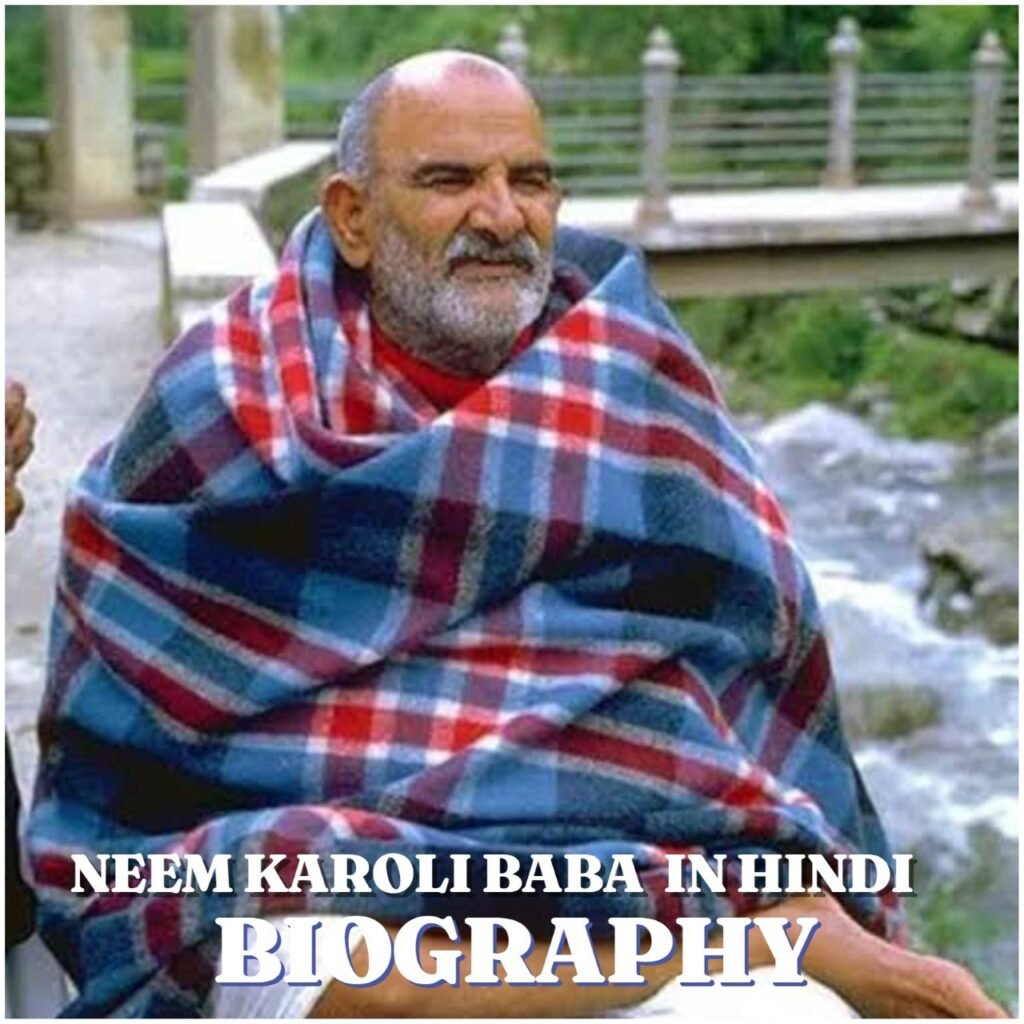
Height and Physical Appearance: Some modern biographical profiles estimate Neem Karoli Baba’s height at approximately 5 feet 9 inches (175 cm) and his weight at around 80 kg, although these measurements should be treated as estimates rather than officially documented statistics. Descriptions from people who knew him portray him as a strongly built Indian man who often wore a simple white dhoti and a blanket, which became one of his most recognizable features. Accounts also describe him as having a shaved or balding head, grey facial hair and a moustache. Importantly, descriptions of his physical stature vary considerably, so an exact height cannot be established with certainty.
Cause of Death and Death of Neem Karoli Baba
Neem Karoli Baba died on 11 September 1973 in Vrindavan, Uttar Pradesh, India, at approximately 1:15 a.m. According to accounts of his final journey, he had been experiencing chest pain and had travelled to Agra to consult a heart specialist. While returning by train toward Kainchi, his condition suddenly deteriorated after he and his companions got down at Mathura. He was taken to a hospital in Vrindavan, where he was reportedly diagnosed as having entered a diabetic coma.
Accounts also indicate that Neem Karoli Baba had a history of heart-related problems, although the exact medical condition responsible for his death is not completely clear from the available historical records. Some devotional accounts describe his final moments as a conscious spiritual departure, while medical accounts refer to the diabetic coma and subsequent cardiac arrest. It is therefore more accurate to say that he died following a serious medical episode involving diabetic coma and underlying heart problems, rather than claim a single definitively established medical cause.
His death became an important moment in the history of his spiritual movement. His followers regarded his passing as Mahasamadhi, a spiritual term used by devotees to describe the conscious departure of a realized saint from the physical body. Neem Karoli Baba’s body was subsequently taken to his Vrindavan ashram, where devotees performed the final rites and later established a Mahasamadhi shrine in his memory. His Vrindavan ashram continues to be an important pilgrimage site associated with his life and legacy.
Neem Karoli Baba Net Worth
There is no reliable public record of Neem Karoli Baba’s personal net worth. Unlike modern celebrities or businesspeople, he did not operate a conventional business or publicly accumulate personal wealth. Accounts of his life describe him as a renunciant who lived simply and did not maintain a conventional salary, personal investment portfolio or commercial enterprise. A recent biographical account also notes that he effectively owned very little and was known for refusing to handle money.
It is therefore misleading to assign him a large personal net-worth figure simply by adding the value of properties or ashrams associated with his name. Ashram assets and donations are not automatically the personal wealth of Neem Karoli Baba, particularly because the institutions continued operating through devotees and charitable organizations after his death. The charitable activities and properties connected with his name should therefore be considered separately from his personal finances.
If an estimate is required for a biography, the most responsible assessment is that Neem Karoli Baba’s personal net worth was effectively minimal or modest at the time of his death in 1973, rather than millions or crores. His true legacy was spiritual rather than financial, and the substantial charitable activity and property connected with his name today belong to organizations, trusts and ashram communities rather than constituting his personal estate. For SEO purposes, it is better to describe his net worth as “not publicly documented” than to publish an unsupported numerical figure.
Legacy of Neem Karoli Baba
Neem Karoli Baba left behind a spiritual legacy that continues to influence devotees in India and around the world more than five decades after his death. His teachings were remarkably simple, focusing on love, compassion, devotion, selfless service and remembrance of God. He encouraged people to serve others without expecting recognition and placed particular importance on feeding the hungry and helping those in need. His devotion to Lord Hanuman also became a defining feature of his spiritual identity, and Hanuman temples and devotional practices remain central to many communities connected with his teachings.
One of the strongest parts of his legacy is the network of ashrams and spiritual centres associated with his life, particularly Kainchi Dham in Uttarakhand and the Vrindavan Ashram. Kainchi Dham has developed into a major pilgrimage destination, attracting devotees and visitors from India and other countries. His influence also reached Western spiritual seekers, including people who later became prominent in technology, business and entertainment. Stories connecting Neem Karoli Baba with figures such as Steve Jobs, Mark Zuckerberg and Julia Roberts have contributed significantly to his international profile, although individual stories about these encounters should be distinguished from independently verified historical facts.
Neem Karoli Baba’s legacy has also continued through books, documentaries, films, devotees and charitable activities inspired by his teachings. His life has increasingly been portrayed to new audiences, while interest in his birthplace, Kainchi Dham and other places associated with him continues to generate public attention. In 2026, renewed coverage surrounding his ancestral home and films inspired by his life demonstrates that his influence remains culturally relevant decades after his passing. Ultimately, Neem Karoli Baba is remembered less for material possessions or formal writings than for the enduring spiritual message associated with Maharaj-ji: love people, serve others and keep faith in God.
Conclusion
Neem Karoli Baba remains one of the most influential Indian spiritual figures of the modern era, remembered by devotees as Maharaj-ji for his devotion to Lord Hanuman, simple way of life and powerful message of love and selfless service. From his early life in Uttar Pradesh to his spiritual journey, the establishment of ashrams such as Kainchi Dham and his influence on devotees in India and abroad, his story continues to attract worldwide interest. Although he passed away in 1973, his teachings, charitable philosophy and spiritual legacy remain alive through his followers, ashrams, books, films and pilgrimage centres. The continuing attention surrounding his life and legacy in 2026 shows that Neem Karoli Baba’s message of compassion, devotion and service continues to resonate with new generations.
Frequently Asked Questions About Neem Karoli Baba
Who was Neem Karoli Baba?
Neem Karoli Baba, also known as Maharaj-ji, was a revered Indian Hindu spiritual teacher and devotee of Lord Hanuman. He became famous for his teachings on love, compassion, devotion and selfless service.
What was Neem Karoli Baba’s real name?
Neem Karoli Baba’s birth name is generally reported as Lakshman Narayan Sharma. He later became widely known as Neem Karoli Baba or Maharaj-ji.
When was Neem Karoli Baba born?
Neem Karoli Baba is generally believed to have been born around 1900 in Akbarpur, Firozabad, Uttar Pradesh, India. His exact birth date is not firmly established in reliable historical records.
When did Neem Karoli Baba die?
Neem Karoli Baba died on September 11, 1973, in Vrindavan, Uttar Pradesh, India, following a serious medical episode.
What was the cause of Neem Karoli Baba’s death?
Accounts of his final illness indicate that Neem Karoli Baba experienced serious health problems involving diabetes and heart-related complications. He was reportedly taken to a hospital in Vrindavan after becoming seriously ill and subsequently died in 1973.
How old was Neem Karoli Baba when he died?
Because his exact birth date is uncertain, his age cannot be established with complete certainty. Based on the commonly reported birth year of 1900, he was approximately 73 years old when he died in 1973.
What religion did Neem Karoli Baba follow?
Neem Karoli Baba was a Hindu spiritual teacher and a devoted follower of Lord Hanuman. His teachings were strongly associated with devotion, service, love and remembrance of God.
Was Neem Karoli Baba married?
Yes. Neem Karoli Baba was married to Ram Beti Sharma. He had a family before dedicating much of his later life to spiritual practice and teaching.
How many children did Neem Karoli Baba have?
Neem Karoli Baba and Ram Beti Sharma reportedly had three children—two sons and one daughter. His sons were Aneg Singh Sharma and Dharm Narayan Sharma, while his daughter was Girija Bhatele.
What is Kainchi Dham?
Kainchi Dham is a spiritual ashram and pilgrimage centre in Uttarakhand associated with Neem Karoli Baba. It became one of the most important centres connected with his teachings and continues to attract devotees and visitors.
Did Steve Jobs meet Neem Karoli Baba?
No. Steve Jobs travelled to India in the 1970s hoping to meet Neem Karoli Baba, but Baba had already died in 1973. Jobs nevertheless visited Kainchi Dham and was influenced by the spiritual environment and teachings associated with Maharaj-ji.
Did Mark Zuckerberg visit Neem Karoli Baba’s ashram?
Yes. Mark Zuckerberg visited Kainchi Dham in India, a place closely associated with Neem Karoli Baba. The visit occurred after Steve Jobs reportedly encouraged Zuckerberg to visit an Indian temple during a difficult period.
What were Neem Karoli Baba’s main teachings?
Neem Karoli Baba’s teachings emphasized loving everyone, serving others, remembering God, helping people in need and practicing devotion. His message was generally expressed in simple language rather than through complex philosophical writings.
What was Neem Karoli Baba’s net worth?
Neem Karoli Baba’s personal net worth is not publicly documented. He lived as a spiritual teacher and renunciant rather than as a businessman, so assigning a specific monetary figure to his personal wealth would be speculative.
Why is Neem Karoli Baba famous?
Neem Karoli Baba is famous for his spiritual teachings, devotion to Lord Hanuman, association with Kainchi Dham and the large community of devotees influenced by his life. His international reputation was also strengthened by stories involving figures such as Steve Jobs and Mark Zuckerberg.
Where is Neem Karoli Baba buried?
Neem Karoli Baba’s Mahasamadhi shrine is located at his Vrindavan Ashram in Uttar Pradesh, India. The site remains an important place of pilgrimage for his devotees.
Is Neem Karoli Baba still alive?
No. Neem Karoli Baba died on September 11, 1973. However, his teachings and spiritual influence continue through his devotees, ashrams and organizations associated with his legacy.