
Introduction
Charles Spurgeon was an influential English Baptist preacher, pastor, author, and Christian educator whose ministry left a lasting mark on Protestant Christianity. Born on June 19, 1834, in Kelvedon, Essex, England, he became widely known for his powerful preaching, deep knowledge of the Bible, memorable illustrations, and ability to communicate Christian teachings in language ordinary people could understand. Often called the “Prince of Preachers,” Spurgeon attracted enormous congregations during the nineteenth century and published thousands of sermons that reached readers far beyond the churches in which he preached. His life was devoted to proclaiming the gospel, training Christian ministers, supporting vulnerable people, and encouraging believers to develop a deeper understanding of Scripture.
Spurgeon’s rise to prominence was remarkable because he became a celebrated preacher while still a teenager. After experiencing a personal religious conversion at the age of fifteen, he began preaching in local settings and soon became pastor of a Baptist congregation in Waterbeach. In 1854, at only nineteen years old, he accepted an invitation to preach at New Park Street Chapel in London. His sermons quickly attracted growing crowds, and the congregation eventually required a much larger building. The Metropolitan Tabernacle opened in 1861 and became the centre of a ministry that combined public preaching, pastoral care, theological teaching, publishing, and charitable work. His sermons were transcribed and distributed widely, making his voice influential even among people who had never heard him preach in person.
Although Spurgeon died in 1892, his writings and ministry continue to influence pastors, theologians, Bible students, and Christians around the world. His best-known works include Morning and Evening, The Treasury of David, and Lectures to My Students, while his extensive collection of sermons remains a major resource for Christian preaching and study. His legacy also includes the founding of a pastors’ college and an orphanage, reflecting his conviction that Christian faith should be expressed through both teaching and practical service. In 2026, renewed interest in his life has been encouraged by new biographical writing, educational resources, and the completion of a major project to restore and republish all sixty-three volumes of his collected sermons. His story remains significant for readers interested in Christian history, preaching, theology, and charitable ministry.
Early Life and Childhood
Charles Haddon Spurgeon was born on June 19, 1834, in Kelvedon, a village in Essex, England. He was the eldest of seventeen children born to John Spurgeon and Eliza Jarvis Spurgeon, although not all of the children survived infancy. His family belonged to the Nonconformist Christian tradition, which included Protestant churches outside the established Church of England. His father and grandfather were ministers, and the household was shaped by regular religious practice, biblical instruction, and Christian literature. This environment introduced Spurgeon to the language and ideas of faith from an early age and helped establish the religious interests that would eventually define his life.
During part of his childhood, Spurgeon lived with his paternal grandparents in Stambourne, Essex, where his grandfather, James Spurgeon, served as a Congregational minister. The atmosphere of the minister’s home exposed him to sermons, theological discussions, and the everyday responsibilities of church life. He also developed a strong interest in reading. Among the books that influenced him was John Bunyan’s The Pilgrim’s Progress, a Christian allegory that he reportedly read repeatedly throughout his life. His early exposure to religious writing helped develop his familiarity with biblical themes, moral questions, and the use of vivid storytelling to communicate spiritual ideas.
Spurgeon was an intellectually curious child who enjoyed reading and thinking deeply about religious matters. Although his upbringing gave him considerable exposure to Christianity, he later described a period of personal spiritual struggle before his conversion. His early life was not simply a story of growing up in a religious household; it was also a period in which he gradually developed his own convictions. This distinction became important in his later preaching, where he frequently emphasised the difference between knowing religious teachings intellectually and personally trusting in Christ. His childhood experiences provided the background for a ministry that placed considerable emphasis on conversion, faith, and the practical consequences of Christian belief.
Education and Academic Background
Charles Spurgeon’s formal education was relatively limited compared with that of many prominent religious scholars of his time. He attended local schools and later studied at institutions that provided instruction in general subjects, languages, and other areas of learning. His education gave him a foundation in reading, writing, and communication, but he did not graduate from a university or complete the conventional theological training often associated with established clergy. Instead, much of his intellectual development came through independent reading, personal study, observation, and the practical experience of preaching.
Spurgeon was particularly committed to reading the Bible and studying Christian authors. He developed a strong interest in Puritan theology, drawing on writers whose works explored sin, grace, salvation, faith, and Christian living. His reading helped him build a broad understanding of Christian doctrine and provided material for his sermons and books. He also read literature outside theology, which contributed to his use of historical references, humour, comparisons, and everyday examples when addressing congregations. His approach demonstrated that effective communication could combine serious study with a lively understanding of human experience.
Although Spurgeon did not follow a conventional university route, he later became an educator in his own right. In 1856, he established a training institution for pastors that became known as Spurgeon’s Pastors’ College. The institution sought to prepare men for Christian ministry through biblical study, theological instruction, and practical training in preaching and pastoral work. Spurgeon remained closely involved in the development of ministers, believing that churches needed leaders who could explain Scripture clearly and serve their congregations faithfully. His educational contribution was therefore not limited to his personal study; he helped create a structure through which other people could develop their own knowledge and ministry skills.
Christian Conversion and the Beginning of His Ministry
One of the most important events in Charles Spurgeon’s life occurred on January 6, 1850, when he was fifteen years old. While travelling through Colchester during severe winter weather, he entered a small Primitive Methodist chapel after the conditions disrupted his original plans. The scheduled preacher was absent, so a layman addressed the small congregation using Isaiah 45:22, a biblical passage calling people to look to God for salvation. The simple message made a profound impression on Spurgeon, who later described the experience as the moment when his spiritual uncertainty gave way to personal faith in Jesus Christ.
Spurgeon’s conversion became central to his understanding of Christian ministry. He believed that the gospel should be communicated clearly and directly, with the aim of helping people understand their need for salvation and the Christian message of grace. His own experience convinced him that a sermon did not need elaborate language or academic complexity to communicate a life-changing truth. He later used this conviction to encourage other preachers to focus on the central message of Scripture rather than allowing their sermons to become exercises in intellectual display.
Following his conversion, Spurgeon began speaking about Christianity in local settings and gradually developed his confidence as a preacher. In 1851, at the age of sixteen, he preached his first sermon in a cottage at Teversham, near Cambridge. His early preaching attracted attention, and in 1852, when he was only seventeen, he became pastor of a Baptist congregation in Waterbeach. The congregation grew under his ministry, and his reputation began to spread beyond the village. These early years gave him practical experience in explaining biblical passages, addressing spiritual questions, and caring for a congregation before he entered the much larger religious world of London.
Pastoral Ministry at New Park Street Chapel
In 1854, Charles Spurgeon was invited to become pastor of New Park Street Chapel in Southwark, London. He was only nineteen years old when he began his ministry there, and his youth initially made him an unusual choice for such a prominent congregation. However, his direct preaching style, command of biblical language, and ability to communicate with people from different backgrounds quickly attracted attention. Congregations grew rapidly, and the chapel’s seating capacity soon proved inadequate for the number of people who wished to hear him.
As the crowds increased, services were held in larger venues, including Exeter Hall and the Surrey Gardens Music Hall. These locations allowed Spurgeon to address thousands of people at a time, an extraordinary achievement in an era before modern sound systems and mass broadcasting. His sermons attracted not only committed churchgoers but also people curious about the young preacher whose words were being discussed throughout London. His growing public profile brought opportunities for wider ministry, but it also exposed him to criticism, intense public scrutiny, and the considerable responsibilities that came with leading a rapidly expanding congregation.
In 1861, the Metropolitan Tabernacle opened in London, providing a permanent setting for Spurgeon’s growing ministry. The building could accommodate approximately 5,000 to 6,000 people, depending on the arrangement of the seating. Spurgeon served as its pastor for the remainder of his life, preaching regularly and overseeing a range of activities connected to the church. The Tabernacle became the centre of a ministry that included worship services, pastoral work, theological instruction, charitable projects, and the distribution of Christian literature. Its growth reflected both Spurgeon’s personal influence and the organisational efforts of the people who worked alongside him.
Spurgeon’s preaching was known for its clarity, emotional force, practical application, and frequent use of illustrations. He drew on everyday experiences, history, literature, and observations about human behaviour to explain biblical teachings. His sermons addressed themes such as repentance, faith, prayer, grace, Christian character, and the importance of a personal relationship with God. Although his theology was firmly rooted in the Baptist and Calvinist traditions, his style was not confined to technical theological language. He sought to make biblical teaching understandable to ordinary listeners while encouraging serious reflection on its meaning.
His sermons were also published regularly, often in weekly pamphlets that allowed readers to engage with his teaching outside the church building. These publications circulated widely in Britain and beyond, and translations helped bring his work to readers in different countries. Spurgeon therefore became influential not only because of the large audiences who attended his services but also because his words could travel far beyond London. The combination of public preaching and print publication helped make him one of the most widely read Christian preachers of the nineteenth century.
Major Books and Literary Contributions
Charles Spurgeon was a prolific writer whose publications covered sermons, devotional readings, biblical commentary, pastoral instruction, and Christian theology. His writing was closely connected to his preaching, but his books also allowed him to address readers who wanted to study particular biblical passages or develop their Christian lives. He wrote with an accessible style, combining theological conviction with vivid illustrations and practical advice. His publications became important resources for pastors, students, and ordinary Christians seeking to understand Scripture.
One of his best-known devotional works is Morning and Evening, a collection of short readings designed to encourage reflection on the Bible and Christian faith at the beginning and end of each day. The work became popular because its entries combine biblical passages with direct pastoral encouragement. Rather than presenting theology as an abstract subject, Spurgeon used devotional writing to connect Christian doctrine with the challenges, hopes, doubts, and responsibilities of everyday life. The book has remained in circulation long after his death and continues to be read by people seeking a structured devotional routine.
Another major work is The Treasury of David, Spurgeon’s extensive commentary on the Book of Psalms. In this work, he brought together biblical interpretation, reflections from earlier Christian writers, historical observations, and his own pastoral insights. The Psalms provided rich material for his interests in worship, prayer, suffering, repentance, trust, and praise. His commentary reflects his belief that Scripture should be studied carefully and applied meaningfully to Christian life. It has remained a reference work for readers and ministers interested in the Psalms and their place in Christian worship.
Lectures to My Students is another influential publication, particularly for people preparing for Christian ministry. Based on instruction given to students at his pastors’ college, the book addresses preaching, preparation, the preacher’s character, public communication, and the practical demands of pastoral service. Spurgeon encouraged aspiring ministers to develop their knowledge of Scripture, cultivate disciplined habits, speak clearly, and maintain a serious commitment to their responsibilities. The work remains relevant to discussions about preaching because it considers not only the content of sermons but also the personal qualities and preparation required of those who deliver them.
Spurgeon’s literary output was much larger than these three titles. His sermons were collected in extensive volumes, and he wrote books and articles on prayer, faith, biblical interpretation, Christian living, and ministry. His magazine, The Sword and the Trowel, helped communicate news about his church’s activities, theological concerns, charitable work, and wider Christian interests. Through these publications, he created a body of work that continues to be studied and republished, allowing later generations to engage with his teaching without relying solely on historical accounts of his preaching.
Charity Work, the Orphanage and Pastors’ College
Charles Spurgeon’s ministry extended beyond preaching and writing. He believed that Christian faith should produce practical concern for people facing poverty, neglect, and social hardship. One of his major initiatives was the establishment of the Stockwell Orphanage, which opened in 1867 to care for boys who had lost their fathers or otherwise faced difficult circumstances. The work later expanded to include girls, and the institution provided children with accommodation, education, and care. Its development reflected Spurgeon’s conviction that children deserved protection and opportunities to build better futures.
The orphanage relied on donations, fundraising, and the support of people who believed in the project’s purpose. Spurgeon used his public influence to encourage contributions, but the work also depended on the daily efforts of staff, administrators, teachers, and supporters. The institution became one of the most visible examples of his commitment to practical Christian service. Rather than viewing preaching and charity as separate activities, he treated them as connected responsibilities within a Christian ministry.
His Pastors’ College was another lasting contribution. Founded in 1856, it aimed to train men for pastoral leadership and preaching, especially those who did not have access to traditional theological institutions. Spurgeon wanted future ministers to be able to explain the Bible accurately, communicate effectively, and serve their congregations with humility and dedication. The college developed a reputation for practical preparation and helped equip ministers who went on to serve churches in Britain and other countries.
Spurgeon also supported the distribution of Christian literature through organised publishing and colportage activities. These efforts helped make religious books and printed materials accessible to a wider public. His ministry therefore operated through several connected channels: preaching to congregations, publishing sermons and books, training pastors, and supporting people in need. The breadth of these activities helps explain why his influence extended beyond the church where he served and why his name became associated with both religious teaching and charitable service.
Trending: Charles Spurgeon’s Complete Sermon Collection Returns to Print in 2026
One of the most significant developments in 2026 for readers of Charles Spurgeon is the completion of a major republication project restoring all sixty-three volumes of his collected sermons. On October 23, 2026, Reformation Heritage Books announced the release of the final set, covering volumes 51 to 63. The project was undertaken in partnership with the Spurgeon Library at Midwestern Baptist Theological Seminary, with the aim of making the extensive collection available again to pastors, researchers, students, and general readers. The complete collection preserves a substantial record of Spurgeon’s preaching and the continued publication of his sermons after his death.
The collection is historically important because Spurgeon’s sermons were published during his lifetime and continued to appear after he died in 1892. Sermons were transcribed, revised, printed, and collected into annual volumes, allowing his teaching to reach readers who could not attend his services. The full series contains more than 3,500 sermons across sixty-three volumes, making it a substantial resource for the study of nineteenth-century preaching and evangelical Christianity. The restoration project has helped return this material to readers in a more accessible form, while retaining the original layout and pagination for reference.
Another development in 2026 is the publication of new material examining Spurgeon’s life beyond his public reputation as the “Prince of Preachers.” A new biography by Ray Rhodes Jr., Spurgeon: The Man Beyond the Pulpit, has been discussed in interviews and Christian publishing circles, bringing renewed attention to Spurgeon’s family life, marriage, personal experiences, and pastoral responsibilities. The renewed biographical interest shows that readers continue to seek a fuller understanding of the man behind the sermons, including the challenges and relationships that shaped his ministry.
New devotional resources have also helped introduce Spurgeon’s teaching to contemporary audiences. In August 2026, Midwestern Seminary announced Breath of the Soul: Devotions for Powerful Prayer, edited by Geoffrey Chang, curator of the Spurgeon Library. The book gathers Spurgeon’s teaching on prayer into thirty daily readings, with the aim of presenting his ideas in a format suitable for modern devotional use. Together, these publications and the completed sermon collection demonstrate that Spurgeon’s work continues to be studied, edited, and shared more than 130 years after his death.
Personal Life and Family
Charles Spurgeon married Susannah Thompson on January 8, 1856. Their marriage became an important part of his personal life and the wider story of his ministry. Susannah supported his work and later became known for her own charitable efforts, particularly the distribution of Christian books to ministers who could not easily afford them. Her work developed into the Book Fund, which helped supply religious literature to pastors and Christian workers. Although she faced serious health difficulties for much of her married life, she continued to contribute to the ministry and charitable activities associated with her husband.
Charles and Susannah had twin sons, Charles and Thomas Spurgeon, born in 1856. Both sons later entered Christian ministry. Charles Spurgeon Jr. became involved in church work and charitable activity, while Thomas Spurgeon eventually succeeded his father as pastor of the Metropolitan Tabernacle after Charles Haddon Spurgeon’s death. Their lives extended the family’s connection with Baptist ministry, although each had to develop his own responsibilities within a church community already closely associated with their father’s reputation.
Spurgeon’s family life was shaped by the demanding nature of his public ministry. His preaching, writing, pastoral responsibilities, and charitable projects required considerable time and energy, while his health often suffered under the strain. His relationship with Susannah was an important source of personal support, and her own charitable work reflected a shared commitment to Christian service. Their marriage is remembered not only as a family relationship but also as a partnership in which both contributed to the wider work of the church.
Despite his public fame, Spurgeon experienced personal grief, periods of illness, and emotional strain. He was known to struggle with depression at different points in his life, and he also suffered from recurring physical health problems. These difficulties affected his ability to maintain his demanding schedule and sometimes required him to spend time away from London. His experience has led later readers to reflect on the emotional pressures faced by religious leaders and the importance of recognising human vulnerability alongside public achievement.
Cause of Death: How Did Charles Spurgeon Die?
Charles Haddon Spurgeon died on January 31, 1892, in Menton, France, at the age of 57. For years, he had experienced recurring health problems that affected his ability to maintain the demanding schedule of preaching, writing, pastoral leadership, and charitable administration. He suffered from gout, rheumatism, and periods of serious illness, which sometimes forced him to leave England to rest in a warmer climate. His health difficulties developed alongside the considerable pressures of his ministry and the public controversies in which he became involved.
Spurgeon’s final illness occurred while he was staying in Menton, a place he visited during periods of poor health. He died after a prolonged struggle with illness, with contemporary accounts associating his death with the complications of his existing health problems. His death was deeply felt among the congregations, ministers, readers, and supporters who had followed his ministry. News of his passing spread widely, and people gathered to honour a preacher whose sermons and charitable initiatives had influenced Christian life in Britain and beyond.
Spurgeon was buried at West Norwood Cemetery in London. His funeral and the public mourning that followed reflected the reach of his ministry, which had extended far beyond the Metropolitan Tabernacle. His death did not bring an immediate end to the publication of his sermons, as material from his preaching continued to be collected and printed for years afterward. His writings, charitable work, and influence on generations of ministers ensured that his contribution to Christian history continued long after his lifetime.
Age, Religion, Nationality, Ethnicity, Height and Physical Appearance
Charles Spurgeon was born on June 19, 1834, and died on January 31, 1892, at the age of 57. His relatively short life was marked by an extraordinary volume of preaching, writing, and charitable work. He became a prominent preacher while still a teenager and spent nearly four decades in pastoral ministry, much of it at the Metropolitan Tabernacle in London. His age at the time of his death often surprises readers because his literary output and influence were so extensive.
Spurgeon was English by nationality and was born in Kelvedon, Essex, England. His family belonged to the Nonconformist Protestant tradition, and his father and grandfather were ministers. The term “tribe” does not particularly apply to his background in the way it might when describing certain ethnic communities; his identity is more accurately described through his English nationality, family history, and religious tradition.
Religion was central to Spurgeon’s identity and public life. He was a Baptist preacher with strong Calvinist convictions and placed considerable emphasis on the authority of the Bible, salvation through Jesus Christ, repentance, faith, and the grace of God. His preaching frequently addressed the spiritual condition of individuals and the practical implications of Christian belief. He also believed that sound doctrine should lead to active Christian service, which was reflected in his work with the orphanage, pastors’ college, and Christian publishing initiatives.
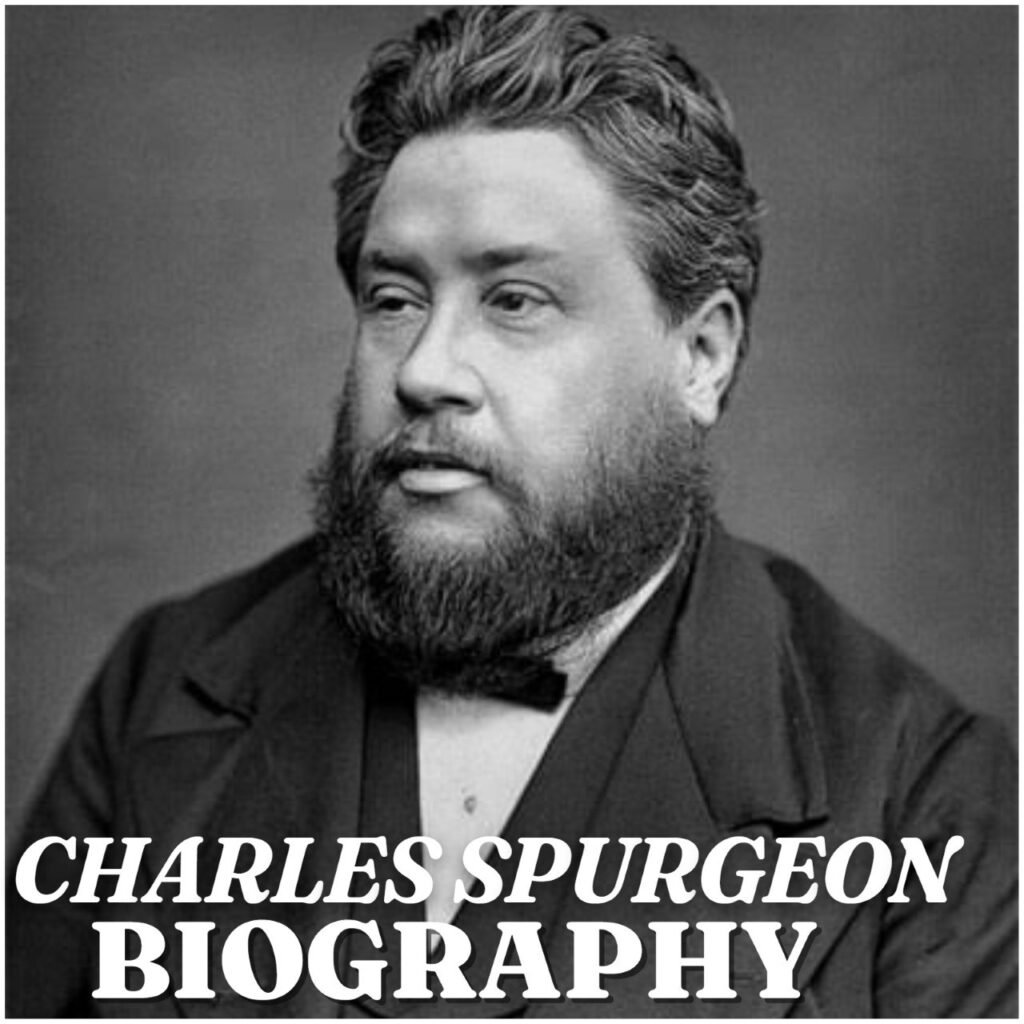
Historical descriptions and photographs portray Spurgeon as a man with a broad face, expressive features, a prominent forehead, and a full beard that became a familiar part of his appearance. He was commonly depicted wearing formal Victorian clothing, including dark suits, waistcoats, and a clerical style appropriate to his position as a prominent minister. Reliable records do not establish a consistently verified height, so an exact measurement should not be treated as certain. His distinctive appearance, combined with his energetic delivery and expressive preaching, helped make him recognisable to audiences in his own time.
Social Media Presence and Online Legacy
Charles Spurgeon lived long before the invention of social media, so he did not personally maintain accounts on Instagram, Facebook, X, or other modern platforms. Today, however, his sermons, devotional writings, quotations, and biographical information are widely shared through Christian websites, digital libraries, publishing organisations, churches, and educational institutions. These platforms allow people to read his original works, listen to recordings of sermons read aloud, study biblical passages through his commentary, and explore the historical context of his ministry.
Readers seeking Spurgeon’s work online can find resources through the Spurgeon Library, the Metropolitan Tabernacle, and established digital collections of Christian literature. His writings are also shared by accounts devoted to Bible teaching, preaching, devotional reading, and church history. Because short quotations are sometimes circulated without their original context, readers benefit from checking the full sermon or publication before attributing a statement to him.
His digital presence demonstrates how historical religious figures can remain influential through the preservation and distribution of their writings. Spurgeon’s sermons, originally printed in nineteenth-century pamphlets and volumes, are now accessible to readers around the world through digitisation and online publication. This has allowed students, ministers, and ordinary Christians to engage with his teaching without needing access to rare printed editions or specialist theological libraries.
Charles Spurgeon Net Worth
Charles Spurgeon lived in the nineteenth century, when financial records and personal wealth were not reported in the same way as they are for modern public figures. There is no widely accepted, reliable estimate of his personal net worth that can be directly compared with contemporary celebrity wealth figures. His income and financial circumstances were connected to his pastoral work, publishing, book sales, and other professional activities, but any precise modern monetary estimate would require careful historical documentation.
Spurgeon’s ministry also involved substantial charitable and educational responsibilities. He helped establish the Stockwell Orphanage and Pastors’ College, supported Christian literature distribution, and encouraged donations to fund these activities. These institutions relied on contributions and organised support, meaning that the money handled by his ministry should not be confused with his personal wealth. His public work involved directing resources toward preaching, education, and the care of vulnerable children rather than building a modern commercial brand.
Although his sermons and books have continued to be published and sold long after his death, the financial proceeds associated with historical publications should not automatically be treated as his personal estate. His enduring importance is better understood through the influence of his writing, the institutions he helped establish, and the generations of Christians who have continued to read his work. For Spurgeon, the most visible measure of his legacy is not a financial estimate but the continuing use of his sermons and books in Christian teaching and ministry.
Legacy and Influence on Christianity
Charles Spurgeon’s influence on Christian preaching remains substantial. His ability to explain biblical passages in clear, memorable language helped make his sermons accessible to audiences from different social and educational backgrounds. He combined doctrinal conviction with practical application, using stories, illustrations, humour, and direct appeals to communicate his message. Generations of ministers have studied his preaching to learn how to organise sermons, explain Scripture, and connect theological ideas with the experiences of everyday life.
His literary legacy is equally significant. The sixty-three volumes of his collected sermons preserve thousands of messages delivered during his ministry and published in the years that followed. Works such as Morning and Evening, The Treasury of David, and Lectures to My Students continue to be used by Christians interested in devotional reading, biblical interpretation, and pastoral preparation. The completion of the republication project in 2026 has made the full sermon collection available again, strengthening opportunities for research and study. His writings remain influential because they combine a recognisable theological framework with an energetic and accessible style.
Spurgeon’s charitable and educational work also forms a major part of his legacy. The orphanage he established reflected his concern for children facing hardship, while the Pastors’ College helped prepare men for Christian ministry. His support for the distribution of Christian literature demonstrated his belief that religious teaching should reach people beyond the walls of a church. These activities show that he understood ministry as involving more than public preaching; he also invested in education, pastoral development, and practical care for vulnerable people.
At the same time, Spurgeon’s ministry included controversy and disagreement. His strong theological convictions sometimes placed him at odds with other church leaders, particularly over biblical interpretation and the direction of Baptist theology. In the late nineteenth century, he became involved in what is known as the Downgrade Controversy, through which he criticised theological trends he believed weakened the authority of Scripture. In 1887, he withdrew from the Baptist Union amid these disputes. His position attracted support from some Christians and criticism from others, illustrating that his influence was accompanied by significant disagreements about doctrine and church leadership.
Ultimately, Charles Spurgeon’s lasting importance comes from the combination of his preaching, writing, pastoral leadership, and charitable work. He became known as the “Prince of Preachers” because of his remarkable ability to communicate Christian teaching to large audiences, but his legacy extends beyond the pulpit. His works continue to be read in churches, homes, seminaries, and online communities across the world. For many Christians, his life remains an example of committed preaching and practical service, while his historical record also offers opportunities to study the challenges, controversies, and responsibilities associated with religious leadership.
Conclusion
Charles Haddon Spurgeon was a remarkable nineteenth-century Baptist preacher whose life combined biblical teaching, literary achievement, pastoral care, and charitable service. From his conversion as a teenager to his leadership of the Metropolitan Tabernacle, he built a ministry that reached thousands of listeners and countless readers through published sermons and books. His work with the Pastors’ College and Stockwell Orphanage demonstrated his commitment to education and practical care, while his writings continue to influence Christian preaching and devotional life. Although he faced ill health and theological controversy, his legacy has endured through the institutions he helped establish and the extensive body of literature he left behind. The continued restoration and publication of his sermons in 2026 show that his voice remains relevant to people seeking to understand Christian faith, ministry, and the history of preaching.
Frequently Asked Questions About Charles Spurgeon
Who was Charles Spurgeon?
Charles Haddon Spurgeon was an English Baptist preacher, pastor, author, and Christian educator who lived from 1834 to 1892. He became widely known as the “Prince of Preachers” because of his influential sermons and his ability to communicate biblical teachings clearly.
When was Charles Spurgeon born?
Charles Spurgeon was born on June 19, 1834, in Kelvedon, Essex, England.
How old was Charles Spurgeon when he died?
Spurgeon was 57 years old when he died on January 31, 1892, in Menton, France.
What was Charles Spurgeon’s cause of death?
Spurgeon died following a period of serious illness. He had suffered from recurring health problems, including gout and rheumatism, and frequently travelled to warmer climates to rest and recover.
Why was Charles Spurgeon called the Prince of Preachers?
He was called the “Prince of Preachers” because of his powerful preaching, wide readership, memorable illustrations, and ability to communicate Christian doctrine to large audiences. His sermons were published regularly and distributed internationally.
What church did Charles Spurgeon pastor?
Spurgeon became pastor of New Park Street Chapel in London in 1854. His growing congregation later moved into the Metropolitan Tabernacle, which opened in 1861. He served there for the remainder of his life.
What was Charles Spurgeon’s religion?
Spurgeon was a Baptist Christian with strong Calvinist convictions. His ministry emphasised the authority of Scripture, salvation through Jesus Christ, repentance, faith, grace, and the importance of practical Christian living.
Did Charles Spurgeon attend university?
No. Spurgeon did not complete a conventional university education or graduate from a university theological programme. He developed his knowledge largely through independent reading, biblical study, and practical ministry experience.
Who was Charles Spurgeon’s wife?
His wife was Susannah Thompson Spurgeon, whom he married in 1856. She supported his ministry and became known for her charitable work distributing Christian books to pastors and ministers.
How many children did Charles Spurgeon have?
Charles and Susannah Spurgeon had twin sons, Charles and Thomas, born in 1856. Both later became involved in Christian ministry.
What are Charles Spurgeon’s most famous books?
His best-known works include Morning and Evening, The Treasury of David, and Lectures to My Students. His extensive collection of published sermons is also an important part of his literary legacy.
What was Charles Spurgeon’s net worth?
There is no widely accepted, reliable estimate of Spurgeon’s personal net worth. His ministry involved preaching, publishing, education, and charitable work, and the funds used for his institutions should not be confused with his personal wealth.
What charitable work did Charles Spurgeon do?
He founded the Stockwell Orphanage in 1867 to care for children in need and established the Pastors’ College to train Christian ministers. He also supported the distribution of Christian books and other literature.
What was the Downgrade Controversy?
The Downgrade Controversy was a late nineteenth-century theological dispute in which Spurgeon criticised trends he believed weakened the authority of Scripture. The dispute contributed to his withdrawal from the Baptist Union in 1887.
What is the latest news about Charles Spurgeon in 2026?
In October 2026, Reformation Heritage Books announced the release of the final volumes in a project to republish all sixty-three volumes of Spurgeon’s collected sermons. New biographical and devotional resources have also renewed interest in his life, marriage, preaching, and teaching on prayer.
Why is Charles Spurgeon still important today?
Spurgeon remains important because his sermons and books continue to be used in Christian preaching, biblical study, devotional reading, and pastoral training. His ministry also provides a historical example of how preaching, education, publishing, and charitable work can operate together in a religious movement.