
Introduction
Jimi Hendrix was one of the most influential musicians in the history of rock music, celebrated for his extraordinary guitar skills, experimental sound, electrifying performances, and ability to transform the way people understood the electric guitar. Born Johnny Allen Hendrix on November 27, 1942, in Seattle, Washington, he later became known worldwide as Jimi Hendrix, a name that would become synonymous with musical innovation and artistic freedom. Although his career at the top lasted only a few years, Hendrix left behind a body of work that continues to inspire musicians and music lovers across generations.
Hendrix rose to international fame during the 1960s, a period marked by significant cultural, social, and musical change. As the frontman of the Jimi Hendrix Experience, he released groundbreaking songs such as “Purple Haze,” “Hey Joe,” “The Wind Cries Mary,” and “Voodoo Child (Slight Return).” His interpretation of Bob Dylan’s “All Along the Watchtower” also became one of the most celebrated cover versions in rock history. Hendrix was renowned for combining blues, rock, psychedelic music, and elements of soul into a distinctive style that featured expressive guitar bends, feedback, distortion, and sounds that seemed almost impossible to produce at the time.
Beyond his technical ability, Hendrix possessed a powerful stage presence and an adventurous musical imagination. His performance at the Monterey International Pop Festival in 1967 introduced him to a wider American audience, while his appearance at Woodstock in 1969 became one of the defining moments of his career. He challenged conventional expectations of guitar playing and helped establish the electric guitar as an instrument capable of extraordinary emotional and sonic expression. More than five decades after his death, Hendrix remains a major cultural figure, and renewed exhibitions, archival releases, and commemorations continue to introduce his music and story to new audiences.
Early Life and Childhood
Jimi Hendrix was born on November 27, 1942, in Seattle, Washington, to James Allen “Al” Hendrix and Lucille Jeter. His parents named him Johnny Allen Hendrix at birth, but his father later changed his name to James Marshall Hendrix in honour of family members. Hendrix grew up in a family that experienced considerable financial hardship, and his childhood was affected by his parents’ unstable relationship and eventual separation. These early difficulties contributed to a complicated upbringing, during which he sometimes lived with relatives and faced periods of uncertainty. Despite these challenges, music became an important part of his life and eventually provided an outlet for his imagination and emotions.
Hendrix developed an interest in music while he was still young. He listened to blues, rhythm and blues, and early rock-and-roll recordings, drawing inspiration from performers whose music expressed deep emotion and individuality. Artists such as Muddy Waters, B.B. King, Howlin’ Wolf, and Chuck Berry helped shape his developing musical taste. He initially experimented with simple instruments before obtaining a guitar and beginning to teach himself how to play. Without the advantages of formal musical training, Hendrix relied heavily on listening, practising, observing other musicians, and discovering techniques through experimentation. This independent approach later became a defining feature of his playing style.
As a teenager, Hendrix became increasingly committed to music, even though his family circumstances and limited resources made it difficult for him to pursue his ambitions. He played with local groups and gradually gained experience performing in front of audiences. His early years were not marked by immediate success, and he had to develop his skills through persistence and practical experience. These formative experiences helped shape the adventurous musician he would become, teaching him to rely on his ear, creativity, and willingness to experiment. Long before he became an international star, Hendrix was a young guitarist determined to find his own musical voice.
Education and Academic Background
Jimi Hendrix attended several schools in Seattle, but his education was interrupted by the difficulties he experienced during childhood and adolescence. He was more interested in music than in conventional academic pursuits, and his growing commitment to playing the guitar increasingly shaped his priorities. Although he did not follow a traditional path into higher education, his lack of formal musical schooling did not prevent him from developing an exceptional understanding of sound, rhythm, melody, and performance.
Hendrix’s musical education was largely informal. He learned by listening carefully to recordings, practising guitar techniques, watching experienced performers, and playing alongside other musicians. This process allowed him to absorb different musical traditions and develop a distinctive style without being restricted by conventional rules. He explored the possibilities of amplification and electronic effects, using distortion, feedback, and sustained notes to create sounds that many guitarists had not previously incorporated so extensively into popular music. His approach demonstrated that artistic mastery can develop through dedication, experimentation, and continuous learning, even when a person does not receive extensive formal instruction.
In 1961, Hendrix enlisted in the United States Army and served as a paratrooper with the 101st Airborne Division. His military service ended after he was discharged in 1962, following an injury during a parachute jump. After leaving the Army, he focused more seriously on music and began working as a backing guitarist for performers on the rhythm-and-blues circuit. These experiences gave him practical training in live performance, timing, improvisation, and working with other musicians. Rather than receiving a conventional academic qualification in music, Hendrix built his expertise through years of playing, observation, discipline, and creative exploration.
Career and Rise to International Fame
Jimi Hendrix began his professional music career by performing with local bands and working as a backing guitarist for established artists. After leaving the Army, he played on the so-called Chitlin’ Circuit, a network of venues that provided opportunities for Black musicians to perform for audiences across the United States. During this period, he worked with musicians and performers including Little Richard, the Isley Brothers, and Curtis Knight. These experiences helped him develop confidence on stage, improve his technical ability, and understand the demands of professional performance. However, he often found himself playing in the background rather than receiving recognition as an artist in his own right.
Hendrix eventually moved to New York City, where he performed under the name Jimmy James and became involved in the local music scene. His abilities attracted the attention of Chas Chandler, the former bassist of the Animals, who recognised his potential and encouraged him to move to London. Hendrix arrived in the United Kingdom in 1966, where Chandler helped him form the Jimi Hendrix Experience with bassist Noel Redding and drummer Mitch Mitchell. The group quickly attracted attention for its powerful sound, Hendrix’s flamboyant stage presence, and his remarkable ability to combine blues-based guitar playing with experimental effects.
The Jimi Hendrix Experience achieved an early breakthrough with the release of “Hey Joe,” followed by “Purple Haze” and “The Wind Cries Mary.” Their debut album, Are You Experienced, released in 1967, became a landmark in psychedelic rock. The album displayed Hendrix’s imaginative songwriting, innovative guitar techniques, and ability to create music that was both commercially appealing and artistically daring. Songs such as “Foxy Lady” and “Fire” further established his reputation, while the album’s inventive production helped redefine what a rock recording could sound like.
Hendrix’s reputation grew rapidly as his performances attracted increasing attention on both sides of the Atlantic. At the Monterey International Pop Festival in June 1967, he delivered a performance that became legendary, culminating in his dramatic destruction and burning of his guitar. The moment was theatrical, but it also captured the spirit of an artist who treated live performance as an opportunity for experimentation and emotional expression. His appearance helped introduce him to a wider American audience and confirmed that he was not simply a skilled guitarist but a performer capable of creating unforgettable musical experiences.
In 1968, Hendrix released Axis: Bold as Love and Electric Ladyland, albums that expanded his artistic range. Axis: Bold as Love demonstrated his interest in colour, emotion, and imaginative songwriting, while Electric Ladyland offered a more ambitious exploration of studio experimentation, extended improvisation, and diverse musical influences. The album included “Voodoo Child (Slight Return)” and his celebrated interpretation of Bob Dylan’s “All Along the Watchtower.” Hendrix transformed the latter song through layered guitar parts, expressive phrasing, and dramatic production, creating a version that became one of the most recognised recordings associated with his career.
One of the most memorable performances of Hendrix’s career took place at the Woodstock music festival in August 1969. His interpretation of “The Star-Spangled Banner” used feedback, distortion, and unusual guitar sounds to evoke the atmosphere of conflict and upheaval surrounding the United States during the Vietnam War era. The performance has since become one of the most discussed moments in the history of rock music. Hendrix used the electric guitar not only as a musical instrument but also as a means of expressing ideas, emotions, and reactions to the world around him.
Hendrix continued to explore new musical directions as his career progressed. He formed the Band of Gypsys with bassist Billy Cox and drummer Buddy Miles, moving towards a heavier blend of rock, funk, blues, and rhythm and blues. The group’s live album, Band of Gypsys, released in 1970, captured this different musical approach and included performances such as “Machine Gun,” a powerful piece that reflected the tension of the period. Hendrix later reunited with Mitch Mitchell and continued working with Cox, developing new material and performing at major events, including the Isle of Wight Festival in 1970.
Despite his extraordinary achievements, Hendrix’s career was often complicated by the pressures of fame, demanding touring schedules, disagreements over management, and the challenges of developing his music while maintaining commercial success. He was continually searching for new sounds and musical collaborators, and his plans for future projects remained unfinished when he died in September 1970. Nevertheless, his recordings and performances had already transformed popular music, securing his place among the most influential musicians of the twentieth century.
Trending: Jimi Hendrix’s Legacy Returns to the Spotlight Through New Releases and Exhibitions
Jimi Hendrix remains in the public eye in 2026 through new archival releases and cultural tributes that highlight the continuing interest in his music and personal history. One of the major developments is the release of Magic Boy: The Jimi Hendrix Experience Live at Berkeley (First Show), issued on October 16, 2026, by Experience Hendrix and Legacy Recordings. The release presents a historic performance from 1970, giving listeners another opportunity to experience Hendrix and his band in a live setting. The continuing publication of archival recordings demonstrates how much material from his relatively short career remains important to music historians and fans.
Another significant development is the exhibition Ronnie Wood: The Jimi Hendrix Portraits, which opened at Handel Hendrix House in London on September 30, 2026, and is scheduled to run until April 11, 2027. The exhibition features paintings and sketches of Hendrix by Rolling Stones guitarist Ronnie Wood, including two previously unseen original portraits. Wood knew Hendrix during the London music scene of the 1960s, making the exhibition a personal tribute as well as an artistic reflection on one of rock music’s most recognisable figures.
Hendrix’s hometown and other cultural institutions have also continued to honour his influence. In June 2026, New York City dedicated the name “Jimi Hendrix Way” to a section of West 8th Street in Greenwich Village, recognising his connection to the city and the musical history surrounding Electric Lady Studios, which he founded. In Seattle, public art and commemorative projects have also helped preserve his connection to the city where he grew up. Together, these developments show that Hendrix’s influence extends beyond recordings and concert footage into public history, visual art, and the preservation of musical heritage.
Personal Life and Family
Jimi Hendrix’s personal life was shaped by his difficult childhood, demanding career, and complex relationships. His parents were James Allen “Al” Hendrix and Lucille Jeter, and he had siblings, including his younger sister, Janie Hendrix, who later became closely involved in managing and protecting his legacy through Experience Hendrix. His family circumstances were often unstable when he was young, and his relationship with his parents was affected by their separation and the financial difficulties they faced. These early experiences formed part of the background to his life, although his music ultimately became the most widely recognised expression of his identity.
Hendrix had several romantic relationships during his adult life, but he never married and had no publicly established children. Among the women associated with his life was Kathy Etchingham, a British woman with whom he shared a relationship during his time in London in the late 1960s. She later became an important voice in discussions of his private life and the years he spent in Britain. Hendrix’s relationships were influenced by the pressures of an international music career, his frequent travel, and the attention that surrounded him as his fame increased. Although public interest has often focused on his private relationships, his work, friendships, and creative partnerships remain central to understanding his life.
His family’s involvement in preserving his music and image has continued long after his death. His sister Janie Hendrix has played a prominent role in the administration of the Hendrix estate and in projects that introduce his recordings and history to new generations. The estate has supported archival releases, exhibitions, educational initiatives, and efforts to protect his artistic legacy. These activities help maintain a connection between Hendrix’s personal history and the worldwide audience that continues to celebrate his music.
Cause of Death: What Happened to Jimi Hendrix?
Jimi Hendrix died on September 18, 1970, in London, England, at the age of 27. His death came at a time when he remained one of the most prominent musicians in the world and was still exploring new creative directions. The news shocked fans and fellow musicians, bringing a sudden end to a career that had changed the sound and possibilities of rock music within only a few years.
The official inquest concluded that Hendrix died from inhalation of vomit due to barbiturate intoxication. He had taken sleeping medication and was found unresponsive at a London hotel after spending time with Monika Dannemann, his girlfriend at the time. His death has been the subject of public discussion and speculation for decades, but the official finding remains the established conclusion. It is important to distinguish that conclusion from unproven theories that have circulated about the circumstances of his final hours.
Hendrix was buried at Greenwood Cemetery in Renton, Washington, near Seattle, the city where he was born and raised. His death at 27 placed him among a group of celebrated musicians whose lives ended at the same age, a coincidence that later became widely known as the “27 Club.” However, his significance is not defined by the circumstances or timing of his death. His lasting importance comes from his recordings, his groundbreaking approach to the electric guitar, and the influence he continues to have on musicians around the world.
Age, Religion, Nationality, Tribe, Height and Physical Appearance
Jimi Hendrix was born on November 27, 1942, and died on September 18, 1970, at the age of 27. Although his life was brief, he achieved remarkable international recognition and became one of the most influential musicians of his generation. His career reached its height during the late 1960s, when his recordings, live performances, and experimental approach to guitar playing helped redefine rock music. His birthday continues to be marked by fans who celebrate his music and enduring influence.
Hendrix was American by nationality, having been born in Seattle, Washington, in the United States. He was of African American ancestry, with family roots that included African American and Cherokee heritage through his maternal family. Discussions of his ethnic background should recognise the complexity of family history rather than assume that a single tribal identity fully describes his ancestry. His identity and experiences as a Black American musician were also significant in the musical and cultural environment in which he developed his career.
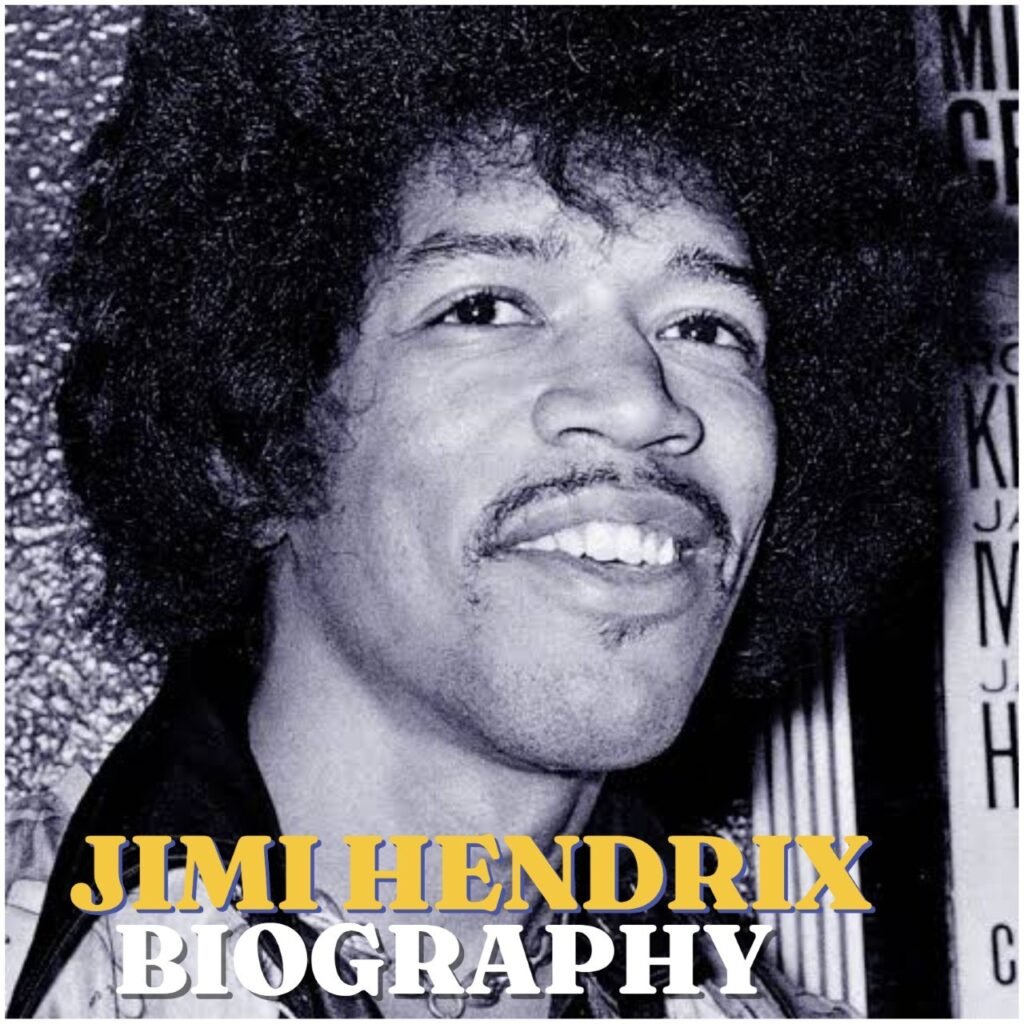
Hendrix was commonly reported to have stood approximately 5 feet 11 inches (180 cm) tall. He was known for his distinctive facial features, expressive eyes, thick curly hair, and memorable fashion choices. His stage appearance often included colourful shirts, patterned jackets, scarves, headbands, and statement accessories that reflected the expressive fashion culture of the 1960s. His appearance was an important part of his stage identity, but it was his musicianship, imagination, and ability to connect with audiences that made him an enduring icon.
Regarding religion, Hendrix grew up in a Christian-influenced family and was exposed to religious traditions during his childhood. However, his personal religious beliefs as an adult are not easily reduced to a single, consistently documented affiliation. His lyrics and artistic interests sometimes explored spiritual and philosophical themes, but it would be inaccurate to assign him a definite adult religious identity without stronger evidence.
Social Media Presence
Jimi Hendrix did not live in the age of social media, but his official online presence allows his music, photographs, recordings, and history to reach audiences around the world. The official Jimi Hendrix website and estate-managed social media accounts share archival material, news about reissues, anniversary celebrations, exhibitions, and information about projects related to his music.
On Instagram, fans can look for the official account under the handle @jimihendrix, which is associated with the continuing promotion of his work and legacy. His online presence is managed in a posthumous context, rather than being a personal account operated by Hendrix himself. Through these digital platforms, new generations can discover his classic songs, watch historic performances, learn about his instruments, and follow developments concerning exhibitions and previously unreleased recordings.
Social media has also helped preserve Hendrix’s relevance in contemporary music culture. Clips of his Woodstock performance, live guitar solos, interviews, photographs, and studio recordings continue to circulate online. These platforms make it easier for younger listeners to explore his influence on rock, blues, funk, and psychedelic music, ensuring that his work remains accessible beyond the audiences who experienced his career firsthand.
Jimi Hendrix Net Worth
Jimi Hendrix’s net worth at the time of his death is difficult to establish with complete accuracy because his estate, recording contracts, royalties, expenses, and business arrangements have been subject to different valuations over the years. During his lifetime, Hendrix earned money through record sales, live performances, songwriting, publishing arrangements, and other professional activities. His rapid rise to fame brought considerable commercial success, although the financial arrangements behind his career were complex and did not necessarily reflect the scale of his cultural influence.
His music has continued to generate revenue through album sales, streaming, licensing, merchandise, reissues, and the commercial use of his recordings. The continuing demand for his music means that the value of his catalogue and associated rights extends far beyond the earnings he personally received during his lifetime. Official releases, including archival concerts and previously unheard recordings, also contribute to the ongoing commercial life of his work.
Although online estimates of Hendrix’s net worth vary widely, there is no single publicly verified figure that should be treated as a definitive measure of his estate’s present value. His financial legacy is better understood through the lasting commercial demand for his music and the continued work involved in managing his catalogue. Ultimately, his importance cannot be measured by money alone: his influence on popular music, guitar performance, and recording techniques is one of the most valuable parts of his legacy.
Legacy and Influence on Music
Jimi Hendrix transformed the electric guitar from an instrument associated primarily with conventional melody and accompaniment into a powerful tool for experimentation and emotional expression. By combining distortion, feedback, unusual tuning approaches, controlled sustain, and expressive playing techniques, he expanded the range of sounds available to rock musicians. His work influenced generations of guitarists, including artists in hard rock, heavy metal, blues, funk, and alternative music. Musicians continue to study his recordings to understand how he combined technical skill with spontaneity and a distinctive musical imagination.
His albums remain central to the history of rock music. Are You Experienced, Axis: Bold as Love, and Electric Ladyland are widely regarded as landmark recordings because they combined memorable songwriting with ambitious production and sonic experimentation. His performances at Monterey and Woodstock have also become enduring parts of popular culture, demonstrating how a live musician can reshape a song or performance through interpretation and improvisation. His version of “The Star-Spangled Banner” at Woodstock remains especially significant because it turned a familiar national anthem into a striking musical statement during a period of political and social tension.
Hendrix’s influence extends beyond his guitar technique. He helped challenge racial and musical boundaries at a time when the music industry often restricted how Black artists were presented and marketed. His work connected blues traditions with psychedelic rock and other musical styles, demonstrating the creative possibilities of blending influences without losing individual identity. Museums, archival projects, commemorations, and new releases continue to preserve his history. The 2026 tributes and archival releases further illustrate that Hendrix is not simply remembered as a musician from the past; he remains an active influence on the way music is played, recorded, discussed, and appreciated today.
Conclusion
Jimi Hendrix remains one of the greatest and most influential guitarists in music history. From his difficult childhood in Seattle to his rapid rise to international fame, his journey demonstrated the power of creativity, persistence, and artistic independence. Through songs such as “Purple Haze,” “Hey Joe,” “All Along the Watchtower,” and “Voodoo Child (Slight Return),” he created a distinctive musical language that continues to inspire performers and listeners more than five decades after his death. His career was tragically short, but his influence has endured through his recordings, performances, and the musicians who continue to learn from his work. As new releases, exhibitions, and commemorations bring his story to wider audiences, Jimi Hendrix’s place in music history remains secure.
Frequently Asked Questions About Jimi Hendrix
Who was Jimi Hendrix?
Jimi Hendrix was an American guitarist, singer, and songwriter widely regarded as one of the most influential electric guitarists in music history. He became internationally famous in the 1960s for his innovative guitar techniques, distinctive sound, and energetic performances.
What was Jimi Hendrix’s real name?
Jimi Hendrix was born Johnny Allen Hendrix on November 27, 1942. His father later changed his name to James Marshall Hendrix, and he became internationally known as Jimi Hendrix.
When was Jimi Hendrix born?
Jimi Hendrix was born on November 27, 1942, in Seattle, Washington, United States.
How old was Jimi Hendrix when he died?
Jimi Hendrix was 27 years old when he died on September 18, 1970, in London, England.
What caused Jimi Hendrix’s death?
The official inquest concluded that Hendrix died from inhalation of vomit due to barbiturate intoxication. His death occurred in London in September 1970.
Was Jimi Hendrix married?
No. Jimi Hendrix never married. He had romantic relationships during his lifetime, including his relationship with Kathy Etchingham, but he had no publicly established children.
Did Jimi Hendrix have children?
There are no publicly established children of Jimi Hendrix. He never married, and claims about possible descendants should not be treated as confirmed without reliable evidence.
What was Jimi Hendrix’s most famous song?
Some of his best-known songs include “Purple Haze,” “Hey Joe,” “The Wind Cries Mary,” “Voodoo Child (Slight Return),” and “All Along the Watchtower.” His Woodstock performance of “The Star-Spangled Banner” is also among his most famous musical moments.
What band was Jimi Hendrix part of?
Hendrix became internationally famous as the frontman of the Jimi Hendrix Experience, which included bassist Noel Redding and drummer Mitch Mitchell. He later performed with the Band of Gypsys, featuring bassist Billy Cox and drummer Buddy Miles.
What were Jimi Hendrix’s most famous albums?
His most celebrated albums include Are You Experienced (1967), Axis: Bold as Love (1967), Electric Ladyland (1968), and Band of Gypsys (1970).
What was Jimi Hendrix’s net worth?
There is no single publicly verified figure that accurately establishes Hendrix’s net worth at the time of his death or the present value of his estate. His catalogue continues to generate income through recordings, royalties, licensing, merchandise, and archival releases.
Was Jimi Hendrix religious?
Hendrix grew up in a Christian-influenced family, but his personal religious beliefs as an adult are not sufficiently documented to assign him a definite religious affiliation with confidence.
What was Jimi Hendrix’s nationality and ethnicity?
Jimi Hendrix was American and was of African American ancestry, with family roots that included Cherokee heritage through his maternal family.
Why is Jimi Hendrix considered one of the greatest guitarists ever?
Hendrix is celebrated for expanding the possibilities of the electric guitar through distortion, feedback, improvisation, and inventive studio techniques. His ability to combine blues, rock, psychedelia, and emotional expression influenced generations of musicians.
What is the latest news about Jimi Hendrix in 2026?
In 2026, Hendrix’s legacy has received renewed attention through the release of Magic Boy: The Jimi Hendrix Experience Live at Berkeley (First Show), the Ronnie Wood: The Jimi Hendrix Portraits exhibition at Handel Hendrix House in London, and the dedication of “Jimi Hendrix Way” in New York City. These developments continue to celebrate his contribution to music and preserve his history for new audiences.