
Who Was Harshad Mehta? A Look at His Life and Legacy
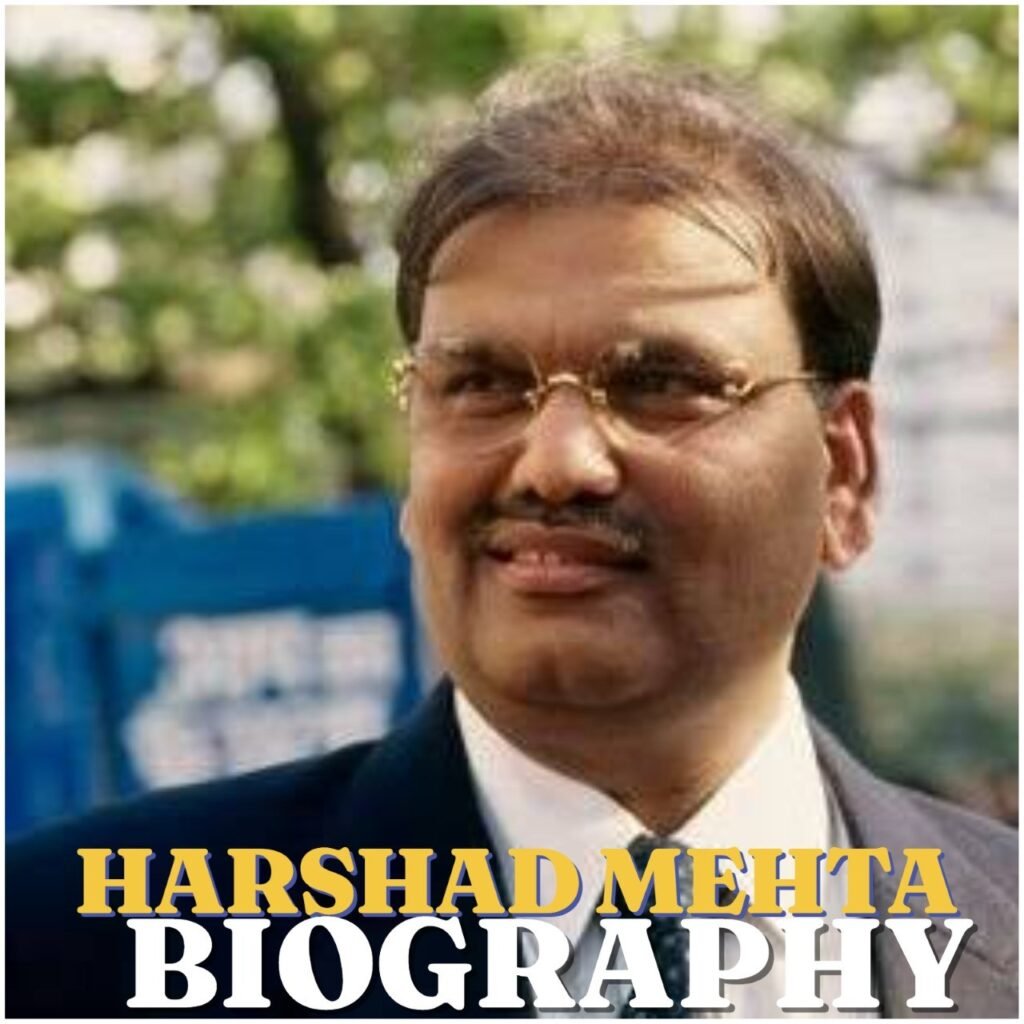
Harshad Shantilal Mehta was one of the most famous and controversial stockbrokers in Indian financial history. Known as the Big Bull of Dalal Street, he rose from a modest background to become a powerful name in India’s stock market. His bold investments, confidence and luxurious lifestyle attracted widespread attention during the late 1980s and early 1990s. For many investors, he represented the possibility of making enormous wealth through the stock market.
However, Mehta’s success did not last. In 1992, a major financial scandal exposed serious irregularities in banking transactions and revealed how funds meant for securities deals had been diverted into the stock market. The scandal shook public confidence, caused heavy financial losses and exposed weaknesses in India’s banking and regulatory systems. Mehta became the central figure in the controversy, and his reputation changed dramatically.
Although he died in 2001, Harshad Mehta remains a significant figure in India’s financial history. His story has continued to attract attention through books, documentaries, news reports and the popular television series Scam 1992: The Harshad Mehta Story. His life offers a remarkable account of ambition, wealth, influence and the consequences of financial misconduct.
Harshad Mehta’s Early Life and Family Background
Harshad Shantilal Mehta was born on July 29, 1954, in Paneli Moti, a village in present-day Gujarat, India. He came from a modest Gujarati family. His father, Shantilal Mehta, was involved in the textile business. The family later moved to Mumbai before settling in Raipur, where Harshad spent part of his childhood.
Growing up, Mehta enjoyed playing cricket and reportedly represented his school team. His early years were far removed from the wealth and public attention he would experience later. He lived an ordinary life and had to work towards the opportunities he wanted. His journey from a modest family background to the centre of India’s financial world would eventually become one of the most discussed stories in the country’s business history.
As a young man, Mehta moved to Mumbai in search of better opportunities. The city was a major centre for trade, business and finance, offering possibilities for people willing to work their way into the commercial world. Although he did not immediately find success, his determination to improve his financial position eventually led him towards the stock market.
Harshad Mehta’s Education and Academic Qualifications
Harshad Mehta completed his early education in Raipur. He was interested in sports and other activities, but his future would take a different direction. His school years provided the foundation for his later studies and introduced him to the opportunities available beyond his hometown.
After completing secondary education, he enrolled at Lala Lajpatrai College in Mumbai, where he studied commerce. He graduated in 1976 with a Bachelor of Commerce degree. His studies gave him a basic understanding of business and finance, although much of his practical knowledge of the stock market came through professional experience.
Mehta did not become a successful stockbroker immediately after graduation. Instead, he took several jobs and gradually learned how businesses operated. These early experiences helped him understand commercial relationships, financial transactions and the importance of building professional connections. Over time, his interest in shares grew, leading him into the competitive world of stockbroking.
Harshad Mehta’s Career: How He Became the Big Bull of Dalal Street
Harshad Mehta’s Early Career and First Jobs
After graduating, Harshad Mehta explored different employment opportunities. He worked in sales and other commercial positions before joining the insurance industry. One of his early jobs was as a dispatch clerk at New India Assurance Company.
Although the position was modest, it gave him valuable exposure to professional life and business operations. During this period, he became increasingly interested in the stock market. He began studying how shares were traded, how prices moved and how investors made decisions. His curiosity gradually developed into a serious interest in stockbroking.
Mehta eventually entered the securities market and began building relationships with brokers, investors and financial institutions. His early years in the industry involved learning how the market worked and identifying opportunities that could help him grow. This experience laid the foundation for his rise on Dalal Street.
How Harshad Mehta Built His Reputation in the Indian Stock Market
During the 1980s, Mehta became increasingly active in India’s stock market. He established himself as a stockbroker and developed a reputation for making large investments in selected companies. His confidence and willingness to take substantial financial risks attracted attention from investors and other market participants.
His rise coincided with a period of change in India’s financial sector. As interest in private investment grew, more people began exploring the stock market as a way to build wealth. Mehta became one of the most visible figures in this growing investment culture.
He was particularly known for aggressively buying shares and supporting companies whose stock prices were rising. His investment activities attracted public interest, and many investors followed his market moves in the hope of making similar profits. His growing influence earned him the nickname Big Bull, a title that reflected his reputation as an aggressive and influential market player.
The 1992 Harshad Mehta Securities Scam Explained
Harshad Mehta’s career reached its most controversial point in 1992, when a major securities scandal came to light. Investigations revealed that funds connected to interbank transactions had been diverted into the stock market through irregular banking arrangements.
At the time, banks used ready-forward transactions to buy and sell government securities. These arrangements allowed banks to manage short-term financial needs. Brokers sometimes acted as intermediaries, helping banks complete transactions. However, weaknesses in the system created opportunities for irregularities involving money and banking documents.
Mehta was found to have exploited these weaknesses. Investigations established that questionable bank receipts were used to obtain funds from banks, which were then channelled into share purchases. The additional buying pressure helped drive up the prices of selected stocks and created an artificial impression of strong market demand.
The scandal became public after journalist Sucheta Dalal reported irregularities involving Mehta’s financial activities. Her reporting raised questions about the source of the money behind his enormous stock market investments. As investigations expanded, several banks and financial institutions came under scrutiny.
The consequences were serious. Investor confidence fell, share prices dropped and the scandal exposed major weaknesses in India’s banking and securities systems. Government agencies and parliamentary bodies investigated the matter, making it one of the most significant financial scandals in modern Indian history.
Harshad Mehta’s Arrest, Investigation and Legal Battles
Following the exposure of the scandal, Harshad Mehta became the subject of investigations by the Central Bureau of Investigation and other authorities. He was arrested in 1992 and faced several criminal cases connected to the securities transactions. Other individuals, including members of his family, were also investigated in related matters.
Mehta denied some allegations and attempted to defend himself through legal proceedings and public statements. One widely reported episode involved his claim that he had paid money to the then Prime Minister, P. V. Narasimha Rao, in exchange for political protection. Rao denied the allegation, and the claim was never established as fact.
The investigations revealed serious weaknesses in the way financial transactions were monitored and recorded. Authorities examined how banking documents were issued, how securities deals were handled and how brokers could gain access to funds that were supposed to remain within the banking system.
Mehta was convicted in some cases, while several other proceedings remained unresolved at the time of his death. His once-powerful position in the stock market had disappeared, and his assets became subject to legal restrictions and recovery proceedings.
Harshad Mehta’s Life and Career After the 1992 Scam
Despite the damage to his reputation, Mehta attempted to return to the financial world. He continued making public appearances and tried to present himself as someone who still understood the stock market. In the late 1990s, he reportedly offered market advice through a website and newspaper column.
However, his efforts to rebuild his career were overshadowed by the investigations and legal cases connected to the 1992 scandal. He also faced further allegations involving market manipulation in relation to selected companies. His activities remained under scrutiny, and regulators eventually barred him from dealing in securities.
The contrast between his earlier popularity and later circumstances was striking. He had once been celebrated by investors who believed he could predict market movements. By the end of his life, he was dealing with serious legal and financial difficulties.
Why Harshad Mehta Is Still Trending: The Popularity of Scam 1992
Harshad Mehta’s story continues to attract attention because it combines ambition, wealth, controversy and one of India’s most significant financial scandals. His journey from ordinary employment to the centre of Dalal Street made him a familiar name even among people who had little knowledge of stock trading.
Interest in his life increased further after the release of Scam 1992: The Harshad Mehta Story in 2020. The SonyLIV series, starring Pratik Gandhi as Mehta, introduced his story to a new generation. It explored his ambitions, business relationships, family life and involvement in the securities scandal. It also brought renewed attention to the journalists and investigators who helped expose the irregularities.
The series encouraged viewers to learn more about the real events behind the drama. Searches about Mehta’s family, wealth, investments, legal battles and death became popular again. His story remains relevant because it raises important questions about financial oversight, investor protection and transparency in banking and securities markets.
Harshad Mehta’s Wife, Marriage and Children
Harshad Mehta was married to Jyoti Mehta. She shared his life during his rise to wealth and the difficult years that followed the 1992 securities scandal. Although Mehta’s financial activities attracted considerable public attention, his family generally maintained a private lifestyle.
The couple had a son named Atur Mehta. Unlike his father, Atur has largely stayed away from public attention. Information about his personal life and activities is limited, although the family has occasionally appeared in news reports connected to legal and financial matters arising from Harshad’s estate.
After Mehta’s death, his family continued to deal with complicated legal issues involving assets, liabilities and claims connected to the scandal. His brother, Ashwin Mehta, became involved in several legal proceedings concerning the family’s financial affairs. These developments showed that the consequences of the scandal extended far beyond Harshad’s lifetime.
Harshad Mehta’s Age, Religion, Caste, Nationality and Physical Appearance
Harshad Mehta was born on July 29, 1954, and died on December 31, 2001. He was 47 years old at the time of his death. Although his life lasted less than five decades, his name remains firmly connected to one of India’s most important financial scandals.
He was Indian by nationality and came from a Gujarati family. Some biographical accounts identify his family as Jain, although detailed information about his personal religious practices is limited. His caste has not been consistently established in reliable public accounts, so it would be inaccurate to assign him a specific caste without stronger evidence.
Mehta was recognised for his confident public presence and carefully presented appearance. During his years of success, he was associated with expensive clothing, luxury cars and an impressive home in Mumbai. His lifestyle became part of his public image and contributed to the fascination surrounding his rise.
Harshad Mehta’s Social Media Accounts and Online Presence
Harshad Mehta lived before social media became a major part of everyday life. He did not have verified Instagram, Facebook, X or other modern social media accounts. During his lifetime, newspapers, television interviews and financial reports were the main ways the public followed his activities.
Today, his name appears across social media through discussions of the 1992 securities scam, clips from Scam 1992 and posts about India’s stock market history. These accounts and posts are generally maintained by other people and should not be mistaken for official profiles belonging to Mehta.
Harshad Mehta’s Net Worth: How Rich Was the Big Bull?
Harshad Mehta became famous for the enormous wealth and luxurious lifestyle associated with his career. At the height of his success, he owned expensive properties and luxury vehicles and was known for making large investments in the stock market. His financial influence was so significant that his name became closely connected with the dramatic market activity of the early 1990s.
However, determining his exact net worth is difficult. The securities scandal involved complex transactions, disputed assets, legal claims and substantial financial liabilities. Several of his properties and other assets were attached during investigations, while courts and appointed authorities dealt with claims from creditors and affected institutions.
For this reason, widely circulated estimates of his personal fortune should be treated cautiously. There is no consistently verified figure that accurately represents his net worth at the time of his death. His financial story is better understood through the scale of the scandal, the assets attached by authorities and the legal claims that continued after his death.
Harshad Mehta’s Death: What Happened to the Big Bull?
Harshad Mehta died on December 31, 2001, at Thane Civil Hospital in Maharashtra, India. He was 47 years old and was in judicial custody following his arrest in connection with allegations involving missing shares. Reports at the time stated that he developed chest pain and was taken to the hospital, where he died following a heart attack.
His death brought an end to the criminal proceedings against him personally, but it did not resolve the financial matters connected to the scandal. His family and the authorities continued dealing with claims involving attached assets, unpaid amounts and other legal disputes.
The scandal also left important questions about India’s financial system. How could such large sums move through the banking system without effective checks? Why were irregularities not detected earlier? These questions helped drive discussions about stronger regulation, better banking procedures and greater accountability among financial institutions.
Harshad Mehta’s Legacy and Impact on the Indian Stock Market
Harshad Mehta’s legacy remains complicated. He is remembered as a stockbroker who achieved extraordinary visibility during a period of rapid change in India’s financial markets. His rise showed how quickly a person could gain influence in a growing investment culture. At the same time, the 1992 securities scam exposed the dangers of weak oversight and the misuse of financial systems.
The scandal became an important turning point in discussions about India’s banking and securities regulations. It increased pressure for stronger monitoring, improved transaction procedures and greater accountability among financial institutions. The Securities and Exchange Board of India, established in 1988, gained statutory powers in 1992. The wider regulatory environment continued to develop as authorities worked to address weaknesses exposed by the scandal.
His story also remains part of popular culture. Scam 1992: The Harshad Mehta Story introduced the events to a new audience and encouraged public interest in India’s financial history. The series helped viewers understand complicated banking transactions while reminding them that the real scandal involved many people and institutions, not just one stockbroker.
Ultimately, Harshad Mehta is remembered for both his rise and his downfall. His life remains a cautionary example of what can happen when financial power operates without sufficient accountability. His name continues to appear in discussions about market manipulation, banking failures and the importance of protecting investors.
Conclusion: The Rise and Fall of Harshad Mehta
Harshad Mehta’s life remains one of the most remarkable and controversial stories in India’s financial history. He moved from ordinary employment to become the famous Big Bull of Dalal Street, gaining wealth and influence before the 1992 securities scam destroyed his reputation. His death in 2001 did not end the legal and financial consequences of the scandal, which continued to affect his family and India’s financial institutions. More than two decades later, his story remains a reminder that financial success must be built on transparency, integrity and strong regulation.
Frequently Asked Questions About Harshad Mehta
Who was Harshad Mehta?
Harshad Mehta was an Indian stockbroker who became famous during the late 1980s and early 1990s. Popularly known as the Big Bull of Dalal Street, he became the central figure in India’s 1992 securities scam.
When was Harshad Mehta born?
Harshad Mehta was born on July 29, 1954, in Paneli Moti, a village in present-day Gujarat, India.
How old was Harshad Mehta when he died?
He was 47 years old when he died on December 31, 2001.
What was Harshad Mehta famous for?
He was famous for his rapid rise in the Indian stock market and his involvement in the 1992 securities scam, which exposed serious weaknesses in banking and financial transactions.
Why was Harshad Mehta called the Big Bull?
He earned the nickname because of his aggressive stock market investments and his reputation for driving up the prices of selected shares.
What was the Harshad Mehta scam?
The 1992 securities scam involved the misuse of banking transactions and questionable bank receipts to obtain funds that were diverted into the stock market. The scandal contributed to artificially inflated share prices and caused major financial disruption when it was exposed.
Who exposed the Harshad Mehta scam?
Journalist Sucheta Dalal played a major role in exposing the irregularities through her reporting. Her investigation raised questions about the source of the funds behind Mehta’s large stock market investments.
Who was Harshad Mehta’s wife?
Harshad Mehta was married to Jyoti Mehta.
Did Harshad Mehta have children?
Yes. He had a son named Atur Mehta.
What was Harshad Mehta’s educational qualification?
He earned a Bachelor of Commerce degree from Lala Lajpatrai College in Mumbai in 1976.
How did Harshad Mehta die?
He died after suffering a heart attack at Thane Civil Hospital on December 31, 2001, while in judicial custody.
What was Harshad Mehta’s net worth?
His exact net worth has not been reliably established. His assets and financial affairs became tied up in legal proceedings and recovery claims following the 1992 securities scam.
Is Scam 1992 based on Harshad Mehta’s life?
Yes. Scam 1992: The Harshad Mehta Story is a television series based on his rise in the stock market and the 1992 securities scandal. Pratik Gandhi portrays Mehta in the series.
What happened to Harshad Mehta’s family after his death?
His family continued to face legal and financial proceedings connected to the assets and liabilities arising from the securities scandal. His brother, Ashwin Mehta, was involved in legal matters concerning the family’s financial affairs.