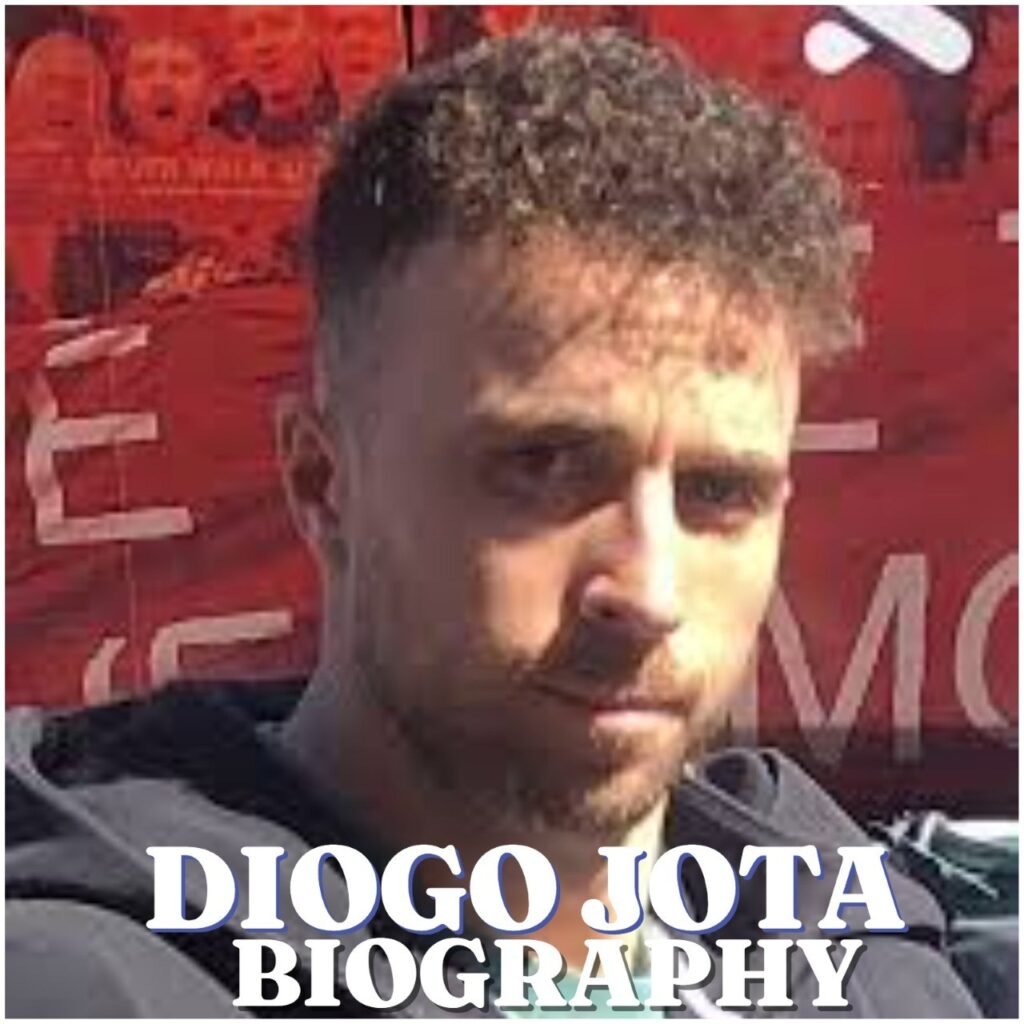

Beyond his achievements on the pitch, Jota was known to supporters as a dedicated teammate and a family man who valued his life away from football. His journey reflected the importance of patience, hard work and seizing opportunities, as he progressed through Portuguese football before establishing himself in England’s highly competitive Premier League. He became particularly popular among Liverpool supporters for his direct attacking style, work rate and memorable goals, while his performances for Portugal helped strengthen his reputation as a dependable international forward.
Tragically, Jota’s life came to an end on 3 July 2025, when he died in a car crash in Spain alongside his younger brother, André Silva. He was only 28 years old and had recently married his longtime partner, Rute Cardoso. His death shocked the football community, prompting tributes from teammates, clubs, supporters and football organisations around the world. As of October 2026, his memory continues to be honoured through Liverpool’s permanent retirement of his No. 20 shirt, the Forever 20 memorial at Anfield, and the release of Forever in Our Hearts, a book celebrating his life and influence. His story remains one of sporting success, personal devotion and a legacy that continues to inspire football fans.
Diogo Jota’s Early Life and Family Background
Diogo José Teixeira da Silva, popularly known as Diogo Jota, was born on 4 December 1996 in Portugal. He grew up in a country where football is an important part of everyday life, with local clubs and youth academies providing opportunities for talented young players to develop their abilities. From an early age, Jota showed an interest in the game and began working towards becoming a professional footballer. His early experiences helped him develop the technical skills, determination and competitive attitude that would later become important features of his playing style.
Jota grew up in a Portuguese family and maintained a close connection with his relatives throughout his life. His parents, Isabel and Joaquim Silva, were part of his family background, while his younger brother, André Silva, also pursued a career in football. The brothers shared a connection through the sport, although they developed their professional careers at different stages and with different clubs. Jota’s family life remained important to him even as his football career took him away from Portugal and into the demanding world of professional football in England.
His early football development involved learning the fundamentals of the game, improving his movement and finishing, and competing against other young players who shared similar ambitions. Rather than becoming an international star overnight, Jota progressed through the stages of youth and senior football, gaining experience and learning from each opportunity. His journey eventually took him from Portuguese football to Spain and then England, where he established himself as a forward capable of competing at a high level. These early experiences formed the foundation of a career that would bring him major club honours and international recognition.
Diogo Jota’s Education
Diogo Jota’s education took place in Portugal, where he balanced his schooling with his growing commitment to football. As is common for young athletes entering organised football, developing his sporting ability required time for training, matches and travel in addition to his ordinary educational responsibilities. His early years were therefore shaped by the challenge of combining formal education with the discipline needed to progress through youth football.
As Jota advanced in the sport, football became an increasingly important part of his daily routine. Training sessions, competitive fixtures and the demands of professional development required commitment, physical preparation and careful time management. Although detailed public information about the names of all the schools he attended and his exact academic qualifications is limited, his progression through Portuguese football demonstrates how seriously he pursued his sporting ambitions from a young age.
Jota’s professional journey also provided a different kind of education through practical experience. Playing alongside experienced footballers, working under different managers and adapting to new teams helped him develop tactical awareness, professionalism and resilience. His move from Portugal to England exposed him to different footballing environments and increasingly demanding competitions. While he became widely known for his sporting achievements rather than academic accomplishments, his career illustrates how discipline, continuous learning and the willingness to adapt can contribute to long-term development.
Diogo Jota’s Football Career and Professional Achievements
Diogo Jota’s professional career began in Portuguese football, where he developed into a promising attacking player. He played for Paços de Ferreira and attracted attention through his performances, showing the pace, finishing and attacking awareness that would become important characteristics of his game. His development led to a move to Atlético Madrid, but he did not make a competitive first-team appearance for the Spanish club. Instead, loan spells provided opportunities to gain match experience and continue improving, including a return to Portugal with FC Porto.
Jota’s career took a major step forward when he joined Wolverhampton Wanderers, initially on loan from Atlético Madrid before the move became permanent. At Wolves, he became an important part of the team’s attack and helped the club win the 2017–2018 EFL Championship, securing promotion to the Premier League. His performances in the Championship and the top flight demonstrated that he could adapt to different levels of competition. He was valued for his ability to play across the forward line, press defenders, find space in the penalty area and contribute goals in important matches. His time at Wolves helped establish him as one of the Premier League’s promising attacking players.
In September 2020, Jota joined Liverpool FC, beginning a significant chapter of his career under manager Jürgen Klopp. He adapted well to Liverpool’s high-intensity playing style and became an important attacking option alongside the club’s other forwards. His ability to play as a central striker or from wider positions gave the team tactical flexibility, while his quick decisions and movement often allowed him to make an impact even when he was not playing for the full 90 minutes. Across his Liverpool career, he made 182 appearances and scored 65 goals in all competitions, contributing to the club’s success in domestic competitions.
During his time at Liverpool, Jota won major honours, including the Premier League title in the 2024–2025 season, the FA Cup and the League Cup. His performances in high-pressure matches helped him build a strong relationship with supporters, who appreciated his work rate and ability to score decisive goals. He also represented Portugal at international level, competing in major tournaments and contributing to the national team’s attacking options. His international career included Portugal’s UEFA Nations League triumphs in 2019 and 2025, achievements that placed him among the players associated with an important period in Portuguese football.
Jota’s career was especially notable because he succeeded in several different footballing environments. He developed in Portugal, gained experience through opportunities linked to Atlético Madrid and FC Porto, became a leading player for Wolves and then contributed to a Liverpool side competing for major trophies. His progress was built on consistent improvement rather than a single breakthrough moment. By the time of his death in July 2025, he had established himself as a respected forward whose club and international achievements secured his place in the memories of supporters.
Why Diogo Jota’s Death Shocked the Football World
Diogo Jota’s death became one of the most devastating stories in football in 2025 because it occurred when he was still in his prime as a professional athlete. On 3 July 2025, Jota died in a car crash in Spain’s Zamora province alongside his younger brother, André Silva. Jota was 28 years old, while André was 25. The news shocked Liverpool supporters, the Portuguese football community and fans across the world, many of whom had followed Jota’s career through his achievements in England and his appearances for the national team.
The tragedy was made even more painful by the timing. Jota had recently married his longtime partner, Rute Cardoso, on 22 June 2025, and was a father of three children. He had achieved significant success in professional football and was still at an age when many players continue to reach new milestones in their careers. His sudden death therefore represented not only the loss of a talented footballer but also the loss of a husband, father, son, brother, friend and teammate.
Tributes followed from Liverpool FC, Portugal’s football community, former clubs, fellow players and supporters. The response reflected the influence Jota had built through his performances and personal relationships during his career. Liverpool later retired the No. 20 shirt across its teams in his honour, while a permanent memorial outside Anfield gave fans a place to remember both Jota and his brother. The continuing tributes demonstrate how deeply his passing affected the football community and why his story remains significant beyond the statistics of his playing career.
Diogo Jota’s Personal Life, Wife and Children
Diogo Jota’s personal life was centred on his family, particularly his relationship with Rute Cardoso, his longtime partner who later became his wife. The couple had been together for several years before getting married on 22 June 2025. Their wedding marked an important moment in their relationship, and photographs and messages shared around the occasion reflected their happiness as they celebrated their marriage. Sadly, their time as a married couple was cut short when Jota died less than two weeks later, on 3 July 2025.
Jota and Rute Cardoso had three children together. Although his career involved travelling, training, matches and the demands of playing professional football at the highest level, he maintained a strong connection with his family. He generally kept his children’s lives private, choosing not to make every aspect of his home life public. His relationship with Rute and their children formed an important part of his identity away from the pitch, and tributes following his death frequently acknowledged the devastating loss experienced by his family.
Jota also had a close relationship with his parents, Isabel and Joaquim Silva, and his younger brother, André Silva. André was also a footballer, and the brothers shared a connection through their involvement in the sport. Both brothers died in the same car crash in Spain on 3 July 2025, making the tragedy particularly painful for their family. Jota’s family life remains a central part of how he is remembered, alongside his achievements as a professional footballer.
Diogo Jota’s Age, Religion, Nationality, Tribe, Height and Physical Appearance
Diogo Jota was born on 4 December 1996 and died on 3 July 2025 at the age of 28. He was a Portuguese national who built his professional career in Portugal, Spain and England before becoming widely recognised for his performances with Liverpool FC and the Portugal national team. His career took him from the early stages of Portuguese football to the Premier League, where he competed against some of the world’s best players.
Jota’s religion was not reliably confirmed in widely available public information, so it would be inaccurate to assign him a particular religious belief without a trustworthy statement from him or his family. Similarly, his ethnic or tribal identity was not clearly established in reliable public biographical records. His nationality, however, was Portuguese, and he represented Portugal in international football. These distinctions are important because nationality, ethnicity and religious belief are different aspects of a person’s identity.
Jota was approximately 1.78 metres (5 feet 10 inches) tall. He had an athletic build suited to the physical and technical demands of professional football. His playing style was characterised by quick movement, sharp changes of direction, close control and an ability to find space around defenders. Rather than relying solely on physical strength, he combined agility, timing and positional awareness to create scoring opportunities. His physical attributes and tactical intelligence allowed him to operate in several attacking positions and contribute to his teams in different ways.
Diogo Jota’s Social Media Presence
Diogo Jota maintained a public profile on social media, where supporters could follow aspects of his football career, training, professional milestones and personal celebrations. His Instagram account was associated with the handle @diogoj_18, through which he connected with fans and shared selected moments from his life. Social media helped supporters follow his progress at Liverpool and with the Portuguese national team, particularly during important matches and trophy celebrations.
His online presence also reflected the connection between modern footballers and their supporters. Through posts and photographs, fans could see moments from his professional journey as well as occasional glimpses of his family life. Nevertheless, Jota generally maintained a degree of privacy around his home life, especially concerning his children. His social media accounts became part of the wider public record of his career, preserving memories of important milestones and celebrations.
Following his death, social media became a major space for tributes from supporters, teammates, clubs and football organisations. Fans shared photographs, match highlights, messages of condolence and memories of his performances, while Liverpool supporters continued to honour his No. 20 shirt. His online legacy remains connected to the affection people felt for him as a footballer and the sadness surrounding his untimely passing. The availability and management of individual social media accounts can change over time, so the handle above should be checked directly if a current profile is needed.
Diogo Jota’s Net Worth, Salary and Sources of Income
Diogo Jota earned his wealth primarily through his professional football career. His contracts with clubs including Wolverhampton Wanderers and Liverpool FC provided him with substantial income, while performance-related bonuses and potential commercial arrangements could also contribute to a player’s overall earnings. As his career progressed and he became an established Premier League forward, his professional value and earning opportunities increased. However, his complete financial records were not publicly available, meaning that any figure presented for his personal net worth must be treated as an estimate rather than an independently verified total.
Some online estimates have placed Jota’s net worth in the range of $12 million to $20 million, with figures around $18 million sometimes cited. This range is an approximate assessment based on his career at major football clubs and the earning opportunities available to an established Premier League player. It should not be interpreted as a confirmed statement of his bank balance, investments or total assets, since public estimates may differ in how they account for taxes, spending, property, investments and other financial commitments.
Jota’s main source of income was football, but professional athletes can also earn money through sponsorships, advertising, image rights and other commercial opportunities. The extent of his individual earnings from these sources was not fully documented in reliable public records. His financial success was therefore closely tied to his professional achievements and the contracts he secured during his career. Although his net worth attracted public interest, his lasting significance is more accurately measured through his footballing accomplishments, his contribution to the teams he represented and the impact he made on supporters.
Diogo Jota’s Legacy and Lasting Impact on Football
Diogo Jota left behind a remarkable legacy in professional football, remembered for his clinical finishing, intelligent movement, versatility and ability to score crucial goals. From his early days at Paços de Ferreira in Portugal to his successful spells with Wolverhampton Wanderers and Liverpool FC, he demonstrated how determination and consistent improvement could lead to success at the highest level. His contributions helped Wolves win the English Championship and secure promotion to the Premier League, while his performances at Liverpool made him an important member of a team that won major domestic trophies, including the 2024–2025 Premier League title. He also represented Portugal at major international competitions and was part of the national team that won the UEFA Nations League in 2019 and 2025. These achievements established Jota as one of Portugal’s notable footballers of his generation.
Beyond his trophies and statistics, Jota’s legacy is closely connected to the relationships he built with his family, teammates and supporters. His commitment to Liverpool earned him a special place in the hearts of fans, who celebrated his goals with a dedicated chant and embraced his iconic No. 20 shirt. Following his death alongside his younger brother, André Silva, on 3 July 2025, Liverpool retired his number across all its teams. In July 2026, the club unveiled the permanent Forever 20 memorial outside Anfield, honouring both brothers and giving supporters a place to remember them. The memorial reflects the deep connection between Jota and the Liverpool community, where his contribution to the club remains part of its modern history.
As of October 2026, Jota’s influence continues through tributes, remembrance initiatives and efforts intended to inspire future generations of footballers. Liverpool’s release of Forever in Our Hearts, a biography written by José Delgado and featuring memories from Jota’s family, friends, teammates and coaches, provides a personal account of the man behind the football achievements. Profits received by the club from the book will support a grassroots football programme established in his name through the LFC Foundation. Through these efforts, Jota’s story will continue to reach young players and supporters, preserving his memory as a talented footballer, devoted family man and much-loved member of the Liverpool family.
Conclusion
Diogo Jota’s biography is a story of talent, determination, achievement and a legacy that continues to inspire football fans around the world. From his early beginnings in Portugal to his successful career with Wolverhampton Wanderers, Liverpool FC and the Portuguese national team, he proved himself as a gifted forward whose goals, versatility and commitment made him an important figure in modern football. Although his life was tragically cut short on 3 July 2025 at the age of 28, his achievements on the pitch and the memories he created with his family, teammates and supporters remain deeply cherished. Liverpool’s retirement of his No. 20 shirt, the Forever 20 memorial at Anfield and the 2026 release of Forever in Our Hearts reflect the lasting impact he made on the club and its community. Diogo Jota will be remembered not only for his footballing success but also for the person behind the player, whose story continues to touch lives long after his passing.
Frequently Asked Questions About Diogo Jota
Who was Diogo Jota?
Diogo Jota was a Portuguese professional footballer best known for playing as a forward for Liverpool FC and the Portugal national team. He was admired for his finishing, intelligent movement, versatility and ability to score important goals.
What was Diogo Jota’s full name?
Diogo Jota’s full name was Diogo José Teixeira da Silva. He became widely known by his football nickname, Diogo Jota.
How old was Diogo Jota when he died?
Diogo Jota was 28 years old when he died on 3 July 2025. He was born on 4 December 1996.
How did Diogo Jota die?
Diogo Jota died in a car crash in the province of Zamora, Spain, on 3 July 2025. His younger brother, André Silva, also died in the accident.
Who was Diogo Jota’s wife?
Diogo Jota’s wife was Rute Cardoso. The couple married on 22 June 2025, shortly before his death, and had three children together.
How many children did Diogo Jota have?
Diogo Jota and his wife, Rute Cardoso, had three children. The family generally kept their children’s lives private.
Which clubs did Diogo Jota play for?
Throughout his professional career, Diogo Jota played for Paços de Ferreira, Atlético Madrid, FC Porto, Wolverhampton Wanderers and Liverpool FC. He also represented Portugal internationally.
How many goals did Diogo Jota score for Liverpool?
Diogo Jota scored 65 goals in 182 appearances across all competitions for Liverpool FC. His goals and attacking contributions helped the club win major trophies, including the 2024–2025 Premier League title.
What trophies did Diogo Jota win during his career?
Jota won several major honours, including the English Championship with Wolverhampton Wanderers, the Premier League, the FA Cup and the League Cup with Liverpool. He was also part of Portugal’s UEFA Nations League-winning squads in 2019 and 2025.
What was Diogo Jota’s jersey number at Liverpool?
Diogo Jota wore the No. 20 shirt at Liverpool. Following his death, the club retired the number across all its teams in honour of him and his contribution to the club.
What was Diogo Jota’s net worth?
Diogo Jota’s exact net worth was not publicly confirmed. Some online estimates placed his wealth in the range of $12 million to $20 million, based on his football salary, bonuses, endorsements and other earnings. These figures should be treated as estimates rather than verified financial records.
What was Diogo Jota’s nationality?
Diogo Jota was Portuguese. He was born in Portugal and represented the country at international level.
How tall was Diogo Jota?
Diogo Jota was approximately 1.78 metres (5 feet 10 inches) tall.
What is Diogo Jota remembered for?
Diogo Jota is remembered for his footballing ability, important goals, determination and contribution to Liverpool and Portugal. His legacy also lives on through the Forever 20 memorial at Anfield and remembrance initiatives that celebrate his life and support future generations of footballers.
Is there a book about Diogo Jota?
Yes. Forever in Our Hearts, written by José Delgado, was released in 2026. The book includes memories and reflections from Jota’s family, teammates, friends and coaches, helping preserve his story beyond his football achievements.