
Introduction
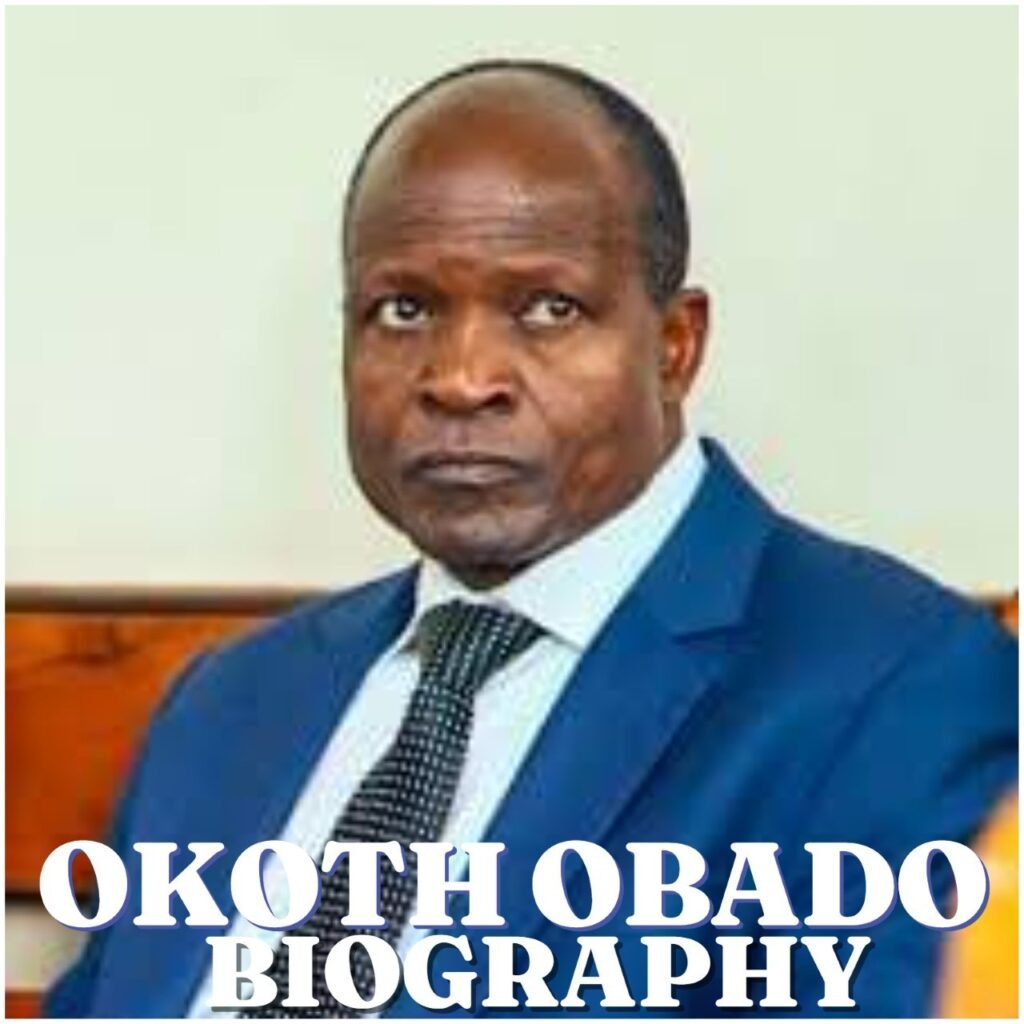
Zachary Okoth Obado is a Kenyan politician whose journey from teaching and business to county leadership made him one of the most recognisable political figures in Migori County. In 2013, he made history by becoming the county’s first governor. He later won a second term, strengthening his influence in the region and establishing himself as a major player in Kenyan politics.
However, Obado’s political success was eventually overshadowed by a murder case that attracted nationwide attention. In September 2018, Rongo University student Sharon Otieno was abducted and killed while seven months pregnant. The investigation led to charges against Obado and two former county officials. After a lengthy trial, the High Court found them guilty in July 2026.
On November 27, 2026, Obado received a 25-year prison sentence for Sharon’s murder. The judgment marked a dramatic turn in the life of a man who had once led an entire county. His biography offers a look at his early life, education, career, political achievements, family and the legal case that changed his public image.
Who Is Okoth Obado?
Okoth Obado is a Kenyan politician and the former governor of Migori County. He served two terms, from 2013 to 2022, after winning the county’s first gubernatorial election and securing re-election four years later.
Before entering politics, he worked as a teacher and became involved in business and the sugar industry. His experience in these fields helped him build relationships across the region and develop a public profile beyond the classroom.
Obado became nationally known for his political career and later for his involvement in the Sharon Otieno murder case. In 2026, the High Court convicted him of murder and sentenced him to 25 years in prison. He subsequently indicated his intention to challenge the conviction and sentence through the appeal process.
Okoth Obado Biography: Quick Facts
| Category | Details |
|---|---|
| Full name | Zachary Okoth Obado |
| Common name | Okoth Obado |
| Birth year | 1957 |
| Nationality | Kenyan |
| Place of origin | Migori County, Kenya |
| Profession | Politician, former teacher and businessman |
| University | Kenyatta University |
| Political position | Former Governor of Migori County |
| Years in office | 2013–2022 |
| Spouse | Helen Obado, according to public reports |
| Children | Reportedly four |
| Known for | Becoming Migori County’s first governor |
| Criminal case | Murder of Sharon Otieno |
| Conviction | July 23, 2026 |
| Prison sentence | 25 years, November 27, 2026 |
Early Life and Family Background
Zachary Okoth Obado was born in 1957 in the Migori region of Kenya. Public information about his exact birth date, childhood and family background is limited. Nevertheless, his roots in the area later became an important part of his political identity.
Obado grew up in a region where farming, education and local businesses played important roles in community life. These activities shaped the economic and social environment in which he began his professional journey. He eventually chose education as his first career, becoming a teacher before moving into business.
Although he later became a powerful political figure, Obado did not begin his career in government. His early professional experiences helped him develop relationships with educators, farmers and businesspeople. These connections became useful when he entered the political arena.
Education and Academic Background
Obado attended St Joseph’s Rapogi Secondary School in Uriri, Migori County. His time there formed part of the educational foundation that prepared him for university.
He later studied at Kenyatta University, where he earned a Bachelor of Education degree. His qualification provided the foundation for his early career as a secondary school teacher.
Obado also pursued postgraduate studies in Strategic Management at Kenyatta University. This additional training strengthened his academic background and gave him knowledge relevant to management, business and organisational leadership.
Career Before Politics: From Teaching to Business
His Early Career as a Teacher
Before becoming a politician, Obado worked as a secondary school teacher. He taught science and served in schools in Kenya, including Rapogi Secondary School and Taranganya Boys High School.
Teaching gave him experience in public service and exposed him to the challenges facing educational institutions. It also allowed him to interact with students, parents, fellow teachers and members of the wider community.
Over time, however, he moved away from the classroom and explored opportunities in business. This decision marked the beginning of a new chapter in his professional life.
His Involvement in the Sugar Industry
Obado became involved in sugarcane farming and the wider sugar industry. The sector was important to many households in western Kenya, where farmers depended on sugarcane production for their livelihoods.
His involvement grew beyond farming and business activities. He later held leadership positions in the former Kenya Sugar Board and became its chairman. This role gave him a wider platform to engage with issues affecting sugar producers and other industry stakeholders.
His experience in the sector also helped him build relationships with influential people in business and public administration. These connections increased his visibility and prepared him for the political opportunities that followed.
Okoth Obado’s Political Career
His First Attempt at Elective Politics
Obado’s political ambitions became more visible before the introduction of county governments. In 2007, he sought the Uriri parliamentary seat through the Orange Democratic Movement (ODM) nomination process. However, he did not secure the party ticket.
His interest in politics continued, and he later turned his attention to the newly created office of county governor. Kenya’s 2010 Constitution introduced devolution and established county governments. The first elections under the new system took place in March 2013.
The creation of the gubernatorial position gave Obado another opportunity to pursue elective office. He entered the Migori race, but disagreements surrounding the ODM nomination process affected his relationship with the party.
Becoming Migori County’s First Governor in 2013
Obado eventually contested the 2013 general election on a People’s Democratic Party (PDP) ticket. He faced strong competition, particularly from candidates associated with ODM, which had considerable political influence in the region.
Despite this challenge, Obado won the election and became Migori County’s first governor. His victory was significant because it demonstrated that a candidate outside the region’s dominant political party could win through local support and grassroots campaigning.
As governor, he became responsible for leading the county administration and overseeing devolved services. These responsibilities included healthcare, agriculture, local infrastructure, county planning and other functions assigned to county governments under Kenya’s Constitution.
His administration operated during the early years of devolution. At the time, counties were still developing their institutions, systems and procedures. Leaders had to establish effective ways to manage public funds and deliver services while responding to growing public expectations.
Winning a Second Term in 2017
Obado sought re-election in the 2017 general election. By then, he had returned to ODM and secured the party’s gubernatorial ticket. His main challenger was Ochilo Ayacko, an experienced politician and former Cabinet minister.
The election attracted considerable attention because of the political competition within Migori County. Obado won the contest and secured a second term, extending his leadership through the 2017–2022 county administration period.
His victory strengthened his position in local politics. However, his relationships with some political figures and sections of the ODM leadership remained complicated. These disagreements reflected the intense competition for influence within the region.
Obado completed his two terms in 2022. Kenya’s Constitution limits governors to two consecutive terms, so he could not seek a third term in the same office.
Leadership, Achievements and Public Controversies
Obado’s time as governor placed him at the centre of Migori County’s development and political affairs. His administration was responsible for implementing county programmes, managing devolved resources and overseeing services that directly affected residents.
His leadership also attracted criticism and public scrutiny. Like several county administrations in Kenya, his government faced questions about public spending, accountability, procurement and the management of county resources.
Obado was also associated with corruption-related investigations and allegations involving his administration. These matters contributed to debates about transparency and the responsibilities of county leaders. However, allegations and investigations must be distinguished from criminal convictions. Each case should be assessed according to its own legal outcome.
The most serious criminal case involving the former governor was the murder of Sharon Otieno. It attracted far greater national attention and eventually resulted in his conviction and imprisonment.
The Sharon Otieno Murder Case: What Happened?
The case involving Sharon Otieno became one of Kenya’s most closely followed criminal proceedings. Sharon was a 26-year-old Rongo University student who was seven months pregnant when she was abducted and murdered in September 2018.
Her disappearance and death caused widespread public concern. Attention soon turned to her reported relationship with the then Migori governor, Okoth Obado. Investigators examined the circumstances surrounding the killing and the people who may have been involved.
Obado was charged alongside his former personal assistant, Michael Juma Oyamo, and former Migori County clerk, Caspal Ajwang Obiero. The prosecution argued that the three men had played different roles in a plan that led to Sharon’s murder.
Obado denied the charge. His defence challenged the prosecution’s case, while the court considered witness testimony, communication records and other evidence presented during the trial.
The proceedings lasted several years and attracted intense public interest. The case was especially significant because it involved a former county governor and the killing of a young pregnant woman.
Okoth Obado’s Murder Conviction in July 2026
On July 23, 2026, the High Court found Obado, Oyamo and Obiero guilty of Sharon Otieno’s murder. Justice Cecilia Wairimu Githua ruled that the prosecution had proved its case beyond reasonable doubt.
The court found that Obado had played a central role in the events leading to Sharon’s death. It concluded that he supplied the motive, instigation and financial resources connected to the murder plan. The court also identified roles played by the other accused men in facilitating and carrying out the operation.
The judgment marked a major turning point in Obado’s life. A man who had once led Migori County was now facing a murder conviction after a lengthy trial.
The court’s decision was based on the evidence presented during the proceedings. It was not simply a result of public accusations or political controversy. The judge considered the evidence as a whole before reaching the verdict.
Okoth Obado Sentenced to 25 Years in Prison
On November 27, 2026, the High Court sentenced Obado to 25 years in prison for Sharon Otieno’s murder. Justice Githua delivered the sentence at the Milimani Law Courts in Nairobi.
The judge rejected Obado’s request for a non-custodial sentence. She found that the seriousness of the crime and its aggravating circumstances outweighed the mitigating factors presented by the defence.
Obado’s former personal assistant, Michael Juma Oyamo, also received a 25-year prison sentence. Former Migori County clerk Caspal Ajwang Obiero was sentenced to 18 years.
The judge described Obado as the principal architect of the criminal enterprise that led to Sharon’s murder. She found that he supplied the motive and funds, while Oyamo helped facilitate the plan and Obiero provided logistical support.
The sentencing marked a major development in a case that had remained before the courts for nearly eight years. It also brought a dramatic chapter in Obado’s public life into sharper focus.
Has Okoth Obado Appealed His Conviction?
Following his sentencing on November 27, 2026, reports indicated that Obado had filed a notice of appeal challenging both his conviction and prison sentence.
An appeal allows a higher court to review a lower court’s decision on the grounds presented by the appellant. Filing a notice of appeal does not automatically overturn a conviction or suspend the legal consequences of a sentence.
The appeal process will determine whether the Court of Appeal upholds, changes or overturns the High Court’s decision. Until a higher court rules otherwise, the conviction and sentence remain the outcome of the High Court proceedings.
Okoth Obado’s Wife and Children
Okoth Obado is reported to be married to Helen Obado. Public reports have also described the couple as having four children. However, he has generally kept detailed information about his family away from the centre of his political activities.
His family life attracted greater public attention during the Sharon Otieno case. The proceedings brought intense scrutiny to his private relationships and the circumstances surrounding his connection with Sharon.
It is important to separate established court findings from rumours and unverified personal claims. Obado’s family members have not all maintained public profiles, and detailed information about their individual lives remains limited.
Okoth Obado’s Age, Nationality and Background
Okoth Obado was born in 1957, making him 69 years old in 2026, depending on his exact birth date. He is Kenyan and comes from the Migori region.
His professional background includes education, business and public leadership. Before entering politics, he worked as a teacher and later became involved in the sugar industry. These experiences helped him develop the public profile that supported his rise in county politics.
Reliable public information about his exact height and other physical measurements is not widely available. Such details are also less important to understanding his political career and the major events that have shaped his public image.
Okoth Obado’s Net Worth and Sources of Income
There is no reliably verified public figure for Okoth Obado’s net worth. Although he has worked in education, business, the sugar industry and politics, these activities do not provide enough information to calculate his total wealth accurately.
His business interests and former public positions have attracted attention, particularly during investigations involving alleged misuse of public funds. However, allegations and reported financial figures should not be treated as proof of his personal wealth.
For that reason, it would be misleading to assign him a specific net worth without credible financial documentation. His professional history provides a more reliable picture of his career than unsupported estimates.
Okoth Obado’s Legacy and Public Image
Okoth Obado’s public legacy is closely connected to two very different periods of his life. His election in 2013 made him Migori County’s first governor and placed him at the centre of the region’s early experience with devolution. His re-election in 2017 further strengthened his political influence.
His career also illustrates how business connections, political alliances and grassroots support can shape the rise of county leaders in Kenya. Before entering elective politics, Obado had built relationships through teaching and the sugar industry. These experiences helped him establish a public profile beyond traditional party structures.
However, his murder conviction has fundamentally changed how his career will be remembered. The case involving Sharon Otieno raised serious questions about power, accountability and the protection of vulnerable people. His 25-year prison sentence is now one of the most significant parts of his public record.
Conclusion
Okoth Obado’s life tells the story of a former teacher and businessman who rose to become Migori County’s first governor and won a second term in office. His political journey brought him influence and national recognition, but the Sharon Otieno murder case changed the course of his life. After being convicted in July 2026, he received a 25-year prison sentence on November 27, 2026. His reported appeal means that the legal process may continue, but the High Court judgment has already marked a dramatic fall for one of Migori’s most prominent former political leaders.
Frequently Asked Questions About Okoth Obado
Who is Okoth Obado?
Okoth Obado is a Kenyan politician and former governor of Migori County. He served two terms between 2013 and 2022 and was convicted of Sharon Otieno’s murder in July 2026.
What is Okoth Obado’s full name?
His name is commonly reported as Zachary Okoth Obado. Some publications use the spelling Zachariah.
How old is Okoth Obado?
He was born in 1957 and is 69 years old in 2026. His exact birth date is not widely established in public records.
Where is Okoth Obado from?
Okoth Obado is from the Migori region of Kenya.
What did Okoth Obado study?
He studied Education at Kenyatta University and later pursued postgraduate studies in Strategic Management.
What did Okoth Obado do before politics?
He worked as a secondary school teacher before moving into business and the sugar industry. He also served as chairman of the former Kenya Sugar Board.
When did Okoth Obado become governor of Migori County?
He became the first governor of Migori County after winning the 2013 general election. He won re-election in 2017 and served until 2022.
Who is Okoth Obado’s wife?
He is reported to be married to Helen Obado.
How many children does Okoth Obado have?
Public reports have described him as having four children, although detailed information about their private lives is limited.
Why was Okoth Obado charged with murder?
He was charged in connection with the September 2018 murder of Rongo University student Sharon Otieno. The prosecution alleged that he played a central role in the events that led to her death.
Was Okoth Obado found guilty of Sharon Otieno’s murder?
Yes. The High Court convicted Obado and two co-accused, Michael Juma Oyamo and Caspal Ajwang Obiero, on July 23, 2026.
How many years was Okoth Obado sentenced to prison?
He was sentenced to 25 years in prison on November 27, 2026.
Has Okoth Obado appealed his conviction?
Reports published on November 27, 2026, indicated that he had filed a notice of appeal challenging his conviction and sentence. The appeal process will determine whether the High Court’s decision is changed.
What is Okoth Obado’s net worth?
His net worth has not been reliably established through publicly verified financial information. Estimates without credible documentation should be treated with caution.
What is Okoth Obado best known for?
He is best known for becoming Migori County’s first governor in 2013, serving two terms and later being convicted and sentenced for Sharon Otieno’s murder.