
Introduction
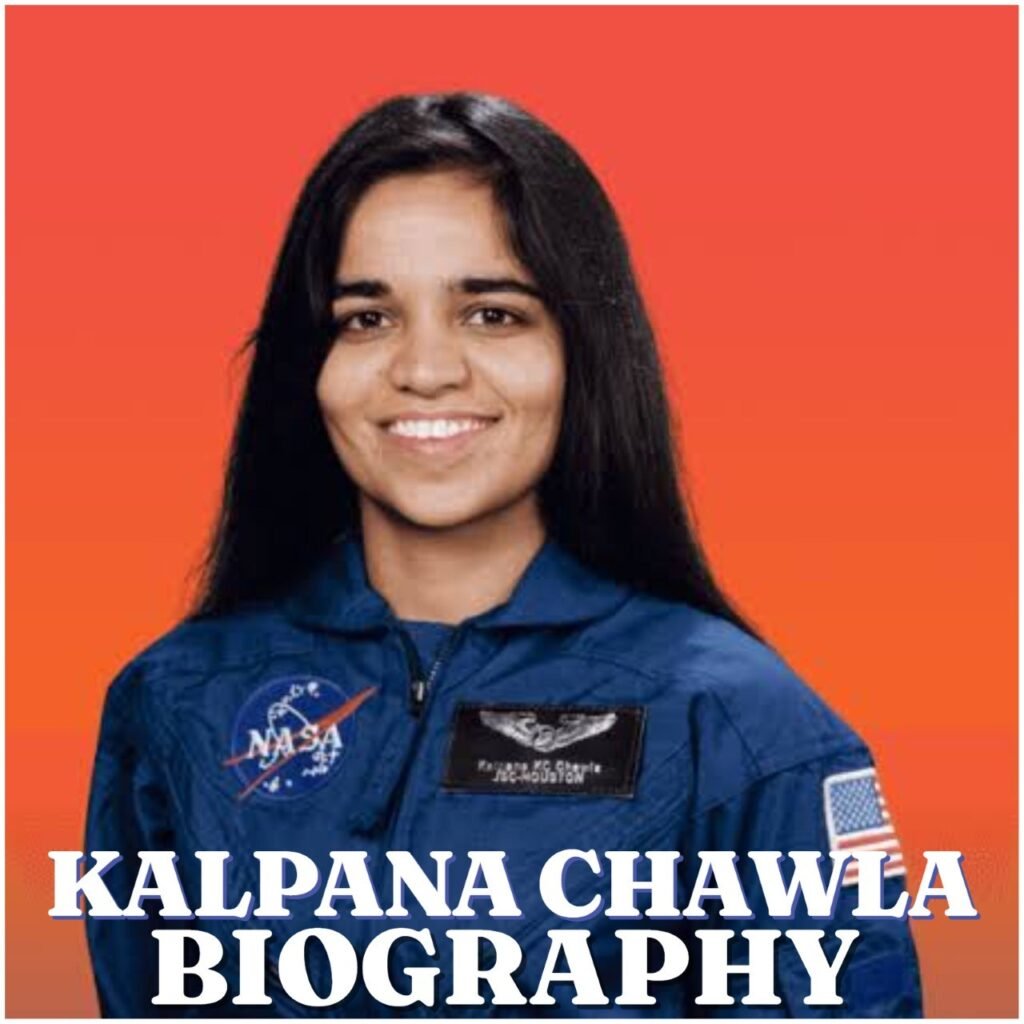
Kalpana Chawla dared to dream beyond the sky she saw as a child. Growing up in Karnal, India, she was fascinated by aircraft and curious about how they could fly. What began as a childhood interest eventually became an extraordinary career. Through hard work, education, and determination, she became the first woman of Indian origin to travel into space.
Chawla was more than a NASA astronaut. She was an accomplished aerospace engineer, research scientist, and pilot. After studying in India and the United States, she built a career in advanced aerospace research before joining NASA’s astronaut corps. In 1997, she made her first journey into space aboard the Space Shuttle Columbia. Six years later, she returned for another mission focused on scientific research.
Her life ended tragically on February 1, 2003, when the Space Shuttle Columbia broke apart during its return to Earth. All seven astronauts on board lost their lives. Yet her achievements continue to inspire people around the world. Her journey from a young girl fascinated by aircraft to a pioneering astronaut remains a powerful example of what education, courage, and determination can achieve.
Who Was Kalpana Chawla?
Kalpana Chawla was an Indian-born American astronaut and aerospace engineer. She became the first woman of Indian origin to travel into space and earned international recognition for her contributions to aerospace science.
Born in Karnal, Haryana, India, she developed an interest in aviation at an early age. That passion influenced her decision to study aeronautical engineering. She later moved to the United States, where she earned advanced degrees and worked as an aerospace researcher.
NASA selected her as an astronaut candidate in 1994. Her first space mission, STS-87, took place in 1997. She returned to space in January 2003 as part of the STS-107 crew. Although the second mission ended in tragedy, her scientific work and historic achievements secured her place in the history of space exploration.
Today, Chawla is remembered as a pioneer who encouraged young people, especially girls, to pursue careers in science, technology, engineering, and mathematics.
Kalpana Chawla Quick Facts
| Category | Details |
|---|---|
| Full name | Kalpana Chawla |
| Date of birth | March 17, 1962 |
| Place of birth | Karnal, Haryana, India |
| Date of death | February 1, 2003 |
| Age at death | 40 years |
| Nationality | Indian-born American |
| Profession | Astronaut, aerospace engineer, research scientist, pilot |
| Education | Punjab Engineering College, University of Texas at Arlington, University of Colorado Boulder |
| Husband | Jean-Pierre Harrison |
| Children | None |
| First space mission | STS-87, 1997 |
| Second space mission | STS-107, 2003 |
| Space agency | NASA |
| Famous for | First woman of Indian origin to travel into space |
| Major honours | Congressional Space Medal of Honor, NASA Distinguished Service Medal, NASA Space Flight Medal |
Early Life and Family Background
Kalpana Chawla was born on March 17, 1962, in Karnal, a city in present-day Haryana, India. She was the youngest of four children born to Banarsi Lal Chawla and Sanjyothi Chawla. Her father was a businessman, and she grew up in a family that supported her interests and ambitions.
As a child, Chawla was fascinated by aircraft. She enjoyed watching planes move across the sky and often wondered how they worked. This curiosity gradually developed into a serious interest in aviation and engineering.
Unlike many children who simply admired aeroplanes, Chawla wanted to understand the science behind flight. She was eager to learn how machines could rise above the ground and travel through the air. That early curiosity would eventually shape her education and career.
Her family played an important role in her development. Although she grew up far from the major centres of international space research, she did not allow her surroundings to limit her ambitions. She continued exploring her interests and became increasingly determined to pursue a career in aviation.
Education: The Foundation of Her Journey to Space
Chawla attended Tagore Baal Niketan Senior Secondary School in Karnal. She developed a strong interest in mathematics and science, subjects that later became central to her professional life. Her fascination with aircraft also influenced her decision to pursue engineering.
In 1978, she enrolled at Punjab Engineering College in Chandigarh to study aeronautical engineering. She graduated in 1982 with a Bachelor of Engineering degree. At the time, aeronautical engineering was a male-dominated field, but Chawla remained focused on her ambition.
She moved to the United States in 1982 to continue her studies. In 1984, she earned a Master of Science degree in aerospace engineering from the University of Texas at Arlington. She then attended the University of Colorado Boulder, where she obtained another master’s degree in 1986 and a PhD in aerospace engineering in 1988.
These qualifications gave her the knowledge and technical skills needed to work on complex aerospace problems. Her academic journey also showed her willingness to take risks, adapt to new environments, and keep learning.
For Chawla, education was not simply a route to employment. It was the foundation that helped turn her childhood fascination with aircraft into a professional career.
Kalpana Chawla’s Engineering Career Before NASA
After completing her doctorate in 1988, Chawla joined NASA’s Ames Research Center in California as a research scientist. She specialised in computational fluid dynamics, a field that uses computer simulations to study how air and other fluids move.
Her research focused on airflow around aircraft, including vehicles designed for vertical and short takeoff and landing. This work helped engineers better understand aerodynamic performance and the behaviour of aircraft in different conditions.
In 1993, she joined Overset Methods Inc., a California-based company specialising in aerospace research. She worked as a vice president and research scientist, contributing to the development of computer-based methods for studying complex aerodynamic problems.
These roles strengthened her professional reputation. She was already making important contributions to aerospace research, but she wanted to take her work further. Her greatest ambition was to travel into space and contribute directly to human space exploration.
That goal eventually led her to NASA’s astronaut selection programme.
How Kalpana Chawla Joined NASA
Chawla became a naturalised United States citizen in 1991. In December 1994, NASA selected her as part of its astronaut candidate programme. It was a major turning point in her life.
She began astronaut training at the Johnson Space Center in Houston, Texas, in March 1995. The programme was demanding. Candidates had to study spacecraft systems, complete physical training, develop technical skills, and prepare for the challenges of working in space.
After completing her training, Chawla became eligible for spaceflight assignments. She also worked on technical projects within NASA’s astronaut office, including responsibilities involving robotics and space shuttle systems.
Her engineering background was a major advantage. She understood the technology astronauts used and could contribute to the testing and development of important equipment.
In November 1996, NASA selected her as a mission specialist and primary robotic arm operator for the STS-87 mission. For Chawla, the assignment brought a childhood dream within reach.
Kalpana Chawla’s First Space Mission: STS-87
<escape></escape>On November 19, 1997, Kalpana Chawla travelled into space aboard the Space Shuttle Columbia as part of mission STS-87. The flight made her the first woman of Indian origin to travel into space.
The mission focused on scientific experiments designed to examine how microgravity affects physical processes. Microgravity creates conditions in which objects appear almost weightless. Studying this environment helps scientists understand how materials and other systems behave beyond Earth.
Chawla served as a mission specialist and operated the shuttle’s robotic arm. One of the mission’s major tasks involved deploying the Spartan satellite, which was designed to study the Sun’s outer atmosphere.
The satellite experienced a deployment problem and did not operate as planned. Astronauts later carried out a spacewalk to retrieve it. Despite this challenge, the mission continued and provided valuable scientific information.
The shuttle completed 252 orbits of Earth before returning safely on December 5, 1997. For Chawla, the flight was a historic achievement. She had moved from studying aircraft in India to helping operate a spacecraft in orbit.
Her success attracted attention in India and around the world. It also encouraged young people, particularly girls, to consider careers in science and engineering.
Kalpana Chawla’s Second Space Mission: STS-107
After her first spaceflight, Chawla returned to NASA’s technical assignments and continued preparing for future missions. She was eventually selected for another flight aboard the Space Shuttle Columbia.
The STS-107 mission launched on January 16, 2003. Its main purpose was to conduct scientific research in space. Chawla served as a mission specialist and flight engineer alongside six other crew members.
The astronauts carried out experiments in several scientific fields, including biology, materials science, combustion, fluid physics, and human health. Researchers wanted to understand how different materials and biological processes behaved in microgravity.
The crew worked in alternating shifts to keep the research programme running around the clock. During the 16-day mission, they completed approximately 80 experiments.
Chawla’s responsibilities included operating scientific equipment and supporting experiments that examined the behaviour of materials and biological systems in space. Her technical knowledge and previous flight experience made her an important member of the team.
The mission was progressing as planned until the shuttle began its return journey on February 1, 2003. What should have been a routine landing became one of the most devastating events in space exploration history.
The Columbia Space Shuttle Disaster and Kalpana Chawla’s Death
On February 1, 2003, the Space Shuttle Columbia broke apart during re-entry into Earth’s atmosphere. The disaster occurred over the southern United States, killing all seven astronauts on board, including Kalpana Chawla.
Investigators later discovered that a piece of insulating foam had broken away from the shuttle’s external fuel tank during launch. It struck the left wing and damaged the thermal protection system.
During re-entry, extremely hot gases entered the damaged area. The heat weakened the wing’s structure, causing the shuttle to lose control and break apart.
The other crew members were Commander Rick Husband, Pilot William McCool, Mission Specialists Michael Anderson, David Brown, and Laurel Clark, and Payload Specialist Ilan Ramon. Their deaths shocked the world and led to major changes in NASA’s approach to shuttle safety.
Chawla was 40 years old when the disaster occurred. Her death was particularly painful in India, where many people had followed her journey from Karnal to NASA. She had become a symbol of ambition, achievement, and the possibilities created by education.
The accident also raised serious questions about spacecraft inspections, engineering decisions, and astronaut safety. NASA investigated the disaster and introduced changes to reduce the risk of similar accidents.
Although Chawla’s life ended tragically, her achievements remain an important part of the history of space exploration.
Kalpana Chawla’s Husband and Personal Life
Kalpana Chawla was married to Jean-Pierre Harrison, a French-born flight instructor and aviation enthusiast. They met in the United States and married in December 1983.
Their shared interest in aviation helped bring them together. Harrison supported Chawla as she continued her education and pursued a demanding career in aerospace engineering.
Despite her growing fame, Chawla preferred to keep her personal life private. She rarely discussed her marriage publicly and focused much of her attention on her professional responsibilities.
The couple did not have children. After her death, Harrison continued to protect her memory and share aspects of her life and achievements.
Kalpana Chawla’s Awards and Achievements
Kalpana Chawla received international recognition for her contributions to aerospace science and space exploration. Her historic missions and professional achievements earned her a place among the most respected figures in NASA’s history.
After her death, she received the Congressional Space Medal of Honor, one of the highest honours awarded to astronauts by the United States government. She was also awarded NASA’s Distinguished Service Medal and NASA Space Flight Medal.
Her first spaceflight in 1997 was one of her greatest achievements. By becoming the first woman of Indian origin to travel into space, she created a historic milestone and encouraged more young people to consider careers in aviation and science.
Her academic record was equally impressive. She earned a bachelor’s degree, two master’s degrees, and a doctorate in aerospace engineering. Her work as a research scientist also demonstrated that her contributions extended beyond her achievements as an astronaut.
Today, schools, scholarships, memorials, and educational programmes honour her name. These tributes help keep her story alive and encourage future generations to follow their interests in science and technology.
Kalpana Chawla’s Legacy and Influence on Space Exploration
Kalpana Chawla’s influence extends far beyond her two space missions. She became a symbol of determination and possibility, particularly for young people who dream of entering fields where they have rarely seen people like themselves represented.
In India, her story continues to inspire students interested in science, technology, engineering, and mathematics. Her journey shows that a person’s background does not have to determine the limits of their ambitions.
Her achievements are also remembered in the United States. The Smithsonian National Air and Space Museum preserves historical material connected to her career, helping future generations learn about her contribution to space exploration.
NASA and other institutions have honoured Chawla through memorials and educational initiatives. Her name is also remembered alongside the other six astronauts who lost their lives in the Columbia disaster.
Perhaps her greatest legacy is the example she set. She began as a young girl who loved watching aircraft. She pursued an education, moved to another country, developed her skills, and continued working towards her ambition until she reached space.
Her story reminds us that extraordinary achievements often begin with simple curiosity. A question about how an aircraft flies can become a lifelong pursuit of knowledge. A childhood dream can become a historic accomplishment when it is supported by discipline, courage, and determination.
Conclusion
Kalpana Chawla’s journey from Karnal, India, to outer space remains one of the most inspiring stories in modern history. Through hard work and an exceptional commitment to education, she became the first woman of Indian origin to travel into space. Her missions aboard the Space Shuttle Columbia contributed to scientific research and established her place in NASA’s history. Although her life ended in the tragic disaster of February 1, 2003, her achievements continue to encourage students, engineers, and future astronauts. Her legacy is a reminder that no dream is too ambitious when it is matched with the determination to pursue it.
Frequently Asked Questions About Kalpana Chawla
Who was Kalpana Chawla?
Kalpana Chawla was an Indian-born American astronaut and aerospace engineer. She became the first woman of Indian origin to travel into space and participated in two NASA Space Shuttle missions.
When and where was Kalpana Chawla born?
She was born on March 17, 1962, in Karnal, Haryana, India.
How old was Kalpana Chawla when she died?
She was 40 years old when she died on February 1, 2003, during the Space Shuttle Columbia disaster.
What was Kalpana Chawla famous for?
She was famous for becoming the first woman of Indian origin to travel into space. She also contributed to aerospace engineering and scientific research during her career at NASA.
What did Kalpana Chawla study?
She studied aeronautical engineering at Punjab Engineering College in Chandigarh. She later earned two master’s degrees and a PhD in aerospace engineering in the United States.
Which NASA missions did Kalpana Chawla participate in?
She participated in two NASA Space Shuttle missions: STS-87 in 1997 and STS-107 in 2003. Both missions took place aboard the Space Shuttle Columbia.
What happened to Kalpana Chawla?
She died on February 1, 2003, when the Space Shuttle Columbia broke apart during re-entry into Earth’s atmosphere. All seven crew members lost their lives.
Who was Kalpana Chawla’s husband?
Her husband was Jean-Pierre Harrison, a French-born flight instructor and aviation enthusiast. They married in December 1983.
Did Kalpana Chawla have children?
No. Kalpana Chawla and her husband, Jean-Pierre Harrison, did not have children.
What awards did Kalpana Chawla receive?
She received the Congressional Space Medal of Honor, NASA Distinguished Service Medal, and NASA Space Flight Medal after her death.
Why is Kalpana Chawla an inspiration?
She is an inspiration because she pursued her ambitions despite the challenges of entering a male-dominated field. Her journey encourages young people, especially girls, to explore careers in science, engineering, and space exploration.
What is Kalpana Chawla’s legacy?
Her legacy includes her contributions to aerospace research, her historic spaceflights, and the inspiration she continues to provide to future generations. She remains one of the most celebrated Indian-born astronauts in history.