
Introduction
José Protasio Rizal Mercado y Alonso Realonda, popularly known as José Rizal, was a Filipino nationalist, writer, physician, poet, educator, and intellectual whose life and works played a major role in the development of Filipino national consciousness. Born on June 19, 1861, in Calamba, Laguna, Rizal grew up in an educated and relatively prosperous family that encouraged learning and intellectual development. He became known for his extraordinary abilities in literature, medicine, languages, science, art, and philosophy, eventually becoming one of the most celebrated figures in Philippine history.
José Rizal is best remembered for his two influential novels, Noli Me Tangere and El Filibusterismo. Through these works, he exposed social injustices, abuses, discrimination, and corruption experienced by Filipinos under Spanish colonial rule. Although Rizal did not advocate violent revolution and generally promoted peaceful reform, education, and civic participation, his writings helped awaken a stronger sense of Filipino identity and nationalism. His ideas became increasingly influential among Filipinos who were seeking political and social change.
Rizal’s life ended tragically when he was executed by a Spanish colonial firing squad on December 30, 1896, at Bagumbayan in Manila, at the age of 35. Rather than ending his influence, his execution strengthened the nationalist movement and transformed him into a powerful symbol of courage, patriotism, and sacrifice. Today, José Rizal is officially honored as the national hero of the Philippines, and his life, writings, and ideals continue to be studied and remembered by generations of Filipinos.
José Rizal Early Life and Childhood
José Rizal was born on June 19, 1861, in Calamba, Laguna, during the period of Spanish colonial rule in the Philippines. He was the son of Francisco Rizal Mercado and Teodora Alonso Realonda, members of an educated and prosperous family. His family valued education, discipline, religion, and intellectual development, and these values had a significant influence on Rizal’s character. From a young age, he demonstrated an exceptional ability to learn, read, write, draw, and observe the world around him. His mother, Teodora, was particularly important in his early education and introduced him to literature and reading.
Rizal grew up in a large family and developed close relationships with his parents and siblings. His older brother Paciano Rizal became one of the most important influences in his life and later supported his education and nationalist activities. Rizal’s childhood experiences in Calamba also exposed him to the social conditions and inequalities that existed under Spanish colonial rule. These experiences contributed to his later interest in social reform and the welfare of Filipinos. His family background, early education, and personal observations helped shape the intellectual and patriotic ideas that became central to his life’s work.
From childhood, Rizal displayed talents that went beyond ordinary academic ability. He became interested in literature, poetry, drawing, sculpture, languages, and the natural world. His early exposure to books and his family’s emphasis on education encouraged him to develop a lifelong passion for learning. As he grew older, his intellectual abilities became increasingly evident, eventually leading him to pursue advanced studies in Manila and Europe. These formative experiences laid the foundation for his development into a physician, writer, scholar, and reformist whose ideas would influence Philippine history.
José Rizal Education and Academic Background
José Rizal received his earliest education at home, where his mother, Teodora Alonso Realonda, played an important role in teaching him basic reading, writing, and religious instruction. He later studied under private tutors before continuing his formal education. Rizal eventually went to Manila, where he studied at the Ateneo Municipal de Manila, now known as Ateneo de Manila University. He excelled academically and developed strong interests in literature, philosophy, languages, and the sciences. His academic performance demonstrated the exceptional intellectual ability that would later distinguish him among Filipino scholars of his generation.
After completing his studies at the Ateneo, Rizal enrolled at the University of Santo Tomas in Manila, where he studied medicine. His decision to pursue medicine was partly connected to his desire to help his mother, who suffered from poor eyesight. However, his experience at the university also exposed him to discrimination and tensions between Filipino students and Spanish professors. Seeking a broader educational experience, Rizal eventually traveled to Europe, where he continued his medical education and expanded his intellectual horizons.
In Europe, Rizal studied and trained in medicine, particularly ophthalmology, and became increasingly involved in intellectual and reformist circles. His travels brought him into contact with scholars, writers, scientists, and political thinkers from different parts of Europe. He learned and used several languages and developed interests that extended far beyond medicine. His education abroad strengthened his belief in the importance of knowledge, scientific progress, education, and peaceful reform. These experiences also provided the intellectual foundation for many of the ideas expressed in his writings and political activities.
José Rizal Career and Professional Life
José Rizal’s career was remarkably diverse, reflecting his talents as a physician, writer, educator, scientist, artist, and reformist. He trained as a doctor and specialized in ophthalmology, eventually practicing medicine in different places, including during his exile in Dapitan. His medical profession allowed him to serve people directly, while his scientific interests encouraged him to study the natural environment and conduct observations and research. Rizal’s career therefore extended beyond traditional medicine and demonstrated his broad intellectual curiosity.
As a writer, Rizal became one of the most influential Filipino authors of the nineteenth century. His first major novel, Noli Me Tangere, was published in 1887 and exposed social and political abuses under Spanish colonial rule. His second novel, El Filibusterismo, was published in 1891 and presented a darker and more critical view of colonial society. His literary works, essays, letters, and poems helped encourage Filipinos to think critically about their society and their relationship with Spanish colonial authorities.
Rizal also became involved in the Filipino reform movement in Europe. He advocated greater representation, equality, education, and reforms for Filipinos rather than initially calling for violent independence. In 1892, after returning to the Philippines, he founded La Liga Filipina, an organization intended to encourage unity, mutual assistance, education, and peaceful reform. The Spanish authorities regarded his activities and writings as threatening, and he was subsequently arrested and exiled to Dapitan. During his exile, Rizal continued practicing medicine, teaching, conducting scientific studies, and working on community improvement projects, demonstrating that his commitment to education and public service continued even under difficult circumstances.
Why José Rizal Was Trending in 2026
José Rizal continued to receive significant attention in 2026, particularly because of commemorative activities surrounding the 165th anniversary of his birth. Philippine historical institutions organized events to remember his contribution to the country, including activities connected to his life, writings, and continuing influence on Philippine identity. His enduring relevance was also highlighted through cultural and educational programs that introduced his work to new audiences.
Another reason for renewed attention in 2026 was the international effort to make Rizal’s most famous novel, Noli Me Tangere, more accessible to Arabic-speaking readers. An Arabic translation initiative involving Philippine cultural and government institutions highlighted the continuing international relevance of Rizal’s literature. The project demonstrated how Rizal’s writings, originally produced during the Spanish colonial period, continue to cross linguistic and cultural boundaries more than a century after his death.
Rizal also remained part of discussions about Philippine education and the teaching of history. Questions surrounding the structure and content of general education courses have renewed conversations about how Filipino students should study national history, including Rizal’s life, works, and writings. These developments demonstrate that Rizal is not simply remembered as a historical figure but continues to be part of contemporary discussions about Filipino identity, education, literature, nationalism, and history.
José Rizal Personal Life and Family
José Rizal came from a large and respected Filipino family with deep roots in Calamba, Laguna. His father was Francisco Mercado, a prosperous farmer and businessman, while his mother was Teodora Alonso Realonda, a highly educated woman who played an important role in developing Rizal’s love for learning, literature, and intellectual pursuits. Rizal was one of eleven children, and his siblings included Paciano Rizal, his older brother and lifelong supporter, as well as Narcisa, Olympia, Lucia, Maria, Concepcion, Josefa, Trinidad, and Soledad. His close relationship with his family remained important throughout his life, even when his education, medical career, and political activities took him far from the Philippines.
Although José Rizal never married, he had several important romantic relationships during his lifetime. Among the women associated with him were Segunda Katigbak, Leonor Valenzuela, Leonor Rivera, Consuelo Ortiga y Rey, and Suzanne Jacoby. His relationship with Leonor Rivera is particularly well known because she is often described as one of the most significant loves of his life. Rivera and Rizal exchanged letters while he was studying and traveling abroad, but their relationship eventually ended after years of separation. Another important relationship was with Josephine Bracken, an Irish woman whom Rizal met while he was living in Dapitan. Bracken became his companion during the final period of his life, and historical accounts describe their relationship as deeply significant to Rizal’s personal life. There is historical debate over whether they were formally married, so it is more accurate to describe Bracken as his partner rather than definitively as his wife.
Family remained a major source of emotional support for Rizal, particularly during the difficult final years of his life. His brother Paciano Rizal was especially important, supporting his education and remaining connected to him during his exile and political troubles. Rizal also maintained correspondence with his parents and siblings whenever circumstances allowed. During his exile in Dapitan, he continued to practice medicine, teach, conduct scientific activities, and participate in community projects while maintaining ties with people close to him. His family’s sacrifices, his relationships, and his experiences of separation and hardship all influenced his character and writings, helping shape the personal side of the man who later became one of the Philippines’ most enduring national heroes.
José Rizal Age, Religion, Nationality, Height and Physical Appearance
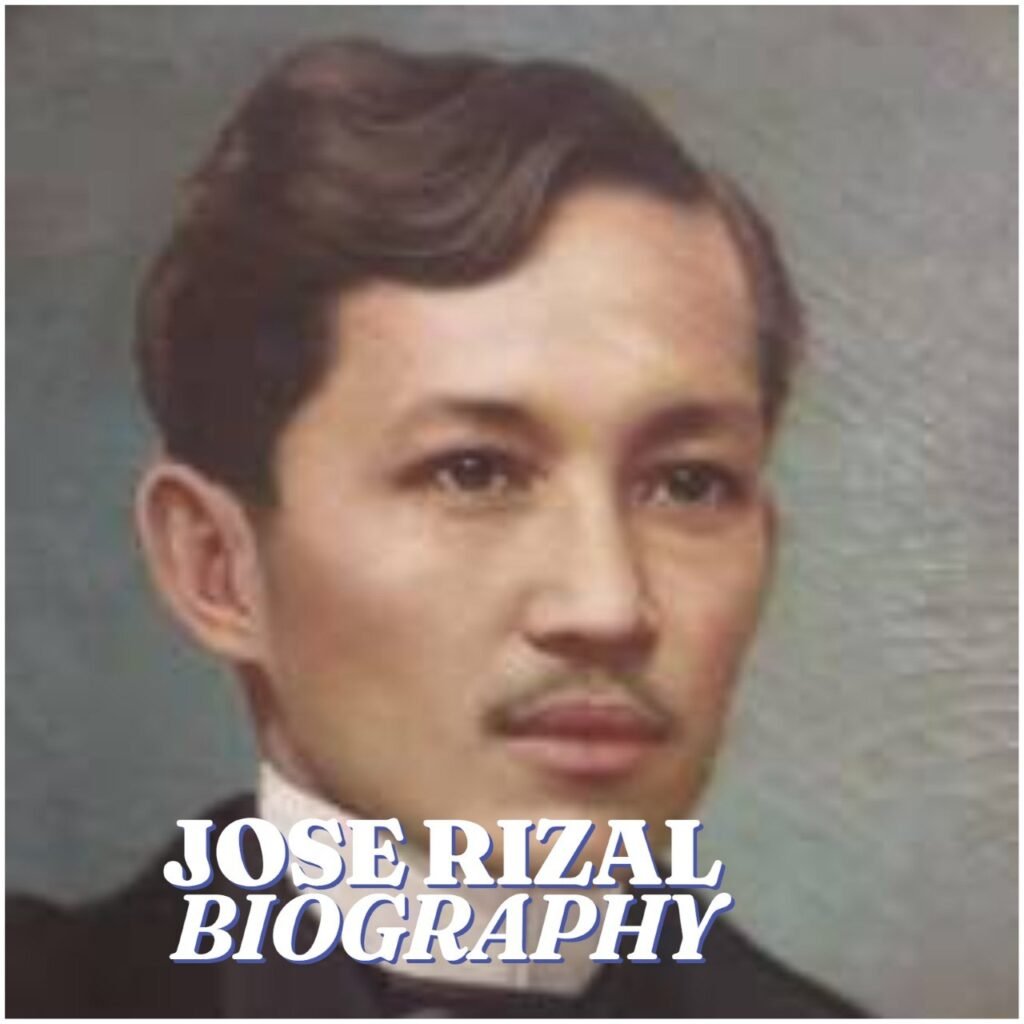
José Rizal was born on June 19, 1861, in Calamba, Laguna, Philippines, and died on December 30, 1896, at the age of 35. He was a Filipino national and is widely recognized as the Philippines’ national hero. Rizal was raised in a Roman Catholic family and was baptized into the Catholic faith, although his later writings and intellectual views sometimes questioned aspects of religious authority and the practices of the Spanish colonial-era Church. He was of Filipino ancestry, with Chinese and Spanish influences in his family background. Historical descriptions and surviving photographs portray Rizal as a relatively slender, well-groomed man with a composed appearance, dark hair, dark eyes, and a serious but dignified expression. His exact height is not firmly established by reliable historical records, although some commonly circulated biographies estimate that he stood at around 5 feet 3 inches (160 cm). Because there is no universally accepted official measurement from his lifetime, this height should be treated as an estimate rather than a confirmed historical fact. His neat appearance, intellectual manner, and distinctive photographs have contributed to the enduring public image of Rizal as a cultured, disciplined, and scholarly Filipino figure.
José Rizal Social Media Presence
José Rizal lived long before the age of social media, so he did not have any personal Facebook, Instagram, X (Twitter), TikTok, or other social media accounts. For a historically accurate biography, it is therefore better not to assign him a modern social media handle. However, his name and legacy remain highly visible online through official museums, government institutions, historical organizations, and educational pages dedicated to his life and works.
Pages and accounts dedicated to José Rizal, Rizal Day, his novels Noli Me Tangere and El Filibusterismo, and Philippine history regularly share his photographs, quotations, writings, historical information, and commemorative activities. Official institutions such as the National Historical Commission of the Philippines (NHCP) and the Intramuros Administration also use social media and digital platforms to promote exhibitions, lectures, historical sites, and educational programs connected to Rizal. Because these are institutional or fan-created accounts rather than accounts operated by Rizal himself, there is no verified personal social media handle for José Rizal.
José Rizal Cause of Death and Death
José Rizal died as a result of execution by firing squad after being convicted by a Spanish colonial military court. He was accused of rebellion, sedition, and conspiracy in connection with the growing Filipino nationalist movement. Although Rizal advocated peaceful reforms and was not the leader of the armed revolution, Spanish authorities regarded his writings and reformist activities as dangerous. His novels, essays, and political ideas had helped awaken Filipino national consciousness, making him a prominent target of the colonial government.
On December 30, 1896, José Rizal was taken from his prison cell at Fort Santiago to Bagumbayan, now known as Rizal Park, in Manila. He was accompanied by Spanish military personnel and a Catholic priest and was given the opportunity to make his final preparations before the execution. Rizal was executed by a firing squad at the age of 35. His death became one of the defining moments in Philippine history and contributed to the growing determination of Filipinos to challenge Spanish colonial rule.
Rizal’s execution did not silence his ideas. Instead, his death strengthened Filipino nationalism and transformed him into a powerful symbol of the country’s struggle against colonial oppression. His final poem, Mi Último Adiós, meaning “My Last Farewell,” expressed his deep love for the Philippines and became one of his most celebrated works. December 30 is commemorated annually as Rizal Day, honoring the life, sacrifice, writings, and enduring legacy of the country’s national hero.
José Rizal’s Legacy
José Rizal’s greatest legacy is his contribution to the development of Filipino national consciousness during the period of Spanish colonial rule. Through his novels, essays, poems, letters, and political writings, he exposed social injustices and criticized abuses within the colonial system. His most famous novels, Noli Me Tangere and El Filibusterismo, became powerful works of Filipino literature and helped inspire a growing sense of national identity. Although Rizal advocated peaceful reform rather than armed revolution, his ideas influenced the generation that eventually fought for Philippine independence.
Rizal’s legacy also extends beyond his literary achievements. He was a physician, educator, scientist, linguist, artist, and community leader who demonstrated the importance of education and intellectual development. During his exile in Dapitan, he practiced medicine, taught young people, conducted scientific studies, and worked on projects intended to improve the local community. His wide range of interests has contributed to his reputation as a Filipino polymath and has made his life an enduring example of how education, knowledge, and service can be used for the benefit of society.
Today, José Rizal remains one of the most influential figures in Philippine history and is officially honored as the country’s national hero. Rizal Day is observed every December 30 to commemorate his execution and remember his contributions and sacrifice for the Filipino nation. Monuments, schools, streets, parks, museums, and institutions across the Philippines bear his name, while his writings continue to be studied by generations of students. His life and death continue to symbolize patriotism, courage, intellectual freedom, and peaceful resistance, ensuring that his influence remains deeply embedded in Philippine culture and national history.
Conclusion
José Rizal remains one of the most influential figures in Philippine history, remembered for using his intelligence, education, writing, and courage to awaken Filipino national consciousness during Spanish colonial rule. Through works such as Noli Me Tangere and El Filibusterismo, his dedication to education and reform, and his ultimate sacrifice at the age of 35, Rizal left an enduring example of patriotism and service to his country. His life demonstrated the power of knowledge, peaceful advocacy, and personal courage, while his execution transformed him into a lasting symbol of the Filipino struggle for dignity and freedom. More than a century after his death, his writings continue to be studied, his life continues to inspire generations, and his legacy remains deeply connected to Philippine identity and national history.
Frequently Asked Questions About José Rizal
Who was José Rizal?
José Rizal was a Filipino nationalist, writer, physician, poet, educator, and intellectual who became the Philippines’ national hero. He is best known for his novels Noli Me Tangere and El Filibusterismo, which exposed social injustices during Spanish colonial rule and helped strengthen Filipino national consciousness.
When and where was José Rizal born?
José Rizal was born on June 19, 1861, in Calamba, Laguna, Philippines. He was born into a well-educated and prosperous Filipino family and developed a strong interest in learning, literature, and the arts from an early age.
How old was José Rizal when he died?
José Rizal was 35 years old when he died. He was executed on December 30, 1896, in Bagumbayan, Manila, during the period of Spanish colonial rule in the Philippines.
What was José Rizal famous for?
José Rizal was famous for his writings, particularly Noli Me Tangere and El Filibusterismo, which criticized abuses and injustices under Spanish colonial rule. He was also known for advocating education, peaceful reform, civic participation, and Filipino national identity.
What were José Rizal’s most famous books?
José Rizal’s two most famous novels are Noli Me Tangere, published in 1887, and El Filibusterismo, published in 1891. Both works became important pieces of Philippine literature and played a major role in shaping Filipino nationalism.
Was José Rizal married?
José Rizal was never formally established as having a wife in the generally accepted historical record. He had several romantic relationships, including with Leonor Rivera, and his final significant relationship was with Josephine Bracken, whom he met during his exile in Dapitan. Historical accounts differ regarding whether Rizal and Bracken were formally married.
Who was José Rizal’s family?
José Rizal was the son of Francisco Mercado and Teodora Alonso Realonda. He came from a family of eleven children and had several siblings, including his older brother Paciano Rizal, who was one of his strongest supporters.
What was José Rizal’s religion?
José Rizal was raised and baptized as a Roman Catholic. However, his writings and intellectual views included criticism of certain abuses and practices associated with religious and colonial authorities during his time.
How did José Rizal die?
José Rizal was executed by a Spanish colonial firing squad on December 30, 1896, at Bagumbayan in Manila. He had been convicted of charges including rebellion, sedition, and conspiracy by a Spanish military court.
What was José Rizal’s last poem?
José Rizal’s famous final poem is Mi Último Adiós, meaning “My Last Farewell.” The poem expressed his love for the Philippines and became one of the most celebrated works associated with his final days.
Why is José Rizal important to the Philippines?
José Rizal is important because his writings and peaceful reformist ideas helped awaken Filipino national consciousness. His courage, intellectual achievements, and execution made him a lasting symbol of patriotism, education, dignity, and the struggle for national freedom.
When is José Rizal Day celebrated?
Rizal Day is celebrated every December 30 in the Philippines. It commemorates the anniversary of José Rizal’s execution in 1896 and honors his contributions and sacrifice for the Filipino nation.
Did José Rizal have social media accounts?
No. José Rizal lived from 1861 to 1896, long before modern social media existed. Therefore, he did not have personal accounts on Facebook, Instagram, X, TikTok, or other social media platforms. Modern accounts using his name are operated by institutions, organizations, educators, or individuals rather than Rizal himself.