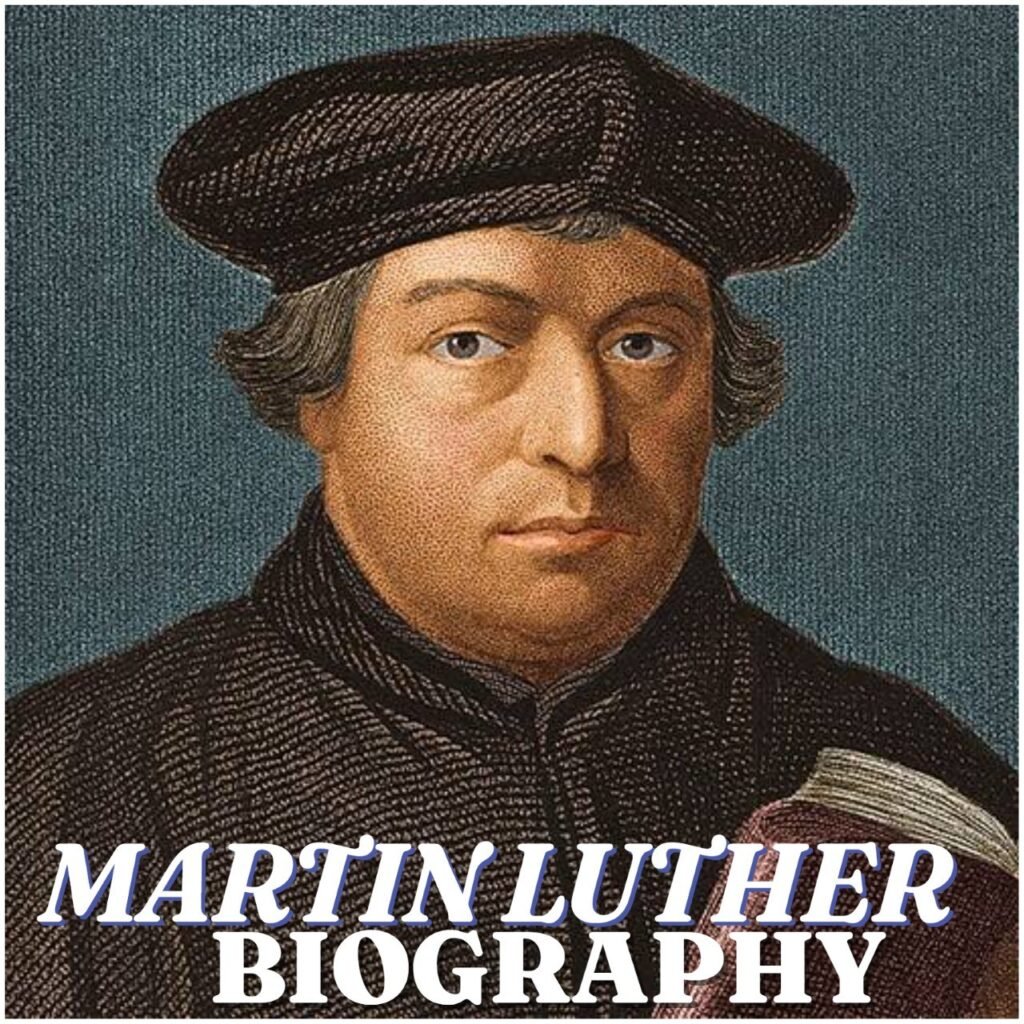

Born on November 10, 1483, in Eisleben, in present-day Germany, Luther initially pursued a career in law before entering an Augustinian monastery. His theological studies led him to question aspects of church teaching and religious practice, particularly the sale of indulgences, which were associated with the remission of temporal punishment for sins. In 1517, he circulated his famous Ninety-Five Theses, traditionally associated with the beginning of the Protestant Reformation. His arguments spread rapidly through the printing press, bringing him into conflict with powerful religious and political authorities and eventually contributing to a lasting division within Western Christianity.
Martin Luther died on February 18, 1546, at the age of 62, but his influence continues to shape religious institutions, education, music, literature and European history. His German translation of the Bible helped make scripture accessible to ordinary readers and contributed significantly to the development of written German. However, his legacy is also complicated by his later writings against Jewish people, which have been widely condemned for their hostility and harmful historical influence. Understanding Martin Luther’s biography therefore requires examining both his role in religious reform and the contradictions in his beliefs and actions.
Martin Luther Profile Summary
| Personal detail | Information |
|---|---|
| Full name | Martin Luther |
| Date of birth | November 10, 1483 |
| Place of birth | Eisleben, Saxony, Holy Roman Empire, now Germany |
| Date of death | February 18, 1546 |
| Age at death | 62 years |
| Nationality | German, in the historical sense |
| Occupations | Theologian, monk, professor, Bible translator and religious reformer |
| Religious tradition | Initially Roman Catholic; founder of the Lutheran Reformation |
| Father | Hans Luther |
| Mother | Margarethe Luther |
| Wife | Katharina von Bora |
| Children | Six biological children |
| Famous work | Ninety-Five Theses |
| Major achievement | Leadership in the Protestant Reformation |
| Best-known translation | Luther’s German Bible |
| Place of death | Eisleben, present-day Germany |
| Historical significance | A central figure in the Reformation and the history of Christianity |
Martin Luther’s Early Life and Family Background
Martin Luther was born on November 10, 1483, in Eisleben, a town in the County of Mansfeld within the Holy Roman Empire. His father, Hans Luther, worked in the mining industry and became involved in the copper-mining business, while his mother, Margarethe Luther, managed the household and helped raise the family. Luther grew up in a period when religion played a central role in European society, influencing education, government, family life and people’s understanding of salvation. His family valued discipline and education, and his father’s growing financial ambitions helped create opportunities for him to receive formal schooling. These early circumstances influenced Luther’s development before he became one of the most consequential religious figures in European history.
During his childhood, Luther lived in the Mansfeld area, where his father hoped he would obtain an education that could lead to a respected professional career. The family was not part of the highest levels of European nobility, but Hans Luther worked hard to improve their economic circumstances. Martin received a religious upbringing in a society where the Catholic Church held considerable spiritual and institutional authority. Like many people of his time, he grew up with a strong awareness of sin, divine judgement, confession and the importance of salvation. These concerns later became central to his theological development, although his mature beliefs emerged through years of study, personal reflection and disputes over established religious authorities.
An important turning point in Luther’s early life occurred in 1505, when he was caught in a severe thunderstorm while travelling near Stotternheim. According to the traditional account, he feared for his life and promised Saint Anne that he would become a monk if he survived. He entered an Augustinian monastery in Erfurt soon afterwards, despite his father’s reported disappointment that he had abandoned the prospect of a legal career. This decision changed the direction of his life. Instead of becoming a lawyer, Luther devoted himself to religious discipline, prayer, study and theological reflection, beginning the journey that would eventually lead him to challenge major practices of the medieval Church.
Martin Luther’s Education
Martin Luther received his early education in schools in Mansfeld and Magdeburg before continuing his studies in Eisenach. His education took place within the established academic and religious traditions of late-medieval Europe, where Latin, classical learning and Christian doctrine were important parts of formal instruction. These studies prepared him for university and introduced him to the intellectual culture of his time. His schooling also helped develop the reading, writing and analytical abilities that later became essential to his work as a theologian, lecturer and translator of religious texts.
Luther enrolled at the University of Erfurt in 1501 and completed a bachelor’s degree in 1502 and a master’s degree in 1505. He studied within the scholastic tradition, which used logical reasoning and philosophical argument to examine questions about knowledge, ethics and theology. Following his father’s wishes, he initially pursued legal studies. However, his decision to enter the Augustinian order in 1505 brought that path to an end. He subsequently continued his religious education, studying theology and becoming increasingly concerned with questions about human sinfulness, God’s righteousness and the possibility of salvation.
Luther’s formal theological development continued after he joined the monastery. He was ordained a priest in 1507 and later studied and taught at the University of Wittenberg, where he became a professor of biblical studies. His close engagement with biblical texts, especially the Psalms, Paul’s Epistle to the Romans and other New Testament writings, shaped his emerging theological convictions. Through teaching, preaching and examining scripture, he developed the belief that salvation was received through God’s grace and faith rather than earned through human achievements. His education was therefore not simply a period of academic preparation; it became the foundation for ideas that challenged important aspects of the religious establishment and helped launch the Protestant Reformation.
Martin Luther’s Career and Role in the Protestant Reformation
Early Career as an Augustinian Monk and Priest
Martin Luther’s professional life began within the Roman Catholic Church, where he served as an Augustinian monk and later as a priest. After entering the monastery in Erfurt in 1505, he devoted himself to prayer, fasting, confession and religious study. He took his spiritual responsibilities seriously and struggled with questions about sin, divine judgement and whether a person could ever become sufficiently righteous to deserve God’s favour. His search for spiritual certainty led him to examine the Bible more deeply and question some of the religious practices he had encountered. These personal and theological struggles became important influences on his later teaching.
In 1507, Luther was ordained a priest, and he continued his theological education while carrying out his religious duties. He travelled to Rome in 1510 or 1511 as part of an Augustinian mission, an experience that exposed him to the religious life of the papal capital. Later accounts often describe the journey as an important stage in his growing dissatisfaction with church practices, although it is difficult to identify it as the single cause of his eventual break with Rome. Luther’s theological development was gradual, shaped by study, teaching, prayer and debates over the meaning of Christian salvation.
Luther eventually became a professor of biblical studies at the University of Wittenberg. His responsibilities included lecturing on scripture and helping students understand the biblical texts. As he studied the writings of the Apostle Paul, particularly the Epistle to the Romans, he increasingly emphasised justification by faith: the belief that sinners are made righteous before God through divine grace received by faith, rather than through their own merits. This conviction became a defining principle of his theology and later formed a central part of Lutheran teaching. His academic position gave him an opportunity to share his ideas, but it also placed him on a path towards conflict with established church authorities.
The Ninety-Five Theses and the Beginning of the Reformation
Martin Luther became internationally known for his Ninety-Five Theses, a series of propositions challenging the sale and promotion of indulgences. Indulgences were connected with the remission of temporal punishment for sins, and Luther believed that the way they were being presented could mislead people about repentance, forgiveness and the authority of the Church. On October 31, 1517, he sent his arguments to Archbishop Albert of Mainz. Tradition holds that he also posted the theses on the door of the Castle Church in Wittenberg, although historians debate the details of that famous episode. What is clear is that the theses circulated widely and helped spark a major religious controversy.
Luther initially presented his theses as an invitation to theological discussion rather than as a fully developed plan to establish a new church. He wanted to challenge what he regarded as abuses in the indulgence system and encourage a more accurate understanding of Christian repentance. However, the controversy expanded as his views became more widely known. The printing press played a crucial role in distributing his writings, allowing his arguments to reach audiences far beyond the university where he taught. His dispute gradually moved from the question of indulgences to deeper disagreements about papal authority, church tradition, scripture and the basis of Christian teaching.
As the controversy intensified, Luther’s position became increasingly confrontational towards the Roman Catholic hierarchy. He argued that the Bible should have decisive authority in matters of Christian doctrine and challenged the idea that the pope could settle every theological question without appeal to scripture. These disagreements helped turn a dispute over religious practice into a much broader movement for reform. The Reformation that emerged involved theologians, rulers, cities, printers and ordinary believers, and it developed differently in different parts of Europe. Luther became its most prominent early figure, although he was not the only reformer responsible for the wider movement.
The Diet of Worms and Luther’s Conflict with Church Authorities
Luther’s writings brought him into conflict with Pope Leo X and the Holy Roman Emperor Charles V. In 1520, a papal bull demanded that he retract certain teachings, and he was excommunicated in January 1521 after refusing to comply. Later that year, Luther was summoned to appear before the Diet of Worms, an assembly of imperial authorities held in the German city of Worms. He was questioned about his writings and asked to withdraw them. Luther refused to recant unless he could be convinced by scripture and sound reasoning that his arguments were wrong. The confrontation became one of the best-known episodes in Reformation history.
Following the Diet of Worms, Luther was placed under an imperial ban, which made him vulnerable to arrest in territories where the ban was enforced. Frederick the Wise, Elector of Saxony, arranged for him to be taken to Wartburg Castle for protection. While there, Luther worked on a German translation of the New Testament using the Greek text and earlier scholarly resources. His translation helped make the biblical text more accessible to German-speaking readers and became one of the most influential literary and religious projects of his career. His use of clear, expressive German also contributed to the development of a more widely shared written language.
Luther returned to Wittenberg in 1522, where he continued preaching, writing and participating in the development of the reform movement. He faced disagreements not only with Catholic authorities but also with other reformers who differed from him on theological and practical questions. The Protestant Reformation was never a completely unified movement, and disputes emerged over the Eucharist, church organisation, the role of images and the relationship between religious reform and political change. Luther’s leadership helped shape the Lutheran tradition, but his disagreements with other reformers also contributed to divisions within Protestant Christianity.
Martin Luther’s Marriage and Family Life
A major personal development in Luther’s life came in 1525, when he married Katharina von Bora, a former nun who had left a convent during the Reformation. Their marriage was significant because clerical celibacy was a central practice in the Roman Catholic Church, while Luther’s reforming position allowed clergy to marry. The couple’s household in Wittenberg became a centre of family life, hospitality and intellectual activity. Katharina managed the household, oversaw practical and financial responsibilities, and helped support the family through demanding circumstances. Their marriage also became an example for many later Protestant clergy who adopted family life rather than monastic celibacy.
Martin and Katharina Luther had six biological children: Johannes, Elizabeth, Magdalena, Martin, Paul and Margarethe. Their family also cared for other children and relatives, reflecting the broader household responsibilities of the period. Family life brought personal joys as well as sorrow, particularly when their daughter Elizabeth died in infancy and their daughter Magdalena died in 1542 at the age of 13. Luther’s writings and correspondence sometimes reveal the emotional challenges he experienced as a husband and father, offering a more personal view of a man often remembered primarily for theological controversy.
Katharina von Bora was more than a supporting figure in Luther’s story. She helped manage property, organise the household, host visitors and maintain the family’s practical affairs while her husband continued his religious work. Their partnership became influential in the development of Protestant ideas about marriage, family and the responsibilities of clergy. Luther’s own family life also demonstrated that the Reformation was not only a theological movement but a transformation that affected everyday religious practice, domestic arrangements and the social position of former monks and nuns.
Martin Luther’s Bible Translation and Written Works
One of Martin Luther’s most important achievements was his translation of the Bible into German. His New Testament translation appeared in 1522, and the complete German Bible was published in 1534, with further revisions during his lifetime. Luther’s work was informed by the original biblical languages and the scholarship available to him. He aimed to produce a translation that German-speaking readers could understand, using accessible language rather than simply reproducing the wording of earlier Latin versions. The result became an important resource for religious teaching and personal reading.
The German Bible had an influence that extended beyond the Church. Its clear and memorable language helped shape written German, particularly by making certain forms of expression more widely familiar across different regions. The printing press allowed copies to circulate on a scale that would have been impossible in earlier centuries, bringing scripture into homes, schools and congregations. Luther’s translation helped strengthen the role of vernacular languages in Christian worship and study, although the wider development of the German language involved many writers, printers and regional traditions rather than one individual alone.
Luther also wrote sermons, theological treatises, hymns, letters and catechisms intended to explain Christian teaching. His Small Catechism and Large Catechism, published in 1529, provided explanations of basic Christian beliefs and became important resources for Lutheran education. His hymn “A Mighty Fortress Is Our God,” based on Psalm 46, became one of the most enduring hymns associated with the Reformation. Through his writing and music, Luther helped establish a religious tradition in which preaching, congregational singing, Bible reading and instruction played central roles.
Later Career and Final Years
During the later decades of his life, Luther continued teaching, preaching and writing while the religious changes he had helped initiate spread across the German territories and beyond. Lutheran churches developed their own forms of worship, organisation and doctrine, often with support from local rulers and city governments. The Reformation also contributed to political and social conflicts, as religious disagreement became intertwined with questions of authority, territory and community identity. Luther supported reform but did not advocate every movement that arose in its name, and he opposed some forms of radical religious and social change.
Luther’s later years were marked by continuing theological disputes, health problems and increasingly harsh polemical writing. His views on the authority of scripture, the sacraments, church organisation and the relationship between civil government and religious life continued to shape Lutheran theology. However, his writings against Jewish people became particularly hostile in the later part of his life. These texts went far beyond theological disagreement and included calls for severe restrictions and persecution. They have been widely condemned and remain a deeply troubling part of his legacy, particularly because later antisemites sometimes invoked his words to support their own prejudices.
In February 1546, Luther travelled to Eisleben to help settle a dispute involving the Counts of Mansfeld. He became seriously ill and died there on February 18, 1546, at the age of 62. His death occurred after nearly three decades of religious controversy and institutional change. By that time, the movement associated with his name had developed into a lasting religious tradition, although the broader Reformation continued to evolve after his death. His writings, translations and theological arguments remained influential among followers who carried his ideas into subsequent generations.
Why Martin Luther Is Trending in October 2026
Martin Luther is receiving renewed attention in October 2026 as churches, museums and educational institutions prepare for Reformation Day on October 31. The annual observance commemorates the event traditionally associated with Luther’s Ninety-Five Theses in 1517 and provides an opportunity to reflect on the religious, political and cultural changes that followed. Lutheran congregations commonly mark the day through worship services, sermons, music and educational activities. The Lutheran Church—Missouri Synod has published information for its October 31, 2026, observance, highlighting the continuing place of the Reformation in church life.
Another current development is the Luther Museum Amsterdam’s exhibition “Vrij Denken” (“Free Thinking”), scheduled to run from October 28, 2026, to March 21, 2027. The exhibition explores the ideas of Martin Luther and the humanist scholar Erasmus, examining their different approaches to religious reform, authority, free will and public debate. By connecting historical disagreements with contemporary questions about freedom of expression and how people engage with opposing views, the exhibition invites visitors to consider how debates from five centuries ago continue to resonate today. The museum has also announced a new award recognising contemporary reformers, with its first presentation planned for October 31, 2026.
Luther-related heritage sites in Germany are also receiving attention in 2026. This year marks 30 years since the Luther memorial sites in Wittenberg and Eisleben received UNESCO World Heritage status. The historic Luther House in Wittenberg is undergoing refurbishment and expansion, with a new permanent exhibition and reopening planned for 2027. In the meantime, visitors can explore the special exhibition Literally Luther: Facets of a Reformer in the neighbouring Augusteum, while other commemorative activities highlight the historical significance of the region. These developments show that Martin Luther remains a subject of active historical interpretation, museum work and public discussion rather than simply a figure confined to the past.
Martin Luther’s Cause of Death
Martin Luther died on February 18, 1546, in Eisleben, the town where he had been born. He was 62 years old. At the time of his death, he was still active in religious affairs and had travelled to Eisleben to help resolve a dispute involving the Counts of Mansfeld. His journey reflected the continued importance of his advice and influence among the German rulers and communities associated with the Reformation. Although his health had deteriorated over time, he continued working until his final illness.
Historical accounts describe Luther as suffering from serious health problems in his later years, and he became increasingly unwell during his final journey. He died after an illness while staying in Eisleben, with contemporary reports describing the circumstances surrounding his final hours. The precise modern medical diagnosis is uncertain, so it is more accurate to say that he died following an illness rather than to assign a definitive cause based on retrospective speculation.
After his death, Luther was buried in Wittenberg, where his grave is located in the Castle Church, a place closely associated with the history of the Reformation. His death did not end the movement he had helped initiate. His followers continued to develop Lutheran theology, worship and church organisation, while disagreements over religious authority and doctrine continued throughout Europe. Today, his burial place and other sites associated with his life remain important destinations for people interested in religious history.
Martin Luther’s Age, Religion, Nationality, Tribe, Height and Physical Appearance
Martin Luther was born on November 10, 1483, and died on February 18, 1546, at the age of 62. He lived during the late-medieval and early-modern periods, when European society was undergoing significant religious, political and intellectual change. His lifetime included the expansion of printing, the growth of humanist scholarship and the emergence of the Protestant Reformation. These developments created the environment in which his ideas spread and contributed to the transformation of Western Christianity.
Luther began his religious life as a Roman Catholic monk and priest before becoming the leading figure in the movement that established Lutheranism. His theological emphasis on salvation through God’s grace received by faith, together with his insistence on the authority of scripture, placed him in direct conflict with the Catholic Church’s leadership. His beliefs became central to Lutheran Christianity, although Protestant traditions developed in different ways after the Reformation. His religious legacy is also complicated by his hostile writings about Jewish people, which must be acknowledged when assessing his historical influence.
Luther was German, born in the Holy Roman Empire in territory that is now part of Germany. The modern concept of nationality did not operate in the same way during the fifteenth and sixteenth centuries, so describing him as German refers to his language, cultural background and place of origin rather than citizenship in the modern nation-state. The category of “tribe” is not normally used to describe his background; he belonged to the German-speaking communities of central Europe. There is no universally established modern height measurement for Luther, and specific figures circulated online should be treated cautiously. Historical portraits generally depict him as a broad-faced, solidly built man, often wearing the dark clothing associated with his religious and academic status. His appearance is known mainly through portraits and contemporary descriptions rather than modern photographic evidence.
Martin Luther’s Social Media Presence
Martin Luther died in 1546, centuries before the invention of social media, so he never maintained personal accounts on Instagram, Facebook, X or other digital platforms. Any modern profile using his name is a contemporary account rather than a personal account created by Luther himself. Such profiles may be run by churches, museums, educational organisations, historians or individuals interested in the Protestant Reformation.
His work nevertheless has a significant presence across the digital world. Churches share his hymns and theological teachings, museums publish information about his life, and educational platforms provide explanations of the Reformation and its historical consequences. Online discussions also examine his German Bible translation, his influence on Protestant Christianity and the more troubling aspects of his legacy, including his anti-Jewish writings. Readers interested in his history should distinguish reliable museum, university and church resources from social media posts that may oversimplify historical events or present inaccurate quotations.
Martin Luther’s Net Worth
Martin Luther’s personal net worth is not available in a form that can be reliably compared with the wealth of modern public figures. He lived in the sixteenth century, long before modern celebrity earnings, commercial book royalties and contemporary methods of calculating personal wealth became established. His livelihood was connected primarily with his religious and academic roles, including his work as a monk, priest, professor, preacher and author. Although his writings became widely circulated, it would be misleading to assign him a specific modern net-worth figure without reliable historical evidence.
Luther’s work had considerable influence, and the growth of the printing industry helped distribute his books, pamphlets, sermons and Bible translations across German-speaking Europe. Printers and publishers benefited from the demand for his writings, while rulers and religious communities supported different aspects of the Reformation. However, the commercial success of publications bearing Luther’s name should not be confused with personal wealth belonging directly to him. His influence came primarily through theology, teaching, religious leadership and writing rather than through a modern commercial career.
A meaningful assessment of Luther’s financial circumstances would require historical evidence about his income, household resources, property, institutional support and the economic arrangements available to clergy and university professors in his period. His marriage to Katharina von Bora also involved the management of a household with children, visitors and practical responsibilities. Without reliable records that establish a comprehensive personal valuation, the most accurate conclusion is that Martin Luther’s net worth is unknown. His enduring historical significance rests on his influence on Christianity, biblical translation, education and European culture, not on a verifiable monetary fortune.
Martin Luther’s Legacy and Influence on Christianity
Martin Luther’s legacy is inseparable from the Protestant Reformation, a movement that reshaped Western Christianity and contributed to profound changes in European society. His challenge to indulgence practices and his emphasis on salvation through faith helped create the theological foundation of Lutheranism. His arguments about scripture, church authority and Christian teaching encouraged other reformers to examine established religious practices and develop their own approaches to reform. Although the Reformation had many causes and involved numerous individuals, Luther’s writings and public disputes made him one of its most influential early leaders.
Luther also left a lasting linguistic and educational legacy through his German Bible translation, sermons, catechisms and hymns. By making biblical texts more accessible to German-speaking readers, he contributed to the expansion of vernacular religious literature and helped shape the development of written German. His educational writings supported the teaching of Christian doctrine in homes and congregations, while his hymns became a lasting part of Lutheran worship. His work illustrates how religious reform can influence not only institutions and beliefs but also language, music, literacy and everyday cultural life.
At the same time, Luther’s legacy must be examined critically. His later writings against Jewish people included deeply hostile statements and proposals for persecution, and these writings have been condemned for their antisemitism. His views also reflected the social and political conflicts of his time, and his positions on authority and social order could be conservative or harsh. Recognising these aspects does not erase his role in the Reformation; rather, it provides a more complete account of his influence. Today, Martin Luther remains a major figure in religious history whose achievements, contradictions and consequences continue to be studied and debated.
Conclusion
Martin Luther was a German theologian and religious reformer whose challenge to the Roman Catholic Church helped transform Christianity and shape European history. From his early education and monastic life to the publication of his Ninety-Five Theses, his German Bible translation and the establishment of the Lutheran tradition, his career had an influence far beyond his own lifetime. His ideas contributed to major changes in religious belief, education, language and church organisation, while his writings against Jewish people remain a troubling part of his historical legacy. As Reformation Day approaches in October 2026 and museums prepare exhibitions exploring his ideas and their relevance, Martin Luther continues to inspire historical study and religious debate. His biography is a reminder that influential historical figures must be understood through both their achievements and the lasting consequences of their actions.
Frequently Asked Questions About Martin Luther
Who was Martin Luther?
Martin Luther was a German theologian, former Augustinian monk and university professor who became the central figure of the Protestant Reformation. He challenged certain practices of the Roman Catholic Church and helped establish the theological foundations of Lutheranism.
When was Martin Luther born?
Martin Luther was born on November 10, 1483, in Eisleben, in the Holy Roman Empire, in territory that is now part of Germany.
Is Martin Luther still alive?
No. Martin Luther died on February 18, 1546, at the age of 62, in Eisleben, present-day Germany.
What was Martin Luther famous for?
Martin Luther was famous for challenging the sale of indulgences, promoting reform within the Church, emphasising salvation through faith and translating the Bible into German. His actions helped spark the Protestant Reformation.
What were Martin Luther’s Ninety-Five Theses?
The Ninety-Five Theses were a series of theological propositions that Luther circulated in 1517, criticising the sale and promotion of indulgences. Traditionally associated with their posting on the door of the Castle Church in Wittenberg, they helped trigger the controversy that developed into the Protestant Reformation.
Why did Martin Luther leave the Catholic Church?
Luther challenged aspects of Catholic teaching and authority, particularly the indulgence system and the relationship between scripture, church tradition and papal authority. He was excommunicated in 1521 after refusing to retract certain teachings. His movement eventually developed into Lutheranism, one of the major traditions of Protestant Christianity.
Who was Martin Luther’s wife?
Martin Luther married Katharina von Bora, a former nun, in 1525. Their marriage became an important example of Protestant clergy embracing family life rather than the requirement of clerical celibacy practised in the Roman Catholic Church.
Did Martin Luther have children?
Yes. Martin Luther and Katharina von Bora had six biological children: Johannes, Elizabeth, Magdalena, Martin, Paul and Margarethe. Their family life was an important part of Luther’s personal history and the development of ideas about marriage and family in Lutheran communities.
What religion did Martin Luther follow?
Luther began as a Roman Catholic monk and priest before becoming the leading figure in the Protestant Reformation. His teachings formed the basis of Lutheran Christianity, which emphasises salvation through God’s grace received by faith and the authority of scripture.
What was Martin Luther’s nationality?
Martin Luther was German. He was born in the Holy Roman Empire in a region that is now part of Germany, although modern national citizenship did not operate in the same way during his lifetime.
What was Martin Luther’s net worth?
Martin Luther’s net worth is unknown. He lived in the sixteenth century, and there is no reliable modern valuation of his personal wealth. His historical importance comes from his religious writings, teaching, Bible translation and role in the Protestant Reformation.
What was Martin Luther’s greatest achievement?
One of Luther’s most significant achievements was helping initiate the Protestant Reformation. His German translation of the Bible was also highly influential, making scripture more accessible to German-speaking readers and contributing to the development of written German.
Why is Martin Luther important today?
Martin Luther remains important because his ideas helped reshape Christianity and influenced European history, education, language and culture. His legacy is studied by theologians and historians, while museums, churches and universities continue to explore both his achievements and the controversial aspects of his writings.
What is happening in 2026 related to Martin Luther?
In October 2026, churches are preparing to observe Reformation Day on October 31. The Luther Museum Amsterdam is scheduled to open its exhibition Vrij Denken on October 28, exploring the ideas of Luther and Erasmus. In Germany, the 30th anniversary of UNESCO World Heritage status for Luther-related sites is also being marked, while renovation work at the Luther House in Wittenberg continues ahead of a planned reopening in 2027.