
Introduction
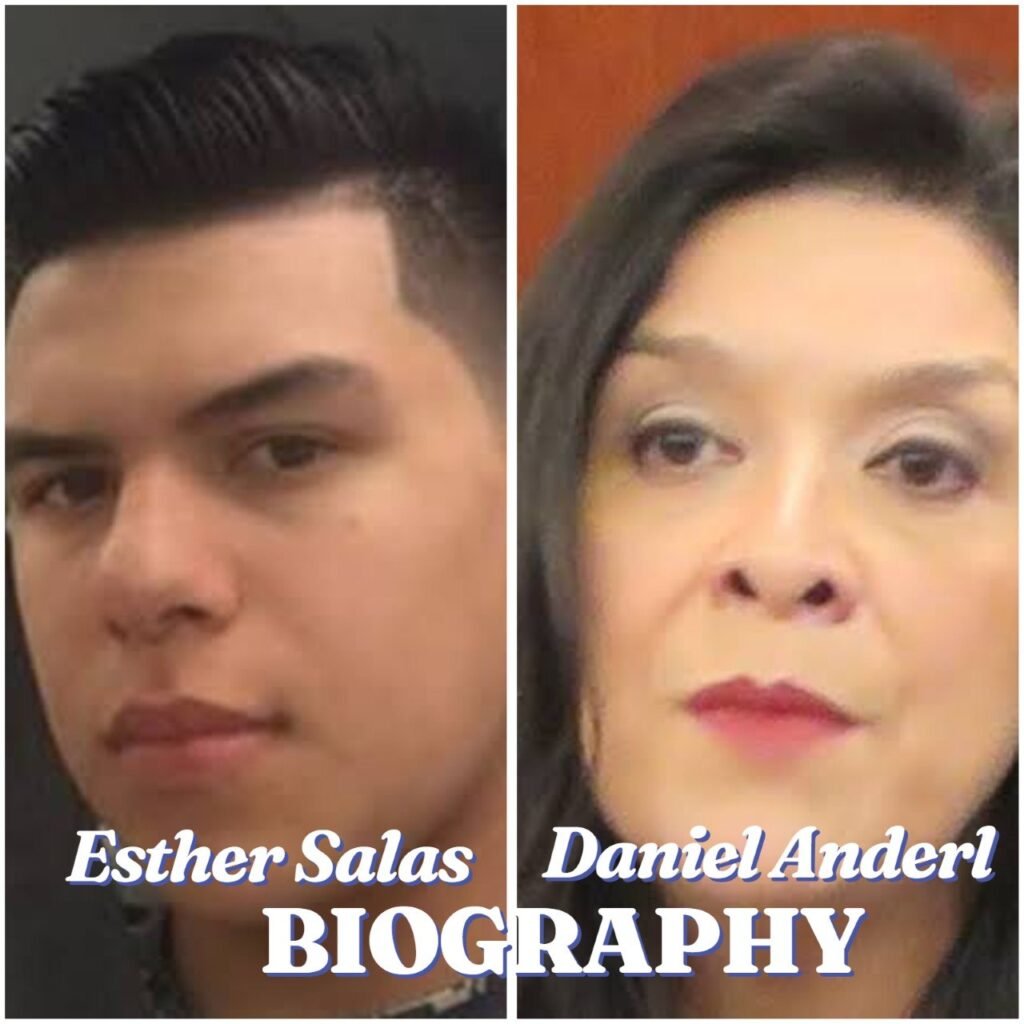
Esther Salas and Daniel Anderl are connected by a story of judicial service, family, tragedy, and lasting legacy that has continued to attract public attention years after the devastating events of July 2020. Esther Salas is a respected American federal judge who made history as the first Latina to serve as a United States District Judge in New Jersey. Her professional career has been defined by public service and a commitment to justice, while her personal life changed dramatically after a violent attack at her family home claimed the life of her only son, Daniel Anderl.
Daniel Anderl was a 20-year-old college student and the only child of Esther Salas and her husband, attorney Mark Anderl. On July 19, 2020, Daniel was fatally shot at the family’s home in North Brunswick, New Jersey, when the gunman arrived disguised as a delivery driver. Mark Anderl was also seriously wounded in the attack, while Judge Salas was unharmed because she was in another part of the house. Investigators later determined that the attack was connected to Salas’s position as a federal judge, turning Daniel’s death into a major national story about threats against members of the judiciary and the vulnerability of judges’ families.
Since Daniel’s death, Esther Salas and her husband have worked to preserve their son’s memory while advocating for stronger protections for judges and their families. Their efforts helped bring greater attention to judicial security and contributed to legislative efforts associated with Daniel’s name, including Daniel’s Law in New Jersey and the federal Daniel Anderl Judicial Security and Privacy Act. In 2026, renewed media coverage of the case, along with honors recognizing Salas’s judicial career and continuing advocacy, has once again brought their story into the public spotlight. This biography explores Esther Salas’s early life, education, legal career, family, Daniel Anderl’s life and legacy, the 2020 tragedy, and the impact the family has had on judicial security in the United States.
Early Life of Esther Salas
Esther Salas was born on December 29, 1968, in California, United States, and grew up in a family with Mexican and Cuban roots. Her mother was Cuban, while her father was Mexican, giving her a multicultural background that later became an important part of her public identity. Salas was raised with an appreciation for education, hard work, and public service, values that would eventually influence her decision to pursue a career in law and become involved in the American justice system. Her early experiences as a Latina growing up in the United States also helped shape her understanding of the importance of equal opportunity and representation.
As a young woman, Salas developed a strong interest in education and the legal profession. She attended Rutgers University, where she earned her undergraduate degree in 1991. Her time at Rutgers played an important role in preparing her for a future in law, and she subsequently continued her education at Rutgers Law School–Newark, where she earned her law degree. Her academic journey was particularly significant because she entered a profession in which Latinas were still underrepresented, eventually becoming one of the pioneering Hispanic women in the federal judiciary.
Before becoming a federal judge, Salas built valuable experience through work in the legal system, including serving as an assistant federal public defender. Her early legal career gave her firsthand experience with criminal cases and the challenges faced by people involved in the justice system. These experiences helped establish the foundation for her later judicial career and prepared her for the historic appointment that would make her the first Latina to serve as a U.S. District Judge in New Jersey. Her early life and education therefore provide important context for understanding both her professional achievements and her later advocacy for judicial security and equal justice.
Education of Esther Salas
Esther Salas began her higher education at Rutgers University, where she developed the academic foundation that would eventually lead her into the legal profession. She graduated from Rutgers in 1991, completing her undergraduate studies before pursuing a career in law. Her time at the university was an important stage in her development because it provided her with the educational background and preparation necessary to enter a highly competitive legal field.
After completing her undergraduate degree, Salas continued her education at Rutgers Law School–Newark, where she earned her Juris Doctor (J.D.) degree. Her legal education prepared her for work within the American justice system and gave her the knowledge necessary to practice law. Studying law at Rutgers also placed her within an institution with a strong tradition of preparing lawyers for public service, an area that would become central to Salas’s professional career.
Salas’s educational journey ultimately became an important part of her historic career in the judiciary. After graduating from law school, she entered the legal profession and gained experience through positions including work as an assistant federal public defender. Her academic training, combined with her practical legal experience, helped prepare her for later judicial appointments. She eventually became the first Latina to serve as a U.S. District Judge in New Jersey, making her educational and professional journey an important part of her broader legacy as a pioneering figure in the federal judiciary.
Career of Esther Salas
Esther Salas began her legal career after graduating from Rutgers Law School–Newark, entering the justice system at a time when Latino representation within the legal profession and federal judiciary was still limited. She gained valuable courtroom and criminal-law experience as an assistant federal public defender in New Jersey, where she represented defendants and developed a reputation as a committed public servant. Her work as a public defender gave her direct experience with the challenges faced by people involved in the criminal justice system and strengthened her understanding of the importance of fair representation and due process.
Salas later moved into the federal judiciary, serving as a United States magistrate judge for the District of New Jersey. Her appointment to the magistrate bench was historic because she became the first Latina to serve as a federal magistrate judge in New Jersey. In this role, she handled a range of judicial responsibilities and gained extensive experience in federal court proceedings. Her performance and experience eventually led to her nomination to the U.S. District Court for the District of New Jersey by President Barack Obama in 2009. The United States Senate confirmed her nomination in 2011, allowing her to become the first Latina to serve as a U.S. District Judge in New Jersey.
As a federal district judge, Salas has continued to handle cases within the federal judicial system while also becoming an increasingly prominent advocate for judicial security and equal access to justice. Her career took on a deeply personal dimension following the 2020 attack at her family home, in which her son, Daniel Anderl, was killed and her husband, Mark Anderl, was seriously injured. Since then, Salas has used her public platform to advocate for stronger protections for judges and their families, including measures designed to limit the public exposure of judges’ personal information. Her professional achievements and advocacy have made her an important figure in discussions about diversity in the judiciary, judicial independence, and the safety of America’s federal judges.
Death of Daniel Anderl and Cause of Death
Daniel Mark Anderl, the only son of U.S. District Judge Esther Salas and attorney Mark Anderl, died on July 19, 2020, at the age of 20. He was a college student at The Catholic University of America in Washington, D.C., and was home with his parents in North Brunswick, New Jersey, during the summer. Daniel had recently celebrated his 20th birthday and was preparing to begin his junior year.
Daniel died after being shot in the chest at the family’s home by Roy Den Hollander, a lawyer who arrived disguised as a delivery driver. When Daniel opened the door, Hollander opened fire. Investigators later determined that Esther Salas was the apparent intended target, but she was in the basement at the time and was not injured. Daniel’s father, Mark Anderl, was also shot multiple times and survived.
Daniel’s death was therefore a homicide caused by a gunshot wound to the chest. His family and those who investigated the attack have described his actions as heroic, with evidence indicating that he stood between the gunman and his father. Judge Salas has said that her son gave his life protecting his parents. Daniel’s death subsequently became a major catalyst for Esther Salas and Mark Anderl’s advocacy for stronger privacy and security protections for federal judges and their families.
What Happened to Roy Den Hollander?
Roy Den Hollander fled the New Jersey scene after the shooting and was later found dead in Sullivan County, New York. Authorities determined that he had died from an apparent self-inflicted gunshot wound. Investigators also found a firearm believed to be connected to the New Jersey attack and an envelope addressed to Judge Salas in his vehicle.
Personal Life and Family of Esther Salas
Esther Salas is married to Mark A. Anderl, an attorney who has also had a career in the legal profession. The couple built their family life in New Jersey, where Salas’s judicial career eventually made her a prominent figure in the state’s federal court system. Their marriage has remained an important part of Salas’s personal story, particularly because Mark was with her during the devastating 2020 attack that changed their family forever.
Esther and Mark had one child, their son Daniel Anderl. Daniel was born on July 13, 2000, and was the couple’s only child. He attended The Catholic University of America in Washington, D.C., where he was studying before his death. Daniel was described by people who knew him as a caring and well-liked young man, and his parents have continued to honor his memory through advocacy, scholarships, and initiatives connected to judicial security and community service.
The Salas family’s life was tragically transformed on July 19, 2020, when Roy Den Hollander attacked their home in North Brunswick, New Jersey. Daniel, who was 20 years old, was fatally shot after answering the door, while Mark Anderl was seriously wounded. Esther was not injured because she was in the basement at the time. Following the tragedy, Esther and Mark became advocates for stronger protections for judges and their families, helping bring national attention to the dangers created when judges’ personal information is publicly exposed. Daniel’s name now lives on through legislation, scholarships, and other initiatives established in his memory.
Esther Salas Age, Religion, Nationality, Height and Physical Appearance
As of September 2026, Esther Salas is 57 years old. She was born on December 29, 1968, in California, United States. Salas has spent much of her professional life in New Jersey, where she built her legal career and eventually became a federal district judge. Her age reflects several decades of experience in law and public service, including her work as a federal public defender, magistrate judge, and U.S. District Judge.
Esther Salas is American by nationality and has Mexican and Cuban family heritage. Her father was Mexican and her mother was Cuban. Regarding her religion, reliable public sources do not consistently provide a detailed statement identifying her personal religious affiliation. For that reason, it is more accurate not to assign her a specific religion without a reliable source or a direct public statement from Salas herself.
Information about Esther Salas’s exact height and weight is not reliably documented in authoritative public sources, so specific measurements should not be presented as confirmed facts. In publicly available photographs and appearances, she has a professional and dignified appearance consistent with her role as a federal judge. She is often seen wearing formal courtroom and professional attire, with dark hair and a composed appearance. Her public image generally reflects the seriousness and professionalism associated with her long career in the American judicial system.
Esther Salas Social Media Presence
Esther Salas maintains a relatively private public profile, and there is no reliably verified personal Instagram, Facebook, TikTok, or X (formerly Twitter) handle publicly confirmed to belong to the federal judge. Searches for accounts using names such as @esthersalas produce multiple unrelated people with the same name, making it inappropriate to identify any of them as Judge Salas without confirmation. Her official professional activities are instead commonly publicized through court, university, legal-organization, and judicial-advocacy channels.
Although Judge Salas does not appear to maintain a widely publicized personal social-media account, she has continued to participate in public events, interviews, educational programs, and discussions concerning judicial security and her family’s experience. Her work has received attention from organizations including Rutgers University, which has highlighted her judicial career and advocacy following the death of her son, Daniel Anderl.
For readers searching for Esther Salas online, it is therefore safer to follow official institutional pages and verified publications rather than unverified accounts using the handle @esthersalas or similar variations. No specific social-media handle should currently be presented as Judge Esther Salas’s official personal account unless it can be confirmed by her, the U.S. District Court for the District of New Jersey, or another authoritative source.
Esther Salas Net Worth
Esther Salas’s exact net worth is not publicly confirmed, so figures published online should be treated as estimates rather than verified facts. As a federal district judge, her primary source of income is her judicial salary. According to the U.S. Courts, the annual salary for a U.S. district judge is $249,900 in 2026.
Considering her long legal career, including years as an assistant federal public defender, U.S. magistrate judge, and federal district judge, a reasonable estimated net worth for Esther Salas could be around $1 million to $3 million. This is an estimate based on her professional career and earning potential, not a figure officially reported by Salas. She has served as a district judge since 2011 and previously served as a magistrate judge from 2006 to 2011.
It is important to distinguish net worth from annual salary. Salas’s $249,900 judicial salary does not mean that she has accumulated that amount as personal wealth each year, because taxes, living expenses, investments, property and other financial obligations affect overall net worth. Federal judges are required to file financial disclosure reports, and the U.S. Courts provides a public system for accessing available reports, but these disclosures should not automatically be interpreted as a single official net-worth figure.
Legacy of Esther Salas and Daniel Anderl
Esther Salas’s legacy is closely connected to her historic career as a federal judge and her role as a pioneering Latina in the New Jersey judiciary. As the first Latina to serve as a U.S. District Judge in New Jersey, she has represented an important milestone for diversity and inclusion within the federal judicial system. Beyond her courtroom responsibilities, Salas has become particularly recognized for speaking about judicial independence and the need to protect judges and their families from threats and the misuse of publicly available personal information.
The legacy of her son, Daniel Anderl, has become an important part of that work. After Daniel was killed in the 2020 attack at the Salas family home, Esther Salas and Mark Anderl dedicated significant effort to improving judicial security. Daniel’s name has been attached to legislative and educational initiatives, including Daniel’s Law in New Jersey and the federal Daniel Anderl Judicial Security and Privacy Act. Memorial scholarships and other programs have also been established in his honor, allowing his name to remain connected to education, public service, and efforts to protect members of the judiciary.
Together, Esther Salas’s career and Daniel Anderl’s memory have created a legacy that extends beyond one family or one tragic event. Salas continues to use her experience to encourage greater awareness of the risks faced by judges, court employees, and their families, while Daniel’s story remains a powerful reminder of the personal consequences that judicial threats can have. Through her judicial service, advocacy, and efforts to preserve her son’s memory, Esther Salas has helped make judicial security a broader public issue and ensured that Daniel’s name continues to be associated with efforts to make the justice system safer.
Conclusion
Esther Salas and her late son Daniel Anderl remain connected to a story of judicial service, family, tragedy, and resilience. Salas’s historic career as the first Latina to serve as a U.S. District Judge in New Jersey has made her an important figure in the American judiciary, while Daniel’s tragic death at age 20 profoundly changed the family’s life and inspired greater advocacy for judicial security. Through her continued public service and efforts to protect judges and their families, Salas has helped ensure that Daniel’s memory carries a lasting purpose. Their story continues to highlight the importance of family, courage, justice, and the need to safeguard those who serve the legal system.
Frequently Asked Questions About Esther Salas and Daniel Anderl
Who is Esther Salas?
Esther Salas is an American federal judge serving on the U.S. District Court for the District of New Jersey. She became the first Latina to serve as a U.S. District Judge in New Jersey and has also become known for advocating stronger security and privacy protections for judges and their families.
How old is Esther Salas?
Esther Salas was born on December 29, 1968. As of September 2026, she is 57 years old.
Who was Daniel Anderl?
Daniel Anderl was the only son of Esther Salas and attorney Mark Anderl. He was born on July 13, 2000, and was a college student at The Catholic University of America before his death in 2020.
How did Daniel Anderl die?
Daniel Anderl was fatally shot at his family’s home in North Brunswick, New Jersey, on July 19, 2020. The attacker, attorney Roy Den Hollander, had reportedly disguised himself as a delivery driver. Daniel was 20 years old.
Who was Esther Salas’s husband?
Esther Salas is married to Mark A. Anderl, an attorney. Mark was also shot and seriously wounded during the 2020 attack that killed their son Daniel.
Was Esther Salas injured in the 2020 attack?
No. Esther Salas was not physically injured during the attack because she was in the basement of the home when the gunman opened fire. Her husband, Mark Anderl, was seriously wounded, while their son Daniel was killed.
Who killed Daniel Anderl?
Daniel Anderl was killed by Roy Den Hollander, an attorney who authorities identified as the gunman responsible for the attack at the Salas family home. Investigators determined that Judge Esther Salas appeared to be the intended target.
What happened to Roy Den Hollander?
Roy Den Hollander was later found dead in New York from an apparent self-inflicted gunshot wound. Investigators connected him to the attack on the Salas family and to the killing of federal judge Esther Salas’s son.
What is Daniel’s Law?
Daniel’s Law is a New Jersey law named in memory of Daniel Anderl. It was created to provide stronger protections for judges and other public officials by limiting the public availability of certain personal information that could potentially be used to threaten or target them and their families.
What is the Daniel Anderl Judicial Security and Privacy Act?
The Daniel Anderl Judicial Security and Privacy Act is federal legislation named after Daniel Anderl that addresses the protection of federal judges’ personal information. Its broader purpose is to strengthen judicial security and reduce the risk that publicly available personal information could be used to threaten judges or their families.
What is Esther Salas’s net worth?
Esther Salas’s exact net worth has not been publicly confirmed. Based on her decades-long legal and judicial career, an estimated net worth of approximately $1 million to $3 million can be used as an unofficial estimate, although this should not be treated as an official financial figure.
Does Esther Salas have social media accounts?
There is no reliably confirmed personal social-media account publicly identified as belonging to Judge Esther Salas. Accounts using names such as @esthersalas should not automatically be assumed to belong to the federal judge unless they are verified through an authoritative source.
What is Esther Salas known for?
Esther Salas is best known for her historic career as a federal judge, her distinction as the first Latina U.S. District Judge in New Jersey, and her advocacy for judicial security following the 2020 killing of her son, Daniel Anderl.