
Introduction
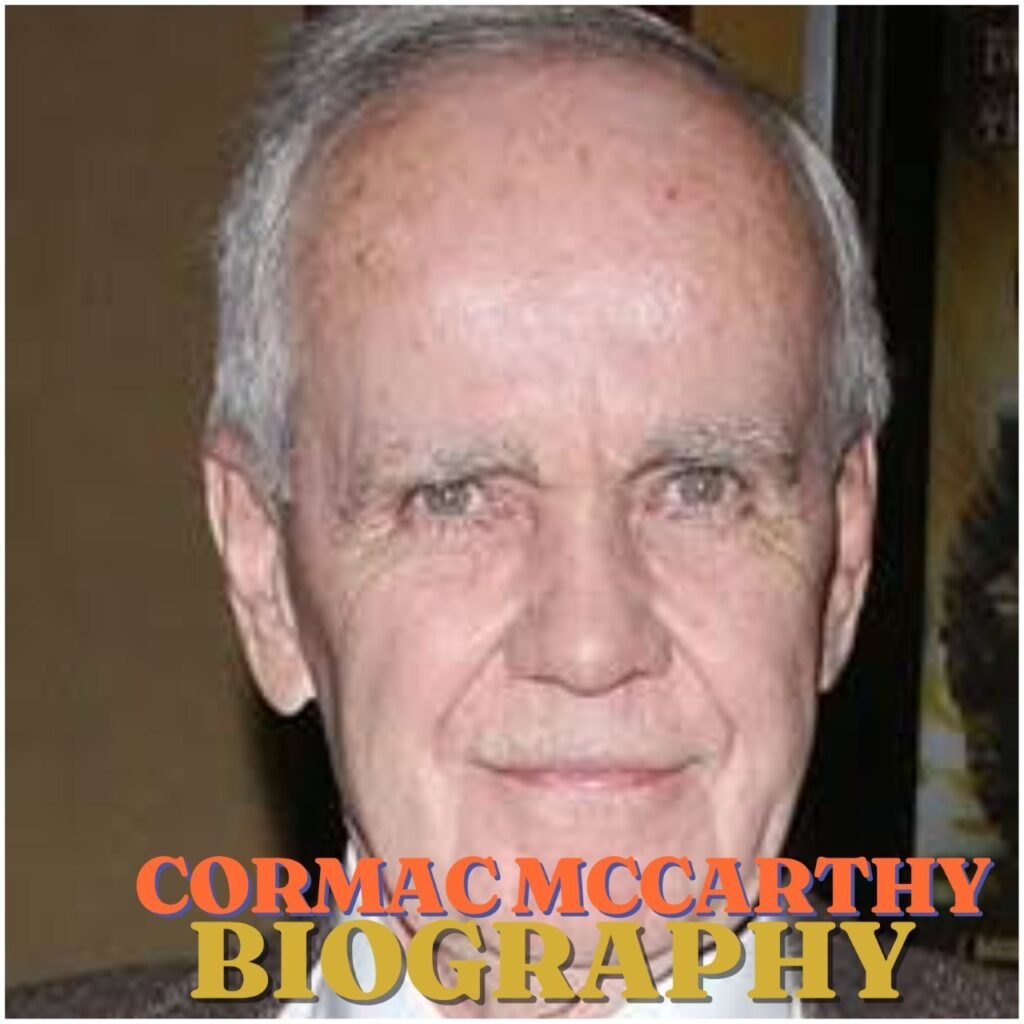
Cormac McCarthy was one of the most influential American novelists of the modern era, celebrated for his powerful storytelling, distinctive writing style, and unflinching exploration of violence, morality, survival, and the human condition. He gained international recognition through literary works such as Blood Meridian, All the Pretty Horses, No Country for Old Men, and The Road. His novels often placed complicated characters in harsh environments, forcing them to confront difficult moral choices and the darker sides of human nature. Although his writing could be unsettling, it also explored love, sacrifice, loyalty, and the determination to survive in a world that frequently appears indifferent to human suffering.
Born Charles McCarthy Jr. on July 20, 1933, in Providence, Rhode Island, United States, he later became known professionally as Cormac McCarthy. He grew up in Tennessee, where the Appalachian landscape and Southern culture influenced his early literary imagination. Unlike many writers who actively sought publicity, McCarthy was famously private and rarely granted interviews. He preferred to let his books speak for themselves, and his reputation grew largely through the strength of his novels rather than through frequent public appearances. His work moved across literary genres, including Southern Gothic fiction, Western novels, crime fiction, philosophical drama, and post-apocalyptic literature.
McCarthy’s literary career lasted nearly six decades and earned him some of the most prestigious honours in American literature, including the Pulitzer Prize for Fiction for The Road and the National Book Award for All the Pretty Horses. His novels also inspired successful film adaptations, including the Academy Award-winning movie No Country for Old Men. He died on June 13, 2023, at the age of 89, but his books continue to attract readers, scholars, and filmmakers. In October 2026, renewed public discussion about his life followed the publication of a new biography, Cormac McCarthy: A Legacy Revisited, which revisits his personal relationships, literary career, and the circumstances surrounding his final novels.
Early Life and Family Background
Cormac McCarthy was born Charles McCarthy Jr. on July 20, 1933, in Providence, Rhode Island. He was the third of six children born to Charles Joseph McCarthy and Gladys Christina McGrail McCarthy. His father worked as a lawyer for the Tennessee Valley Authority, an organisation involved in regional development and public infrastructure. In 1937, when McCarthy was still a young child, the family moved to Knoxville, Tennessee, where his father continued his professional career. This move placed McCarthy in the Southern United States, a region whose landscapes, social traditions, religious influences, and complicated history would later appear throughout his fiction.
Growing up in Knoxville exposed McCarthy to the Appalachian environment that influenced his early novels. The region’s mountains, forests, small communities, and working-class experiences became part of the atmosphere of books such as The Orchard Keeper, Outer Dark, Child of God, and Suttree. His early literary world was shaped by a sense of isolation, poverty, family conflict, and the fragile relationship between human beings and their surroundings. Although his novels were fictional, the places and social conditions he observed helped him develop a distinctive understanding of the American South and its cultural complexities.
McCarthy’s relationship with writing developed gradually. He was interested in reading and ideas, but he did not initially follow a conventional path towards becoming a professional novelist. His later life was characterised by periods of financial difficulty, relocation, and intense dedication to writing. He eventually moved away from Tennessee and settled in the American Southwest, where the deserts, borderlands, and vast open landscapes gave his fiction a new direction. His movement from Appalachia to the Southwest became an important turning point in his career, influencing some of the ambitious Western novels for which he is now best known.
Education
Cormac McCarthy attended Catholic schools while growing up in Knoxville, Tennessee. His early education exposed him to religious ideas, literature, and the traditions of formal learning, although he did not ultimately complete a conventional university degree. His intellectual interests expanded beyond the classroom as he became increasingly drawn to books, history, philosophy, and the observation of human behaviour. These interests later became central to his writing, which frequently examined questions about morality, violence, religion, and the meaning of existence.
In 1951, McCarthy enrolled at the University of Tennessee, where he studied for a short period before leaving to join the United States Air Force in 1953. He served for four years, including time stationed in Alaska. His military service took him away from his familiar surroundings and exposed him to different experiences. During this period, he read extensively, strengthening his knowledge of literature and expanding his intellectual interests. After leaving the Air Force, he returned to the University of Tennessee in 1957 and continued studying, but he eventually left without earning a degree.
While at university, McCarthy began publishing short stories in the student literary magazine and received the Ingram-Merrill Award for creative writing in 1959 and 1960. These early recognitions provided encouragement as he pursued literature more seriously. He later moved to Chicago, where he worked while continuing to write. His educational journey demonstrated that his literary development came through a combination of formal study, independent reading, practical experience, and a sustained commitment to writing rather than through the completion of a university qualification.
Career and Rise to Literary Fame
Early writing career and first novel
Cormac McCarthy began establishing himself as a novelist in the 1960s. His first novel, The Orchard Keeper, was published in 1965. Set in rural Tennessee, the book introduced readers to the landscapes, characters, and themes that would shape much of his early work. It explored isolation, violence, changing communities, and the relationship between people and the natural world. Although the novel did not immediately make him a household name, it established him as a serious literary voice with a style that differed from mainstream commercial fiction.
McCarthy followed his debut with Outer Dark in 1968 and Child of God in 1973. Both works explored disturbing aspects of human behaviour, including cruelty, alienation, and the breakdown of social and moral boundaries. His novels often featured characters living at the edges of society, people who were misunderstood, isolated, or involved in acts that challenged conventional ideas of humanity. These books earned him a growing readership among literary critics and readers who appreciated challenging, unconventional fiction.
In 1979, he published Suttree, a novel set in and around Knoxville that followed the life of a man living on the margins of society. The book combined dark humour, vivid descriptions, and complex characters, reflecting McCarthy’s deep familiarity with the Southern landscape. Although his early novels received critical attention, he remained relatively obscure to the wider reading public for many years. His later move to the American Southwest would help him develop a new literary direction and bring his work to a much larger audience.
Blood Meridian and the American West
One of McCarthy’s most important works is Blood Meridian, published in 1985. Set largely along the United States–Mexico border during the nineteenth century, the novel follows a young protagonist known as the kid as he becomes involved with a violent group of men operating in the frontier regions. The book depicts brutal encounters, historical conflict, and the destructive consequences of human violence. Its graphic content and philosophical depth made it one of McCarthy’s most challenging novels, but its literary reputation has grown substantially over time.
Blood Meridian explored the American West in a way that departed from the heroic image often associated with traditional Western stories. Instead of presenting the frontier as a place of uncomplicated courage and freedom, McCarthy portrayed it as a landscape marked by conquest, cruelty, greed, and moral uncertainty. His descriptions of the desert and borderlands were both beautiful and terrifying, creating a setting in which human ambition and violence appeared inseparable from the history of the region.
The novel did not initially achieve the commercial success of some of McCarthy’s later books, but it became one of the works most frequently discussed by literary scholars and critics. Its complex language, historical references, and examination of violence helped establish his reputation as a writer willing to confront difficult questions without providing easy answers. Today, Blood Meridian is often regarded as one of his defining achievements and a major work of American literature.
The Border Trilogy and mainstream success
McCarthy reached a broader audience with the publication of All the Pretty Horses in 1992. The novel follows John Grady Cole, a young Texan who travels into Mexico with a friend in search of a life beyond the limitations of his home environment. Through its exploration of love, loyalty, responsibility, and the end of an old way of life, the book presented McCarthy’s literary concerns in a form that was more accessible to many readers than his earlier novels.
All the Pretty Horses won the National Book Award for Fiction in 1992 and helped establish McCarthy as a major figure in contemporary American literature. Its success also marked the beginning of what became known as the Border Trilogy, which continued with The Crossing in 1994 and concluded with Cities of the Plain in 1998. The trilogy explored the lives of young men moving between Texas and Mexico, often confronting difficult choices in landscapes where traditional ideas of honour and freedom were increasingly uncertain.
The Border Trilogy combined Western settings with philosophical reflection and emotional storytelling. McCarthy examined the relationship between people and the places they inhabit, the passing of cultural traditions, and the costs of pursuing ideals in an unpredictable world. These novels broadened his readership while preserving the seriousness and literary ambition that had characterised his earlier work. The trilogy remains an important part of his contribution to American fiction.
No Country for Old Men and international recognition
In 2005, McCarthy published No Country for Old Men, a crime novel set in Texas that follows the consequences of a drug deal gone wrong. The story centres on Llewelyn Moss, who discovers a large amount of money at the scene of a violent confrontation, and Anton Chigurh, a relentless killer who pursues him. Sheriff Ed Tom Bell serves as an important counterpoint to the violence, reflecting on the changes he sees in the world and his difficulty understanding the cruelty surrounding him.
The novel differed from some of McCarthy’s earlier works because it used a more direct narrative style and moved with the urgency of a thriller. Nevertheless, it retained his interest in fate, moral responsibility, violence, and the limits of human control. The story also explored the tension between older values and a world that appears increasingly difficult to comprehend.
The Coen brothers adapted the novel into a film released in 2007, starring Javier Bardem, Josh Brolin, and Tommy Lee Jones. The film received widespread critical acclaim and won four Academy Awards, including Best Picture. Its success introduced McCarthy’s work to audiences who might not otherwise have encountered his novels and confirmed that his stories could be powerful on both the page and the screen.
The Road and the Pulitzer Prize
In 2006, McCarthy published The Road, one of his most widely read novels. Set in a post-apocalyptic world devastated by an unspecified catastrophe, the story follows a father and his young son as they travel through a ruined landscape in search of safety. They face starvation, cold, violence, and the constant threat posed by other survivors. Despite the bleak setting, the novel centres on the bond between father and child and the effort to preserve compassion in circumstances that seem to encourage cruelty.
The novel received the Pulitzer Prize for Fiction in 2007, further strengthening McCarthy’s standing as one of America’s leading writers. Readers and critics praised its emotional power, spare prose, and exploration of the relationship between hope and despair. The story’s father-son relationship also carried personal resonance because McCarthy had a son, John, who was an important part of his later family life.
The Road was adapted into a film released in 2009, starring Viggo Mortensen as the father and Kodi Smit-McPhee as the son. The adaptation brought the novel’s harsh landscapes and emotional tension to the screen. The book’s success helped make McCarthy more widely known, even though he continued to avoid the publicity and interviews commonly associated with bestselling authors.
Plays, screenplays and other literary work
Although McCarthy was primarily known as a novelist, he also wrote plays and screenplays. His play The Stonemason explored family relationships, responsibility, tradition, and the passing of knowledge between generations. His work The Sunset Limited, published in 2006, presented a philosophical confrontation between two characters whose contrasting worldviews raised questions about faith, despair, and the possibility of meaning in life.
McCarthy also wrote the screenplay for The Counselor, a crime thriller released as a film in 2013. The project allowed him to explore themes of greed, corruption, and the consequences of entering a dangerous criminal world. Although the film received mixed reviews, it demonstrated that his interest in storytelling extended beyond conventional novels and literary fiction.
His writing was notable for its distinctive use of punctuation, long descriptive passages, and dialogue that often avoided conventional quotation marks. He was willing to depart from standard grammatical habits when he believed the choices supported the rhythm or intensity of the prose. This style became one of the most recognisable features of his work, influencing other writers and prompting extensive critical discussion.
The Passenger and Stella Maris
In 2022, McCarthy published The Passenger and Stella Maris, two interconnected novels that became his final published books. The Passenger follows Bobby Western, a salvage diver whose life becomes entangled with a mysterious missing aircraft and a series of unsettling questions. The novel explores grief, memory, mathematics, physics, identity, and the uncertainty of human knowledge.
Stella Maris centres on Alicia Western, Bobby’s sister, who is receiving psychiatric care and engages in extended conversations about mathematics, philosophy, reality, and her personal struggles. The two novels are closely connected through their characters and intellectual concerns, presenting a more explicitly philosophical side of McCarthy’s work. They also reflect his long-standing interest in scientific ideas and his relationships with researchers at the Santa Fe Institute.
The books received substantial attention because they appeared shortly before his death in 2023. In October 2026, a newly published biography by Tracy Daugherty renewed discussion of McCarthy’s final years and raised questions about the authorship and development of Stella Maris. Those claims have attracted attention, but questions raised in a biography should not be treated as established fact. McCarthy’s publisher has disputed the suggestion that the novel was not entirely his work, and the controversy remains a matter of public literary discussion rather than a settled conclusion.
Why Cormac McCarthy Is Trending in October 2026
Cormac McCarthy has returned to public discussion in October 2026 following the publication of Cormac McCarthy: A Legacy Revisited, a biography written by Tracy Daugherty. Published in early October, the book examines McCarthy’s life, literary development, family relationships, marriages, friendships, and the personal costs of his commitment to writing. It has attracted interest from readers and literary critics because McCarthy was notoriously private, leaving many aspects of his life less publicly understood than those of other celebrated authors.
The new biography has also sparked debate about the development of McCarthy’s final novels, particularly Stella Maris, published in 2022. The book discusses questions raised about the extent of McCarthy’s authorship of the novel. These claims have not been established as fact, and his publisher has disputed the suggestion that the work was not entirely written by McCarthy. The discussion has nevertheless renewed interest in how scholars assess an author’s manuscripts, creative process, and final published works.
Beyond the controversy, the renewed attention reflects McCarthy’s continuing importance in American literature. His books remain widely discussed for their treatment of violence, history, family, science, and morality. The publication of a major new biography has encouraged readers to revisit his novels and consider how his personal experiences, geographical movements, and intellectual interests influenced the stories he left behind.
Personal Life and Family
Cormac McCarthy lived a relatively private personal life and rarely discussed his family in public. He married three times and had two sons, Cullen McCarthy and John Francis McCarthy. His relationships and family responsibilities formed part of his life story, although he generally preferred to keep his private affairs away from public attention. His dedication to writing frequently required periods of solitude, and he spent much of his career moving between places in pursuit of the environment and concentration he needed for his work.
His first marriage was to Lee Holleman, whom he met during his early years at the University of Tennessee. The couple had a son, Cullen, and later divorced. McCarthy subsequently married Anne DeLisle, a singer and dancer whom he met while living in Europe. That marriage also ended in divorce. His third marriage was to Jennifer Winkley, with whom he had his son John Francis. This relationship also ended, and McCarthy spent his later years living in New Mexico. His marriages and family relationships have received renewed attention in biographical accounts of his life, although some details have remained private or have been described differently in different accounts.
McCarthy was not a celebrity who regularly appeared in magazines or discussed his personal life through interviews. He generally avoided the public spotlight and rarely offered explanations of his novels. Friends and colleagues nevertheless described him as intellectually curious, generous, and interested in a wide variety of subjects, including mathematics, physics, history, music, and philosophy. His son John was an important part of his later life, and the father-son relationship is often discussed in connection with the emotional themes of The Road. The novel’s focus on a father trying to protect his child in a dangerous world has become one of the most moving elements of McCarthy’s literary legacy.
Age, Religion, Tribe, Nationality, Height and Physical Appearance
Cormac McCarthy was 89 years old when he died on June 13, 2023. He was born on July 20, 1933, in Providence, Rhode Island, United States. Had he lived, he would have turned 93 on July 20, 2026. His literary career spanned nearly six decades, during which he published influential novels, plays, and screenplays.
McCarthy was American by nationality and came from a family of Irish Catholic background. He grew up in Tennessee and spent significant periods of his adult life in the American Southwest, particularly Texas and New Mexico. His cultural background and the environments in which he lived influenced his writing, especially his depictions of Southern communities, the American frontier, and the borderlands between the United States and Mexico. He was not associated with an African tribal identity; his family background was rooted in the United States and Irish ancestry.
McCarthy’s religious outlook was complex and is best understood through the philosophical questions explored in his books rather than through a simple label. Religious imagery, biblical language, questions about good and evil, and reflections on human suffering appear throughout his fiction. However, his novels do not always provide clear answers about faith or morality, and his personal religious beliefs should not be assumed solely from the themes of his writing.
A verified official height measurement for McCarthy is not widely documented. In photographs from different stages of his life, he was often seen wearing understated clothing, with a distinctive face and a reserved public demeanour. He generally avoided the polished image associated with celebrity culture and preferred a quiet life centred on writing, reading, intellectual discussion, and personal interests. His public image became closely associated with his serious literary reputation and his reluctance to seek attention.
Social Media Presence
Cormac McCarthy did not maintain a widely recognised personal social media presence. He belonged to a generation of writers whose careers developed long before platforms such as Instagram, Facebook, and X became central to public communication. Even as digital media grew, he remained notably private and rarely participated in the publicity campaigns or online conversations commonly associated with contemporary bestselling authors.
Readers can still encounter his work through publishers, literary institutions, libraries, universities, book clubs, and online literary communities. Discussions about his novels, their adaptations, and his influence continue across digital platforms. His work is frequently examined through book reviews, essays, academic discussions, and conversations among readers who are interested in American literature.
Although McCarthy did not build his reputation through social media, his literary influence has continued to spread through these channels. Readers regularly discuss the themes and characters of Blood Meridian, The Road, No Country for Old Men, and his other novels. His limited public presence helped preserve the sense of mystery surrounding him, while the continuing interest in his books ensures that his work remains visible to new generations of readers.
Cormac McCarthy Net Worth and Sources of Income
Cormac McCarthy’s exact net worth at the time of his death was not reliably established in publicly available financial records. Estimates of a deceased author’s wealth can be difficult to verify because they depend on private assets, royalties, property, investments, publishing agreements, and the financial arrangements of an estate. For that reason, a specific figure should not be treated as confirmed without reliable documentation.
McCarthy’s principal source of income was his writing. He earned money through the publication of novels, short stories, plays, and screenplays, as well as through the sale of film adaptation rights. As his readership expanded, books such as All the Pretty Horses, No Country for Old Men, and The Road reached wider commercial audiences. The success of film adaptations also increased public interest in his novels and helped extend their commercial life.
His literary reputation has continued to support interest in his work after his death. New editions, translations, adaptations, scholarly studies, and renewed media attention can all contribute to the ongoing commercial value of an author’s catalogue. However, sales revenue does not equal personal wealth, and the financial details of McCarthy’s estate are not fully public. The most accurate conclusion is that he achieved considerable literary and commercial success, while his precise net worth remains unverified.
Cause of Death
Cormac McCarthy died on June 13, 2023, at his home in Santa Fe, New Mexico, United States. He was 89 years old. His death was confirmed by his publisher, and his son John McCarthy confirmed the news. Reports stated that he died of natural causes.
His death marked the end of a long literary career that had helped reshape modern American fiction. Writers, critics, publishers, readers, and colleagues paid tribute to his distinctive prose, intellectual curiosity, and ability to confront difficult subjects without simplifying them. His passing was widely recognised as a major loss to literature, particularly because of his influence on writers interested in the American West, philosophical fiction, and stories about survival and human morality.
Although McCarthy is no longer alive, his novels continue to be published, studied, discussed, and adapted. His death also encouraged renewed attention to his private life, intellectual interests, and relationships with other writers and scientists. The continued publication of biographies and critical studies demonstrates that his life and work remain subjects of considerable literary interest.
Legacy and Contributions to Literature
Cormac McCarthy’s most enduring contribution was his ability to develop a distinctive literary style that challenged readers while remaining deeply concerned with human experience. His writing combined vivid descriptions of landscapes with difficult questions about violence, morality, fate, and survival. He often avoided conventional punctuation and dialogue formatting, creating prose that could feel ancient, immediate, and unsettling at the same time. This approach helped distinguish his novels from much of mainstream fiction and inspired extensive discussion among writers and critics.
His work also transformed the way the American West and the Southern United States have been represented in literature. Rather than relying on romanticised accounts of frontier life, McCarthy explored conquest, cruelty, social collapse, and the fragility of moral ideals. Blood Meridian challenged traditional Western mythology, while the Border Trilogy examined the end of familiar ways of life and the uncertainty facing young people in changing landscapes. His novels demonstrated that regional settings could become the foundation for broader philosophical questions about history and human nature.
McCarthy’s influence extended beyond literature through successful film adaptations and his relationships with the scientific community. The film version of No Country for Old Men won four Academy Awards, including Best Picture, while The Road introduced his post-apocalyptic storytelling to a wider audience. His association with the Santa Fe Institute also reflected his interest in scientific and philosophical ideas, particularly mathematics and physics. His legacy therefore reaches beyond fiction alone, encompassing discussions about cinema, history, ethics, science, and the possibilities of storytelling.
Conclusion
Cormac McCarthy was a major American novelist whose uncompromising approach to storytelling earned him a lasting place in modern literature. From his early Tennessee novels to the sweeping violence of Blood Meridian, the Western landscapes of the Border Trilogy, the crime and moral uncertainty of No Country for Old Men, and the fragile hope of The Road, he explored the darkest and most compassionate aspects of human existence. His Pulitzer Prize and other honours recognised a body of work that challenged readers and expanded the possibilities of American fiction. Although he died in 2023 at the age of 89, renewed interest in his life and final novels in 2026 shows that his influence has not faded. Through his books, McCarthy continues to invite readers to confront difficult questions about humanity, history, love, suffering, and survival.
Frequently Asked Questions About Cormac McCarthy
Who was Cormac McCarthy?
Cormac McCarthy was an American novelist, playwright, and screenwriter best known for Blood Meridian, All the Pretty Horses, No Country for Old Men, and The Road. He was recognised for his distinctive prose style and his exploration of violence, morality, survival, and human nature.
Is Cormac McCarthy dead?
Yes. Cormac McCarthy died on June 13, 2023, at his home in Santa Fe, New Mexico, at the age of 89.
What was Cormac McCarthy’s real name?
He was born Charles McCarthy Jr. on July 20, 1933, and became professionally known as Cormac McCarthy.
How old was Cormac McCarthy when he died?
He was 89 years old when he died in June 2023. He would have turned 93 on July 20, 2026.
What was the cause of Cormac McCarthy’s death?
McCarthy died of natural causes at his home in Santa Fe, New Mexico, according to his publisher’s announcement.
What was Cormac McCarthy’s most famous book?
Some of his best-known novels are The Road, No Country for Old Men, Blood Meridian, and All the Pretty Horses. The Road won the Pulitzer Prize for Fiction in 2007, while All the Pretty Horses won the National Book Award in 1992.
Did Cormac McCarthy win a Pulitzer Prize?
Yes. He won the 2007 Pulitzer Prize for Fiction for The Road, a post-apocalyptic novel about a father and son trying to survive in a devastated world.
Was No Country for Old Men based on a true story?
No. No Country for Old Men is a work of fiction. It uses a realistic setting and crime narrative to explore violence, chance, and moral uncertainty, but it is not presented as a true account of specific real-life events.
Was Cormac McCarthy married?
Yes. McCarthy married three times. His wives were Lee Holleman, Anne DeLisle, and Jennifer Winkley. Each marriage eventually ended.
Did Cormac McCarthy have children?
Yes. He had two sons, Cullen McCarthy and John Francis McCarthy, from different relationships.
What was Cormac McCarthy’s nationality?
He was American. He was born in Providence, Rhode Island, and grew up in Knoxville, Tennessee, before spending much of his later life in the American Southwest.
What was Cormac McCarthy’s religion?
McCarthy came from an Irish Catholic background, and religious and biblical themes appeared throughout his fiction. However, his personal beliefs were complex, and his literary themes alone do not establish a precise religious identity.
Did Cormac McCarthy attend university?
Yes. He attended the University of Tennessee but left without completing a degree. During his university years, he began publishing short stories and received creative-writing awards.
Why was Cormac McCarthy famous for his writing style?
He was known for spare punctuation, distinctive dialogue formatting, vivid descriptions, philosophical themes, and an often stark portrayal of violence and survival. His style differed from conventional fiction and became one of the most recognisable features of his work.
What is Blood Meridian about?
Blood Meridian is a novel set largely in the nineteenth-century American West and the Mexico–United States borderlands. It follows a young man who becomes involved with a violent group operating in the frontier region. The book explores conquest, brutality, and the darker aspects of human nature.
What is The Road about?
The Road tells the story of a father and his young son travelling through a devastated post-apocalyptic landscape. They struggle to find food and safety while attempting to preserve their humanity in a dangerous world. The novel won the 2007 Pulitzer Prize for Fiction.
What was Cormac McCarthy’s net worth?
His exact net worth was not publicly verified. His income came mainly from book sales, publishing royalties, film adaptations, screenwriting, and other literary work. Any precise figure should be treated as an estimate unless supported by reliable financial information.
Why is Cormac McCarthy trending in October 2026?
He has attracted renewed attention following the publication of Tracy Daugherty’s biography Cormac McCarthy: A Legacy Revisited. The book examines his life and career and has sparked debate about aspects of his final novels, particularly Stella Maris. Some claims raised in the biography have been disputed and should not be treated as established facts.
What is Cormac McCarthy’s legacy?
McCarthy’s legacy lies in his influential novels, distinctive prose, philosophical exploration of human behaviour, and contribution to American literature. His books continue to be read, studied, adapted, and debated, ensuring that his work remains important to readers and scholars around the world.