
Who Was Boxcar Willie?
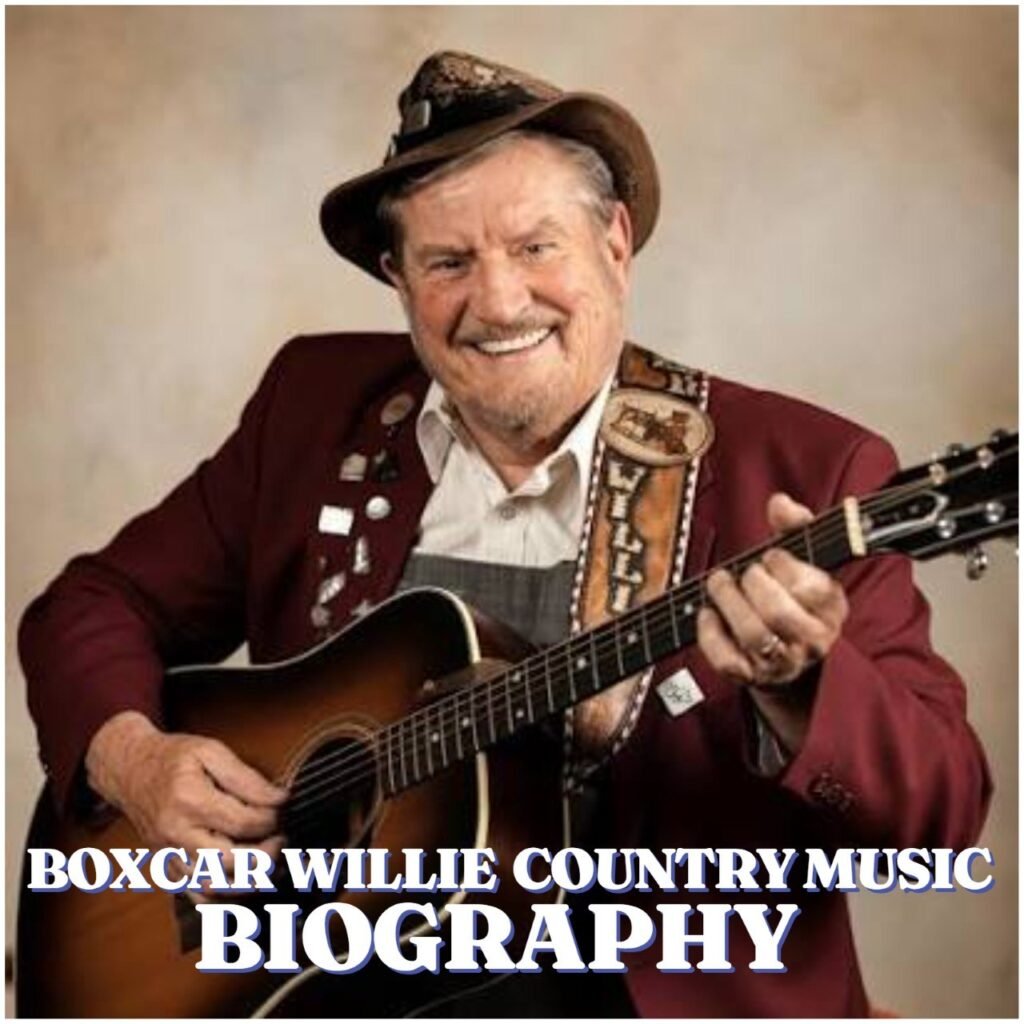
Boxcar Willie, whose real name was Lecil Travis Martin, was an American country music singer, songwriter and entertainer best known for his memorable railroad-hobo character and his dedication to traditional country music. Born on September 1, 1931, in Sterrett, Texas, Boxcar Willie developed a love for country and gospel music from an early age. His childhood was strongly influenced by railroad culture because his father worked for the railroad, and the family lived close to the railway tracks. He later incorporated those experiences into a stage personality that featured striped overalls, a battered hat, a red bandanna and a scruffy hobo appearance. His ability to imitate a train whistle and his performances of railroad songs helped make him one of the most recognizable personalities in traditional country music.
Before achieving international fame as Boxcar Willie, Lecil Travis Martin spent more than two decades serving in the United States Air Force, where he worked as a flight engineer. During his military years, he continued performing music under the name Marty Martin, combining his military responsibilities with his passion for country entertainment. His professional transformation into Boxcar Willie came in the 1970s, when he developed the railroad-hobo character that would eventually become his trademark. His breakthrough was helped by appearances on American television and, particularly, by his discovery by British country-music promoters. His success in Britain eventually brought him international recognition and helped establish him as an unusual but highly successful traditional country performer.
Boxcar Willie later became a member of the Grand Ole Opry, appeared regularly on television programs such as Hee Haw, recorded numerous albums and became one of the most recognizable entertainers associated with Branson, Missouri. He and his wife, Lloene Johnson Martin, purchased a theater in Branson where he performed for many years, building a strong connection with the city’s live country-music scene. Despite suffering from leukemia during the final years of his life, he continued performing when his health permitted. Boxcar Willie died on April 12, 1999, at the age of 67, but his music, railroad-themed persona and contribution to traditional country entertainment have continued to keep his name alive.
Why Is Boxcar Willie Trending Today?
Boxcar Willie has recently attracted renewed attention because September 1, 2026, marked what would have been his 95th birthday. Music-history and country-music publications have used the occasion to remember the singer’s career, distinctive railroad character and contribution to traditional country music. Because Boxcar Willie died in 1999, the renewed attention is commemorative rather than the result of a new personal development. His birthday provides an opportunity for longtime fans and newer audiences to revisit the career of an entertainer whose image and musical style were unlike those of most mainstream country stars.
Another reason Boxcar Willie continues to receive attention is his connection with the Grand Ole Opry and the history of traditional country music. His rise was particularly unusual because he achieved substantial popularity in Britain before becoming a major American country personality. His membership in the Grand Ole Opry in 1981 represented an important recognition of his place in country music, while his television appearances helped bring his distinctive character to a much wider audience. His career demonstrates how a strong stage identity, traditional music and live performance could create an enduring entertainment brand.
Boxcar Willie also remains interesting to audiences because his railroad-hobo persona has become part of American country-music history. His striped overalls, battered hat, storytelling style and famous train-whistle imitation gave him an identity that audiences could immediately recognize. His recordings of railroad songs and traditional country material continue to appeal to listeners interested in classic country, Americana and railroad music. As interest in older country performers grows through anniversaries, music-history features and streaming platforms, Boxcar Willie continues to be remembered as one of the genre’s most distinctive entertainers.
Boxcar Willie’s Early Life and Childhood
Lecil Travis Martin was born on September 1, 1931, in Sterrett, Texas, to Birdie Brown and Edna Jones Martin. He was the eldest son in the family and grew up in an environment where country and gospel music were part of everyday life. His father played the fiddle, and Martin sang with members of his family while growing up. He also listened to the Grand Ole Opry on the radio, an experience that helped shape his interest in country music. His family’s connection to the railroad also became an important influence on his future career because his father worked for the railroad and the family lived in a company house near the tracks.
As a teenager, Martin developed a fascination with trains and the people who traveled by rail. He reportedly rode the rails himself and encountered hobos and other travelers whose appearance and stories later influenced his famous stage character. His connection to railroad life was therefore genuine in the sense that it was part of his upbringing and personal experiences, even though he did not become a professional railroad worker. He also began performing at a young age, including appearances around the Dallas area and an appearance on the Big D Jamboree when he was about 17.
His early exposure to country music, gospel singing, radio performances and railroad culture eventually gave him the ingredients for the character that would define his career. Rather than simply becoming another country singer, Martin developed a recognizable personality that connected music with storytelling and the romantic image of the American railroad traveler. That combination became the foundation of Boxcar Willie and allowed him to stand out in an increasingly competitive country-music industry.
Boxcar Willie Education and Musical Development
There is limited reliable public information about Boxcar Willie’s formal education, and no well-documented college or university career is generally associated with him. His development as a musician was instead shaped largely by his family, his early exposure to country and gospel music, radio listening and practical experience as a performer. Growing up in a musical family gave him an early opportunity to sing, while listening to the Grand Ole Opry introduced him to many of the country performers who influenced his musical direction.
His most important form of musical education came through experience. He learned by listening to traditional country performers, singing with his family and performing in clubs and on radio programs. He was influenced by artists such as Jimmie Rodgers, Roy Acuff and Ernest Tubb, whose music emphasized storytelling, traditional country instrumentation and recognizable personalities. These influences later became evident in Boxcar Willie’s preference for classic country songs and railroad-themed material.
His more than 20 years in the U.S. Air Force also contributed to his development as a disciplined professional performer. While serving as a flight engineer, he continued performing music under the name Marty Martin and gained experience entertaining audiences in different environments. His military career gave him discipline and extensive life experience, while his musical activities allowed him to continue developing the performance skills that eventually helped him transition into full-time entertainment.
Boxcar Willie Career and Rise to Fame
Boxcar Willie’s professional career developed gradually before his distinctive character became an international success. During his years in the U.S. Air Force, he performed under the name Marty Martin, but after leaving military service in 1979, he concentrated more heavily on his music career. During the 1970s, he developed the Boxcar Willie persona, portraying a traveling hobo associated with American railroads. The character was inspired in part by his childhood railroad experiences and by a hobo he encountered who reminded him of a friend named Willie Wilson. The combination of the boxcar image and the name Willie eventually produced the stage name that became internationally famous.
His major breakthrough came through his growing exposure in Britain. After a performance opportunity in Nashville, a British booking agent recognized his potential and helped bring him to the United Kingdom. Boxcar Willie quickly developed a devoted following there, and his appearance at the 1979 Wembley International Country Music Festival became a significant moment in his career. His performance received an enthusiastic response and helped establish him as a major attraction in the British country-music market. His album King of the Road also performed strongly in Britain, demonstrating that his traditional style and railroad persona had international appeal.
After his success overseas, Boxcar Willie returned to greater prominence in the United States. He became a member of the Grand Ole Opry in 1981, an important milestone that recognized his contribution to country music. He also became a regular performer on Hee Haw and appeared on other television programs, bringing his unusual character to millions of viewers. His career was not built around a long string of major American chart singles, but rather around touring, television, album sales, personal appearances and his ability to connect with audiences through a distinctive live show.
Boxcar Willie Personal Life and Family
Boxcar Willie’s personal life included several marriages, but his longest and most significant relationship was with Lloene Sue Johnson Martin. The couple met in 1962, and Lloene eventually became his fourth wife. They remained together until Boxcar Willie’s death in 1999. Their relationship was an important part of his later life and career, particularly as the couple became involved in his Branson business interests and supported his work as a live entertainer.
Boxcar Willie and Lloene had four children: PaulaKay Lane, Tammy Martin LaCore, Larry Martin and Lorrie Martin Brown, with Larry and Lorrie being twins. His family was closely connected to his entertainment career, and his son Larry later performed with him and became known as Boxcar Willie Jr. The involvement of his family in his performances helped extend the Boxcar Willie name beyond Lecil Martin himself and contributed to the continuation of his musical tradition after his death.
Family remained important to Boxcar Willie during his battle with leukemia. Accounts of his final years describe him continuing to work and perform when possible despite the seriousness of his illness. His wife and children were among the people closest to him during his final illness. He died at his home in Branson surrounded by family, leaving behind not only recordings and performances but also a family that had shared much of his professional journey.
Boxcar Willie Age, Nationality, Religion and Physical Appearance
Boxcar Willie was born on September 1, 1931, and died on April 12, 1999, making him 67 years old at the time of his death. If he were alive in 2026, he would have celebrated his 95th birthday on September 1. He was an American citizen and American country music entertainer, having been born in Texas and spending most of his life in the United States apart from his international performances and tours.
There is no reliable public evidence establishing a specific religious denomination for Boxcar Willie, so it would be inaccurate to assign him a particular denomination without stronger documentation. However, gospel music was an important part of his childhood and musical upbringing. He sang in a church choir when he was young and retained an association with traditional country and gospel music throughout his career. His musical background therefore reflected the strong influence of both country and Christian gospel traditions.
Boxcar Willie was particularly recognizable because of his physical appearance and stage clothing. His trademark look included striped bib overalls, a red bandanna, worn shoes, a battered hat and a scruffy beard or stubble, creating the appearance of a traveling railroad hobo. His appearance was deliberately connected to the character he portrayed and became as important to his public identity as his music. A reliable exact height for Boxcar Willie is not well documented, so specific height figures circulating online should be treated cautiously rather than presented as fact.
Boxcar Willie Social Media and Digital Presence
Because Boxcar Willie died in 1999, he did not have personal social-media accounts during his lifetime. There is therefore no verified personal Instagram, Facebook, TikTok or X account that can accurately be described as an account operated by Boxcar Willie himself. Any social-media pages using his name today are generally fan, archival, family-related or tribute accounts rather than personal accounts maintained by the singer.
His digital presence nevertheless continues through recordings, historical videos, photographs, television appearances and fan-created tributes. Streaming services and online video platforms have also made it easier for younger audiences to discover his traditional country recordings and railroad performances. His recognizable image and unusual career have helped maintain interest in his work even decades after his death.
The continued circulation of Boxcar Willie’s performances online is particularly important to his legacy because much of his popularity was built through live entertainment and television. Digital platforms now allow audiences who never saw him perform in person to experience his train-whistle imitation, railroad songs, storytelling and distinctive stage character. In this way, modern media has helped preserve aspects of his career for new generations.
Boxcar Willie Net Worth
There is no officially confirmed public figure for Boxcar Willie’s net worth at the time of his death. Some online sources have published estimates in the multi-million-dollar range, including figures around $4 million to $5 million, but these should be regarded as estimates rather than verified estate records. Because there is no authoritative public estate statement establishing a precise figure, it is more accurate to discuss his financial success in relation to his career and business activities than to claim an exact net worth as fact.
Boxcar Willie earned money from several areas of the entertainment industry, including album sales, touring, television appearances, personal appearances and merchandise and direct-response promotional work. His international success, particularly in Britain, gave him an important commercial audience, while his numerous recordings and years of live performances provided additional sources of income. Reports that he had accumulated numerous gold and platinum records demonstrate the scale of his commercial career, although album certifications and sales figures should not automatically be treated as personal profit.
His ownership of businesses in Branson also played an important role in his financial story. He and Lloene purchased the Boxcar Willie Theater in 1986, and the operation became a major part of his later career. They also became associated with a train museum and two motels, creating additional business interests beyond music. Considering his decades-long entertainment career, international album success, television exposure, touring income and Branson property interests, a cautious historical estimate would place his wealth in the multi-million-dollar range, roughly around $4 million to $5 million at the time of his death, although this remains an estimate rather than a confirmed figure.
Boxcar Willie Cause of Death and Death
Boxcar Willie died on April 12, 1999, in Branson, Missouri, at the age of 67, after a battle with leukemia. His illness had been diagnosed in 1996, and reports describe it as an aggressive form of leukemia. Although the diagnosis significantly affected his health, he continued performing whenever he was physically able. His determination to continue entertaining audiences became an important part of the story of his final years.
After his diagnosis, Boxcar Willie underwent treatment and experienced periods of remission. Accounts of his illness describe him continuing to work despite chemotherapy and the physical challenges associated with the disease. His dedication to performing reflected the importance of his Branson theater and his relationship with his audience. His health eventually deteriorated, however, and the leukemia returned with greater severity.
Boxcar Willie spent his final days surrounded by family at his home in Branson. He died on April 12, 1999, and was later buried at Ozarks Memorial Park in Branson. His death marked the end of a career that had lasted for decades, but his recordings, television appearances, Grand Ole Opry membership and Branson legacy ensured that his contribution to country music would continue to be remembered.
Boxcar Willie’s Legacy in Country Music
Boxcar Willie left behind a distinctive legacy as one of the most recognizable personalities in traditional country music. Unlike many performers who built their careers around a conventional country-star image, he created the memorable persona of a traveling railroad hobo and incorporated train sounds, storytelling and classic country songs into his performances. His unusual style helped him develop a loyal audience and made the name Boxcar Willie synonymous with railroad-themed country entertainment.
His induction into the Grand Ole Opry in 1981 remains one of the most important achievements of his career. He also became closely associated with Branson, Missouri, where his theater helped establish him as a major live entertainer and contributed to the city’s development as a popular country-music destination. His recordings, including King of the Road and other traditional country and gospel material, continue to introduce his music to new generations of listeners.
More than two decades after his death in 1999, Boxcar Willie continues to be remembered for his authenticity, distinctive appearance and commitment to traditional American country music. His son Larry Martin, who performed as Boxcar Willie Jr., also helped carry aspects of his father’s musical tradition forward. Today, Boxcar Willie remains an enduring figure in country-music history, particularly among fans of classic country, railroad songs and the colorful entertainers who helped shape American roots music.
Conclusion
Boxcar Willie remains an unforgettable figure in the history of American country music, remembered for transforming his railroad-hobo character into a successful career that reached audiences in the United States, Britain and beyond. From his years in the U.S. Air Force to his rise as a Grand Ole Opry member, Branson entertainer and traditional country-music personality, he built a career defined by perseverance, originality and a deep love for classic country and railroad songs. Although he died from leukemia in 1999 at the age of 67, his distinctive voice, train-whistle performances, memorable appearance and contributions to Branson continue to preserve his place in country-music history. More than two decades after his passing, Boxcar Willie’s music and legacy continue to attract fans who appreciate the storytelling, character and traditional sound that made him one of country music’s most recognizable entertainers.
Frequently Asked Questions About Boxcar Willie
Who was Boxcar Willie?
Boxcar Willie was an American country music singer and entertainer whose real name was Lecil Travis Martin. He became famous for his distinctive railroad-hobo persona, train songs, storytelling performances and highly recognizable appearance. He was also a member of the Grand Ole Opry and became an important entertainer in Branson, Missouri.
What was Boxcar Willie’s real name?
Boxcar Willie’s real name was Lecil Travis Martin. He was born on September 1, 1931, in Sterrett, Texas, and later developed the Boxcar Willie character as part of his country music career.
When was Boxcar Willie born?
Boxcar Willie was born on September 1, 1931. His birthplace was Sterrett, Texas, in the United States.
How old was Boxcar Willie when he died?
Boxcar Willie was 67 years old when he died on April 12, 1999. In 2026, he would have been 95 years old.
What was Boxcar Willie’s cause of death?
Boxcar Willie died from leukemia on April 12, 1999. He had been diagnosed with the disease in 1996 and continued performing for periods during his treatment before his health eventually deteriorated.
Was Boxcar Willie a member of the Grand Ole Opry?
Yes. Boxcar Willie became a member of the Grand Ole Opry in 1981. His membership was one of the major achievements of his career and helped cement his place in country music history.
What was Boxcar Willie famous for?
Boxcar Willie was famous for his hobo-inspired railroad character, traditional country music, train songs and realistic train-whistle imitation. His striped overalls, battered hat and railroad-themed performances became his trademark.
Did Boxcar Willie really work on the railroad?
No. Boxcar Willie did not work professionally on the railroad, although he had a strong connection to railroad culture. His father worked for the railroad, and Boxcar Willie rode trains as a teenager, experiences that later influenced his famous stage character.
Was Boxcar Willie in the military?
Yes. Before becoming a full-time country entertainer, Boxcar Willie served in the U.S. Air Force for more than 20 years. He worked as a flight engineer and also performed music during his military years.
Did Boxcar Willie have children?
Yes. Boxcar Willie and his wife, Lloene Johnson Martin, had four children: PaulaKay Lane, Tammy Martin LaCore, Larry Martin and Lorrie Martin Brown. His son Larry also performed with him and later continued aspects of his father’s musical tradition.
Who was Boxcar Willie’s wife?
Boxcar Willie’s longtime wife was Lloene Sue Johnson Martin. The couple met in 1962, married later, and remained together until Boxcar Willie’s death in 1999.
What was Boxcar Willie’s biggest hit?
Boxcar Willie became particularly famous for his recordings of traditional railroad and country songs, including “King of the Road.” His music achieved especially strong commercial success in Britain, where he developed a large following.
Did Boxcar Willie have a theater in Branson?
Yes. Boxcar Willie and his wife purchased a theater in Branson, Missouri, in 1986. The Boxcar Willie Theater became an important part of his later career, where he performed regularly for visitors during the tourist season.
What was Boxcar Willie’s net worth when he died?
There is no officially confirmed public figure for Boxcar Willie’s net worth at the time of his death. Based on his long recording career, international success, television appearances, touring income and ownership of Branson businesses, some estimates place his wealth in the multi-million-dollar range, but these figures should be treated as estimates rather than verified estate records.
What is Boxcar Willie’s legacy?
Boxcar Willie is remembered as one of country music’s most distinctive traditional entertainers. His railroad-hobo persona, train songs, whistle imitation, Grand Ole Opry membership and successful Branson theater career helped create a unique place for him in American country music history. His music and character continue to attract fans of classic country and railroad-themed songs.