
Introduction
Dr. Sarvepalli Radhakrishnan was one of India’s most respected philosophers, scholars, teachers, authors, and statesmen. Born on September 5, 1888, in Tiruttani, Madras Presidency, he rose from a modest background to become an internationally recognized philosopher and an influential figure in Indian public life. His writings and teachings helped introduce Indian philosophy, particularly Hindu philosophical thought, to audiences around the world, while his academic career established him as one of the leading intellectuals of his generation.
Radhakrishnan later moved from academia into diplomacy and politics, serving as India’s first Vice-President from 1952 to 1962 and the second President of India from 1962 to 1967. Throughout his career, he remained closely associated with education and intellectual development. His contribution to scholarship and public service earned him several major honours, including the Bharat Ratna in 1954, India’s highest civilian award at the time.
Today, Sarvepalli Radhakrishnan is remembered not only for his presidency and philosophical works but also for his lasting influence on education in India. His birthday, September 5, is observed annually as Teachers’ Day in India, making his name especially significant in schools, colleges, and educational institutions. As Teachers’ Day 2026 approaches, his life, education, family, career, philosophy, achievements, and legacy continue to attract interest from people searching for a deeper understanding of the scholar who became one of India’s most distinguished leaders.
Early Life of Sarvepalli Radhakrishnan
Sarvepalli Radhakrishnan was born on September 5, 1888, in Tiruttani, a town that was then part of the Madras Presidency under British India and is now in Tamil Nadu, India. He was born into a Telugu-speaking Brahmin family. His father, Sarvepalli Veeraswami, worked as a subordinate revenue official, while his mother was Sitamma. Radhakrishnan grew up in a traditional environment where education, discipline, and religious learning were highly valued. Although his family did not belong to a wealthy background, his academic ability became evident from an early age.
Radhakrishnan received his early education in schools in Tiruttani and Tirupati before continuing his studies in Madras. He later attended Madras Christian College, where he studied philosophy and developed a deep interest in Indian religious thought, Western philosophy, ethics, and comparative religion. His years as a student were particularly important because they shaped the intellectual interests that would define his future career. He became an outstanding student and developed the ability to examine Indian philosophical traditions alongside ideas from Western thinkers.
His academic success eventually opened the door to a distinguished career in teaching and scholarship. At a relatively young age, Radhakrishnan began teaching philosophy and quickly gained recognition for his intellectual ability and clear explanation of complex philosophical ideas. Rather than limiting himself to traditional academic study, he sought to demonstrate the depth and relevance of Indian philosophy to the wider world. These early experiences laid the foundation for his later achievements as a renowned professor, author, diplomat, Vice-President, and President of India.
Education of Sarvepalli Radhakrishnan
Sarvepalli Radhakrishnan began his education in schools in Tiruttani and Tirupati, where he received a strong academic foundation. He later moved to Madras, where he continued his studies at Madras Christian College. His time at the college proved particularly important because he specialized in philosophy and developed a deep interest in Indian philosophical traditions, religion, ethics, and Western philosophical thought. His academic performance was outstanding, and his studies helped shape the intellectual career that would later make him one of India’s most respected philosophers.
After completing his studies, Radhakrishnan continued to develop his knowledge of philosophy through teaching, research, and writing. His academic interests focused particularly on explaining Indian philosophical ideas in a way that could be understood by both Indian and Western audiences. He became known for his ability to compare Indian and Western systems of thought while defending the intellectual depth and relevance of Indian philosophy. His scholarly work eventually earned him recognition far beyond India.
Radhakrishnan’s education became the foundation for a distinguished academic career. He went on to teach philosophy at several major Indian institutions and later held prestigious positions, including professorships at the University of Calcutta and the University of Oxford. His academic achievements, philosophical writings, and dedication to education established his reputation internationally before he entered diplomacy and politics. His lifelong connection with education also became an important part of his legacy, particularly because his birthday is celebrated as Teachers’ Day in India.
Career of Sarvepalli Radhakrishnan
Sarvepalli Radhakrishnan began his professional career as a teacher of philosophy and gradually became one of India’s most influential academics. After completing his studies, he joined the Madras Presidency College as an assistant professor of philosophy in 1909. He later taught at the University of Mysore, where he continued developing his reputation as a scholar and writer. His academic career expanded significantly when he joined the University of Calcutta as the King George V Professor of Mental and Moral Science. Through his teaching and publications, Radhakrishnan gained recognition for presenting Indian philosophy to both Indian and international audiences.
Radhakrishnan also held several important leadership positions in higher education. He served as Vice-Chancellor of Andhra University from 1931 to 1936 and later became Vice-Chancellor of Banaras Hindu University. His international academic reputation grew further when he became the Spalding Professor of Eastern Religions and Ethics at the University of Oxford, a position he held alongside his broader scholarly work. He wrote influential books including Indian Philosophy, The Hindu View of Life, and An Idealist View of Life, helping establish him as an important interpreter of Indian philosophical traditions.
After years in academia, Radhakrishnan entered public service and diplomacy. He served as India’s ambassador to the Soviet Union from 1949 to 1952 before becoming the country’s first Vice-President in 1952. He served two terms in that position and subsequently became the second President of India in 1962, serving until 1967. His career therefore extended from teaching and philosophy to university leadership, international diplomacy, and the highest constitutional offices in India. His achievements in education and public service earned him numerous honours, most notably the Bharat Ratna in 1954.
Why Sarvepalli Radhakrishnan Is Trending in September 2026
Sarvepalli Radhakrishnan is currently attracting renewed attention because Teachers’ Day in India will be celebrated on September 5, 2026, which is his birth anniversary. The occasion is observed every year to recognize the contribution of teachers and educators, while also remembering Radhakrishnan’s extraordinary career as a philosopher, professor, scholar, and statesman. His association with the celebration makes his biography particularly relevant during the first week of September.
Interest in Radhakrishnan typically increases around his birthday as students, teachers, schools, colleges, and educational organizations share tributes, speeches, essays, quotations, and information about his life. His journey from an academic and philosophy professor to India’s first Vice-President and second President continues to make him an important figure in Indian history. His writings on Indian philosophy and education have also helped preserve his relevance beyond his political career.
The 2026 Teachers’ Day period provides an opportunity to revisit Radhakrishnan’s contribution to education and public service. Although he died in 1975, his influence remains visible through the annual celebration of Teachers’ Day and the continued study of his philosophical works. As September 5, 2026 approaches, searches for his biography, birth date, education, family, career, achievements, presidency, Bharat Ratna, and legacy are expected to receive increased attention.
Cause of Death and Death of Sarvepalli Radhakrishnan
Dr. Sarvepalli Radhakrishnan died on April 17, 1975, at the age of 86. The official President of India records confirm his date of death but do not specify a particular medical condition or officially stated cause of death. Therefore, it is more accurate to avoid attributing his death to a specific disease unless supported by a reliable historical source.
Radhakrishnan had withdrawn from public life after completing his presidential term in 1967, spending his later years largely away from active politics. He had already established a remarkable legacy as a philosopher, educator, author, diplomat, Vice-President, and President of India. His death marked the end of the life of one of India’s most influential intellectual figures of the 20th century.
His death did not diminish his influence. Radhakrishnan continues to be remembered every year on September 5, his birthday, which is celebrated as Teachers’ Day in India in recognition of his contribution to education and philosophy. The official President of India website continues to list him as the country’s second President and records his lifespan as September 5, 1888 – April 17, 1975.
Personal Life and Family of Sarvepalli Radhakrishnan
Sarvepalli Radhakrishnan was married to Sivakamamma (S. Sivakamamma), and their marriage was an important part of his personal life. The official Vice President of India biography identifies his spouse by this name and records his marital status as married. Despite his demanding career as a philosopher, professor, diplomat, and statesman, Radhakrishnan maintained a relatively private family life and devoted much of his public identity to education, scholarship, and national service.
Radhakrishnan was born into a family in which his father, S. Veerasamiah, worked as a subordinate revenue official. His early family environment and education played an important role in shaping his intellectual development and later interest in philosophy and religion. Unlike many public figures, he did not make his private family affairs a major part of his public career, with most historical accounts focusing instead on his academic achievements, philosophical writings, diplomacy, and political service.
His family life also continued alongside an exceptionally demanding professional journey. Radhakrishnan progressed from teaching philosophy to becoming a university leader, India’s ambassador to the Soviet Union, the country’s first Vice-President, and eventually its second President. He died on April 17, 1975, after a life devoted largely to scholarship, education, and public service. His family and personal background remain an important part of his biography, while his wider legacy continues to be remembered every September 5 through Teachers’ Day in India.
Age, Religion, Nationality, Height and Physical Appearance of Sarvepalli Radhakrishnan
Age: Sarvepalli Radhakrishnan was born on September 5, 1888, and died on April 17, 1975, at the age of 86. He lived through a period of major political and social transformation in India and witnessed the country’s transition from British rule to independence. His long life allowed him to build an extraordinary career spanning philosophy, education, diplomacy, and national leadership.
Religion: Radhakrishnan was Hindu and was born into a Telugu-speaking Brahmin family. His religious and philosophical background strongly influenced his intellectual work, particularly his writings on Hinduism, Vedanta, comparative religion, and spirituality. He became internationally known for explaining Indian philosophical traditions to Western audiences while also engaging deeply with Western philosophical thought.
Nationality: Radhakrishnan was Indian. He was born in Tiruttani during the period of British India and later became one of independent India’s most prominent public figures. His national service included serving as India’s ambassador to the Soviet Union, first Vice-President, and eventually the second President of India from 1962 to 1967.
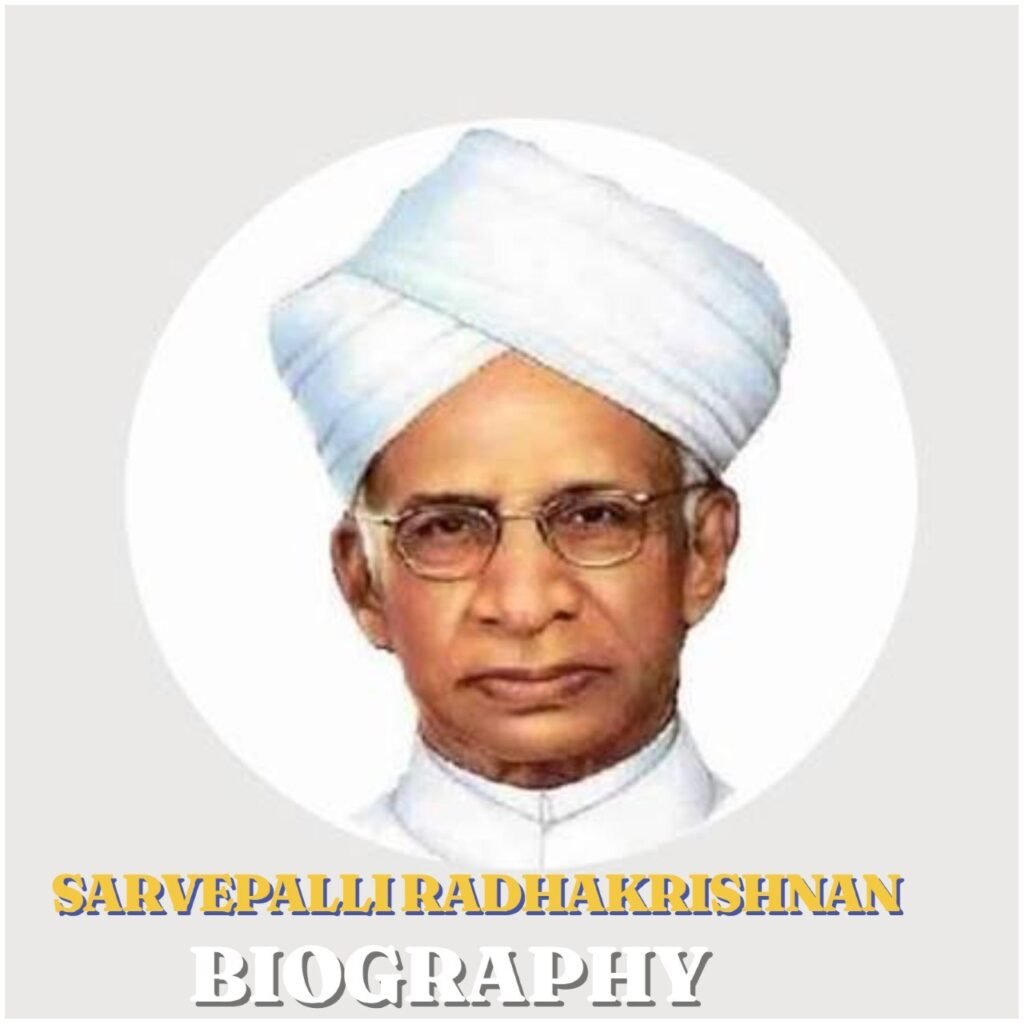
Height and Physical Appearance: A reliably documented official height for Sarvepalli Radhakrishnan is not readily available, so a specific height should not be presented as fact. Historical photographs generally portray him as a dignified, slim-built man with a distinctive appearance, often wearing traditional Indian clothing and a white turban, which became strongly associated with his public image. He was also known for his calm and scholarly demeanor, an appearance that complemented his reputation as a philosopher, teacher, and statesman.
Sarvepalli Radhakrishnan Net Worth
There is no reliable historical record of Dr. Sarvepalli Radhakrishnan’s personal net worth. Unlike modern public figures, his finances were not publicly documented in a way that would allow a trustworthy net-worth calculation. Official records focus primarily on his academic career, diplomatic service, Vice-Presidency, and Presidency rather than his personal wealth.
Radhakrishnan earned income through a long career as a professor, university administrator, author, diplomat, Vice-President, and President of India. He held prestigious academic positions, including the Spalding Professorship of Eastern Religions and Ethics at Oxford, and later served as India’s ambassador to the Soviet Union before becoming Vice-President and President. Because his career covered several decades and included senior government positions, he would have accumulated personal assets and savings, but there is insufficient evidence to calculate their exact value.
For a biography published today, it is therefore safer to describe his net worth as unknown rather than assigning a precise figure. Any websites claiming that Radhakrishnan had a specific net worth in millions or crores should be treated cautiously unless they provide historical financial documentation. His enduring significance came primarily from his intellectual achievements, contributions to education, philosophical writings, and public service, rather than from personal wealth.
Legacy of Sarvepalli Radhakrishnan
Sarvepalli Radhakrishnan’s legacy is closely connected to education, philosophy, and intellectual leadership in India. Through his teaching and extensive writings, he helped introduce Indian philosophical traditions to international audiences and encouraged greater understanding between Eastern and Western systems of thought. His books, including Indian Philosophy, The Hindu View of Life, and An Idealist View of Life, remain important works in the study of Indian philosophy and comparative religion.
His legacy also extends to his service as a statesman. Radhakrishnan became India’s first Vice-President, serving from 1952 to 1962, before becoming the country’s second President from 1962 to 1967. His career demonstrated how academic scholarship and public service could come together at the highest level of national leadership. He received the Bharat Ratna in 1954 in recognition of his outstanding contributions to the country.
Perhaps his most enduring legacy is the annual celebration of Teachers’ Day in India on September 5, his birthday. The tradition honours teachers while remembering Radhakrishnan’s lifelong commitment to education and learning. Decades after his death in 1975, his name continues to be associated with teachers, students, philosophy, and the belief that education can shape individuals and strengthen society.
Conclusion
Sarvepalli Radhakrishnan remains one of India’s most influential philosophers, educators, and statesmen, whose remarkable journey took him from the classroom to the highest constitutional office in the country. His contributions to philosophy, education, diplomacy, and public service earned him lasting national and international recognition, including the Bharat Ratna. Even decades after his death in 1975, his influence continues through his writings and the annual celebration of Teachers’ Day on September 5, ensuring that his dedication to education and learning remains an enduring part of India’s history.
Frequently Asked Questions About Sarvepalli Radhakrishnan
Who was Sarvepalli Radhakrishnan?
Sarvepalli Radhakrishnan was an Indian philosopher, educator, author, diplomat, and statesman who served as the first Vice-President of India from 1952 to 1962 and the second President of India from 1962 to 1967.
When was Sarvepalli Radhakrishnan born?
Sarvepalli Radhakrishnan was born on September 5, 1888, in Tiruttani, in present-day Tamil Nadu, India.
When did Sarvepalli Radhakrishnan die?
He died on April 17, 1975, at the age of 86. Reliable official biographies do not provide a specific medical cause of death.
Why is September 5 celebrated as Teachers’ Day in India?
September 5 is celebrated as Teachers’ Day in India because it is the birth anniversary of Sarvepalli Radhakrishnan, whose life was strongly associated with education, teaching, philosophy, and scholarship.
What was Sarvepalli Radhakrishnan famous for?
He was famous for his contributions to Indian philosophy and education, his academic writings, and his service as India’s first Vice-President and second President. He was also internationally recognized for explaining Indian philosophical traditions to Western audiences.
What was Sarvepalli Radhakrishnan’s religion?
Radhakrishnan was Hindu and was born into a Telugu-speaking Brahmin family. Hindu philosophy and Indian religious thought were important influences on his scholarly work.
Who was Sarvepalli Radhakrishnan’s wife?
His wife was Sivakamamma, also referred to in some records as S. Sivakamamma.
Did Sarvepalli Radhakrishnan receive the Bharat Ratna?
Yes. Sarvepalli Radhakrishnan received the Bharat Ratna in 1954 in recognition of his exceptional contributions to India.
What books did Sarvepalli Radhakrishnan write?
Some of his best-known works include Indian Philosophy, The Hindu View of Life, An Idealist View of Life, Eastern Religions and Western Thought, and The Principal Upanishads.
What was Sarvepalli Radhakrishnan’s net worth?
There is no reliable historical figure for his personal net worth. Unlike modern public figures, detailed information about his personal assets and wealth was not publicly documented, so claims giving an exact net-worth figure should be treated cautiously.
How long was Sarvepalli Radhakrishnan President of India?
Radhakrishnan served as President of India from May 13, 1962, to May 13, 1967, completing one five-year presidential term.
What is Sarvepalli Radhakrishnan’s legacy?
His legacy combines philosophy, education, scholarship, and public service. He remains especially remembered for his contribution to Indian education and philosophy and for inspiring the annual celebration of Teachers’ Day on September 5 in India.