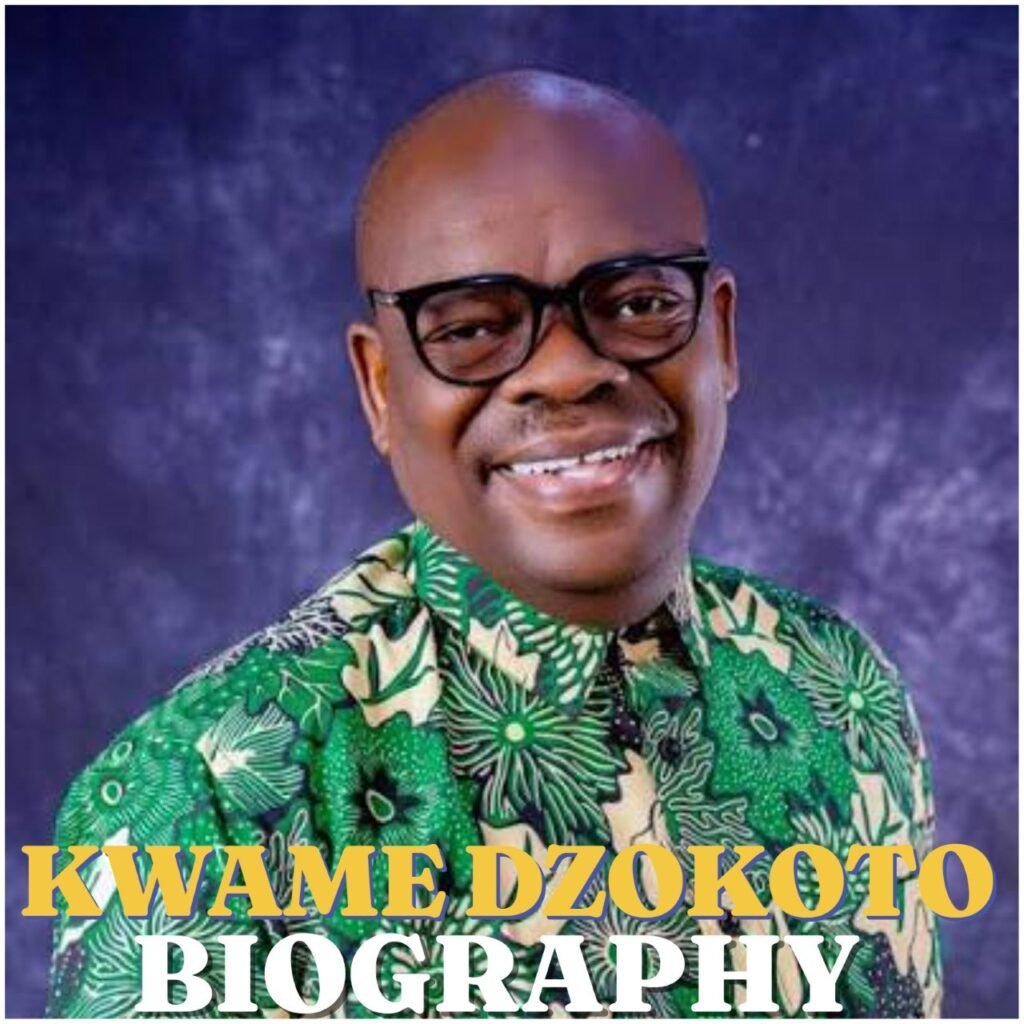

Born Seth Kwame Dzokoto, he built a career that extended beyond acting. He worked in radio, recorded advertising voice-overs, explored Ghanaian cuisine through television, and entered partisan politics with the National Democratic Congress (NDC). He also pursued further education, graduating in 2025 with a master’s degree in Defence and International Politics from the Ghana Armed Forces Command and Staff College. His professional journey reflected interests in entertainment, communication, education, and public affairs.
In the latest development, Kwame Dzokoto died on October 22, 2026, at the age of 51, according to reports from Ghanaian media. He reportedly collapsed while participating in a radio discussion on Owass Radio in Tarkwa and was taken to a hospital, where he was pronounced dead on arrival. News of his death prompted tributes from political colleagues and renewed attention to his contribution to Ghanaian television, radio, comedy, and food programming.
Early Life and Family Background
Kwame Dzokoto was born Seth Kwame Dzokoto in Ghana and grew up in the Western Region, particularly around Sekondi and Takoradi. He came from a family with both Ewe and Fante roots. In a public interview in September 2026, he explained that his father was Ewe while his mother was Fante, giving him a cultural background connected to two important Ghanaian ethnic communities. His upbringing around the coastal communities of the Western Region influenced his familiarity with local languages, humour, and everyday Ghanaian life.
His father was identified as Moses Dzokoto, a retired railway worker, while his mother, Mercy Oppong, was described as a businesswoman. Reports about his early life indicate that he spent much of his childhood under his mother’s care in a fishing community in Sekondi. Growing up in this environment exposed him to the language, expressions, traditions, and experiences of ordinary people, elements that later became noticeable in his comedic performances and broadcasting style.
Dzokoto’s early ambitions were not limited to entertainment. He reportedly hoped to become a seaman before his professional interests shifted towards broadcasting. His eventual entry into radio opened a path that would take him into acting, advertising, television presentation, and politics. Although he became widely recognised through comedy, his career demonstrated that he had interests beyond performing, including communication, leadership, and public affairs.
Education
Kwame Dzokoto attended Tarkwa Secondary School, where he received part of his formal education. His early education provided a foundation for his later professional development, although detailed public information about his childhood academic performance and school activities remains limited. His subsequent career suggests that communication and practical experience became important parts of his personal and professional growth.
After secondary school, Dzokoto pursued mechanical engineering studies at Cape Coast Polytechnic, now known as Cape Coast Technical University. He did not complete the programme, as his career gradually moved in a different direction. Rather than continuing solely along an engineering path, he began developing opportunities in broadcasting and entertainment, where his voice, sense of humour, and ability to engage audiences proved valuable.
Dzokoto later returned to formal education as his professional interests expanded. In August 2025, he graduated from the Ghana Armed Forces Command and Staff College with a master’s degree in Defence and International Politics. He reportedly became interested in international affairs after listening to discussions about the Russia–Ukraine war and related global issues. His postgraduate achievement was an important milestone, showing that his interests extended beyond entertainment and into international relations, security, and political analysis.
Career and Rise to Fame
Early career in radio broadcasting
Kwame Dzokoto’s broadcasting career reportedly began in 1998 after he was encouraged to try radio following an event at which he had helped fill in for a master of ceremonies. People familiar with his communication skills encouraged him to explore broadcasting, leading to an opportunity at Dynamite FM in Tarkwa. He began reading announcements in Fante and gradually developed the presentation style that would become one of his professional strengths.
He later worked with Skyy Power FM in Takoradi and Hello FM in Kumasi. At Hello FM, he took on additional responsibilities, including work as a programmes manager, while also presenting programmes such as Kwanso Bre Bre. His radio career helped him build a connection with listeners through his lively delivery, humour, and use of local expressions. It also strengthened his ability to discuss public issues in a style that was accessible to everyday audiences.
Dzokoto’s work in radio extended beyond presenting. He became known for voice-over assignments and advertising jingles, including promotional work for Ghanaian films and consumer products. His distinctive voice and comic timing helped make advertisements memorable, especially in the local entertainment market. Over time, he developed experience in media management and worked with stations including Pluzz FM in Accra, expanding his career beyond the microphone.
Acting fame through Efiewura
One of the biggest turning points in Dzokoto’s career was his role in Efiewura, a popular Ghanaian television comedy series. He played Judge Koboo, a character remembered for his humorous delivery, expressive mannerisms, and memorable exchanges with other characters. The role introduced him to a much wider television audience and helped establish him as a recognisable figure in Ghanaian entertainment.
His performance in Efiewura demonstrated his ability to use everyday language and familiar social situations to create comedy. The series resonated with viewers because it drew on recognisable aspects of Ghanaian life, relationships, and community interactions. Dzokoto’s character became one of the roles audiences associated with the programme, and his performance helped secure his place in the country’s television comedy scene.
His screen partnership with Mercy Little Smith, who played Benyiwa, Judge Koboo’s wife in the series, also became familiar to viewers. Their on-screen relationship contributed to the programme’s humour and appeal. When Smith died in 2024, Dzokoto publicly mourned his colleague, describing her as a dear on-screen partner. Their performances remain part of the memories many fans associate with Efiewura.
Success as the host of Edziban
Another important chapter in Dzokoto’s career was his work as the host of TV3’s food and tourism programme Edziban. The programme explored Ghanaian cuisine, local eateries, traditional dishes, and food businesses in different communities. At a time when food-focused digital content had not yet become as widespread as it is today, Edziban brought Ghana’s food culture to television audiences through entertainment and exploration.
Dzokoto’s presentation style helped make the programme engaging. He combined humour with visits to food vendors and restaurants, introducing viewers to different dishes and the people behind them. His enthusiasm and expressive reactions became a distinctive part of the show’s identity. The programme was not simply about eating; it also showcased Ghanaian culinary traditions and the businesses that helped preserve them.
The programme’s success was recognised at the 2014 Chartered Institute of Marketing, Ghana Awards, where Edziban won Television Programme of the Year. This achievement strengthened Dzokoto’s reputation as a versatile television personality who could move comfortably between comedy, culture, food, and travel-related content.
Advertising, comedy and memorable expressions
Beyond his major television roles, Dzokoto made a significant contribution to Ghanaian advertising and promotional entertainment. He recorded voice-overs for films, commercial products, and other campaigns, using humour and energetic delivery to capture listeners’ attention. His work was especially familiar to audiences who encountered promotional announcements for Ghanaian movies and entertainment products.
He was also known for colourful expressions and catchphrases that became associated with his public persona. Phrases such as “Edziban a dzidzi” helped reinforce his connection with local language and humour. His use of Fante expressions and conversational wordplay gave his presentation style a recognisable character, allowing him to communicate with audiences in a way that felt culturally familiar.
Dzokoto’s professional versatility helped him build a career across several areas of the media industry. He was not limited to a single television character or programme; he worked as a radio presenter, media manager, voice-over artist, actor, and television host. This variety made him a familiar personality to audiences who encountered his work through different channels.
Political Career and Involvement with the NDC
Kwame Dzokoto also pursued a career in partisan politics through the National Democratic Congress, commonly known as the NDC. His political involvement developed alongside his entertainment career, and he held communication-related responsibilities within the party in the Tarkwa-Nsuaem Constituency. His experience in broadcasting and public communication provided a foundation for participating in political discussions and explaining party positions to audiences.
In November 2015, Dzokoto won the NDC parliamentary primary for the Tarkwa-Nsuaem Constituency, securing the party’s nomination for the 2016 general election. His decision to contest the seat attracted public attention because he was already known as an entertainer. He argued that a career in entertainment did not prevent someone from understanding public concerns or contributing to parliamentary work.
During the 2016 general election, Dzokoto contested against the New Patriotic Party’s George Mireku Duker. He did not win the seat, with Duker receiving more votes. However, Dzokoto remained involved in the NDC’s activities after the election and continued contributing to political communication in the Western Region. His political career illustrated his interest in public affairs beyond his identity as an actor and television presenter.
According to party statements released after his death, Dzokoto continued to support the NDC’s communication and advocacy work in subsequent years. His activities included involvement with regional communication structures and discussions about public issues. Although he did not become a Member of Parliament, his participation in electoral politics formed a significant part of his public life.
Why Kwame Dzokoto Is Trending in October 2026
Kwame Dzokoto became a major subject of public attention in October 2026 following reports of his sudden death on October 22. The actor and broadcaster was participating in a morning discussion on Owass Radio in Tarkwa when he reportedly became unwell. The programme was interrupted, and he was taken to a hospital, where he was pronounced dead on arrival. He was 51 years old.
His death came only weeks after he had publicly addressed rumours about his health. In September 2026, Dzokoto appeared in an interview in which he rejected claims that he had already died and spoke about recovering after surgery abroad. He also discussed health challenges, including high blood pressure and diabetes. At the time, he expressed gratitude to people who had supported him during his treatment.
The news of his death prompted an outpouring of sadness among fans, colleagues, and political associates. Many remembered him for his role as Judge Koboo in Efiewura, while others celebrated his work on Edziban, his radio career, and his distinctive voice in advertising. The circumstances of his death also brought renewed attention to his final public appearances and his contributions to Ghana’s entertainment industry.
His passing was particularly significant because he had remained involved in public discussions and political communication despite his previous health challenges. The NDC’s Western Regional communication leadership paid tribute to him, describing his death as a loss to the party, the media industry, and the wider public. As of the latest reports, further details about funeral arrangements had not been fully announced.
Personal Life and Family
Kwame Dzokoto generally kept much of his private life away from the public spotlight. While his career involved frequent appearances on television and radio, he did not consistently share detailed information about his relationships and family. Public reports about his marital status have also differed over the years, making it important to distinguish between confirmed information and older claims.
Some earlier media reports identified a woman named Christina as his wife and referred to the birth of a son. However, in August 2020, Dzokoto publicly denied reports that he had married, explaining that wedding photographs circulating online had been taken during an advertising shoot. He said at the time that he was not married. Later public statements from the NDC extended condolences to his wife and children after his death, but the available reports do not provide a complete, independently confirmed account of his family circumstances.
Dzokoto’s family background included his father, Moses Dzokoto, and his mother, Mercy Oppong. He also spoke about his Ewe and Fante heritage, explaining how his parents’ backgrounds connected him to both communities. Beyond these details, he kept many aspects of his personal relationships private. His family, friends, colleagues, and supporters are now among those remembering his life and career following his death.
Age, Religion, Tribe, Nationality, Height and Physical Appearance
Kwame Dzokoto was 51 years old when he died on October 22, 2026. His exact date of birth is not consistently established in widely available public reports, so it is safer to state his reported age at death rather than give an unverified birthday. His career spanned several decades, from his early broadcasting work in the late 1990s to his later activities in television, politics, and public discussion.
Dzokoto was Ghanaian by nationality. He had Ewe and Fante family roots: he identified his father as Ewe and his mother as Fante. His upbringing in the Western Region helped shape his familiarity with Fante language and local cultural expressions, which became noticeable in his comic performances and broadcasting work. His cultural background was part of the distinctive style that audiences came to recognise.
Reliable public information about Dzokoto’s religious affiliation is limited, so it would be inappropriate to assign him a specific religion without a clear statement from him or his family. Similarly, a verified height measurement is not readily established in public reporting. He was recognisable to audiences for his expressive face, energetic presentation, comic timing, and distinctive voice rather than for any officially documented physical measurements.
Social Media Presence
Kwame Dzokoto used social media as part of his public presence, sharing updates and connecting with people interested in his entertainment and political activities. His public posts and appearances helped fans follow his work, including his television career, political engagement, and personal reflections. His online presence also became a place where colleagues and supporters shared tributes following news of his death.
In the days after his passing, posts and videos associated with his career circulated widely as people revisited his performances and remembered his contribution to Ghanaian television. Clips from Efiewura, moments from Edziban, and reports about his final public appearances drew attention from audiences who had followed him over the years.
As with many public figures, social media offered Dzokoto a direct way to communicate outside traditional broadcasting. However, his most enduring public recognition came through the television programmes, radio broadcasts, and advertising work that introduced him to Ghanaian audiences.
Kwame Dzokoto Net Worth and Sources of Income
Kwame Dzokoto’s exact net worth was not reliably established in publicly available financial records. Unlike major international celebrities whose assets and business holdings are frequently assessed by financial publications, Dzokoto’s earnings and personal investments were not widely documented. Any specific figure presented as a confirmed net worth would therefore be speculative.
His professional income likely came from several areas over the course of his career. These included acting roles, television presentation, radio broadcasting, media management, advertising voice-overs, commercial endorsements, and related entertainment assignments. His work on Efiewura and Edziban gave him a recognisable public profile, while his distinctive voice created additional opportunities in promotional and advertising work.
His involvement in politics and postgraduate studies also showed that his interests extended beyond entertainment, but there is insufficient public information to determine how much he earned from each activity or whether he held substantial investments or business assets. The most accurate assessment is that Dzokoto built a long, multi-faceted professional career, while his exact net worth remains unverified.
Health Challenges and Cause of Death
Kwame Dzokoto had spoken publicly about health challenges in September 2026, shortly before his death. During an interview, he said he had been dealing with high blood pressure and diabetes and had undergone surgery outside Ghana. He also discussed the support he received for his treatment and said he was recovering. His comments came after rumours about his health circulated online, which he had publicly rejected at the time.
On October 22, 2026, Dzokoto reportedly collapsed while participating in a morning radio discussion at Owass Radio in Tarkwa. According to reports from the station and media outlets, the programme was suspended after he became unwell, and he was rushed to a hospital. He was pronounced dead on arrival. His death was acknowledged by representatives of the NDC in the Western Region.
Although reports have described the circumstances surrounding his collapse, the precise medical cause of death had not been publicly confirmed in the initial reports available as of October 23, 2026. His previously disclosed health conditions should not automatically be treated as the confirmed cause. Further medical or family information would be needed to establish the exact cause of death.
Legacy and Contributions to Ghanaian Entertainment
Kwame Dzokoto’s legacy is closely associated with Efiewura, where his portrayal of Judge Koboo made him a familiar face in Ghanaian homes. His humour, expressive delivery, and ability to make everyday conversations entertaining helped establish him as a memorable performer in Ghanaian television comedy. For viewers who followed the series, his character became part of the programme’s long-standing cultural appeal.
His work on Edziban also left a contribution to television programming about food and local culture. By visiting eateries and showcasing Ghanaian dishes, he helped bring attention to food vendors, culinary traditions, and the variety of local cuisine. The programme’s recognition at the 2014 CIMG Awards reflected its impact as a television production, while Dzokoto’s presenting style helped make the subject accessible and entertaining to viewers.
Beyond television, his radio career and advertising work demonstrated the importance of voice and language in Ghanaian media. His distinctive presentation, Fante expressions, and comic voice-overs allowed him to connect with listeners and consumers in memorable ways. His involvement in politics and continued education further showed that he had interests beyond entertainment. His career crossed several fields, leaving a body of work that audiences can remember through his performances, broadcasts, and public service activities.
Conclusion
Kwame Dzokoto’s life and career reflected the versatility of a Ghanaian entertainer who moved between acting, comedy, radio, food television, advertising, and politics. From his memorable portrayal of Judge Koboo in Efiewura to his work on Edziban, he built a distinctive place in the country’s media landscape. His pursuit of a master’s degree in Defence and International Politics also showed a commitment to learning beyond his entertainment career. His death at 51 on October 22, 2026, was a major loss to fans, colleagues, and political associates. Although his career took him through different professional paths, he will be remembered most vividly for his humour, his distinctive voice, and the television work that made him a familiar name across Ghana.
Frequently Asked Questions About Kwame Dzokoto
Who was Kwame Dzokoto?
Kwame Dzokoto, whose full name was Seth Kwame Dzokoto, was a Ghanaian actor, comedian, radio broadcaster, television presenter, advertising voice-over artist, and politician. He was best known for playing Judge Koboo in Efiewura and hosting TV3’s food programme Edziban.
Is Kwame Dzokoto dead?
Yes. Kwame Dzokoto died on October 22, 2026, at the age of 51, according to Ghanaian media reports. He reportedly collapsed during a radio discussion at Owass Radio in Tarkwa and was pronounced dead on arrival at a hospital.
What was Kwame Dzokoto’s age when he died?
He was 51 years old when he died on October 22, 2026. His exact date of birth is not consistently confirmed in the available public reports.
What was Kwame Dzokoto famous for?
He was best known for playing Judge Koboo in the Ghanaian television comedy series Efiewura and for hosting Edziban, a TV3 programme that explored Ghanaian food, local eateries, and culinary traditions.
What was Kwame Dzokoto’s real name?
His full name was Seth Kwame Dzokoto.
What was Kwame Dzokoto’s nationality?
He was Ghanaian and grew up in the Western Region of Ghana.
What tribe did Kwame Dzokoto belong to?
Dzokoto had Ewe and Fante family roots. He stated publicly that his father was Ewe and his mother was Fante.
Who were Kwame Dzokoto’s parents?
Public reports identify his father as Moses Dzokoto, a retired railway worker, and his mother as Mercy Oppong, a businesswoman.
Was Kwame Dzokoto married?
Public information about his marital status is inconsistent. He denied reports of his marriage in August 2020, saying that photographs circulating online had been taken during an advertising shoot. Later reports following his death referred to his wife and children, but a complete, independently confirmed account of his family circumstances is not readily available.
Did Kwame Dzokoto have children?
Some public reports have referred to his children, but detailed information about them has not been consistently established in reliable reporting.
What was Kwame Dzokoto’s educational background?
He attended Tarkwa Secondary School and later studied mechanical engineering at Cape Coast Polytechnic, although he did not complete that programme. In 2025, he graduated from the Ghana Armed Forces Command and Staff College with a master’s degree in Defence and International Politics.
What role did Kwame Dzokoto play in Efiewura?
He played Judge Koboo, a comic character who became one of the roles most strongly associated with his career. His humorous delivery and on-screen partnership with Mercy Little Smith, who played Benyiwa, helped make him familiar to television audiences.
What was Edziban about?
Edziban was a TV3 food and tourism programme that explored Ghanaian cuisine, local eateries, food vendors, and traditional dishes. Dzokoto hosted the programme, using humour and lively presentation to introduce audiences to local food culture.
Did Kwame Dzokoto enter politics?
Yes. He was a member of the National Democratic Congress and contested the Tarkwa-Nsuaem parliamentary seat in the 2016 general election. He lost to George Mireku Duker of the New Patriotic Party but remained involved in political communication.
What was Kwame Dzokoto’s net worth?
His exact net worth was not publicly verified. His professional earnings came from acting, radio, television presentation, advertising voice-overs, media work, and related entertainment activities, but there is insufficient reliable information to establish a specific figure.
What was the cause of Kwame Dzokoto’s death?
He reportedly collapsed during a radio discussion on October 22, 2026, and was pronounced dead on arrival at a hospital in Tarkwa. Although he had previously spoken about high blood pressure, diabetes, and surgery abroad, the precise medical cause of death had not been publicly confirmed in the initial reports available as of October 23, 2026.
What is Kwame Dzokoto’s legacy?
His legacy includes his memorable acting in Efiewura, his presentation of Edziban, his radio and advertising work, and his involvement in Ghanaian politics. He is remembered as a versatile media personality whose humour and distinctive presentation style connected him with audiences across the country.