
Introduction
Tamerlane, also known as Timur or Timur the Lame, was one of the most powerful and controversial military leaders in world history. Born on 9 April 1336 near present-day Shahrisabz, Uzbekistan, he rose from a regional warlord to establish the vast Timurid Empire, which stretched across much of Central Asia, Persia, the Caucasus, the Middle East, and parts of South Asia. His extraordinary military campaigns reshaped the political landscape of the 14th and early 15th centuries, earning him a reputation as both a brilliant strategist and a ruthless conqueror.
Throughout his reign, Tamerlane led numerous successful military expeditions that brought some of the era’s greatest kingdoms under his control. His victories over powerful rivals, including the Delhi Sultanate, the Golden Horde, and the Ottoman Empire, demonstrated his exceptional tactical abilities and made him one of history’s most feared commanders. Although his conquests often resulted in widespread destruction and heavy loss of life, they also helped spread artistic, architectural, and intellectual influences throughout the regions under Timurid rule.
Beyond his achievements on the battlefield, Tamerlane left a lasting legacy through the cultural and architectural development of his capital city, Samarkand, which flourished as a center of learning, trade, and Islamic civilization. His descendants continued his influence for generations, most notably through Babur, the founder of the Mughal Empire in India. Today, historians continue to study Tamerlane’s life, balancing his remarkable military accomplishments with the profound impact his campaigns had on millions of people across Asia and the Middle East.
Early Life and Background
Tamerlane, whose birth name was Timur, was born on 9 April 1336 near the city of Kesh, now known as Shahrisabz, in present-day Uzbekistan. He belonged to the Barlas tribe, a Turco-Mongol clan that traced its origins to the Mongol Empire established by Genghis Khan. By the time Timur was born, the Barlas people had largely adopted the Turkic language and embraced Islam, creating a unique cultural identity that blended Mongol heritage with Central Asian traditions. Growing up in this environment exposed Timur to both the nomadic warrior lifestyle and the political complexities of the Chagatai Khanate.
Very little is known with certainty about Timur’s childhood, but historical accounts suggest that he received practical training in horse riding, archery, hunting, and military tactics from an early age. These skills were considered essential for young men in the region and prepared him for the constant tribal conflicts that characterized Central Asia during the 14th century. Timur also developed an understanding of diplomacy and leadership by observing the alliances and rivalries among local tribal chiefs, experiences that later shaped his approach to empire-building. During his youth, he suffered injuries that left him with a permanent limp and damage to one arm, giving rise to the nickname “Timur-i-Lang,” meaning “Timur the Lame,” from which the Western name Tamerlane was derived.
As Timur reached adulthood, Central Asia was experiencing significant political instability following the fragmentation of the Mongol Empire. The weakening authority of the Chagatai Khanate created opportunities for ambitious military leaders to compete for power and territory. Timur gradually emerged as one of these rising figures, forming strategic alliances and demonstrating exceptional skill in warfare and leadership. His early experiences navigating tribal politics, surviving regional conflicts, and commanding small military forces laid the foundation for the remarkable career that would eventually make him the founder of the powerful Timurid Empire and one of the most influential conquerors in world history.
Education
Unlike many modern political or military leaders, Tamerlane did not receive a formal education through universities or structured academic institutions. Born into the Turco-Mongol Barlas tribe in the 14th century, he grew up in a nomadic society where practical knowledge and military training were valued more highly than classroom learning. Historical records do not indicate that he was formally literate in the way many scholars of his time were, although he was surrounded by educated advisers, administrators, and religious scholars throughout his reign.
Tamerlane’s education was primarily shaped by experience and the traditions of his culture. From an early age, he learned horseback riding, archery, swordsmanship, hunting, and battlefield tactics, which were considered essential skills for young men of noble tribal families. He also gained a deep understanding of tribal customs, diplomacy, leadership, and military organization by participating in local conflicts and observing the political struggles within Central Asia. These practical lessons proved invaluable as he rose from a regional warlord to the founder of the Timurid Empire.
Although historians continue to debate the extent of Timur’s literacy, there is broad agreement that he deeply appreciated knowledge, religion, and culture. After establishing his empire, he invited scholars, architects, poets, physicians, artisans, and religious leaders from across the Islamic world to his capital, Samarkand. His patronage helped transform the city into one of the leading centers of learning, science, literature, and Islamic architecture. While Tamerlane himself was best known as a military commander, his support for intellectual and cultural development left a lasting educational legacy that continued under his descendants, particularly during the Timurid Renaissance.
Career
Tamerlane’s career began during the political instability that followed the decline of the Chagatai Khanate in Central Asia. In the 1360s, he emerged as a skilled military commander by forming alliances with influential tribal leaders and gradually expanding his authority across the region. His strategic intelligence, ability to unite rival factions, and mastery of cavalry warfare allowed him to gain prominence despite fierce competition from other warlords. By 1370, Timur had established himself as the undisputed ruler of Transoxiana and made Samarkand the capital of his growing empire.
Over the next three decades, Tamerlane embarked on a series of ambitious military campaigns that transformed the Timurid Empire into one of the largest empires of the medieval world. He conquered vast territories across modern-day Uzbekistan, Kazakhstan, Turkmenistan, Iran, Afghanistan, Iraq, Syria, Azerbaijan, Armenia, Georgia, Pakistan, and northern India. His forces defeated the Golden Horde under Tokhtamysh, captured Delhi in 1398, and achieved one of history’s most significant military victories by defeating Ottoman Sultan Bayezid I at the Battle of Ankara in 1402. These victories established Timur as the dominant military power across much of Asia and the Middle East.
Although Tamerlane’s career was defined by conquest, he also devoted considerable attention to strengthening and beautifying his empire. He transformed Samarkand into a magnificent imperial capital by commissioning grand mosques, palaces, gardens, libraries, and public buildings. Skilled architects, artisans, engineers, and scholars from conquered territories were brought to the city, contributing to its remarkable cultural and architectural achievements. His administration promoted trade along the Silk Road and encouraged artistic development, laying the foundations for the Timurid Renaissance that flourished under his successors.
Throughout his military career, Tamerlane became known for his innovative battlefield tactics, rapid cavalry movements, and effective use of intelligence and psychological warfare. He frequently employed surprise attacks, carefully planned logistics, and coordinated military formations that overwhelmed larger enemy forces. However, his campaigns were also notorious for their brutality. Cities that resisted his armies often faced widespread destruction, mass executions, and forced deportations, earning him a reputation as one of history’s most feared conquerors. These actions remain a central part of debates surrounding his historical legacy.
In 1404, after decades of continuous expansion, Tamerlane prepared for what was intended to be his greatest campaign—the conquest of Ming China. He assembled a massive army and began the journey eastward, but the expedition was cut short when he fell seriously ill. Timur died on 18 February 1405 in Otrar, present-day Kazakhstan, before reaching China. Although his empire began to fragment after his death, his military achievements, administrative influence, and cultural patronage continued to shape Central Asia and the Islamic world for generations, making his career one of the most significant in medieval history.
Why Tamerlane Is Trending in 2026
Tamerlane is trending in 2026 because of renewed global interest in medieval history, fueled by documentaries, history podcasts, educational YouTube channels, and social media discussions examining the world’s greatest military commanders. Historians and content creators have revisited Timur’s campaigns, leadership strategies, and lasting influence on Central Asia, introducing his story to a new generation of audiences. His legacy continues to generate debate due to the contrast between his remarkable military achievements and the devastating human cost of his conquests.
Another reason Tamerlane is receiving increased attention is the continued publication of books, academic research, and digital history projects exploring the Timurid Empire and its impact on world civilization. Scholars are highlighting not only his military successes but also his patronage of architecture, science, literature, and Islamic culture. These discussions have renewed appreciation for Samarkand’s transformation into one of the medieval world’s greatest centers of art and learning under Timurid rule.
In addition, Tamerlane’s biography has become a popular search topic as students, researchers, and history enthusiasts seek reliable information about his life, empire, family, military campaigns, and legacy. The growing popularity of historical biographies and educational content on search engines has contributed to increased online interest in his life. While there have been no major new discoveries about Tamerlane in 2026, the continued reassessment of his achievements and controversies has kept his biography relevant and widely discussed.
Death and Cause of Death
Tamerlane died on 18 February 1405 in Otrar, located in present-day Kazakhstan, at approximately 68 years of age. At the time of his death, he was leading a massive military expedition intended to invade Ming China, a campaign that many historians believe would have been one of the largest of his career. Despite his advanced age, Timur remained actively involved in military planning and personally accompanied his army as it advanced eastward during the harsh winter months.
Historical records indicate that Tamerlane fell seriously ill while encamped in Otrar after enduring freezing temperatures and the physical demands of the journey. Although the exact nature of his illness has never been conclusively established, most historians believe he died from natural causes, likely resulting from complications related to illness, old age, and exhaustion. Some historical accounts suggest he developed a severe fever or respiratory illness, while others attribute his death to the combined effects of the extreme winter conditions and the strain of years of continuous military campaigning. There is no credible historical evidence that he was assassinated or died in battle.
Following his death, Tamerlane’s body was transported to Samarkand, the capital of the Timurid Empire, where he was buried in the magnificent Gur-e-Amir Mausoleum. His passing brought an immediate end to the planned invasion of China, and his empire gradually fragmented as his successors competed for power. Nevertheless, the Timurid dynasty continued to influence Central Asia for generations, and his descendants, including Babur, went on to establish the Mughal Empire in India. Today, Tamerlane’s tomb remains one of Uzbekistan’s most important historical landmarks and a symbol of his enduring legacy.
Personal Life and Family
Tamerlane’s personal life was closely connected to the political traditions of the Turco-Mongol world, where marriages often served to strengthen alliances and reinforce claims to power. Although he spent much of his adult life leading military campaigns, he maintained a large royal household and placed great importance on his family and dynasty. One of his most significant marriages was to Saray Mulk Khanum (also known as Bibi Khanum), a Chagatai princess and descendant of Genghis Khan. Through this marriage, Timur gained additional political legitimacy and adopted the prestigious title Gurkani, meaning “son-in-law” of the Genghisid royal family. Historical records also mention several other wives and consorts, including Tuman Agha, who were members of the Timurid court and played important roles within the royal household.
Tamerlane fathered numerous children who helped strengthen and administer the expanding Timurid Empire. Among his most notable sons were Jahangir Mirza, Umar Shaikh Mirza I, Miran Shah, and Shah Rukh Mirza. After Timur’s death in 1405, Shah Rukh Mirza emerged as one of his most successful successors, restoring stability to much of the empire and encouraging the flourishing of art, literature, science, and architecture. Timur’s grandchildren also became influential figures, particularly Ulugh Beg, Shah Rukh’s son, who earned worldwide recognition as a brilliant astronomer, mathematician, and ruler. Through his descendants, Timur’s family continued to shape the political and cultural history of Central Asia for generations.
Beyond his immediate family, Tamerlane’s legacy extended to later dynasties through his direct descendants. His great-great-great-grandson Babur founded the Mughal Empire in India in 1526, establishing one of the most powerful and influential empires in South Asian history. Despite spending much of his life on military campaigns, Timur was deeply committed to preserving his family’s prestige and ensuring the continuation of his dynasty. There is no reliable historical evidence of any fiancée before his marriages, as marriages among ruling families of his era were generally arranged for political and diplomatic purposes rather than public courtship. Today, the Timurid family remains one of the most historically significant royal dynasties of the medieval Islamic world.
Age, Religion, Nationality, Height and Physical Appearance
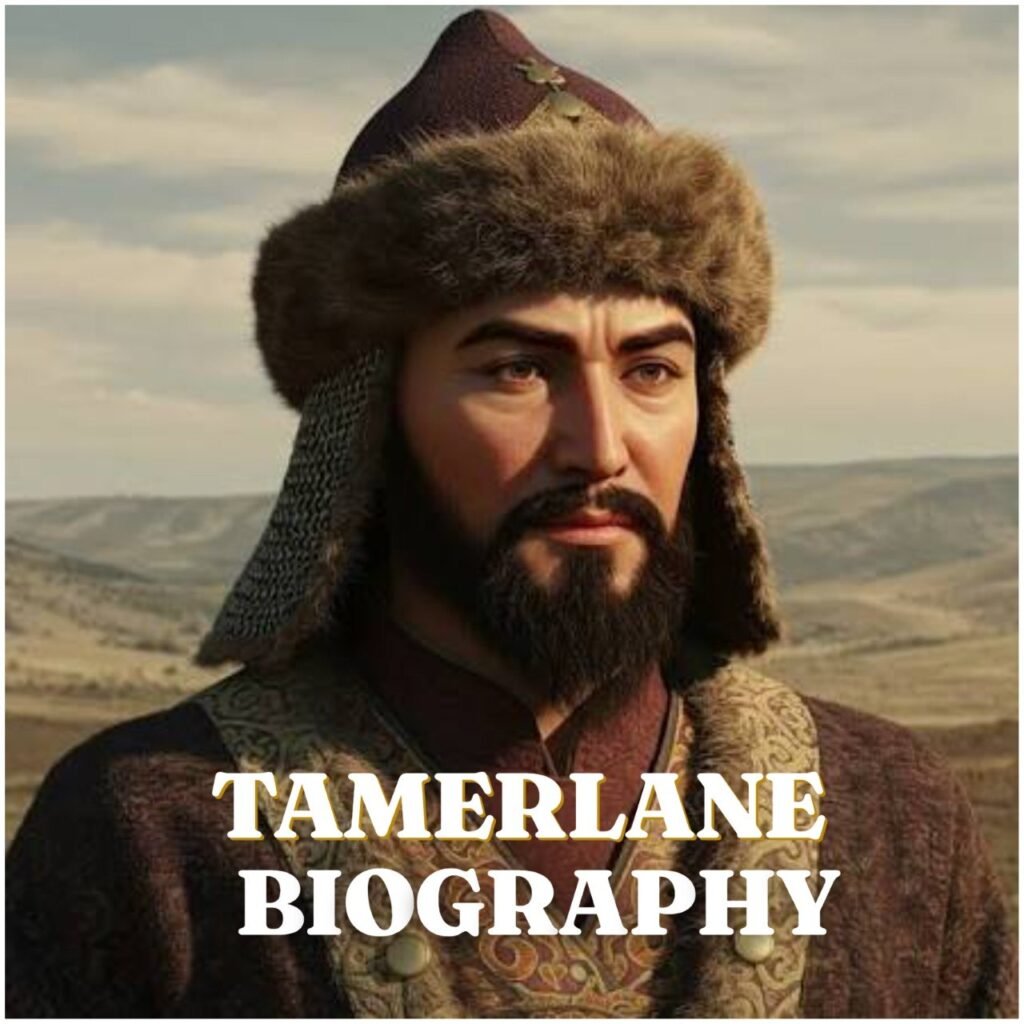
At the time of his death on 18 February 1405, Tamerlane (Timur) was 68 years old, having been born on 9 April 1336. He was a follower of Sunni Islam, and his faith played an important role in both his personal life and his rule, although his military campaigns often extended against both Muslim and non-Muslim states. Tamerlane was born near Kesh (modern-day Shahrisabz, Uzbekistan) and is generally regarded as belonging to the Turco-Mongol cultural world. In modern terms, his nationality is commonly associated with Uzbekistan, as he was born within the borders of the present-day country. Historical reconstructions suggest that Tamerlane stood at approximately 5 feet 8 inches (173 cm) tall. Skeletal examinations conducted during the 20th century indicate that he had a strong, broad build with a powerful physique suited to a lifetime of warfare. He is believed to have had a broad face, high cheekbones, reddish-brown hair mixed with gray in later life, and a long beard. He also suffered injuries that left him with a permanent limp and limited use of one arm, giving rise to the name “Timur-i-Lang” (“Timur the Lame”), from which the Western name Tamerlane was derived.
Net Worth
Determining Tamerlane’s exact net worth is impossible because he lived during the 14th and early 15th centuries, long before the concept of personal financial statements or modern wealth measurements existed. As the founder and ruler of the Timurid Empire, Timur controlled enormous amounts of wealth acquired through conquest, taxation, trade, tribute, and the resources of one of the largest empires of the medieval world. His empire stretched across much of Central Asia, Persia, the Middle East, and parts of South Asia, giving him access to immense economic resources.
Based on the size of his empire and the vast riches under his control, modern historians estimate that Tamerlane’s wealth would have been equivalent to between $100 billion and $200 billion (USD) in today’s value, making him one of the wealthiest rulers in history by modern standards. This estimate is not an official historical figure but rather a modern approximation based on the territories he ruled, the tribute he collected, the treasures captured during military campaigns, and the economic output of his empire. His wealth included gold, silver, precious gemstones, livestock, valuable textiles, luxury goods, land, palaces, and countless other assets gathered from conquered kingdoms.
Rather than using his wealth solely for personal luxury, Tamerlane invested heavily in expanding and strengthening his empire. He financed massive military campaigns, maintained one of the most powerful armies of his era, and sponsored the construction of magnificent mosques, palaces, gardens, libraries, and public buildings in Samarkand, which became the capital of the Timurid Empire. His patronage of architecture, education, science, and the arts helped transform Samarkand into one of the world’s greatest cultural centers. Although his fortune cannot be calculated with precision, Tamerlane’s control over vast resources and territories places him among the richest and most influential rulers in world history.
Legacy
Tamerlane left behind one of the most influential and complex legacies in world history. As the founder of the Timurid Empire, he reshaped the political landscape of Central Asia, the Middle East, and parts of South Asia through a series of extraordinary military campaigns. His victories over powerful rivals, including the Golden Horde, the Delhi Sultanate, and the Ottoman Empire, established him as one of history’s greatest military strategists. While his conquests expanded trade routes and altered the balance of power across Eurasia, they also caused widespread destruction, making his legacy a subject of ongoing historical debate.
Beyond the battlefield, Tamerlane is remembered for transforming Samarkand into one of the world’s greatest centers of Islamic culture, architecture, and learning. He commissioned magnificent monuments, mosques, palaces, gardens, and public buildings that showcased the artistic achievements of the Timurid era. By bringing skilled architects, artisans, scholars, scientists, and craftsmen from across his empire to Samarkand, he laid the foundation for what became known as the Timurid Renaissance. His grandson, Ulugh Beg, continued this cultural tradition by promoting astronomy, mathematics, and education, ensuring that the Timurid dynasty became renowned not only for military power but also for intellectual and scientific progress.
Tamerlane’s influence continued long after his death through his descendants, most notably Babur, who founded the Mughal Empire in India in 1526. Today, Timur is regarded as a national hero in Uzbekistan, where his statues, museums, and monuments commemorate his contributions to the country’s history and identity. At the same time, many historians remember him as a ruthless conqueror whose campaigns resulted in immense human suffering and the destruction of countless cities. This combination of military brilliance, cultural patronage, and extraordinary brutality has ensured that Tamerlane remains one of the most studied, controversial, and influential figures in medieval history.
Conclusion
Tamerlane, also known as Timur, remains one of the most remarkable and controversial figures in world history. From his humble beginnings in Central Asia, he built the powerful Timurid Empire through exceptional military leadership, strategic vision, and relentless ambition. Although his campaigns brought widespread destruction and loss of life, they also reshaped the political map of Eurasia and paved the way for significant cultural, architectural, and intellectual achievements centered in Samarkand. His influence continued through the Timurid dynasty and the later Mughal Empire founded by his descendant Babur. Today, Tamerlane is remembered as both a brilliant conqueror and a complex historical figure whose legacy continues to inspire debate among historians, making his life an enduring subject of study and fascination.
Frequently Asked Questions (FAQs)
Who was Tamerlane?
Tamerlane, also known as Timur or Timur the Lame, was a Turco-Mongol conqueror and the founder of the Timurid Empire. He ruled from 1370 until his death in 1405 and is regarded as one of history’s greatest military commanders.
When and where was Tamerlane born?
Tamerlane was born on 9 April 1336 near Kesh (modern-day Shahrisabz, Uzbekistan), which was then part of the Chagatai Khanate.
How did Tamerlane die?
Tamerlane died on 18 February 1405 in Otrar, present-day Kazakhstan, after falling seriously ill while leading a military expedition to invade Ming China. Historians believe he died of natural causes, likely due to illness, old age, and the harsh winter conditions.
How old was Tamerlane when he died?
Tamerlane was 68 years old when he died in 1405.
What was Tamerlane famous for?
Tamerlane was famous for founding the Timurid Empire, conquering vast territories across Central Asia, Persia, the Middle East, and northern India, and defeating powerful rulers such as Ottoman Sultan Bayezid I at the Battle of Ankara in 1402.
What was Tamerlane’s religion?
Tamerlane practiced Sunni Islam, and Islamic traditions influenced many aspects of his rule, although his empire included people of different religions and cultures.
Who was Tamerlane’s wife?
One of Tamerlane’s most prominent wives was Saray Mulk Khanum, also known as Bibi Khanum, a Chagatai princess whose marriage strengthened Timur’s political legitimacy.
Did Tamerlane have children?
Yes. Tamerlane had several children, including Jahangir Mirza, Umar Shaikh Mirza I, Miran Shah, and Shah Rukh Mirza, who played important roles in the Timurid dynasty.
What was Tamerlane’s net worth?
There is no official historical record of Tamerlane’s personal wealth. However, modern estimates suggest that the resources under his control as ruler of the Timurid Empire would have been equivalent to approximately $100–200 billion (USD) in today’s value.
Where is Tamerlane buried?
Tamerlane was buried in the Gur-e-Amir Mausoleum in Samarkand, Uzbekistan, where his tomb remains one of the country’s most important historical landmarks.
Why is Tamerlane still remembered today?
Tamerlane is remembered for his extraordinary military achievements, his role in founding the Timurid Empire, and his patronage of architecture, culture, and learning. His legacy remains debated because his conquests brought both significant cultural development and widespread destruction.