
Introduction
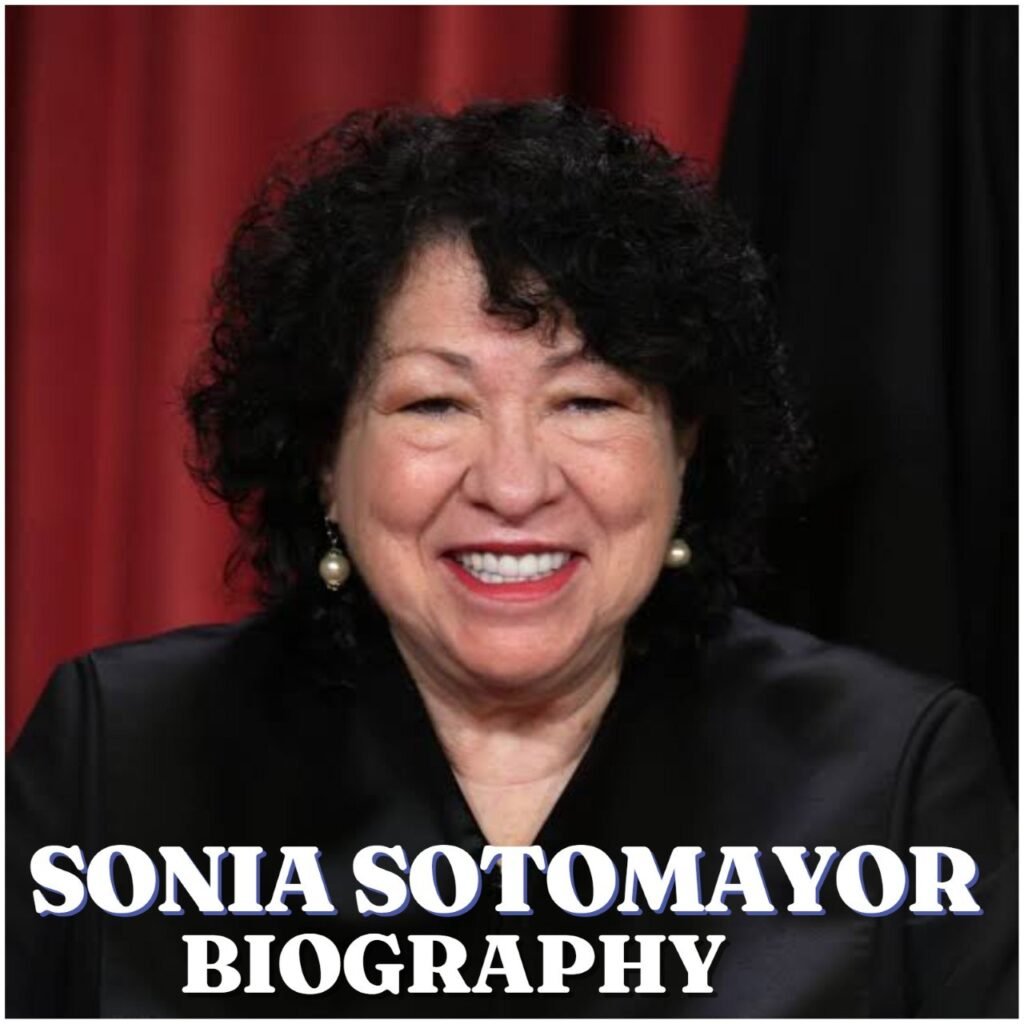
Sonia Sotomayor is an American jurist and the first Latina to serve as an Associate Justice of the Supreme Court of the United States. Appointed by President Barack Obama in 2009, she became the third woman to serve on the Supreme Court and has remained a prominent figure in American constitutional law. Over the course of her career, Sotomayor has become known for her extensive legal experience, detailed judicial opinions, and public advocacy for civic education and equal access to the justice system.
Born on June 25, 1954, in The Bronx, New York City, Sotomayor was raised in a Puerto Rican family and developed an early interest in law after reading about the fictional detective Nancy Drew. She went on to study at Princeton University before earning her law degree from Yale Law School. Her professional career included work as an assistant district attorney in New York, private legal practice, service on the U.S. District Court, and later the U.S. Court of Appeals for the Second Circuit.
Beyond her work on the Supreme Court, Sonia Sotomayor has become a widely recognized public figure whose life story has attracted considerable attention. She has written memoirs about her upbringing and legal journey and has frequently spoken about education, constitutional principles, opportunity, and the importance of understanding democratic institutions. In 2026, she continues to serve on the Supreme Court while making occasional public appearances where she discusses the judiciary, civic responsibility, technology, and the continuing importance of constitutional government.
Sonia Sotomayor Early Life
Sonia Sotomayor was born on June 25, 1954, in The Bronx, New York City, to Puerto Rican parents, Juan Sotomayor and Celina Báez. Her father worked as a tool-and-die worker, while her mother worked as a nurse and later became a practical nurse. Sotomayor and her younger brother, Juan, were raised in a working-class family in the Bronx, where her parents emphasized education and personal responsibility. Her father died when she was nine years old, after which her mother became the primary provider for the family.
Growing up, Sotomayor developed an early interest in books and education. She has said that reading the Nancy Drew mystery series helped inspire her interest in becoming a lawyer. Her childhood also included significant health challenges, as she was diagnosed with type 1 diabetes at age seven. Despite these circumstances, she remained focused on her education and became an academically motivated student. Her experiences growing up in a Puerto Rican household in New York later became an important part of the personal story she shared through her memoirs and public appearances.
Sotomayor attended Cardinal Spellman High School in the Bronx, where she excelled academically and became involved in extracurricular activities. Her achievements earned her a scholarship to Princeton University, marking an important step beyond the circumstances of her childhood. At Princeton, she studied history and graduated summa cum laude in 1976. She then attended Yale Law School, where she earned her Juris Doctor degree in 1979 and began building the legal career that would eventually lead her to the federal judiciary and, in 2009, the Supreme Court of the United States.
Sonia Sotomayor Education
Sonia Sotomayor began her higher education at Princeton University after graduating from Cardinal Spellman High School in the Bronx. At Princeton, she studied history and became deeply engaged in academic and campus activities. She graduated in 1976 with a Bachelor of Arts degree, earning summa cum laude honors. She was also elected to Phi Beta Kappa, reflecting her strong academic performance. Her time at Princeton was particularly significant because she was among the first generations of students from her background to attend the institution.
After Princeton, Sotomayor attended Yale Law School, where she continued to distinguish herself academically. She served as an editor of the Yale Law Journal and participated in activities that gave her additional exposure to legal scholarship and practice. She received her Juris Doctor degree in 1979, completing the formal education that prepared her for a career in law and public service. Her experience at Yale also placed her in an environment where she could develop the analytical and legal skills that later became important throughout her judicial career.
Sotomayor’s educational journey from a public high school in the Bronx to Princeton and Yale Law School became an important part of her life story. Her academic achievements opened the way to professional opportunities, including work as a prosecutor in New York and later service on the federal bench. Her education has also remained a recurring theme in her public discussions, particularly when she talks about opportunity, access to higher education, and the importance of encouraging young people to pursue academic goals.
Sonia Sotomayor Career
Sonia Sotomayor began her legal career in 1979 as an assistant district attorney in the Manhattan District Attorney’s Office under District Attorney Robert Morgenthau. She worked as a prosecutor until 1984, handling cases involving robbery, assault, murder, and other crimes. Her experience in the prosecutor’s office gave her practical courtroom experience and helped establish the foundation for her later work as a judge. In 1984, she entered private practice at the New York law firm Pavia & Harcourt, where she focused largely on commercial litigation and intellectual-property matters.
Sotomayor entered the federal judiciary in 1992 when President George H. W. Bush nominated her to the U.S. District Court for the Southern District of New York. The Senate confirmed her nomination, making her the youngest federal judge in the Southern District at the time. During her tenure, she presided over a broad range of cases and became recognized for her careful approach to legal questions. In 1997, President Bill Clinton nominated her to the U.S. Court of Appeals for the Second Circuit, where she served until joining the Supreme Court. Her appellate experience gave her a significant role in deciding complex questions of federal and constitutional law.
In 2009, President Barack Obama nominated Sotomayor to the Supreme Court following the retirement of Justice David Souter. The U.S. Senate confirmed her nomination, and she was sworn in as an Associate Justice on August 8, 2009. She became the first Latina and the first person of Puerto Rican heritage to serve on the Supreme Court. Since joining the Court, Sotomayor has participated in decisions involving constitutional rights, criminal justice, administrative law, civil rights, and other major legal issues. She has also become known for her written dissents and public discussions about the Constitution, the judiciary, education, and equal justice.
Throughout her Supreme Court career, Sotomayor has continued to write opinions and participate in oral arguments while also engaging with the public through books, speeches, and educational appearances. Her memoirs, including My Beloved World and Just Ask! Be Different, Be Brave, Be You, have offered insight into her upbringing, education, and professional journey. In 2026, she remains an active member of the Supreme Court and continues to contribute to the Court’s work while speaking publicly about civic education, constitutional principles, judicial independence, and the changing role of technology in society.
Sonia Sotomayor’s Recent Comments on Civic Education and AI Draw Attention
Sonia Sotomayor has recently attracted attention following a September 2026 public appearance in Oklahoma, where she discussed the importance of civic education and understanding how the U.S. constitutional system works. During the event, she expressed concern about gaps in Americans’ knowledge of government and constitutional principles, emphasizing the importance of understanding institutions such as the judiciary and the system of checks and balances. Her remarks have renewed attention to her long-standing interest in education and public understanding of the law.
Sotomayor also addressed the growing role of artificial intelligence in society and the legal system. She cautioned against relying too heavily on technology when making decisions that require human judgment and compassion. Her comments reflected a broader discussion about how emerging technologies could affect legal practice and the responsibilities of judges, particularly when individual circumstances need to be considered alongside legal rules.
Her recent public comments have also brought renewed attention to her views on presidential authority and the independence of the judiciary. As an active Supreme Court justice, Sotomayor continues to participate in major constitutional cases while occasionally speaking publicly about the role of courts in American government. Her September appearance therefore provides a recent look at several issues that have featured prominently in her public work: civic knowledge, constitutional principles, judicial responsibility, and the challenges created by rapidly developing technology.
Sonia Sotomayor Cause of Death and Death
Sonia Sotomayor has not died. As of September 23, 2026, she remains an Associate Justice of the Supreme Court of the United States. Recent reporting shows that she participated in a public fireside discussion at the University of Oklahoma-Tulsa on September 16, 2026, where she discussed her judicial career, civic education, and constitutional issues.
Because Sotomayor is living and continuing her judicial duties, there is no cause of death or date of death to report. She was born on June 25, 1954, in The Bronx, New York, and assumed her position on the Supreme Court on August 8, 2009.
Sonia Sotomayor Personal Life and Family
Sonia Sotomayor was born into a Puerto Rican family in The Bronx, New York. Her parents were Juan Sotomayor and Celina Báez, and she has a younger brother, Juan Sotomayor. Her father worked as a tool-and-die worker and died when Sonia was nine years old, after which her mother played a central role in raising and supporting the family. Sotomayor has frequently discussed how her family background and upbringing influenced her education, ambitions, and eventual legal career.
Sotomayor married Kevin Noonan, a fellow attorney, in 1976. The marriage ended in divorce in 1983, and she has not remarried. She has no children. Much of her public life since then has centered on her legal career, writing, education, and public service, although she has continued to speak warmly about the importance of family relationships and the experiences that shaped her childhood.
Her family background remains an important part of her personal story. Sotomayor’s Puerto Rican heritage and working-class upbringing in the Bronx have featured prominently in her memoir My Beloved World, in which she describes her childhood, education, and journey into the legal profession. Her family experiences have also informed many of her public discussions about educational opportunity and the importance of perseverance.
Sonia Sotomayor Age, Religion, Nationality, Tribe, Height and Physical Appearance
Age: Sonia Sotomayor was born on June 25, 1954, in The Bronx, New York City. As of September 23, 2026, she is 72 years old. The Federal Judicial Center confirms her birth year and place, while the Supreme Court Historical Society records her full birth date.
Religion: Sotomayor was raised Roman Catholic. Her Catholic upbringing was part of her childhood in the Bronx and is documented in biographical accounts of her early life.
Tribe/Heritage: For Sonia Sotomayor, Puerto Rican heritage is the more accurate description rather than a tribal identity. Both of her parents, Juan Sotomayor and Celina Báez, were born in Puerto Rico before moving to the United States. She is therefore an American of Puerto Rican descent and is widely recognized as the first Latina and first Hispanic justice of the U.S. Supreme Court.
Height and Physical Appearance: A consistently reliable official source does not establish an exact height for Sotomayor, so an exact measurement should not be presented as fact. She is publicly recognizable by her dark hair, glasses, and formal judicial attire, particularly in her official Supreme Court portraits and public appearances.
Sonia Sotomayor Social Media Presence
Sonia Sotomayor does not appear to maintain a verified personal social-media account that can be reliably attributed to her. Because of her position on the U.S. Supreme Court, many social-media posts and accounts using her name are unofficial or operated by other organizations. For an SEO biography, it is therefore safer not to present an unverified username as her personal handle.
Readers can instead follow official Supreme Court communications for information about Sotomayor’s judicial work and public activities. No reliable source located in the latest search confirms a personal Instagram, X, Facebook, or TikTok handle belonging to Justice Sotomayor.
Sonia Sotomayor Net Worth
Sonia Sotomayor’s exact current net worth is not publicly established, so figures published by celebrity-finance websites should be treated as estimates rather than confirmed amounts. Her primary source of income is her position as an Associate Justice of the U.S. Supreme Court. In 2026, the official salary for an associate justice is $306,600 per year.
Sotomayor has also earned additional income from her work as an author. Her financial disclosures have reported payments from Penguin Random House for book advances and royalties. For example, her 2024 disclosure recorded a $60,000 advance and more than $73,000 in additional royalties from her books.
Because her publicly available disclosures do not provide a single net-worth figure, a precise estimate would be speculative. Considering her long career as a federal judge and Supreme Court justice, book income, and other reportable financial interests, it is reasonable to describe her wealth as being in the low millions of dollars, rather than presenting an unsupported exact figure. Her financial disclosures are publicly available through the federal judiciary’s disclosure system.
Sonia Sotomayor Legacy
Sonia Sotomayor’s legacy is closely associated with her historic appointment to the Supreme Court. When she took her seat in 2009, she became the first Latina and first person of Hispanic heritage to serve as a justice of the United States Supreme Court. Her appointment represented a significant milestone in the history of the federal judiciary and made her a prominent figure for discussions about representation in American public institutions.
Her professional legacy also includes a long career in public service and federal judging. Before joining the Supreme Court, Sotomayor served as a prosecutor, private attorney, U.S. District Judge, and judge on the U.S. Court of Appeals for the Second Circuit. On the Supreme Court, she has participated in major cases involving constitutional rights, criminal justice, civil rights, administrative law, and other areas of American law. Her written opinions and dissents have become an important part of her judicial record.
Beyond the courtroom, Sotomayor has contributed to public discussions about education, opportunity, civic knowledge, and the role of the judiciary. Through books such as My Beloved World and her appearances with students and members of the public, she has shared aspects of her journey from a working-class neighborhood in the Bronx to the nation’s highest court. Her continuing presence on the Supreme Court and her emphasis on education and civic understanding remain important parts of the public legacy associated with her career.
Conclusion
Sonia Sotomayor’s life and career reflect a remarkable journey from a working-class upbringing in The Bronx to the highest court in the United States. From her education at Princeton and Yale Law School to her work as a prosecutor, federal judge, appellate judge, and Supreme Court justice, she has built a career centered on law and public service. As the first Latina and first person of Hispanic heritage to serve on the Supreme Court, Sotomayor holds a significant place in American judicial history. Her continued work on the Court, writing, and public discussions about education, constitutional principles, and civic responsibility ensure that her professional journey remains a subject of lasting public interest.
Frequently Asked Questions About Sonia Sotomayor
Who is Sonia Sotomayor?
Sonia Sotomayor is an American jurist who has served as an Associate Justice of the United States Supreme Court since 2009. She was nominated by President Barack Obama and became the first Latina and first person of Hispanic heritage to serve on the Supreme Court.
How old is Sonia Sotomayor?
Sonia Sotomayor was born on June 25, 1954. As of September 23, 2026, she is 72 years old.
Where was Sonia Sotomayor born?
Sonia Sotomayor was born in The Bronx, New York City, on June 25, 1954.
What is Sonia Sotomayor’s nationality?
Sonia Sotomayor is American. She is of Puerto Rican heritage, as both of her parents were born in Puerto Rico.
What religion is Sonia Sotomayor?
Sotomayor was raised Roman Catholic. Her Catholic upbringing formed part of her childhood and family background.
Where did Sonia Sotomayor go to college?
Sotomayor attended Princeton University, where she studied history and graduated summa cum laude in 1976. She subsequently attended Yale Law School, earning her Juris Doctor degree in 1979.
When did Sonia Sotomayor become a Supreme Court justice?
Sonia Sotomayor was nominated to the Supreme Court by President Barack Obama in 2009. The U.S. Senate confirmed her nomination, and she was sworn in as an Associate Justice on August 8, 2009.
Is Sonia Sotomayor married?
Sonia Sotomayor married attorney Kevin Noonan in 1976. Their marriage ended in divorce in 1983. She has not remarried.
Does Sonia Sotomayor have children?
No. Sonia Sotomayor does not have children.
What is Sonia Sotomayor’s net worth?
Sonia Sotomayor’s exact net worth is not publicly established. Her principal income comes from her position as a Supreme Court justice, supplemented by income from her published books and other reportable financial interests. Publicly available information supports describing her wealth as being in the low millions of dollars, but an exact figure would be speculative.
Is Sonia Sotomayor still a Supreme Court justice?
Yes. As of September 23, 2026, Sonia Sotomayor remains an active Associate Justice of the United States Supreme Court.
Sonia Sotomayor is particularly known for her historic appointment as the first Latina and first person of Hispanic heritage on the U.S. Supreme Court, her extensive judicial career, her written opinions and dissents, and her public advocacy for education and civic understanding.