
Introduction
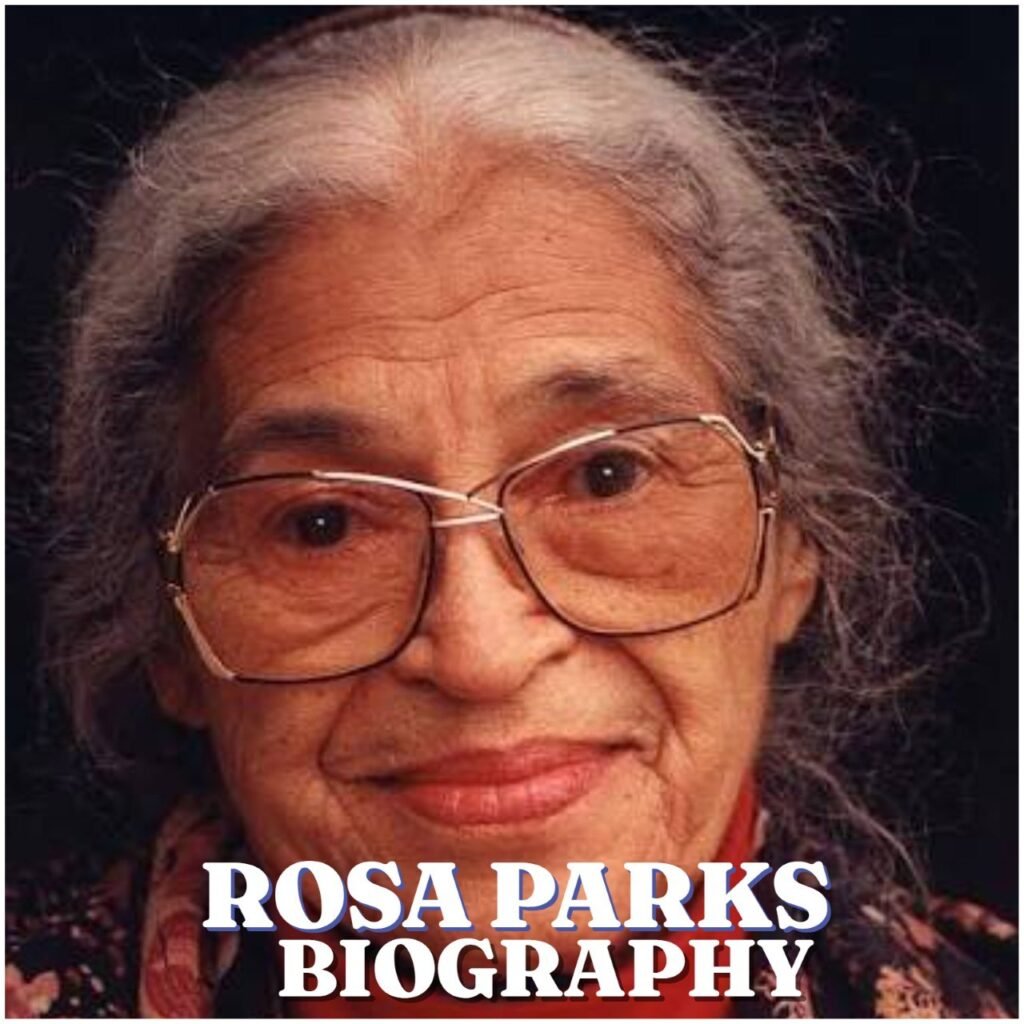
Rosa Louise McCauley Parks remains one of the most recognized figures in American civil-rights history, remembered particularly for her role in the Montgomery Bus Boycott of 1955. Born on February 4, 1913, in Tuskegee, Alabama, Parks became an important figure in the struggle against racial segregation and discrimination in the United States. Her decision on December 1, 1955, not to give up her seat to a white passenger on a segregated Montgomery bus led to her arrest and helped spark a prolonged boycott that challenged the city’s system of segregated public transportation.
Although Rosa Parks is often described simply as the woman who refused to surrender her bus seat, her activism extended far beyond that single event. She had been involved with the National Association for the Advancement of Colored People (NAACP) before the Montgomery Bus Boycott and worked to document racial injustice and support civil-rights causes. After moving to Detroit, Michigan, she continued her activism and remained involved in efforts concerning racial equality, housing, employment and social justice. Her life therefore represents a much broader history of organized resistance rather than one isolated act of protest.
Rosa Parks died on October 24, 2005, in Detroit at the age of 92, but her influence continues to be recognized through museums, educational programs, memorials, books and public commemorations. In 2026, institutions such as the Rosa Parks Museum in Montgomery continue to preserve and interpret her story for new generations. Its current exhibition, Rosa Parks: A Lifetime of Being Rebellious, uses materials from her personal collection to emphasize the breadth of her activism and is scheduled to run through December 19, 2026.
Early Life of Rosa Parks
Rosa Louise McCauley Parks was born on February 4, 1913, in Tuskegee, Alabama, to James McCauley and Leona Edwards McCauley. She was raised in Alabama during the Jim Crow era, when racial segregation was enforced throughout much of everyday life. When Rosa was two years old, her family moved to Pine Level, Alabama, where she lived with her maternal grandparents. Her mother was a teacher and initially taught Rosa at home before Rosa later moved to Montgomery to continue her education.
Parks’ childhood unfolded in an environment in which racial discrimination was a routine part of life. Her upbringing within an African American family in segregated Alabama helped shape her understanding of injustice and dignity. She attended the Montgomery Industrial School for Girls, an institution that provided Black girls with educational opportunities during segregation. Her experiences growing up in Alabama, together with the values emphasized by her family and teachers, contributed to the convictions that later guided her civil-rights work.
As a young woman, Parks became increasingly involved in Montgomery’s Black community and civil-rights activities. She married Raymond A. Parks in 1932, and the couple shared an interest in racial politics and activism. Raymond was involved with the NAACP, and Rosa later became deeply involved in the Montgomery branch herself. By 1943, she had become secretary of the Montgomery NAACP, beginning a period of organized activism that preceded her historic 1955 arrest by more than a decade.
Education of Rosa Parks
Rosa Parks received her early education in Alabama, attending schools in Pine Level and Montgomery during a period when public education was racially segregated. She later attended the Montgomery Industrial School for Girls, where she received an education in an environment that encouraged academic development and personal discipline. The school was part of her formative years and contributed to her intellectual development during a period when educational opportunities for Black children were severely restricted by segregation.
Parks subsequently attended Alabama State Teachers College for Negroes, now known as Alabama State University. However, she was unable to complete her studies at that time because of family responsibilities and the need to care for relatives. Despite leaving college before completing a degree, Parks continued to value education and eventually received her high-school diploma in 1933. The Library of Congress timeline records her high-school graduation and later lists numerous honorary degrees and other recognitions she received during her lifetime.
Her education also extended beyond formal classrooms through her experiences as a civil-rights activist. After becoming involved with the Montgomery branch of the NAACP, Parks developed practical knowledge of racial discrimination, voter registration and civil-rights organizing. She investigated cases involving racial violence and discrimination and participated in leadership training. These experiences provided an important education in community organizing and civil-rights advocacy and helped prepare her for the activism that would make her internationally known.
Rosa Parks Career and Civil Rights Activism
Rosa Parks’ career was closely connected to her lifelong commitment to civil rights and racial equality. Before becoming internationally recognized, she worked in several occupations, including as a seamstress and tailor’s assistant. Her professional life was affected by the racial discrimination that shaped employment opportunities for Black Americans in the segregated South. Alongside her paid work, Parks devoted significant time to civil-rights activism and became increasingly involved with the Montgomery NAACP. The Library of Congress records that she lost her job as an assistant tailor at Montgomery Fair after the boycott began.
In 1943, Parks became secretary of the Montgomery NAACP. She investigated cases involving police brutality, sexual violence, murder and racial discrimination and worked alongside figures such as E. D. Nixon. In 1949, she also became an adviser to the organization’s youth council. This history is important because it shows that Parks had already spent years working for civil rights before her famous bus arrest. Her activism was therefore part of a sustained commitment to challenging racial injustice rather than an isolated act of protest.
On December 1, 1955, Parks was arrested after refusing to give up her seat to a white passenger on a Montgomery city bus. Her arrest became a catalyst for the Montgomery Bus Boycott, which was organized by Black residents and civil-rights leaders and lasted more than a year. The boycott became one of the defining campaigns of the modern civil-rights movement, and legal challenges ultimately resulted in the end of segregation on Montgomery’s public buses.
Following the boycott, Parks and her husband moved to Detroit in 1957. She continued her civil-rights activities and participated in major events, including the March on Washington for Jobs and Freedom in 1963 and the Selma-to-Montgomery March in 1965. From 1965 to 1988, she worked in Congressman John Conyers’ district office in Detroit, where she continued serving members of the community. Her career therefore remained connected to public service and social justice long after the Montgomery Bus Boycott.
Parks also helped establish the Rosa and Raymond Parks Institute for Self Development in 1987, an organization dedicated to educating and developing young people. She published autobiographical and educational works, including Rosa Parks: My Story and Quiet Strength. Her achievements were recognized with numerous honors, including the NAACP Spingarn Medal in 1979, the Presidential Medal of Freedom in 1996 and the Congressional Gold Medal in 1999.
Renewed Interest in Rosa Parks’ Legacy Through 2026 Museum Exhibitions and Events
Rosa Parks remains the subject of renewed public attention in 2026 through exhibitions and educational programs focused on her life and civil-rights activism. The Rosa Parks Museum in Montgomery, Alabama, is currently presenting Rosa Parks: A Lifetime of Being Rebellious, an exhibition featuring facsimiles of items from Parks’ personal collection and emphasizing the broader scope of her activism beyond the 1955 Montgomery Bus Boycott. The exhibition opened on December 1, 2025, and is scheduled to remain open through December 19, 2026.
The Rosa Parks Museum has also continued organizing public programs throughout 2026. Its calendar includes the museum’s 11th annual Juneteenth celebration, educational activities and other community events. The museum also marked what would have been Parks’ 113th birthday in February 2026 with free admission and special activities. These programs keep her history visible while providing educational opportunities for visitors and younger generations.
The museum’s continuing work is particularly significant because it presents Parks’ life as more than a single moment on a bus. Troy University describes the museum as an active memorial to Parks and the Montgomery Bus Boycott and says its mission includes collecting, preserving and exhibiting artifacts related to Parks, the boycott and the wider civil-rights movement. Its current exhibition similarly uses personal materials to explore her long life of social-justice activism.
Cause of Death and Death of Rosa Parks
Rosa Parks died on October 24, 2005, in Detroit, Michigan, at the age of 92. She had spent her later years in Detroit after moving there in 1957 and continued to be honored for her civil-rights contributions. The Library of Congress records her death and notes that she subsequently lay in honor in the United States Capitol Rotunda.
Following her death, Parks received extensive public tributes from civil-rights organizations, political leaders and members of the public. Her placement in the U.S. Capitol Rotunda was an extraordinary national honor, reflecting the significance of her contribution to American history. The Library of Congress preserves extensive material documenting her life, including personal correspondence, photographs, writings and records of the honors she received.
Parks was laid to rest in Detroit, where her final resting place remains associated with her family. Her death marked the end of a life that had become closely associated with the struggle against racial segregation, but her story continues to be taught through museums, educational programs, books and commemorative events. The continuing preservation of her papers and personal collection allows researchers and the public to explore dimensions of her life beyond the famous Montgomery bus incident.
Personal Life and Family of Rosa Parks
Rosa Parks was born to James McCauley and Leona Edwards McCauley and had a younger brother named Sylvester McCauley. After her parents separated, Rosa spent much of her childhood with her mother and maternal grandparents near Pine Level, Alabama. Her mother was a teacher, and Parks’ early family environment placed considerable emphasis on education, dignity and independence. These family influences became part of the foundation for her later activism.
Rosa Parks married Raymond A. Parks on December 18, 1932. Raymond was a barber and an active supporter of civil-rights causes, and the couple shared an interest in racial politics and community activism. They remained married until Raymond’s death in 1977 and did not have children. Their partnership was an important part of Parks’ personal life, particularly during the years when she became increasingly involved with the Montgomery NAACP and the struggle against racial segregation.
After Raymond’s death, Parks continued living and working in Detroit while maintaining her involvement in civil-rights and educational activities. She helped establish the Rosa and Raymond Parks Institute for Self Development in 1987, creating a lasting institution associated with both her and her husband’s names. Parks devoted much of her later life to activism, writing, education and public service, and her personal papers preserve evidence of her family relationships, friendships and decades of civic involvement.
Rosa Parks Age, Religion, Nationality, Height and Physical Appearance
Age: Rosa Parks was born on February 4, 1913, in Tuskegee, Alabama, and died on October 24, 2005, in Detroit, Michigan. She was 92 years old when she died. Her life spanned more than nine decades and included major developments in American society, particularly the struggle for racial equality and the modern civil-rights movement.
Religion: Rosa Parks was a Christian and was raised within the African American Christian tradition. Faith was an important part of her personal life, while churches and religious communities were also significant institutions within the wider African American civil-rights movement of her era. Her writings and public legacy frequently reflect themes of faith, courage, dignity and perseverance.
Nationality: Rosa Parks was American. She was born in Alabama and spent significant portions of her life in Montgomery and Detroit. Her experiences as an African American woman living under segregation strongly shaped her understanding of racial inequality and contributed to her lifelong civil-rights activism.
Height and Physical Appearance: A reliably documented exact height for Rosa Parks is not consistently available in authoritative historical records, so a precise measurement should not be presented as established fact. Historical photographs show Parks as a neatly presented woman who often wore modest or formal clothing, with carefully styled hair and a composed expression. Her public image became closely associated with dignity, seriousness and quiet determination, particularly in photographs taken during her years of civil-rights activism.
Rosa Parks Age, Religion, Tribe, Height and Physical Appearance
Age: Rosa Parks was born on February 4, 1913, in Tuskegee, Alabama, and died on October 24, 2005, in Detroit, Michigan. She was 92 years old at the time of her death. Her long life covered major changes in American society, particularly the struggle for racial equality and the development of the modern civil-rights movement.
Religion: Rosa Parks was raised in a Christian household and maintained a Christian faith throughout her life. Her religious background was connected to the African American church tradition, which played an important role in community life and civil-rights organizing during her era.
Tribe: The term **“tribe” is not generally used to classify African Americans in the United States in the same way it is used for many African ethnic groups. Parks was an African American woman of U.S. heritage, and available biographical records identify her family ancestry through her parents and maternal family in Alabama rather than assigning her to a specific African tribe. It is therefore more accurate to describe her ancestry through her documented family history than to attach an unsupported tribal identity.
Height and Physical Appearance: A reliably documented exact height for Rosa Parks is not consistently available in authoritative biographical records, so a precise measurement should not be treated as confirmed. Historical photographs show Parks as a neatly presented woman who often wore modest dresses or formal clothing, with carefully styled hair and a composed expression. Her dignified appearance became part of the public image associated with her civil-rights activism.
Rosa Parks Social Media Presence
Rosa Parks died in 2005, before modern social-media platforms such as Facebook, Instagram and X became widely used, so she did not have verified personal social-media accounts. Any account claiming to be Rosa Parks herself should therefore be treated cautiously unless it is clearly operated by an official institution, archive or organization representing her legacy.
Her legacy is nevertheless represented online by organizations and institutions dedicated to preserving her history. The Rosa Parks Museum maintains an online presence where exhibitions, educational programs and commemorative events are shared. When discussing social media, it is more accurate to refer to institutional accounts rather than inventing a personal handle for Parks. The museum’s current online programs include its 2026 exhibitions and events celebrating her life and legacy.
Rosa Parks Net Worth
Rosa Parks’ exact net worth at the time of her death in 2005 is not reliably documented in authoritative public records. Unlike modern celebrities and public figures, Parks did not build her public profile primarily through commercial entertainment or large-scale business ventures. Her income came largely from ordinary employment, including work as a seamstress and later as an employee in Congressman John Conyers’ congressional office.
It would therefore be misleading to present a precise figure as fact or to estimate her wealth simply from her historical fame. Parks did receive financial recognition and major honors during her later years, and she earned income from her books and other work, but these circumstances should not be confused with the kind of commercial earnings associated with contemporary celebrities. Her surviving papers document her awards, writings and personal correspondence, but they do not establish a reliable public net-worth figure.
For an SEO biography, the most accurate description is that Rosa Parks’ net worth was not publicly established. Her historical significance rests on her civil-rights activism rather than personal wealth. Any website giving an exact dollar amount for her net worth should be treated as an estimate unless it provides credible documentation from her estate or financial records.
Rosa Parks’ Legacy
Rosa Parks’ legacy is deeply connected to the American civil-rights movement and the struggle against racial segregation. Her December 1, 1955 arrest after refusing to surrender her bus seat became a catalyst for the Montgomery Bus Boycott, a major protest that lasted more than a year and helped challenge racial segregation in public transportation. Although she is often remembered primarily for that incident, her activism with the NAACP and her continued involvement in civil-rights causes demonstrate that her contribution extended far beyond a single moment on a bus.
Parks’ influence continued after the boycott and after she moved to Detroit. She remained involved in efforts concerning racial equality, education and social justice, and helped establish the Rosa and Raymond Parks Institute for Self Development. She also received major national recognition, including the Congressional Gold Medal in 1999, the highest honor awarded by the U.S. legislative branch. Her Presidential Medal of Freedom and NAACP Spingarn Medal were among the other major honors recognizing her contributions.
Today, Rosa Parks is remembered through museums, memorials, educational programs, books and public commemorations. The Rosa Parks Museum in Montgomery continues to preserve and interpret her life, while exhibitions increasingly emphasize that her activism was a lifelong commitment rather than a single moment on a bus. Its current exhibition, Rosa Parks: A Lifetime of Being Rebellious, draws on her personal collection and runs through December 19, 2026, demonstrating the continuing effort to present the full scope of her life and activism.
Conclusion
Rosa Parks remains one of the most significant figures in American civil-rights history, remembered not only for her pivotal role in the 1955 Montgomery Bus Boycott but also for decades of activism against racial injustice. From her early life in Alabama and work with the NAACP to her later years in Detroit, Parks consistently contributed to the struggle for equality and human dignity. Although she died in 2005 at the age of 92, her story continues to be preserved through museums, educational programs, books and commemorations, ensuring that her contributions and the broader history of the civil-rights movement remain relevant to future generations.
Frequently Asked Questions About Rosa Parks
Who was Rosa Parks?
Rosa Parks was an American civil-rights activist best known for her role in the Montgomery Bus Boycott of 1955. Her arrest after refusing to give up her bus seat became an important event in the struggle against racial segregation in the United States.
When was Rosa Parks born?
Rosa Parks was born on February 4, 1913, in Tuskegee, Alabama, United States.
When did Rosa Parks die?
Rosa Parks died on October 24, 2005, in Detroit, Michigan, at the age of 92.
What was Rosa Parks famous for?
Rosa Parks is famous for refusing to surrender her seat to a white passenger on a segregated Montgomery bus on December 1, 1955. Her arrest helped trigger the Montgomery Bus Boycott.
Was Rosa Parks the first person to challenge segregation on a bus?
No. Other Black Americans had challenged segregated bus policies before Parks, including Claudette Colvin, who was arrested in Montgomery earlier in 1955. Parks became particularly prominent because her case helped lead to the Montgomery Bus Boycott and the subsequent legal challenge to bus segregation.
Was Rosa Parks married?
Yes. Rosa Parks married Raymond Parks in 1932. They remained married until his death in 1977 and did not have children.
What was Rosa Parks’ religion?
Rosa Parks was a Christian and was raised within the African American Christian tradition. Her faith was an important part of her personal life.
Where did Rosa Parks live?
Rosa Parks lived in several places during her life, including Alabama and Detroit, Michigan. She moved to Detroit in 1957 and spent much of her later life there.
What was Rosa Parks’ occupation?
Parks worked in several occupations, including as a seamstress and tailor’s assistant, and later worked in the congressional office of U.S. Representative John Conyers Jr. She also devoted significant time to civil-rights activism.
Did Rosa Parks have children?
No. Rosa Parks and her husband, Raymond Parks, did not have children.
What awards did Rosa Parks receive?
Among her major honors, Parks received the NAACP Spingarn Medal in 1979, the Presidential Medal of Freedom in 1996, and the Congressional Gold Medal in 1999.
What was Rosa Parks’ net worth?
Rosa Parks’ exact net worth is not reliably established in authoritative public records. Because she was primarily an activist and worked ordinary jobs rather than building a commercial fortune, precise online estimates should be treated cautiously.
Where is Rosa Parks buried?
Rosa Parks is buried at Woodlawn Cemetery in Detroit, Michigan, alongside members of her family. Her final resting place is part of the continuing historical record of her life and family.
Why is Rosa Parks still important today?
Rosa Parks remains important because her life represents a significant part of the struggle against racial segregation in the United States. Museums, schools and civil-rights organizations continue to preserve her story and educate new generations about her activism and the wider civil-rights movement. The Rosa Parks Museum in Montgomery continues this work through exhibitions, artifacts and educational programs.
In 2026, the Rosa Parks Museum in Montgomery is presenting Rosa Parks: A Lifetime of Being Rebellious, an exhibition featuring facsimiles of materials from Parks’ personal collection. The exhibition opened on December 1, 2025, and is scheduled to run through December 19, 2026. The museum has also held birthday and Juneteenth programming during 2026.