
Introduction
Robert Frost was one of the most influential American poets of the twentieth century, widely celebrated for his remarkable ability to transform ordinary experiences into profound reflections on life, nature, human relationships, and personal choices. Born on March 26, 1874, in San Francisco, California, United States, Frost became internationally recognised for his distinctive writing style, which combined simple language, rural imagery, and deeper philosophical meanings. His poems often explored the beauty and challenges of everyday life, making his work accessible to ordinary readers while attracting the attention of literary scholars around the world. Even decades after his death, Robert Frost remains a significant figure in American literature, and his poetry continues to be studied in schools, colleges, and universities.
Throughout his literary career, Robert Frost established himself as a master of traditional poetic forms, natural imagery, and conversational language. Some of his most famous poems include *The Road Not Taken*, *Stopping by Woods on a Snowy Evening*, *Mending Wall*, *Birches*, and *Fire and Ice*. Through these works, he explored themes such as freedom, responsibility, isolation, mortality, uncertainty, and the complicated relationship between human beings and the natural world. His outstanding contributions to literature earned him four Pulitzer Prizes for Poetry, making him one of the most celebrated poets in American history. Frost also gained national recognition when he read his poem “The Gift Outright” at the inauguration of President John F. Kennedy in 1961, further strengthening his reputation as an important cultural figure.
In 2026, Robert Frost continues to attract attention from readers, researchers, educators, and poetry enthusiasts who remain interested in his life, literary achievements, and enduring influence. Recent literary discussions, renewed interest in his correspondence, and contemporary interpretations of his poems have continued to bring his work to new audiences. Although Frost died on January 29, 1963, in Boston, Massachusetts, his legacy remains firmly established through his published collections, biographies, letters, and the continued study of his poetry. His life story offers valuable insight into the experiences, personal struggles, and creative dedication behind his literary success, making Robert Frost an enduring subject of interest for anyone seeking to understand the development of American poetry.
Early Life of Robert Frost
Robert Frost was born on March 26, 1874, in San Francisco, California, United States, to William Prescott Frost Jr. and Isabelle Moodie. His father was a teacher and journalist who later became involved in newspaper work, while his mother was of Scottish descent and had an interest in literature and education. Frost spent his early childhood in California, where his family lived before his father’s death from tuberculosis in 1885. The loss of his father was a defining event in his childhood, creating financial difficulties for the family and prompting his mother to move with Robert and his younger sister, Jeanie, to Lawrence, Massachusetts, to live closer to relatives. This move introduced Frost to New England, the region that would later become closely associated with his poetry and literary identity.
During his teenage years, Robert Frost developed a strong interest in reading, writing, and literature. He attended Lawrence High School, where he performed well academically and discovered his enthusiasm for poetry. In 1892, he graduated from high school as a co-valedictorian alongside Elinor Miriam White, who would later become his wife. His early experiences in New England, including its changing seasons, rural communities, farms, forests, and traditional way of life, provided inspiration for many of the images and themes that appeared in his later poems. Although Frost initially explored different educational and career opportunities, his growing passion for writing gradually became central to his ambitions. His upbringing, family experiences, and observations of ordinary people helped shape the realistic yet philosophical style that distinguished his work.
After graduating from high school, Frost briefly attended Dartmouth College in 1892 but left after only a short period. He subsequently worked in several occupations, including teaching, newspaper delivery, and farming, while continuing to develop his writing skills. In 1894, a magazine published his poem “My Butterfly: An Elegy,” marking an early milestone in his literary journey. The following year, he married Elinor White, his former schoolmate and longtime companion, and the couple began building a family while Frost continued pursuing poetry. Despite experiencing financial uncertainty and struggling to establish himself as a writer, he remained committed to his literary ambitions. These early challenges taught him about perseverance, responsibility, disappointment, and the complexities of human life, themes that would later become central to his poetry and help establish his reputation as one of America’s most respected poets.
Education of Robert Frost
Robert Frost began his formal education in California before continuing his studies in Massachusetts following the death of his father in 1885. After relocating with his mother and younger sister to Lawrence, Massachusetts, he attended Lawrence High School, where he demonstrated strong academic abilities and developed an interest in literature, poetry, and writing. During his school years, Frost became increasingly fascinated by language and the way writers could communicate complex emotions and ideas through carefully chosen words. His interest in poetry grew alongside his academic achievements, and he eventually graduated from Lawrence High School in 1892 as a co-valedictorian, sharing the distinction with Elinor Miriam White, who later became his wife. His experiences during these formative years helped establish the educational and intellectual foundation for his future literary career.
After completing high school, Frost enrolled at Dartmouth College in Hanover, New Hampshire, in 1892. However, his time at the institution was brief, as he left after only a few months without completing a degree. Although he did not follow a conventional university path, Frost continued educating himself through extensive reading, independent study, writing, and practical experiences. He later attended Harvard University in Cambridge, Massachusetts, from 1897 to 1899, where he studied subjects including classical literature and languages. However, he left Harvard before earning a degree. His decisions to leave both institutions reflected his unconventional educational journey and his determination to pursue a life shaped by his personal interests and ambitions rather than by formal academic expectations.
Despite never completing a college degree, Robert Frost became one of the most highly respected literary figures in American history, demonstrating that formal qualifications are not the only route to intellectual and creative achievement. His education at Lawrence High School, brief attendance at Dartmouth College, and later studies at Harvard University contributed to his understanding of literature, language, and poetic tradition. Beyond the classroom, his experiences as a teacher, farmer, and writer provided practical knowledge of rural life and human relationships, which became important elements of his poetry. In recognition of his literary accomplishments, Frost received numerous honorary degrees from universities and colleges throughout his career. His educational journey remains an example of how independent learning, perseverance, and dedication to a chosen craft can contribute to lasting success in literature.
Career of Robert Frost
Robert Frost built an extraordinary literary career through his dedication to poetry, his distinctive writing style, and his ability to explore complex human experiences through everyday language. Although he faced financial difficulties and struggled to establish himself during his early years, he remained committed to his ambition of becoming a successful writer. His career developed gradually as he experimented with different poetic forms, published his early work, and drew inspiration from the landscapes and communities of New England. Unlike many poets who relied heavily on elaborate language, Frost often used familiar conversations, rural settings, and ordinary situations to communicate profound ideas about life, responsibility, loneliness, nature, and human relationships. This combination of simplicity and philosophical depth eventually made him one of the most widely recognised poets in American literature.
Early Career and First Publications
Robert Frost began pursuing poetry seriously during his youth, but gaining recognition in the literary world proved challenging. In 1894, his poem “My Butterfly: An Elegy” was published by *The Independent*, a New York-based literary and political publication. The publication represented an important early achievement and encouraged him to continue developing his writing. During the following years, Frost worked in different occupations, including teaching and farming, while writing poetry whenever he could. In 1895, he married Elinor Miriam White, and the responsibilities of family life increased the pressure to find a reliable source of income. Nevertheless, he continued to develop his literary voice, drawing on personal experiences, observations of rural communities, and his growing understanding of the difficulties people encounter throughout their lives.
Frost’s early professional progress was slow, and he spent several years trying to secure a stable position as a poet. He briefly worked as a teacher and later operated a poultry farm in Derry, New Hampshire, where he lived with his family. His experiences working outdoors and observing the routines of rural life helped shape the landscapes, characters, and situations that became central to his poetry. Although he submitted poems to publications, widespread recognition did not come immediately. During this period, he continued reading extensively, revising his work, and experimenting with traditional poetic structures. These years of uncertainty helped him develop the patient, observant approach that later distinguished his writing and enabled him to turn familiar experiences into lasting literary works.
Literary Recognition and Major Achievements
Frost’s literary career advanced significantly after he moved with his family to England in 1912. There, he connected with influential literary figures and published *A Boy’s Will* in 1913 and *North of Boston* in 1914. These collections helped establish his reputation as a distinctive poet, and their success contributed to his growing recognition when he returned to the United States in 1915.
Frost continued publishing collections, including *Mountain Interval*, *New Hampshire*, *West-Running Brook*, and *A Further Range*. His writing combined traditional poetic structures with natural speech and thoughtful observations of rural life. He explored the tensions between individuals, the choices people make, and the uncertainties that shape human existence. His work appealed to both general readers and literary critics because it could be appreciated for its language and imagery while also inviting deeper interpretation.
One of the most remarkable aspects of Frost’s career was his success in receiving four Pulitzer Prizes for Poetry. He won for *New Hampshire* in 1924, *Collected Poems* in 1931, *A Further Range* in 1937, and *A Witness Tree* in 1943. These awards strengthened his position as one of America’s leading poets. He also worked as a teacher and lecturer, including at Amherst College, and became an influential public speaker whose readings introduced poetry to audiences across the country.
In 1961, Frost was invited to participate in the inauguration of President John F. Kennedy. He prepared to read a poem titled “Dedication,” but the bright sunlight made it difficult for him to read his manuscript. He instead recited “The Gift Outright” from memory. The moment symbolised his standing as a major American cultural figure and remains an important episode in his career.
Why Robert Frost Is Trending in 2026: Renewed Interest in His Letters and Timeless Poetry
Robert Frost is attracting renewed literary attention in 2026 because readers, researchers, and poetry enthusiasts continue to explore his life, personal correspondence, and lasting influence on American literature. His poetry remains relevant because it addresses universal experiences, including difficult decisions, loneliness, relationships, uncertainty, and the search for meaning in everyday life. Works such as *The Road Not Taken*, *Stopping by Woods on a Snowy Evening*, and *Mending Wall* continue to inspire discussions in classrooms, literary publications, and poetry communities. His ability to express complicated ideas through familiar language has helped his writing remain accessible to new generations, even more than six decades after his death.
Another reason for the renewed interest in Robert Frost is the continued publication and examination of his letters and other historical materials. These documents provide additional insight into his personality, relationships, professional struggles, and development as a writer. They also help scholars understand the differences between Frost’s public reputation as a celebrated poet and the more complicated experiences he encountered throughout his personal life. In 2026, discussions surrounding *The Letters of Robert Frost, Volume 4: 1937–1946* have contributed to interest in his biography and literary history, giving readers a deeper perspective on the experiences behind his celebrated works.
Robert Frost’s continuing presence in literary discussions also reflects the enduring importance of nature and human experience in his poetry. Contemporary readers often interpret his descriptions of forests, country roads, changing seasons, and rural communities as reflections on environmental awareness, personal responsibility, and the challenges of making choices. His poems invite different interpretations depending on the reader’s experiences, which helps explain why they remain subjects of academic research and public discussion. As literary societies, educators, and contemporary poets continue to revisit his work, Frost’s reputation as one of America’s most influential poets remains strong in 2026.
Personal Life and Family of Robert Frost
Robert Frost married Elinor Miriam White on December 19, 1895, after a relationship that began when they were students at Lawrence High School in Massachusetts. Elinor was not only his wife but also an important source of encouragement throughout his literary journey. She shared his interest in education and literature and supported his ambition to become a successful poet, even during periods of financial uncertainty. The couple lived in different places, including New Hampshire and England, as Frost pursued opportunities to publish his work and establish his career. Their marriage lasted until Elinor’s death in 1938. Although their family life included difficult experiences and personal disagreements, Elinor’s influence on Frost’s life and writing remained significant.
Robert and Elinor Frost had six children: Elliot, Lesley, Carol, Irma, Marjorie, and Elinor Bettina. Their family experienced considerable sorrow, as Elliot died in childhood, Marjorie died in 1934 following complications after childbirth, and Carol died in 1940. Their youngest daughter, Elinor Bettina, died only a few days after her birth. Their surviving children, Lesley and Irma, lived into adulthood, although the family continued to face personal difficulties. These losses deeply affected Frost and his wife, adding to the emotional complexity of their lives. Frost’s experiences with family relationships, grief, and the passage of time are often discussed by scholars examining the emotional dimensions of his poetry, although his poems should not be treated simply as direct accounts of his private experiences.
Following Elinor’s death in 1938, Robert Frost continued his literary work while dealing with the loss of his longtime companion. He maintained relationships with fellow writers, literary critics, students, and friends, many of whom admired his intelligence, conversational style, and influence on American poetry. His private life was more complicated than the image of a peaceful New England poet sometimes suggested, and later biographical studies have explored his family relationships, personal struggles, and conflicting aspects of his personality. Frost never remarried after Elinor’s death. He died on January 29, 1963, in Boston, Massachusetts, leaving behind a lasting literary legacy. His family history remains an important part of his biography because it provides context for understanding the personal experiences that accompanied his long career as one of America’s most celebrated poets.
Robert Frost’s Age, Religion, Nationality, Health and Physical Appearance
Age
Robert Frost was born on March 26, 1874, in San Francisco, California, United States, and died on January 29, 1963, in Boston, Massachusetts, at the age of 88. He lived through a period of significant social, cultural, and literary change and became one of the most respected poets in American history. Throughout his lifetime, Frost received numerous literary honours, including four Pulitzer Prizes for Poetry. His long career and enduring influence established him as an important figure in American literature.
Religion
Robert Frost’s religious beliefs were complex and frequently explored through his poetry. He grew up in a household influenced by Christianity, and his mother, Isabelle Moodie, was associated with the Swedenborgian Church. Religious questions, including the existence of God, the nature of suffering, morality, and humanity’s relationship with the universe, appeared in his literary work. However, Frost’s personal beliefs cannot easily be reduced to a simple religious label. His poems often present uncertainty and conflicting perspectives rather than straightforward religious teachings, inviting readers to consider spiritual and philosophical questions for themselves.
Nationality
Robert Frost was American by nationality. Although his mother was born in Scotland and his family had British ancestry, he was born in San Francisco, California, and became one of the most prominent voices in American poetry. He spent much of his adult life in New England, particularly in Massachusetts, New Hampshire, and Vermont. The region’s rural landscapes, changing seasons, farms, stone walls, and woodland paths became recurring features of his writing. His ability to use distinctly American settings and conversational language to examine universal human experiences helped establish his international literary reputation.
Health
Robert Frost experienced several health difficulties throughout his life. During his younger years, he suffered from respiratory illnesses, including pneumonia, and concerns about his lung health influenced some of his decisions about work and where he lived. In his later years, he continued to travel, lecture, and participate in literary events despite the challenges associated with ageing. In 1962, he was diagnosed with prostate and bladder cancer and experienced further complications before his death in Boston on January 29, 1963. His health challenges occurred alongside significant personal losses and an exceptionally demanding literary career.
Physical Appearance
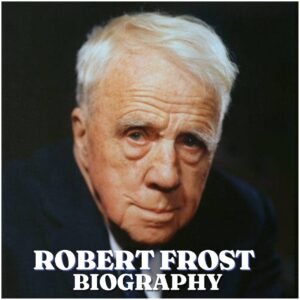
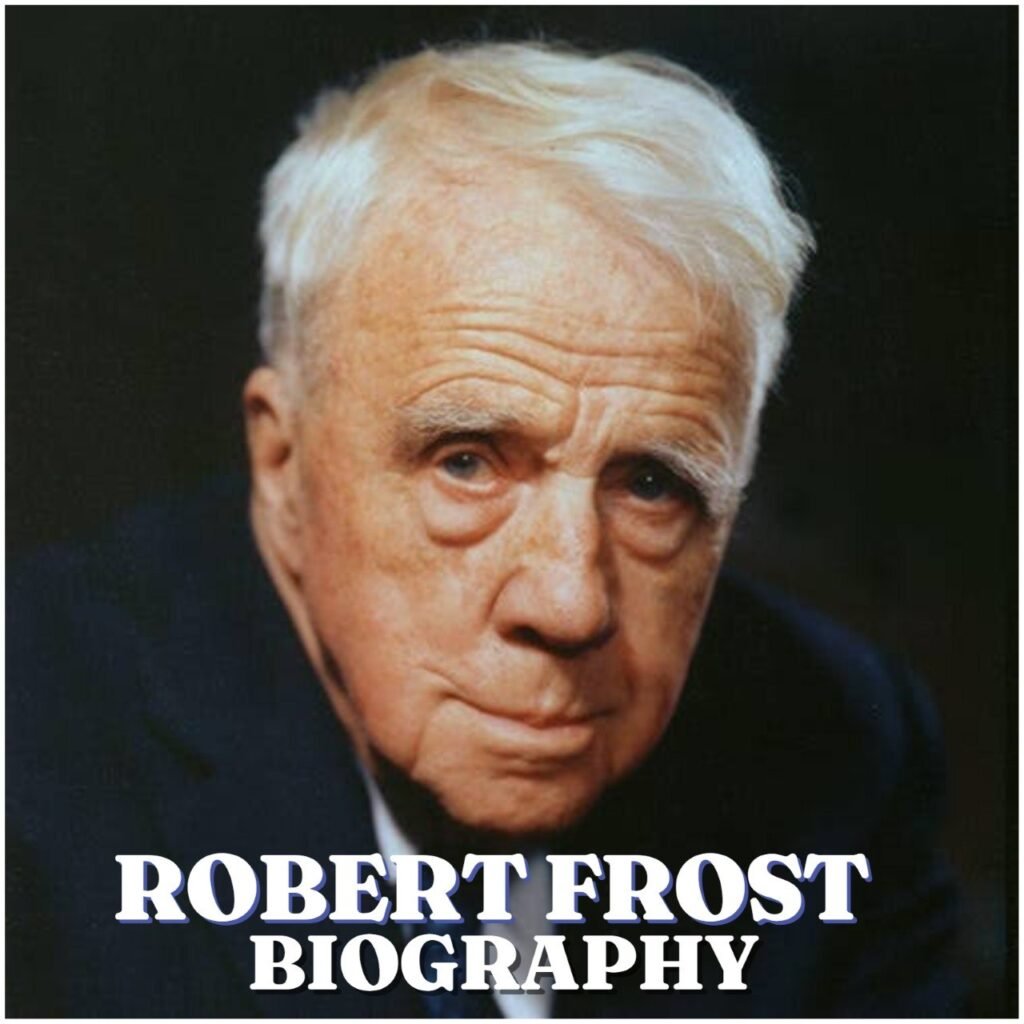
Robert Frost was often described in biographical accounts as a tall, solidly built man with a rugged face and distinctive eyes. As he grew older, his hair turned white, and his facial features became more pronounced, giving him a recognisable appearance in photographs and public appearances. His appearance, combined with his New England accent and conversational manner, contributed to his public image as a thoughtful, experienced poet. Photographs of Frost at poetry readings and literary gatherings show him in both formal attire and everyday clothing, reflecting his role as a celebrated public figure who remained closely associated with rural American life.
Robert Frost’s Age, Religion, Tribe, Height and Physical Appearance
Age
Robert Frost was born on March 26, 1874, in San Francisco, California, United States, and died on January 29, 1963, at the age of 88. He spent much of his life writing poetry, teaching, and delivering readings that established him as one of America’s most respected literary figures. Although he died more than six decades ago, his poems remain widely studied and appreciated around the world. His lasting influence reflects his ability to explore human choices, nature, relationships, and life’s uncertainties through memorable language.
Religion
Robert Frost grew up in a family with Christian influences. His mother, Isabelle Moodie, was associated with the Swedenborgian Church, and Frost was exposed to religious stories and biblical teachings during childhood. As he grew older, however, his personal views became more independent and complex. His poetry frequently examined questions about faith, morality, suffering, God, and humanity’s place in the universe. Rather than consistently presenting a single religious viewpoint, his writing often explored uncertainty and conflicting beliefs. Therefore, his religious outlook is best described as complex rather than assigned a definite denomination without qualification.
Tribe and Ethnic Background
Robert Frost was American, with family roots in Scotland and England. His mother, Isabelle Moodie, was born in Scotland, while his father’s ancestors included English settlers who had arrived in New Hampshire during the seventeenth century. The term *tribe* is not generally applicable to Frost’s documented background in the way it might be for someone belonging to a specific Indigenous or African ethnic community. His ancestry is more accurately described in terms of his Scottish maternal heritage and English paternal lineage. These family origins formed part of his background, although his literary identity became particularly associated with the rural landscapes and culture of New England.
Height
Robert Frost’s exact height is not consistently documented in authoritative biographical sources. Consequently, it is better not to assign him a specific measurement without reliable evidence. Historical photographs show him as a solidly built man who developed a distinctive appearance as he grew older. His public image was shaped more by his white hair, expressive face, formal clothing, and recognisable presence at poetry readings than by any documented physical measurements.
Physical Appearance
Robert Frost became recognisable for his white hair, strong facial features, expressive eyes, and mature appearance in photographs taken during the later years of his life. In public appearances, he frequently wore formal suits, reflecting his position as a respected poet and lecturer. His thoughtful expression and composed manner contributed to the familiar image of an experienced literary figure. Photographs of Frost at readings, university events, and public ceremonies preserve the appearance of a man whose influence extended far beyond his physical presence. Today, these historical images remain an important part of how readers remember one of America’s most celebrated poets.
Social Media Presence of Robert Frost
Robert Frost lived from 1874 to 1963, long before social media platforms such as Instagram, Facebook, X (formerly Twitter), and TikTok existed. Therefore, he did not have personal social media accounts or official handles during his lifetime. Today, his literary legacy continues to reach readers through poetry organisations, educational institutions, historical archives, and online literary communities that share his poems, discuss his achievements, and introduce his work to younger generations.
Readers looking for information about Frost can visit the official Robert Frost website at https://www.robertfrost.org/ and explore the Robert Frost Society at https://robertfrostsociety.org/, which promotes scholarly research, educational programmes, and appreciation of his poetry. These organisations help preserve his literary contributions and provide information about his life, writings, and continuing influence.
Although Robert Frost has no verified personal social media handle, readers may encounter accounts dedicated to his poetry on different platforms. Such accounts should not automatically be considered official or affiliated with his estate. His enduring popularity demonstrates how digital communities can introduce classic literature to new audiences and keep the work of influential writers alive across generations.
Robert Frost Net Worth
Robert Frost’s exact net worth at the time of his death in 1963 is not reliably documented in publicly available historical records. Unlike modern celebrities, whose wealth is often estimated through property holdings, business investments, and financial disclosures, Frost lived during a period when poets’ personal finances were not routinely reported. Nevertheless, he earned income through poetry publications, book royalties, teaching positions, public readings, and literary awards. His financial circumstances improved considerably as his reputation grew, allowing him to move from years of financial uncertainty to a more established position in American literary life.
During his successful years, Frost received income from the sale of poetry collections, publishing agreements, university appointments, lectures, and speaking engagements. His books, including *A Boy’s Will*, *North of Boston*, and *New Hampshire*, helped establish his reputation and contributed to his long-term earnings. He also taught at institutions such as Amherst College and Dartmouth College and received four Pulitzer Prizes for Poetry. These achievements strengthened his professional standing and expanded the demand for his work. However, assigning a specific dollar amount to his personal fortune without dependable financial records would be misleading.
Today, Robert Frost’s literary estate remains important because his published works, copyrights, and permissions are managed through arrangements established after his death. His continuing popularity means that his poetry retains cultural and commercial value, although this does not establish a verified figure for his estate’s current worth. For an accurate biography, Robert Frost’s net worth should be described as unknown rather than given an unsupported estimate. His greatest legacy is the enduring influence of his poetry, which continues to be read, studied, published, and celebrated around the world.
Legacy of Robert Frost
Robert Frost left an extraordinary legacy as one of the most influential poets in American literary history. His ability to combine straightforward language, vivid descriptions of nature, and profound reflections on human life distinguished him from many other writers of his generation. Through poems such as *The Road Not Taken*, *Stopping by Woods on a Snowy Evening*, *Mending Wall*, and *Birches*, Frost explored themes of personal choice, responsibility, isolation, relationships, and the uncertainties of existence. His writing often began with familiar experiences from rural life before developing into deeper philosophical reflections, allowing readers from different backgrounds to connect with his work. His four Pulitzer Prizes for Poetry further established his reputation as an exceptional literary figure, and his poems continue to be studied in schools and universities around the world.
Another important part of Robert Frost’s legacy is his contribution to the development and appreciation of modern American poetry. Although he frequently used traditional poetic forms and regular rhythms, his writing incorporated natural speech, realistic dialogue, and recognisable rural settings. His years in New England strongly influenced his literary imagination, providing landscapes and everyday situations that became central to many of his best-known works. Frost also became an important public literary figure, delivering readings and participating in cultural events that introduced poetry to audiences beyond academic circles. In 1961, he recited “The Gift Outright” at the inauguration of President John F. Kennedy, becoming the first poet to participate in a presidential inauguration in this way. This event demonstrated the national cultural significance he had achieved late in his career.
Robert Frost’s influence remains strong decades after his death on January 29, 1963. His poems continue to inspire readers, writers, educators, and researchers who examine their literary craftsmanship and explore their different interpretations. Literary societies, archived correspondence, biographies, and educational programmes help preserve knowledge of his life and work for future generations. His poetry is also frequently discussed in relation to decision-making, human nature, environmental awareness, and the relationship between individuals and society. Although some of his poems are widely quoted and sometimes interpreted too simply, their deeper meanings continue to invite careful reading and debate. Ultimately, Robert Frost’s enduring legacy lies in his remarkable ability to transform ordinary moments into memorable reflections on the human condition, securing his place among the most celebrated poets in the English language.
Conclusion
Robert Frost remains one of the most celebrated poets in American literary history, remembered for his distinctive writing style, thoughtful exploration of human experiences, and remarkable ability to find deeper meaning in ordinary moments. Born on March 26, 1874, in San Francisco, California, he overcame personal challenges, financial difficulties, and family tragedies to establish a lasting literary career that earned him four Pulitzer Prizes for Poetry. His famous works, including *The Road Not Taken*, *Stopping by Woods on a Snowy Evening*, and *Mending Wall*, continue to inspire readers through their exploration of nature, personal choices, responsibility, relationships, and life’s uncertainties. Although Frost died on January 29, 1963, at the age of 88, his literary influence remains strong through continued academic study, poetry readings, historical publications, and contemporary discussions of his work. His life and achievements demonstrate the enduring power of poetry to express complex ideas in accessible language, ensuring that Robert Frost’s name and contributions remain significant to generations of readers worldwide.
Frequently Asked Questions About Robert Frost
1. Who was Robert Frost?
Robert Frost was an American poet renowned for his realistic descriptions of rural life, nature, human relationships, and philosophical questions. He became one of the most influential poets of the twentieth century and won four Pulitzer Prizes for Poetry.
2. When and where was Robert Frost born?
Robert Frost was born on March 26, 1874, in San Francisco, California, United States. Although he was born in California, much of his life and literary identity became associated with New England.
3. How old was Robert Frost when he died?
Robert Frost was 88 years old when he died on January 29, 1963, in Boston, Massachusetts.
4. What was Robert Frost famous for?
Robert Frost was famous for poems such as *The Road Not Taken*, *Stopping by Woods on a Snowy Evening*, *Mending Wall*, and *Fire and Ice*. His poetry combines accessible language, traditional forms, and profound reflections on human life.
5. How many Pulitzer Prizes did Robert Frost win?
Robert Frost won four Pulitzer Prizes for Poetry. His awards recognised his outstanding contribution to American literature and established his reputation as one of the country’s most celebrated poets.
6. Who was Robert Frost’s wife?
Robert Frost’s wife was Elinor Miriam White. They married on December 19, 1895, and remained married until her death in 1938.
7. How many children did Robert Frost have?
Robert Frost and his wife, Elinor, had six children: Elliot, Lesley, Carol, Irma, Marjorie, and Elinor Bettina. The family experienced several tragic losses during their lifetimes.
8. What was Robert Frost’s educational background?
Robert Frost attended Lawrence High School in Massachusetts and briefly studied at Dartmouth College and Harvard University. He left both colleges without earning a degree but later received numerous honorary degrees in recognition of his literary achievements.
9. What was Robert Frost’s religion?
Robert Frost grew up in a family influenced by Christianity, but his personal religious and philosophical views were complex. His poetry frequently explored questions about faith, morality, suffering, and humanity’s relationship with the universe.
10. What was Robert Frost’s net worth?
Robert Frost’s exact net worth at the time of his death in 1963 is not reliably documented. He earned income through book sales, poetry royalties, teaching, lectures, and literary awards, but a precise financial estimate cannot be established confidently from available historical information.
11. What is Robert Frost’s most famous poem?
*The Road Not Taken* is widely regarded as one of Robert Frost’s most recognisable poems. Published in 1915, it explores choices and their consequences, although its meaning is often more ambiguous than the popular interpretation that it simply celebrates individualism.
12. Did Robert Frost have social media accounts?
No. Robert Frost died in 1963, before modern social media platforms existed. He did not have personal Instagram, Facebook, X, or TikTok accounts. Readers can explore his poetry through literary organisations, educational websites, and historical archives.