
Introduction to Phillis Wheatley Biography
Phillis Wheatley Peters was one of the most remarkable poets in American history, whose extraordinary journey from enslavement to literary recognition continues to inspire readers around the world. Born in West Africa around 1753, she was kidnapped as a young child and transported to Boston, Massachusetts, where she was sold into slavery. Despite the difficult circumstances of her early life, Wheatley demonstrated an exceptional ability to learn, eventually mastering English and developing a talent for writing poetry. Her intelligence, creativity, and determination helped her overcome significant barriers in a society where enslaved Africans were denied basic freedoms and educational opportunities. Today, she is remembered as a pioneering African-born poet whose achievements challenged the prejudices of her time.
Wheatley’s literary career reached a historic milestone in 1773 when her poetry collection, Poems on Various Subjects, Religious and Moral, was published in London. She became the first author of African descent in the American colonies to publish a book, establishing her place in literary history while still a young woman. Her poems explored themes such as religion, morality, death, liberty, and human experience, demonstrating her deep knowledge of classical literature and Christian teachings. Her accomplishments attracted attention in both Britain and America, although she also faced racial discrimination and skepticism from people who questioned whether an enslaved African woman could produce sophisticated literary works. Her story reveals both the power of education and the injustices that shaped the world in which she lived.
More than two centuries after her death on December 5, 1784, Phillis Wheatley’s legacy remains relevant to discussions about African American literature, women’s history, freedom, and equality. Her life has inspired generations of writers, historians, educators, and readers who continue to examine her poetry and the challenges she faced. In January 2026, the United States Postal Service honored her with a commemorative Forever stamp, bringing renewed public attention to her extraordinary contribution to American history. Although she experienced financial hardship during her later years and died at approximately 31, Wheatley left behind a lasting literary legacy that continues to be studied and celebrated. Her biography offers a powerful account of talent, perseverance, and the determination to make one’s voice heard despite overwhelming obstacles.
Latest News and Updates About Phillis Wheatley in 2026
One of the most significant recent developments concerning Phillis Wheatley is the United States Postal Service’s decision to honor her with a commemorative Forever stamp. The stamp was officially dedicated in Boston on January 29, 2026, as part of the USPS Black Heritage stamp series. The artwork was created by artist Kerry James Marshall and portrays Wheatley as a writer, emphasizing her intellectual achievements and enduring importance in American literary history. The stamp also draws attention to her unfinished second poetry collection, which she had hoped to publish but never saw released during her lifetime. This commemoration provides a timely opportunity to introduce her story to new readers and recognize her contribution to American culture.
Historical research and educational publications have also continued to explore Wheatley’s experiences as an enslaved African woman who became a published poet. Her life remains important to discussions about slavery, education, Christianity, women’s literary achievements, and the contradictions of a society that celebrated liberty while denying freedom to enslaved people. Modern scholars continue to examine her poetry and correspondence to understand how she navigated racial discrimination and literary expectations during the eighteenth century. Her work remains relevant to readers interested in African American history and the development of American literature.
Wheatley’s legacy also continues through historical institutions, museums, libraries, and educational resources that preserve and interpret her work. The renewed public attention surrounding her 2026 commemorative stamp demonstrates that her achievements remain significant more than two centuries after her death. Although she lived a relatively short life and faced considerable financial difficulties, her literary accomplishments established a lasting place for her in American history. These modern recognitions reinforce her importance as a pioneering writer whose talent challenged the assumptions of her time.
Early Life of Phillis Wheatley
Phillis Wheatley Peters was born around 1753 in West Africa, although her exact birthplace and original African name remain unknown. Her childhood took a tragic turn when she was kidnapped and forced onto a slave ship bound for North America. In 1761, when she was approximately seven or eight years old, she arrived in Boston, Massachusetts, aboard a vessel commonly identified as the Phillis. She was subsequently purchased by John Wheatley, a wealthy Boston merchant, for his wife, Susanna Wheatley. The family named the young girl Phillis after the ship that had transported her across the Atlantic. Separated from her homeland and the life she might have known, she entered an unfamiliar society where enslaved people had few rights and limited opportunities.
Despite the harsh realities of enslavement, Wheatley soon demonstrated an unusual ability to learn. The Wheatley family recognized her intellectual potential and allowed her to receive an education that was rarely available to enslaved African children, particularly girls. Susanna Wheatley and members of the household helped introduce her to reading and writing, and she made remarkable progress in learning English. She also developed an interest in the Bible, classical literature, history, and other subjects that would later influence her poetry. Within a relatively short period, Wheatley became capable of reading complex texts and expressing her thoughts through carefully written verses. Her rapid intellectual development attracted attention and laid the foundation for her future as a poet, although her educational opportunities were exceptional rather than representative of the experiences of most enslaved people.
As Wheatley grew older, her interest in literature developed into a serious talent for poetry. By her early teenage years, she was already composing poems that demonstrated an understanding of religious ideas, classical references, and the literary conventions of the eighteenth century. Her early works attracted attention within the Wheatley household and beyond, helping establish her reputation as an unusually gifted young writer. However, her achievements existed alongside the contradictions of her circumstances: she could gain recognition for her intellect while remaining subject to a system that denied her personal freedom. These experiences formed an important part of her early development and influenced how later generations interpreted her life and work. Her childhood journey from West Africa to Boston, combined with her determination to learn and write, became the starting point of a literary career that would make her one of the most significant pioneering figures in African American literature.
Education of Phillis Wheatley
Phillis Wheatley received an unusual education for an enslaved African girl living in eighteenth-century America. After arriving in Boston in 1761, she became part of the household of John and Susanna Wheatley, who recognized her remarkable intellectual abilities. Unlike many enslaved children who were denied access to formal learning, Phillis was given opportunities to study reading and writing under the guidance of members of the Wheatley family. Susanna Wheatley played an important role in encouraging her intellectual development and literary interests. Phillis learned to read English and quickly demonstrated an extraordinary ability to understand written texts. Her progress was so impressive that she soon moved beyond basic literacy and began exploring more advanced subjects, laying the foundation for her future success as a poet and writer.
Although there is limited evidence of Phillis Wheatley attending a conventional school, she received much of her education through private instruction, independent reading, and study within the Wheatley household. She developed knowledge of the Bible, English literature, history, geography, and classical works associated with ancient Greece and Rome. She also studied Latin, and some historical accounts indicate that she acquired a level of familiarity with classical languages and literature that was unusual for someone of her age and circumstances. Through her reading, she encountered the works and literary traditions that influenced eighteenth-century poetry. Her education was particularly remarkable because enslaved Africans generally faced severe restrictions on learning and intellectual advancement. Wheatley’s experience was therefore exceptional, reflecting both her extraordinary determination and the unusual opportunities made available to her by the household in which she lived.
Wheatley’s education directly influenced her development as a literary figure. By the time she was a teenager, she had begun writing poetry that reflected her knowledge of religion, classical literature, and the poetic conventions of her era. Her growing reputation eventually attracted the attention of prominent individuals who were impressed by her intellectual abilities. In 1773, her collection Poems on Various Subjects, Religious and Moral was published in London, marking a major milestone in her literary career. Her success demonstrated that an African-born woman who had been enslaved as a child could produce sophisticated literary work despite the racial prejudice of the period. Although Wheatley’s education did not follow the conventional path of a formal school or university, her independent study, private instruction, and dedication to reading enabled her to become one of the pioneering figures in African American literature. Her educational journey remains an important example of the transformative power of learning, even under deeply unjust circumstances.
Phillis Wheatley’s Career and Literary Achievements
Phillis Wheatley’s career as a poet began during her childhood, when her exceptional reading ability and talent for writing attracted attention within the Wheatley household in Boston, Massachusetts. By her early teenage years, she was composing poems influenced by religion, classical literature, and the literary traditions of eighteenth-century Britain. One of her early notable works was a poem commemorating the deaths of prominent individuals, demonstrating her ability to write about serious subjects with maturity and sophistication. As her reputation grew, her poetry began circulating among educated readers and influential members of society. However, becoming a recognized writer was not easy because racial prejudice led many people to question whether an enslaved African girl could produce sophisticated literary works. In 1772, she was examined by a group of prominent Boston men who sought to establish the authenticity of her writing. Their assessment helped support her claim to authorship and contributed to the circumstances surrounding the publication of her first poetry collection.
A major turning point in Wheatley’s career came in 1773, when her collection, Poems on Various Subjects, Religious and Moral, was published in London. The book contained 39 poems and established her as the first author of African descent in the American colonies to publish a book. Its publication was particularly significant because she was still enslaved when the collection appeared. The book attracted attention in Britain and America, introducing readers to her literary abilities and distinctive poetic voice. Among her notable works was On Being Brought from Africa to America, a poem that addresses Christianity, race, and spiritual equality. Another important work was To His Excellency General Washington, which she wrote in 1775 and which appeared in 1776. General George Washington acknowledged her poem and invited her to visit him, although historical accounts differ in their details about the meeting. Through these works, Wheatley established a place in the literary world while navigating the restrictions and racial inequalities of her time.
Following the publication of her first collection, Wheatley continued writing and sought opportunities to develop her literary career. Her circumstances changed significantly after the Wheatley family emancipated her in 1773, although freedom did not guarantee financial security or social equality. In 1778, she married John Peters, a free Black man, and became known as Phillis Wheatley Peters. She attempted to secure support for another collection of poetry and other writings, but she faced considerable financial difficulties and struggled to find a publisher. Her later years were marked by hardship, and she eventually worked as a domestic servant while caring for her family and continuing to write. Unfortunately, her planned second collection was never published during her lifetime, and she died in Boston on December 5, 1784, at approximately 31 years old. Despite the brevity of her career and the obstacles she encountered, Wheatley’s achievements helped challenge racial stereotypes and opened an important chapter in African American literary history. Her poetry continues to be studied for its literary craftsmanship, religious themes, and engagement with freedom, identity, and human dignity.
Phillis Wheatley’s Personal Life and Family
Phillis Wheatley’s personal life was shaped by her early experiences of enslavement, her education, and her eventual emergence as a celebrated poet. Born in West Africa around 1753, she was kidnapped as a child and transported to Boston, Massachusetts, where she was purchased by John Wheatley, a wealthy merchant, for his wife, Susanna Wheatley. The couple’s household became central to Phillis’s early life, providing her with opportunities to learn reading, writing, and literature. Their daughter, Mary Wheatley, also played a role in her education by helping her develop her literacy skills. Although Phillis gained recognition for her intelligence and literary talent, her circumstances remained complicated because she lived under slavery during the early years of her life. In 1773, following the publication of her first poetry collection in London, she gained greater public recognition. The Wheatley family subsequently emancipated her, giving her a degree of personal independence, although the racial discrimination of the period continued to affect her opportunities and experiences.
One of the most significant developments in Phillis Wheatley’s personal life was her marriage to John Peters in 1778. Peters was a free Black man who worked in business, and after their marriage, she became known as Phillis Wheatley Peters. Their relationship began during a period when she was trying to establish an independent life after emancipation. However, the couple experienced considerable financial difficulties, and historical accounts suggest that Peters struggled to maintain a stable livelihood. Wheatley also faced challenges in finding publishers and financial support for her writing, particularly as she attempted to prepare a second collection of poetry. Despite her literary achievements, she did not enjoy the lasting financial security that might have been expected from her growing reputation. Her marriage therefore formed part of a difficult chapter in her life, illustrating the challenges that free Black couples could face in late eighteenth-century America.
Phillis Wheatley and her husband, John Peters, had three children, but tragically, none survived into adulthood. The loss of her children, combined with financial hardship and the difficulties of sustaining her literary career, contributed to the challenges of her later years. There is limited reliable information about the children’s names and individual lives, so it is important not to assign them names without historical evidence. Wheatley’s life became increasingly difficult as she struggled to support herself and her family. She eventually worked as a domestic servant in a boardinghouse in Boston while continuing to pursue her literary interests. On December 5, 1784, she died at approximately 31 years old, and her infant son died shortly afterward. Although her personal life was marked by hardship and loss, her achievements as a pioneering poet secured her place in history. Today, Phillis Wheatley Peters is remembered not only for her literary accomplishments but also for the extraordinary resilience she demonstrated while navigating enslavement, racial discrimination, marriage, and family tragedy.
Phillis Wheatley’s Age, Religion, Tribe, Height and Physical Appearance
Age and Date of Birth
Phillis Wheatley Peters was born around 1753 in West Africa, although her exact date of birth remains unknown. Historical records indicate that she was approximately seven or eight years old when she was kidnapped and transported to Boston, Massachusetts, in 1761. She spent her childhood and teenage years in the Wheatley household, where she developed the reading and writing skills that later helped her become a celebrated poet. Wheatley died on December 5, 1784, at approximately 31 years old. Despite her short life, she achieved an extraordinary place in literary history through the publication of her poetry collection, Poems on Various Subjects, Religious and Moral, in 1773. Her achievements continue to be recognized as an important milestone in African American literature.
Religion and Religious Beliefs
Phillis Wheatley was a Christian, and her religious beliefs played a central role in her life and literary career. After arriving in Boston, she became familiar with Christian teachings through the Wheatley household and developed a strong interest in the Bible. Her poetry frequently explored themes of faith, salvation, morality, death, and the relationship between God and humanity. One of her best-known poems, On Being Brought from Africa to America, reflects her engagement with Christianity while also raising questions about racial prejudice and spiritual equality. Although her religious writing reflected the conventions of eighteenth-century Christian literature, her experiences as an enslaved African woman gave her work additional historical significance. Her faith became one of the defining influences on her poetry and contributed to her recognition among religious and literary readers in Britain and colonial America.
Tribe and African Ethnic Background
Phillis Wheatley’s precise African ethnic group or tribe is unknown because surviving historical records do not establish her original community or family identity. She was born in West Africa around 1753, and some historical accounts suggest that she may have originated from an area near present-day Senegal or The Gambia. However, there is insufficient evidence to identify her confidently as belonging to a particular ethnic group, such as the Wolof, Mandinka, or Fula. It is therefore historically responsible to describe her as a West African-born poet rather than assign her a specific tribe without reliable evidence. Her original African name and the identities of her biological parents are also unknown. Despite these gaps in the historical record, her African origins remain an important part of her biography because her achievements challenged the racial prejudices and restrictive attitudes of the eighteenth century.
Height and Physical Appearance
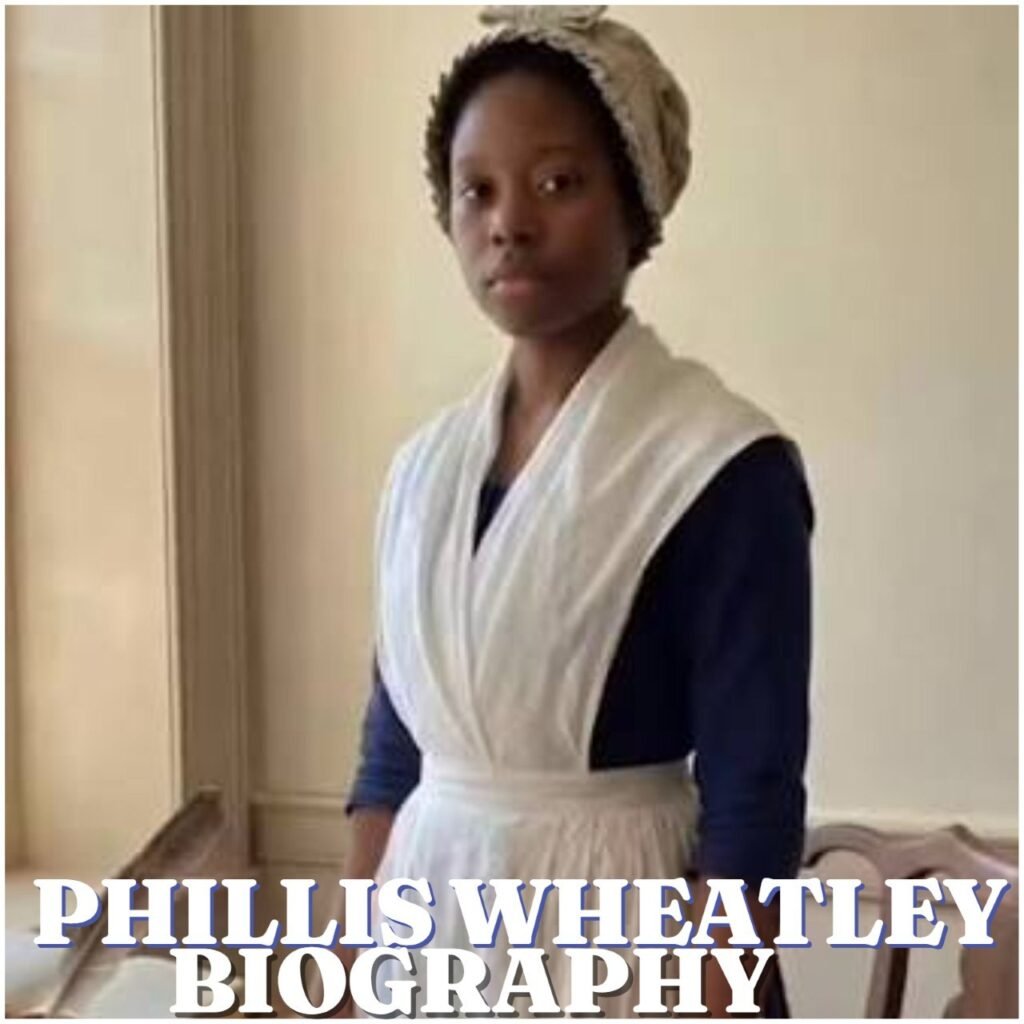
Phillis Wheatley’s exact height, weight, and other physical measurements have not been established by reliable historical records. Consequently, any specific height attributed to her should be treated as unverified. Historical portraits and engravings provide some insight into how she has been visually represented, although these artistic images cannot establish her precise physical characteristics. She is often depicted wearing modest eighteenth-century clothing, including a dress, a head covering, and a collar consistent with the fashion of her period. Some portraits show her seated with a book, manuscript, or writing instrument, emphasizing her identity as a poet and educated woman. These representations have become closely associated with her public image and historical legacy. Although many details of her appearance remain unknown, her surviving portraits continue to help readers connect with the life and achievements of this pioneering African-born writer.
Phillis Wheatley’s Net Worth
Phillis Wheatley Peters’ exact net worth at the time of her death in 1784 is unknown because reliable financial records documenting her total assets, earnings, and debts have not survived in sufficient detail. Unlike modern writers, who may earn royalties, book advances, and income from digital publishing, Wheatley lived in the eighteenth century, when opportunities for Black women to earn money from literature were severely limited. Her first poetry collection, Poems on Various Subjects, Religious and Moral, was published in London in 1773 and brought her international recognition. However, her literary success did not necessarily translate into substantial personal wealth. Although her work attracted attention from influential readers, historical evidence does not establish the total amount she earned from book sales or how much of that income she personally retained.
During her lifetime, Wheatley faced considerable financial difficulties, particularly after her emancipation and marriage to John Peters in 1778. She attempted to secure financial support for a second collection of poetry, but she struggled to find a publisher and maintain a stable income. Her husband also experienced economic difficulties, and the couple’s circumstances became increasingly challenging. In her later years, Wheatley worked as a domestic servant in a Boston boardinghouse while continuing to pursue her literary interests. These circumstances suggest that she did not enjoy lasting financial security despite her historic literary achievements. Her experience illustrates the difficulties faced by many talented Black writers in an era when slavery, racial discrimination, and limited publishing opportunities restricted their ability to build and preserve wealth.
Because there is no reliable historical calculation of Phillis Wheatley’s personal fortune, assigning her a specific net worth in modern US dollars would be misleading. Any figure presented as her confirmed net worth would be speculative. A responsible biography should therefore describe her financial position qualitatively rather than invent a numerical estimate based on the earnings of modern poets or authors. Her greatest contribution was not the accumulation of money but the literary legacy she left behind. As the first author of African descent in the American colonies to publish a book, Wheatley established an important precedent for generations of African American writers. More than two centuries after her death, her poems continue to be studied, published, and discussed, demonstrating that her historical influence far exceeded the financial rewards she was able to obtain during her lifetime.
Phillis Wheatley’s Legacy and Influence on American Literature
Phillis Wheatley Peters left a remarkable legacy as one of the pioneering figures in African American literature and an important poet of the eighteenth century. Her greatest achievement was the publication of Poems on Various Subjects, Religious and Moral in 1773, which made her the first author of African descent in the American colonies to publish a book. At a time when enslaved Africans were routinely denied education and intellectual freedom, Wheatley’s literary success challenged widespread racist beliefs about Black people’s intelligence and creative abilities. Her poetry demonstrated an impressive command of English, classical literature, and Christian themes, earning her recognition among readers in Britain and colonial America. Although she experienced enslavement, discrimination, and financial hardship, her accomplishments established an important foundation for later generations of African American writers and helped expand the historical understanding of Black literary achievement.
Wheatley’s influence also extends to discussions of slavery, freedom, religion, and equality. Her poems reflected the intellectual and political climate of the American Revolution, when ideas about liberty and human rights were widely debated even as slavery continued to exist. In works such as On Being Brought from Africa to America and To His Excellency General Washington, she engaged with religious beliefs and political ideals that shaped her world. Modern readers and scholars continue to examine her writing to understand the complexities of her experiences as an African-born woman who lived under slavery and later gained her freedom. Her life illustrates the contradictions of a society that celebrated liberty while denying freedom to many people. Through her poetry, Wheatley created a lasting literary voice that continues to inspire discussions about racial prejudice, education, women’s achievements, and the struggle for human dignity.
Today, Phillis Wheatley remains an influential figure in American history, literary studies, and African American cultural heritage. Her poetry is studied in schools, universities, and historical institutions, while her biography continues to inspire readers interested in resilience, intellectual achievement, and the power of education. In January 2026, the United States Postal Service honored her with a commemorative Forever stamp as part of its Black Heritage series, bringing renewed public recognition to her contributions. This recognition demonstrates that her significance extends far beyond the eighteenth century. Although Wheatley died on December 5, 1784, at approximately 31 years old, her work continues to reach new audiences and influence how people understand the history of American literature. Her enduring legacy rests on her ability to achieve literary distinction under extraordinary circumstances and to leave behind works that remain relevant to conversations about freedom, equality, and the human capacity for creativity.
Conclusion
Phillis Wheatley Peters remains one of the most remarkable pioneers in American literary history, whose extraordinary journey from enslavement in childhood to international recognition as a poet continues to inspire generations. Born in West Africa around 1753, she overcame enormous obstacles through education, determination, and her exceptional talent for writing. Her 1773 poetry collection, Poems on Various Subjects, Religious and Moral, established her as the first author of African descent in the American colonies to publish a book, challenging the racial prejudices of her time. Although she experienced financial hardship, family tragedy, and the limitations imposed on Black women in the eighteenth century, her literary achievements secured her a lasting place in history. Her legacy continues through her poetry, historical scholarship, and public commemorations, including the 2026 United States Postal Service stamp honoring her life. Ultimately, Phillis Wheatley’s biography is a powerful reminder that talent and intellectual achievement can emerge under even the most difficult circumstances, and her enduring contributions continue to enrich American literature and the broader struggle for freedom, equality, and human dignity.
Frequently Asked Questions About Phillis Wheatley
1. Who was Phillis Wheatley?
Phillis Wheatley Peters was an African-born poet who became the first author of African descent in the American colonies to publish a book. She is remembered for her literary achievements and her contributions to African American literature during the eighteenth century.
2. When was Phillis Wheatley born?
Phillis Wheatley was born around 1753 in West Africa. Her exact date of birth and original birthplace remain unknown because detailed records of her early life have not survived.
3. How old was Phillis Wheatley when she died?
Phillis Wheatley was approximately 31 years old when she died on December 5, 1784, in Boston, Massachusetts.
4. What was Phillis Wheatley’s real name?
She was originally known as Phillis Wheatley after the ship that transported her to Boston. Following her marriage to John Peters in 1778, she became known as Phillis Wheatley Peters. Her original African name is unknown.
5. What was Phillis Wheatley famous for?
Phillis Wheatley was famous for her poetry and for becoming the first author of African descent in the American colonies to publish a book. Her collection, Poems on Various Subjects, Religious and Moral, was published in London in 1773.
6. Who was Phillis Wheatley’s husband?
Phillis Wheatley married John Peters, a free Black man, in 1778. After their marriage, she became known as Phillis Wheatley Peters. The couple experienced financial difficulties during their marriage.
7. Did Phillis Wheatley have children?
Yes, Phillis Wheatley and her husband, John Peters, had three children. However, none survived into adulthood, and historical information about their individual lives is limited.
8. What religion did Phillis Wheatley follow?
Phillis Wheatley was a Christian. Her religious beliefs strongly influenced her poetry, which frequently explored themes of faith, salvation, morality, death, and spiritual equality.
9. What tribe did Phillis Wheatley belong to?
Phillis Wheatley’s exact African ethnic group or tribe is unknown. Although she was born in West Africa, surviving historical records do not provide sufficient evidence to identify her specific ethnic background.
10. What was Phillis Wheatley’s height?
Phillis Wheatley’s exact height has not been documented in reliable historical records. Any specific measurement attributed to her would be speculative.
11. What was Phillis Wheatley’s net worth?
Phillis Wheatley’s exact net worth is unknown because reliable records of her total assets, earnings, and debts are unavailable. Despite her literary recognition, she experienced financial hardship during her later years.
12. What is Phillis Wheatley’s most famous book?
Her most famous book is Poems on Various Subjects, Religious and Moral, published in London in 1773. The collection established her as a pioneering literary figure in African American history.
13. What are some of Phillis Wheatley’s famous poems?
Some of her notable poems include On Being Brought from Africa to America, To His Excellency General Washington, and On the Death of the Rev. Mr. George Whitefield. These works explore religious beliefs, political ideals, and human experiences.
14. Was Phillis Wheatley a free woman?
Phillis Wheatley was enslaved after arriving in Boston in 1761. She was emancipated in 1773, the year her first poetry collection was published, and subsequently lived as a free woman.
15. How did Phillis Wheatley die?
Phillis Wheatley died in Boston, Massachusetts, on December 5, 1784, at approximately 31 years old. She experienced financial hardship during her later years. Her infant son also died shortly after her death.
16. Why is Phillis Wheatley important in history?
Phillis Wheatley is important because she challenged racial prejudice through her literary achievements at a time when enslaved Africans faced severe restrictions on education and freedom. Her work helped establish an important foundation for African American literature.
17. What recognition did Phillis Wheatley receive in 2026?
In January 2026, the United States Postal Service issued a commemorative Forever stamp honoring Phillis Wheatley as part of its Black Heritage stamp series. The recognition highlighted her lasting contribution to American literature and history.
18. What is Phillis Wheatley’s legacy today?
Phillis Wheatley’s legacy lives on through her poetry, historical research, educational materials, and public commemorations. She remains an influential figure in discussions about African American literature, education, racial equality, and the history of slavery.