
Introduction
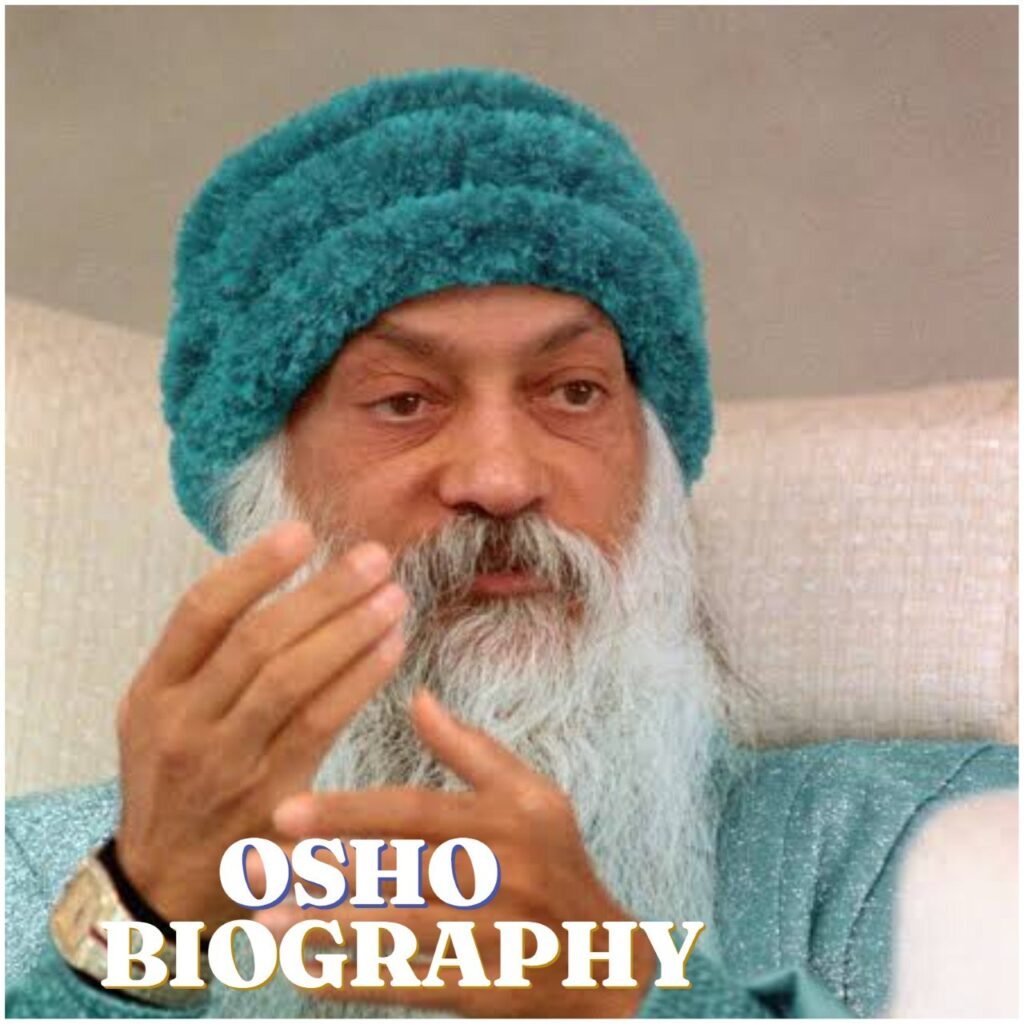
Osho, popularly known as Bhagwan Shree Rajneesh, was one of the most influential and controversial spiritual teachers of the 20th century. Born Chandra Mohan Jain on December 11, 1931, in Kuchwada, Madhya Pradesh, India, he became internationally recognized for his unconventional teachings on meditation, consciousness, love, freedom and personal transformation. Rather than encouraging followers to accept traditional beliefs without question, Osho urged people to explore their own minds and experiences through meditation and awareness.
Throughout his life, Osho attracted followers from India and many other parts of the world, while also facing considerable criticism and controversy. His movement expanded internationally, particularly after he established a commune in Pune, which became an important centre for his teachings and meditation practices. His ideas drew influences from Zen Buddhism, Taoism, Sufism, Tantra, Yoga and other philosophical traditions, but he presented them in a distinctive and often provocative style that challenged conventional religious, social and moral ideas.
Osho died in Pune, Maharashtra, on January 19, 1990, at the age of 58, but his influence did not end with his death. His books, recorded lectures, meditation techniques and philosophical ideas continue to reach readers and spiritual seekers around the world. Decades later, Osho remains a fascinating and divisive figure whose life story combines spirituality, philosophy, international fame, controversy and an enduring legacy that continues to attract attention in 2026.
Early Life of Osho
Osho was born Chandra Mohan Jain on December 11, 1931, in Kuchwada, a small village in the present-day Raisen district of Madhya Pradesh, India. He was born into a Jain family and was the eldest of eleven children of Babulal Jain and Saraswati Jain. During his early childhood, he spent several years living with his maternal grandparents, an experience that gave him considerable freedom and allowed him to develop an independent personality. His grandfather was particularly influential in his early years, encouraging him to explore life and think for himself rather than simply accepting traditional beliefs.
From an early age, Osho displayed a strong interest in questions about existence, spirituality, death and the nature of consciousness. He was known as an independent and questioning child who often challenged religious and social conventions. Rather than accepting established ideas simply because they were taught to him, he wanted to discover answers through his own experiences. His fascination with meditation and philosophy developed during his childhood and adolescence, eventually becoming central to his life’s work. His intense curiosity about spirituality also led him to explore different religious and philosophical traditions while growing up.
As a young man, Osho continued his intellectual and spiritual exploration while pursuing formal education. He studied at D.N. Jain College in Jabalpur and later completed his master’s degree in philosophy at Sagar University. During his university years, he became an accomplished debater and public speaker and developed a reputation for challenging conventional religious ideas. He also became increasingly interested in meditation and philosophical inquiry. These early experiences shaped the distinctive worldview that would later make him internationally known as a spiritual teacher, philosopher and meditation advocate.
Osho’s Education
Osho began his formal education in Madhya Pradesh before continuing his studies in Jabalpur. During his school years, he was known for his independent thinking, curiosity and interest in philosophical questions. He did not simply accept traditional ideas and often questioned religious teachings and social conventions. His intellectual interests gradually became focused on philosophy, spirituality and the nature of human consciousness, subjects that would later become central to his public teachings.
For his higher education, Osho attended D.N. Jain College in Jabalpur, where he studied philosophy. He was an active student and developed strong skills in debating and public speaking. His university years also gave him an opportunity to study different philosophical traditions and examine questions concerning religion, morality, existence and human freedom. His interest in meditation continued to grow alongside his academic studies, and he increasingly sought answers through personal experience rather than relying solely on established philosophical or religious authorities.
Osho later completed a master’s degree in philosophy from the University of Sagar (Sagar University). After completing his studies, he worked as a professor of philosophy and became known for his engaging lectures and unconventional approach to religious and philosophical subjects. His academic background provided him with a strong foundation for discussing complex ideas, although his later teachings went beyond conventional academic philosophy. The combination of formal philosophical education, extensive reading, meditation and personal spiritual exploration helped shape the distinctive intellectual and spiritual approach for which Osho eventually became internationally famous.
Osho’s Career and Rise as a Spiritual Teacher
Osho began his professional career in academia after completing his master’s degree in philosophy. He worked as a professor of philosophy at the University of Jabalpur, where he taught students while also developing a reputation as an engaging and unconventional speaker. During this period, he travelled extensively across India, delivering lectures on religion, spirituality, meditation, philosophy and human consciousness. His willingness to challenge established religious beliefs and social traditions gradually attracted a growing audience.
During the 1960s and early 1970s, Osho became increasingly recognized as a spiritual teacher. He initially became known as Acharya Rajneesh, and his public talks attracted followers throughout India. He encouraged people to question conventional ideas and introduced meditation techniques designed to help people deal with stress, suppressed emotions and psychological barriers. Among his best-known practices was Dynamic Meditation, an active form of meditation involving physical movement, breathing, emotional release and periods of silence. His growing following eventually led to the establishment of the Rajneesh Ashram in Pune in 1974, which became an international centre for meditation and spiritual study.
Osho’s career entered an international phase when many Western followers began travelling to India to attend his lectures and meditation programs. In 1981, he moved to the United States and established the Rajneeshpuram community in Oregon, where thousands of followers participated in communal living and meditation. The Oregon period became highly controversial because of conflicts with local residents and authorities, as well as criminal activities committed by members of the movement. Osho was arrested in the United States in 1985 after an investigation into the Rajneesh movement and subsequently left the country. He returned to India, eventually settling in Pune, where he continued giving discourses and developing meditation programs until his death in 1990. His recorded talks, books and meditation techniques have continued to influence spiritual seekers around the world.
Osho Is Trending Again Because of Renewed Interest in His Life, Followers and Controversial Legacy
Osho is receiving renewed attention in 2026 as stories about his influence on prominent Indian personalities continue to resurface. Recent coverage has revisited the experiences of Bollywood figures who became associated with Osho, particularly Vinod Khanna and filmmaker Mahesh Bhatt. In July 2026, Pooja Bhatt recalled her father’s association with Osho and the dramatic circumstances surrounding his decision to leave the movement, bringing renewed public interest to Osho’s impact on Indian cinema personalities.
Another reason for the renewed attention is continuing interest in Vinod Khanna’s years at Osho’s commune. Khanna famously left Bollywood at the height of his career to follow Osho, and accounts from his family have provided new details about his life within the commune. These stories have prompted fresh discussions about the powerful influence Osho had on followers who were willing to abandon successful careers and conventional lifestyles in pursuit of spiritual experiences.
Osho’s teachings themselves also remain relevant to modern audiences. During Guru Purnima 2026, his ideas about meditation, inner freedom and the relationship between a teacher and seeker received renewed attention. Osho-related organisations are also continuing to conduct meditation retreats and publish new material in 2026, demonstrating that interest in his philosophy and meditation methods remains active decades after his death.
Cause of Death and Death of Osho
Osho, whose birth name was Chandra Mohan Jain, died on January 19, 1990, in Pune, Maharashtra, India. He was 58 years old. Contemporary reports stated that he died at around 5:00 p.m., and his personal physician, Dr. Gokul Gokani, reported the cause as massive coronary thrombosis, commonly described as a severe heart attack.
The circumstances surrounding Osho’s death have nevertheless remained controversial. Some former followers and writers have questioned the official explanation and have alleged that he may have been poisoned, particularly because of claims that he suffered health problems after his detention in the United States in 1985. However, these allegations remain disputed and there is no established medical evidence proving that Osho was murdered or poisoned. The official account remains that he died from a heart-related condition.
Following his death, Osho’s body was taken to the Gautama the Buddha Auditorium at his Pune commune, where thousands of followers gathered before his cremation. His remains were later placed in a memorial at the commune. The memorial carries the famous inscription “Never Born, Never Died”, reflecting Osho’s own philosophical view that consciousness transcends physical birth and death.
Osho’s Personal Life and Family
Osho was born Chandra Mohan Jain on December 11, 1931, into a Jain family in Kuchwada, Madhya Pradesh. He was the eldest of 11 children born to Babulal Jain, a cloth merchant, and Saraswati Jain. During his early childhood, Osho was raised for several years by his maternal grandparents, particularly his grandmother, whom he later credited with giving him unusual freedom to explore life and develop his independent personality. His family background and early experiences played an important role in shaping his questioning attitude toward traditional religion and social conventions.
Osho never married and did not have a wife or officially recognized children. He openly rejected marriage as an institution, explaining that he considered personal freedom to be more important than legal attachment. He also rejected the idea of becoming a traditional celibate monk. Accounts of his early life mention a childhood relationship with a girl named Shashi, who died when Osho was young, an experience that reportedly had a profound effect on his thinking about death. Later, several women became closely associated with his spiritual movement, but claims describing particular women as his girlfriends or fiancées should be treated cautiously because they are not equivalent to a documented marriage or formal engagement.
Osho remained closely connected to his family despite developing a life centred on spirituality and his growing international movement. His siblings included Vijay, Shailendra, Amit, Aklank and Nikalank, as well as sisters including Rasa, Snehlata, Neeru and Nisha. His parents also became connected with his later spiritual community; sources documenting his family history state that his father eventually spent time at the Pune commune. Osho’s relationship with the concept of family was unconventional: he argued that traditional family structures could condition individuals and envisioned communities in which children could grow up around many conscious adults rather than being shaped exclusively by the nuclear family.
Osho’s Age, Religion, Nationality, Height and Physical Appearance
Age: Osho was born Chandra Mohan Jain on December 11, 1931, and died on January 19, 1990, in Pune, Maharashtra. He was therefore 58 years old at the time of his death. His life spanned a period in which he developed from a philosophy student and university professor into an internationally known spiritual teacher and founder of the Rajneesh movement.
Religion: Osho was born into a Jain family, with his parents being followers of the Jain tradition. However, describing him simply as a Jain religious leader can be misleading because throughout his career he strongly questioned institutional religion and drew ideas from numerous traditions, including Jainism, Buddhism, Hinduism, Taoism and Zen. He generally emphasized personal spiritual experience and meditation rather than adherence to an organized religious system.
Nationality: Osho was Indian by nationality. He was born in Kuchwada in present-day Madhya Pradesh, India, and spent much of his early and professional life in India before becoming internationally known. He later spent several years in the United States during the Rajneesh movement’s Oregon period before returning to India, where he lived in Pune until his death.
Height and Physical Appearance: Published biographical sources give different figures for Osho’s height, with estimates ranging from approximately 5 feet 5 inches (165 cm) to 5 feet 8 inches (173 cm), so his exact height cannot be confirmed with confidence. Photographs from different periods show him with a distinctive long beard, dark eyes and, particularly during his later years, a noticeably balding or largely bald head. His appearance changed over the decades, but his long beard, robes and calm facial expression became strongly associated with his public image as a spiritual teacher.
Osho Net Worth
Osho’s exact personal net worth is difficult to establish because much of the wealth associated with his movement was held through trusts, foundations, communes and other organizations rather than directly in his personal name. A recent report stated that his wealth at the time of his death in 1990 was believed to have exceeded $100 million, with the estimate linked to intellectual property, real estate, brand licensing and the wider spiritual enterprise.
Osho’s financial success came from several sources connected with his global spiritual movement, including book sales, recorded lectures, meditation programs, retreats, donations and properties. During the Rajneeshpuram period in Oregon, his followers built a huge commune and developed extensive infrastructure. The movement also became famous for its fleet of Rolls-Royce cars; historical reporting documented as many as 93 Rolls-Royces, although Osho himself repeatedly said that the cars belonged to the commune’s trust rather than to him personally.
Based on the available historical reporting and the scale of his worldwide organization, a reasonable biography estimate is that Osho’s net worth was around $100 million or more at the time of his death, but this should be presented as an estimated figure, not a verified personal fortune. His posthumous financial legacy has also continued through publishing, meditation centers, licensing and intellectual property connected with his teachings. Therefore, estimates of Osho’s wealth should be distinguished from the much larger value of assets controlled by organizations associated with the Rajneesh movement.
Osho’s Legacy
Osho left behind a complex and highly influential spiritual legacy that continues to attract followers, readers and meditation practitioners around the world. His teachings focused heavily on meditation, awareness, individual freedom, inner transformation and living in the present moment. Rather than presenting himself as the founder of a conventional religion, Osho encouraged people to question established beliefs and discover their own understanding through direct experience. His recorded discourses and hundreds of published books have helped preserve his ideas for new generations.
One of the most important parts of Osho’s legacy is his contribution to modern meditation practices. He developed and popularized techniques such as Dynamic Meditation, which combines intense physical activity, breathing, emotional release, silence and stillness. His approach attempted to make meditation accessible to people who found traditional methods difficult or restrictive. The Osho International Meditation Resort in Pune, which developed from his former ashram, continues to attract visitors from different countries for meditation programs, personal development activities and retreats, helping maintain his international influence decades after his death.
Osho’s legacy, however, remains controversial as well as influential. His movement experienced major conflicts and scandals, particularly during the Rajneeshpuram period in Oregon, including criminal activities committed by senior members of the organization and legal disputes involving the commune. These events continue to shape public discussions about Osho and the movement he created. Despite the controversies, his writings, recorded lectures and meditation methods remain widely circulated, and his distinctive views on spirituality, sexuality, freedom, consciousness and human relationships continue to generate debate and interest. His legacy therefore remains a mixture of spiritual innovation, global influence, controversy and enduring cultural fascination.
Conclusion
Osho remains one of the most fascinating and controversial spiritual figures of modern history. From his early life as Chandra Mohan Jain in India to his rise as a globally recognized meditation teacher, his journey was marked by unconventional ideas, international influence and significant controversy. Although he died in 1990 at the age of 58, his teachings on meditation, consciousness, freedom and personal transformation continue to attract interest around the world. His books, recorded discourses and meditation techniques have preserved his influence, while the controversies surrounding the Rajneesh movement continue to shape discussions about his life and legacy. Ultimately, Osho’s story remains a complex combination of spiritual philosophy, personal freedom, global influence, wealth, controversy and an enduring search for human consciousness.
Frequently Asked Questions About Osho
Who was Osho?
Osho, born Chandra Mohan Jain, was an Indian spiritual teacher, philosopher and meditation advocate who became internationally known as Bhagwan Shree Rajneesh and later Osho. He was known for his unconventional teachings on meditation, consciousness, freedom, love and personal transformation.
When was Osho born?
Osho was born on December 11, 1931, in Kuchwada, Madhya Pradesh, India.
When did Osho die?
Osho died on January 19, 1990, in Pune, Maharashtra, India, at the age of 58.
What was Osho’s real name?
Osho’s birth name was Chandra Mohan Jain. He was also known as Acharya Rajneesh and Bhagwan Shree Rajneesh before adopting the name Osho.
What was the cause of Osho’s death?
The reported cause of Osho’s death was massive coronary thrombosis, a severe heart-related condition. Claims that he was poisoned have circulated over the years, but there is no established medical evidence proving that he was murdered or poisoned.
What religion did Osho follow?
Osho was born into a Jain family, but he did not identify himself simply as a conventional follower of Jainism. His teachings incorporated ideas and practices associated with several spiritual traditions, including Jainism, Buddhism, Hinduism, Taoism, Sufism and Zen.
Was Osho married?
No, Osho was never married. He rejected conventional marriage and emphasized individual freedom and personal experience rather than traditional family structures.
Did Osho have children?
There is no reliable evidence that Osho had biological children. He never married and lived primarily as a spiritual teacher and philosopher.
Where did Osho live?
Osho lived in several places during his life, including different parts of India and the United States. His most important spiritual centres were the Pune ashram in India and the Rajneeshpuram commune in Oregon, United States.
What was Osho’s net worth?
Osho’s exact personal net worth has never been definitively established. Historical reports have estimated that the wealth associated with him and his movement exceeded $100 million around the time of his death, although much of the property and money was connected to organizations and trusts rather than held as his personal fortune.
What was Osho famous for?
Osho was famous for his teachings on meditation, consciousness, spirituality, personal freedom and human relationships. He also became known internationally for his unconventional views and for developing meditation practices such as Dynamic Meditation.
Why was Osho controversial?
Osho became controversial because of his unconventional teachings, views on sexuality and religion, enormous wealth and the activities of his movement. The Rajneeshpuram community in Oregon was also involved in serious criminal and legal controversies during the 1980s, making Osho’s legacy both influential and highly debated.
Where is Osho buried?
Osho was cremated in Pune, India, and his ashes were placed at the Osho International Meditation Resort. His memorial bears the inscription “Never Born, Never Died”, reflecting his philosophical views about life and consciousness.
What is Osho’s legacy?
Osho’s legacy includes his extensive collection of books and recorded discourses, his meditation techniques and the international meditation centres influenced by his teachings. Despite the controversies surrounding his movement, his ideas continue to be studied and practiced by people interested in meditation, spirituality and personal transformation.