
Introduction
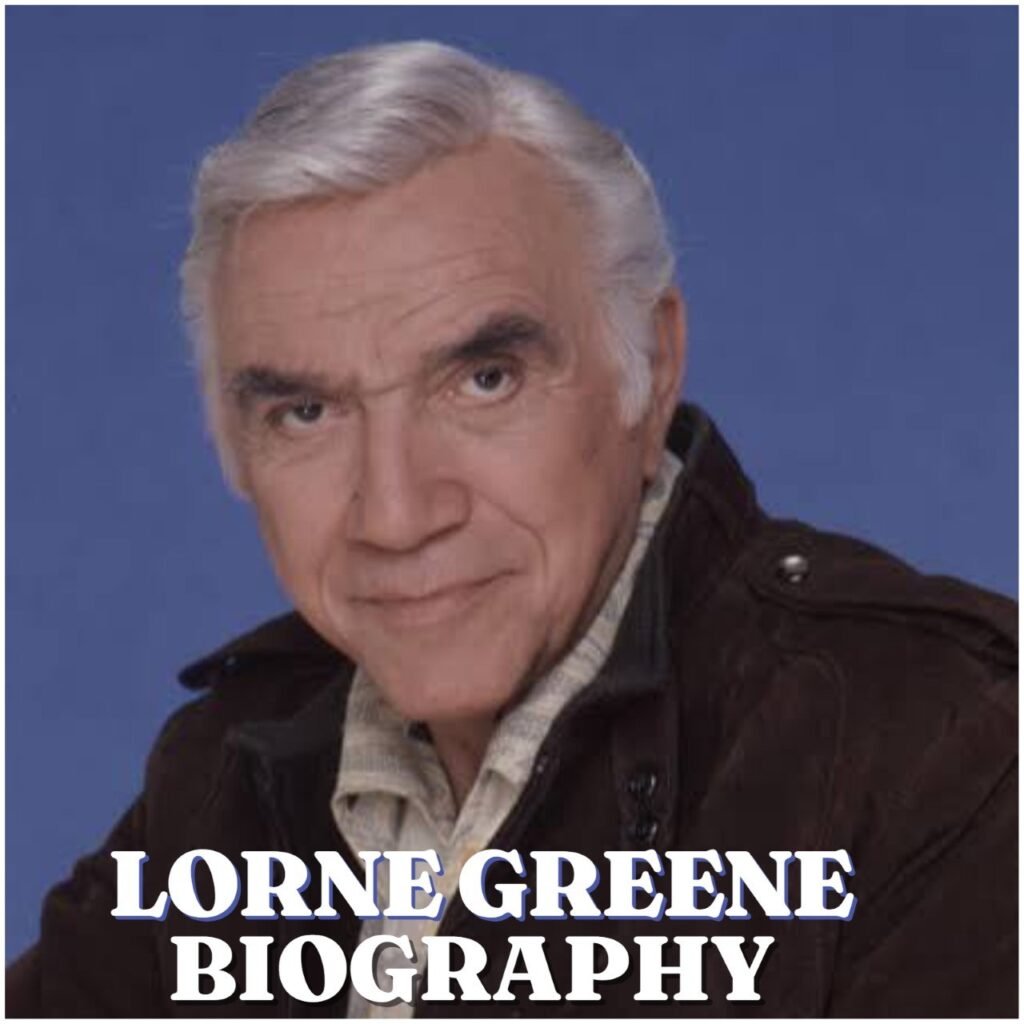
Lorne Greene was a Canadian actor and broadcaster whose deep voice, commanding presence, and memorable performances made him a television legend. He became famous worldwide for playing Ben Cartwright in the classic Western series Bonanza. His portrayal of a wise, loving, and courageous father won the hearts of millions of viewers and helped make the show one of television’s biggest successes.
But Greene’s story began long before Hollywood fame. During the Second World War, he became one of Canada’s best-known radio newsreaders. His powerful voice and serious delivery earned him the nickname “The Voice of Doom.” He later moved from broadcasting to theatre, film, and television, proving that his talent went far beyond reading the news.
Greene also became famous for playing Commander Adama in Battlestar Galactica. Beyond acting, he explored music and supported wildlife conservation. His career spanned several decades and reached audiences across different generations. Today, he is remembered not only as the face of Bonanza but also as one of the most versatile entertainers of his time.
Who Was Lorne Greene?
Lorne Greene was a Canadian actor, radio broadcaster, and television presenter. He is best remembered for playing Ben Cartwright in Bonanza and Commander Adama in Battlestar Galactica. Born on February 12, 1915, in Ottawa, Ontario, Canada, he began his career in radio before becoming an international television star.
His birth name was Lyon Himan Green. As a young man, he developed a passion for drama and broadcasting while studying at Queen’s University. After graduating, he received further theatre training in New York and returned to Canada to pursue a career in entertainment.
Greene first gained national attention as a CBC newsreader during the Second World War. His distinctive voice made him popular with listeners and later became one of his greatest assets as an actor. His success in Bonanza transformed him into a household name, while his later work in science fiction and environmental television expanded his influence.
Lorne Greene: Quick Facts
| Category | Details |
|---|---|
| Birth name | Lyon Himan Green |
| Professional name | Lorne Greene |
| Date of birth | February 12, 1915 |
| Place of birth | Ottawa, Ontario, Canada |
| Nationality | Canadian |
| Family background | Jewish |
| Education | Queen’s University; Neighborhood Playhouse School of the Theatre |
| Profession | Actor, broadcaster, and television presenter |
| Famous roles | Ben Cartwright and Commander Adama |
| Best-known shows | Bonanza and Battlestar Galactica |
| First wife | Rita Hands |
| Second wife | Nancy Deale |
| Children | Linda, Charles, and Gillian |
| Date of death | September 11, 1987 |
| Age at death | 72 years |
| Place of death | Santa Monica, California, United States |
Early Life and Family Background
Lorne Greene was born on February 12, 1915, in Ottawa, Ontario, Canada. His parents, Daniel and Dora Green, were Jewish immigrants from Russia. He grew up in a family that valued education, music, and the arts. His parents hoped he would become a concert violinist, but Greene eventually discovered that acting and performance interested him more.
He experienced family loss at an early age. His older brother died during the 1918 influenza pandemic, leaving Greene as the only surviving child. He spent his childhood in Ottawa, where he attended school and began developing an interest in creative activities.
As he grew older, his passion for performance became stronger. He enjoyed drama and storytelling, and these interests gradually influenced his career choices. Although his family had other hopes for his future, Greene chose to follow his own path. That decision would eventually take him from Canadian radio to international television fame.
Education and Early Interest in Acting
Greene entered Queen’s University in Kingston, Ontario, in 1932. He initially studied chemical engineering, but his growing interest in drama soon changed his plans. He became active in the university’s Drama Guild, where he acted in productions and explored directing.
He also developed his broadcasting skills through the university’s radio station, CFRC. These activities helped him discover that he enjoyed performing and communicating with audiences. He eventually moved away from engineering and focused more on the arts and languages.
After graduating in 1937, Greene continued his acting education at the Neighborhood Playhouse School of the Theatre in New York. He spent two years developing his performance skills before returning to Canada in 1939. His training gave him a stronger foundation for professional acting, while his broadcasting experience opened another important door.
Lorne Greene’s Broadcasting Career: The Voice of Doom
Greene joined the Canadian Broadcasting Corporation (CBC) in 1939 as a radio announcer. His deep voice, clear pronunciation, and confident delivery quickly made him one of the organisation’s prominent broadcasters. He became a trusted newsreader at a time when radio was a major source of information for the public.
His work became especially important during the Second World War. Canadians depended on radio reports to follow military developments and understand events unfolding around the world. Greene’s serious delivery of difficult news earned him the nickname “The Voice of Doom.” The name reflected the tone of his wartime broadcasts and the attention listeners gave to his reports.
His broadcasting career helped establish him as a familiar voice across Canada. It also taught him how to communicate with confidence and control. These skills later became essential to his acting career, particularly when he played characters who needed to sound wise, experienced, and authoritative.
During the war, Greene also served as a Flying Officer in the Royal Canadian Air Force. After his military service, he returned to broadcasting while continuing to pursue opportunities in theatre and entertainment.
Theatre Career and Contributions to Canadian Entertainment
Greene’s interest in acting extended beyond radio. He became involved in Canada’s theatre community and helped create opportunities for other performers. One of his important contributions was helping establish the Academy of Radio Arts in Toronto, which trained aspiring actors, writers, directors, and broadcasting professionals.
He also helped establish the Jupiter Theatre, a repertory theatre company that supported stage productions and encouraged Canadian talent. These projects showed his interest in building the entertainment industry, not just advancing his own career.
Greene continued performing on stage and gained experience in both Canadian and American theatre. He later appeared in Broadway productions, where he developed his skills as a professional stage actor. This experience prepared him for the television opportunities that would soon transform his career.
Lorne Greene’s Breakthrough Role in Bonanza
Greene’s biggest career opportunity came in 1959 when he was cast as Ben Cartwright in NBC’s Western television series Bonanza. The programme followed the lives of the Cartwright family, who owned the Ponderosa Ranch in Nevada.
Greene played Ben Cartwright, the widowed father of three sons. Ben was known for his wisdom, courage, fairness, and strong sense of responsibility. Greene brought warmth and authority to the character, making him more than a typical Western patriarch. His performance gave the family a steady leader and helped create the emotional heart of the show.
Bonanza became one of the most successful Western television programmes of its time. It ran for 14 seasons, from 1959 to 1973, and attracted viewers around the world. Greene’s portrayal of Ben Cartwright became one of the show’s greatest strengths. Audiences admired the character’s ability to guide his family while standing up for what he believed was right.
The role changed Greene’s life. He went from being a respected Canadian broadcaster to an international television star. His name became closely linked with Bonanza, and Ben Cartwright remains the character most people remember him for today.
Lorne Greene’s Other Film and Television Roles
Although Bonanza brought him worldwide fame, Greene did not allow himself to be defined by one role. He continued working in film and television, taking on characters that showed his range as an actor.
After Bonanza ended, he starred in the detective series Griff, which ran from 1973 to 1974. He also appeared in notable television productions such as The Moneychangers and Roots. His involvement in Roots, a landmark historical miniseries about slavery and African American family history, introduced him to another major television audience.
His film credits included The Silver Chalice, Autumn Leaves, The Buccaneer, and Earthquake. These productions allowed him to explore different stories and characters beyond the Western genre.
His continued success showed that he was more than a television actor who had enjoyed one major hit. Greene remained active in the entertainment industry and built a career that reached across several genres.
Commander Adama: Lorne Greene’s Success in Battlestar Galactica
In 1978, Greene took on another memorable role when he was cast as Commander Adama in the original science-fiction series Battlestar Galactica. The programme followed the survivors of a devastating attack by the robotic Cylons as they travelled through space in search of a new home.
Greene played the leader responsible for protecting the surviving human fleet. Commander Adama was strong and determined, but he also showed compassion and concern for the people under his command. Greene’s mature appearance and commanding voice made him a natural choice for the role.
The original series ran from 1978 to 1979 and developed a loyal following among science-fiction fans. Although it did not last as long as Bonanza, Greene’s performance became one of its most memorable features.
The role introduced him to viewers who might not have watched his Western work. It also proved that he could move between very different genres without losing the qualities that made him such a compelling actor.
Lorne Greene’s Music Career and Hit Recording, Ringo
Greene also explored music, using his distinctive voice in several recordings. Rather than focusing on traditional singing, he became known for spoken-word performances that combined storytelling with music.
His biggest musical success came in 1964 with the release of “Ringo.” The recording told a Western-style story about a gunfighter and featured Greene’s dramatic narration. It became an unexpected hit, reaching number one on the Billboard Hot 100 in the United States.
The success of “Ringo” surprised many listeners who knew Greene mainly as Ben Cartwright. It showed that his storytelling skills could attract audiences beyond television. He released other recordings during the 1960s, but none matched the popularity of “Ringo.”
The recording remains one of the most unusual achievements of his career. It demonstrated how he turned his greatest trademark, his voice, into a successful musical performance.
Environmental Advocacy and Lorne Greene’s New Wilderness
Greene had interests beyond acting and broadcasting. He became an advocate for wildlife conservation and environmental education, using his public profile to encourage people to appreciate and protect the natural world.
His interest in conservation became especially visible through Lorne Greene’s New Wilderness, a television programme that explored wildlife and environmental issues. He hosted the series and helped bring stories about animals, habitats, and conservation to a wider audience.
The programme allowed him to combine his broadcasting experience with his interest in education. His familiar voice made the subject accessible, while the stories encouraged viewers to think about the importance of protecting wildlife.
His environmental work revealed another side of his personality. He was not only interested in entertaining people; he also believed television could inform audiences and draw attention to important issues.
Lorne Greene’s Wife, Marriage, and Children
Greene married Rita Hands in 1940. They had two children, Linda and Charles, before their marriage ended in divorce in 1960. During this period, Greene was building his career in broadcasting and television while raising a family.
In 1961, he married Nancy Deale. Their marriage lasted until his death in 1987. They had one daughter, Gillian, bringing the total number of Greene’s children to three.
Greene generally kept his family life private. Although he became a familiar face to millions of television viewers, he rarely made his personal relationships the focus of public attention. His family remained an important part of his life throughout his career.
Lorne Greene’s Nationality, Ethnicity, and Personal Details
Lorne Greene was Canadian and was born in Ottawa, Ontario. His parents were Jewish immigrants from Russia, and he grew up in a Jewish family. His background formed an important part of his personal history, although his public career focused mainly on broadcasting and acting.
He was known for his tall stature and deep, unmistakable voice. His appearance and speaking style helped him portray characters with authority and confidence. These qualities were particularly effective in Bonanza and Battlestar Galactica, where he played leaders responsible for others.
Greene died at the age of 72. During his lifetime, he witnessed major changes in entertainment, from the early popularity of radio to television’s rise as a global industry. He successfully adapted to these changes and remained relevant across several decades.
Lorne Greene’s Awards, Honours, and Achievements
Greene received several honours for his contributions to entertainment and public life. In 1969, he was appointed an Officer of the Order of Canada. This recognition reflected his services to the performing arts and his wider contributions to society.
He also received an honorary doctorate from Queen’s University in 1971. The honour was especially meaningful because the university had played a major role in developing his interest in drama and broadcasting. His journey from student performer to international television star made the recognition particularly significant.
His environmental work also earned recognition. In 1983, he received an Outstanding Service Award from the International Fund for Animal Welfare. In 2015, he was posthumously inducted into Canada’s Walk of Fame for his lasting contribution to the entertainment industry.
Beyond these formal honours, Greene’s greatest achievement was the lasting popularity of his work. Bonanza and Battlestar Galactica continued to attract audiences long after their original broadcasts, while “Ringo” secured an unexpected place in music history.
Lorne Greene’s Death
Lorne Greene died on September 11, 1987, in Santa Monica, California, at the age of 72. He developed complications after surgery for a perforated ulcer, including pneumonia. His death brought an end to a career that had influenced Canadian broadcasting and international television for nearly five decades.
News of his passing attracted widespread attention. For Bonanza fans, he would always be Ben Cartwright, the wise father who guided the Cartwright family. Science-fiction audiences remembered him as Commander Adama, while Canadian listeners continued to appreciate his contribution to radio broadcasting.
Greene left behind an impressive body of work. His performances, recordings, and environmental programmes ensured that his influence extended well beyond the television series that made him famous.
Lorne Greene’s Legacy: Why He Remains a Television Icon
Lorne Greene’s legacy comes from his ability to succeed in several areas of entertainment. He began as a radio broadcaster, developed his skills on stage, and became an international television star. His career showed how talent, discipline, and adaptability could create opportunities across different industries.
His portrayal of Ben Cartwright remains his most enduring contribution to popular culture. Through Bonanza, he helped create one of television’s most memorable father figures. His later performance as Commander Adama proved that his appeal was not limited to Westerns and introduced him to a new generation of viewers.
Greene’s influence also reached beyond acting. His work in theatre education supported aspiring performers, while his broadcasting career helped shape Canadian radio. His environmental programmes encouraged audiences to take a greater interest in wildlife and conservation. These contributions made his career more meaningful than fame alone.
Decades after his death, Greene remains an important figure in classic television. His unmistakable voice, memorable characters, and commitment to entertainment continue to leave a lasting impression on audiences around the world.
Conclusion
Lorne Greene’s life was a remarkable journey from Canadian radio broadcasting to international television fame. He became a household name as Ben Cartwright in Bonanza, earned another generation of fans as Commander Adama in Battlestar Galactica, and explored music and environmental education along the way. His deep voice made him instantly recognisable, but his versatility made him truly memorable. Through his performances and contributions to the entertainment industry, Greene secured a lasting place in television history.
Frequently Asked Questions About Lorne Greene
Who was Lorne Greene?
Lorne Greene was a Canadian actor and broadcaster best known for playing Ben Cartwright in Bonanza and Commander Adama in Battlestar Galactica. He also worked in theatre, music, and environmental television.
What was Lorne Greene’s real name?
Lorne Greene was born Lyon Himan Green. He later became professionally known as Lorne Greene.
When was Lorne Greene born?
Lorne Greene was born on February 12, 1915, in Ottawa, Ontario, Canada.
How old was Lorne Greene when he died?
Lorne Greene was 72 years old when he died on September 11, 1987.
What made Lorne Greene famous?
He became famous for playing Ben Cartwright in the Western television series Bonanza. His role as Commander Adama in Battlestar Galactica also became widely recognised.
Did Lorne Greene play Ben Cartwright in Bonanza?
Yes. Greene played Ben Cartwright throughout the show’s original run from 1959 to 1973. The role became the most famous performance of his career.
Was Lorne Greene in Battlestar Galactica?
Yes. He played Commander Adama in the original Battlestar Galactica series, which premiered in 1978.
Why was Lorne Greene called the Voice of Doom?
He earned the nickname because of his deep, serious voice and the difficult wartime news he delivered as a CBC radio newsreader during the Second World War.
Did Lorne Greene have a number-one song?
Yes. His spoken-word recording “Ringo” reached number one on the Billboard Hot 100 in 1964.
Who was Lorne Greene’s wife?
Greene was first married to Rita Hands. After their divorce, he married Nancy Deale in 1961. They remained married until his death.
How many children did Lorne Greene have?
He had three children: Linda and Charles from his first marriage, and Gillian from his second marriage.
What was Lorne Greene’s nationality?
Lorne Greene was Canadian. He was born in Ottawa, Ontario, and later developed an international career in television and film.
What awards did Lorne Greene receive?
His honours included appointment as an Officer of the Order of Canada in 1969, an honorary doctorate from Queen’s University in 1971, and an Outstanding Service Award from the International Fund for Animal Welfare in 1983. He was also inducted into Canada’s Walk of Fame in 2015.
What caused Lorne Greene’s death?
Lorne Greene died on September 11, 1987, following complications from surgery for a perforated ulcer. He developed pneumonia before his death.