
Introdction
José Protacio Rizal Mercado y Alonso Realonda, populaly known as José Rizal, was a Filipino physician, novelist, poet, essayist, educator, nd nationalist formed the course of Philippine history. Born on June 19, 1861, in Calamba, Laguna, Rizal became one of the most educated Filipinos of his era, excelling in medicine, literature, science, and the humanities. Through his remarkable intellect and unwavering commitment to justice, he emerged as the leading voice of the Philippine reform movement during the Spanish colonial period. Today, Rizal is officially recognized as the national hero of the Philippines, celebrated for his enduring influence on the country’s struggle for freedom, equality, and national identity.
Unlike many revolutionaries of his time, José Rizal believed that lasting change could be achieved through education, peaceful reform, and the power of the written word. His landmark novels, Noli Me Tangere (1887) and El Filibusterismo (1891), exposed corruption, social inequality, and abuses committed under Spanish colonial rule. These literary masterpieces awakened nationalist sentiments among Filipinos and inspired a generation of reformists and revolutionaries. Although Rizal did not advocate armed rebellion, his ideas became a catalyst for the Philippine Revolution, making him one of the most influential figures in Southeast Asian history.
More than a century after his death, José Rizal’s legacy continues to resonate across the Philippines and beyond. His achievements as a physician, multilingual scholar, scientist, artist, and humanitarian demonstrate the extraordinary breadth of his talents, while his courage and patriotism continue to inspire people around the world. His life story remains a powerful example of how knowledge, integrity, and peaceful advocacy can shape the destiny of a nation. As a result, Rizal is not only remembered as a historical figure but also as a timeless symbol of intellectual excellence, civic responsibility, and the enduring pursuit of liberty.
Early Life
José Protacio Rizal Mercado y Alonso Realonda was born on June 19, 1861, in the town of Calamba, Laguna, in the Philippines, then a colony of the Spanish Empire. He was the seventh of eleven children born to Francisco Rizal Mercado, a prosperous farmer and leaseholder, and Teodora Alonso Realonda, an educated woman known for her intelligence and strong moral values. Rizal grew up in a loving, disciplined, and intellectually stimulating household where education, hard work, and respect for others were highly valued. His parents recognized his exceptional abilities at an early age and encouraged him to develop his talents through reading, writing, and creative pursuits.
From childhood, Rizal displayed remarkable intelligence and curiosity. According to accounts from his family, he learned the alphabet at the age of three under the guidance of his mother and soon developed a passion for books and learning. He wrote his first poem as a young boy and demonstrated an impressive aptitude for drawing, sculpture, and languages. Surrounded by books and inspired by his family’s emphasis on education, Rizal cultivated interests that extended beyond academics to include nature, history, and the arts. These formative experiences nurtured the critical thinking and compassion that would later define his career as a reformist and writer.
Rizal received his earliest education from his mother before being taught by private tutors in Calamba. He later attended the local school run by Maestro Justiniano Aquino Cruz in Biñan, Laguna, where he excelled academically despite facing challenges common to students of the time. His outstanding performance during these early years laid the foundation for his later studies at the Ateneo Municipal de Manila, the University of Santo Tomas, and prestigious institutions in Europe. The combination of a supportive family environment, quality education, and an insatiable desire for knowledge shaped José Rizal into one of the most accomplished intellectuals and influential national heroes in Philippine history.
Education
José Rizal’s educational journey began at home, where his mother, Teodora Alonso Realonda, taught him the alphabet, reading, writing, and the fundamentals of moral and religious instruction. Recognizing his exceptional intelligence at an early age, his parents arranged for him to study under private tutors before enrolling him at the school of Maestro Justiniano Aquino Cruz in Biñan, Laguna. There, Rizal quickly distinguished himself as one of the brightest students, excelling in reading, mathematics, Latin, and the humanities. His early academic success reflected not only his natural brilliance but also his strong discipline and eagerness to learn.
In 1872, Rizal enrolled at the Ateneo Municipal de Manila, one of the Philippines’ most prestigious educational institutions. Despite initially facing challenges because he arrived late for enrollment, he soon became one of the school’s top-performing students. During his years at Ateneo, Rizal earned numerous academic honors and graduated in 1877 with a Bachelor of Arts degree, receiving the highest distinction among his classmates. He actively participated in literary competitions, artistic activities, and extracurricular organizations, demonstrating remarkable talent in writing, painting, sculpture, and public speaking. His education at Ateneo played a significant role in shaping his intellectual curiosity, leadership qualities, and commitment to public service.
After graduating from Ateneo, Rizal studied philosophy and medicine at the University of Santo Tomas in Manila. Frustrated by discrimination against Filipino students under the Spanish colonial system, he decided to continue his education in Europe. He enrolled at the Universidad Central de Madrid in Spain, where he earned his Licentiate in Medicine in 1884 and later completed a degree in Philosophy and Letters in 1885. Determined to further improve his medical expertise, Rizal pursued advanced studies in ophthalmology in Paris and Heidelberg, Germany, training under some of Europe’s leading specialists. His extensive education, combined with his mastery of more than twenty languages and broad knowledge of science, literature, history, and the arts, established him as one of the most accomplished scholars of the nineteenth century and equipped him to become a leading advocate for peaceful reform in the Philippines.
Career
José Rizal built an extraordinary career that combined medicine, literature, science, education, and social reform. After completing his medical studies in Spain and receiving advanced training in ophthalmology in France and Germany, he returned to the Philippines to practice as an eye specialist. His decision to specialize in ophthalmology was influenced in part by his desire to treat his mother, who had been suffering from deteriorating eyesight. Rizal earned a reputation as a skilled and compassionate physician, treating patients from different social backgrounds while continuing his research in the natural sciences. In addition to medicine, he contributed to fields such as anthropology, zoology, botany, linguistics, and history, publishing scholarly works that gained recognition from scientific societies in Europe.
While practicing medicine, Rizal became internationally known for his literary achievements. His first novel, Noli Me Tangere (1887), offered a powerful critique of corruption, injustice, and abuse under Spanish colonial rule and quickly became one of the most influential books in Philippine history. He followed it with El Filibusterismo (1891), a darker and more politically charged novel that further exposed the inequalities experienced by Filipinos. Beyond these landmark works, Rizal wrote essays, poems, newspaper articles, and letters advocating peaceful reform, equal rights, freedom of expression, and better educational opportunities. His writings circulated widely among Filipinos and reform-minded intellectuals, making him the leading voice of the Philippine Propaganda Movement.
In 1892, Rizal returned to the Philippines and founded La Liga Filipina, a civic organization that promoted peaceful reforms, national unity, and economic cooperation among Filipinos. Although the organization existed only briefly before Spanish authorities arrested him, it reflected his belief that education, civic participation, and lawful reform were the most effective paths toward national progress. Following his arrest, Rizal was exiled to Dapitan in Mindanao, where he continued to serve society by practicing medicine, teaching local children, conducting scientific research, and undertaking community development projects such as improving water systems and agriculture. Even during exile, he remained committed to public service and intellectual advancement. His career came to a tragic end when he was executed by firing squad on December 30, 1896, but his professional achievements and unwavering dedication to truth, knowledge, and justice established him as one of the greatest intellectuals and national heroes in Philippine history.
Why Is José Rizal Trending in 2026?
José Rizal is trending in 2026 primarily because Filipinos around the world recently commemorated the 165th birth anniversary of the national hero on June 19, 2026. Government agencies, educational institutions, Philippine embassies and consulates, civic organizations, and Filipino communities held wreath-laying ceremonies, cultural events, historical exhibitions, lectures, and youth programs to celebrate his life and enduring contributions to the nation. The anniversary generated widespread media coverage and renewed public interest in Rizal’s writings, patriotism, and vision for the Philippines.
The milestone celebration also sparked discussions about the continued relevance of Rizal’s ideals in addressing modern issues such as education, misinformation, civic responsibility, national unity, and good governance. Universities, historians, and public officials highlighted how his works, particularly Noli Me Tangere and El Filibusterismo, remain valuable in understanding social justice, freedom, and responsible citizenship. Opinion pieces and educational campaigns encouraged younger generations to revisit his writings and apply his principles to contemporary society.
In addition to official commemorations, José Rizal gained significant attention across social media platforms, where users shared historical facts, inspirational quotes, documentaries, and discussions about his legacy. Online conversations revisited his life as a physician, scholar, and reformist while celebrating his lasting influence on Philippine history and national identity. The combination of anniversary events, educational initiatives, and social media engagement has made José Rizal one of the most talked-about historical figures in the Philippines in 2026.
Death and Cause of Death
José Rizal died on December 30, 1896, at the age of 35 after being executed by firing squad at Bagumbayan (now Rizal Park) in Manila, Philippines. His execution was ordered by the Spanish colonial government following a military trial in which he was convicted of rebellion, sedition, and conspiracy. Although Rizal consistently advocated peaceful reform rather than armed revolution, Spanish authorities believed that his writings, speeches, and influence had inspired the growing nationalist movement and contributed to the outbreak of the Philippine Revolution in 1896. His death marked one of the most significant events in Philippine history.
The official cause of José Rizal’s death was execution by firing squad. On the morning of December 30, he was escorted from his prison cell at Fort Santiago to Bagumbayan, where he faced a platoon of Spanish soldiers. Before his execution, Rizal reportedly requested to face the firing squad, but his request was denied, and he was ordered to turn his back. In his final moments, he famously twisted his body as he fell so that he landed facing the sky, a gesture that has become one of the enduring symbols of his courage and dignity. Shortly before his execution, he also wrote his celebrated farewell poem, “Mi Último Adiós” (My Last Farewell), expressing his love for the Philippines and his willingness to sacrifice his life for his country’s future.
José Rizal’s execution sparked widespread outrage among Filipinos and intensified support for the Philippine Revolution against Spanish colonial rule. Rather than silencing the reform movement, his death inspired countless Filipinos to continue the struggle for independence, ultimately contributing to the end of Spanish rule in the Philippines. Today, Rizal is remembered not only for the manner of his death but also for the ideals he championed throughout his life. Every December 30, the Philippines observes Rizal Day, a national holiday dedicated to honoring his sacrifice, patriotism, and lasting contributions to the nation’s history and identity.
Personal Life and Family
José Rizal was born into one of the most respected and educated families in Calamba, Laguna. He was the seventh of eleven children born to Francisco Rizal Mercado, a prosperous farmer and leaseholder, and Teodora Alonso Realonda, an intelligent and highly educated woman who played a significant role in shaping his character and love for learning. His siblings were Saturnina, Paciano, Narcisa, Olympia, Lucia, Maria, Concepción, Josefa, Trinidad, and Soledad Rizal. Among them, his elder brother Paciano Rizal became one of his closest confidants and strongest supporters, providing financial assistance for his education and quietly supporting the Philippine reform movement. Rizal maintained close relationships with his family throughout his life, regularly corresponding with them during his years of study and travel across Europe.
José Rizal never had children, but his personal life included several well-documented romantic relationships. His first love was Segunda Katigbak, although their relationship did not continue because she was already engaged to another man. He later fell deeply in love with Leonor Rivera, his longtime sweetheart and the woman widely believed to have inspired the character of María Clara in Noli Me Tangere. Despite their strong affection for one another, Leonor eventually married British railway engineer Henry Charles Kipping after years of separation and family pressure. During his travels abroad, Rizal also formed relationships with women such as Nellie Boustead, Gertrude Beckett, Suzanne Jacoby, and O-Sei-san (Seiko Usui), reflecting the international nature of his life and career.
In the final years of his life, Rizal found companionship with Josephine Bracken, an Irish woman who came to Dapitan seeking treatment for her adoptive father’s eyesight. Their relationship quickly deepened, and they lived together during Rizal’s exile. Historical accounts indicate that the couple sought to marry while he was in Dapitan but faced religious and legal obstacles. It is widely believed that they were married shortly before Rizal’s execution on December 30, 1896, although some aspects of the ceremony remain the subject of historical debate. Josephine remained devoted to Rizal until his death, and their relationship has become an enduring part of his personal story, illustrating the sacrifices and challenges he faced alongside his commitment to serving his country.
Age, Religion, Nationality, Height and Physical Appearance
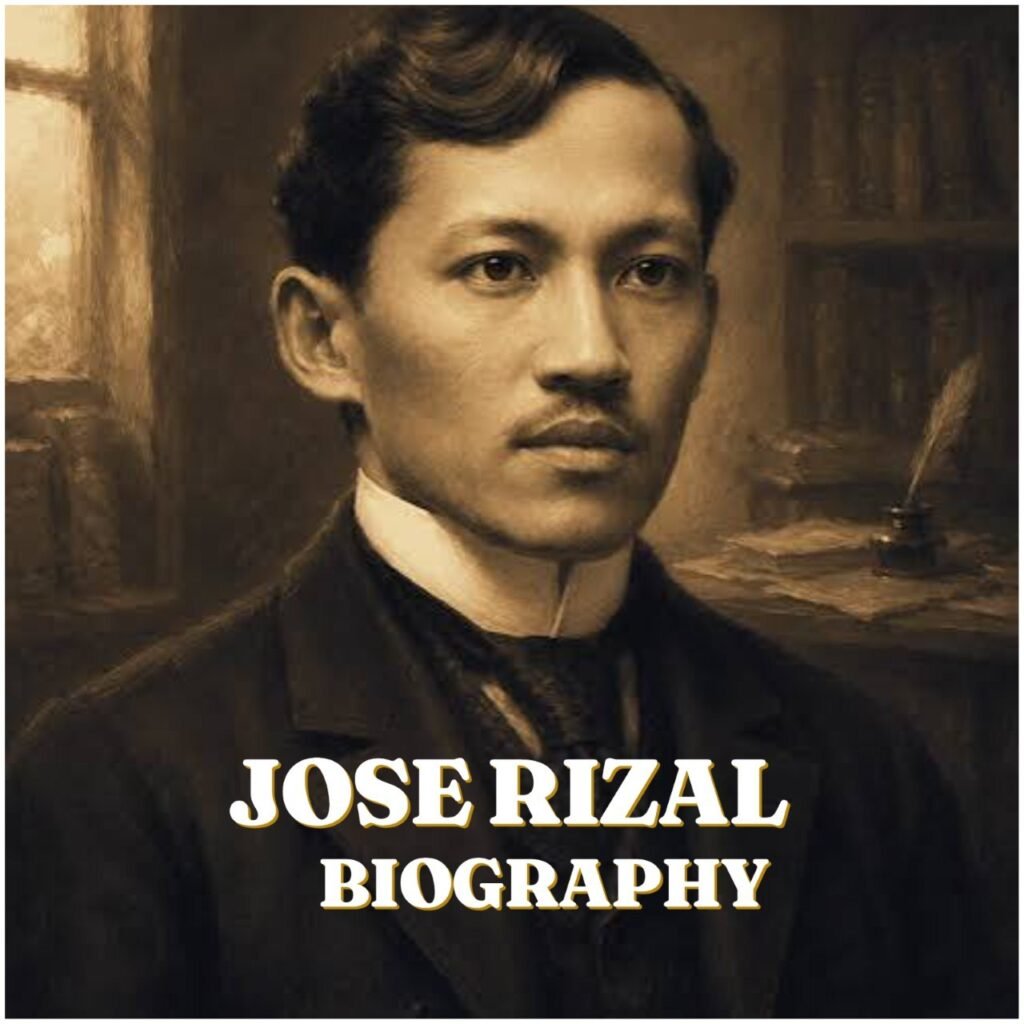
José Rizal was born on June 19, 1861, in Calamba, Laguna, Philippines, and was 35 years old at the time of his execution on December 30, 1896. He was Filipino by nationality and came from a family of mixed Filipino, Chinese, and Spanish ancestry. Rizal was raised in the Roman Catholic faith and remained culturally connected to Catholicism throughout his life, although his reformist writings and criticism of abuses committed by some members of the Spanish clergy often placed him at odds with church authorities. Historical records describe him as standing approximately 5 feet 3 inches (160 cm) tall, with a slim, athletic build. He had black hair, dark brown eyes, and a composed, refined appearance that reflected his disciplined lifestyle. Contemporary accounts frequently praised his intelligence, calm demeanor, courteous manners, and dignified presence, qualities that complemented his reputation as a physician, scholar, writer, and one of the Philippines’ greatest national heroes.
Net Worth
There are no reliable historical records documenting José Rizal’s exact net worth, as the concept of calculating the personal wealth of nineteenth-century historical figures in today’s terms is largely speculative. Throughout his life, Rizal earned income primarily as a physician (ophthalmologist), writer, educator, and landowner. He also received financial support from his family and close friends while pursuing his studies in Europe. Unlike many public figures, Rizal devoted much of his time and resources to education, scientific research, literature, and advocating peaceful reforms rather than accumulating personal wealth.
Based on his professional background, successful medical practice, ownership of property during his exile in Dapitan, and earnings from his literary works, modern historians and biographical analysts estimate that José Rizal’s wealth would be equivalent to approximately US$500,000 to US$1 million in today’s value. This estimate is not an official figure but a reasoned approximation of the economic value of his assets, professional income, and social standing had they been adjusted for inflation and modern purchasing power. It should therefore be viewed as an informed estimate rather than a verified historical fact.
Although José Rizal was relatively comfortable financially compared to many Filipinos of his era, his greatest legacy was never measured by money. He used his education, medical expertise, and literary talent to serve his fellow citizens and promote justice, equality, and national consciousness. His novels, essays, poems, and scientific contributions continue to generate educational, cultural, and historical value more than a century after his death. Today, Rizal is remembered not for his personal fortune but for the immeasurable impact he had on Philippine history and his enduring influence as the country’s foremost national hero.
Legacy
José Rizal’s legacy is rooted in his unwavering commitment to education, peaceful reform, and the pursuit of justice. Through his influential novels, Noli Me Tangere and El Filibusterismo, he exposed the social injustices, corruption, and abuses that existed under Spanish colonial rule. His writings awakened a sense of nationalism among Filipinos and encouraged them to seek equality, dignity, and freedom. Although Rizal rejected violence as a means of achieving political change, his ideas inspired countless Filipinos to stand up for their rights and played a crucial role in shaping the country’s path toward independence. Today, he is officially recognized as the national hero of the Philippines, and his life continues to serve as a model of patriotism, integrity, and intellectual excellence.
Beyond his contributions to literature and politics, Rizal left a lasting impact on education, science, and public service. As a physician, educator, linguist, artist, and scientist, he demonstrated the value of lifelong learning and the importance of using knowledge to improve society. His achievements in medicine, particularly ophthalmology, along with his work in anthropology, zoology, botany, and history, showcased the breadth of his talents and earned him recognition from scholars around the world. Schools, universities, parks, museums, streets, monuments, and public institutions across the Philippines and in many other countries have been named in his honor, reflecting the global respect for his accomplishments and ideals.
More than a century after his execution, José Rizal remains one of the most admired historical figures in Asia. His birthday on June 19 is commemorated through educational and cultural activities, while Rizal Day, observed every December 30, is a Philippine national holiday honoring his sacrifice and contributions to the nation. His works continue to be required reading in Philippine schools, ensuring that new generations learn about his vision of freedom, civic responsibility, and national unity. In the twenty-first century, Rizal’s message of peaceful reform, critical thinking, respect for human dignity, and love for one’s country continues to inspire people around the world, making his legacy as relevant today as it was during his lifetime.
Conclusion
José Rizal remains one of the most influential and respected figures in Philippine history, remembered not only as the nation’s foremost hero but also as an exceptional physician, novelist, poet, scholar, and advocate for peaceful reform. Through his groundbreaking literary works, unwavering commitment to education, and courageous stand against injustice, he inspired a national awakening that ultimately contributed to the Philippines’ struggle for independence. Although his life was cut short by execution at the age of 35, his ideals of freedom, equality, patriotism, and intellectual excellence continue to shape Filipino society and inspire people around the world. More than a century after his death, José Rizal’s remarkable achievements and enduring legacy stand as a powerful reminder that knowledge, integrity, and compassion can transform a nation and leave an impact that transcends generations.
Frequently Asked Questions (FAQs)
Who was José Rizal?
José Rizal was a Filipino physician, novelist, poet, essayist, and nationalist who is widely recognized as the national hero of the Philippines. His writings inspired the Philippine reform movement and played a major role in awakening Filipino nationalism during Spanish colonial rule.
When and where was José Rizal born?
José Rizal was born on June 19, 1861, in Calamba, Laguna, Philippines, which was then part of the Spanish East Indies.
How did José Rizal die?
José Rizal died by firing squad execution on December 30, 1896, at Bagumbayan (now Rizal Park) in Manila after being convicted of rebellion, sedition, and conspiracy by the Spanish colonial government.
What was the cause of José Rizal’s death?
The official cause of José Rizal’s death was execution by firing squad. His execution was ordered by Spanish colonial authorities, who accused him of inspiring the Philippine Revolution through his writings and reformist activities.
How old was José Rizal when he died?
José Rizal was 35 years old when he was executed on December 30, 1896.
What are José Rizal’s most famous books?
José Rizal’s two most famous novels are Noli Me Tangere (1887) and El Filibusterismo (1891). These works exposed the abuses of Spanish colonial rule and inspired the Filipino nationalist movement.
Who were José Rizal’s parents?
José Rizal’s parents were Francisco Rizal Mercado, a prosperous farmer, and Teodora Alonso Realonda, an educated woman who greatly influenced his love for learning and education.
Did José Rizal have a wife?
José Rizal’s longtime partner was Josephine Bracken. Historical accounts indicate that they were married shortly before his execution in 1896, although some details of the marriage remain debated by historians.
What was José Rizal’s religion?
José Rizal was raised as a Roman Catholic. While he remained culturally connected to the Catholic faith, he openly criticized abuses committed by some members of the Spanish clergy during the colonial period.
What was José Rizal’s estimated net worth?
There is no official record of José Rizal’s net worth. Based on his successful career as a physician, writer, educator, and landowner, historians estimate that his wealth would be equivalent to approximately US$500,000 to US$1 million in today’s value.
Why is José Rizal considered a national hero?
José Rizal is considered the national hero of the Philippines because his writings, peaceful advocacy for reform, and ultimate sacrifice inspired the Filipino people to pursue freedom, justice, and national identity during the struggle against Spanish colonial rule.
Why is José Rizal trending in 2026?
José Rizal is trending in 2026 because Filipinos around the world recently commemorated the 165th anniversary of his birth through official ceremonies, educational programs, cultural events, and social media campaigns celebrating his enduring legacy and contributions to Philippine history.