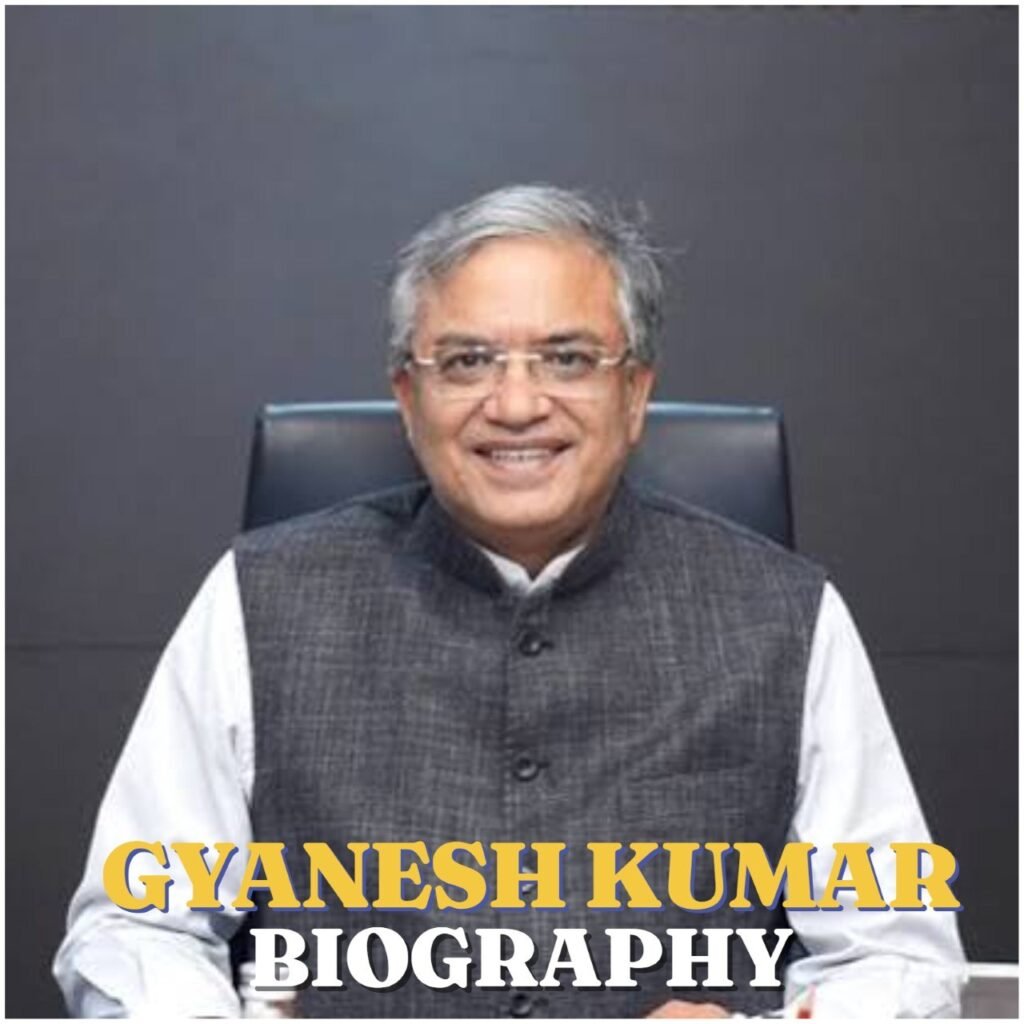

Who Is Gyanesh Kumar?
Gyanesh Kumar is a prominent Indian civil servant who has built a distinguished career spanning several decades in public administration and governance. A member of the 1988-batch Indian Administrative Service (IAS) from the Kerala cadre, he has held several important positions at both the state and central government levels. His administrative experience includes work in Kerala and senior responsibilities in the Government of India, where he was involved in areas including defence, home affairs, parliamentary affairs and cooperation. His career has placed him among the senior bureaucrats who have played important roles in shaping government policy and administration in India.
Gyanesh Kumar became particularly prominent after joining the Election Commission of India as an Election Commissioner in March 2024. He subsequently became the 26th Chief Election Commissioner of India on February 19, 2025, succeeding Rajiv Kumar. In this position, he became responsible for leading the constitutional body charged with conducting and overseeing elections across the country. His tenure has included major electoral exercises and important debates surrounding the management and revision of electoral rolls, making his role increasingly significant in India’s political and democratic landscape.
In 2026, Gyanesh Kumar has remained in the national spotlight because of controversies surrounding the Election Commission’s Special Intensive Revision (SIR) of electoral rolls and the political debate over its implementation. Opposition parties have raised allegations concerning the electoral-roll revision process, while the Election Commission has defended its actions and procedures. These developments, together with legal proceedings and public demonstrations, have added a new dimension to Kumar’s public profile. Today, he remains one of India’s most closely watched constitutional officials, with his career, leadership of the Election Commission, education, family background, achievements and recent controversies attracting considerable public interest.
Gyanesh Kumar Early Life and Background
Gyanesh Kumar was born on January 27, 1964, in Midhakur, Agra, Uttar Pradesh, India, and grew up in an environment that encouraged education, discipline and public service. He later developed an interest in engineering and public administration, which eventually shaped the direction of his professional career. Although details about his childhood and early family life are not widely available in the public domain, his subsequent career demonstrates a strong academic foundation and an early commitment to serving the country through government administration.
Kumar pursued higher education in engineering and completed his Bachelor of Technology (B.Tech) in Civil Engineering from the Indian Institute of Technology Kanpur (IIT Kanpur) in 1985. His engineering education provided him with analytical and technical skills that later became useful in his administrative career. He subsequently expanded his knowledge beyond engineering by studying Business Finance at ICFAI and Environmental Economics at Harvard University, giving him exposure to areas of finance, economics and public policy.
After completing his education, Gyanesh Kumar entered the Indian Administrative Service (IAS) as part of the 1988 batch, joining the Kerala cadre. His entry into the IAS marked the beginning of a long career in public administration, during which he served in a variety of positions at the district, state and central-government levels. His early administrative assignments helped him gain practical experience in governance and public policy and laid the foundation for the senior positions he would later hold in the Government of India and, eventually, the Election Commission of India.
Gyanesh Kumar Education and Academic Qualifications
Gyanesh Kumar has a strong academic background that combines engineering, finance and economics. He completed his Bachelor of Technology (B.Tech) in Civil Engineering from the Indian Institute of Technology Kanpur (IIT Kanpur) in 1985. His education at one of India’s leading technical institutions provided him with a solid foundation in analytical thinking, problem-solving and technical knowledge, skills that later supported his career in public administration.
After completing his engineering degree, Kumar continued to broaden his academic knowledge beyond the technical field. He studied Business Finance at ICFAI, gaining additional understanding of financial management and business-related subjects. This multidisciplinary education became useful during his long administrative career, particularly while handling government responsibilities involving institutions, public-sector organisations, economic matters and policy implementation.
Kumar also studied Environmental Economics at Harvard University, adding an international dimension to his academic background. His combination of engineering, finance and economics education reflects the diverse expertise he developed before and during his public-service career. In recognition of his professional and public-service contributions, IIT Kanpur honoured him with its Distinguished Alumni Award in 2025, further highlighting his connection with the institution where his higher-education journey began.
Gyanesh Kumar Career and Professional Journey
Gyanesh Kumar began his professional career after joining the Indian Administrative Service (IAS) in 1988 as part of the Kerala cadre. During his early years in the Kerala administration, he served in several important positions, including Assistant Collector of Ernakulam and Sub-Collector of Adoor. He later became District Collector of Ernakulam and Municipal Commissioner of the Corporation of Cochin, where he gained extensive experience in district administration, urban governance and public-service delivery. He also served as Managing Director of the Kerala State Cooperative Bank and held responsibilities connected with infrastructure and development projects.
Kumar subsequently moved into senior positions within the Government of Kerala, where he handled departments including Finance Resources, Fast Track Projects, Public Works, Modernising Government Programme, and Food, Civil Supplies and Consumer Affairs. His career then expanded to the central government, where he served as Joint Secretary in the Ministry of Defence, working on the upgrading of India’s defence shipyards. He later served as Joint Secretary and Additional Secretary in the Ministry of Home Affairs, during a period that included major developments involving Jammu and Kashmir and the establishment of the Ram Janmabhoomi trust following the Supreme Court’s Ayodhya judgment.
Kumar went on to become Secretary in the Ministry of Parliamentary Affairs in 2021 and later Secretary in the Ministry of Cooperation in 2022. He retired from government service on January 31, 2024, but soon returned to public service when he was appointed an Election Commissioner of India in March 2024. In that role, he was involved in the administration of the 2024 Lok Sabha election. On February 19, 2025, he took charge as India’s 26th Chief Election Commissioner, succeeding Rajiv Kumar. His tenure has since included major electoral and institutional issues, particularly the Special Intensive Revision of electoral rolls. As of October 2026, Kumar remains Chief Election Commissioner, with his term scheduled to run until January 26, 2029.
Gyanesh Kumar Personal Life and Family
Gyanesh Kumar is married to Anuradha Kumar, who has largely maintained a private life away from the public attention surrounding her husband’s senior government career. The couple have children, including two daughters who have followed careers in India’s civil services. Public reports identify their daughters as Medha Roopam and Abhishri, while their son is Arnav Kumar. Unlike her husband, Anuradha has generally remained outside the media spotlight, although she has occasionally accompanied Kumar during family visits and public appearances.
Kumar’s elder daughter, Medha Roopam, is a 2014-batch IAS officer of the Uttar Pradesh cadre and has served as the District Magistrate of Gautam Buddha Nagar (Noida). She secured 10th rank in the UPSC Civil Services Examination and has also been associated with competitive shooting. Medha is married to Manish Bansal, another 2014-batch IAS officer, who has served as the District Magistrate of Agra. The couple’s careers have made them a notable civil-service family in their own right.
Kumar’s younger daughter, Abhishri, is an Indian Revenue Service (IRS) officer who entered the civil services through the UPSC examination in 2017. She is married to Akshay Labroo, an IAS officer from the 2017 batch who has served in Jammu and Kashmir. Gyanesh Kumar’s wider family also has a strong connection with public service: his brother Manish Kumar is an IRS officer, while his sister Roli’s husband, Upendra Jain, is an IPS officer. This concentration of IAS, IPS and IRS officers within the family has made the Kumar family particularly notable for its long-standing connection with India’s public administration.
Gyanesh Kumar Age, Religion, Nationality, Height and Physical Appearance
Gyanesh Kumar was born on January 27, 1964, in Midhakur, Agra, Uttar Pradesh, India. As of October 2026, he is 62 years old. He belongs to the 1988 batch of the Indian Administrative Service (IAS), Kerala cadre, and has spent more than three decades working in senior administrative and constitutional positions.
Gyanesh Kumar is Indian by nationality and was born in Uttar Pradesh, India. His official biography published by the Election Commission of India provides extensive information about his education and professional career but does not specify his religion. Therefore, his religious affiliation should not be stated as fact without a reliable source confirming it.
Gyanesh Kumar’s height is reported to be approximately 172 centimetres (5 feet 8 inches). Public biographical sources describe him as having black eyes and salt-and-pepper hair. As a senior government official and Chief Election Commissioner, he is frequently seen in formal professional attire at official meetings, election-related events and public functions.
Gyanesh Kumar Net Worth and Salary
Gyanesh Kumar’s exact net worth is not publicly known. Recent reports confirm that there is no verified public figure showing his complete assets, investments, properties and liabilities. Information about his immovable property returns from his years as an IAS officer has also been treated as private information under the Right to Information framework. Therefore, claims giving a precise figure for his net worth should be treated as estimates rather than confirmed facts.
As the Chief Election Commissioner of India, Kumar currently receives a basic salary of approximately ₹2.5 lakh per month, equivalent to the salary of a Cabinet Secretary. The position also provides significant official benefits, including government accommodation, an official vehicle and driver, security, medical facilities and other allowances. In addition, his more than three decades of service as an IAS officer and senior government administrator would have contributed to his accumulated savings, pension entitlements, property and other personal assets.
Because there is no reliable public asset declaration from which his complete wealth can be calculated, a precise net-worth figure would be speculative. For biography purposes, Gyanesh Kumar’s net worth can reasonably be described as estimated rather than officially confirmed, with his wealth primarily associated with his long government career, senior administrative positions, salary, pension benefits, savings and possible personal investments. It is safer not to publish a specific crore figure as fact unless a verified asset declaration becomes publicly available.
Gyanesh Kumar’s Role as Chief Election Commissioner
Gyanesh Kumar became the 26th Chief Election Commissioner of India on February 19, 2025, after serving as an Election Commissioner from March 2024. His appointment placed him at the head of the Election Commission of India, the constitutional institution responsible for administering elections and overseeing the country’s electoral process. His earlier experience in several central-government ministries gave him a lengthy background in public administration before he assumed this constitutional position.
During his tenure as Chief Election Commissioner, Kumar has been associated with significant electoral and institutional developments in India. His leadership has involved matters concerning election administration, electoral rolls and the functioning of the Election Commission. His position has consequently attracted considerable attention from political parties, civil-society groups and the wider public, particularly when decisions made by the Commission have become subjects of political debate or legal scrutiny.
Gyanesh Kumar Latest Controversy and 2026 Developments
In 2026, Gyanesh Kumar has remained in the national spotlight because of controversy surrounding the Election Commission’s Special Intensive Revision (SIR) of electoral rolls. Opposition parties have raised allegations concerning the electoral-roll revision process and have criticised the Election Commission’s approach, while the Commission has defended its actions and procedures. The dispute has generated political protests, public debate and legal challenges, making the SIR process one of the most closely watched issues associated with Kumar’s tenure.
The controversy has also resulted in legal proceedings involving the Election Commission and questions about the manner in which electoral-roll revisions have been handled. These developments have increased scrutiny of Kumar’s leadership and placed the independence and functioning of the Election Commission at the centre of political discussion. His position as Chief Election Commissioner means that decisions made during his tenure can have significant implications for India’s electoral system and public confidence in the democratic process.
Gyanesh Kumar Legacy and Achievements
Gyanesh Kumar’s legacy is closely connected to his long career in Indian public administration and his rise from an IAS officer to one of the country’s most senior constitutional officials. During more than three decades in government service, he worked across state and central administrations, handling responsibilities related to defence, home affairs, parliamentary affairs and cooperation. His experience in different areas of government has made him a notable figure in India’s administrative history and demonstrated the broad range of responsibilities undertaken by senior civil servants.
His appointment as the 26th Chief Election Commissioner of India in February 2025 represents one of the most significant stages of his career. As head of the Election Commission of India, Kumar has been responsible for overseeing the country’s electoral machinery and protecting the integrity of the democratic process. His tenure has also been associated with major debates over electoral-roll revisions and election administration, particularly the Special Intensive Revision (SIR) exercise. These developments have made his leadership subject to considerable political and public scrutiny, adding both institutional significance and controversy to his legacy.
Beyond his own career, Kumar’s family has also attracted attention because of its strong representation in India’s civil services. His daughters Medha Roopam and Abhishri have pursued careers in the IAS and IRS respectively, while other members of his extended family have served in senior government positions. His educational connection with IIT Kanpur, which honoured him with its Distinguished Alumni Award in 2025, further reflects recognition of his contribution to public service. Ultimately, Kumar’s lasting legacy will depend not only on his earlier administrative achievements but also on how his tenure as Chief Election Commissioner is remembered in the context of India’s evolving electoral and democratic institutions.
Conclusion
Gyanesh Kumar has built a remarkable career spanning engineering, public administration and India’s electoral system, rising from a 1988-batch IAS officer to become the 26th Chief Election Commissioner of India. His decades of government service, senior roles in the Ministry of Home Affairs, Ministry of Parliamentary Affairs and Ministry of Cooperation, and leadership of the Election Commission have established him as an important figure in Indian public life. While his tenure as Chief Election Commissioner has attracted political debate and scrutiny, particularly over electoral-roll revisions, his extensive administrative experience and contribution to public service remain central to his biography. With his family also having a strong presence in India’s civil services, Gyanesh Kumar’s career represents a notable chapter in the country’s administrative and electoral history.
Frequently Asked Questions About Gyanesh Kumar
Who is Gyanesh Kumar?
Gyanesh Kumar is an Indian civil servant and the 26th Chief Election Commissioner of India. He is a 1988-batch IAS officer of the Kerala cadre and has held several senior positions in the Indian government.
How old is Gyanesh Kumar?
Gyanesh Kumar was born on January 27, 1964. As of October 2026, he is 62 years old.
When did Gyanesh Kumar become Chief Election Commissioner?
Gyanesh Kumar became the 26th Chief Election Commissioner of India on February 19, 2025, succeeding Rajiv Kumar.
What is Gyanesh Kumar’s educational qualification?
Gyanesh Kumar holds a B.Tech in Civil Engineering from IIT Kanpur. He also studied Business Finance at ICFAI and Environmental Economics at Harvard University.
Which IAS batch does Gyanesh Kumar belong to?
Gyanesh Kumar belongs to the 1988 batch of the Indian Administrative Service (IAS) and was allotted the Kerala cadre.
What positions did Gyanesh Kumar hold before becoming Chief Election Commissioner?
Before becoming Chief Election Commissioner, Kumar served in several senior administrative positions, including roles in the Ministry of Defence, Ministry of Home Affairs, Ministry of Parliamentary Affairs and Ministry of Cooperation. He was also an Election Commissioner before becoming CEC.
Who is Gyanesh Kumar’s wife?
Gyanesh Kumar’s wife is Anuradha Kumar. She has generally maintained a private life away from the public spotlight surrounding her husband’s career.
Does Gyanesh Kumar have children?
Yes. Gyanesh Kumar has children, including daughters Medha Roopam, an IAS officer, and Abhishri, an IRS officer. Their careers have added to the family’s notable connection with India’s civil services.
What is Gyanesh Kumar’s net worth?
Gyanesh Kumar’s exact net worth is not publicly verified. As a senior Indian civil servant with decades of government service, his wealth would generally include accumulated salary, savings, pension benefits and personal assets, but a precise figure should not be presented as fact without a verified asset declaration.
What is Gyanesh Kumar’s religion?
Gyanesh Kumar’s official public biography does not clearly state his religion. Therefore, his religious affiliation should not be presented as confirmed without a reliable source.
What is Gyanesh Kumar’s nationality?
Gyanesh Kumar is Indian by nationality.
What is Gyanesh Kumar’s height?
Gyanesh Kumar’s height is reported by some biographical sources as approximately 172 cm (5 feet 8 inches). However, this measurement has not been prominently confirmed in his official biography.
What is Gyanesh Kumar known for?
Gyanesh Kumar is best known for his long career as an IAS officer, his senior positions in the Government of India, his appointment as an Election Commissioner in 2024, and his subsequent appointment as Chief Election Commissioner of India in 2025.
What is the latest controversy involving Gyanesh Kumar?
In 2026, Gyanesh Kumar has faced political criticism and public scrutiny over the Election Commission’s Special Intensive Revision (SIR) of electoral rolls. Opposition parties have raised concerns about the process, while the Election Commission has defended its actions and procedures. The controversy has also resulted in legal and political challenges involving the Election Commission.