
Introduction to Ernest Hemingway
Ernest Hemingway was one of the most influential American novelists, short-story writers, and journalists of the twentieth century. Born on July 21, 1899, in Oak Park, Illinois, United States, he became internationally renowned for his distinctive writing style, memorable characters, and powerful exploration of human courage, love, loss, war, and survival. His simple yet expressive prose transformed modern literature and inspired generations of writers around the world. Among his most celebrated works are The Old Man and the Sea, A Farewell to Arms, For Whom the Bell Tolls, and The Sun Also Rises. Through these literary masterpieces, Hemingway established himself as a major figure in American literature and earned a lasting place in literary history.
Hemingway’s life was as fascinating as the stories he created. In addition to his career as a novelist, he worked as a journalist and experienced significant historical events, including the First World War and the Spanish Civil War, which influenced many of his literary themes. He spent considerable time in places such as Paris, Spain, Cuba, and Key West, Florida, drawing inspiration from their cultures, landscapes, and people. His adventurous lifestyle, passion for fishing, interest in hunting, and experiences travelling across different countries contributed to his public image as a bold and unconventional literary figure. However, behind his reputation for courage and adventure was a complex individual whose personal relationships, emotional struggles, and experiences shaped both his life and his writing.
Throughout his career, Ernest Hemingway received widespread recognition for his contribution to literature, including the Pulitzer Prize for Fiction in 1953 for The Old Man and the Sea and the Nobel Prize in Literature in 1954. His works remain widely read, studied, and discussed for their literary innovation, emotional depth, and portrayal of the human condition. Although Hemingway died on July 2, 1961, at the age of 61, his influence has endured across generations, and his books continue to attract readers worldwide. In 2026, renewed attention surrounding the 100th anniversary of The Sun Also Rises, first published in 1926, provides another opportunity to celebrate his achievements and examine his lasting impact on modern fiction. His remarkable journey from a young journalist in Illinois to a Nobel Prize-winning author remains an important chapter in the history of world literature.
Early Life of Ernest Hemingway
Ernest Hemingway was born on July 21, 1899, in Oak Park, Illinois, a suburb of Chicago in the United States. His full name was Ernest Miller Hemingway, and he was the second of six children born to Clarence Edmonds Hemingway, a physician, and Grace Hall Hemingway, a musician and former opera singer. His father introduced him to outdoor activities such as fishing, hunting, camping, and exploring nature, while his mother encouraged music and cultural interests. These different influences helped shape Hemingway’s personality and later became important elements of his writing. His childhood was spent in a relatively comfortable household, where education, discipline, outdoor recreation, and family expectations played significant roles in his upbringing. The natural surroundings of northern Michigan, where his family owned a cottage near Walloon Lake, became particularly important to him and later inspired the landscapes and outdoor experiences portrayed in several of his stories.
During his childhood, Hemingway developed a strong interest in reading, writing, sports, and adventure. He attended Oak Park and River Forest High School, where he participated in activities such as boxing, football, and track, while also contributing to the school newspaper and literary magazine. His early writing experiences helped him develop the skills that would eventually support his career as a journalist and novelist. Hemingway was particularly attracted to stories involving courage, competition, personal responsibility, and the challenges individuals face when confronted with difficult circumstances. His family’s contrasting interests also influenced his development, as his father encouraged practical outdoor knowledge while his mother promoted artistic pursuits. These experiences exposed him to different aspects of life and gave him a foundation for the direct, observant writing style that later became one of his defining characteristics.
After graduating from high school in 1917, Hemingway decided not to attend college immediately and instead began working as a reporter for The Kansas City Star in Missouri. This early professional experience proved extremely important because the newspaper’s writing guidelines encouraged short sentences, clear language, and concise reporting. Those principles later became central to Hemingway’s literary style. In 1918, during the First World War, he travelled to Europe as an ambulance driver for the American Red Cross and served on the Italian front, where he was seriously injured by mortar fire. His wartime experiences exposed him to suffering, courage, fear, and the realities of conflict, subjects that would influence several of his best-known works. His early years as a student, journalist, and wartime volunteer therefore played a major role in shaping the experiences, themes, and literary ambitions that eventually made Ernest Hemingway one of the most celebrated writers of the twentieth century.
Education of Ernest Hemingway
Ernest Hemingway received his early education in Oak Park, Illinois, where he attended Oak Park and River Forest High School. During his school years, he demonstrated an interest in English, literature, journalism, and outdoor activities, developing many of the interests that would later influence his writing career. He was an active student who participated in sports such as boxing and football while contributing to the school’s newspaper and literary magazine. These activities provided him with opportunities to practise writing, observe people, and communicate ideas clearly. His experiences in the school newspaper were particularly valuable because they introduced him to the fundamentals of reporting, editing, and presenting information in an engaging manner. Although Hemingway did not initially pursue a university education, his secondary-school experiences gave him an important foundation for his future career as a journalist and novelist.
After graduating from high school in 1917, Hemingway chose to enter the workforce rather than enrol immediately at a college or university. He secured a position as a reporter for The Kansas City Star, a newspaper in Missouri, where he learned practical journalism skills under professional editors. The newspaper’s emphasis on short sentences, direct language, accurate descriptions, and concise reporting strongly influenced his approach to writing. Hemingway developed the habit of observing people and events carefully, gathering information, and presenting stories without unnecessary explanations. Although this period was not part of a conventional university education, it served as an important form of professional training that shaped his distinctive literary voice. His experiences in the newsroom helped him understand how to construct clear narratives, select meaningful details, and communicate complex situations through simple but effective language.
Hemingway’s education continued through his experiences as a journalist, traveller, and participant in major historical events. In 1918, he volunteered as an ambulance driver for the American Red Cross during the First World War and served in Italy, where his experiences exposed him to the realities of conflict and human suffering. He subsequently travelled extensively throughout Europe and other parts of the world, learning about different cultures, social environments, and ways of life. These experiences became an informal but significant part of his intellectual and artistic development, providing material for novels such as A Farewell to Arms and The Sun Also Rises. Hemingway never earned a university degree, but his combination of secondary schooling, newspaper training, extensive reading, and firsthand experience helped him become one of the most influential writers of the twentieth century. His career demonstrates how practical experience, disciplined observation, and continuous learning can contribute significantly to literary achievement, even without a traditional university education.
Career of Ernest Hemingway
Ernest Hemingway built one of the most celebrated literary careers of the twentieth century, becoming internationally recognised for his novels, short stories, and journalism. His professional journey began in 1917 when he worked as a reporter for The Kansas City Star, where he learned the importance of concise sentences, precise descriptions, and straightforward language. These principles later became defining characteristics of his writing style. In 1918, Hemingway travelled to Europe as an ambulance driver with the American Red Cross during the First World War. His experiences in Italy, including being wounded while serving near the front, deeply influenced his understanding of conflict, courage, sacrifice, and human vulnerability. After returning to civilian life, he continued developing his writing skills and eventually worked as a foreign correspondent, reporting on political events and social developments in Europe. Journalism gave him the practical experience and observational discipline that helped him establish himself as a serious literary talent.
Hemingway’s literary breakthrough came during the 1920s, when he became associated with the expatriate artistic community in Paris. He met influential writers and artists, including Gertrude Stein, Ezra Pound, and other members of the modernist literary circle, who contributed to the intellectual environment in which he developed his craft. His first major novel, The Sun Also Rises, was published in 1926 and explored the experiences of American and British expatriates living in Europe after the First World War. The novel attracted attention for its restrained prose, realistic dialogue, and portrayal of disillusionment among the post-war generation. In 1929, Hemingway published A Farewell to Arms, a novel inspired partly by his experiences during the First World War. The book explored the relationship between an American ambulance officer and a British nurse against the background of war, love, and loss. Its success strengthened his reputation as a major novelist and established him as a distinctive voice in modern American literature.
In the 1930s, Hemingway continued expanding his literary reputation through fiction, journalism, and nonfiction writing. His interest in Spain, bullfighting, travel, and outdoor life influenced books such as Death in the Afternoon (1932) and Green Hills of Africa (1935). During the Spanish Civil War, he reported on the conflict as a correspondent, gaining firsthand knowledge that later contributed to For Whom the Bell Tolls, published in 1940. The novel explored the experiences of an American volunteer fighting alongside Spanish Republican forces and examined themes of loyalty, sacrifice, love, and the human cost of war. During the Second World War, Hemingway also worked as a correspondent, continuing his involvement in journalism while developing his reputation as a writer capable of combining personal observation with larger historical events. His ability to transform real experiences into compelling fiction made him one of the most recognisable literary figures of his generation.
Hemingway achieved one of the greatest accomplishments of his career with the publication of The Old Man and the Sea in 1952. The novella tells the story of an ageing Cuban fisherman whose determination and endurance are tested during a difficult fishing expedition. The work received widespread acclaim and earned Hemingway the Pulitzer Prize for Fiction in 1953. In 1954, he was awarded the Nobel Prize in Literature in recognition of his mastery of narrative and influence on contemporary writing. Although his later years were affected by personal and health difficulties, his contribution to literature remained substantial. Hemingway died on July 2, 1961, in Ketchum, Idaho, but his books continued to reach new generations of readers. His memoir, A Moveable Feast, was published posthumously in 1964, offering reflections on his early years as a writer in Paris. His career is remembered for its influential prose style, internationally recognised novels, award-winning storytelling, and enduring impact on modern literature.
Trending: Ernest Hemingway’s The Sun Also Rises Celebrates 100 Years in 2026
Ernest Hemingway is attracting renewed attention in October 2026 as readers, literary scholars, and admirers prepare to celebrate the 100th anniversary of his landmark novel, The Sun Also Rises. First published on October 22, 1926, the novel became one of the defining works of modern American literature and helped establish Hemingway as an internationally recognised author. Its centenary offers an opportunity to revisit the story, examine its historical background, and appreciate how Hemingway captured the uncertainty and disillusionment experienced by people following the First World War. The anniversary is particularly significant because the novel introduced many readers to his distinctive writing style, characterised by concise sentences, realistic dialogue, and powerful emotions expressed through carefully chosen details.
A major development surrounding the centenary is renewed publishing interest in the novel. New editions and annotated materials give readers additional opportunities to explore Hemingway’s writing, the historical context of the story, and the influences behind its characters and settings. Such publications can help both new readers and longtime admirers understand the novel’s importance in the development of modern fiction. The continuing commercial and scholarly interest in The Sun Also Rises also demonstrates that Hemingway’s books remain culturally relevant a century after their original publication.
The anniversary is also generating academic and cultural interest in Hemingway’s connections with Spain and the wider Hispanic world. Conferences, literary discussions, and commemorative activities provide opportunities to examine the relationship between his experiences abroad and the stories he created. These activities demonstrate that Hemingway remains an important subject of literary discussion, even decades after his death, and that the 100-year milestone is renewing interest in both his achievements and the complex themes explored in his writing. The novel’s continuing popularity reinforces his reputation as an author whose observations about relationships, disillusionment, identity, and the search for meaning remain relevant to contemporary readers.
Personal Life and Family of Ernest Hemingway
Ernest Hemingway was born on July 21, 1899, in Oak Park, Illinois, to Clarence Edmonds Hemingway, a physician, and Grace Hall Hemingway, a musician and music teacher. He grew up in a family of six children, including his older sister, Marcelline, and younger siblings Ursula, Madelaine, Carol, and Leicester. His father introduced him to outdoor activities and nature, while his mother encouraged artistic interests, creating a family environment that influenced his personality and creative development. Hemingway’s personal life was adventurous and complex, shaped by his travels, friendships, professional ambitions, and relationships. He spent significant periods living in Paris, Key West, Florida, and Cuba, where he found inspiration for his writing. His family background and experiences throughout adulthood became important parts of his identity, although his relationships with relatives were sometimes complicated.
Hemingway married four times during his lifetime. His first wife was Elizabeth Hadley Richardson, whom he married in 1921. They lived in Paris during the early years of his writing career and had one son, John Hadley Nicanor Hemingway, popularly known as Jack or Bumby. The couple divorced in 1927 after Hemingway became involved with journalist Pauline Pfeiffer, whom he married later that year. Hemingway and Pauline had two sons, Patrick Hemingway and Gregory Hemingway, and their marriage lasted until 1940. Later that year, he married Martha Gellhorn, a respected journalist and war correspondent who shared his interest in international reporting. Their marriage ended in divorce in 1945. In 1946, Hemingway married Mary Welsh, a journalist he had met while working as a correspondent during the Second World War. Mary remained his wife until his death in 1961. His marriages reflected different periods of his life, from his early literary ambitions in Europe to his later years in Cuba and the United States.
Family relationships remained an important part of Hemingway’s life and legacy. His three sons followed different paths: Jack became known for his interests in writing and outdoor pursuits, Patrick pursued a career connected to Africa and conservation, and Gregory experienced a more difficult personal journey. Hemingway also became a grandfather through Jack’s children, including Muffet Hemingway, Margaux Hemingway, and Mariel Hemingway. His family history was marked by both achievement and hardship, and his relationships with his children were not always easy. Hemingway himself struggled with personal difficulties during his later years, which affected his family life and relationships. He died on July 2, 1961, in Ketchum, Idaho, at the age of 61. Despite the complexities of his private life, his family remains closely associated with his literary legacy, while biographies, memoirs, and historical collections continue to provide insight into the personal experiences behind his celebrated works.
Ernest Hemingway’s Age, Religion, Nationality, Health and Physical Appearance
Age: Ernest Hemingway was born on July 21, 1899, in Oak Park, Illinois, United States, and died on July 2, 1961, at the age of 61. He was one of the most influential American writers of the twentieth century, celebrated for his novels, short stories, and journalism. Although his life ended before his 62nd birthday, his literary achievements earned him international recognition, including the Pulitzer Prize for Fiction in 1953 and the Nobel Prize in Literature in 1954. His experiences across Europe, Africa, Cuba, and the United States contributed significantly to his writing and helped establish his reputation as a major figure in modern literature.
Religion: Hemingway grew up in a Protestant Christian household in which religion played a role in family life. As an adult, he converted to Roman Catholicism in 1927, around the time of his marriage to Pauline Pfeiffer, who was Catholic. His religious beliefs and attitudes were complex, and his literary works often explored questions of faith, suffering, morality, courage, and the meaning of life. Religious themes appear particularly in The Old Man and the Sea and For Whom the Bell Tolls, although his writing also reflects doubt and the difficulties people experience when searching for meaning in a troubled world. His religious background formed one part of the broader personal and cultural influences that shaped his life and literary career.
Nationality: Ernest Hemingway was an American citizen by birth. He was born and raised in Illinois, but his professional life took him to many countries, including France, Italy, Spain, and Cuba. His international experiences influenced his perspective on politics, culture, relationships, and war, providing settings and inspiration for several of his most famous books. Despite spending substantial periods outside the United States, Hemingway remained an important figure in American literature. His distinctive prose style, internationally acclaimed novels, and contributions to modern storytelling secured his place among the most recognised American authors in history.
Health: Hemingway experienced several significant health challenges throughout his life. During the First World War, he was seriously wounded while serving as an ambulance driver in Italy. Later, he sustained injuries in accidents, including two aircraft crashes during an African trip in 1954. These incidents contributed to physical pain and other health difficulties. In his later years, he also experienced serious psychological and cognitive difficulties and received medical treatment. Researchers have subsequently examined historical accounts of his declining health, although retrospective medical explanations cannot always establish a definitive diagnosis. His health struggles affected his final years, but his literary achievements and influence remained substantial.
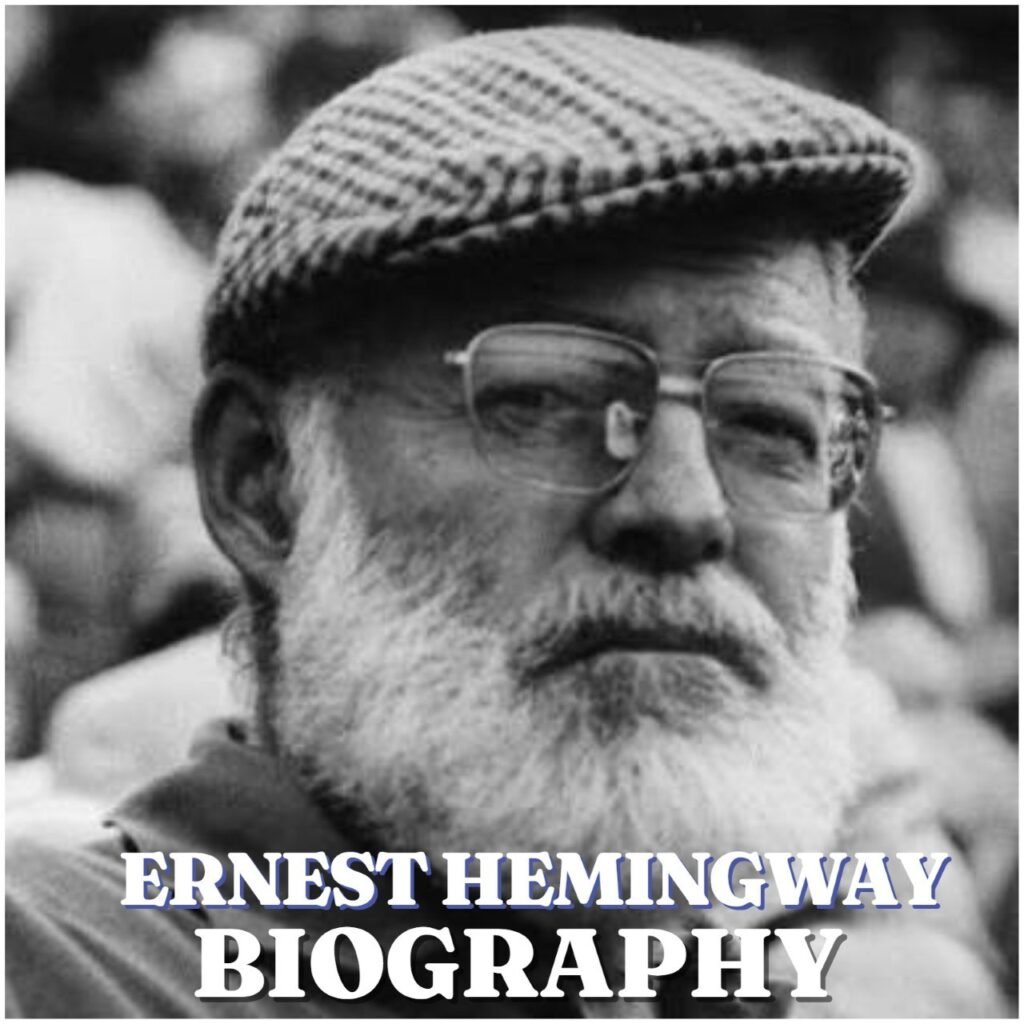
Physical Appearance: Ernest Hemingway was widely recognised for his robust build, broad shoulders, and rugged appearance, which reflected his interest in outdoor activities such as fishing, hunting, and travelling. He was approximately six feet tall, or 183 centimetres, and frequently appeared in photographs wearing simple shirts, jackets, or outdoor clothing. He often sported a thick beard or moustache during different periods of his life, and his short hair and strong facial features contributed to his recognisable public image. His appearance became closely associated with the adventurous persona he cultivated as a writer, journalist, and traveller. However, beyond this outward image, Hemingway was a complex individual whose personal experiences, relationships, health challenges, and creative ambitions helped shape his remarkable literary legacy.
Ernest Hemingway’s Age, Religion, Tribe, Height and Physical Appearance
Age: Ernest Hemingway was born on July 21, 1899, in Oak Park, Illinois, United States, and died on July 2, 1961, at the age of 61. He was an influential American novelist, short-story writer, and journalist whose literary achievements earned him international recognition. His celebrated works include The Old Man and the Sea, A Farewell to Arms, For Whom the Bell Tolls, and The Sun Also Rises. Despite his relatively short life, Hemingway made a lasting contribution to modern literature and received the Pulitzer Prize for Fiction in 1953 and the Nobel Prize in Literature in 1954.
Religion: Hemingway grew up in a Protestant Christian family in which his parents were involved in their local Congregational church. As an adult, he converted to Roman Catholicism in 1927, around the time of his marriage to Pauline Pfeiffer. Religious ideas, questions about faith, and the search for meaning appear in several of his literary works. His writing also explores courage, sacrifice, suffering, morality, and the difficulties people encounter when facing uncertainty. Although his personal beliefs were complex, his religious background formed part of the cultural and personal experiences that influenced his life and writing.
Tribe and Ethnic Background: Ernest Hemingway was American and came from a family of European ancestry. He was not a member of an Indigenous American tribe or an African ethnic group. His family background was primarily associated with European-American heritage, including English ancestry. Hemingway grew up in Illinois and spent many childhood summers in northern Michigan, where his father introduced him to fishing, hunting, and outdoor life. His encounters with different communities and cultures later influenced aspects of his writing, particularly his descriptions of people and places outside the United States.
Height: Ernest Hemingway was approximately 6 feet (183 centimetres) tall. His tall stature and solid build contributed to his recognisable public image as a writer who enjoyed outdoor pursuits, including fishing, hunting, and travelling. His physical presence was frequently noted in biographies and historical photographs, and his appearance became associated with the adventurous personality he projected throughout his career.
Physical Appearance: Hemingway was known for his broad shoulders, sturdy build, strong facial features, and distinctive facial hair, which included a moustache and, during certain periods, a full beard. Photographs from different stages of his life show him wearing everything from formal suits to casual shirts and outdoor clothing. His appearance reflected his interest in practical activities and his extensive travels, while his public persona became closely associated with courage, independence, and adventure. However, his identity extended far beyond his outward appearance: his literary imagination, experiences, relationships, and observations of human behaviour were central to his enduring reputation as one of the most influential writers of the twentieth century.
Ernest Hemingway’s Social Media Presence
Ernest Hemingway lived long before the rise of social media and died in 1961, so he never maintained personal accounts on platforms such as Instagram, Facebook, or X (formerly Twitter). However, his literary legacy continues to attract readers, historians, and admirers online. The official Ernest Hemingway estate shares information about his life, books, family history, and literary events through its digital platforms. An Instagram account previously identified as @ernest.hemingway.official has been associated with promoting his legacy and sharing literary-related content, but its current official status should be verified before treating it as an authenticated account.
Hemingway’s continuing online presence demonstrates the lasting influence of his writing on modern readers. His official website, [Ernest Hemingway Official](https://www.ernesthemingwayofficial.com/), provides biographical information, literary updates, and announcements about events celebrating his work. Readers can also explore the activities of the Hemingway Society and historical institutions dedicated to preserving his manuscripts, photographs, and personal history. Although Hemingway cannot personally interact with followers, his books, quotations, and literary achievements continue to circulate across digital platforms, helping introduce new generations to one of America’s most influential writers.
Ernest Hemingway’s Net Worth
Ernest Hemingway’s net worth has been the subject of considerable interest because of his success as a novelist, journalist, and Nobel Prize-winning author. Although he died on July 2, 1961, his literary works continue to generate income through book sales, publishing rights, adaptations, and licensing. Some historical estimates have placed the value of his estate at approximately $1.4 million at the time of his death, although this figure should be treated cautiously because publicly available accounts do not establish a universally accepted valuation. If an estate valued at $1.4 million in 1961 were adjusted for inflation, it would represent roughly $15 million or more in modern purchasing power, depending on the inflation measure used.
Hemingway accumulated his wealth primarily through his novels, short stories, journalism, and publishing agreements. His best-known books, including The Old Man and the Sea, A Farewell to Arms, For Whom the Bell Tolls, and The Sun Also Rises, achieved commercial success and established him as one of the leading authors of his generation. His 1953 Pulitzer Prize and 1954 Nobel Prize in Literature further strengthened his reputation and the commercial value of his work. He also owned property and other assets during his lifetime. However, his financial circumstances changed over the years because of personal expenses, investments, and changes in his property holdings. His precise lifetime earnings and total wealth cannot be established with complete certainty from publicly available estimates.
Today, Hemingway’s financial legacy continues through the enduring popularity of his books and the management of his literary estate. New editions, translations, film adaptations, and licensing arrangements help preserve the commercial value of his work. His name also attracts literary tourism, particularly at historic locations associated with his life, although tourism revenue should not automatically be counted as personal estate income. It is important to distinguish Hemingway’s documented historical estate from speculative estimates of the value of his literary legacy today. A reasonable biography estimate is approximately $1.4 million at the time of his death, equivalent to roughly $15 million or more in modern purchasing power, rather than a definitive current net-worth figure.
Legacy of Ernest Hemingway
Ernest Hemingway left an extraordinary legacy as one of the most influential writers in modern American literature. His distinctive writing style, characterised by short sentences, direct language, realistic dialogue, and understated emotional expression, transformed the way many authors approached storytelling. Through celebrated works such as The Sun Also Rises, A Farewell to Arms, For Whom the Bell Tolls, and The Old Man and the Sea, Hemingway explored universal themes of courage, love, war, loss, dignity, and human endurance. His ability to communicate profound emotions through seemingly simple prose earned him admiration from readers and literary critics around the world. His achievements were recognised with the Pulitzer Prize for Fiction in 1953 and the Nobel Prize in Literature in 1954, establishing his position among the most important literary figures of the twentieth century. Even decades after his death, his books remain widely read in schools, universities, and literary communities, demonstrating the enduring relevance of his ideas and storytelling techniques.
Another important part of Hemingway’s legacy is his influence on generations of writers, journalists, and filmmakers. His approach to fiction encouraged authors to focus on observable actions, carefully selected details, and the emotions that remain unspoken beneath conversations and events. This technique, often associated with his iceberg theory of writing, suggests that a story’s deeper meaning can extend far beyond what is explicitly described on the page. Hemingway also helped popularise stories shaped by international travel, wartime experiences, and encounters with different cultures. His experiences in Paris, Spain, Italy, and Cuba provided settings and perspectives that enriched his fiction and connected his work to major historical events. Although his personal life and attitudes have attracted criticism and debate, his literary achievements continue to inspire serious discussion about artistic innovation, masculinity, trauma, and the relationship between an author’s experiences and creative work.
Hemingway’s legacy remains especially visible in 2026, as readers and literary institutions recognise the 100th anniversary of The Sun Also Rises, first published in 1926. The centenary offers an opportunity to revisit the novel’s portrayal of the Lost Generation and examine its continuing relevance to contemporary readers. His former homes, museums, archives, and literary organisations preserve important records of his life, while new editions and scholarly studies introduce his work to younger audiences. Hemingway’s influence extends beyond literature into popular culture, tourism, journalism, and discussions about the craft of writing. Although his life ended on July 2, 1961, his contribution to world literature remains substantial. His ability to transform personal experiences and historical events into compelling stories has ensured that Ernest Hemingway continues to be remembered not merely as an award-winning novelist, but as a writer whose work helped shape the development of modern fiction.
Conclusion
Ernest Hemingway remains one of the most influential literary figures in American and world history, celebrated for his distinctive writing style, remarkable storytelling, and exploration of courage, love, war, loss, and human endurance. From his early experiences as a journalist to his international success as a novelist, Hemingway built a career that transformed modern literature and inspired generations of writers. His celebrated works, including The Sun Also Rises, A Farewell to Arms, For Whom the Bell Tolls, and The Old Man and the Sea, continue to attract readers and receive academic attention worldwide. His achievements were recognised through the Pulitzer Prize for Fiction in 1953 and the Nobel Prize in Literature in 1954, cementing his reputation as a literary pioneer. Although he died in 1961, his influence remains strong, particularly in 2026 as readers celebrate the 100th anniversary of The Sun Also Rises. Ultimately, Hemingway’s life, literary achievements, and enduring cultural significance ensure that his name remains an essential part of conversations about great writers and the evolution of modern storytelling.
Frequently Asked Questions About Ernest Hemingway
Who was Ernest Hemingway?
Ernest Hemingway was an American novelist, short-story writer, and journalist widely regarded as one of the most influential writers of the twentieth century. He was known for his concise writing style and celebrated works such as The Old Man and the Sea, A Farewell to Arms, and The Sun Also Rises.
When and where was Ernest Hemingway born?
Ernest Hemingway was born on July 21, 1899, in Oak Park, Illinois, United States. He grew up in a family that encouraged outdoor activities, reading, and artistic interests, all of which influenced his development as a writer.
How old was Ernest Hemingway when he died?
Ernest Hemingway was 61 years old when he died on July 2, 1961, in Ketchum, Idaho, United States. He died 19 days before his 62nd birthday.
What was Ernest Hemingway famous for?
Hemingway was famous for his novels, short stories, journalism, and distinctive prose style. His writing frequently explored war, courage, love, loss, and human endurance. He is also remembered for his influence on modern fiction and his international literary achievements.
Did Ernest Hemingway win a Nobel Prize?
Yes. Ernest Hemingway received the Nobel Prize in Literature in 1954 in recognition of his mastery of narrative and his influence on contemporary writing. He had previously won the Pulitzer Prize for Fiction in 1953 for The Old Man and the Sea.
What are Ernest Hemingway’s most famous books?
Some of Ernest Hemingway’s best-known books include:
* The Sun Also Rises (1926)
* A Farewell to Arms (1929)
* Death in the Afternoon (1932)
* For Whom the Bell Tolls (1940)
* The Old Man and the Sea (1952)
* A Moveable Feast (published posthumously in 1964)
These works explore themes ranging from war and personal relationships to courage, dignity, and the challenges of human existence.
How many times was Ernest Hemingway married?
Ernest Hemingway was married four times. His wives were Elizabeth Hadley Richardson, Pauline Pfeiffer, Martha Gellhorn, and Mary Welsh. He had three sons: John Hadley Nicanor Hemingway, Patrick Hemingway, and Gregory Hemingway.
What was Ernest Hemingway’s net worth?
Hemingway’s exact net worth at the time of his death is not definitively established. Some historical estimates place his estate at approximately $1.4 million in 1961, although this figure should be treated cautiously. His literary works have continued to generate commercial value through publishing, adaptations, and licensing.
What religion did Ernest Hemingway follow?
Hemingway grew up in a Protestant Christian household and converted to Roman Catholicism in 1927. Religious themes, questions about morality, and reflections on suffering and human purpose appear in several of his literary works.
What is Ernest Hemingway’s writing style called?
Hemingway’s writing style is commonly described as concise, direct, and understated. His approach is associated with the iceberg theory, the idea that a story can communicate deeper meanings through what is left unsaid rather than explaining every emotion or detail explicitly.
Why is Ernest Hemingway trending in 2026?
Ernest Hemingway is receiving renewed attention in 2026 because The Sun Also Rises, his influential 1926 novel, is celebrating its 100th anniversary. The milestone has prompted renewed interest in the book’s historical background, literary significance, and continuing influence on modern fiction.
Ernest Hemingway’s legacy rests on his lasting influence on modern literature, his distinctive prose style, and his exploration of universal human experiences. His novels and short stories continue to be read and studied internationally, while his Pulitzer Prize and Nobel Prize achievements remain important milestones in literary history.