
Introduction
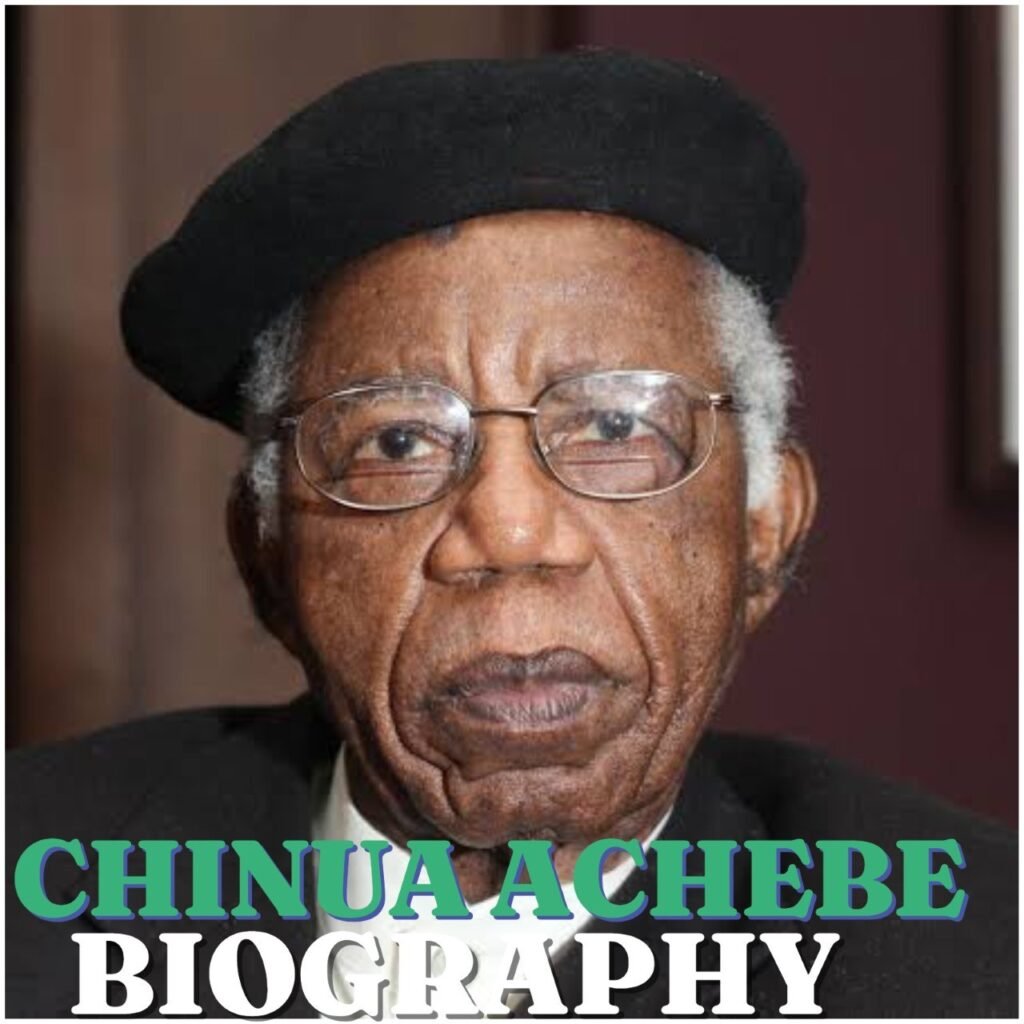
Chinua Achebe was a Nigerian novelist, poet, professor and literary critic. He became one of Africa’s most respected writers through books that explored Igbo culture, colonialism, identity and social change. His first novel, Things Fall Apart, became an international success and remains a landmark in African literature.
Achebe believed that Africans should tell their own stories. He wanted the world to see African societies beyond the stereotypes found in many colonial-era books. Through his writing, he showed the richness of African traditions, the strength of community life and the challenges created by colonial rule.
He was also a teacher, journalist, editor and public intellectual. His work earned him international recognition and influenced generations of writers. Although he died in 2013, his books remain widely read and studied. His story is one of talent, courage and a lifelong commitment to telling African stories.
Early Life and Family Background
Chinua Achebe was born Albert Chinualumogu Achebe on November 16, 1930, in Ogidi, a town in present-day Anambra State, southeastern Nigeria. He was the fifth of six children born to Isaiah Okafo Achebe and Janet N. Iloegbunam Achebe.
His father worked as a teacher and Christian evangelist with the Church Missionary Society. His mother was also a Christian, but she had a strong connection to Igbo customs and oral traditions. Their home brought together Christian teachings and traditional Igbo culture.
Growing up in this environment exposed Achebe to two different ways of life. He learned about Christianity from his parents and school. At the same time, older relatives and members of his community introduced him to Igbo stories, proverbs and customs. These early experiences later became important parts of his writing.
As a child, Achebe enjoyed reading and listening to stories. He became fascinated by the power of language and the way stories could explain people’s beliefs and experiences. His exposure to both African traditions and Western education helped shape his understanding of the world.
Education and Early Interest in Writing
Achebe began his education at the Church Mission Society school in Ogidi. He later attended school near Owerri before gaining admission to Government College, Umuahia, in 1944. The institution was known for its strong academic standards and produced several notable Nigerian figures.
At Government College, Achebe developed a serious interest in books and literature. He read works by writers such as Charles Dickens and William Shakespeare. However, he also began to question how African people were portrayed in some of the books he studied.
In 1948, he entered University College, Ibadan, which was then affiliated with the University of London. He initially studied medicine but later changed his course to English, history and theology. He graduated in 1953.
His university experience helped him develop his writing skills and think more deeply about African identity. He noticed that many stories about Africa were written from foreign perspectives. He wanted to create stories that reflected the experiences of African people themselves. This idea became a central part of his literary career.
Career and Rise to Fame
Early Career at the Nigerian Broadcasting Corporation
After graduating in 1953, Achebe briefly worked as a teacher. In 1954, he joined the Nigerian Broadcasting Corporation in Lagos as a talks producer. His job involved preparing and producing radio programmes for listeners across the country.
He gradually took on greater responsibilities and later became Director of External Broadcasting. The position gave him opportunities to travel and learn more about Nigeria’s different communities and social conditions.
Working in radio also improved his communication skills. He learned how to present ideas in clear, engaging language. While building his broadcasting career, he continued working on the novel that would introduce him to readers around the world.
Things Fall Apart and International Recognition
In 1958, Achebe published Things Fall Apart, his first novel. The book tells the story of Okonkwo, a respected wrestler and farmer in an Igbo community called Umuofia. Okonkwo is known for his strength and determination, but his fear of appearing weak often causes problems in his life.
The novel presents Igbo society before and during the arrival of British colonial rule and Christian missionaries. It explores family life, religion, justice, leadership and the importance of tradition. It also shows how foreign influence begins to change the community.
Things Fall Apart became an international success. Readers gained a deeper understanding of Igbo society through its characters, customs and conflicts. The novel has since been translated into many languages and is widely studied in schools and universities.
The book also challenged the way Africa had been portrayed in much colonial-era literature. Instead of presenting African people as lacking history or culture, Achebe showed a complex society with its own laws, beliefs and social structures. The success of the novel established him as one of the leading voices in African literature.
No Longer at Ease
Achebe published No Longer at Ease in 1960. The novel follows Obi Okonkwo, the grandson of Okonkwo from Things Fall Apart. Obi returns to Nigeria after studying in Britain and struggles to balance his education, family expectations and the demands of modern society.
The story examines the challenges facing Nigerians during the final years of British colonial rule. It also explores corruption, social pressure and the conflict between traditional values and modern ambitions.
Through Obi’s experiences, Achebe shows that education alone cannot solve every problem in society. Personal choices, family expectations and public pressure can also shape a person’s future. The book became another important part of his exploration of Nigeria’s changing society.
Arrow of God
In 1964, Achebe published Arrow of God. The novel focuses on Ezeulu, a chief priest who faces growing pressure from British colonial officials and changes within his own community.
Ezeulu struggles to protect his religious authority as the influence of colonial rule grows. His decisions create tension between him, his people and the colonial administration.
The story explores power, tradition, religion and the consequences of refusing to understand change. It also shows how colonial rule affected local leadership and relationships within African communities.
A Man of the People
Achebe published A Man of the People in 1966. The novel examines political life in a newly independent African country. It follows a young teacher who becomes involved in the activities of a corrupt politician.
Through humour and political satire, Achebe exposes greed, dishonesty and the misuse of public office. The story reflects the political challenges that faced many African countries after independence.
The novel attracted attention because it appeared shortly before Nigeria experienced a military coup in January 1966. The country later entered a period of political instability that led to the Nigerian Civil War.
Anthills of the Savannah
In 1987, Achebe published Anthills of the Savannah, his fifth novel. The story takes place in the fictional African country of Kangan, which is ruled by a military government.
The novel follows three friends whose lives become complicated by political power and personal ambition. Through their experiences, Achebe examines dictatorship, propaganda, friendship and the responsibilities of leadership.
The book was shortlisted for the Booker Prize in 1987. It also showed that Achebe remained deeply interested in the political and social challenges facing African countries long after independence.
Chinua Achebe and the Nigerian Civil War
The Nigerian Civil War, which lasted from 1967 to 1970, had a major impact on Achebe’s life. The conflict began after the Eastern Region declared independence as the Republic of Biafra.
Achebe supported Biafra and served as one of its representatives abroad. He travelled to different countries to explain the situation and draw attention to the humanitarian crisis. The war also affected his family and community.
The conflict brought deep personal pain. His friend, poet Christopher Okigbo, died during the war. Achebe also witnessed the suffering caused by violence, hunger and displacement in the region.
The experience influenced his writing. He produced poems and short stories that reflected the fear, loss and hardship of the period. His collection Christmas in Biafra and Other Poems and the story collection Girls at War and Other Stories include works connected to the conflict.
In 2012, he published There Was a Country: A Personal History of Biafra. The book shares his memories and views about the war. It also renewed public discussion about the conflict and its lasting effect on Nigeria.
Career as a Teacher and Professor
Achebe’s influence extended beyond his books. He spent much of his life teaching and encouraging young writers. After the civil war, he returned to academic work and became a professor at the University of Nigeria, Nsukka.
He also taught at universities in the United States, including the University of Massachusetts Amherst and Bard College in New York. At Bard, he served as the Charles P. Stevenson Professor of Languages and Literature.
In 2009, he joined Brown University in Rhode Island as the David and Marianna Fisher University Professor and Professor of Africana Studies. He remained at the university until his death.
As a teacher, Achebe encouraged students to think critically about history, culture and literature. He helped bring African writing into wider academic discussions and showed that African experiences deserved serious attention.
His Work as an Editor and Literary Publisher
Achebe played an important role in introducing African writers to a wider audience. In 1962, he became the founding editor of Heinemann’s African Writers Series. The series published works by African authors and helped bring their stories to readers around the world.
His work as an editor gave other writers an opportunity to share their experiences and ideas. It also helped establish African literature as an important part of international publishing.
He later founded and edited Okike, a literary journal that supported new writing from Africa. Through these projects, Achebe helped younger writers find opportunities and strengthened the African literary community.
Chinua Achebe as a Poet and Essayist
Although Achebe is best known for his novels, he also wrote poetry and essays. His poems often explored war, suffering, identity and human relationships.
His poetry collections include Beware, Soul-Brother, and Other Poems and Christmas in Biafra and Other Poems. In 1972, he received the Commonwealth Poetry Prize for Beware, Soul-Brother.
Achebe also wrote essays about literature, politics and African identity. One of his most discussed essays is An Image of Africa: Racism in Conrad’s Heart of Darkness. In it, he criticised Joseph Conrad’s portrayal of Africa and challenged the way African people were represented in the novel.
His other essay collections include Hopes and Impediments, Home and Exile and The Education of a British-Protected Child. These works reveal his ability to discuss difficult subjects in clear and thoughtful language.
Other Important Books by Chinua Achebe
Achebe wrote several books beyond his five major novels. His children’s books include Chike and the River, The Drum, The Flute and How the Leopard Got His Claws, which he co-wrote with John Iroaganachi.
He also wrote The Trouble with Nigeria, published in 1983. The book examines the country’s political and social problems, including poor leadership, corruption and weaknesses in public institutions.
His final major book, There Was a Country, appeared in 2012. It reflects on the Nigerian Civil War and his personal experiences during the Biafran period.
These works show the range of Achebe’s interests. He wrote for adults and children, explored history and politics, and used different forms of literature to discuss African life.
Chinua Achebe’s Awards and Achievements
Achebe received many awards during his lifetime. His achievements brought international recognition to Nigerian and African literature.
One of his major honours was the Man Booker International Prize, which he won in 2007. The award recognised his lifetime contribution to literature.
He also received the Commonwealth Poetry Prize in 1972 for Beware, Soul-Brother, and Other Poems. In 2002, he received the German Booksellers’ Peace Prize for his contribution to literature and intercultural understanding.
Achebe was awarded more than 20 honorary degrees by universities around the world. He also received Nigeria’s National Merit Award and several other literary honours. These achievements reflected the respect he earned as a writer, teacher and public intellectual.
Trending: Chinua Achebe’s Lasting Influence on African Literature
Chinua Achebe remains an important figure in schools, universities and literary discussions. His books continue to attract readers because they explore issues that remain relevant today, including identity, culture, leadership, colonialism and independence.
Things Fall Apart is especially important because it gives readers a detailed picture of Igbo society before and during colonial rule. It has become a major text in literature courses and is often used to introduce students to African writing.
Achebe also influenced writers across the world. His success showed that African stories could reach international audiences without losing their cultural identity. He encouraged other writers to explore their histories, languages and communities.
His influence can also be seen in the way African literature is taught and discussed. Readers continue to study his novels because they offer more than accounts of the past. They explore human experiences that remain meaningful across generations.
Personal Life, Wife and Marriage
Chinua Achebe married Christiana Chinwe Okoli on September 10, 1961. She was also known as Christie Achebe. Their marriage lasted for more than five decades, until his death in 2013.
Christiana supported him through different stages of his career. Their family life included periods in Nigeria and the United States, especially after Achebe’s serious car accident in 1990.
Although Achebe was a public figure, he generally kept his family life private. He focused much of his public attention on writing, teaching and issues affecting society. His marriage to Christiana remained an important part of his personal life.
Children and Family Life
Achebe and his wife had four children: Chinelo, Ikechukwu, Chidi and Nwando. They raised their family while he worked as a writer, broadcaster and university professor.
His daughter Chinelo became a writer, continuing the family’s connection to literature. His other children have largely maintained private lives compared with their famous father.
Family and community were important themes in Achebe’s writing. His novels often explore relationships between parents and children, family responsibilities and the role of individuals within a wider society.
Age, Religion, Tribe, Nationality, Height and Physical Appearance
Chinua Achebe was born on November 16, 1930, and died on March 21, 2013. He was 82 years old at the time of his death.
He was Nigerian by nationality and belonged to the Igbo ethnic group. He was born in Ogidi, in present-day Anambra State, where Igbo language and culture shaped his early life.
Achebe grew up in a Christian family. His father worked as a Christian evangelist, and his parents were associated with the Anglican tradition. His writing also showed a deep knowledge of traditional Igbo beliefs and practices.
His exact height is not consistently documented in reliable public records. He was often seen wearing glasses and traditional or formal clothing. In his later years, he used a wheelchair after a serious road accident left him partially paralysed.
Chinua Achebe’s Net Worth
Chinua Achebe’s exact net worth was never publicly confirmed. There is no reliable financial record that establishes the full value of his estate at the time of his death.
His income came from several sources. These included book sales, publishing agreements, university positions, speaking engagements and literary work. Things Fall Apart became an international bestseller, while his other books also reached readers around the world.
Achebe spent much of his career teaching and writing. His financial worth is difficult to establish, so any specific figure should be treated with caution. His lasting contribution is better measured by the influence of his books and ideas than by an unverified estimate.
Chinua Achebe’s Accident and Death
In 1990, Achebe was involved in a serious car accident in Nigeria. The crash left him partially paralysed and affected his ability to move without assistance. He later received treatment in the United States and continued much of his academic career there.
Despite the challenges caused by the accident, he did not stop writing or teaching. He worked at Bard College and later Brown University. He also continued to speak about African literature, Nigerian politics and cultural identity.
Chinua Achebe died on March 21, 2013, in Boston, Massachusetts, United States. He was 82 years old. His death led to tributes from writers, scholars, political leaders and readers across the world.
Legacy and Influence
Chinua Achebe changed the way many people read and understand African literature. Before his success, many widely circulated books about Africa were written by outsiders and often presented African societies through limited or distorted views. Achebe offered a different perspective by placing African people, traditions and experiences at the centre of his stories.
His greatest achievement remains Things Fall Apart. The novel introduced millions of readers to Igbo society and the effects of colonial rule. Its success helped open doors for other African writers and showed that local stories could have worldwide importance.
His influence went beyond literature. As a teacher, editor and public intellectual, he supported new writers and encouraged honest discussions about African history and politics. His books remain widely studied, and his ideas continue to shape conversations about identity, culture and storytelling. Chinua Achebe left behind a body of work that continues to speak to new generations.
Conclusion
Chinua Achebe’s life was defined by his love of storytelling and his commitment to African identity. From his childhood in Ogidi to his international success as a novelist and professor, he used literature to share the experiences of his people with the world. His books challenged stereotypes, explored colonialism and examined the problems facing modern Nigeria. Through Things Fall Apart and his other works, he helped shape modern African literature and inspired generations of writers. Although he died in 2013, his stories and ideas remain alive in classrooms, libraries and the minds of readers around the world.
Frequently Asked Questions About Chinua Achebe
Who was Chinua Achebe?
Chinua Achebe was a Nigerian novelist, poet, professor and literary critic. He was best known for writing Things Fall Apart, one of the most influential novels in African literature.
What was Chinua Achebe’s real name?
His full birth name was Albert Chinualumogu Achebe. He became widely known as Chinua Achebe.
When was Chinua Achebe born?
He was born on November 16, 1930, in Ogidi, in present-day Anambra State, Nigeria.
When did Chinua Achebe die?
He died on March 21, 2013, in Boston, Massachusetts, United States. He was 82 years old.
What was Chinua Achebe famous for?
He was famous for writing Things Fall Apart. He was also known for his novels, poems and essays about African culture, colonialism, politics and identity.
What is Chinua Achebe’s most famous book?
His most famous book is Things Fall Apart, published in 1958. It tells the story of an Igbo community facing major changes during the arrival of British colonial rule.
How many novels did Chinua Achebe write?
He published five major novels: Things Fall Apart, No Longer at Ease, Arrow of God, A Man of the People and Anthills of the Savannah.
What tribe did Chinua Achebe belong to?
Chinua Achebe belonged to the Igbo ethnic group. He was born in Ogidi, an Igbo town in southeastern Nigeria.
What was Chinua Achebe’s nationality?
He was Nigerian.
Who was Chinua Achebe’s wife?
His wife was Christiana Chinwe Okoli, also known as Christie Achebe. They married on September 10, 1961.
How many children did Chinua Achebe have?
He had four children: Chinelo, Ikechukwu, Chidi and Nwando.
What did Chinua Achebe study at university?
He studied at University College, Ibadan, where he focused on English, history and theology. He graduated in 1953.
Did Chinua Achebe win the Nobel Prize in Literature?
No. He did not win the Nobel Prize in Literature. However, he received several major international honours, including the 2007 Man Booker International Prize.
What awards did Chinua Achebe win?
His awards included the Man Booker International Prize, the Commonwealth Poetry Prize and the German Booksellers’ Peace Prize. He also received more than 20 honorary degrees.
What happened to Chinua Achebe in 1990?
He was involved in a serious car accident in Nigeria in 1990. The accident left him partially paralysed and led him to spend much of his later life in the United States.
What was Chinua Achebe’s role in the Biafran War?
During the Nigerian Civil War, Achebe supported Biafra and served as one of its representatives abroad. He travelled internationally to draw attention to the conflict and its humanitarian consequences.
What was Chinua Achebe’s net worth?
His exact net worth was not publicly confirmed. He earned income from book sales, teaching, publishing and other literary work, but reliable records do not establish a specific total.
Why is Chinua Achebe important to African literature?
He helped present African history and culture from an African perspective. His novels challenged stereotypes and inspired generations of writers to tell stories about their own communities and experiences.