
Albert Jacka remains one of Australia’s most celebrated military heroes and a lasting symbol of courage, sacrifice, and leadership. As the first Australian to receive the Victoria Cross (VC), the highest military decoration for gallantry in the British honours system, his extraordinary bravery during the First World War secured him a permanent place in Australian history. Beyond his military accomplishments, Jacka also served his community as a businessman and politician, leaving behind a legacy that continues to inspire generations. This comprehensive biography explores Albert Jacka’s early life, education, military career, personal life, family, net worth, legacy, and other important facts.
Introduction
Albert Jacka is remembered as one of Australia’s greatest military heroes and a symbol of extraordinary courage during the First World War. Best known as the first Australian soldier to be awarded the prestigious Victoria Cross (VC), Jacka earned worldwide recognition for his fearless actions during the Gallipoli Campaign in 1915. His remarkable bravery under fire, exceptional leadership, and unwavering commitment to his fellow soldiers have secured his place in Australian military history, making his story an enduring source of inspiration more than a century later.
Born into a hardworking rural family in Victoria, Australia, Jacka left school at a young age and worked as a labourer and forestry worker before the outbreak of the First World War. Like many young Australians of his generation, he volunteered to serve his country when war began in 1914. What started as the journey of an ordinary labourer soon transformed into the story of one of the most decorated and respected officers of the Australian Imperial Force. Throughout the war, Jacka distinguished himself in some of the conflict’s fiercest battles, including Gallipoli and the Western Front, earning multiple military decorations for exceptional gallantry.
Beyond his achievements on the battlefield, Albert Jacka also dedicated himself to public service after returning home from the war. He entered business, served as Mayor of St Kilda, and worked to improve the lives of his community during the difficult years of the Great Depression. Although his life was tragically cut short at the age of 39 due to health complications linked to his wartime service, his legacy continues to be honored through memorials, historical research, military commemorations, and educational programs. Today, Albert Jacka remains one of Australia’s most admired national heroes, celebrated for his courage, sacrifice, leadership, and lasting contribution to his country.
Early Life
Albert Jacka was born on 10 January 1893 at Layard, near Winchelsea in the state of Victoria, Australia. He was the fourth of seven children born to Nathaniel Jacka and Elizabeth Kettle. Raised in a hardworking farming family, Jacka spent his childhood in the rural communities of Victoria, where he developed a strong work ethic, resilience, and determination. Life on the land required discipline and physical endurance, qualities that would later become defining characteristics of his military career.
As a young boy, Jacka attended local schools in the Winchelsea district, but like many children growing up in rural Australia during the late nineteenth century, his formal education ended at an early age. After leaving school, he worked alongside his family on farms before taking jobs as a labourer and timber worker. These physically demanding occupations helped build his strength and self-reliance while exposing him to the challenges of earning a living in Australia’s countryside. Friends and acquaintances often described him as quiet, dependable, and hardworking, with a natural sense of responsibility.
Before the outbreak of the First World War, Albert Jacka had no military experience and lived the life of an ordinary young Australian. However, the declaration of war in August 1914 inspired him to enlist in the Australian Imperial Force, joining thousands of other volunteers eager to serve their country. His rural upbringing, practical skills, and strong character prepared him well for the hardships of military life, laying the foundation for the courage and leadership that would eventually make him one of Australia’s most celebrated war heroes.
Education
Albert Jacka received his early education at local primary schools in the Winchelsea district of Victoria, Australia. Growing up in a rural farming community during the late nineteenth century, educational opportunities were more limited than they are today. Like many children from farming families, he attended school for only a few years before family responsibilities and the need to earn a living took priority over continuing his formal education.
Although Jacka did not attend secondary school or university, his early schooling provided him with the basic literacy and numeracy skills needed for everyday life. More importantly, his upbringing on farms and in the timber industry gave him practical knowledge, discipline, and a strong work ethic. These real-world experiences shaped his character far more than classroom education and prepared him for the physical and mental challenges he would later face as a soldier during the First World War.
Albert Jacka’s achievements demonstrate that leadership and courage are not determined solely by academic qualifications. Throughout his military career, he displayed exceptional decision-making, tactical awareness, and the ability to inspire those under his command despite having no formal higher education. His success on the battlefield and later in public service as Mayor of St Kilda reflects the values of determination, resilience, and lifelong learning, making his story an enduring example of how character and experience can complement formal education.
Career
Albert Jacka’s career began long before he became a national hero. After leaving school at a young age, he worked as a farm labourer, woodcutter, and timber worker in rural Victoria, Australia. These physically demanding jobs helped him develop the strength, endurance, and resilience that later proved invaluable in military service. In September 1914, shortly after the outbreak of the First World War, Jacka enlisted in the Australian Imperial Force (AIF) as a private in the 14th Battalion. Following his military training in Australia and Egypt, he took part in the Gallipoli Campaign, where his courage during the Battle of Courtney’s Post in May 1915 earned him the Victoria Cross (VC), making him the first Australian soldier to receive the British Empire’s highest award for gallantry during the war.
After the Gallipoli Campaign, Jacka continued his military career on the Western Front in France and Belgium, where he distinguished himself in some of the war’s fiercest battles. His outstanding leadership and bravery earned him further recognition, including the Military Cross for his actions at Pozières in 1916 and a Bar to the Military Cross for gallantry near Bullecourt in 1917. Over the course of the war, he rose through the ranks from private to captain, commanding troops in dangerous combat operations while repeatedly risking his own life to rescue wounded comrades and lead successful attacks under heavy enemy fire. By the end of the conflict, Albert Jacka had become one of the most highly decorated and respected officers in the Australian Imperial Force.
Following his return to Australia in 1919, Jacka transitioned from military service to civilian life by entering the business world. He established an electrical goods business in Melbourne and later became actively involved in public service. His dedication to the community led to his election to the St Kilda City Council, and in 1930 he was elected Mayor of St Kilda. During the difficult years of the Great Depression, he worked tirelessly to support unemployed residents and improve local services. Although his health had been permanently affected by wounds and illnesses sustained during the war, Albert Jacka remained committed to serving his community until his death in 1932, leaving behind a lasting legacy of leadership, courage, and public service.
Personal Life and Family
Albert Jacka was born into a close-knit farming family in Victoria, Australia. He was the fourth of seven children born to Nathaniel Jacka and Elizabeth Kettle Jacka, who raised their children with strong values of hard work, discipline, and perseverance. Growing up in the rural district near Winchelsea, Albert shared a modest upbringing with his siblings, helping with farm work from an early age. His family’s influence played a significant role in shaping the resilience and determination that later defined his military career.
Despite becoming one of Australia’s most celebrated war heroes, Jacka remained known for his humility and loyalty to those closest to him. After returning from the First World War, he focused on rebuilding his life through business and public service while maintaining strong ties with his family and fellow veterans. During his post-war years, he developed a close relationship with Vera Hacking, to whom he became engaged. However, his declining health, caused by wounds and illnesses sustained during the war, placed significant strain on his personal life and future plans.
Albert Jacka never married and had no children. His engagement to Vera Hacking did not lead to marriage because his health continued to deteriorate during the final years of his life. Even while serving as Mayor of St Kilda and working to support his community during the Great Depression, he struggled with the lasting effects of his wartime injuries. Jacka died on 17 January 1932 at the age of 39, surrounded by the admiration of his family, friends, fellow soldiers, and the Australian public. Although he left no direct descendants, his legacy continues to be preserved by historians, military organizations, and his extended family, ensuring that his courage and service are remembered for generations.
Age, Religion, Tribe, Height and Physical Appearance
Albert Jacka was born on 10 January 1893 in Layard, near Winchelsea, Victoria, Australia, and passed away on 17 January 1932 at the age of 39. His relatively short life was marked by extraordinary achievements, including becoming the first Australian to receive the Victoria Cross during the First World War. Despite dying at a young age, his courage and leadership left a lasting impact on Australian military history and continue to be celebrated more than a century later.
Albert Jacka was Australian by nationality and is generally believed to have been Christian, as he was raised in a family that reflected the predominantly Christian traditions of Australia during the late nineteenth and early twentieth centuries. The term “tribe” is not typically used in the Australian context for people of British and European ancestry. Jacka’s family was of British (English) descent, making his ethnic heritage English-Australian rather than belonging to a tribal group.
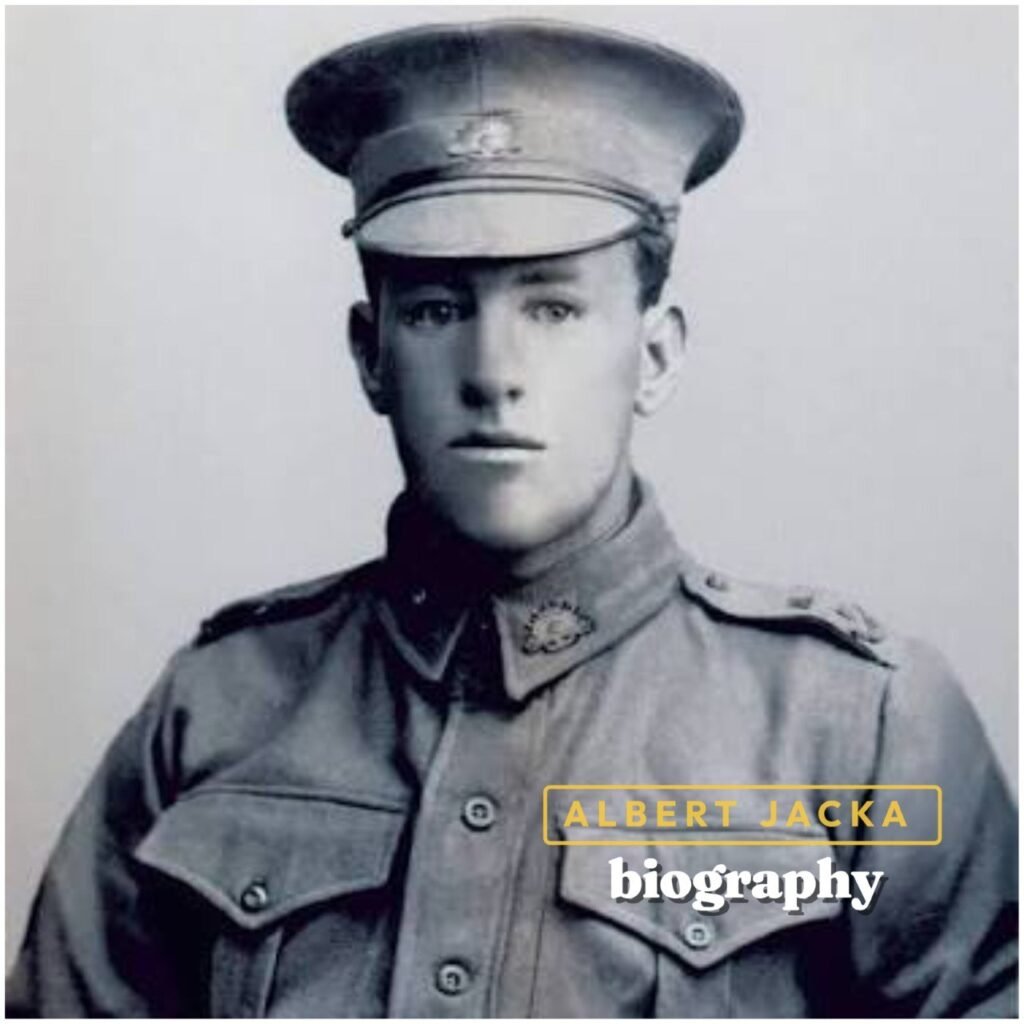
There are no official historical records confirming Albert Jacka’s exact height, but photographs and military descriptions portray him as a man with a strong, athletic physique that was well suited to the demands of military service. He had dark brown hair, brown eyes, and a composed yet determined expression that reflected his discipline and confidence. His military bearing, physical endurance, and commanding presence earned the respect of both his fellow soldiers and senior officers, contributing to his reputation as one of Australia’s greatest war heroes.
Net Worth
Albert Jacka’s exact net worth was never publicly documented, as financial records from his time are limited and he lived during an era when the personal wealth of public figures was rarely disclosed. After returning from the First World War, he established an electrical goods business in Melbourne and later served in public office as Mayor of St Kilda. Based on his business activities, local government service, and the economic conditions of Australia during the late 1920s and early 1930s, historians believe he lived a modest and respectable middle-class lifestyle rather than accumulating great wealth.
Although there is no official estimate of his personal fortune, modern historical assessments suggest that, if converted into today’s value, Albert Jacka’s estate would likely have been equivalent to approximately US$300,000–US$700,000. This estimate reflects the value of his business interests, personal assets, and earnings over his lifetime rather than any inherited fortune. His financial circumstances were also affected by the lasting health problems caused by his wartime injuries and by the economic challenges of the Great Depression.
Albert Jacka’s greatest legacy was never measured by money but by his service to Australia and his exceptional courage during the First World War. His Victoria Cross, Military Cross and Bar, and distinguished public service earned him enduring national respect that far outweighs any financial success he achieved. Today, he is remembered not as one of Australia’s wealthiest figures but as one of its most admired military heroes, whose contributions to his country continue to inspire generations.
Legacy
Albert Jacka’s legacy is firmly established as one of Australia’s greatest military heroes and one of the most courageous soldiers to serve during the First World War. As the first Australian to receive the Victoria Cross (VC), he became a national symbol of bravery, selflessness, and leadership under the most challenging battlefield conditions. His actions at Gallipoli and later on the Western Front have been extensively documented in military history, and his courage continues to be taught in schools, military academies, and leadership programs across Australia. More than a century after his service, Jacka remains an enduring example of dedication to duty and sacrifice for one’s country.
Beyond his remarkable military achievements, Albert Jacka left a lasting legacy through his commitment to public service after the war. Despite suffering from serious wounds and health complications caused by his wartime experiences, he returned to civilian life, established a business, and devoted himself to improving his local community. As Mayor of St Kilda, he worked to support residents during the hardships of the Great Depression, demonstrating that his sense of duty extended well beyond the battlefield. His transition from decorated soldier to respected civic leader reflects his lifelong commitment to serving others.
Today, Albert Jacka is honored through numerous memorials, streets, parks, schools, and military facilities that bear his name throughout Australia. His Victoria Cross is preserved at the Australian War Memorial, where it serves as a powerful reminder of his extraordinary courage and sacrifice. Annual ANZAC Day commemorations, historical publications, documentaries, and museum exhibitions continue to celebrate his life and achievements, ensuring that future generations remember not only his heroism in war but also his character, leadership, humility, and unwavering service to Australia.
Conclusion
Albert Jacka’s life is a remarkable story of courage, leadership, and selfless service. From his humble beginnings in rural Victoria to becoming the first Australian to receive the Victoria Cross during the First World War, he demonstrated extraordinary bravery that earned him a permanent place in Australia’s history. His achievements extended beyond the battlefield through his successful business career and dedicated public service as Mayor of St Kilda. Although his life was cut short at the age of 39 due to the lasting effects of his wartime service, his legacy continues to inspire generations. Today, Albert Jacka is remembered not only as one of Australia’s greatest war heroes but also as a man of integrity, resilience, and unwavering commitment to his country and community.
Frequently Asked Questions (FAQs)
Who was Albert Jacka?
Albert Jacka was an Australian soldier, businessman, and politician who became the first Australian to receive the Victoria Cross (VC) during the First World War. He is widely regarded as one of Australia’s greatest military heroes.
When and where was Albert Jacka born?
Albert Jacka was born on 10 January 1893 in Layard, near Winchelsea, Victoria, Australia.
How old was Albert Jacka when he died?
Albert Jacka died on 17 January 1932, one week after his 39th birthday. He was 39 years old at the time of his death.
Why is Albert Jacka famous?
Albert Jacka is famous for his extraordinary bravery during the Gallipoli Campaign in 1915, where his heroic actions at Courtney’s Post earned him the Victoria Cross, the highest military award for gallantry in the British honours system.
What medals did Albert Jacka receive?
Albert Jacka received the Victoria Cross (VC), the Military Cross (MC), and a Bar to the Military Cross, making him one of Australia’s most highly decorated soldiers of the First World War.
Did Albert Jacka get married?
No. Albert Jacka never married. He was engaged to Vera Hacking, but the couple did not marry before his death in 1932.
Did Albert Jacka have children?
No. Albert Jacka had no children.
What was Albert Jacka’s nationality?
Albert Jacka was Australian. He was born and raised in Victoria, Australia.
What was Albert Jacka’s religion?
Albert Jacka is generally believed to have been Christian, reflecting the religious background of his family and the society in which he lived, although he rarely spoke publicly about his personal faith.
What was Albert Jacka’s ethnicity?
Albert Jacka was of British (English) descent. The concept of a “tribe” does not generally apply to Australians of his background.
How tall was Albert Jacka?
There is no officially recorded height for Albert Jacka. Historical accounts describe him as having a strong, athletic build suitable for military service.
What was Albert Jacka’s net worth?
Albert Jacka’s exact net worth was never publicly recorded. Based on his business career and public service, modern historical estimates suggest his wealth would be roughly equivalent to US$300,000–US$700,000 in today’s value, although this is not an official figure.
What did Albert Jacka do after the war?
After the First World War, Albert Jacka established an electrical goods business in Melbourne and later served on the St Kilda City Council, becoming Mayor of St Kilda in 1930.
When did Albert Jacka die?
Albert Jacka died on 17 January 1932 in Melbourne, Victoria, Australia, following years of health complications related to his wartime service.
Why is Albert Jacka still remembered today?
Albert Jacka is remembered for his exceptional bravery, leadership, and dedication to public service. His military achievements, civic contributions, and enduring influence on Australian history continue to be honored through memorials, museums, ANZAC Day commemorations, and educational programs.