
Introduction
Albert Einstein was one of the most influential scientists in modern history and is widely regarded as one of the greatest physicists of all time. Born on March 14, 1879, in Ulm, in the Kingdom of Württemberg, German Empire, Einstein became famous for transforming humanity’s understanding of space, time, gravity, matter, and energy. His name is particularly associated with the equation E = mc² and the theories of special and general relativity, which fundamentally changed the way scientists understood the physical universe.
Beyond his scientific achievements, Albert Einstein lived a remarkable life that crossed several countries and historical periods. He studied and worked in Switzerland, became an important academic figure in Germany, and eventually moved to the United States after the rise of Nazi Germany. In 1921, he was awarded the Nobel Prize in Physics, particularly for his explanation of the photoelectric effect. He was also known for expressing strong views on peace, civil rights, politics, education, and other major social issues of his time.
Although Albert Einstein died on April 18, 1955, at the age of 76, his influence has continued to grow long after his death. His theories remain central to modern physics, while his personal papers, scientific writings, correspondence, and historical records continue to provide insight into his life and ideas. This biography explores Albert Einstein’s early life, education, scientific career, family, personal life, major discoveries, Nobel Prize, wealth, final years, death, and the enduring legacy that has made his name synonymous with scientific genius.
Early Life of Albert Einstein
Albert Einstein was born on March 14, 1879, in the city of Ulm, in the Kingdom of Württemberg, which was then part of the German Empire. He was the son of Hermann Einstein, an electrical engineer and businessman, and Pauline Koch Einstein. His family was Jewish, although Einstein’s relationship with organized religion became more complex as he grew older. Shortly after his birth, the family moved to Munich, where his father and uncle established an electrical equipment business. Einstein spent much of his early childhood in Munich, where he was introduced to mathematics, science, music, and intellectual pursuits.
As a child, Einstein developed a strong curiosity about how the natural world worked. One famous story from his childhood concerns a magnetic compass that he received when he was around five years old. He was fascinated by the invisible force that caused the compass needle to move and reportedly became deeply interested in understanding the hidden principles behind natural phenomena. He also developed a strong appreciation for mathematics and geometry. Einstein later recalled being particularly impressed by the certainty and logical structure of geometry, which helped shape the analytical approach that would become central to his scientific thinking.
Einstein’s early education was largely received in Munich, but his family’s financial difficulties eventually influenced the direction of his life. When his parents moved to Italy because of problems with their business, Einstein initially remained in Germany to continue his education. He later left school and joined his family in Italy before moving to Switzerland. In Switzerland, he continued his education and eventually entered the Swiss Federal Polytechnic in Zurich, where he studied mathematics and physics. His early years were therefore marked by curiosity, independent thinking, family changes, and an unconventional educational path that helped prepare him for the revolutionary scientific work he would produce in adulthood.
Education of Albert Einstein
Albert Einstein began his formal education in Munich, where he attended a Catholic elementary school before moving on to the Luitpold Gymnasium. Although he performed well in mathematics and science, he disliked the rigid teaching methods and strict discipline of the German school system. When his family moved to Italy because of difficulties with their electrical business, Einstein eventually left the Munich school system and continued his education independently. He later moved to Switzerland, where he completed his secondary education at the Argovian cantonal school in Aarau. His time in Aarau was important because the school’s more liberal educational environment allowed him to develop his independent thinking and scientific interests.
In 1896, Einstein entered the Swiss Federal Polytechnic in Zurich, now known as ETH Zurich, to study mathematics and physics. He trained as a teacher of mathematics and physics and graduated in 1900 with a diploma. During his years in Zurich, he studied under several prominent academics and developed a strong interest in theoretical physics. He also met Mileva Marić, a fellow physics student who later became his first wife. Einstein’s university years helped establish the mathematical and scientific foundation that would eventually support his groundbreaking theories.
After graduating in 1900, Einstein initially struggled to secure a university teaching position and instead worked as a tutor and temporary teacher. In 1902, he obtained a position as a technical expert at the Swiss Patent Office in Bern. Although the job was not an academic appointment, it gave him enough stability to continue studying physics in his spare time. While working at the patent office, Einstein developed some of his most important scientific ideas, eventually publishing the extraordinary series of papers in 1905 that established him as a major figure in modern physics.
Albert Einstein’s Scientific Career
Albert Einstein’s professional career began in Switzerland after he graduated from the Swiss Federal Polytechnic in Zurich in 1900. After finding it difficult to obtain a university teaching position, he worked as a tutor and temporary teacher before securing a position at the Swiss Patent Office in Bern in 1902. As a technical expert, Einstein reviewed patent applications involving electrical and mechanical inventions. Despite working outside academia, he continued conducting theoretical physics research in his spare time. His position at the patent office provided the financial stability that allowed him to develop several ideas that would later transform modern physics.
The year 1905 became the defining breakthrough of Einstein’s early career. While still working at the patent office, he published several major scientific papers addressing the photoelectric effect, Brownian motion, special relativity, and the relationship between mass and energy. These publications earned him recognition within the scientific community and eventually helped him move into academic positions. He later held teaching and research appointments at universities in Zurich and Prague before returning to Zurich. In 1914, Einstein moved to Berlin, where he became a member of the Prussian Academy of Sciences and continued his research into theoretical physics. In 1915, he completed his general theory of relativity, one of the most important achievements of his scientific career.
Einstein’s international reputation grew rapidly after observations of a solar eclipse in 1919 provided evidence supporting a prediction of general relativity concerning the bending of light by gravity. He became one of the world’s most famous scientists and received the 1921 Nobel Prize in Physics, awarded particularly for his explanation of the photoelectric effect. After the rise of Adolf Hitler and the Nazi government in Germany, Einstein left Europe and eventually settled permanently in the United States. In 1933, he joined the Institute for Advanced Study in Princeton, New Jersey, where he spent the remainder of his professional life working on theoretical physics, particularly his efforts to develop a unified theory of fundamental forces. Alongside his scientific work, he became increasingly involved in humanitarian, political, and social issues, making his career significant not only in science but also in public life.
Albert Einstein’s Personal Life and Family
Albert Einstein was married twice during his lifetime. His first wife was Mileva Marić, a Serbian mathematician and former fellow student whom he met while studying at the Swiss Federal Polytechnic in Zurich. The couple married on January 6, 1903, and had three children: Lieserl, born in 1902 before their marriage; Hans Albert Einstein, born in 1904; and Eduard Einstein, born in 1910. Very little is known with certainty about Lieserl’s later life, and historical records suggest that she may have been given up for adoption. Einstein and Mileva’s marriage eventually deteriorated, and they divorced in February 1919.
Later in 1919, Einstein married Elsa Einstein, his cousin, who had previously been married to Max Löwenthal and had two daughters, Ilse Löwenthal and Margot Löwenthal. Elsa became Einstein’s second wife and accompanied him during many important years of his international career. When Einstein emigrated to the United States in 1933 following the rise of Nazi Germany, Elsa went with him to Princeton, New Jersey. The couple lived there until Elsa’s death on December 20, 1936. Elsa was known for helping manage Einstein’s household and protecting him from some of the demands and attention that came with his worldwide fame.
Einstein’s children followed different paths in life. Hans Albert Einstein became a civil engineer and later a respected professor of hydraulics at the University of California, Berkeley. His younger brother Eduard Einstein initially showed strong academic and musical abilities and began studying medicine with the intention of becoming a psychiatrist, but his health later prevented him from completing his studies. Einstein maintained contact with his sons after his separation from Mileva, although his relationship with Hans Albert was complicated for many years before improving later in life. Einstein also had one sister, Maria “Maja” Einstein, with whom he remained close. His parents were Hermann Einstein and Pauline Koch Einstein, and his family background remained an important part of his personal history.
Albert Einstein Age, Religion, Tribe, Nationality, Height and Physical Appearance
Albert Einstein’s Age
Albert Einstein was born on March 14, 1879, in Ulm, Württemberg, Germany, and died on April 18, 1955, in Princeton, New Jersey, at the age of 76. He lived through a period of enormous scientific and political change and spent more than five decades developing ideas that profoundly influenced modern physics.
Albert Einstein’s Religion
Einstein was born into a Jewish family. His parents, Hermann Einstein and Pauline Koch Einstein, were Jewish, and his Jewish heritage remained an important part of his identity throughout his life. However, Einstein’s personal philosophy about religion was unconventional, and he did not practice Judaism in the traditional sense. His writings frequently discussed God, religion, spirituality, and the relationship between science and belief.
Albert Einstein’s Tribe and Ethnic Background
The term “tribe” is not generally used to describe Albert Einstein’s background because he was a European Jewish man rather than a member of a tribal group in the African or similar cultural sense. His family was Ashkenazi Jewish, with roots in the Jewish communities of Central Europe. Einstein was born in the German state of Württemberg and later became closely associated with Switzerland and the United States through his citizenship and professional life. His Jewish heritage was particularly significant during the rise of antisemitism and Nazi persecution in Germany.
Albert Einstein’s Nationality
Einstein was German-born, but his nationality changed during his lifetime. In 1896, he renounced his German citizenship and became officially stateless for a period before becoming a Swiss citizen in 1901. After moving permanently to the United States in the 1930s, he became an American citizen in 1940 while retaining his Swiss citizenship. He therefore had strong connections to Germany, Switzerland, and the United States at different stages of his life.
Albert Einstein’s Height and Physical Appearance
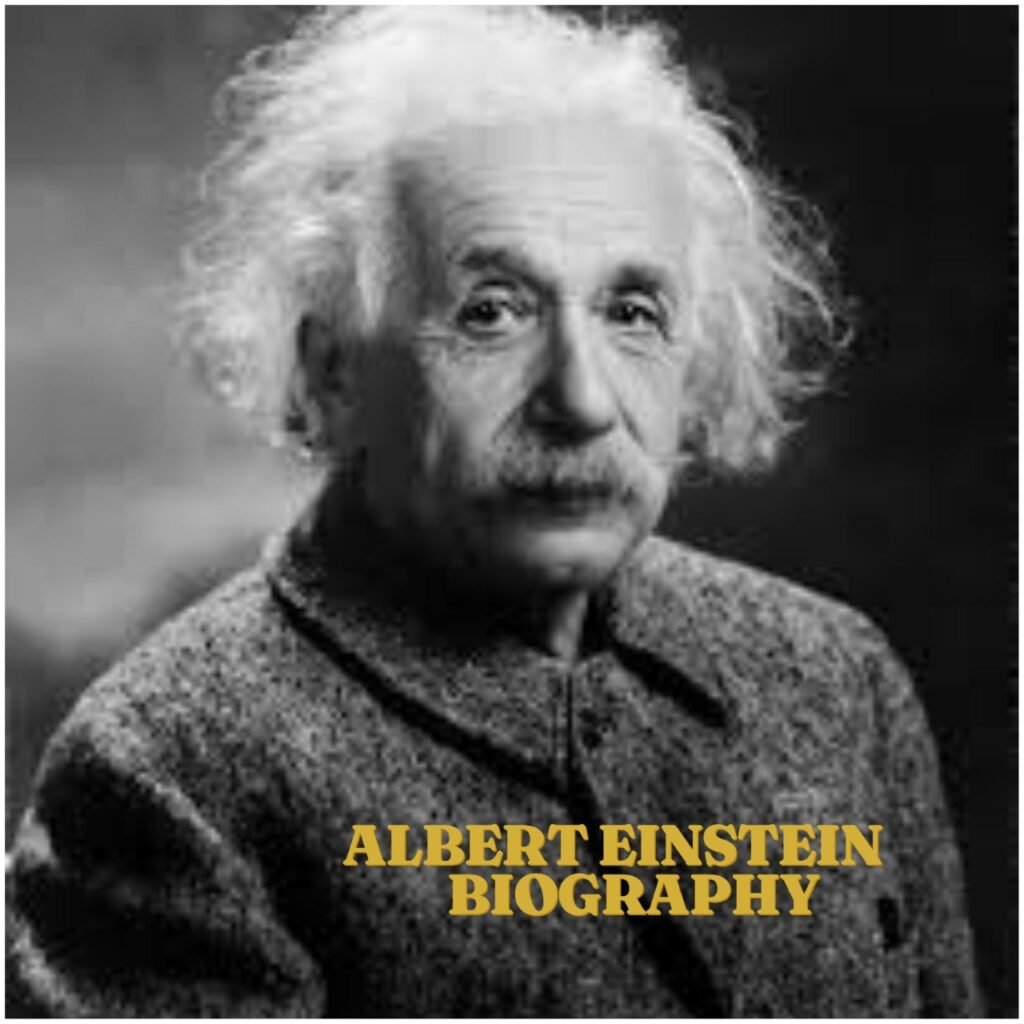
There is no universally documented official measurement establishing Einstein’s exact adult height, although biographical sources commonly place him at approximately 5 feet 9 inches (175 cm). He had a distinctive appearance that became closely associated with his public image. Einstein was particularly recognizable for his thick, often uncombed hair, mustache, expressive face, and relatively informal style of clothing. In his later years, his unruly white hair became one of the most recognizable physical characteristics associated with the famous physicist, contributing to the enduring popular image of Einstein as an unconventional intellectual.
Albert Einstein’s Major Scientific Achievements
Albert Einstein’s scientific achievements changed several major areas of physics. His special theory of relativity, published in 1905, introduced a new understanding of space and time and demonstrated that measurements of time and distance depend on the observer’s state of motion. The same year, he published his work on mass-energy equivalence, which produced the famous equation E = mc². His later general theory of relativity, completed in 1915, provided a revolutionary description of gravity as a consequence of the curvature of spacetime.
Einstein also made important contributions to the emerging field of quantum physics. His explanation of the photoelectric effect proposed that light could behave as discrete packets of energy, helping establish the quantum nature of electromagnetic radiation. This work was particularly important because it earned him the 1921 Nobel Prize in Physics. He also made major contributions to the understanding of Brownian motion, providing theoretical evidence supporting the atomic nature of matter.
The significance of Einstein’s work extended far beyond the scientific community. His theories have influenced modern cosmology, astrophysics, gravitational physics and numerous areas of experimental science. General relativity has continued to be tested through observations and experiments, while Einstein’s ideas remain important in contemporary studies of black holes, gravitational waves, the expansion of the universe and other fundamental questions about the cosmos.
Albert Einstein and the Nobel Prize
Albert Einstein received the 1921 Nobel Prize in Physics, although the award was formally presented to him in 1922. He was recognized particularly for his discovery of the law of the photoelectric effect and his contributions to theoretical physics. Contrary to a common misconception, Einstein did not receive the Nobel Prize specifically for his theory of relativity.
The Nobel recognition strengthened Einstein’s international reputation and provided further evidence of his importance to modern physics. By this time, his theories had already attracted enormous attention from scientists around the world, and his public reputation continued to grow. The Nobel Prize remains one of the most important recognitions associated with his career.
Albert Einstein’s Net Worth
Albert Einstein did not leave behind the kind of enormous personal fortune associated with many modern celebrities and public figures. At the time of his death in 1955, estimates place the value of his estate at approximately $65,000, although historical valuations from that period are difficult to compare directly with modern wealth. Much of Einstein’s income during his career came from academic positions, research appointments, lectures, publications, and his Nobel Prize. He was also known for living relatively modestly despite becoming one of the world’s most famous scientists.
Einstein’s earnings increased substantially later in his career. When he joined the Institute for Advanced Study in Princeton, his compensation was considerably higher than the amount he initially suggested he needed. Historical Institute records show that his appointment was arranged with a salary of around $15,000 per year, together with retirement and pension provisions. His 1921 Nobel Prize in Physics also came with a substantial monetary award, which Einstein had agreed would go to his first wife, Mileva Marić, as part of their divorce arrangements.
Today, it is important to distinguish Einstein’s historical personal wealth from the value generated by his name and intellectual estate after his death. His copyrights, writings, and publicity rights were placed under the control of trustees, with the literary estate ultimately benefiting the Hebrew University of Jerusalem. Einstein’s name and image have subsequently generated significant licensing revenue, meaning that his intellectual and commercial legacy is worth far more today than the personal estate he left in 1955. However, there is no reliable modern figure for “Albert Einstein’s net worth” because he has been deceased for more than 70 years. Therefore, a biography should state his historical estate at roughly $65,000 at the time of death in 1955, rather than presenting a speculative modern net-worth figure as fact.
Albert Einstein’s Cause of Death and Death
Albert Einstein died on April 18, 1955, at Princeton Hospital in Princeton, New Jersey, United States. He was 76 years old. The immediate cause of his death was the rupture of an abdominal aortic aneurysm (AAA), a serious condition in which a weakened section of the body’s main artery, the aorta, becomes enlarged and can eventually rupture, causing severe internal bleeding. Einstein had previously undergone surgery for the condition, but he declined further surgery when doctors offered another operation shortly before his death.
In the final days of his life, Einstein remained intellectually active despite his declining health. He continued working on mathematical and physical ideas and reportedly took some of his writings with him to the hospital. He was aware that his condition was serious but chose not to undergo another surgical procedure. According to historical accounts, Einstein died peacefully in the early morning hours of April 18, 1955, after the aneurysm ruptured.
After his death, Einstein’s wishes regarding his remains were respected in an unusual way. His body was cremated and his ashes were scattered at an undisclosed location, so there is no public grave that serves as his burial site. However, his brain was removed without his family’s initial permission by pathologist Thomas Stoltz Harvey, who believed it could provide scientific insight into Einstein’s extraordinary intellectual abilities. Parts of his brain were subsequently preserved and studied by researchers, while Einstein’s eyes were reportedly given to his ophthalmologist, Henry Abrams.
Albert Einstein’s Legacy
Albert Einstein’s greatest legacy is his extraordinary contribution to modern physics. His theories of special relativity and general relativity transformed scientific understanding of space, time, gravity, matter, and energy. His famous mass-energy relationship, E = mc², became one of the most recognizable equations in science. His explanation of the photoelectric effect also played an important role in the development of quantum physics and earned him the 1921 Nobel Prize in Physics. Many of the predictions arising from his theories have continued to be tested and confirmed through increasingly sophisticated scientific observations.
Beyond his scientific achievements, Einstein became a global symbol of intellectual curiosity, independent thinking, and scientific creativity. He was not interested only in theoretical physics; he also spoke publicly about peace, war, civil rights, education, nationalism, and the responsibilities of scientists. His opposition to Nazism and his advocacy for Jewish causes became important parts of his public life. His writings, letters, manuscripts, and other personal documents have continued to attract historians and researchers, providing valuable insight into both his scientific thinking and the social issues that shaped his life.
Einstein’s influence remains visible in modern science and popular culture more than seven decades after his death. His theories continue to form an important foundation for areas such as cosmology, astrophysics, gravitational-wave research, and modern technology. His name has also become almost universally associated with extraordinary intelligence, although his actual legacy is more significant than the popular image of the “genius” with wild hair. Through his scientific discoveries, philosophical ideas, humanitarian views, and enduring influence on generations of researchers, Albert Einstein remains one of the most important and recognizable figures in the history of science.
Conclusion
Albert Einstein’s life was a remarkable journey from a curious young student in Germany to one of the most influential physicists in history. Through groundbreaking theories such as special and general relativity, his explanation of the photoelectric effect, and the famous equation E = mc², he permanently changed humanity’s understanding of the universe. Beyond science, his personal experiences, humanitarian views, and commitment to intellectual freedom added another dimension to his legacy. Although Einstein died in 1955 at the age of 76, his discoveries continue to influence modern physics and his name remains a worldwide symbol of scientific brilliance, curiosity, and innovation.
Frequently Asked Questions About Albert Einstein
Who was Albert Einstein?
Albert Einstein was a German-born theoretical physicist who became one of the most influential scientists in modern history. He is best known for developing the theories of special and general relativity, explaining the photoelectric effect, and establishing the famous mass-energy relationship represented by E = mc².
When and where was Albert Einstein born?
Albert Einstein was born on March 14, 1879, in Ulm, in the Kingdom of Württemberg, German Empire, which is now part of Germany.
How old was Albert Einstein when he died?
Albert Einstein was 76 years old when he died on April 18, 1955, in Princeton, New Jersey, United States.
What did Albert Einstein die from?
Albert Einstein died from a ruptured abdominal aortic aneurysm on April 18, 1955. He had previously undergone surgery for the condition but declined another operation shortly before his death.
What was Albert Einstein famous for?
Albert Einstein was famous primarily for his theories of special and general relativity, his explanation of the photoelectric effect, his work in quantum theory, and the mass-energy equation E = mc².
Did Albert Einstein win a Nobel Prize?
Yes. Albert Einstein received the 1921 Nobel Prize in Physics. He was awarded the prize particularly for his explanation of the law of the photoelectric effect, rather than specifically for his theory of relativity.
What was Albert Einstein’s religion?
Albert Einstein was born into a Jewish family. His personal views about religion were complex and unconventional, and he did not follow traditional religious beliefs in a straightforward way. He frequently discussed God, spirituality, science, and philosophy in his writings.
Who was Albert Einstein’s first wife?
Albert Einstein’s first wife was Mileva Marić, whom he met while studying at the Swiss Federal Polytechnic in Zurich. They married in 1903 and had three children: Lieserl, Hans Albert Einstein, and Eduard Einstein.
Who was Albert Einstein’s second wife?
Albert Einstein married Elsa Einstein in 1919 after his divorce from Mileva Marić. Elsa was his cousin and remained his wife until her death in 1936.
How many children did Albert Einstein have?
Albert Einstein had three children with Mileva Marić: Lieserl, Hans Albert Einstein, and Eduard Einstein. His first child, Lieserl, was born before Einstein and Mileva married, and reliable information about her later life is limited.
What was Albert Einstein’s nationality?
Einstein was born a German citizen, later became a Swiss citizen, and eventually became an American citizen in 1940 while retaining his Swiss citizenship. His life and career were therefore closely connected to Germany, Switzerland, and the United States.
How tall was Albert Einstein?
Albert Einstein’s exact officially documented height is difficult to establish with certainty. Many biographical sources estimate his height at approximately 5 feet 9 inches (175 cm).
What was Albert Einstein’s net worth?
There is no completely reliable modern net-worth figure for Albert Einstein. Historical estimates suggest that his personal estate was worth approximately $65,000 at the time of his death in 1955, although the value of his intellectual and publicity rights became considerably more significant after his death.
Where did Albert Einstein live after leaving Germany?
After leaving Germany in 1933 following the rise of Adolf Hitler, Einstein settled in the United States. He became a professor at the Institute for Advanced Study in Princeton, New Jersey, where he remained until his death in 1955.
Why is Albert Einstein still famous today?
Albert Einstein remains famous because his theories fundamentally changed modern physics and continue to influence scientific research. His distinctive personality, humanitarian views, writings, and iconic appearance have also made him one of the most recognizable scientists in history.