
Introduction
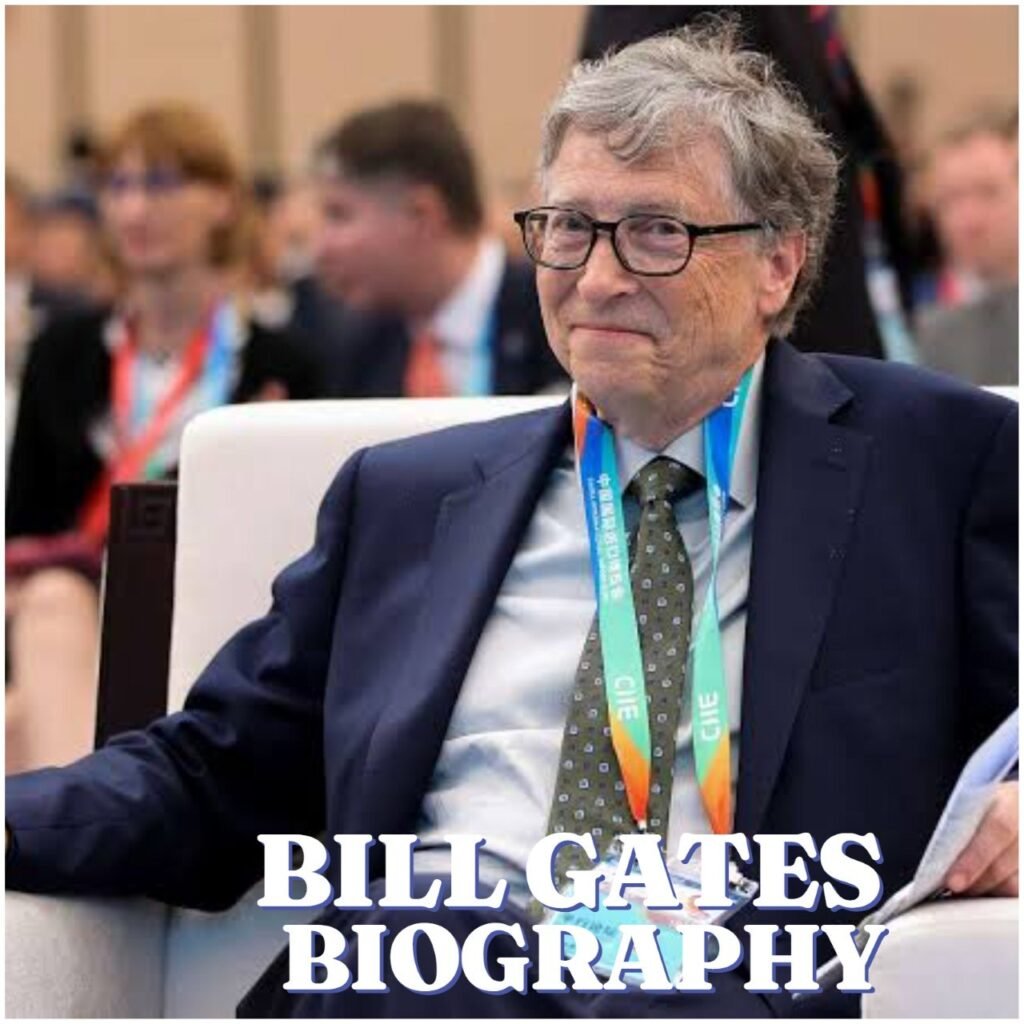
Bill Gates is one of the most influential technology entrepreneurs, business leaders, philanthropists, and investors of the modern era. Born on October 28, 1955, in Seattle, Washington, Gates became globally recognized as the co-founder of Microsoft, the technology company that helped transform personal computing and make software a central part of everyday life. Alongside Paul Allen, he built Microsoft from a small software venture into one of the world’s most powerful technology companies, eventually becoming one of the richest and best-known people on the planet. Although his early career was defined by computers, software, and business, Gates has gradually expanded his influence into philanthropy, global health, climate change, nuclear energy, education, and emerging technologies.
In recent years, Bill Gates has increasingly focused on using his wealth, knowledge, and global influence to address some of the world’s most difficult challenges. Through the Bill & Melinda Gates Foundation, he has supported initiatives involving infectious diseases, vaccination, maternal and child health, poverty reduction, agricultural development, and access to essential healthcare. His interests have also expanded into climate and clean-energy technologies, including his involvement with TerraPower, a company developing advanced nuclear energy systems. At the same time, Gates has become an increasingly prominent voice in discussions about artificial intelligence, particularly its potential to transform industries, reshape employment, increase productivity, and create new social and economic challenges.
Today, Bill Gates remains a major public figure whose career continues to evolve long after his most active years at Microsoft. His personal fortune, philanthropic commitments, investments in technology and energy, views on artificial intelligence, and plans for the future continue to attract worldwide attention. From revolutionizing the personal computer industry to becoming one of the world’s most prominent philanthropists, Gates’ journey reflects the extraordinary impact that technology, entrepreneurship, and long-term investment can have on society. This biography explores Bill Gates’ early life, education, Microsoft career, personal life, family, wealth, philanthropy, business interests, recent activities, and the lasting legacy he continues to build.
Bill Gates Education
Bill Gates began his education in Seattle, Washington, where he attended public schools before enrolling at the private Lakeside School. His time at Lakeside proved to be a major turning point in his life because the school had access to a computer terminal at a time when computers were still relatively uncommon in schools. Gates quickly developed a strong interest in computer programming and spent long hours experimenting with the machine. At Lakeside, he met fellow student Paul Allen, who shared his fascination with computers and would later become his Microsoft co-founder. Gates’ early exposure to programming gave him an opportunity to develop technical skills and explore ideas that would eventually influence his decision to pursue a career in software.
After graduating from Lakeside School in 1973, Gates enrolled at Harvard University, where he studied law and other subjects while continuing to devote much of his attention to computers and programming. Although he was officially a student at Harvard, Gates became increasingly focused on developing software and working with emerging computer technologies. During this period, he and Paul Allen worked on software projects, and Gates eventually left Harvard before completing his degree. His decision to leave university was closely connected to the opportunity to build Microsoft after the emergence of the Altair 8800 personal computer. Rather than following a conventional academic or professional path, Gates chose entrepreneurship and technology, a decision that ultimately became one of the defining moments of his career.
Although Bill Gates did not complete a university degree, his education continued through practical experience, independent learning, reading, programming, and working with some of the world’s most talented technology professionals. His story is often cited as an example of how formal education is only one part of professional development, although leaving university is not necessarily a path that should be replicated by everyone. Gates’ experience combined a strong academic foundation with intense curiosity and hands-on experimentation, allowing him to develop both technical and business skills. His time at Lakeside and Harvard helped shape his analytical approach to problem-solving, while his decision to pursue Microsoft demonstrated his willingness to take significant risks when he believed that personal computing and software had enormous future potential.
Bill Gates Career and Microsoft Success
Bill Gates began his professional career in the computer industry while he was still a teenager, developing programming skills and working on early software projects with his school friend Paul Allen. In 1975, after learning about the Altair 8800 microcomputer, Gates and Allen contacted the company behind it, Micro Instrumentation and Telemetry Systems (MITS), and developed a version of the BASIC programming language for the machine. The success of that project encouraged them to establish Microsoft, initially operating under the name Micro-Soft. Gates became the company’s central business and technical leader, helping turn software development into a major commercial industry during the rapid growth of personal computers.
Microsoft expanded dramatically during the 1980s and 1990s, particularly after its operating-system partnership with IBM helped establish MS-DOS as a major platform for personal computers. The company later developed Windows, which became one of the world’s most widely used operating systems and helped make Microsoft a dominant force in the global technology industry. Gates served as Microsoft’s chief executive officer for many years and played a major role in the company’s product strategy, software licensing model, business partnerships, and expansion into new areas of technology. Under his leadership, Microsoft grew from a small software company into a multinational technology giant, making Gates one of the world’s most prominent entrepreneurs and eventually one of its wealthiest individuals.
Gates stepped down as Microsoft’s CEO in 2000 and increasingly shifted his attention toward philanthropy, while remaining involved with the company as chairman and later as a technology adviser. He formally left his daily role at Microsoft in 2008, allowing him to devote more time to the Bill & Melinda Gates Foundation and other projects. Beyond Microsoft, his career has expanded into investment, climate technology, clean energy, healthcare, and advanced nuclear power through ventures such as TerraPower. In more recent years, Gates has also become an influential voice on artificial intelligence, technological innovation, global health, and the future of work, making his career a transition from software entrepreneur to technology investor and global philanthropist.
Bill Gates Is Making Headlines Over His Warning About AI and the Future of Jobs
Bill Gates is currently trending because of his increasingly serious warnings about the rapid development of artificial intelligence and its potential impact on employment and society. In a major essay published in August 2026, the Microsoft co-founder argued that AI is advancing faster than governments and institutions are preparing for its consequences. He warned that the technology could rapidly transform professions including law, customer service, medicine, software development and manufacturing, potentially leaving society with far fewer jobs than it has today.
One of Gates’ most notable proposals is the idea of creating “human-reserved” jobs, meaning certain occupations or responsibilities would deliberately remain reserved for people even when AI and robots become technically capable of performing them. He has also suggested taxes on AI or robots as a possible way of helping governments fund worker retraining and social safety programs. Gates has expressed particular concern about young people entering the workforce, arguing that the disappearance of entry-level opportunities could create significant economic and social challenges.
Gates’ AI concerns have also taken an international dimension. He is seeking discussions with Chinese President Xi Jinping, reportedly with a meeting being planned for November 2026, to explore international cooperation on AI safety and regulation. Gates has argued that the United States and China may need to cooperate on managing dangerous AI systems, including risks involving cybersecurity, biological threats and increasingly powerful models. His latest position marks a notable shift from his earlier optimism about AI and has made him one of the most prominent technology figures warning that the world needs to prepare more urgently for the technology’s consequences.
Bill Gates Personal Life and Family
Bill Gates was born into a well-established Seattle family. His father, William H. Gates Sr., was a prominent attorney and civic leader, while his mother, Mary Maxwell Gates, was a teacher, businesswoman and community leader who served as a regent of the University of Washington. Gates grew up with two sisters, Kristi and Libby, and has often spoken about how his family environment encouraged intellectual curiosity, competition and achievement. His parents also supported his early interest in computers, which eventually became an important part of his journey toward founding Microsoft.
Bill Gates married Melinda French Gates on January 1, 1994, after the two had met while working at Microsoft. Their marriage lasted 27 years, and they had three children: Jennifer Katharine Gates, born in 1996; Rory John Gates, born in 1999; and Phoebe Adele Gates, born in 2002. Bill and Melinda announced their divorce in 2021, and their marriage was officially dissolved on August 2, 2021. Despite their separation, they have continued to share a family connection through their children and grandchildren and have appeared together at important family occasions. Melinda left the Gates Foundation in 2024 and now leads her own philanthropic organization, Pivotal.
Gates is now a father of three and a grandfather, with his daughter Jennifer Gates having married Egyptian-American equestrian Nayel Nassar in 2021. Jennifer and Nassar have two daughters, making Bill Gates a grandfather to two grandchildren. His children have pursued their own professional and educational interests rather than simply following their father’s technology career. Gates has also indicated that he does not intend to pass his entire fortune directly to his children, emphasizing that the majority of his wealth is intended for philanthropic purposes. As of 2026, Gates is divorced and remains focused heavily on philanthropy, technology, climate innovation, artificial intelligence and other global issues.
Bill Gates Age, Religion, Nationality, Height and Physical Appearance
Bill Gates’ Age: Bill Gates was born on October 28, 1955, in Seattle, Washington, United States. As of September 1, 2026, he is 70 years old. He has spent more than five decades in the technology and business world, first gaining international recognition through Microsoft and later becoming one of the world’s most prominent philanthropists. His long career has allowed him to remain influential across several generations of technological change.
Bill Gates’ Religion: Bill Gates has spoken publicly about religion and faith without presenting himself as strongly committed to a particular religious denomination. He has acknowledged the importance of religious and moral values and has said that his children were raised in a religious environment, including participation in the Catholic Church. At the same time, Gates has expressed uncertainty about specific religious beliefs and has emphasized science, reason and moral responsibility in his worldview. For that reason, it is more accurate to describe his religious views as spiritual or broadly Christian-influenced rather than assigning him a specific denomination.
Bill Gates’ Nationality and Height: Bill Gates is American by nationality and citizenship, having been born and raised in Seattle, Washington. His height is commonly reported at approximately 5 feet 10 inches (1.78 metres), although some biographical sources give slightly different measurements. His physical appearance is recognizable for his relatively tall build, light complexion, brown-to-gray hair, and characteristic eyeglasses. Over the decades, his appearance has changed naturally with age, but his glasses and understated style have remained among his most recognizable features.
Bill Gates Net Worth in 2026
As of September 1, 2026, Bill Gates has an estimated net worth of approximately $110.1 billion, according to Forbes’ real-time billionaire ranking. Forbes currently places him at No. 19 among the world’s richest people. His fortune has fluctuated over the years because a significant portion of billionaire wealth is tied to investments and market valuations. Gates remains one of the world’s wealthiest individuals even though his financial strategy has changed considerably since the period when Microsoft represented the overwhelming majority of his wealth.
Although Bill Gates became wealthy primarily through Microsoft, his current fortune is much more diversified than it was during his years leading the company. Forbes estimates that Gates now owns less than 1% of Microsoft, following years of selling and donating shares. His wealth is connected to a broad portfolio of investments and assets, while he has also invested heavily in areas such as climate technology, clean energy and TerraPower, the advanced nuclear-energy company he founded. These investments reflect his broader interest in technologies that he believes could have significant economic and social effects in the future.
Gates’ approach to wealth has also been strongly influenced by his commitment to philanthropy. Forbes reports that he has donated more than $59 billion to the Gates Foundation, and he has said that the purpose of his wealth is increasingly to support organizations and initiatives that help address global problems. His fortune therefore represents not only the financial success of his Microsoft career but also decades of investment, asset diversification and business activities outside Microsoft. His approach to philanthropy has also contributed significantly to how his wealth and public legacy are viewed today.
Bill Gates Legacy
Bill Gates’ legacy is closely connected to the transformation of personal computing and the growth of the modern software industry. As the co-founder of Microsoft, Gates helped make computer software accessible to a mass market and played a central role in the widespread adoption of personal computers. Microsoft’s Windows operating system and other software products became fundamental tools for businesses, schools and households around the world. His entrepreneurial approach, intense focus on software and ability to build strategic partnerships helped establish a business model that influenced generations of technology entrepreneurs and contributed to the development of the global digital economy.
Beyond technology, Gates’ philanthropic legacy has become an equally important part of his public life. Through the Gates Foundation, he has directed enormous resources toward global health, vaccination, infectious-disease prevention, agricultural development, education and poverty reduction. The foundation’s work has helped fund research, public-health programs and initiatives designed to improve living conditions in developing countries. Gates has also encouraged other wealthy individuals to consider philanthropy as a long-term responsibility, most notably through the Giving Pledge, which he launched with Warren Buffett to encourage billionaires to commit the majority of their wealth to charitable causes.
Gates’ evolving legacy also includes his efforts to influence the future of climate technology, nuclear energy and artificial intelligence. Through investments and initiatives outside Microsoft, he has supported technologies intended to address climate change and energy challenges, while his involvement with TerraPower reflects his belief in advanced nuclear power as part of the world’s future energy mix. His recent warnings about artificial intelligence and employment have further positioned him as a prominent participant in debates about how society should manage rapidly advancing technology. Whether viewed primarily as a technology pioneer, billionaire investor or global philanthropist, Bill Gates has left a lasting mark on business and society, and his continuing work suggests that his legacy will extend well beyond the creation of Microsoft.
Conclusion
Bill Gates’ journey from a curious young programmer in Seattle to the co-founder of Microsoft and one of the world’s most influential philanthropists is a remarkable story of innovation, ambition, and transformation. His contributions to personal computing changed the technology industry, while his later work through philanthropy, climate technology, advanced nuclear energy, and artificial intelligence has expanded his influence far beyond Microsoft. At 70, Gates continues to play an important role in conversations about global health, technological development, climate change, wealth and the future of work, ensuring that his impact will extend well beyond his achievements as a technology entrepreneur.
Frequently Asked Questions About Bill Gates
Who is Bill Gates?
Bill Gates is an American technology entrepreneur, investor, philanthropist, and co-founder of Microsoft. He helped popularize personal computing through Microsoft’s software and later became one of the world’s most prominent philanthropists through the Gates Foundation.
How old is Bill Gates?
Bill Gates is 70 years old as of September 1, 2026. He was born on October 28, 1955, in Seattle, Washington, United States.
What is Bill Gates’ net worth in 2026?
Bill Gates’ estimated net worth is approximately $110.1 billion in 2026, according to Forbes’ real-time billionaire estimates. His wealth comes from investments, assets, business interests, and his historic ownership of Microsoft.
Is Bill Gates still married?
No. Bill Gates and Melinda French Gates divorced in 2021 after 27 years of marriage. They have three children together: Jennifer Katharine Gates, Rory John Gates, and Phoebe Adele Gates.
How many children does Bill Gates have?
Bill Gates has three children with Melinda French Gates: Jennifer Katharine Gates, Rory John Gates, and Phoebe Adele Gates. His eldest daughter, Jennifer, is married to Egyptian-American equestrian Nayel Nassar.
What is Bill Gates famous for?
Bill Gates is best known for co-founding Microsoft with Paul Allen. He played a major role in the development and commercialization of personal-computer software, particularly through Microsoft’s MS-DOS and Windows operating systems.
Did Bill Gates graduate from Harvard?
No. Bill Gates attended Harvard University but left before completing his degree. He left college to pursue the opportunity to build Microsoft with Paul Allen after the emergence of the Altair 8800 computer.
What does Bill Gates do now?
Bill Gates focuses primarily on philanthropy, investments, climate and clean-energy technology, global health, and emerging technologies. He remains closely associated with the Gates Foundation and is also involved in initiatives related to artificial intelligence and advanced nuclear energy.
What is Bill Gates’ religion?
Bill Gates has discussed faith and religion publicly but does not strongly identify himself with a particular religious denomination. He has described himself as having a broad spiritual and moral outlook while emphasizing science, reason, and humanitarian values.
What is Bill Gates’ nationality?
Bill Gates is American. He was born in Seattle, Washington, United States, and is a citizen of the United States.
How tall is Bill Gates?
Bill Gates is commonly reported to be approximately 5 feet 10 inches (1.78 metres) tall, although published estimates of his exact height vary slightly.
Why is Bill Gates trending in 2026?
Bill Gates has been receiving renewed attention in 2026 because of his warnings about artificial intelligence and the future of employment. He has discussed the possibility of AI significantly changing or eliminating certain jobs and has called for society and governments to prepare for the economic and social consequences of increasingly capable AI systems. :::