
Introduction
Atiq Ahmed was an Indian politician and one of the most controversial figures in the history of Uttar Pradesh politics. Born on 10 August 1962 in Allahabad (now Prayagraj), he rose from a local political leader to become a five-time Member of the Uttar Pradesh Legislative Assembly (MLA) and later served as a Member of Parliament (MP) from the Phulpur constituency. His influence extended across the political and criminal landscape of the state, making him a widely recognized and often debated public figure. Throughout his career, he remained at the center of intense media coverage due to his political success as well as the numerous criminal allegations and legal proceedings associated with his name.
Ahmed’s life reflected the complex intersection of politics, power, and organized crime in northern India. Over several decades, he built a significant support base in parts of Prayagraj while simultaneously facing accusations in dozens of serious criminal cases, including murder, kidnapping, extortion, land grabbing, and conspiracy. His career was marked by repeated electoral victories despite ongoing legal challenges, illustrating both his political influence and the deeply polarized public opinion surrounding him. Supporters viewed him as a powerful grassroots leader, while critics regarded him as one of India’s most notorious gangster-politicians.
Atiq Ahmed’s life came to a dramatic end on 15 April 2023, when he and his brother Ashraf Ahmed were shot dead by assailants while under police escort in Prayagraj during a live media interaction. The incident drew nationwide attention and reignited debates about law and order, organized crime, and political accountability in India. Even in 2026, his name continues to appear in discussions, documentaries, news reports, and popular culture, with filmmakers and analysts revisiting his controversial legacy and the lasting impact of his rise and fall on Uttar Pradesh’s political history.
Early Life
Atiq Ahmed was born on 10 August 1962 in Allahabad, now officially known as Prayagraj, in the Indian state of Uttar Pradesh. He was raised in a middle-class Muslim family and spent most of his childhood in the city’s Chakia locality, an area that would later become the center of his political and social influence. Growing up in a densely populated neighborhood, Ahmed witnessed the economic and social challenges faced by many residents. These early experiences shaped his understanding of local issues and helped him establish connections with people in the community from a young age.
Ahmed received his primary education in Allahabad, but his academic journey was relatively short. Rather than pursuing higher education, he became increasingly involved in local activities and neighborhood affairs during his teenage years. According to various reports, he was drawn into the city’s criminal underworld in his youth, a period when gang rivalries and political patronage were becoming increasingly intertwined in parts of Uttar Pradesh. His growing reputation in local circles gradually transformed him into a figure with considerable influence in the Chakia area.
By his late teens and early twenties, Atiq Ahmed had begun building a network of supporters and associates, giving him a significant presence in local politics. His popularity among some sections of the community, combined with his strong local influence, enabled him to contest elections at a relatively young age. In 1989, he was elected as an independent Member of the Uttar Pradesh Legislative Assembly from the Allahabad West constituency, marking the beginning of a political career that would span more than two decades. This early transition from neighborhood influence to elected office laid the foundation for a life that would later become one of the most controversial stories in modern Indian politics.
Education
Atiq Ahmed received his early education in Allahabad (now Prayagraj), Uttar Pradesh, where he attended local schools during his childhood. Although details about the specific institutions he attended have never been widely documented in public records, it is generally known that he completed his basic schooling in the city where he was born and raised. His education took place during a period when Allahabad was recognized as one of northern India’s prominent educational and cultural centers.
Unlike many politicians who pursued university degrees before entering public life, Atiq Ahmed did not continue to higher education. Reports indicate that he discontinued his formal studies at an early stage and became increasingly involved in local social and political activities during his youth. As his influence in his neighborhood grew, his focus shifted away from academics and toward building relationships, community networks, and eventually a political career. His rise demonstrated that his public influence stemmed more from grassroots connections than from educational qualifications.
Despite having limited formal education, Atiq Ahmed went on to establish himself as a significant political figure in Uttar Pradesh. He entered electoral politics at a young age and was elected as an independent Member of the Uttar Pradesh Legislative Assembly in 1989. Over the following decades, he served multiple terms as an MLA and later became a Member of Parliament, illustrating how his political journey was shaped primarily by local influence, organizational skills, and public visibility rather than academic achievements. His career remains one of the most controversial examples of the intersection between politics and criminal allegations in modern Indian history.
Career
Atiq Ahmed began his political career in the late 1980s after establishing a strong local presence in Allahabad (now Prayagraj), Uttar Pradesh. In 1989, at the age of 27, he was elected as an independent Member of the Uttar Pradesh Legislative Assembly (MLA) from the Allahabad West constituency. His victory marked the beginning of a long political career, and he quickly became one of the most influential figures in the region. Over the following years, he successfully retained his political influence by winning multiple Assembly elections, representing Allahabad West on several occasions under different political parties, including the Samajwadi Party and Apna Dal.
During his years in public office, Ahmed expanded his political reach beyond the state legislature. In the 2004 Indian general election, he was elected as a Member of Parliament (MP) to the Lok Sabha from the Phulpur constituency, a seat once represented by India’s first Prime Minister, Jawaharlal Nehru. His tenure in Parliament lasted until 2009, during which he participated in national politics while continuing to maintain a significant influence in Prayagraj and surrounding districts. Throughout his career, he built a loyal political support base, with many followers viewing him as a leader who addressed local issues and represented marginalized communities.
Despite his electoral success, Atiq Ahmed’s political career was consistently overshadowed by serious criminal allegations. Over the years, law enforcement agencies registered more than 160 criminal cases against him, including charges related to murder, kidnapping, extortion, land grabbing, assault, and criminal conspiracy. Several of these cases remained under investigation or trial for years, while others resulted in convictions. In 2019, he was convicted in a kidnapping case, and investigations intensified following the 2023 murder of lawyer Umesh Pal, a key witness in the 2005 Raju Pal murder case. His career ultimately came to an abrupt end on 15 April 2023, when he and his brother Ashraf Ahmed were shot dead while under police escort in Prayagraj. Today, his political journey is remembered as one of the most controversial in modern Indian history, symbolizing the complex relationship between electoral politics, organized crime, and the criminal justice system in Uttar Pradesh.
Personal Life and Family
Atiq Ahmed was married to Shaista Parveen, who became well known in her own right because of her involvement in politics and the legal controversies surrounding the family. Shaista was associated with the Bahujan Samaj Party (BSP) for a period and later sought to enter active electoral politics. Following the criminal cases filed against Atiq Ahmed and subsequent investigations into the family, she also became the subject of multiple police investigations. Despite the intense public scrutiny, she remained one of the central figures connected to Ahmed’s personal and political life.
The couple had five sons—Mohammad Asad Ahmed, Ali Ahmed, Umar Ahmed, Ahzam Ahmed, and Aban Ahmed. Several members of the family attracted public attention because of ongoing criminal investigations and court proceedings. Their third son, Mohammad Asad Ahmed, was killed in a police encounter in Jhansi, Uttar Pradesh, on 13 April 2023, just two days before Atiq Ahmed himself was shot dead. The deaths of both father and son within the same week drew nationwide media attention and marked a dramatic chapter in the family’s history.
Although Atiq Ahmed maintained a strong political support base in parts of Prayagraj, his family life remained deeply affected by legal battles and public controversy. His brothers, including Ashraf Ahmed, were also linked to several criminal cases over the years. Ashraf was shot dead alongside Atiq Ahmed on 15 April 2023 while both were under police escort in Prayagraj. Following their deaths, the Ahmed family continued to face legal proceedings and public scrutiny, making them one of the most widely discussed political families in recent Indian history. Despite the controversies, the family’s story remains an important part of understanding Atiq Ahmed’s life, influence, and legacy.
Age, Religion, Tribe, Height and Physical Appearance
Age
Atiq Ahmed was born on 10 August 1962 in Allahabad (now Prayagraj), Uttar Pradesh, India. He was 60 years old at the time of his death on 15 April 2023. During his lifetime, he remained an influential and controversial figure in Uttar Pradesh politics for more than three decades.
Religion
Atiq Ahmed followed Islam and was born into a Muslim family. His religious background was a part of his personal identity throughout his life, although he was primarily known in the public sphere for his political career and the numerous legal cases associated with him rather than for religious activities.
Tribe
There are no credible public records identifying Atiq Ahmed as belonging to a specific tribe. He was widely described as belonging to the Muslim community in Uttar Pradesh, but no officially verified information regarding any tribal affiliation has been published. Therefore, it is not accurate to assign him to a particular tribe.
Height and Physical Appearance
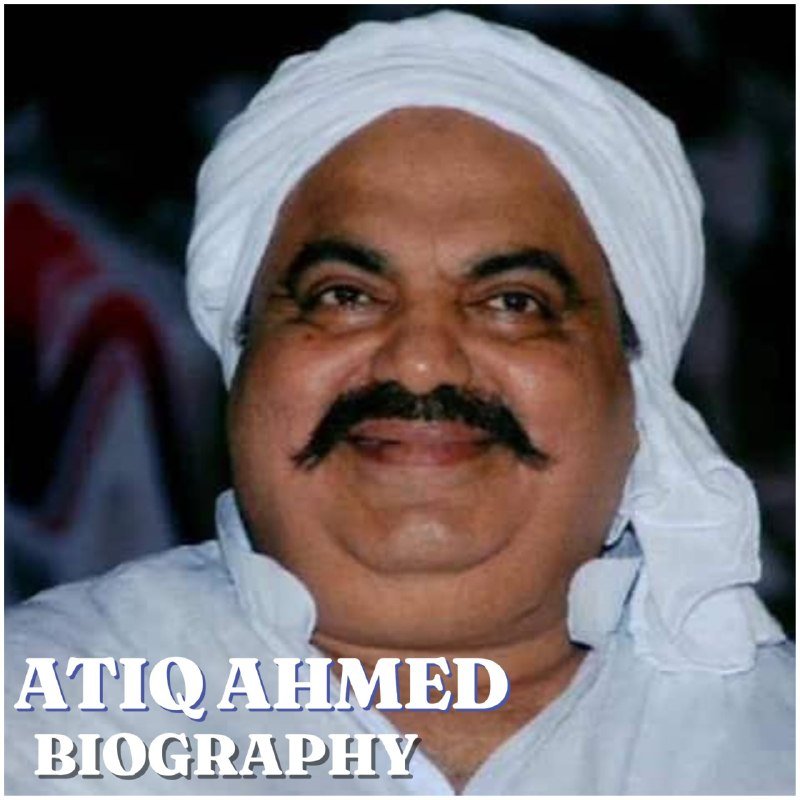
Atiq Ahmed was reported to be approximately 5 feet 9 inches (175 cm) tall and had a sturdy, heavy-set physique. He had dark brown eyes, black hair that became partially gray as he aged, and a distinctive mustache that became one of his recognizable features. He was frequently seen wearing traditional white kurta-pajama, a style commonly associated with politicians in northern India, which contributed to his recognizable public image.
Net Worth
Atiq Ahmed’s exact net worth was never officially confirmed, and estimates varied significantly because much of his wealth was the subject of investigations by Indian law enforcement agencies. Based on his long political career, real estate holdings, business interests allegedly linked to him, and assets disclosed during various legal proceedings, his estimated net worth at the time of his death was believed to be between ₹80 crore and ₹120 crore (approximately US$9.5 million to US$14 million). These figures are estimates compiled from publicly available reports rather than officially verified financial statements.
A substantial portion of Ahmed’s reported wealth consisted of residential and commercial properties, agricultural land, and other real estate in Prayagraj and nearby areas of Uttar Pradesh. Over the years, authorities accused him of acquiring numerous properties through illegal land-grabbing and extortion schemes, allegations that he consistently denied during legal proceedings. Beginning in 2020, the Uttar Pradesh government launched an extensive crackdown on his alleged criminal empire, demolishing several properties and attaching assets worth hundreds of millions of rupees under various legal provisions. These enforcement actions significantly affected the value and control of the assets associated with him and his family.
Although Atiq Ahmed earned income as a politician during his years as a Member of the Legislative Assembly and later as a Member of Parliament, his public reputation was dominated by allegations that much of his wealth came from unlawful activities rather than legitimate political earnings. Because numerous court cases involving his assets remained unresolved at the time of his death in 2023, no definitive valuation of his estate has ever been established. As of 2026, the estimated net worth range of ₹80 crore to ₹120 crore remains a commonly cited approximation based on available public records, media investigations, and the scale of assets linked to him.
Legacy
Atiq Ahmed’s legacy remains one of the most controversial in modern Indian political history. Over a career spanning more than three decades, he emerged as a powerful political figure in Uttar Pradesh, serving five terms as a Member of the Legislative Assembly (MLA) and one term as a Member of Parliament (MP). His influence in Prayagraj was significant, with many supporters crediting him for maintaining strong grassroots connections and helping residents with local issues. At the same time, his political career was consistently overshadowed by numerous criminal allegations, making him one of the most debated figures in India’s political landscape.
Ahmed is widely remembered as a symbol of the complex relationship between politics and organized crime in parts of northern India. His long list of criminal cases, high-profile court proceedings, and repeated electoral victories fueled national discussions about criminalization in Indian politics, electoral reforms, and the need for greater accountability among public officials. His death in April 2023, along with that of his brother Ashraf Ahmed during a police escort, became one of the most widely reported incidents in recent Indian history and intensified debates over law enforcement, public safety, and the rule of law.
Even after his death, Atiq Ahmed continues to be the subject of books, documentaries, television debates, and media analysis examining his rise, influence, and downfall. His life has inspired fictional characters and cinematic portrayals, reflecting the lasting public fascination with his story. As of 2026, historians, political analysts, journalists, and legal experts continue to study his career as an example of how political power, local influence, and criminal allegations intersected in contemporary India. His legacy remains deeply divisive, viewed by some as that of a powerful regional leader and by others as a cautionary example of the challenges posed by the criminalization of politics.
Conclusion
Atiq Ahmed’s life was a remarkable yet deeply controversial journey that combined political success with decades of legal battles and criminal allegations. Rising from the streets of Prayagraj to become a five-time MLA and a Member of Parliament, he established himself as one of Uttar Pradesh’s most influential political figures. However, his career was consistently overshadowed by serious accusations and court cases that ultimately defined his public image. His death in April 2023 marked the end of an era, but debates surrounding his life, political influence, and the criminalization of politics in India continue. As of 2026, Atiq Ahmed remains a significant and polarizing figure whose legacy serves as both a subject of historical interest and a reminder of the complex relationship between power, politics, and the justice system in modern India.
Frequently Asked Questions (FAQs) About Atiq Ahmed
1. Who was Atiq Ahmed?
Atiq Ahmed was an Indian politician and former gangster from Prayagraj, Uttar Pradesh. He served as a five-time Member of the Uttar Pradesh Legislative Assembly (MLA) and was elected as a Member of Parliament (MP) from the Phulpur constituency between 2004 and 2009.
2. When and where was Atiq Ahmed born?
Atiq Ahmed was born on 10 August 1962 in Allahabad (now Prayagraj), Uttar Pradesh, India.
3. When did Atiq Ahmed die?
Atiq Ahmed died on 15 April 2023 in Prayagraj, Uttar Pradesh, after he and his brother Ashraf Ahmed were shot while under police escort.
4. How old was Atiq Ahmed when he died?
Atiq Ahmed was 60 years old at the time of his death.
5. What was Atiq Ahmed’s religion?
Atiq Ahmed followed Islam and was born into a Muslim family.
6. Who was Atiq Ahmed’s wife?
Atiq Ahmed was married to Shaista Parveen, who was also involved in politics and later became the subject of several criminal investigations.
7. How many children did Atiq Ahmed have?
Atiq Ahmed had five sons: Mohammad Asad Ahmed, Ali Ahmed, Umar Ahmed, Ahzam Ahmed, and Aban Ahmed.
8. What political positions did Atiq Ahmed hold?
Atiq Ahmed served as a five-time MLA in the Uttar Pradesh Legislative Assembly and later as the Member of Parliament (Lok Sabha) representing the Phulpur constituency from 2004 to 2009.
9. What was Atiq Ahmed’s estimated net worth?
Although no official figure was ever confirmed, Atiq Ahmed’s net worth was widely estimated to be between ₹80 crore and ₹120 crore at the time of his death, based on publicly reported assets and property holdings.
10. Why is Atiq Ahmed famous?
Atiq Ahmed is famous for his long political career, his influence in Uttar Pradesh politics, and the numerous criminal cases associated with him. His life and death remain among the most discussed topics in modern Indian political history.
11. What was Atiq Ahmed’s height?
Atiq Ahmed was approximately 5 feet 9 inches (175 cm) tall.
12. What is Atiq Ahmed’s legacy?
Atiq Ahmed’s legacy remains highly controversial. He is remembered as both a powerful political leader in Prayagraj and a central figure in debates about the criminalization of politics in India. His life continues to be studied by journalists, historians, and political analysts.