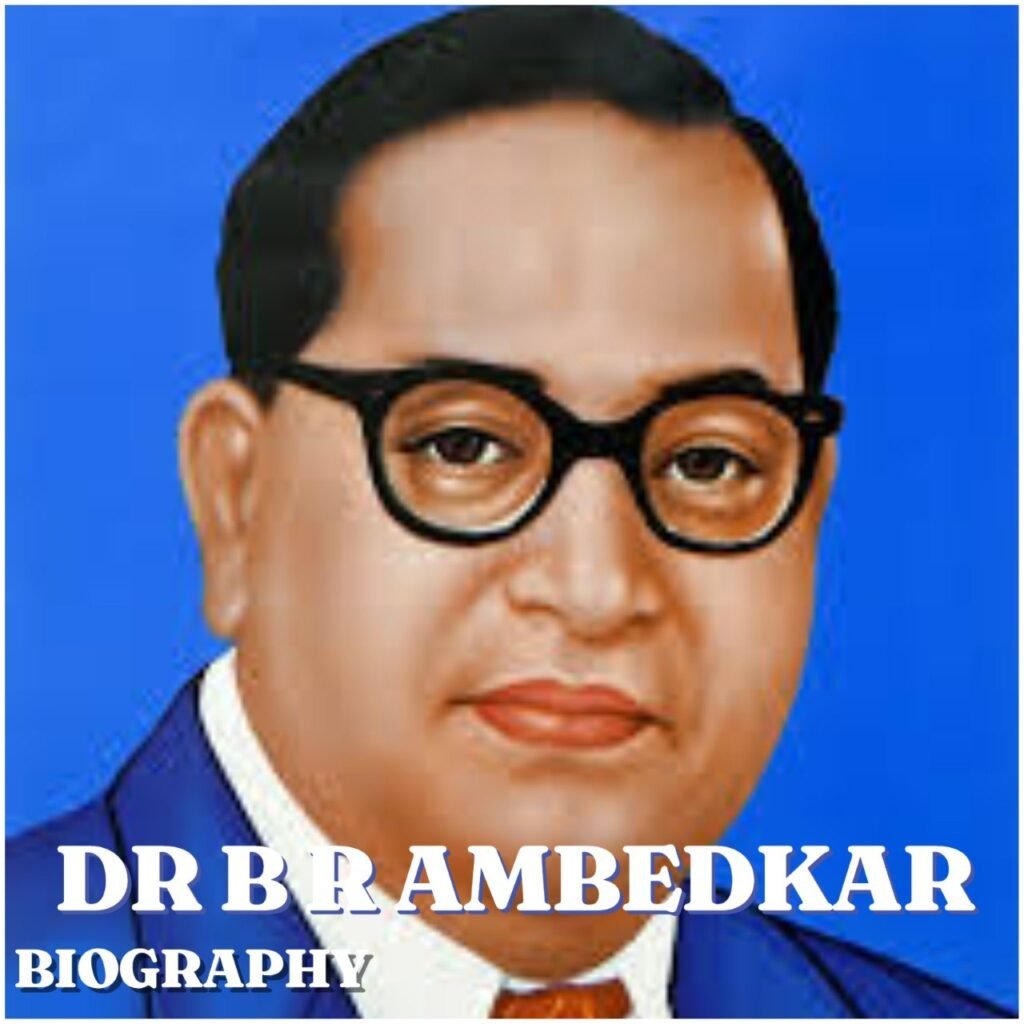

Meta Description: Discover the complete biography of Dr. B. R. Ambedkar, including his early life, education, career, family, wives, children, religion, tribe, age, height, net worth, legacy, and frequently asked questions. Learn about the life and achievements of the principal architect of the Constitution of India.
Dr. B. R. Ambedkar Biography
Dr. Bhimrao Ramji Ambedkar, popularly known as Dr. B. R. Ambedkar or Babasaheb Ambedkar, was one of India’s greatest jurists, economists, politicians, social reformers, and constitutional scholars. Revered as the principal architect of the Constitution of India, he played a defining role in shaping the legal and democratic framework of modern India. Throughout his life, Ambedkar dedicated himself to promoting equality, justice, liberty, and human dignity while leading the fight against caste discrimination and social inequality. His remarkable contributions continue to inspire millions of people across India and around the world.
Born on 14 April 1891 in Mhow (now officially known as Dr. Ambedkar Nagar) in present-day Madhya Pradesh, Ambedkar overcame severe social discrimination and economic hardship to become one of the most highly educated Indians of his generation. His academic journey took him to prestigious institutions such as Columbia University in the United States and the London School of Economics in the United Kingdom, where he earned advanced degrees in economics, law, and political science. His exceptional intellect and determination transformed him into one of the most respected scholars and reformers in Indian history.
Even in 2026, Dr. B. R. Ambedkar’s philosophy and achievements remain deeply relevant. His birth anniversary is celebrated across India with seminars, public lectures, educational programs, and tributes recognizing his immense contributions to constitutional democracy and social justice. His writings on equality, education, women’s rights, economic development, and human rights continue to influence scholars, policymakers, students, and activists worldwide. As one of the greatest champions of justice and constitutional governance, Ambedkar’s legacy remains stronger than ever.
Table of Contents
- Introduction
- Early Life
- Education
- Career
- Personal Life and Family
- Age, Religion, Tribe, Height and Physical Appearance
- Net Worth
- Legacy
- Conclusion
- Frequently Asked Questions (FAQs)
Introduction
Dr. Bhimrao Ramji Ambedkar, popularly known as Dr. B. R. Ambedkar or Babasaheb Ambedkar, was one of India’s most influential jurists, economists, social reformers, and political leaders. He is best remembered as the chief architect of the Constitution of India, a document that laid the foundation for the world’s largest democracy and enshrined the principles of justice, liberty, equality, and fraternity. Through his remarkable intellect and unwavering commitment to social justice, Ambedkar dedicated his life to fighting discrimination, uplifting marginalized communities, and promoting equal rights for every citizen. His contributions continue to shape India’s legal, political, and social landscape decades after his passing.
Born on 14 April 1891 in Mhow (now officially known as Dr. Ambedkar Nagar) in present-day Madhya Pradesh, Ambedkar overcame severe social discrimination and economic hardship to become one of the most highly educated Indians of his era. He earned degrees from prestigious institutions, including Columbia University in the United States and the London School of Economics in the United Kingdom, establishing himself as a distinguished scholar in economics, law, and political science. His academic excellence, combined with his determination to challenge caste-based inequality, transformed him into a leading advocate for social reform and constitutional governance.
Even in 2026, Dr. B. R. Ambedkar’s legacy remains as relevant as ever. India continues to commemorate his life and achievements through national celebrations, academic research, public lectures, and government initiatives that emphasize his vision of an inclusive and democratic society. His writings on constitutionalism, education, human rights, women’s empowerment, and social equality continue to inspire scholars, policymakers, activists, and millions of people around the world. Revered as the “Father of the Indian Constitution,” Ambedkar’s enduring influence extends far beyond India, making him one of the most respected champions of justice and human dignity in modern history.
Early Life
Dr. Bhimrao Ramji Ambedkar was born on 14 April 1891 in the military cantonment of Mhow (now officially known as Dr. Ambedkar Nagar) in present-day Madhya Pradesh, India. He was the fourteenth and youngest surviving child of Ramji Maloji Sakpal, a Subedar in the British Indian Army, and Bhimabai Sakpal. Although his father valued education and discipline, the family belonged to the Mahar community, which was then regarded as an “untouchable” caste under the rigid Hindu caste system. From an early age, Ambedkar experienced social exclusion and discrimination, circumstances that would later inspire his lifelong struggle for equality, justice, and human rights.
Ambedkar spent much of his childhood in Satara and later moved to Bombay (now Mumbai), where he attended school despite facing numerous obstacles because of his caste. He and other students from marginalized communities were often forced to sit separately from their classmates, were denied access to drinking water unless someone from a higher caste poured it for them, and endured frequent humiliation from both teachers and fellow students. Despite these hardships, Ambedkar displayed exceptional intelligence, determination, and a deep passion for learning. His father encouraged his education, believing that knowledge was the most powerful tool for overcoming social injustice.
A major turning point in Ambedkar’s early life came when he successfully completed his matriculation from Elphinstone High School, becoming one of the first students from the Mahar community to achieve this milestone. His academic success earned him recognition and financial support from Sayajirao Gaekwad III, the progressive Maharaja of Baroda, who awarded him a scholarship for higher education. This opportunity enabled Ambedkar to continue his studies at Elphinstone College and later pursue advanced education abroad, laying the foundation for his extraordinary career as a scholar, lawyer, economist, constitutional expert, and one of the greatest social reformers in Indian history.
Education
Dr. B. R. Ambedkar’s educational journey is widely regarded as one of the most remarkable success stories in Indian history. Despite growing up in a society deeply divided by caste discrimination, he remained committed to academic excellence and consistently outperformed expectations. After completing his early education in Bombay (now Mumbai), he enrolled at Elphinstone College, which was affiliated with the University of Bombay. In 1912, he graduated with a Bachelor of Arts (B.A.) degree in Economics and Political Science, becoming one of the first members of the Mahar community to earn a university degree. His outstanding academic performance attracted the attention of progressive leaders who recognized his immense potential.
In 1913, Ambedkar received a prestigious scholarship from Sayajirao Gaekwad III, the Maharaja of Baroda, to pursue higher education abroad. He enrolled at Columbia University in New York, where he studied economics, sociology, history, philosophy, anthropology, and political science under some of the world’s leading scholars. During his time at Columbia, he earned a Master of Arts (M.A.) degree in 1915 and later completed a Ph.D. in Economics. His doctoral research examined India’s financial administration and economic development, demonstrating his exceptional analytical abilities and laying the groundwork for his later contributions to economic policy and constitutional governance.
After completing his studies in the United States, Ambedkar continued his education in the United Kingdom. He attended the London School of Economics (LSE), where he earned a Doctor of Science (D.Sc.) in Economics, further establishing himself as one of the foremost economists of his generation. At the same time, he studied law at Gray’s Inn in London and qualified as a Barrister-at-Law, enabling him to build a distinguished legal career. Armed with world-class education from some of the most prestigious institutions in the world, Ambedkar returned to India determined to use his knowledge to fight social inequality, advance constitutional democracy, and champion the rights of marginalized communities. His educational achievements remain an enduring source of inspiration for students and scholars across the globe.
Career
Dr. B. R. Ambedkar built an extraordinary career as an economist, lawyer, educator, politician, social reformer, and constitutional expert. After returning to India from his studies in the United States and the United Kingdom, he briefly served as the Military Secretary to the Maharaja of Baroda. However, persistent caste-based discrimination forced him to leave the position. Determined to use his education to challenge social injustice, Ambedkar began practicing law in Bombay (now Mumbai) and quickly gained recognition as a brilliant legal scholar and advocate. Alongside his legal career, he taught political economy at the Sydenham College of Commerce and Economics, where his lectures earned widespread respect for their depth and insight.
As a social and political leader, Ambedkar dedicated his career to securing equal rights for the oppressed and marginalized sections of Indian society. He founded several organizations and launched newspapers such as Mooknayak, Bahishkrit Bharat, and Janata to raise awareness about caste discrimination and social inequality. Throughout the 1920s and 1930s, he led historic movements, including the Mahad Satyagraha for the right of untouchables to access public water sources and the Kalaram Temple Entry Movement, both of which became defining moments in India’s struggle for social justice. Ambedkar also represented the interests of the Depressed Classes during the Round Table Conferences in London, where he argued for political representation and constitutional safeguards for marginalized communities.
Following India’s independence in 1947, Dr. Ambedkar reached the pinnacle of his public career when he was appointed the country’s first Minister of Law and Justice in Prime Minister Jawaharlal Nehru’s cabinet. He also served as the Chairman of the Drafting Committee of the Constituent Assembly, leading the team responsible for preparing the Constitution of India. His vision helped create a Constitution that guarantees fundamental rights, equality before the law, religious freedom, and protections against discrimination. Although he resigned from the cabinet in 1951 over differences concerning the Hindu Code Bill, his influence on India’s legal and democratic institutions remained profound. In 1956, shortly before his death, he embraced Buddhism along with hundreds of thousands of followers, marking the culmination of his lifelong campaign for dignity, equality, and social transformation.
Personal Life and Family
Dr. B. R. Ambedkar’s personal life was marked by both profound joy and heartbreaking loss. He was born into the family of Ramji Maloji Sakpal, a Subedar in the British Indian Army, and Bhimabai Sakpal, whose emphasis on education and discipline greatly influenced his early years. Despite belonging to the Mahar community and facing widespread social discrimination, Ambedkar’s parents encouraged him to pursue learning as a path to empowerment. The family experienced financial hardship, and after the death of his mother when he was still a child, Ambedkar was raised with the support of his father and other relatives, circumstances that strengthened his resilience and determination to succeed.
In 1906, at the age of fifteen, Ambedkar married Ramabai Ambedkar (née Ramabai Sakpal) in accordance with the customs of the time. Ramabai stood by him through years of financial difficulties and his demanding educational pursuits in India, the United States, and the United Kingdom. The couple had five children—Yashwant Ambedkar, Gangadhar, Ramesh, Indu, and Rajratna. Tragically, only Yashwant Ambedkar survived into adulthood, while the other children died at a young age. Ramabai herself passed away in 1935, a loss that deeply affected Ambedkar during one of the most significant periods of his public and political life.
After several years as a widower, Dr. Ambedkar married Dr. Savita Ambedkar (born Sharada Kabir) on 15 April 1948. A qualified medical doctor, Savita Ambedkar played a crucial role in caring for his health during his later years, when he suffered from diabetes and other chronic illnesses brought on by years of relentless work. She remained a steadfast companion until his death on 6 December 1956. Although Ambedkar devoted much of his life to public service and the fight for social justice, his family relationships, personal sacrifices, and the unwavering support of both Ramabai and Savita formed an important foundation for his remarkable achievements. Today, his descendants, especially through his son Yashwant Ambedkar, continue to be associated with preserving and promoting his enduring legacy.
Age, Religion, Tribe, Height and Physical Appearance
Dr. B. R. Ambedkar was born on 14 April 1891 in Mhow (now Dr. Ambedkar Nagar), Madhya Pradesh, India, and died on 6 December 1956 in Delhi at the age of 65. Although he is no longer alive, his life and achievements continue to inspire millions across India and around the world. As one of the principal architects of the Constitution of India and a tireless advocate for social justice, his influence remains deeply embedded in India’s democratic and constitutional framework.
By birth, Ambedkar belonged to the Mahar community, a historically marginalized community in the Indian caste system that is often described as a Dalit community. He was born into a Hindu family but became increasingly critical of caste-based discrimination throughout his life. On 14 October 1956, he formally converted to Buddhism at Deekshabhoomi in Nagpur, leading a historic mass conversion that inspired hundreds of thousands of followers to embrace Buddhism. This decision reflected his lifelong commitment to equality, dignity, and freedom from caste oppression.
Dr. Ambedkar was approximately 5 feet 8 inches (173 cm) tall and had a dignified, scholarly appearance that became instantly recognizable throughout his public life. He possessed a medium build, a fair-to-wheatish complexion, and neatly groomed black hair in his younger years, which gradually turned gray with age. His trademark round-rimmed spectacles, formal Western-style suits, crisp shirts, ties, and polished shoes reflected both his professionalism and his belief in presenting himself with confidence and dignity. His calm demeanor, commanding presence, and intellectual charisma made him one of the most respected public figures in modern Indian history.
Net Worth
There are no official or historically verified records documenting the exact net worth of Dr. B. R. Ambedkar during his lifetime. Unlike many modern public figures, Ambedkar did not accumulate wealth through business ventures or commercial enterprises. His income primarily came from his work as a lawyer, economist, professor, author, and later as India’s first Minister of Law and Justice. Much of his life was devoted to public service, constitutional reform, and advocating for the rights of marginalized communities rather than building personal riches.
Based on the nature of his professional career, educational achievements, government positions, legal practice, and intellectual contributions, historians generally regard Ambedkar as financially comfortable but not extraordinarily wealthy. If his earnings, assets, and professional stature were translated into today’s economic context, his estimated net worth would likely be in the range of US$1 million to US$3 million. This estimate is intended solely as an informed approximation based on his professional career and is not supported by official financial records. His extensive personal library, scholarly publications, and lifelong dedication to public service remain among his most valuable legacies.
Although Dr. Ambedkar did not pursue wealth as a primary goal, his contributions to India’s constitutional framework, legal system, and social reform have created an immeasurable legacy. His influence extends far beyond financial success, with his ideas continuing to shape public policy, education, and human rights discussions across the globe. Today, his writings, speeches, and reforms remain invaluable resources for scholars, lawmakers, and social justice advocates, making his intellectual wealth far greater than any estimated monetary value.
Legacy
Dr. B. R. Ambedkar’s legacy is one of the most profound and transformative in modern Indian history. As the principal architect of the Constitution of India, he established the constitutional framework that continues to safeguard democracy, equality, justice, liberty, and fundamental rights for more than a billion citizens. His leadership in drafting the Constitution helped create a legal system that prohibits discrimination, protects civil liberties, and promotes equal opportunities regardless of caste, religion, gender, or social background. His constitutional vision remains a cornerstone of India’s democratic institutions and continues to influence legal systems and constitutional scholarship around the world.
Beyond his role as a constitutional expert, Ambedkar is remembered as a fearless social reformer who devoted his life to challenging caste discrimination and empowering marginalized communities through education, political participation, and legal reform. His speeches, books, and advocacy encouraged millions of people to demand dignity, equality, and human rights. Influential works such as Annihilation of Caste, The Buddha and His Dhamma, and numerous essays on economics, politics, and religion continue to be studied by scholars and universities worldwide. His historic conversion to Buddhism in 1956 also inspired one of the largest religious conversion movements in modern history, leaving a lasting impact on Indian society.
Today, Dr. B. R. Ambedkar is honored as one of India’s greatest national icons. His birth anniversary on 14 April is celebrated every year with nationwide events, academic conferences, cultural programs, and public tributes recognizing his extraordinary achievements. Numerous universities, research institutions, airports, roads, museums, memorials, scholarships, and government programs bear his name in recognition of his lasting contributions. In 1990, he was posthumously awarded the Bharat Ratna, India’s highest civilian honor. More than six decades after his passing, his vision of an inclusive, democratic, and just society continues to inspire leaders, students, policymakers, and human rights advocates across the world.
Conclusion
Dr. Bhimrao Ramji Ambedkar’s life is a remarkable story of perseverance, scholarship, and unwavering dedication to justice. Rising above the severe social discrimination and hardships he faced during his childhood, he became one of the most educated and influential leaders in Indian history. His pioneering work as a jurist, economist, politician, social reformer, and the principal architect of the Constitution of India transformed the nation and established enduring principles of equality, liberty, fraternity, and constitutional democracy. Through his advocacy for education, social inclusion, and the protection of fundamental rights, Ambedkar empowered millions of marginalized people and reshaped India’s social and political landscape. Even in 2026, his ideas continue to guide policymakers, scholars, and citizens, ensuring that his extraordinary legacy remains relevant for future generations.
Frequently Asked Questions (FAQs) About Dr. B. R. Ambedkar
Who was Dr. B. R. Ambedkar?
Dr. Bhimrao Ramji (B. R.) Ambedkar was an Indian jurist, economist, politician, social reformer, and the principal architect of the Constitution of India. He is widely regarded as one of the greatest champions of social justice and equality in Indian history.
When and where was Dr. B. R. Ambedkar born?
Dr. B. R. Ambedkar was born on 14 April 1891 in Mhow, now officially known as Dr. Ambedkar Nagar, in the state of Madhya Pradesh, India.
When did Dr. B. R. Ambedkar die?
Dr. Ambedkar passed away on 6 December 1956 in New Delhi, India, at the age of 65.
What was Dr. B. R. Ambedkar’s religion?
Dr. Ambedkar was born into a Hindu family belonging to the Mahar community. On 14 October 1956, he converted to Buddhism, leading one of the largest mass religious conversion movements in modern history.
What tribe or community did Dr. B. R. Ambedkar belong to?
Dr. B. R. Ambedkar belonged to the Mahar community, a historically marginalized Dalit community in India.
How tall was Dr. B. R. Ambedkar?
Dr. B. R. Ambedkar was approximately 5 feet 8 inches (173 cm) tall.
Who were Dr. B. R. Ambedkar’s wives?
Dr. Ambedkar married Ramabai Ambedkar in 1906. Following her death in 1935, he married Dr. Savita Ambedkar (Sharada Kabir) in 1948.
Did Dr. B. R. Ambedkar have children?
Yes. Dr. B. R. Ambedkar and Ramabai Ambedkar had five children—Yashwant, Gangadhar, Ramesh, Indu, and Rajratna. Only Yashwant Ambedkar survived into adulthood.
What were Dr. B. R. Ambedkar’s educational qualifications?
Dr. Ambedkar earned a Bachelor of Arts (B.A.) from the University of Bombay, a Master of Arts (M.A.) and Ph.D. in Economics from Columbia University, a Doctor of Science (D.Sc.) in Economics from the London School of Economics, and qualified as a Barrister-at-Law from Gray’s Inn, London.
Why is Dr. B. R. Ambedkar called the Father of the Indian Constitution?
He served as the Chairman of the Drafting Committee of the Constituent Assembly and played the leading role in drafting the Constitution of India, earning him the title of the principal architect or “Father of the Indian Constitution.”
What is Dr. B. R. Ambedkar famous for?
He is famous for drafting the Constitution of India, advocating for the rights of Dalits and other marginalized communities, promoting education and equality, opposing caste discrimination, and leading a historic Buddhist conversion movement.
What was Dr. B. R. Ambedkar’s estimated net worth?
There are no official records of his personal wealth. Based on his career as a lawyer, economist, professor, author, and government minister, his estimated net worth in today’s value is approximately US$1 million to US$3 million, though this is only an informed estimate and not a verified figure.
What is Dr. B. R. Ambedkar’s legacy?
Dr. B. R. Ambedkar’s legacy is built on his lasting contributions to constitutional democracy, social justice, education, human rights, and equality. His writings, reforms, and constitutional vision continue to influence India and inspire people around the world to work toward a more just, inclusive, and democratic society.