
Who Was Lee Kuan Yew?
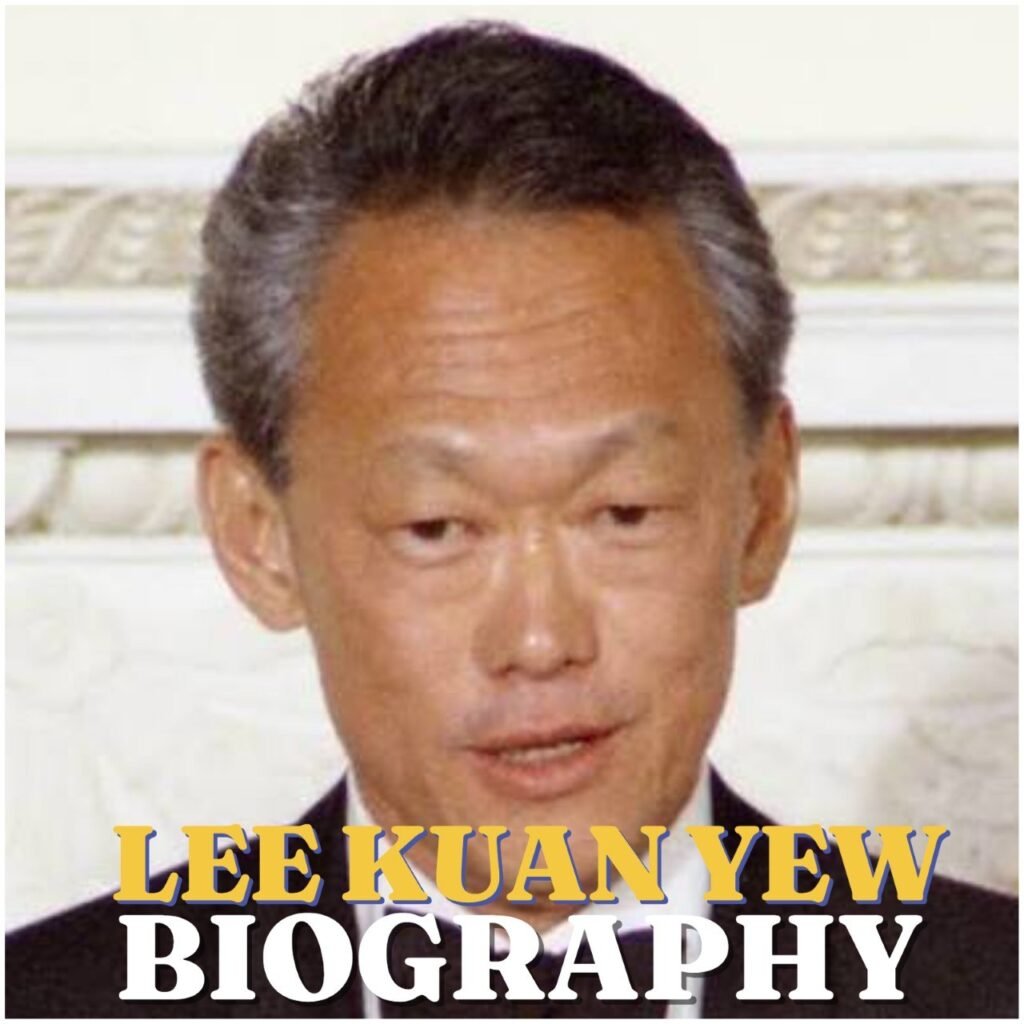
Lee Kuan Yew was a Singaporean lawyer, politician, and statesman who led one of the most remarkable national transformations in modern history. Known as the founding father of modern Singapore, he became the country’s first prime minister in 1959 and remained in office until 1990. During his leadership, Singapore moved from British colonial rule to independence and developed into one of the world’s major financial, commercial, and trading centres.
When Singapore became independent in 1965, its future looked uncertain. The country had few natural resources, high unemployment, limited land, and serious security concerns. Many people questioned whether such a small nation could survive on its own. Lee, however, believed that Singapore could succeed through careful planning, strong institutions, education, international trade, and investment in its people.
His government introduced policies that reshaped housing, education, national security, and the economy. Yet his legacy is not defined by development alone. His leadership also attracted criticism over restrictions on political opposition, press freedom, and civil liberties. Understanding Lee Kuan Yew means examining both his achievements and the controversies that continue to shape discussions about his time in power.
Lee Kuan Yew at a Glance
| Detail | Information |
|---|---|
| Full name | Lee Kuan Yew |
| English name | Harry Lee Kuan Yew |
| Date of birth | September 16, 1923 |
| Place of birth | Singapore |
| Date of death | March 23, 2015 |
| Age at death | 91 years |
| Nationality | Singaporean |
| Ethnic background | Chinese, from a Straits Chinese family |
| Education | Raffles Institution, Raffles College, University of Cambridge |
| Profession | Lawyer and politician |
| Political party | People’s Action Party (PAP) |
| Wife | Kwa Geok Choo |
| Children | Lee Hsien Loong, Lee Wei Ling, and Lee Hsien Yang |
| Best known for | Leading Singapore’s independence and development |
| Prime minister | 1959–1990 |
Early Life and Family Background
Lee Kuan Yew was born on September 16, 1923, in Singapore, which was then a British colonial territory. He was the eldest child of Lee Chin Koon and Chua Jim Neo. His family belonged to the Straits Chinese community, whose members had Chinese ancestry and had lived in the Malay region for generations.
His father worked for the Shell Oil Company before taking on other jobs, while his mother managed the household. Lee grew up in a family that valued education, discipline, and hard work. He was exposed to English-language education from an early age, which later influenced his academic interests and professional direction.
As a child, he was known by the English name Harry. Growing up in colonial Singapore also exposed him to a society shaped by different ethnic groups, languages, and cultural traditions. These early experiences would later influence his understanding of national identity and the challenges of governing a multicultural country.
Education and the Experience That Changed His Life
Lee attended Raffles Institution, one of Singapore’s most respected schools. He performed exceptionally well in his examinations and later gained admission to Raffles College. His academic success opened the door to further studies, but the Second World War interrupted his plans.
In February 1942, Japanese forces captured Singapore after defeating the British. The occupation brought widespread hardship, fear, and uncertainty. Lee witnessed the collapse of colonial authority and experienced the vulnerability of a society that could not protect itself from an invading power.
During the occupation, he survived by taking different jobs. He worked as a clerk and later became involved in English-language editing for a Japanese propaganda department. These experiences gave him a close view of wartime administration and the consequences of political and military weakness. They also influenced his later emphasis on national security and self-reliance.
After the war, Lee travelled to England to continue his education. He initially attended the London School of Economics before transferring to Fitzwilliam College, Cambridge. In 1949, he graduated with first-class honours in law, earning a distinction known as a starred first. He was subsequently called to the Bar at Middle Temple in 1950.
From Lawyer to Political Leader
Lee returned to Singapore in 1950 and began practising law. He established the law firm Lee & Lee with his wife, Kwa Geok Choo, and fellow lawyer Dennis Lee. His legal work brought him into contact with trade unions and workers who were campaigning for better wages, improved working conditions, and greater rights.
These relationships introduced him to the political struggles of ordinary Singaporeans. At the time, the country was still under British colonial administration, but demands for self-government were growing. Lee became increasingly convinced that Singaporeans needed greater control over their political and economic future.
His work with trade unions also helped him build relationships with activists and political organisers. He gradually moved beyond private legal practice and became involved in the campaign for independence from colonial rule.
In 1954, Lee helped establish the People’s Action Party (PAP). The party brought together people who wanted political change and greater self-government for Singapore. Lee became its secretary-general and soon emerged as one of its most prominent leaders.
Lee Kuan Yew Becomes Singapore’s First Prime Minister
The PAP gained political support by promising an end to colonial rule and greater participation in government. Its influence grew as Singaporeans demanded more control over their future.
In the 1959 general election, the party won a majority of seats in the Legislative Assembly. Singapore gained internal self-government from Britain, and Lee Kuan Yew became its first prime minister on June 5, 1959.
The new administration inherited serious problems. Unemployment was high, many families lived in poor housing conditions, and labour disputes regularly disrupted economic activity. Lee’s government began introducing policies to improve housing, expand education, attract investment, and strengthen public institutions.
He also believed Singapore’s long-term future depended on closer economic and political ties with neighbouring Malaya. A merger, he argued, would provide access to a larger market and create new opportunities for trade and development. This vision led to Singapore joining Malaysia in 1963.
Singapore’s Separation from Malaysia and the Birth of an Independent Nation
On September 16, 1963, Singapore became part of the Federation of Malaysia, alongside Malaya, Sabah, and Sarawak. Lee supported the merger because he believed it would strengthen Singapore’s economy and provide a more secure political future.
However, the union soon faced serious disagreements. The Singapore government and Malaysia’s federal leadership clashed over political representation, economic arrangements, and competing ideas about national identity. Tensions also developed between the PAP and the United Malays National Organisation (UMNO), a major party in Malaysia’s governing coalition.
The situation became more difficult after racial tensions and communal violence in Singapore in 1964. Political disagreements continued, and relations between the two governments deteriorated.
On August 9, 1965, Singapore separated from Malaysia and became an independent country. Lee announced the decision during a televised press conference. He was visibly emotional because he had spent years working towards a political union with Malaya. Despite his disappointment, he accepted the new reality and focused on building a future for Singapore.
Independence presented an enormous challenge. Singapore had limited natural resources, a small domestic market, and serious security concerns. Lee’s government now had to create jobs, strengthen national institutions, develop infrastructure, and build a shared identity among people from different backgrounds.
How Lee Kuan Yew Transformed Singapore’s Economy
One of Lee’s most important contributions was his government’s approach to economic development. Rather than relying on natural resources, Singapore focused on international trade, manufacturing, foreign investment, and the development of skilled workers.
The government invested in roads, transport systems, industrial estates, and port facilities. Singapore’s strategic location along major international shipping routes also helped it become an important centre for maritime trade and logistics.
The Economic Development Board, established in 1961, played a major role in attracting foreign businesses and supporting industrial growth. Under Lee’s leadership, Singapore gradually expanded beyond traditional trading activities and developed a wider economy that included manufacturing, financial services, and international business.
His administration also emphasised effective public administration and long-term planning. Government agencies were expected to deliver results, while the civil service developed a reputation for discipline and professional standards.
This transformation was not the work of one person alone. Workers, business owners, public servants, international partners, and generations of Singaporeans all contributed to the country’s progress. Nevertheless, Lee’s government provided much of the political direction and institutional support behind its development.
Public Housing, Education, and Social Progress
Economic growth was only one part of Lee Kuan Yew’s vision. He also wanted Singaporeans to have better living conditions and access to opportunities that could improve their lives.
Housing was one of the country’s most urgent problems. In the early years of self-government, many families lived in overcrowded and inadequate homes. To address this, the government expanded public housing through the Housing and Development Board (HDB), established in 1960.
The HDB developed residential flats and planned communities that gave more families access to secure accommodation. Over time, public housing became a defining feature of Singapore. Residential areas were increasingly supported by schools, transport links, healthcare facilities, and other essential services.
Education was another major priority. Lee’s government expanded access to schooling and promoted subjects that could prepare young people for employment in a modern economy. Mathematics, science, technical education, and vocational training became important parts of the country’s development strategy.
The government also promoted English as a common working language to strengthen Singapore’s international business connections. At the same time, mother-tongue education was maintained for the country’s different ethnic communities. The policy aimed to balance economic competitiveness with cultural identity, although its effects on language and heritage have remained subjects of discussion.
National Security and the Development of Singapore’s Armed Forces
For a newly independent country, protecting national sovereignty was essential. Singapore was small, lacked natural resources, and faced an uncertain regional security environment. Lee believed that the country could not depend entirely on other nations for its defence.
His government therefore made national security a central part of national planning. Singapore introduced compulsory national service for eligible male citizens and permanent residents, helping to build a trained reserve force.
The government also developed the Singapore Armed Forces with assistance from international partners, including Israel during its early development. Over time, the country invested in modern equipment, military training, technology, and professional defence institutions.
Lee regarded a credible defence capability as necessary for protecting independence and supporting economic stability. His administration therefore treated national security as an essential part of Singapore’s long-term survival.
Lee Kuan Yew’s Leadership Style and Political Controversies
Lee Kuan Yew’s leadership was marked by strong central authority, long-term planning, and an emphasis on stability and order. The People’s Action Party remained in power throughout his time as prime minister, and Lee played a central role in shaping Singapore’s political direction.
His supporters argue that this approach helped the country manage the difficult conditions it faced after independence. They point to economic development, public housing, institutional growth, and Singapore’s emergence as an international business centre as important results of his administration.
However, his government also faced criticism over restrictions on political opposition, press freedom, and freedom of expression. Critics argued that laws and government practices limited political competition and placed pressure on individuals and organisations that challenged the ruling party.
Lee defended many of these policies by arguing that Singapore needed stability, social cohesion, and effective administration to survive in a challenging regional environment. He often stressed that a country’s political system should be understood in relation to its history, size, and circumstances.
His record remains the subject of debate. His contribution to Singapore’s economic and institutional development is widely recognised, while questions about political freedoms and the limits of government authority remain central to assessments of his leadership.
Retirement and Later Government Positions
After serving as prime minister for more than three decades, Lee stepped down on November 28, 1990. He handed over leadership to Goh Chok Tong, who became Singapore’s second prime minister. The transition marked an important stage in the country’s political development.
Lee remained involved in government after leaving the prime minister’s office. He served as Senior Minister and continued advising the administration. In August 2004, he became Minister Mentor when his son, Lee Hsien Loong, took office as prime minister.
During this period, he continued speaking about globalisation, economic competition, national security, and international relations. His views attracted attention from political leaders, academics, and business figures around the world.
He stepped down as Minister Mentor in May 2011 and left the Cabinet. Although he no longer held an official government position, his influence on Singapore’s political and institutional history remained significant.
Lee Kuan Yew’s Wife: His Marriage to Kwa Geok Choo
Lee Kuan Yew married Kwa Geok Choo, a Singaporean lawyer who became his lifelong partner. They met while studying in Singapore and later continued their relationship during their time in England.
The couple secretly married on December 23, 1947, in Stratford-upon-Avon, England. They later held a public wedding ceremony in Singapore in 1950. Their marriage lasted for more than six decades and was known for its close personal and professional partnership.
Kwa Geok Choo was an accomplished lawyer who co-founded the law firm Lee & Lee. She maintained her own professional career while supporting her husband’s political journey. Although she generally kept a private public profile, she played an important role in his personal and professional life.
She died on October 2, 2010, at the age of 89. Her death was a major personal loss for Lee, who had shared much of his life and career with her.
Lee Kuan Yew’s Children and Family Life
Lee Kuan Yew and Kwa Geok Choo had three children: Lee Hsien Loong, Lee Wei Ling, and Lee Hsien Yang. Each followed a different professional path, although the family remained closely connected to Singapore’s public life.
Their eldest son, Lee Hsien Loong, became Singapore’s third prime minister in 2004. He served until 2024, when Lawrence Wong succeeded him. Before becoming prime minister, he held several senior government positions and contributed to the country’s economic and political administration.
Their daughter, Lee Wei Ling, became a neurologist and held senior positions in the medical profession. Their younger son, Lee Hsien Yang, pursued a career in business and telecommunications.
After Lee Kuan Yew’s death, disagreements among the siblings became public, particularly over the future of the family’s former residence at 38 Oxley Road. The dispute attracted considerable attention because of the family’s political importance and questions surrounding their father’s wishes.
Lee Kuan Yew’s Ethnicity, Religion, and Nationality
Lee Kuan Yew was Singaporean by nationality and came from a Chinese family belonging to the Straits Chinese community. His background reflected the multicultural society of colonial Singapore, where Chinese, Malay, Indian, and other communities lived alongside one another.
His religious outlook was complex. He was exposed to Christian influences through his family and education, but he did not consistently identify himself as a practising Christian. His later public statements reflected a largely secular and pragmatic approach to religion and government.
As prime minister, he placed considerable importance on religious harmony. His government promoted policies intended to maintain peaceful relationships among Singapore’s different ethnic and religious communities. This approach was closely connected to his belief that social stability was essential to the country’s development.
Lee Kuan Yew’s Death and State Funeral
Lee Kuan Yew died on March 23, 2015, at the age of 91, at Singapore General Hospital. His death marked the end of a major chapter in Singapore’s political history and prompted tributes from leaders and citizens around the world.
The government declared a period of national mourning. Thousands of people visited Parliament House to pay their respects, while many others gathered along the route of his funeral procession. The public response reflected his influence on Singapore’s development and national identity.
His state funeral took place on March 29, 2015, at the University Cultural Centre of the National University of Singapore. Political leaders, international representatives, family members, and ordinary citizens attended the ceremony.
He was remembered for his role in Singapore’s independence and economic transformation. His death also renewed discussions about his political philosophy, governing methods, and lasting influence on the country.
Lee Kuan Yew’s Awards and International Recognition
Lee received numerous honours during his lifetime in recognition of his political leadership and contributions to international relations. His influence extended beyond Singapore, and he developed relationships with political leaders from different parts of the world.
Among the honours he received were the Grand Cross of the Order of St Michael and St George from the United Kingdom and Japan’s Order of the Rising Sun. He also received recognition from academic institutions, including honorary distinctions from universities.
His ideas about governance, economic development, and international affairs attracted attention from policymakers and researchers. Singapore’s development experience became an important subject in discussions about how small countries could build competitive economies.
In 2015, Singapore established the Lee Kuan Yew World City Prize. The international award recognises achievements in creating liveable, sustainable, and vibrant urban communities. It reflects the lasting association between his name and Singapore’s approach to urban planning and development.
Lee Kuan Yew’s Legacy: How He Shaped Modern Singapore
Lee Kuan Yew’s legacy is closely tied to Singapore’s transformation from a British colonial territory into an independent and internationally influential city-state. His government helped establish institutions, economic policies, public housing programmes, and education systems that shaped the country’s development for decades.
His approach to governance has also influenced discussions about economic growth and public administration in other countries. Policymakers have studied Singapore’s experience with long-term planning, foreign investment, education, and international trade. His ideas about national survival and economic competitiveness continue to feature in debates about development.
However, his legacy remains contested. Many credit him with helping create a prosperous and stable Singapore, while others question the restrictions on political freedoms that accompanied his governing style. These differing views highlight an important issue in evaluating political leadership: economic progress must also be considered alongside political participation, accountability, and individual rights.
Lee Kuan Yew remains one of the most influential political figures in modern Asian history. His decisions shaped Singapore’s national identity and helped establish its place in the international community. His achievements and controversies continue to offer important lessons about the opportunities and challenges of nation-building.
Conclusion
Lee Kuan Yew’s story is the story of Singapore’s transformation from colonial rule to independence and international prominence. As the country’s first prime minister, he led a government that prioritised economic development, education, public housing, national security, and effective public administration. His leadership helped establish many of the institutions that shaped modern Singapore. Yet his time in power also raised difficult questions about political freedom and the limits of government authority. His legacy is therefore best understood through both his achievements and the controversies surrounding his leadership. More than a decade after his death, Lee Kuan Yew remains a defining figure in Singapore’s history and an influential subject in discussions about political leadership and national development.
Frequently Asked Questions About Lee Kuan Yew
Who was Lee Kuan Yew?
Lee Kuan Yew was a Singaporean lawyer, politician, and statesman who became the country’s first prime minister. He played a central role in Singapore’s independence and economic development.
When was Lee Kuan Yew born?
Lee Kuan Yew was born on September 16, 1923, in Singapore.
When did Lee Kuan Yew die?
He died on March 23, 2015, at the age of 91.
How long did Lee Kuan Yew serve as Singapore’s prime minister?
He served as prime minister from June 5, 1959, to November 28, 1990, a period of approximately 31 years.
Who was Lee Kuan Yew’s wife?
His wife was Kwa Geok Choo, a Singaporean lawyer and co-founder of the law firm Lee & Lee. They married in 1947.
How many children did Lee Kuan Yew have?
He had three children: Lee Hsien Loong, Lee Wei Ling, and Lee Hsien Yang.
What was Lee Kuan Yew famous for?
He was famous for leading Singapore through self-government, independence, and economic development. He is widely regarded as the founding father of modern Singapore.
Which political party did Lee Kuan Yew belong to?
He was a founding member of the People’s Action Party (PAP), which he helped establish in 1954.
Why did Singapore separate from Malaysia?
Singapore separated from Malaysia on August 9, 1965, following political, economic, and communal tensions between the two governments. Disagreements over political representation and national identity contributed to the separation.
What did Lee Kuan Yew do after retiring as prime minister?
After leaving office in 1990, he served as Senior Minister and later as Minister Mentor. He left the Cabinet in May 2011.
Where did Lee Kuan Yew study?
He attended Raffles Institution and Raffles College in Singapore before studying law at Fitzwilliam College, Cambridge, in England. He graduated in 1949 with first-class honours in law.
What is Lee Kuan Yew’s legacy?
His legacy includes Singapore’s independence, economic transformation, public housing development, education policies, and the establishment of strong public institutions. His leadership style and his government’s restrictions on political freedoms remain subjects of historical and political debate.