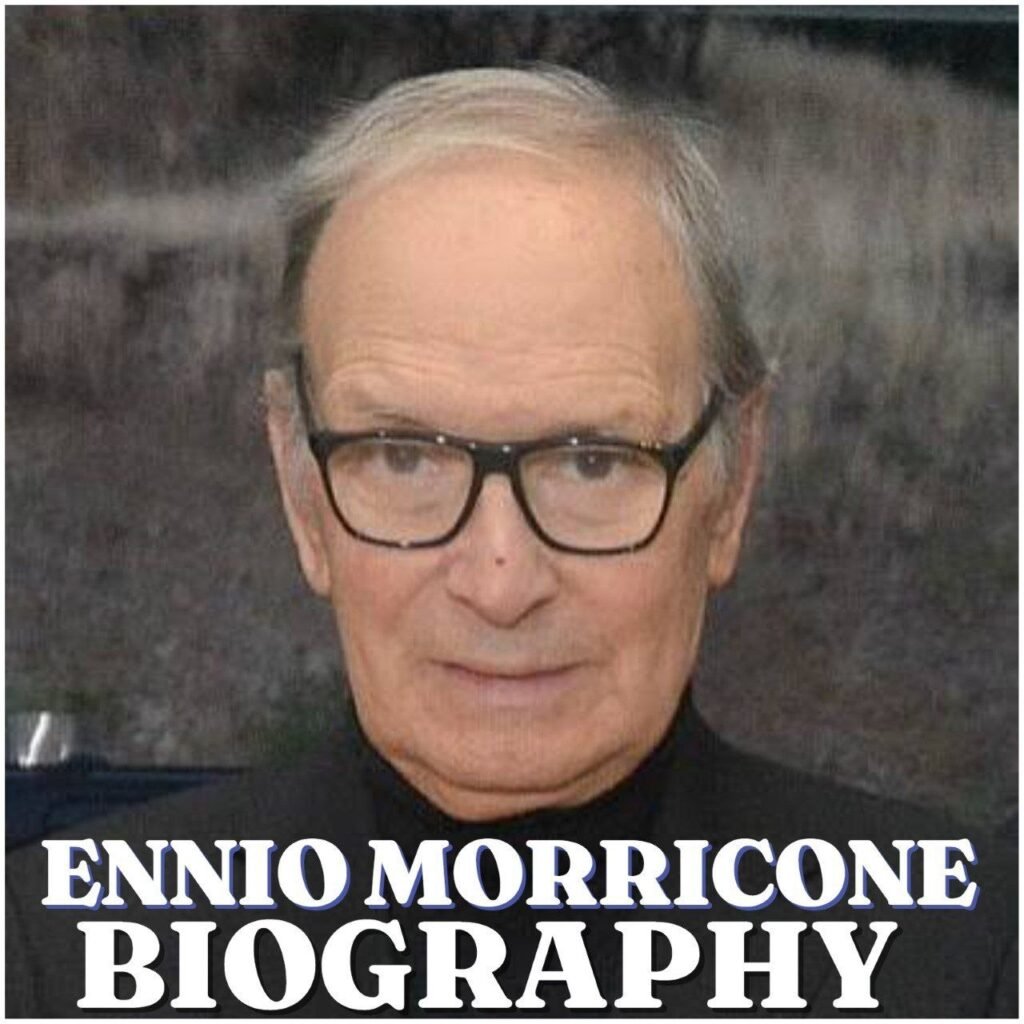

Introduction
Ennio Morricone was an Italian composer, conductor, orchestrator and musician widely regarded as one of the greatest film composers in history. He became internationally famous for creating memorable soundtracks for classic Western films, particularly those directed by Sergio Leone. His music for The Good, the Bad and the Ugly, Once Upon a Time in the West and A Fistful of Dollars helped transform the way audiences experienced film music.
Morricone’s talent extended far beyond Western movies. During his long career, he composed music for more than 400 films, working with directors from Italy, Europe and Hollywood. His compositions appeared in dramas, thrillers, historical films, comedies and other genres. He also wrote concert music, arranged popular songs and worked in radio and television. His ability to combine traditional orchestral sounds with unusual instruments and experimental techniques gave his compositions a distinctive identity.
Although Ennio Morricone died on July 6, 2020, his music continues to reach new audiences around the world. He received numerous awards during his lifetime, including an honorary Academy Award and a competitive Oscar for The Hateful Eight. His influence remains visible in modern film scoring, and his compositions continue to be performed and celebrated. This biography explores his early life, education, career, marriage, children, personal details, estimated net worth and lasting legacy.
Early Life and Family Background
Ennio Morricone was born on November 10, 1928, in Rome, Italy. His parents were Mario Morricone and Libera Ridolfi. His father was a professional trumpeter who performed in jazz bands, while his mother managed the family’s home. Growing up in a household where music was part of everyday life gave Ennio an early opportunity to understand musical instruments and performance.
Morricone was the eldest of five children. His father’s profession played an important role in introducing him to music. He began learning the trumpet at a young age and showed an unusual interest in composing. While other children were still discovering their interests, he was already experimenting with melodies and musical arrangements. His early exposure to different musical styles helped him develop a strong foundation.
As a young boy, Morricone showed a natural ability to understand musical structure. His father encouraged his development, and he soon began receiving formal instruction. He attended the Santa Cecilia Conservatory in Rome, where he studied music and developed the technical skills that would later support his professional career. His childhood experiences laid the foundation for a lifetime devoted to composition.
Education and Academic Background
Ennio Morricone received his formal musical education at the Conservatorio di Santa Cecilia in Rome, one of Italy’s respected music institutions. He enrolled as a young student and studied the trumpet, following in his father’s footsteps. His training helped him develop a strong understanding of musical performance, harmony and composition.
He received his trumpet diploma in 1946. He continued studying composition under the guidance of Goffredo Petrassi, an influential Italian composer and teacher. Petrassi helped him understand advanced musical techniques and the principles of writing for different instruments. Morricone completed his composition studies in 1954, building the technical foundation that would support his later work in film and concert music.
His education was not limited to classroom instruction. Morricone developed his abilities through practical work as a performer, arranger and composer. He studied traditional classical music while also exploring modern and experimental approaches. This combination became one of the defining features of his career. It allowed him to create music that could be both technically sophisticated and emotionally accessible to a wide audience.
Ennio Morricone’s Career and Professional Achievements
Early Career as a Musician and Arranger
Before becoming an internationally recognised film composer, Ennio Morricone worked in several areas of the Italian music industry. He performed as a trumpeter, wrote arrangements and composed music for radio and theatre. These early opportunities allowed him to gain practical experience and understand how music could be adapted for different audiences and productions.
He also worked as an arranger for the Italian broadcasting company RAI and the RCA record label. During this period, he contributed to recordings by popular Italian singers and became known for his ability to create fresh musical arrangements. He worked with different instruments and experimented with unusual combinations of sounds, helping him develop a style that stood out from conventional arrangements.
His work in popular music was an important part of his development. It gave him experience with recording studios, musicians and professional production teams. It also taught him how to create memorable melodies that could connect with listeners. These skills later became valuable when he began composing for films.
Beginning His Film Composition Career
Ennio Morricone officially began his film-scoring career in 1961 with Il Federale, directed by Luciano Salce. The project introduced him to the demands of composing music for cinema. Unlike concert music, film scores must support a story, strengthen emotions and respond to what is happening on screen.
His early film work helped him understand how music could influence the way viewers experienced a scene. He experimented with different sounds and arrangements, often choosing instruments that were not commonly associated with traditional film scores. His willingness to take creative risks helped distinguish his compositions from those of other composers.
Morricone gradually became a respected figure in Italian cinema. Directors recognised his ability to create music that could strengthen a film’s identity. His breakthrough came through his collaboration with childhood schoolmate Sergio Leone, whose Western films introduced Morricone’s work to audiences around the world.
Collaboration with Sergio Leone and the Spaghetti Westerns
One of the most important partnerships in Ennio Morricone’s career was his collaboration with Italian film director Sergio Leone. The two had known each other since childhood, but their professional partnership became internationally famous through a series of Western films.
Their collaboration began with A Fistful of Dollars in 1964. Morricone created a soundtrack that sounded very different from the traditional orchestral music commonly used in American Westerns. He combined electric guitar, whistles, bells, percussion and other unusual sounds to create a distinctive atmosphere. The result helped give the film a unique identity.
He continued working with Leone on For a Few Dollars More in 1965 and The Good, the Bad and the Ugly in 1966. The latter became one of the most recognisable film soundtracks ever created. Its memorable main theme became closely associated with Western cinema and helped establish Morricone as an international music figure. Their partnership continued with Once Upon a Time in the West in 1968 and A Fistful of Dynamite in 1971.
The Good, the Bad and the Ugly and International Recognition
The Good, the Bad and the Ugly became one of Ennio Morricone’s most celebrated works. Its soundtrack demonstrated how music could become an essential part of a film’s identity rather than simply playing in the background. The unusual vocal sounds, whistles, percussion and orchestral elements created a memorable atmosphere that audiences could recognise immediately.
The film’s main theme became particularly famous. Its distinctive sound helped establish a new musical language for Western films and influenced composers working in the genre. Even people who have not watched the film may recognise parts of its soundtrack because it has been reused, performed and referenced in popular culture.
The success of the soundtrack helped Morricone gain international recognition. It also demonstrated that film music could become commercially successful and culturally important in its own right. His compositions were no longer known only to cinema audiences; they were becoming familiar to music listeners around the world.
Work Beyond Western Films
Although Morricone became closely associated with Western cinema, his career covered a much wider range of film genres. He composed music for dramas, crime films, thrillers, historical stories, comedies and romantic productions. His ability to adapt his musical style to different stories made him one of the most versatile composers in the industry.
Among his notable works was the soundtrack for The Battle of Algiers (1966), a film known for its political and historical themes. He also composed music for The Mission (1986), whose score became one of his most respected works. The film’s music combines orchestral writing with choral elements and sounds connected to the story’s setting.
Other major projects included Once Upon a Time in America (1984), The Untouchables (1987), Cinema Paradiso (1988) and Malèna (2000). These films demonstrated his ability to create different musical moods while maintaining the emotional depth that made his work distinctive.
Collaborations with International Directors
As his reputation grew, Ennio Morricone began working with directors from different countries. His collaborators included Bernardo Bertolucci, Pier Paolo Pasolini, Brian De Palma, Roman Polanski, Oliver Stone and Giuseppe Tornatore. Each partnership gave him an opportunity to explore a different approach to film music.
His collaboration with Giuseppe Tornatore was especially important. Morricone composed the music for several of Tornatore’s films, including Cinema Paradiso. The soundtrack became internationally admired for its emotional themes and beautiful melodies. The music helped strengthen the film’s story about memory, friendship and the power of cinema.
Morricone’s international work showed that his talent was not restricted to one country or style of filmmaking. He could compose music for stories with different cultural backgrounds, settings and themes. His ability to understand a film’s emotional needs helped him become one of the most sought-after composers of his generation.
The Hateful Eight and His First Competitive Oscar
One of the most important achievements of Morricone’s later career came through his collaboration with American filmmaker Quentin Tarantino. Tarantino had used Morricone’s earlier music in several films and admired his work. Their professional relationship eventually led to Morricone composing the original score for The Hateful Eight, released in 2015.
The soundtrack was darker and more atmospheric than some of his earlier work. It helped create tension and supported the film’s dramatic setting. Morricone’s composition received widespread praise and brought him another major international award.
In 2016, he won the Academy Award for Best Original Score for The Hateful Eight. At 87, he became the oldest person to win a competitive Oscar in a music category at the time. The award was especially meaningful because it recognised his work on a specific film after decades of international success.
Concert Music, Conducting and Experimental Composition
Ennio Morricone was not only a film composer. He also wrote concert works for orchestras, chamber groups and other musical ensembles. These compositions allowed him to explore musical ideas that were not always suitable for film soundtracks. His concert music reflected his interest in classical traditions, modern composition and experimental techniques.
He was also involved in Nuova Consonanza, an Italian group devoted to experimental and improvised music. The group explored unusual sounds, electronic instruments and different approaches to performance. Morricone’s participation showed that he was interested in musical experimentation throughout his career.
In addition to composing, he conducted orchestras performing his music. These concerts allowed audiences to experience his film scores outside the cinema. His work on stage demonstrated his understanding of orchestration and his ability to guide musicians through complex compositions.
Final Years and Death
Ennio Morricone continued working well into his later years. Even after receiving major international awards, he remained committed to composing and conducting. His work for The Hateful Eight introduced his music to another generation of film fans and demonstrated that his creative abilities remained strong.
In his later years, he also conducted concerts featuring selections from his extensive catalogue. These performances attracted audiences who wanted to experience his music in a live orchestral setting. His final years were marked by international recognition and continued appreciation for his contribution to cinema.
Morricone died in Rome on July 6, 2020, at the age of 91. His death was widely mourned by filmmakers, musicians, actors and audiences around the world. His music, however, continues to be performed, recorded and used in films and other forms of entertainment.
Why Is Ennio Morricone Trending in 2026?
Ennio Morricone continues to attract attention in 2026 because his music remains an important part of film history. His compositions for The Good, the Bad and the Ugly, The Mission, Cinema Paradiso and other films continue to reach new listeners through streaming platforms, orchestral performances and film retrospectives.
Interest in his life has also been sustained by the documentary Ennio, directed by Giuseppe Tornatore. Released in 2021, the documentary explores Morricone’s career through interviews, archival material and reflections from people who worked with him. Its continued screenings and festival presentations help introduce his story to audiences who may not have experienced his music when he was alive.
His legacy is also discussed whenever filmmakers and composers explore the relationship between music and storytelling. Morricone’s approach to sound, melody and unusual instrumentation influenced generations of musicians. Although he is no longer alive, his work remains relevant to discussions about great film composers and the history of cinema.
Personal Life, Wife and Children
Ennio Morricone was married to Maria Travia, whom he met before becoming internationally famous. The couple married in 1956 and remained together throughout his life. Maria supported him during the demanding years of his career, including the periods when he was composing music for several productions and travelling for professional commitments.
Their marriage lasted more than six decades. Morricone was known for keeping much of his family life away from public attention. Although his professional work brought him international recognition, he generally preferred to maintain a private home life. His relationship with Maria remained an important part of his personal story.
The couple had four children: Marco, Alessandra, Andrea and Giovanni. Their son Andrea Morricone also became a composer and musician. He worked in music and collaborated with his father on some projects. Ennio’s family was an important source of support throughout his career, and he remained closely connected to them until his death in 2020.
Ennio Morricone’s Age, Religion, Nationality, Ethnicity, Height and Physical Appearance
Ennio Morricone was born on November 10, 1928, in Rome, Italy. He died on July 6, 2020, at the age of 91. He was Italian by nationality and was born into an Italian family. His cultural background and musical education were closely connected to Rome and the wider Italian artistic tradition.
Information about Morricone’s personal religious beliefs is not consistently established in reliable biographical sources. Although religious and spiritual themes appeared in some of the films for which he composed music, this does not automatically establish his own religious affiliation. It is therefore more accurate to avoid assigning him a specific religion without a clear personal statement.
Morricone was commonly reported to be approximately 5 feet 4 inches tall, although published figures may vary. He was often seen wearing formal clothing when conducting orchestras or attending public events. His calm appearance and focused manner reflected the serious approach he brought to his musical work. He became recognisable not through a celebrity-style public image but through the music he created.
Ennio Morricone’s Social Media Presence and Online Activities
Ennio Morricone did not build a public career around social media. Most of his professional life took place before platforms such as Instagram and TikTok became major parts of the entertainment industry. He was better known for his music, public performances, interviews and collaborations with filmmakers than for maintaining personal online accounts.
After his death, his music and legacy continued to receive attention through online platforms. Streaming services allow listeners to explore his soundtracks, while video platforms feature concert performances, interviews and documentary material. His work is also discussed by film fans, musicians and music historians.
There are social media accounts and fan pages dedicated to Morricone, but these should not automatically be treated as his personal profiles. His official website and authorised music releases are more reliable ways to learn about his compositions and professional legacy. His continued online presence comes mainly through the music and archival material he left behind.
Ennio Morricone’s Net Worth and Sources of Income
Ennio Morricone’s exact net worth at the time of his death has not been reliably established in public financial records. Some celebrity wealth websites have published estimates, but these figures are not confirmed by his family or an official financial disclosure. It is therefore difficult to state an exact amount with confidence.
His main source of income was his work as a composer, arranger, conductor and musician. Over several decades, he composed music for hundreds of films and television productions. His soundtracks generated income through film contracts, music publishing, recordings, licensing and performance rights. His work with major directors and international film productions made him one of the most successful composers in cinema history.
Morricone also earned income through concert performances, record sales and other musical projects. His compositions have continued to be performed and licensed after his death, creating an ongoing cultural and commercial presence for his work. Although his precise wealth remains uncertain, his long career and extensive catalogue represent a substantial artistic and commercial legacy.
Ennio Morricone’s Legacy and Influence in the Music and Film Industry
Ennio Morricone’s influence on film music is difficult to overstate. His compositions helped change the way directors and composers approached soundtracks. Rather than relying only on traditional orchestral arrangements, he experimented with whistles, electric guitars, percussion, voices and unusual sound effects. This approach helped create memorable musical identities for the films he worked on.
His influence is particularly clear in the Western genre. Before his work with Sergio Leone, many Western soundtracks followed familiar musical patterns. Morricone introduced a different sound that was sometimes sparse, dramatic and unconventional. His music helped shape the identity of Italian Westerns and influenced composers who later worked in the genre.
His achievements were recognised through major international awards. He received an honorary Academy Award in 2007 and won the competitive Oscar for Best Original Score in 2016 for The Hateful Eight. He also received BAFTA Awards, Golden Globes, Grammy recognition and numerous Italian honours. Beyond these awards, his greatest achievement may be the lasting connection audiences have with his music. His compositions continue to bring emotion, atmosphere and meaning to the films they accompany.
Conclusion
Ennio Morricone was one of the most influential composers in the history of cinema. From his early musical education in Rome to his internationally celebrated soundtracks, he built a career that transformed film music across several generations. His collaborations with Sergio Leone, Giuseppe Tornatore and other major directors produced some of the most memorable compositions in movie history. Although he died in 2020 at the age of 91, his music continues to inspire composers, filmmakers and audiences around the world. His legacy remains a powerful example of how music can shape the way people experience stories.
Frequently Asked Questions About Ennio Morricone
1. Who was Ennio Morricone?
Ennio Morricone was an Italian composer, conductor and orchestrator best known for creating music for hundreds of films. He became internationally famous for his soundtracks to Western films directed by Sergio Leone.
2. When was Ennio Morricone born?
Ennio Morricone was born on November 10, 1928, in Rome, Italy.
3. When did Ennio Morricone die?
Ennio Morricone died on July 6, 2020, in Rome, Italy. He was 91 years old.
4. What was Ennio Morricone famous for?
He was famous for composing film soundtracks, particularly for The Good, the Bad and the Ugly, Once Upon a Time in the West, The Mission and Cinema Paradiso.
5. What was Ennio Morricone’s nationality?
Ennio Morricone was Italian. He was born and raised in Rome, Italy.
6. Who was Ennio Morricone’s wife?
His wife was Maria Travia. They married in 1956 and remained together until his death in 2020.
7. How many children did Ennio Morricone have?
Ennio Morricone had four children with his wife, Maria Travia. Their names were Marco, Alessandra, Andrea and Giovanni.
8. Was Ennio Morricone’s son also a composer?
Yes. His son Andrea Morricone became a composer and musician. He also worked with his father on musical projects.
9. How many films did Ennio Morricone compose music for?
Morricone composed music for more than 400 films, according to biographical accounts of his career. He also wrote concert music and compositions for theatre, radio and television.
10. What was Ennio Morricone’s most famous soundtrack?
One of his most famous soundtracks was for The Good, the Bad and the Ugly (1966). Its distinctive main theme became one of the most recognisable pieces of film music ever created.
11. Did Ennio Morricone win an Oscar?
Yes. He received an honorary Academy Award in 2007 and won the Academy Award for Best Original Score in 2016 for The Hateful Eight.
12. How many Oscars did Ennio Morricone win?
He received two Academy Awards: an honorary Oscar in 2007 and a competitive Oscar for The Hateful Eight in 2016.
13. What was Ennio Morricone’s net worth?
His exact net worth has not been reliably confirmed. Some online publications have estimated his wealth, but there is no official public figure that establishes the value of his estate.
14. What instrument did Ennio Morricone play?
Morricone studied and played the trumpet. He also worked with piano and developed a deep understanding of orchestration and a wide range of musical instruments.
15. Who was Ennio Morricone’s most famous director collaborator?
Sergio Leone was one of his most famous collaborators. Their partnership produced several influential Western films, including A Fistful of Dollars, For a Few Dollars More and The Good, the Bad and the Ugly.
16. What was Ennio Morricone’s educational background?
He studied at the Conservatorio di Santa Cecilia in Rome. He received a trumpet diploma in 1946 and completed his composition studies in 1954 under composer Goffredo Petrassi.
17. What religion was Ennio Morricone?
His personal religious affiliation is not consistently established in reliable public biographical sources. It is best not to assign him a specific religion without a clear statement from him.
18. Why is Ennio Morricone still remembered today?
He is remembered for transforming film music through his distinctive compositions, creative use of instruments and ability to support powerful storytelling. His soundtracks continue to be performed, studied and enjoyed by audiences around the world.