
Introduction
William Shakespeare remains one of the most influential writers in world literature, celebrated for his unforgettable plays, powerful poetry, memorable characters, and remarkable understanding of human nature. More than four centuries after his death, his works continue to entertain audiences, inspire writers, influence filmmakers, and shape the way people understand love, ambition, jealousy, betrayal, power, and tragedy. His name is closely associated with some of the greatest literary works ever written, including Romeo and Juliet, Hamlet, Macbeth, Othello, and King Lear. Although he lived in England during the late sixteenth and early seventeenth centuries, his stories remain relevant to people across different cultures and generations.
Shakespeare was not born into a royal or particularly wealthy family, and there is no evidence that he began life with the advantages enjoyed by members of the English aristocracy. He grew up in Stratford-upon-Avon, developed his career during the exciting but competitive Elizabethan theatre era, and eventually became a successful playwright, poet, actor, and shareholder in a prominent theatre company. His rise to prominence was closely connected to London’s growing theatrical industry and the popularity of live performances during the reigns of Queen Elizabeth I and King James I. Through his ability to combine entertaining stories with complex characters and striking language, Shakespeare established himself as a central figure in English drama.
Today, William Shakespeare is widely regarded as the greatest writer in the English language, although literary greatness is always open to discussion. His works have been translated into numerous languages, adapted for stage and screen, and studied in schools and universities around the world. His influence can be seen in modern expressions, storytelling techniques, theatre, cinema, and popular culture. Despite the continuing debates surrounding some details of his personal life and the authorship of his works, the historical evidence identifies Shakespeare as a major working playwright of his time. His biography offers a fascinating account of a man whose imagination and literary skill helped transform the history of drama.
Early Life and Family Background of William Shakespeare
William Shakespeare was born in Stratford-upon-Avon, a market town in Warwickshire, England, in April 1564. His exact birth date is not documented, but April 23 is traditionally celebrated as his birthday because his baptism was recorded on April 26 at Holy Trinity Church. This date is also associated with his death in 1616, although historians distinguish between documented records and long-standing tradition. Shakespeare grew up in a community where trade, religion, education, and local government played important roles in everyday life. The environment in which he was raised later provided a useful background for the social relationships, conflicts, and ambitions explored in his writing.
His father, John Shakespeare, was a successful glove maker and leatherworker who also traded in other goods and held several positions in Stratford’s local government. His mother, Mary Arden, came from a family with agricultural land and established local connections. For a period, the family enjoyed a respectable position in the town, and John Shakespeare eventually became its leading municipal officer, similar to a mayor. However, the family later experienced financial difficulties, and John’s public standing declined. William’s early exposure to both prosperity and financial uncertainty may help explain his familiarity with the different social classes and economic pressures that appear throughout his plays, although the exact influence of these experiences on his writing cannot be established with certainty.
William was the eldest surviving son in a family of eight children. His siblings included Gilbert, Richard, Edmund, Joan, and Anne, alongside two older sisters who died in infancy. Growing up in a large family would have placed him within the ordinary responsibilities and social expectations of an Elizabethan household. Stratford also offered opportunities to encounter travelling performers, public celebrations, religious traditions, and stories from English and European culture. Although very little is known about Shakespeare’s private thoughts during childhood, surviving records and knowledge of the period provide a general picture of the world in which he grew up. His later success was particularly remarkable because he came from a provincial town rather than one of England’s principal centres of literary and political power.
Education and Intellectual Development
William Shakespeare is generally believed to have attended Stratford’s King’s New School, a grammar school that provided education to boys in the town. Although no surviving school register conclusively confirms his attendance, his father’s position and the school’s local role make it a strong possibility. Grammar-school education during Shakespeare’s time concentrated heavily on Latin, grammar, rhetoric, classical literature, and the study of ancient writers. Students learned through reading, memorisation, translation, and imitation, and they sometimes encountered dramatic works through classroom exercises. These subjects helped develop the language skills and rhetorical techniques that became prominent features of Shakespeare’s writing.
His likely education exposed him to the works of Roman authors such as Ovid, Virgil, Plautus, and Terence, whose stories and dramatic methods influenced European literature. Shakespeare also drew on historical chronicles, traditional tales, English writing, and religious and cultural knowledge available during his lifetime. His plays demonstrate a strong understanding of persuasion, public speaking, political authority, and the ways people use language to influence others. However, there is no reliable evidence that he attended a university, and he should not be described as a university graduate. His educational background was different from that of many formally trained scholars, but it provided a foundation that he expanded through reading, professional experience, observation, and sustained work in the theatre.
Shakespeare’s intellectual development was not limited to what he may have learned in school. The theatre offered him a practical education in performance, audience expectations, storytelling, and human behaviour. As an actor and playwright, he had to understand how dialogue sounded when spoken aloud, how characters could hold an audience’s attention, and how a scene could build suspense or produce laughter. His writing suggests a remarkable ability to adapt language to different characters, from kings and generals to servants, lovers, clowns, and ordinary citizens. Because records of his private reading and writing habits are limited, it is difficult to reconstruct his education in full. Nevertheless, his body of work demonstrates how a likely grammar-school education, extensive reading, and experience in professional theatre combined to shape one of English literature’s most influential writers.
Career and Rise to Fame
Beginning of His Writing and Acting Career
The precise circumstances surrounding Shakespeare’s entry into professional theatre remain uncertain. Historical records become clearer in the late 1580s and early 1590s, but much of the period between his early family life and his emergence in London is poorly documented. These years are often called Shakespeare’s “lost years” because surviving records do not provide a reliable account of his activities. By the early 1590s, however, he was established in London’s theatrical world as both a writer and performer. His early success developed during a period when public theatre was becoming increasingly popular and playwrights were producing works for audiences from different social backgrounds.
Shakespeare’s career advanced through his association with professional acting companies, particularly the Lord Chamberlain’s Men, which became the King’s Men after King James I took the throne in 1603. He was not merely an independent writer selling scripts to performers; he was also an actor and a shareholder in the company. This arrangement gave him a financial interest in theatrical success and connected his livelihood to the production of plays. His work attracted attention for its lively plots, memorable characters, imaginative language, and ability to combine serious themes with humour. By the end of the sixteenth century, Shakespeare had become one of the leading playwrights of his generation.
His career benefited from London’s growing theatre culture, but his achievement was not simply a result of being in the right place at the right time. He developed a distinctive dramatic style that blended popular entertainment with emotional complexity and intellectual depth. He could write energetic scenes for a broad audience while exploring difficult questions about justice, political legitimacy, personal responsibility, love, and ambition. His ability to move between comedy, tragedy, history, and poetic drama made him unusually versatile. As his reputation grew, he gained both professional recognition and the financial means to acquire property in Stratford-upon-Avon.
Famous Plays and Literary Achievements
Shakespeare’s works are commonly grouped into tragedies, comedies, histories, and later romances, although some plays cross these categories. His tragedies examine the consequences of human weakness, destructive ambition, jealousy, revenge, and difficult moral choices. Hamlet explores grief, uncertainty, revenge, and the struggle to act; Macbeth examines ambition and the corruption of power; Othello portrays jealousy and manipulation; and King Lear investigates family loyalty, authority, suffering, and the collapse of judgement. These plays have remained central to world drama because their characters face conflicts that audiences can still recognise, even when the social structures around them are very different from modern life.
His comedies are equally important, offering mistaken identities, romantic confusion, witty exchanges, disguise, and unexpected reunions. Works such as A Midsummer Night’s Dream, Twelfth Night, Much Ado About Nothing, and As You Like It combine humour with questions about love, gender expectations, friendship, and social identity. His history plays, including Richard III, Henry IV, Part 1, and Henry V, dramatise the struggle for political authority and examine the relationship between leadership, public image, and responsibility. Later works such as The Tempest and The Winter’s Tale blend romance, loss, reconciliation, and the possibility of renewal. Across these different forms, Shakespeare showed an exceptional ability to create characters whose motives are often mixed and whose choices have consequences.
Shakespeare also wrote poetry that secured his place beyond the theatre. His narrative poems Venus and Adonis and The Rape of Lucrece were published in the 1590s, while his 154 sonnets explore love, beauty, time, jealousy, desire, absence, and the relationship between art and mortality. His poetry displays a careful command of rhythm, metaphor, imagery, and the sonnet form. Many of his works are believed to have been written during the late sixteenth and early seventeenth centuries, but exact dates are uncertain for a number of individual plays. Scholars also debate the precise number of plays he wrote or co-wrote, as collaboration was common in the theatre of his era. His surviving body of work is generally understood to include around 38 plays, 154 sonnets, and several longer poems.
The Globe Theatre and Shakespeare’s Professional Success
One of the defining developments in Shakespeare’s career was his involvement with the Globe Theatre, which opened in London in 1599 and became closely associated with his company. The Globe provided a major venue for performances of his plays and helped establish his place in the commercial theatre industry. Audiences included people from different backgrounds, and performances relied on strong dialogue, physical action, music, comic scenes, and imaginative staging. The theatre’s open-air design and the limited technical effects available at the time encouraged playwrights to use language to establish locations, create atmosphere, and communicate action.
Shakespeare’s position as a shareholder was especially significant because it allowed him to benefit financially from the company’s success rather than depending entirely on payment for individual scripts. He also invested in property in Stratford-upon-Avon, including New Place, one of the town’s substantial houses, which he purchased in 1597. Further land and property investments indicate that his professional achievements translated into lasting financial security. His success demonstrates that early modern theatre was not only an artistic activity but also a commercial enterprise requiring investment, management, and a reliable audience.
The Globe was destroyed by fire in 1613 during a performance of Henry VIII, an event associated with a theatrical cannon effect. It was subsequently rebuilt, but the incident remains a notable moment in the history of Shakespeare’s theatre. By this stage, Shakespeare had already established a considerable reputation and had produced many of the works for which he is now remembered. His career illustrates how writing, acting, business ownership, and collaboration could combine to create a successful life in the performing arts.
The First Folio and the Preservation of His Works
An essential part of Shakespeare’s literary legacy is the First Folio, a collection of his plays published in 1623, seven years after his death. It was assembled by John Heminges and Henry Condell, fellow actors and members of his theatrical company. The collection brought together 36 plays and helped preserve works that might otherwise have been lost or survived only in less reliable forms. Eighteen of the plays included in the First Folio had not previously appeared in print, making the volume particularly important to the survival of Shakespeare’s writing.
The First Folio was more than a tribute to a former colleague. It became one of the most important publications in English literary history because it provided an enduring foundation for later editions, performances, and scholarly study. Without it, readers might not have inherited the familiar texts of works such as Macbeth, The Tempest, and Twelfth Night in the form that became central to Shakespeare studies. The collection also demonstrated that his fellow actors regarded his work as worth preserving for future generations.
Today, Shakespeare’s texts exist in many editions, and editors continue to study early printed versions, differences between texts, and questions about collaboration and authorship. The First Folio remains a landmark in the history of publishing and theatre. Its survival helped ensure that Shakespeare’s influence would extend well beyond the audiences who saw his plays performed during his lifetime.
Personal Life and Family of William Shakespeare
William Shakespeare married Anne Hathaway in 1582, when he was about 18 years old. Anne was approximately 26 and came from Shottery, a village near Stratford-upon-Avon. Their marriage took place at a time when Shakespeare was still a young man at the beginning of his adult life, long before his reputation as a playwright had reached its height. The surviving records confirm the marriage, although they provide little detail about the couple’s private relationship or the circumstances that brought them together. As a result, many popular claims about their marriage remain speculation rather than established fact.
The couple had three children. Their first child, Susanna Shakespeare, was born in May 1583, followed by twins Hamnet and Judith in 1585. Hamnet died in 1596 at the age of 11, a family loss that has often attracted attention from readers trying to understand the emotional background of Shakespeare’s later tragedies. However, there is no conclusive evidence that any specific play was written as a direct response to his son’s death. Susanna later married physician John Hall, while Judith married Thomas Quiney. Shakespeare’s descendants through his children did not establish a surviving direct line, although descendants of his wider family may be traced through his siblings.
Shakespeare’s professional life frequently took him to London, while his wife and children remained primarily connected to Stratford-upon-Avon. He continued to acquire property in his home town and eventually returned there during the later part of his life. His will, prepared shortly before his death, made provisions for members of his family and included the well-known bequest of his “second-best bed” to Anne Hathaway. The meaning of this gift has generated considerable debate, but it should not automatically be interpreted as evidence of an unhappy marriage; household property and inheritance practices in the period were complex. Overall, the available records show that Shakespeare maintained family and financial ties to Stratford while building his career in London’s competitive theatre industry.
William Shakespeare’s Age, Religion, Nationality, Tribe, Height and Physical Appearance
William Shakespeare was born in 1564 and died in 1616 at the age of 52. His birthday is traditionally celebrated on April 23, although his exact birth date is not confirmed by a surviving record. He was baptised on April 26, 1564, in Stratford-upon-Avon, England, and died on April 23, 1616, according to the commonly accepted historical chronology. His relatively short life was nevertheless marked by significant professional success, financial achievement, and a body of writing that would become one of the most studied in world literature.
Shakespeare was English by nationality and was born in Warwickshire, England, during the Tudor period. In terms of ancestry and cultural background, he belonged to the English society of his time. The modern idea of “tribe” does not neatly apply to his historical context, so it is more accurate to describe him as English rather than assign him a tribal identity. His religious background is more complicated. He lived during a period of religious tension between Catholic traditions and the established Church of England. Although scholars have examined records and family connections for clues about his religious beliefs, his personal convictions cannot be stated with certainty. It is therefore misleading to claim definitively that he belonged to a particular religious denomination without qualification.
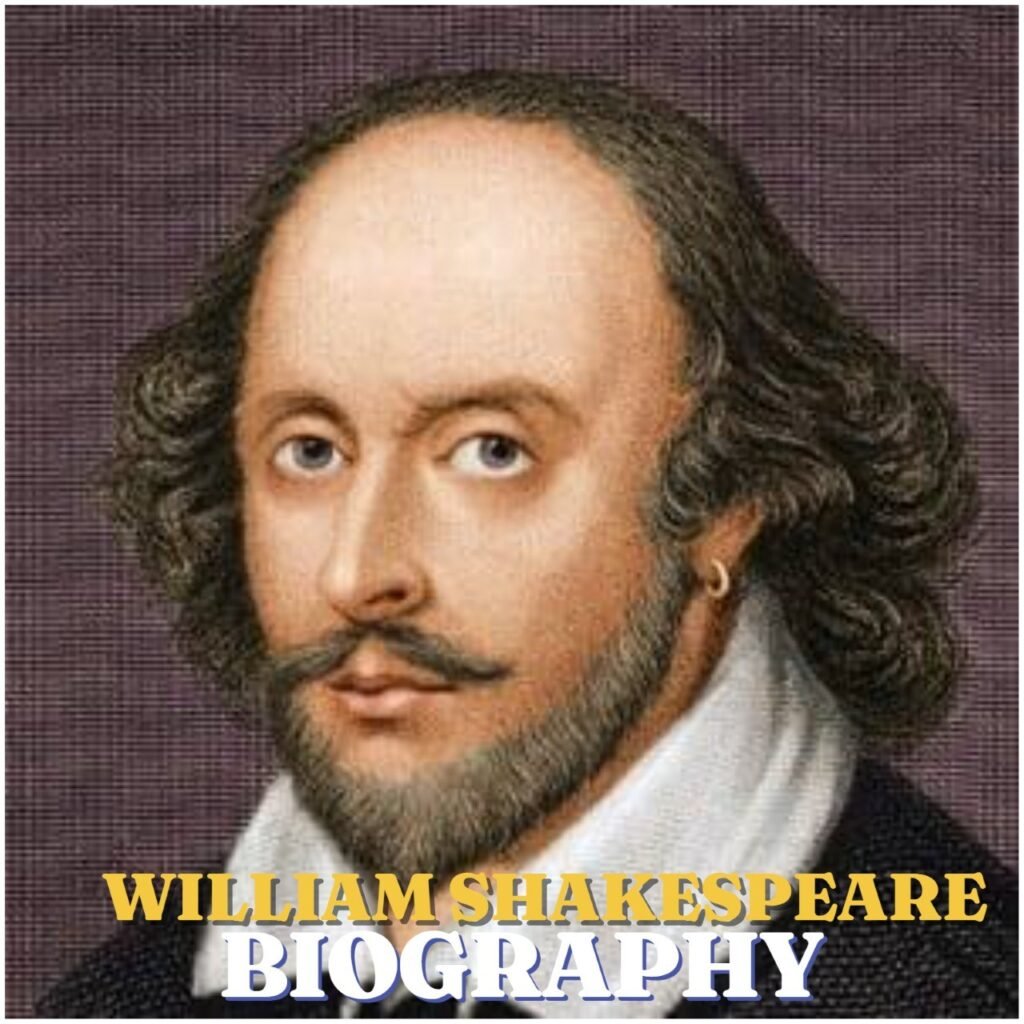
There is no reliable, universally accepted measurement of Shakespeare’s height, and surviving historical evidence does not establish his exact weight or detailed physical measurements. Portraits associated with him depict a man with a high forehead, dark hair, a moustache or short beard, and clothing typical of a well-to-do English gentleman of the late sixteenth and early seventeenth centuries. However, the authenticity and accuracy of some portraits have been debated, and images made after his death may reflect artistic interpretation. Any precise claims about his height, eye colour, or other physical characteristics should therefore be treated cautiously. His literary achievements are much better documented than his physical appearance.
William Shakespeare’s Social Media Presence
William Shakespeare lived centuries before social media, the internet, or modern forms of personal communication, so he did not have an Instagram, Facebook, X, TikTok, or YouTube account. There are no authentic personal social media handles associated with him. His continued popularity online, however, has made his name a frequent subject of educational videos, literary discussions, theatre announcements, quotations, and adaptations.
Today, organisations dedicated to Shakespeare’s life and works, including the Shakespeare Birthplace Trust, the Royal Shakespeare Company, and Shakespeare’s Globe, maintain official digital platforms where audiences can explore his plays, learn about his life, and discover productions inspired by his writing. These organisations are not Shakespeare’s personal accounts, but they help introduce his work to new generations through digital storytelling and performance. His words also circulate widely across social media, where quotations from his plays and sonnets are often shared in discussions about love, friendship, ambition, grief, and human behaviour.
The ongoing online interest in Shakespeare demonstrates how a historical literary figure can remain relevant in a modern digital environment. His works are discussed by students, teachers, actors, directors, researchers, and general readers across the world. Although Shakespeare himself never used social media, the digital circulation of his writing has helped preserve his cultural influence and make his work accessible beyond traditional theatres and printed books.
William Shakespeare’s Net Worth
William Shakespeare’s exact net worth cannot be calculated reliably in modern currency, but historical records indicate that he became a financially successful writer and theatre investor. Unlike many writers who relied primarily on payment for individual works, Shakespeare participated in the commercial structure of the acting company for which he wrote and performed. His share in the company’s earnings, together with income connected to his theatrical work, helped him accumulate assets during his lifetime. His financial success is particularly notable because he began his life in a provincial town and worked in a profession that depended on changing public tastes and commercial demand.
One of the clearest signs of his wealth was his purchase of New Place in Stratford-upon-Avon in 1597. He later acquired additional land and property interests, including agricultural land and income-producing rights. These purchases suggest that he was not merely earning enough to support himself but was building long-term financial security. By the time of his death, he owned valuable property and had enough assets to make provisions for his family in his will. His investments also indicate that he understood the importance of securing wealth beyond the immediate income earned from performances and writing.
Although modern articles sometimes assign Shakespeare a specific net worth in today’s money, such figures depend on uncertain assumptions about property values, purchasing power, and historical income. A precise modern-dollar estimate would therefore give a misleading impression of certainty. The more reliable conclusion is that Shakespeare was a prosperous man by the standards of his time. His financial achievements came from a combination of literary work, acting, participation in a successful theatre company, and property investment. His career offers an important reminder that he was not only an extraordinary creative figure but also a working professional who managed to build substantial material success.
William Shakespeare’s Legacy and Lasting Influence
William Shakespeare’s greatest legacy is the lasting power of his writing. His plays continue to be performed because they explore human experiences that remain recognisable across centuries, including love, grief, jealousy, ambition, loyalty, fear, and the desire for power. His characters are rarely simple symbols of good or evil; they often struggle with conflicting emotions, uncertain motives, and the consequences of their own decisions. This psychological complexity allows different generations to interpret his works in new ways. A modern audience watching Macbeth, for example, may see a story about political ambition and moral collapse, while another may focus on fear, manipulation, or the damage caused by unchecked desire.
His contribution to the English language is another important part of his influence. Shakespeare’s writing helped popularise expressions and turns of phrase that remain familiar in everyday communication, while his imaginative use of metaphor, rhythm, wordplay, and dramatic dialogue expanded the possibilities of English literature. Some expressions associated with him may have existed in earlier forms, so it is not always accurate to say that he invented every phrase attributed to him. Nevertheless, his works helped preserve and popularise a remarkable range of language. His sonnets also remain central to the study of English poetry because of their treatment of time, beauty, love, memory, and the relationship between art and mortality.
Shakespeare’s influence extends far beyond literature. His plays have inspired countless stage productions, films, television adaptations, novels, operas, ballets, and modern retellings. Stories such as Romeo and Juliet have been reimagined in different cultures and historical settings, while Hamlet and Macbeth continue to challenge actors and directors with their demanding roles and moral questions. His works are taught around the world, and institutions dedicated to his life and writing preserve historical records, support research, and bring his plays to new audiences. His legacy is not simply that he wrote famous works; it is that those works remain open to reinterpretation, allowing people to discover fresh meaning in familiar stories.
Cause of Death: How Did William Shakespeare Die?
William Shakespeare died in Stratford-upon-Avon on April 23, 1616, at the age of 52, according to the traditional historical chronology. His burial was recorded at Holy Trinity Church, where his grave remains an important site associated with his life and literary legacy. The precise cause of his death is not known because surviving records do not provide a reliable medical explanation. Although various stories and theories have emerged over the centuries, none has been established conclusively by historical evidence.
Some accounts have suggested that Shakespeare died after an illness, while other stories connect his death to drinking or events involving other writers. These claims should be treated cautiously because they are not supported by strong contemporary medical documentation. It is more accurate to say that Shakespeare died in 1616 at 52 and that the exact circumstances of his final illness remain uncertain. His death marked the end of a remarkable career, but the publication and preservation of his plays ensured that his influence would continue long after his lifetime.
Why William Shakespeare Is Receiving Attention in 2026
William Shakespeare continues to attract renewed attention in 2026 through literary research, theatre productions, educational projects, and the preservation of his historical legacy. April remains an important period for Shakespeare-related events because his traditional birthday is celebrated on April 23. Institutions and scholars use this occasion to revisit familiar facts about his life, explore the historical evidence behind his biography, and introduce his works to new audiences. Recent educational discussions have also highlighted how much is known about Shakespeare from surviving records—and how many details, including his exact birth date and aspects of his private life, remain uncertain.
One notable development in Shakespeare heritage in 2026 is the continued presentation of Becoming Shakespeare, an exhibition at Shakespeare’s Birthplace in Stratford-upon-Avon. The exhibition explores the people, place, and experiences that may have helped shape his creative development. Rather than treating Shakespeare as a distant literary genius whose success appeared overnight, this kind of exhibition encourages visitors to consider his family background, his home town, and the cultural environment in which he developed as a writer. It also reflects a broader interest in understanding historical figures through documentary evidence and the places connected to their lives.
Shakespeare’s continued relevance also comes from the adaptability of his work. His plays can be performed in traditional historical settings or reinterpreted through contemporary themes, allowing directors and audiences to examine issues such as leadership, gender, prejudice, conflict, and the abuse of power. Schools and universities continue to study his writing, while theatres and digital platforms make his stories available to audiences who may never visit a traditional Shakespearean venue. His continuing presence in education and popular culture shows why his biography remains a subject of public interest more than 400 years after his death.
Conclusion
William Shakespeare’s life story is one of remarkable literary achievement, professional determination, and lasting cultural influence. Born in Stratford-upon-Avon in 1564, he developed into a playwright, poet, actor, and theatre shareholder whose works transformed English drama and continue to influence storytelling across the world. His family life, education, financial success, and years in London’s theatrical community help explain the historical setting in which his career developed, even though many personal details remain unknown. From the tragedies of Hamlet and Macbeth to the humour of Twelfth Night and the romance of The Tempest, his writing continues to explore the complexity of human experience. William Shakespeare died in 1616, but his words, characters, and ideas remain alive in books, classrooms, theatres, films, and everyday language, securing his place as one of the most enduring literary figures in history.
Frequently Asked Questions About William Shakespeare
Who was William Shakespeare?
William Shakespeare was an English playwright, poet, and actor widely regarded as one of the greatest writers in the English language. He wrote celebrated plays such as Hamlet, Romeo and Juliet, Macbeth, and Othello, as well as 154 sonnets and several narrative poems.
When was William Shakespeare born?
William Shakespeare was born in April 1564 in Stratford-upon-Avon, England. His exact birth date is unknown, but his birthday is traditionally celebrated on April 23. His baptism was recorded on April 26, 1564.
How old was William Shakespeare when he died?
William Shakespeare was 52 years old when he died in 1616. According to the traditional chronology, he died on April 23, the same date on which his birthday is celebrated.
What was William Shakespeare famous for?
Shakespeare was famous for writing plays and poetry that explored human emotions, relationships, politics, ambition, jealousy, love, and tragedy. His works are celebrated for their memorable characters, imaginative storytelling, poetic language, and continuing relevance to modern audiences.
Who was William Shakespeare’s wife?
William Shakespeare’s wife was Anne Hathaway. They married in 1582, when Shakespeare was about 18 and Anne was approximately 26. They had three children: Susanna, Hamnet, and Judith.
How many children did William Shakespeare have?
William Shakespeare had three children with Anne Hathaway. Their first child, Susanna, was born in 1583, and their twins, Hamnet and Judith, were born in 1585. Hamnet died at the age of 11.
What are William Shakespeare’s most famous plays?
Some of Shakespeare’s best-known plays include Romeo and Juliet, Hamlet, Macbeth, Othello, King Lear, A Midsummer Night’s Dream, The Merchant of Venice, Twelfth Night, and The Tempest. These works remain popular in theatre, education, film, and literary study.
What is William Shakespeare’s most famous tragedy?
Hamlet is often considered one of Shakespeare’s most famous tragedies. It follows Prince Hamlet as he struggles with grief, revenge, uncertainty, and questions about morality and action. Macbeth, Othello, and King Lear are also among his most celebrated tragedies.
Did William Shakespeare attend university?
There is no reliable evidence that William Shakespeare attended university. He is generally believed to have attended King’s New School in Stratford-upon-Avon, where students studied Latin, grammar, rhetoric, and classical literature.
What was William Shakespeare’s religion?
William Shakespeare lived in England during a period of religious conflict between Catholic traditions and the established Church of England. His precise personal religious beliefs remain uncertain, and historians have debated the available evidence without reaching a definitive conclusion.
What was William Shakespeare’s net worth?
William Shakespeare’s exact net worth in modern currency is unknown. However, historical records show that he became financially successful through his work as a playwright and actor, his share in a theatre company, and his investments in property and land.
How tall was William Shakespeare?
William Shakespeare’s exact height is not known. There is no reliable historical record establishing his height or other precise physical measurements.
How did William Shakespeare die?
William Shakespeare died in Stratford-upon-Avon in 1616 at the age of 52. His exact cause of death has not been established by reliable historical evidence, although various theories have been proposed over the years.
Where is William Shakespeare buried?
William Shakespeare is buried at Holy Trinity Church in Stratford-upon-Avon, England. His burial place remains an important historical and literary site visited by people interested in his life and works.
What is William Shakespeare’s greatest contribution to literature?
Shakespeare’s greatest contribution was his lasting influence on drama, poetry, and the English language. His exploration of human nature, innovative storytelling, memorable characters, and imaginative use of language helped shape literature and theatre around the world.
Does William Shakespeare have any social media accounts?
No. William Shakespeare lived centuries before social media existed, so he has no authentic personal accounts on Instagram, Facebook, TikTok, or X. Modern literary organisations and theatre institutions maintain online platforms dedicated to his life and works.
Why is William Shakespeare still important today?
William Shakespeare remains important because his plays and poems explore experiences that people continue to recognise, including love, ambition, betrayal, grief, power, and personal responsibility. His works are still performed, adapted, translated, and studied around the world, allowing each generation to interpret his writing in new ways.