
Introduction
Stephen King is one of the most influential and widely read authors in modern literature, celebrated for his ability to turn ordinary places, familiar relationships and everyday fears into unforgettable stories. Known around the world as the “King of Horror,” he has written novels, short stories and novellas that explore supernatural terror, psychological suspense, crime, fantasy and human nature. His famous works include Carrie, The Shining, It, Misery, Pet Sematary, The Green Mile and The Shawshank Redemption. Through his distinctive storytelling, King has built a reputation for creating characters and fictional worlds that continue to fascinate readers long after they finish a book.
Born on September 21, 1947, in Portland, Maine, United States, Stephen Edwin King developed an interest in storytelling at a young age. His childhood experiences, love of books, early attempts at writing and observations of small-town American life helped shape the themes that later became central to his work. Although his novels are often associated with frightening creatures, haunted buildings and terrifying supernatural events, many of his most memorable stories also examine grief, addiction, bullying, family relationships, childhood, friendship and the struggle between good and evil. This combination of horror and recognisable human experiences has helped his writing appeal to audiences far beyond traditional horror readers.
As of October 22, 2026, Stephen King remains alive and continues to attract attention through new publications and screen adaptations of his stories. One of the major developments this month is the release of Other Worlds Than These, a new novel connected to the wider universe of The Talisman, Black House and The Dark Tower. His novel Carrie has also returned to the spotlight through a new television adaptation developed by filmmaker Mike Flanagan. On October 22, 2026, reports announced that Prime Video had renewed the Carrie series for a second season, adding another chapter to the long history of King’s work on screen. These developments show how his stories continue to reach new audiences across generations.
Stephen King Profile Summary
| Profile | Details |
|---|---|
| Full name | Stephen Edwin King |
| Popular name | Stephen King |
| Date of birth | September 21, 1947 |
| Age | 79 years old |
| Place of birth | Portland, Maine, United States |
| Nationality | American |
| Profession | Novelist, short-story writer, screenwriter and producer |
| Genres | Horror, supernatural fiction, suspense, thriller, fantasy and crime |
| Famous nickname | King of Horror |
| Education | University of Maine |
| Wife | Tabitha King |
| Children | Naomi, Joe and Owen King |
| Famous works | Carrie, The Shining, It, Misery, The Green Mile and The Dark Tower series |
| Social media | Publicly active on X under the handle @StephenKing |
| Estimated net worth | Often estimated at around $500 million, although exact personal financial details are not publicly confirmed |
| Current status | Alive and active as a writer |
Early Life and Family Background
Stephen King was born on September 21, 1947, in Portland, Maine, to Donald Edwin King and Nellie Ruth Pillsbury King. His early childhood was shaped by family changes and financial challenges. When Stephen was still very young, his father left the family, leaving his mother to raise him and his older brother, David, largely on her own. The family moved between different places during his childhood before eventually settling in Durham, Maine. These experiences exposed King to the uncertainty of family life and the realities of growing up without consistent financial security, circumstances that would later inform the ordinary but emotionally complicated characters in his fiction.
King’s interest in stories emerged when he was young. He enjoyed reading comic books, adventure stories and horror fiction, and he began experimenting with writing while still a child. One frequently discussed influence was his discovery of books and stories that allowed him to explore frightening situations from the safety of his imagination. He also developed an interest in films, particularly those featuring monsters, suspense and supernatural events. Rather than simply consuming these stories, he became increasingly interested in how writers created tension, developed characters and kept readers curious about what would happen next.
As King grew older, writing became more than a hobby. He began producing stories of his own and submitting some of them to publications, although success did not arrive immediately. His early efforts helped him understand the discipline required to develop a writing career, including the importance of revising work, accepting rejection and continuing to write despite limited recognition. Maine also became a lasting influence on his imagination. Many of his stories are set in fictional Maine communities, where familiar streets, schools, homes and neighbourhoods become settings for extraordinary events. His ability to make the familiar feel frightening would eventually become one of his strongest literary characteristics.
Education
Stephen King attended local schools in Maine, where he continued developing his interest in literature and creative writing. During his school years, he read widely and began writing stories that reflected his fascination with horror, adventure and the darker aspects of human behaviour. His enthusiasm for storytelling encouraged him to experiment with different plots and characters, while his reading helped him understand how writers could build suspense and communicate complex ideas through accessible language. Although he would later become famous for horror, his interests were never limited to one category of fiction.
After completing high school, King enrolled at the University of Maine in Orono, where he studied English. He graduated in 1970 with a Bachelor of Arts degree in English. His university years were important because they allowed him to deepen his understanding of literature, develop his writing skills and become more familiar with the techniques used to construct effective narratives. He also participated in student life and contributed to campus publications, gaining practical experience that complemented his academic studies. During this period, he continued writing stories and working towards the possibility of becoming a professional author.
King’s education did not immediately lead to a comfortable writing career. After university, he faced the practical challenge of earning a living while trying to establish himself as a writer. He worked as a teacher and took on other jobs while continuing to write in his spare time. These early professional experiences taught him the importance of perseverance and time management. His journey demonstrates that formal education can provide useful knowledge and discipline, but a successful writing career may also require years of independent practice, rejection and persistence before an opportunity changes everything.
Stephen King’s Career and Rise to Fame
Early Writing Career and First Publications
Before becoming a bestselling author, Stephen King spent years developing stories and trying to find publishers willing to accept his work. He wrote during his free time, submitted short stories to magazines and gradually learned how the publishing industry operated. Some of his early stories were published in magazines, providing modest income and valuable experience. Even when these early publications did not make him widely known, they helped him establish himself as a serious writer and encouraged him to continue pursuing his ambition.
After graduating from university, King worked as an English teacher while writing in the evenings and during other available hours. He and his wife, Tabitha, faced the financial pressures familiar to many young families, and their early life together was far removed from the wealth and international recognition he would later achieve. King continued developing longer manuscripts while balancing his responsibilities at home and work. His determination during this period became an important part of his professional story because he persisted even when a writing career seemed uncertain.
His breakthrough came when Carrie, his first published novel, was released in 1974. The story follows Carrie White, a socially isolated teenage girl who experiences bullying and abuse before discovering that she possesses extraordinary telekinetic abilities. As the story progresses, humiliation, cruelty and emotional pain culminate in a devastating series of events. The novel attracted significant attention and introduced readers to King’s ability to combine supernatural horror with realistic social problems. Its success helped transform him from a struggling writer into a recognised author and opened the door to a much larger literary career.
Carrie and the Beginning of International Recognition
The success of Carrie was a turning point in King’s life. The novel’s popularity increased further after its film adaptation was released in 1976, directed by Brian De Palma. The film brought the story to a wider audience and helped establish King’s reputation in both publishing and cinema. The success demonstrated that his stories could work across different forms of entertainment while retaining the emotional tension and unsettling themes that made them distinctive.
King followed Carrie with a series of novels that strengthened his position as a leading voice in horror fiction. Salem’s Lot, published in 1975, reimagined the vampire story within a small American town, while The Shining, published in 1977, explored isolation, family breakdown and psychological terror in a remote hotel. These novels showed that King could draw from traditional horror ideas while creating modern settings and emotionally complex characters. Instead of relying solely on monsters or supernatural events, he built fear through relationships, personal weaknesses and the gradual breakdown of ordinary life.
As his popularity grew, King became known for his ability to write at length without losing readers’ interest. His novels often combine multiple characters, detailed settings and intersecting storylines, allowing tension to develop gradually. He also became skilled at creating fictional towns and recurring references that make different stories feel connected. This approach gave readers a sense that King’s fictional world extended beyond any single novel, encouraging them to return to his work and discover how its themes and locations related to one another.
Major Books and Literary Achievements
One of King’s most recognised novels is It, published in 1986. The story centres on a group of childhood friends who confront a terrifying entity that takes the form of a clown known as Pennywise. Moving between the characters’ childhoods and adulthood, the novel explores friendship, trauma, memory, courage and the lasting effects of fear. Its scale and psychological depth helped make it one of King’s defining works, while Pennywise became one of the most recognisable characters associated with modern horror.
Another major work is Misery, published in 1987. It tells the story of a successful novelist who becomes dependent on an obsessive fan after a serious accident leaves him trapped in her home. The novel creates suspense without requiring an elaborate supernatural threat, demonstrating King’s ability to make human behaviour itself deeply frightening. The Green Mile, originally published in serial instalments in 1996, took a different approach by combining prison drama, supernatural elements and moral questions about justice, compassion and suffering. Its emotional storytelling helped introduce King’s work to readers who might not usually choose horror fiction.
King has also produced stories that move between horror, crime, fantasy and coming-of-age drama. The Dark Tower series combines elements of western fiction, fantasy, science fiction and horror in a large-scale narrative centred on Roland Deschain and his quest across a strange and dangerous world. Other important titles include The Stand, Pet Sematary, 11/22/63, Doctor Sleep, The Outsider and Fairy Tale. His body of work demonstrates that his writing is not confined to frightening readers; it also examines love, loyalty, regret, courage, loss and the decisions people make under pressure.
Richard Bachman and Writing Under a Pen Name
During the early part of his career, King also published books under the pen name Richard Bachman. These works allowed him to explore a different publishing identity and test whether his stories could attract readers without relying on his established name. The Bachman books included Rage, The Long Walk, Roadwork and The Running Man. They generally displayed a harsher or more experimental tone than some of his better-known supernatural horror novels, although they continued to explore fear, social pressure and human behaviour.
The secret did not remain hidden forever. A bookseller and writer eventually noticed similarities between the writing styles and investigated the identity behind Richard Bachman. The discovery that Bachman was Stephen King attracted considerable attention and became a memorable episode in publishing history. Rather than ending his career, the revelation added another dimension to his public image and showed that he was interested in exploring different creative approaches.
King’s use of a pen name also illustrates the variety of his interests. While he is widely associated with haunted houses, monsters and supernatural events, his fiction often focuses on dystopian societies, crime, obsession, poverty, violence and the consequences of human decisions. The Bachman books helped demonstrate that his ability to create tension was not dependent on supernatural horror alone.
Film and Television Adaptations
Stephen King’s influence extends well beyond books. Many of his stories have been adapted into films, television series and miniseries, making him one of the most frequently adapted contemporary authors. Among the best-known adaptations are The Shining, Stand by Me, Misery, The Shawshank Redemption, The Green Mile, It and Doctor Sleep. These productions have introduced his characters and themes to audiences who may never have read the original novels.
Some adaptations remain especially popular because they capture the emotional and psychological depth of the source material. The Shawshank Redemption, based on King’s novella Rita Hayworth and Shawshank Redemption, became widely celebrated for its exploration of friendship, hope and perseverance. Stand by Me, adapted from The Body, tells a coming-of-age story about friendship and the transition from childhood to adulthood. Both demonstrate that King can create compelling drama without relying on traditional horror.
Other adaptations have taken creative liberties with the original stories, producing different interpretations of King’s characters and themes. King has sometimes expressed reservations about how particular works were adapted, while praising others that he felt successfully captured their spirit. The continuing interest in his books from filmmakers and television producers reflects the flexibility of his storytelling: his fictional worlds can be reimagined for new audiences while retaining the central conflicts that made them memorable.
Writing Style and Major Themes
King’s writing is often characterised by accessible language, detailed characterisation, conversational dialogue and a gradual build-up of tension. He frequently begins with ordinary people facing recognisable problems before introducing circumstances that challenge their understanding of the world. A family may move into an isolated hotel, a town may be threatened by an ancient evil, or an ordinary person may find themselves caught in a frightening situation they cannot control. Because the characters’ lives feel familiar, the extraordinary events can become more unsettling.
Another important feature of King’s work is his interest in childhood and adolescence. His young characters often experience bullying, family conflict, social isolation or the difficulty of growing up. Stories such as It and Carrie explore how cruelty can shape a person’s identity and how painful experiences may continue to affect people into adulthood. King also frequently examines addiction, particularly through stories informed by his own past struggles, showing how personal weaknesses can affect families, friendships and professional lives.
His fiction also returns repeatedly to questions of morality, courage and responsibility. Characters are often forced to make difficult decisions when confronted with violence, injustice or supernatural danger. Some discover unexpected strength, while others are destroyed by fear, selfishness or obsession. This attention to human behaviour helps explain why King’s stories can remain compelling even when readers already know the supernatural elements. The real tension often lies in what people will do when they are frightened, desperate or given power over others.
Why Stephen King Is Trending in October 2026
Stephen King is attracting renewed attention in October 2026 because of major developments involving both his books and their screen adaptations. His work remains a significant part of the entertainment industry, with new releases, anniversary editions and television projects giving longtime fans and new readers reasons to revisit his fictional worlds.
Carrie Returns to Television and Is Renewed for Season Two
One of the biggest developments as of October 22, 2026, is the renewed attention surrounding Carrie. A new eight-episode television adaptation developed by filmmaker Mike Flanagan arrived on Prime Video on October 7, 2026. The series reimagines King’s 1974 debut novel for a contemporary audience, updating elements of Carrie’s school experience and exploring how bullying and social pressures operate in a world shaped by social media.
On October 22, 2026, entertainment reports announced that Prime Video had renewed the series for a second season. The announcement is a major development for the adaptation and indicates that the story will continue beyond its first instalment. King is involved as an executive producer, while Flanagan serves as the key creative figure behind the new version. Their collaboration has drawn interest because Flanagan has previously adapted other works by King and is known for creating atmospheric horror television.
The new Carrie series also brings renewed discussion to the original novel’s themes. Although the story contains supernatural horror, it also explores bullying, humiliation, family control and the damage caused when vulnerable people are mistreated. By revisiting these themes in a contemporary setting, the adaptation introduces King’s early work to viewers who may know his name mainly through more recent films or television productions.
Other Worlds Than These Arrives in October 2026
Another important development is the publication of Other Worlds Than These, released on October 6, 2026. The novel returns to the wider fictional universe associated with The Talisman, Black House and The Dark Tower. It continues the story of Jack Sawyer and brings together elements of fantasy, adventure, horror and the interconnected worlds that have appeared throughout King’s writing.
The book is particularly significant because it represents a major continuation of the story that began with The Talisman, co-written by King and Peter Straub, and continued in Black House. The new novel draws on this shared literary history and explores the fate of worlds connected to King’s broader mythology. Its release has generated interest among readers who have followed the earlier books, while its standalone appeal gives newer readers another entry point into his work.
The publication also highlights King’s continued interest in returning to established characters and fictional settings while finding new conflicts for them to face. Rather than relying exclusively on new premises, he has often revisited ideas and worlds that readers already recognise. This approach allows long-running stories to develop over time and gives fans an opportunity to explore familiar characters from a different stage of their lives.
Forty Years of It
2026 also marks the fortieth anniversary of It, which was originally published in 1986. The novel remains one of King’s most famous works and continues to influence popular horror through its depiction of Pennywise, a terrifying entity that preys on children in the fictional town of Derry, Maine. Its combination of childhood fears, friendship, memory and supernatural violence has helped it remain relevant to new generations of readers.
To mark the anniversary, publishers have released special editions of the novel, including collector-focused versions with new cover designs and additional features. These editions give established fans an opportunity to revisit the book and offer collectors a new way to celebrate its place in horror literature. The anniversary has also renewed discussion about the novel’s length, its interconnected characters and the way it moves between childhood and adulthood.
The continued popularity of It shows how certain King stories have become cultural landmarks rather than merely bestselling books. Pennywise remains a recognisable figure in horror, and the novel’s themes continue to be discussed through its adaptations and anniversary releases. For King, the fortieth anniversary offers another reminder of how a story published decades ago can remain commercially and culturally significant.
Personal Life and Family
Stephen King married Tabitha Spruce, a fellow writer, in 1971. Their relationship began while both were students, and they have remained married throughout his long career. Tabitha has pursued her own writing career and has been an important part of King’s personal life. Their partnership developed before King became internationally famous, meaning she experienced the challenges of his early writing years as well as the demands that came with his eventual success. The couple’s long marriage is a significant part of his biography because it spans the period from his uncertain beginnings as a writer to his status as one of the world’s most recognised authors.
Stephen and Tabitha King have three children: Naomi King, Joe Hill and Owen King. Joe Hill, whose birth name is Joseph Hillström King, has become a successful author in his own right, particularly in horror and dark fantasy. Owen King is also a writer, with published works that include novels and collaborations. Their careers have attracted attention because they share an interest in storytelling while developing their own creative identities. Naomi King has pursued a different path and has been less publicly associated with the publishing industry than her brothers.
King’s family life has influenced aspects of his writing, although his fictional characters and events should not be treated as direct accounts of his private experiences. He has spoken publicly over the years about the importance of family, the challenges of addiction and the need to maintain discipline in his professional life. His personal experiences have helped inform some of his fiction, particularly stories involving addiction and its effects on relationships. Despite his international fame, he has continued to maintain strong connections to Maine, where he and his family have long-standing roots.
Stephen King’s Age, Religion, Nationality, Tribe, Height and Physical Appearance
Stephen King was born on September 21, 1947, making him 79 years old as of October 22, 2026. His long career has spanned more than five decades, during which he has written novels, short stories, novellas and screenplays while remaining a prominent figure in popular literature. His sustained output and the continuing adaptations of his work have allowed him to reach readers across several generations.
King is American by nationality and was born in Portland, Maine. He has spent much of his life connected to the state, which has inspired many of the fictional towns and landscapes in his writing. Maine’s small communities, forests, roads and isolated buildings often appear in his stories, giving his fictional settings a distinctive regional character. In terms of tribe or ethnic community, King is generally identified as an American writer of European ancestry; the word “tribe” is not normally used as a relevant biographical category for him.
King’s religious views have been expressed in different ways over the course of his life, and his writing frequently engages with questions of faith, evil, morality and the supernatural. However, his fictional use of religious themes should not be confused with a complete account of his personal beliefs. Readers can find religious imagery and moral questions throughout his books, but his work also includes sceptical characters and situations in which traditional explanations fail to provide easy answers.
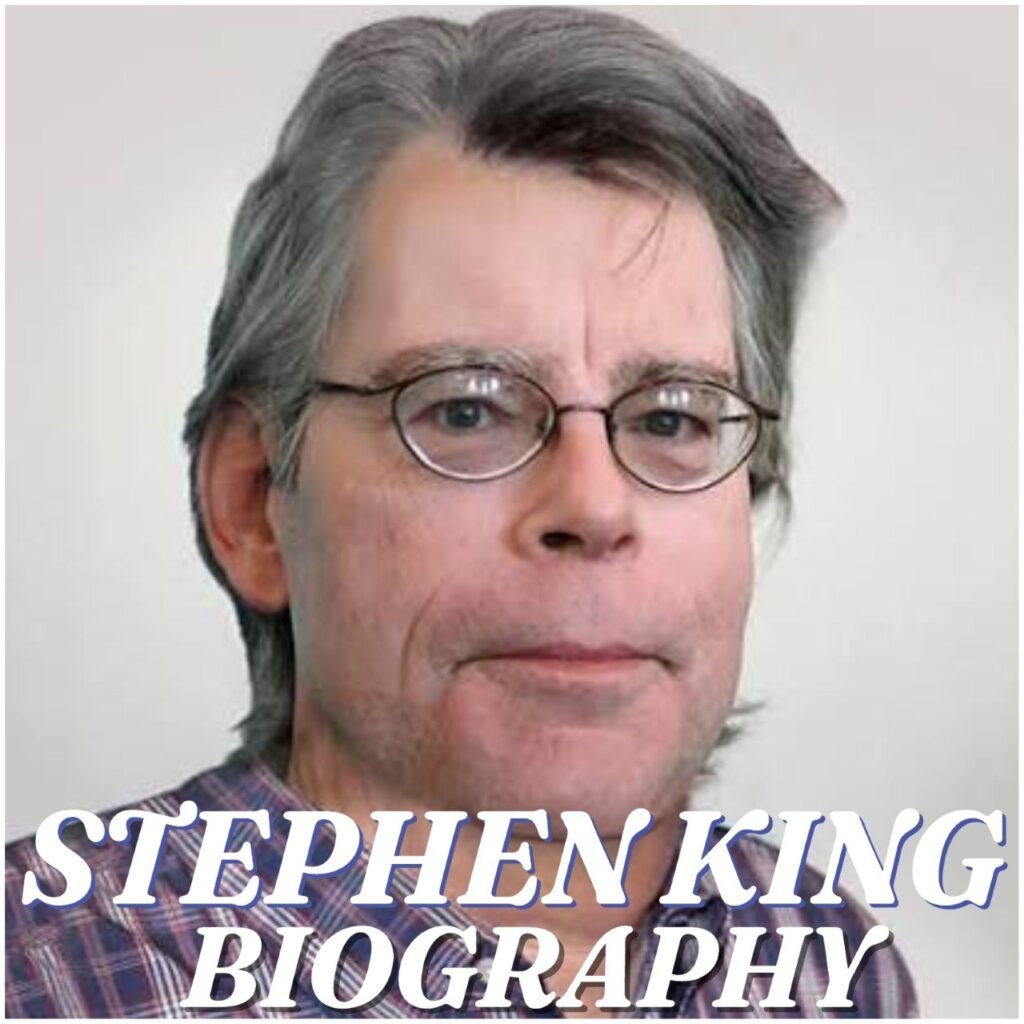
King is commonly described as having a tall build, grey or white hair in recent years, and a familiar appearance that includes glasses in many public photographs. However, a verified official height is not consistently established in reliable biographical sources, so an exact measurement should not be presented as confirmed fact. His public appearance has changed naturally with age, while his name, glasses and recognisable presence have become familiar to readers and audiences around the world.
Stephen King’s Social Media Presence
Stephen King maintains a public presence on social media, where he comments on books, films, current affairs and topics that interest him. He is widely associated with the handle @StephenKing on X, formerly Twitter. His posts have attracted a substantial following, in part because his online voice can be direct, humorous and outspoken. His social media presence allows readers to follow his public commentary alongside updates about his literary work.
King’s social media activity is not limited to promoting books. He has used online platforms to share opinions on public issues, discuss entertainment and interact with readers. As with any public account, individual posts may reflect his personal views rather than official statements from publishers or film studios. Readers should also be careful to distinguish his verified or established accounts from fan pages and impersonation accounts.
For the most reliable updates about new books, official editions, interviews and adaptations, King’s official website remains an important source of announcements. His online presence complements his publishing career by allowing fans to follow developments between major releases and discover news about projects connected to his work.
Stephen King’s Net Worth
Stephen King’s net worth is commonly estimated at approximately $500 million, although this figure should be treated as a widely circulated estimate rather than a verified statement of his personal finances. His exact wealth is not publicly confirmed in a comprehensive financial disclosure. Nevertheless, his long career, large catalogue of bestselling books and continued commercial relevance make him one of the most financially successful writers in modern popular literature.
A substantial part of King’s income has come from book sales, publishing advances and royalties. Many of his novels have sold millions of copies worldwide and have been translated into numerous languages. His work continues to be published in new editions, including anniversary and collector’s editions, while older titles remain available to readers. The long commercial life of his catalogue means that books released decades ago can continue to contribute to his earnings.
Screen adaptations have also played a major role in the commercial reach of King’s stories. Film and television rights, production involvement and related agreements can generate income when his work is adapted for new audiences. However, the financial terms of individual contracts are not always public, so it is not possible to calculate his exact earnings from every project. His estimated wealth reflects the scale and longevity of his career, but any specific net-worth figure should be understood as an approximation.
Stephen King’s Legacy and Influence
Stephen King’s legacy is rooted in his transformation of modern horror fiction. He helped bring horror into mainstream publishing by creating stories that combine frightening events with detailed character development and familiar social settings. His novels have influenced generations of writers who have followed his approach to building suspense, exploring psychological fear and giving ordinary people extraordinary problems. His success also demonstrated that horror could support complex, ambitious narratives without losing its ability to entertain a broad readership.
Another important part of King’s legacy is the extraordinary number of adaptations inspired by his work. His stories have been transformed into films, television series and miniseries, often reaching audiences who may never have read the original books. Adaptations such as The Shawshank Redemption, Stand by Me, Misery and It have become widely recognised in their own right. This continued movement between literature and screen entertainment has made King a major figure in popular culture and helped keep his stories relevant as technology and audience tastes change.
Beyond horror, King has contributed to wider discussions about childhood, addiction, trauma, community, justice and the choices people make under pressure. His work frequently suggests that the most frightening experiences are not always caused by supernatural forces; cruelty, obsession, isolation and unchecked power can be equally destructive. Through his combination of suspense, humour, emotional storytelling and social observation, King has built a body of work that continues to attract readers and inspire debate. His influence is evident not only in horror fiction but also in contemporary storytelling across several genres.
Conclusion
Stephen King is much more than the author popularly known as the “King of Horror.” From his early life in Maine and his struggles to establish himself as a writer to the success of Carrie and the global reach of novels such as The Shining, It and The Green Mile, his career reflects decades of creativity and persistence. As of October 2026, he remains alive and influential, with Other Worlds Than These adding to his literary catalogue, the fortieth anniversary of It celebrating one of his most famous novels, and the new Carrie television adaptation receiving a second-season renewal. His ability to combine suspense with recognisable human struggles has secured his place among the most important popular authors of his generation, and his stories continue to find new audiences through books, films and television.
Frequently Asked Questions About Stephen King
Who is Stephen King?
Stephen King is an American novelist, short-story writer and screenwriter best known for horror, suspense and supernatural fiction. His famous books include Carrie, The Shining, It, Misery and The Green Mile.
How old is Stephen King in 2026?
Stephen King is 79 years old as of October 22, 2026. He was born on September 21, 1947, in Portland, Maine, United States.
Is Stephen King still alive?
Yes. Stephen King is alive as of October 22, 2026, and continues to attract attention through his books and adaptations of his work.
What is Stephen King famous for?
Stephen King is famous for writing horror novels and suspenseful stories that combine supernatural events with realistic characters and emotional conflicts. He is also known for the many successful films and television productions based on his books.
What is Stephen King’s most famous book?
Several of King’s books are widely recognised, including Carrie, The Shining, It, Misery and The Stand. It is particularly famous for its terrifying antagonist, Pennywise, while The Shining is one of his best-known psychological horror novels.
Who is Stephen King’s wife?
Stephen King’s wife is Tabitha King, a writer whom he married in 1971. They have remained married throughout his long literary career.
How many children does Stephen King have?
Stephen King and his wife, Tabitha, have three children: Naomi King, Joe Hill and Owen King. Joe Hill and Owen King have both pursued writing careers.
What did Stephen King study at university?
Stephen King studied English at the University of Maine in Orono and graduated in 1970 with a Bachelor of Arts degree in English.
What was Stephen King’s first published novel?
Stephen King’s first published novel was Carrie, released in 1974. Its success helped establish his career and was followed by a long series of bestselling books.
What is Stephen King’s net worth in 2026?
Stephen King’s net worth is often estimated at around $500 million. This is an approximate figure rather than a confirmed disclosure of his personal finances.
What is Stephen King’s social media handle?
Stephen King is widely associated with the handle @StephenKing on X, formerly Twitter. Readers should check account authenticity because fan pages and impersonation accounts may also use his name.
What is Stephen King’s latest book in October 2026?
One of his major new releases in October 2026 is Other Worlds Than These, published on October 6. The novel returns to the connected fictional universe associated with The Talisman, Black House and The Dark Tower.
Why is Stephen King’s Carrie trending in October 2026?
Carrie is trending because a new eight-episode television adaptation developed by Mike Flanagan premiered on Prime Video on October 7, 2026. On October 22, reports announced that the series had been renewed for a second season.
What is Stephen King’s contribution to literature?
Stephen King has helped shape modern horror and popular fiction through his extensive catalogue of novels, short stories and novellas. His writing explores fear, childhood, addiction, friendship, trauma and morality, and many of his stories have become influential films and television productions.