
Born Alfred Joseph Hitchcock on August 13, 1899, in Leytonstone, London, England, he began his professional journey in the British film industry before moving to Hollywood, where he established himself as an internationally recognised director. His career spanned more than five decades and included silent films, celebrated black-and-white productions, colour thrillers and the popular television series Alfred Hitchcock Presents. His remarkable understanding of human fear, curiosity, guilt and obsession helped him create films that were entertaining while also exploring the darker sides of human behaviour.
Hitchcock died on April 29, 1980, at the age of 80, but his influence has never disappeared. His work remains important to film students, critics, historians and entertainment audiences around the world. Interest in his life and achievements continues through screenings, retrospectives, books, documentaries and renewed discussions about his creative methods. Understanding Alfred Hitchcock’s biography offers insight into the life of a director who transformed suspense into an art form and left a permanent mark on global filmmaking.
Alfred Hitchcock Profile Summary
| Personal detail | Information |
|---|---|
| Full name | Alfred Joseph Hitchcock |
| Popular name | Alfred Hitchcock |
| Date of birth | August 13, 1899 |
| Place of birth | Leytonstone, London, England |
| Date of death | April 29, 1980 |
| Age at death | 80 years |
| Nationality | British-born; later a naturalized American citizen |
| Profession | Film director, producer, screenwriter and television presenter |
| Famous nickname | The Master of Suspense |
| Religion and upbringing | Raised in the Roman Catholic tradition |
| Parents | William Edgar Hitchcock and Emma Jane Hitchcock |
| Wife | Alma Reville |
| Daughter | Patricia Hitchcock |
| Best-known films | Psycho, Vertigo, Rear Window, North by Northwest and The Birds |
| Estimated net worth | Some estimates place his wealth at about $65 million in 1980; this is not a verified estate figure |
| Place of death | Los Angeles, California, United States |
Alfred Hitchcock’s Early Life and Family Background
Alfred Hitchcock was born on August 13, 1899, in Leytonstone, an area of East London, England. He was the youngest child of William Edgar Hitchcock, a greengrocer, and Emma Jane Hitchcock, née Whelan. He grew up in a working-class family in which discipline, responsibility and religious values played important roles. His parents’ approach to raising their children helped shape the reserved personality for which he later became known. Although Hitchcock eventually developed a reputation as a master of suspense, his childhood was not spent in the glamorous world of filmmaking. Instead, he grew up in an ordinary household and gradually developed the interests and observations that would influence his creative career.
Hitchcock’s upbringing was strongly influenced by his Roman Catholic background and the discipline associated with his schooling. Biographical accounts frequently discuss an incident from his childhood in which his father reportedly sent him to a local police station with a note asking an officer to punish him for misbehaviour. The story is often connected to Hitchcock’s later interest in authority, guilt, fear and punishment, although it should not be treated as the sole explanation for the themes in his films. His childhood experiences, family environment and observations of everyday life all contributed to his understanding of how people respond when they feel threatened, trapped or uncertain.
As a young man, Hitchcock developed an interest in drawing, design, photography and storytelling. Before becoming a director, he explored technical and artistic work that helped him understand how images could communicate ideas without relying entirely on dialogue. His early experiences in London also exposed him to theatre, crime stories and the rapidly developing motion-picture industry. These interests gradually directed him towards filmmaking, where he discovered that he could combine visual composition, narrative structure and psychological observation. The skills he developed during this period later became essential to his distinctive approach to suspense and cinematic storytelling.
Alfred Hitchcock’s Education
Alfred Hitchcock attended St Ignatius College, a Jesuit school in London, where he received a Catholic education and experienced a disciplined academic environment. His schooling introduced him to structured learning and the importance of careful observation, while the religious atmosphere exposed him to questions of morality, guilt and personal responsibility. Although it is tempting to connect every theme in his later films directly to his education, Hitchcock’s creative outlook was shaped by a combination of his upbringing, professional experiences and personal interests. His school years nevertheless formed an important part of his early development.
After leaving school, Hitchcock pursued technical training that prepared him for a practical career. He studied at the London County Council School of Engineering and Navigation, where he developed skills in subjects connected with engineering, drawing and design. These studies were not a conventional route into directing, but they gave him a useful understanding of visual planning, technical detail and the organisation of complex work. His ability to think carefully about space, movement and composition later became evident in films that depended on carefully arranged sets, controlled camera positions and precise visual information.
Hitchcock’s education also continued through employment and experience rather than formal film-school training. He entered the film industry during a period when cinema was developing rapidly and learned by working with people involved in production, title design, writing and direction. His early jobs helped him understand how films were assembled, how stories were communicated visually and how different departments contributed to the finished product. This combination of formal technical education and practical industry experience provided a foundation for his later achievements as a director who paid close attention to both artistic storytelling and the technical details of filmmaking.
Alfred Hitchcock’s Career and Rise to Fame
Early Career in the British Film Industry
Alfred Hitchcock began working in the film industry in the early 1920s, initially taking on jobs connected with title design, writing and production. During the silent-film era, title cards were essential for communicating dialogue and plot information, and Hitchcock’s work in this area helped him develop a strong understanding of visual storytelling. He gradually took on more responsibilities, including work as an assistant director and screenwriter, gaining experience in the different stages of film production. These early opportunities allowed him to observe how directors managed actors, organised scenes and communicated stories through images, preparing him for the responsibilities he would later assume as a filmmaker.
Hitchcock’s first opportunity to direct a feature film came with Number 13, an unfinished project from 1922. His first completed feature as a director was The Pleasure Garden (1925), a silent drama that demonstrated his growing interest in visual composition and dramatic storytelling. Although it did not immediately establish him as a major international filmmaker, the experience allowed him to develop his craft and understand the challenges of directing a full-length production. He continued to build his professional reputation in British cinema, learning how to use camera placement, editing and visual clues to guide the audience’s attention.
A major breakthrough came with The Lodger: A Story of the London Fog (1927), a suspense film about a mysterious lodger suspected of being a serial killer. The film is often regarded as one of the earliest clear demonstrations of the style that would define Hitchcock’s career. It explored suspicion, mistaken identity, fear and the possibility that an apparently ordinary person could be hiding a dangerous secret. The film’s success helped establish Hitchcock as a director with a special talent for suspense and set the foundation for the long career that followed.
Establishing His Reputation Through British Cinema
Throughout the late 1920s and 1930s, Hitchcock continued developing his directing style through a series of thrillers, dramas and mysteries. Films such as Blackmail (1929), The 39 Steps (1935), Secret Agent (1936), Sabotage (1936) and The Lady Vanishes (1938) helped establish his reputation as one of Britain’s leading directors. Blackmail became especially important because it was produced during the transition from silent cinema to sound. Hitchcock used sound as a storytelling device rather than simply as a way to record dialogue, demonstrating an early interest in how technical innovation could intensify a film’s emotional effect.
The 39 Steps became one of his most celebrated British films because it combined suspense, humour, romance and a fast-moving story about an ordinary man caught in a dangerous conspiracy. Its use of a wrongly accused protagonist, rapid changes of location and escalating danger helped establish a narrative pattern that Hitchcock would revisit in later productions. The Lady Vanishes further demonstrated his ability to blend mystery with comedy, keeping audiences uncertain about what was happening while allowing the characters’ personalities to create humour and tension. These films helped make his work attractive to audiences beyond Britain.
During this period, Hitchcock refined many techniques that would become closely associated with his name. He understood that suspense often depends on what the audience knows, what the characters know and what remains hidden. By controlling the release of information, he could encourage viewers to anticipate danger and become emotionally involved in a scene. He also developed an interest in ordinary people placed in extraordinary circumstances, a recurring idea that gave his thrillers a sense of realism even when their plots became highly dramatic. His growing reputation eventually attracted the attention of Hollywood producers.
Alfred Hitchcock’s Move to Hollywood
In 1939, Hitchcock moved to the United States to pursue opportunities in Hollywood, where the film industry offered greater resources, international distribution and access to major studios. His move represented a significant turning point because he was already a respected director in Britain, but Hollywood presented a much larger and more competitive environment. He began working with producer David O. Selznick, whose reputation and influence helped introduce Hitchcock to the American film industry. The transition required him to adapt to a new professional culture while maintaining the creative identity that had made his British films successful.
His first major American production was Rebecca (1940), a psychological drama based on the novel by Daphne du Maurier. The film explored marriage, jealousy, identity and the emotional influence of a deceased woman over a new bride. It received critical and commercial success and won the Academy Award for Best Picture, giving Hitchcock an important early achievement in Hollywood. Although the award was presented to the film’s producers rather than to Hitchcock as Best Director, Rebecca helped confirm that his storytelling style could succeed with American audiences and within the studio system.
Hitchcock went on to direct a wide range of Hollywood productions, including Foreign Correspondent (1940), Shadow of a Doubt (1943), Lifeboat (1944), Spellbound (1945) and Notorious (1946). These films showed his ability to work across different kinds of suspense stories, from wartime intrigue to psychological drama and romantic espionage. He collaborated with major performers, writers, cinematographers and composers, but remained closely involved in shaping the visual structure of his films. His Hollywood career eventually made him one of the most recognisable directors in international cinema.
Alfred Hitchcock’s Golden Age of Filmmaking
The 1950s and early 1960s are often considered among the most celebrated periods of Hitchcock’s career. During these years, he directed a series of films that combined technical experimentation, compelling performances and tightly controlled suspense. Strangers on a Train (1951) explored the disturbing idea of two strangers exchanging murders, while Dial M for Murder (1954) turned a carefully planned crime into a tense battle of timing, evidence and survival. These films demonstrated Hitchcock’s interest in ordinary relationships becoming dangerous when people are driven by jealousy, fear or obsession.
In 1954, Hitchcock released Rear Window, starring James Stewart and Grace Kelly. The film follows a photographer confined to his apartment who begins observing his neighbours and suspects that one of them has committed murder. By limiting much of the action to what the central character can see from his window, Hitchcock turned the act of watching into the main source of suspense. The film also raised questions about privacy, curiosity and the responsibilities of people who observe the lives of others. Its carefully designed setting and controlled point of view have made it a lasting subject of film study.
Hitchcock followed Rear Window with Vertigo (1958), North by Northwest (1959) and Psycho (1960), three films that became central to his reputation. Vertigo examines obsession, memory, identity and manipulation, while North by Northwest follows an innocent man who becomes trapped in a dangerous case of mistaken identity. Psycho shocked audiences with its narrative structure, psychological intensity and famous shower scene, which demonstrated how editing, music and suggestion could produce fear without relying entirely on explicit violence. These films continue to be discussed for their technical achievements and complex treatment of human behaviour.
The Birds and His Later Films
In 1963, Hitchcock released The Birds, a horror thriller in which unexplained bird attacks disrupt life in a small coastal community. Unlike conventional monster films, the story does not offer a simple explanation for the animals’ behaviour, leaving viewers with a persistent sense of uncertainty. The film’s sound design, visual effects and careful escalation of danger reinforced Hitchcock’s ability to create suspense through atmosphere as well as plot. It also became one of his most recognisable works, further strengthening his association with psychological and supernatural terror.
Hitchcock continued directing films in the following years, including Marnie (1964), Torn Curtain (1966), Topaz (1969), Frenzy (1972) and Family Plot (1976). These later productions varied in their reception, but they demonstrate his continued interest in crime, deception, psychological conflict and characters living under pressure. Frenzy, in particular, returned him to London and to the dark crime narratives that had marked parts of his early British career. Family Plot, released in 1976, became his final completed feature film as a director.
Hitchcock’s later years were affected by age and declining health, and he eventually stopped directing feature films. He had been developing a project titled The Short Night, but it was never completed. Even as his career came to an end, he remained a significant figure in film culture, receiving tributes and recognition for his contribution to cinema. His final years did not diminish the importance of his earlier work, and his films continued to attract new audiences long after he stopped making them.
Alfred Hitchcock’s Television Career
In addition to his work in cinema, Hitchcock became a familiar television personality through Alfred Hitchcock Presents, which began in 1955. The anthology series featured suspenseful and sometimes darkly comic stories, often ending with a twist or an unexpected revelation. Hitchcock introduced many episodes himself, using his dry humour and distinctive screen presence to welcome viewers and comment on the stories. His introductions and closing remarks became an important part of the programme’s identity and helped turn him into a recognisable public figure beyond the film industry.
The success of Alfred Hitchcock Presents expanded his audience and demonstrated that his storytelling methods could work effectively in a shorter format. The series later developed into The Alfred Hitchcock Hour, which presented longer episodes. Through television, Hitchcock brought suspense into viewers’ homes on a regular basis and helped popularise the anthology thriller format. His television work also strengthened his public image as a director who understood both the seriousness of fear and the entertainment value of a clever, unsettling story.
Awards, Honours and Professional Achievements
Alfred Hitchcock received numerous honours during his lifetime and after his death, reflecting the lasting importance of his work. Although he was nominated five times for the Academy Award for Best Director, he never won that competitive award. Nevertheless, Rebecca, which he directed, won Best Picture at the 1941 Academy Awards. In 1968, Hitchcock received the Irving G. Thalberg Memorial Award, an honorary recognition from the Academy of Motion Picture Arts and Sciences for his contribution to film production.
He also received other major forms of recognition, including the American Film Institute’s Life Achievement Award in 1979 and a knighthood in 1980, shortly before his death. His work has been celebrated through film preservation, retrospectives and the continued critical reassessment of his major productions. Several of his films have been selected for preservation in the United States National Film Registry, reflecting their cultural, historical or aesthetic importance.
Hitchcock’s greatest professional achievement, however, may be the enduring influence of his filmmaking methods. His use of suspense, subjective camera perspectives, visual clues, carefully timed edits and psychological tension became part of the vocabulary of modern cinema. His films remain reference points for directors, editors, screenwriters and students seeking to understand how visual storytelling can guide an audience’s emotions. His reputation therefore rests not only on awards or box-office success but also on the techniques and ideas he helped establish in filmmaking.
Why Alfred Hitchcock Is Trending in 2026
Alfred Hitchcock has attracted renewed attention in 2026 through new publications, documentaries and film-preservation projects that revisit his life and influence. One notable development is the publication of Tony Lee Moral’s book A Century of Hitchcock: The Man, the Myths, the Legacy, released in June 2026. The book revisits Hitchcock’s career, reputation and the stories that have shaped public understanding of him. Its publication has provided a fresh opportunity for readers and film enthusiasts to examine both his creative achievements and the complicated questions surrounding his personal and professional conduct.
Another important development is the renewed availability of rare family footage. In June 2026, the Il Cinema Ritrovato festival in Bologna presented highlights from three restored reels of home movies filmed by Hitchcock and his wife, Alma Reville, between approximately 1928 and 1936. The footage includes family celebrations, moments with their daughter Patricia, scenes with their dogs and appearances by friends and colleagues. Restored by the Academy Film Archive and The Film Foundation, these films offer a more intimate view of Hitchcock away from the carefully managed public image associated with his suspense thrillers.
Hitchcock’s life and work have also been revisited through Hitchcock Confidential, a documentary presented by ALL ARTS Documentary Selects on PBS in May 2026. The programme examines Hitchcock’s life and creative partnership with Alma Reville, drawing attention to Reville’s contributions to the films and to their long personal relationship. Together, the new book, documentary and restored family footage demonstrate why Hitchcock continues to attract attention: his films remain influential, while new material and fresh perspectives encourage audiences to reassess the man behind the camera.
Alfred Hitchcock’s Cause of Death
Alfred Hitchcock died on April 29, 1980, at the age of 80, at his home in Bel Air, Los Angeles, California. His death marked the end of a career that had transformed suspense filmmaking and established him as one of the most recognisable directors of the twentieth century. He had spent his later years in California, where he continued to receive professional recognition even as his health deteriorated. His death was widely reported as the passing of a major figure in international cinema.
Biographical accounts commonly associate Hitchcock’s final illness with kidney failure and declining health. In his later years, age and physical difficulties limited his ability to continue working, although he remained interested in filmmaking and had plans for additional projects. One of the films he hoped to make was The Short Night, but the production never went ahead. His death meant that Family Plot (1976) remained his final completed feature film as a director.
Following his death, Hitchcock was cremated, and his ashes were scattered over the Pacific Ocean, according to widely circulated biographical accounts. His passing was mourned by colleagues, film enthusiasts and audiences who had followed his career for decades. Although his life ended in 1980, his films continued to be shown, studied and discussed, allowing his influence to extend far beyond his lifetime.
Alfred Hitchcock’s Personal Life and Family
Alfred Hitchcock’s family background played an important part in his life, although he generally maintained a reserved public persona. His parents were William Edgar Hitchcock and Emma Jane Hitchcock, née Whelan, and he grew up in London as the youngest child in the family. His childhood was shaped by a Roman Catholic upbringing and a disciplined home environment. As his career developed, Hitchcock became increasingly private about aspects of his personal life, but his marriage and creative partnership with Alma Reville became central to his story.
Hitchcock married Alma Reville on December 2, 1926. Reville was a talented film editor, screenwriter and creative collaborator who understood the technical and artistic demands of filmmaking. Their relationship extended well beyond marriage: she contributed to script development, editing and the refinement of ideas across his career. Their daughter, Patricia Alma Hitchcock, was born on July 7, 1928, and later appeared in several of her father’s productions, including Stage Fright (1950), Strangers on a Train (1951) and Psycho (1960). Patricia married Joseph E. O’Connell Jr. in 1952, and they had three daughters: Mary Stone, Tere Carrubba and Katie Fiala.
Hitchcock and Alma remained married until his death in 1980, and their partnership lasted for more than five decades. Alma died on July 6, 1982, while their daughter Patricia lived until August 9, 2021, passing away at the age of 93. The family’s story has become an important part of Hitchcock’s biography because it reveals a personal side of a director often remembered for his dark films and distinctive public image. The restored family home movies presented in 2026 have also offered audiences an intimate glimpse of Hitchcock as a husband and father, complementing the more familiar image of the Master of Suspense.
Alfred Hitchcock’s Age, Religion, Nationality, Tribe, Height and Physical Appearance
Alfred Hitchcock was born on August 13, 1899, and died on April 29, 1980, making him 80 years old at the time of his death. His career stretched across the silent-film era, the transition to sound, the rise of colour cinema and the growth of television. This long professional life allowed him to witness and influence several major changes in the entertainment industry, while his films continued to evolve with new technologies and storytelling methods.
Hitchcock was raised in the Roman Catholic tradition and attended St Ignatius College, a Jesuit school in London. His religious upbringing is frequently discussed in relation to the themes of guilt, morality, punishment and fear that appear in several of his films. These themes are not necessarily direct expressions of his personal beliefs, but his background provides useful context for understanding the moral and psychological questions that recur throughout his work. His nationality was British by birth, and he later became a naturalized American citizen in 1955 after moving to Hollywood in 1939.
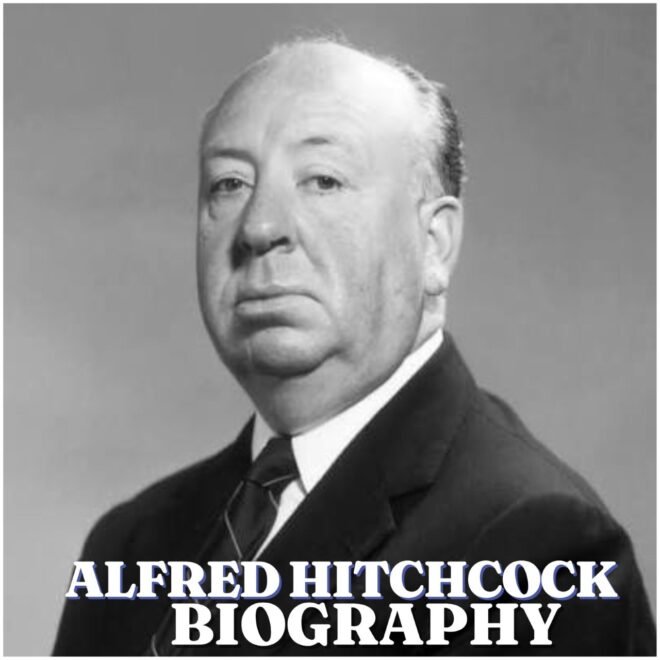
The category of “tribe” is not generally used to describe Hitchcock’s background in the way it might be applied to some African or other ethnic communities. He was English by upbringing and national origin, with biographical accounts also referring to Irish ancestry in his family background. Hitchcock is commonly reported to have stood approximately 5 feet 7 inches (1.70 metres) tall, although online height figures should be treated as estimates rather than definitive measurements. He was known for his stocky build, round face, receding hairline and distinctive profile. His usual public appearance included dark suits and ties, while his calm expression and dry sense of humour became recognisable features of his public persona.
Alfred Hitchcock’s Social Media Presence
Alfred Hitchcock died in 1980, long before social media platforms such as Instagram, Facebook and X existed. He therefore did not maintain personal social media accounts or publish posts under modern social media handles during his lifetime. His ongoing digital presence is instead shaped by his films, official legacy resources, film archives, retrospectives and accounts that share information about his work and career.
Accounts associated with Hitchcock’s legacy may use names such as @alfredhitchcockofficial on Instagram or @AlfredHitchcock on X, while Facebook pages may use variations of “Alfred Hitchcock Official.” However, social media usernames and verification status can change, and a name alone does not establish that an account is officially operated by his estate. Readers should check the account’s current details and affiliation before treating any profile as an authoritative source. Hitchcock’s legacy is also maintained through film institutions, documentary programmes, archival projects and publications that introduce his work to new audiences.
His digital following reflects the continuing appeal of his movies, filmmaking techniques and distinctive screen persona. Film enthusiasts share clips, analyse famous scenes, discuss plot twists and revisit his most influential productions. As new documentaries, restored footage and books appear, online conversations help introduce Hitchcock to viewers who may not have encountered his films when they were first released. His personal social media presence may be a historical impossibility, but his work remains widely discussed across modern digital platforms.
Alfred Hitchcock’s Net Worth
Alfred Hitchcock’s exact net worth at the time of his death in 1980 has not been definitively established. Some online estimates place his wealth at approximately $65 million in 1980, equivalent to roughly $250 million in today’s money after adjusting for inflation. These figures should be treated as estimates rather than verified estate records. Hitchcock built his fortune through his work as a film director, producer, screenwriter and television personality, becoming one of the most commercially successful filmmakers of his generation. His career included more than 50 feature films, many of which achieved international recognition and continued to generate interest long after their original releases.
One of Hitchcock’s most commercially significant projects was Psycho (1960), the psychological thriller that became one of his most famous films. Rather than relying solely on a conventional directing fee, he reportedly negotiated a financial arrangement that gave him a substantial share of the film’s profits. Some online accounts estimate that this arrangement earned him around $15 million at the time, although the exact terms and amount should not be regarded as independently verified financial records. His other successful productions, including Rear Window, Vertigo, North by Northwest and The Birds, strengthened his professional reputation and earning power. His television work, particularly Alfred Hitchcock Presents, also extended his influence and commercial opportunities beyond cinema.
Hitchcock’s financial legacy continues through the enduring popularity of his films, which remain available through theatrical screenings, television broadcasts, home-video releases and digital distribution. His name also appears in books, documentaries, film retrospectives and licensing activities connected with his work. However, the present-day value of his estate and its ongoing revenue are not publicly established in a way that supports a definitive current net-worth figure. The often-repeated estimate of approximately $250 million in inflation-adjusted wealth is therefore a useful point of reference, not a confirmed valuation of his estate. Ultimately, Hitchcock’s financial success reflected the commercial value of his films and the enduring cultural reputation he built over decades of filmmaking.
Alfred Hitchcock’s Legacy and Influence on Cinema
Alfred Hitchcock’s legacy in the film industry remains extraordinary, earning him a permanent place among the most influential directors in cinema history. Widely known as the Master of Suspense, he transformed the way filmmakers create tension, fear, mystery and psychological drama. Through films such as Psycho, Vertigo, Rear Window, North by Northwest and The Birds, Hitchcock demonstrated that suspense could be built not only through frightening events but also through camera movement, editing, music, silence and the careful control of what audiences see and hear. His innovative storytelling techniques helped shape the modern thriller and continue to influence filmmakers across different generations.
Beyond his technical achievements, Hitchcock left a lasting mark on popular culture and film scholarship. His distinctive visual style, memorable cameos, dark humour and ability to explore fear, guilt, obsession and human psychology made his work recognisable to audiences around the world. His television series, Alfred Hitchcock Presents, also introduced his personality and storytelling approach to millions of viewers, helping make him one of the most recognisable directors of the twentieth century. At the same time, his reputation has attracted critical discussion about his treatment of women, his conduct towards performers and the power dynamics within his productions. These discussions form part of the continuing examination of his life and work, showing that his legacy involves both artistic achievements and difficult questions about the man behind the camera.
Hitchcock’s influence continues through film festivals, retrospectives, documentaries, books and academic studies dedicated to his career. Filmmakers continue to draw inspiration from his suspense-building methods, visual storytelling and ability to turn ordinary situations into extraordinary experiences of fear and uncertainty. His films remain subjects of discussion among film lovers, students and critics, demonstrating their enduring artistic and cultural importance. The restoration of archival material and publication of new research in 2026 have further encouraged audiences to revisit his work and reconsider his personal history. More than four decades after his death, Alfred Hitchcock remains a defining figure in cinema, remembered not simply for the films he directed but for changing how audiences experience suspense on screen.
Conclusion
Alfred Hitchcock remains one of the most celebrated and influential filmmakers in cinema history, remembered for his extraordinary ability to turn suspense, fear and psychological tension into unforgettable storytelling. From his early beginnings in Britain to his remarkable success in Hollywood, he built a career defined by creativity, innovation and a distinctive filmmaking style that earned him the title Master of Suspense. His classic films, including Psycho, Vertigo, Rear Window and North by Northwest, continue to entertain audiences and inspire filmmakers around the world. Beyond his professional achievements and financial success, Hitchcock left a lasting cultural legacy that continues to attract new generations of film enthusiasts, scholars and critics. Although he died in 1980, his influence remains firmly established, and his contribution to the development of modern cinema ensures that Alfred Hitchcock will continue to be remembered as a master storyteller whose work changed the way suspense is created and experienced on screen.
Frequently Asked Questions About Alfred Hitchcock
Who was Alfred Hitchcock?
Alfred Hitchcock was a British-born film director and producer widely known as the Master of Suspense. He became famous for directing psychological thrillers, mystery films and suspense classics, including Psycho, Vertigo, Rear Window and North by Northwest.
When was Alfred Hitchcock born?
Alfred Hitchcock was born on August 13, 1899, in Leytonstone, London, England.
How old was Alfred Hitchcock when he died?
Alfred Hitchcock was 80 years old when he died on April 29, 1980, in Los Angeles, California, United States.
What was Alfred Hitchcock famous for?
Alfred Hitchcock was famous for his suspenseful storytelling, innovative camera techniques, psychological thrillers and unexpected plot twists. His ability to build tension and manipulate audience expectations earned him the title Master of Suspense.
What were Alfred Hitchcock’s most famous movies?
Some of Alfred Hitchcock’s most famous movies include Psycho (1960), Vertigo (1958), Rear Window (1954), North by Northwest (1959), The Birds (1963), Rebecca (1940) and Dial M for Murder (1954).
Who was Alfred Hitchcock’s wife?
Alfred Hitchcock was married to Alma Reville, an English screenwriter, film editor and creative collaborator. They married on December 2, 1926, and remained together until his death in 1980.
Did Alfred Hitchcock have children?
Yes. Alfred Hitchcock and his wife, Alma Reville, had one daughter, Patricia Hitchcock, born on July 7, 1928. Patricia appeared in several of her father’s productions, including Stage Fright, Strangers on a Train and Psycho.
What was Alfred Hitchcock’s nationality?
Alfred Hitchcock was born British and later became a naturalized American citizen in 1955. He began his filmmaking career in Britain before moving to Hollywood in 1939.
What was Alfred Hitchcock’s religion?
Alfred Hitchcock was raised in the Roman Catholic tradition and attended St Ignatius College, a Jesuit school in London. His Catholic upbringing is often discussed in relation to themes of guilt, morality, fear and punishment found in some of his films.
What was Alfred Hitchcock’s net worth?
Alfred Hitchcock’s exact net worth at the time of his death has not been definitively established. Some online estimates place his wealth at approximately $65 million in 1980, equivalent to roughly $250 million today after inflation. These figures are estimates rather than verified estate records.
Why was Alfred Hitchcock called the Master of Suspense?
Hitchcock earned the nickname Master of Suspense because of his exceptional ability to create tension, anticipation and fear through visual storytelling, editing, music and carefully constructed plots. Rather than relying solely on sudden shocks, he often allowed audiences to anticipate danger, making suspense central to the viewing experience.
Did Alfred Hitchcock make cameo appearances in his films?
Yes. Alfred Hitchcock became famous for making brief cameo appearances in many of his films. He often appeared in the background or as a passer-by, turning these appearances into a recognisable trademark that audiences enjoyed spotting.
Did Alfred Hitchcock win an Academy Award for Best Director?
No. Alfred Hitchcock never won the competitive Academy Award for Best Director, despite receiving five nominations in that category. However, Rebecca, which he directed, won the Academy Award for Best Picture, and Hitchcock received the Irving G. Thalberg Memorial Award in 1968 in recognition of his contributions to filmmaking.
What is Alfred Hitchcock’s greatest legacy?
Alfred Hitchcock’s greatest legacy is his lasting influence on suspense, psychological thrillers and cinematic storytelling. His innovative techniques continue to inspire directors, screenwriters and film students, while his classic movies remain widely studied, screened and discussed decades after his death.
Why is Alfred Hitchcock being discussed in 2026?
Alfred Hitchcock has attracted renewed attention in 2026 through the publication of Tony Lee Moral’s book A Century of Hitchcock: The Man, the Myths, the Legacy, the PBS documentary Hitchcock Confidential and the presentation of restored family home movies at the Il Cinema Ritrovato festival in Bologna. These projects offer fresh perspectives on his career, his partnership with Alma Reville and his enduring influence on cinema.