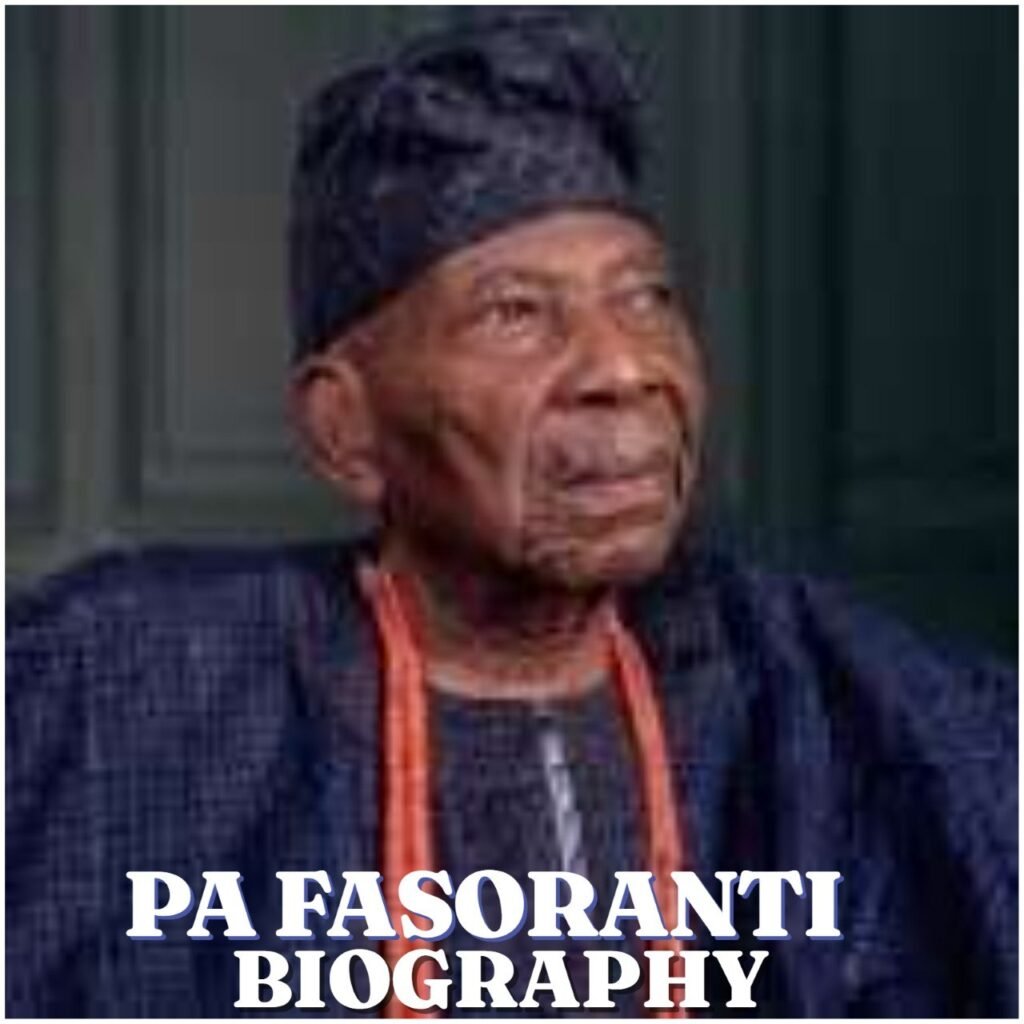

Pa Reuben Famuyide Fasoranti was one of Nigeria’s prominent elder statesmen, educationists, politicians, and Yoruba socio-political leaders. His life spanned 100 years of remarkable historical changes, from British colonial rule and Nigeria’s independence to military governments and the return to civilian democracy. Best known for his association with Chief Obafemi Awolowo’s progressive political tradition and his leadership of Afenifere, Fasoranti devoted much of his life to education, public administration, democratic advocacy, and Yoruba political affairs. His long career placed him among the notable figures in southwestern Nigeria’s political history, while his contributions to education and public service helped establish his reputation beyond his home state of Ondo.
Born on May 11, 1926, in Uso, in present-day Ondo State, Nigeria, Fasoranti pursued a professional path that combined educational development with political participation. Before becoming widely recognised as an elder statesman, he worked as an educator and school administrator and became involved in establishing educational institutions. He later entered government service and served as Commissioner for Finance in the old Ondo State between 1979 and 1983 under Governor Michael Ajasin. His political journey was closely connected to the ideals of Chief Obafemi Awolowo, whose progressive movement influenced generations of political leaders in southwestern Nigeria. Through his involvement in government and political organisations, Fasoranti became associated with debates about social welfare, education, democracy, federalism, and responsible leadership.
In his later years, Fasoranti remained an influential voice in Yoruba socio-political affairs through his leadership of Afenifere, an organisation known for advocating Yoruba interests, social justice, democratic governance, and constitutional restructuring. Although his political activities sometimes attracted controversy, particularly during disagreements within Afenifere over political alliances and presidential candidates, he continued to command attention in national discussions. He celebrated his 100th birthday on May 11, 2026, before his death on October 20, 2026. His passing marked the end of a century-long life shaped by education, public administration, political activism, and family experiences. His biography provides an opportunity to examine the personal journey, professional achievements, political influence, and lasting legacy of a man whose life was closely connected to Nigeria’s changing political landscape.
Early Life and Family Background of Pa Fasoranti
Pa Reuben Famuyide Fasoranti was born on May 11, 1926, in Uso, a community in present-day Ondo State, southwestern Nigeria. He grew up during the colonial period, when educational opportunities and access to modern public institutions were still developing across many parts of the country. His formative years coincided with a period of growing political consciousness among Nigerians and increasing demands for self-government. These historical circumstances provided the wider context for the generation to which Fasoranti belonged, many of whom later contributed to Nigeria’s educational, political, and administrative development. Although detailed accounts of his childhood and immediate family background are limited in widely available public records, his subsequent career demonstrated a sustained commitment to education and public service.
Fasoranti received his early formal education at Ondo Boys’ High School, an institution that contributed to the education of several prominent Nigerians. He continued his studies at Yaba Higher College in Lagos, one of the leading institutions providing advanced education during the colonial era. He later attended the University College, Ibadan, now known as the University of Ibadan, where he studied English and Geography. His educational journey reflected the importance of formal learning in preparing Nigerians for professional responsibilities at a time when the country was developing its educational system and expanding opportunities for indigenous participation in administration and other public institutions. The knowledge and training he acquired helped prepare him for his subsequent career in teaching, school administration, and public affairs.
Fasoranti’s early life was shaped by the social and historical environment of southwestern Nigeria during the first half of the twentieth century. The expansion of formal education and the emergence of Nigerian political movements created opportunities for educated Nigerians to participate more actively in community development and government. His eventual career in education and politics reflected these wider developments. Although his childhood has not been extensively documented in public biographies, his later activities demonstrate how education became a central part of his professional identity and how his involvement in public affairs extended from local educational development to state administration and national political discussions.
Education and Academic Qualifications of Pa Fasoranti
Pa Reuben Famuyide Fasoranti’s educational background played an important role in shaping his career as an educationist, public administrator, and political leader. He received his early education at Ondo Boys’ High School, where he developed the academic foundation that prepared him for further studies. At a time when access to advanced education was limited for many Nigerians, particularly during the colonial period, his pursuit of formal education provided him with opportunities to acquire the knowledge and skills needed for professional development. His early schooling formed part of the foundation for his subsequent involvement in educational administration and public service.
After completing his early education, Fasoranti proceeded to Yaba Higher College in Lagos, an institution recognised for its contribution to the training of professionals during the colonial era. He later attended the University College, Ibadan, now the University of Ibadan, where he studied English and Geography. His academic training exposed him to disciplines that supported communication, critical thinking, and an understanding of society and the environment. These areas of knowledge were relevant to his later work in teaching and school administration, as well as his participation in public affairs. His educational journey also reflected the growing importance of indigenous professionals in Nigeria’s developing institutions.
Beyond his studies in Nigeria, Fasoranti pursued further education in the United Kingdom and Australia, where he reportedly obtained additional qualifications in education and educational administration. These qualifications, according to published biographical accounts, strengthened his professional preparation and supported his long-term involvement in educational development. Rather than limiting his career to classroom teaching, he went on to take up responsibilities in school leadership and administration, contributing to the establishment and management of educational institutions. His educational background therefore formed a significant part of his professional identity and helped prepare him for the wider responsibilities he later assumed in government and political leadership.
Career of Pa Fasoranti: From Educationist to Nigerian Elder Statesman
Pa Reuben Famuyide Fasoranti built a career that combined education, public administration, and political leadership. Although he became widely recognised as a Yoruba elder statesman and a prominent figure in Nigerian politics, his professional journey began in the education sector. He worked as a teacher and later took on responsibilities in school administration, where he contributed to the development of educational institutions in southwestern Nigeria. His involvement in education reflected the importance he attached to learning as a foundation for individual advancement and societal development. Through his work as an educator and administrator, Fasoranti became involved in efforts to expand access to schooling and strengthen educational opportunities for young Nigerians.
One of the notable aspects of his career was his participation in establishing and developing educational institutions. He taught at schools including Ondo Boys’ High School and Oyemekun Grammar School in Akure. In 1957, he became the founding principal of Anglican Grammar School, Iju-Itaogbolu, where he spent approximately 14 years helping to develop the institution. After his career in formal education, he continued investing in schooling by establishing Omolere Nursery and Primary School and Akure High School. He also established St. Frances’ Academy in Igoba, Akure, in memory of his late wife. His contributions extended beyond classroom instruction to include school management, institutional development, and efforts to improve educational opportunities for children and young people.
Fasoranti’s career later expanded into government and partisan politics, where he became associated with the progressive political tradition of Chief Obafemi Awolowo. He joined the Action Group and subsequently became associated with the Unity Party of Nigeria (UPN). Between 1979 and 1983, he served as Commissioner for Finance in the old Ondo State under Governor Michael Ajasin during Nigeria’s Second Republic. This appointment placed him in a significant public administrative position, where he was involved in the state’s financial affairs. His political outlook was influenced by the progressive movement’s emphasis on education, social welfare, healthcare, and rural development. Following his years in government, Fasoranti continued to participate in political activities and became a prominent leader of Afenifere, a Yoruba socio-political organisation. In this capacity, he contributed to discussions on democracy, restructuring, social justice, and political representation. His career, spanning education, government service, and political advocacy, established him as an influential figure in southwestern Nigerian politics until his death on October 20, 2026.
Why Is Pa Fasoranti Trending? His Death at 100 and Tributes from Nigerian Leaders
Pa Reuben Famuyide Fasoranti became a major subject of public attention following reports of his death on October 20, 2026, at the age of 100. News of the passing of the Nigerian elder statesman attracted attention across the country, particularly among political leaders, members of the Yoruba community, and supporters of the progressive political tradition associated with Chief Obafemi Awolowo. His death marked the end of a century-long life that witnessed some of the most significant developments in Nigeria’s political history, from colonial rule and independence to military government and the return to civilian democracy. As news spread, tributes and condolence messages highlighted his long involvement in education, public administration, and Yoruba socio-political affairs.
Another reason Fasoranti is trending is the outpouring of tributes from prominent political leaders. President Bola Ahmed Tinubu mourned him as an important figure in Chief Obafemi Awolowo’s progressive political tradition, highlighting his commitment to federalism, social justice, and democratic governance. Ondo State Governor Lucky Aiyedatiwa also paid tribute to the late statesman, describing his life as one marked by integrity, wisdom, and service to Ondo State, Yorubaland, and Nigeria. These reactions have renewed public interest in Fasoranti’s contributions to Nigeria’s political development and the democratic struggle.
The question of Afenifere’s future leadership has also attracted attention following his passing. As a longstanding leader of the organisation, Fasoranti played a significant role in its political direction, including during periods of internal disagreement over political alliances. On October 21, 2026, reports quoted the Olu of Iluabo, Oba Olu Falae, dismissing concerns about a potential succession struggle and explaining that the organisation’s leadership process would determine its next leader. Meanwhile, Fasoranti’s family has emphasised celebrating the century-long life he lived and the values he represented, including resilience, hard work, and love. These developments have made his death a major topic in Nigerian news and public discussion.
Pa Fasoranti’s Cause of Death and Final Moments
Pa Reuben Famuyide Fasoranti, the renowned Nigerian elder statesman and former leader of Afenifere, died on October 20, 2026, at the age of 100. His death was announced by Ondo State Governor Lucky Aiyedatiwa, who expressed sadness over the loss and described him as a respected figure whose life was dedicated to public service, integrity, and the advancement of Ondo State, Yorubaland, and Nigeria. His passing marked the end of a remarkable life that spanned a century of major political, social, and historical developments in Nigeria.
Regarding the cause of death, his son, Dr Taiwo Fasoranti, disclosed that his father died peacefully in his sleep at his residence in Akure, Ondo State, at approximately 4 p.m. on October 20, 2026. According to his son’s account, the centenarian passed away in his room and in his bed. However, reports published around the time of his death did not identify a specific medical cause, and no confirmed medical explanation was provided in the sources reviewed. It is therefore important to distinguish the reported circumstances of his death from a medically confirmed cause.
Following his death, tributes poured in from political leaders, members of Afenifere, and Nigerians who recognised his contributions to education, public administration, and democratic activism. President Bola Ahmed Tinubu mourned him as an important figure in the progressive political tradition associated with Chief Obafemi Awolowo, while other leaders acknowledged his longstanding commitment to public service and Yoruba political affairs. His family also expressed gratitude for his long life and the positive influence he had on others. Having celebrated his 100th birthday on May 11, 2026, Pa Fasoranti left behind a legacy of educational development, political engagement, and service that will remain part of Nigeria’s history.
Pa Fasoranti’s Personal Life, Wife and Children
Pa Reuben Famuyide Fasoranti was a devoted family man who maintained a relatively private personal life despite his prominence in Nigerian politics. He was married to Frances Oladiwura Fasoranti, née Awosika, whom he met while they were students. The couple reportedly remained friends for nine years before marrying in 1955. Their marriage was an important part of his personal life, and they shared a strong interest in education. Frances later established and managed Omolere Nursery and Primary School, contributing to the family’s educational work. She died in 1991, and Fasoranti subsequently chose not to remarry, explaining in an interview that he did not want another marriage to disturb the happiness of his children. He later honoured his late wife’s memory by establishing St. Frances’ Academy in Igoba, Akure, in her name.
Fasoranti’s children were an important part of his life, and published accounts identify his children as including Bunmi, Olufunmilayo Fasoranti, Funke Olakunrin, Taiwo Fasoranti, and Kehinde Fasoranti. His children and wider family were central to his life after the death of his wife. Accounts of his later years portrayed him as a disciplined father who valued education, good conduct, and personal responsibility. His son, Dr Taiwo Fasoranti, who serves as Secretary to the Ondo State Government, spoke publicly following his father’s death on October 20, 2026. He described his father as a man whose life had made a lasting impact and whose absence would leave a significant gap for the family.
One of the most painful experiences in Fasoranti’s family life was the death of his daughter, Funke Olakunrin, who was killed in July 2019 when gunmen attacked the vehicle in which she was travelling along the Ore–Ondo road. She was 58 years old at the time, and her death attracted widespread national attention, particularly concerning insecurity on Nigerian highways. The tragedy deeply affected the family and prompted public calls for justice and improved security. Despite these personal losses, Fasoranti continued his public engagements and remained a prominent figure in Yoruba socio-political affairs. He died at the age of 100 in October 2026, leaving behind his surviving children, grandchildren, extended family, and a legacy that extended beyond politics into education and family life.
Pa Fasoranti’s Age, Religion, Tribe, Nationality, Height and Physical Appearance
Pa Reuben Famuyide Fasoranti was born on May 11, 1926, and died on October 20, 2026, at the age of 100 years. His life spanned a century of major changes in Nigeria, from British colonial rule and independence to military governments and the return to civilian democracy. He was born in Uso, in present-day Ondo State, Nigeria, and spent much of his later life in Akure, where he remained active in public affairs and Yoruba socio-political leadership. His remarkable longevity made him one of the prominent Nigerian elder statesmen of his generation.
In terms of religion, Fasoranti was a Christian. His involvement in education included service in schools connected with Christian institutions, and his family established St. Frances’ Academy in memory of his late wife. In a 2022 interview, he also described himself as a churchman and spoke about his interest in church music. Ethnically, he was Yoruba, one of Nigeria’s largest ethnic groups, with a strong historical and cultural presence in southwestern Nigeria. His association with Afenifere, a Yoruba socio-political organisation, further connected his public life with discussions about Yoruba identity, political representation, cultural interests, and Nigeria’s constitutional structure.
Regarding nationality, Pa Fasoranti was Nigerian by nationality and was widely recognised for his contributions to education, public administration, and democratic activism. His physical appearance in photographs and public appearances was characteristic of an elderly Nigerian statesman: he had a dark complexion, a generally lean build, a mature facial structure, and short grey or white hair in his later years. He was frequently photographed wearing traditional Yoruba attire, including flowing agbada-style garments and caps, reflecting the cultural dress commonly associated with respected Yoruba elders. His exact height has not been reliably documented in publicly available biographical sources, so a specific measurement cannot be confirmed.
Pa Fasoranti’s Social Media Presence and Online Popularity
Pa Reuben Famuyide Fasoranti was a traditional elder statesman who maintained a relatively private lifestyle and was primarily known for his work in education, public administration, and political leadership rather than for his online activities. Unlike many contemporary public figures, he did not have a widely verified personal social media presence. Available biographical sources do not confirm official personal accounts associated with him on Instagram, Facebook, TikTok, or X (formerly Twitter). As a result, it would be misleading to publish a specific social media handle as his official account without reliable verification.
Although Pa Fasoranti was not known for actively managing personal social media accounts, news about his political activities, public statements, centenary celebration, and death has been shared widely online. Nigerians can find updates and tributes through the official channels of Afenifere, the Ondo State Government, and reputable Nigerian news organisations. Following his death on October 20, 2026, his name attracted renewed online attention as people shared condolence messages, photographs, interviews, and reflections on his contribution to Nigerian public life. Readers should be cautious of accounts using his name or photographs without evidence that they are officially authorised.
His online presence was therefore shaped more by his public reputation and the reporting of his activities than by a known personal social media brand. His decades of involvement in education and politics, his association with Chief Obafemi Awolowo, and his leadership of Afenifere provided the main subjects of online discussions about him. His death has also encouraged renewed interest in his biography, family history, political career, and educational contributions, ensuring that information about his life continues to circulate among readers interested in Nigerian history and politics.
Pa Fasoranti’s Net Worth: Estimated Wealth and Sources of Income
Pa Reuben Famuyide Fasoranti’s net worth has not been reliably established through publicly available financial disclosures. Some online biography websites have estimated his wealth at approximately US$100,000, but this figure has not been independently verified and should not be treated as an authoritative assessment of his estate. There is no publicly confirmed valuation that establishes the total worth of his assets, properties, savings, investments, or other financial interests at the time of his death. Consequently, any estimate of his wealth should be approached with caution rather than presented as a confirmed financial fact.
Fasoranti’s professional life included several sources of potential income and asset accumulation. He worked as a teacher and school administrator, established educational institutions, and served as Commissioner for Finance in the old Ondo State from 1979 to 1983. His long career in education and public service provided professional income over several decades, while his involvement in establishing schools may have contributed to the assets associated with his educational activities. However, the value of any properties, business interests, investments, savings, or other holdings associated with him has not been comprehensively documented in reliable public sources. His former government position should not, by itself, be used to infer the size of his personal wealth.
Beyond his financial standing, Fasoranti’s legacy was closely associated with education, democratic activism, and political leadership. His influence extended through the schools he established, his service in government, and his decades of involvement in Afenifere and the progressive political tradition of Chief Obafemi Awolowo. Following his death on October 20, 2026, the total value of his estate remained undisclosed in the sources reviewed. Therefore, US$100,000 can only be mentioned as an unverified online estimate, not a confirmed statement of his wealth or inheritance. His long record of public service and educational involvement remains better documented than his personal finances.
The Legacy of Pa Fasoranti: Education, Democracy and Yoruba Leadership
Pa Reuben Famuyide Fasoranti’s legacy is rooted in his contributions to education, public administration, democratic activism, and Yoruba socio-political leadership. Throughout his long life, he demonstrated a sustained commitment to public service, beginning with his work as an educationist and continuing through his involvement in government and political organisations. His role in establishing and developing educational institutions helped create opportunities for young people in southwestern Nigeria, while his service as Commissioner for Finance in the old Ondo State between 1979 and 1983 placed him among the public administrators who shaped the region during Nigeria’s Second Republic. His professional journey reflected the connection between education, leadership, and community development, and his contributions remain an important part of his public record.
Another significant aspect of Fasoranti’s legacy was his association with Chief Obafemi Awolowo’s progressive political tradition and his leadership of Afenifere. He remained involved in discussions about democracy, federalism, social justice, and the political interests of the Yoruba people for several decades. His participation in Nigeria’s political development extended across different governments and political periods, including the struggle for democratic governance during military rule. His leadership also placed him at the centre of discussions about political alliances and the direction of Yoruba political advocacy. Although disagreements over political alliances and electoral support occasionally exposed divisions within Afenifere, his long involvement in the organisation established him as a notable figure in southwestern Nigeria’s political history. His life offers an important perspective on the evolution of political movements, ideological commitments, and regional advocacy in Nigeria.
Pa Fasoranti’s death on October 20, 2026, at the age of 100 marked the end of a life that witnessed profound changes in Nigeria’s history. Beyond political titles and public appointments, his enduring significance lies in his contributions to education, his commitment to public affairs, and the influence he exercised within Yoruba socio-political circles. His example continues to provide material for discussions about responsible leadership, democratic participation, and the role of elder statesmen in national development. While future assessments of his impact may differ according to political perspectives, his place in the history of education and progressive politics in southwestern Nigeria remains an important part of his legacy. The institutions he helped establish, the public responsibilities he undertook, and the political tradition he represented remain central to understanding his contribution to Nigerian society.
Conclusion: Remembering Pa Reuben Famuyide Fasoranti
Pa Reuben Famuyide Fasoranti was a distinguished Nigerian elder statesman, educationist, politician, and Yoruba socio-political leader whose life and career left a significant mark on Nigeria’s history. From his early years in education to his service as Commissioner for Finance in the old Ondo State and his leadership of Afenifere, he remained involved in public affairs, democratic advocacy, and the promotion of educational development. His association with Chief Obafemi Awolowo’s progressive political tradition further established his place in the political history of southwestern Nigeria. Although he passed away on October 20, 2026, at the age of 100, his contributions to education, public administration, and political activism remain important aspects of his legacy. His life serves as a reminder of the enduring role that education, civic engagement, and sustained public service can play in shaping society and influencing future generations.
Frequently Asked Questions About Pa Fasoranti
1. Who was Pa Fasoranti?
Pa Fasoranti, whose full name was Reuben Famuyide Fasoranti, was a Nigerian elder statesman, educationist, politician, and prominent Yoruba socio-political leader. He was widely known for his leadership of Afenifere and his association with Chief Obafemi Awolowo’s progressive political tradition.
2. When was Pa Fasoranti born?
Pa Reuben Fasoranti was born on May 11, 1926, in Uso, in present-day Ondo State, Nigeria.
3. How old was Pa Fasoranti when he died?
Pa Fasoranti was 100 years old when he died on October 20, 2026. He celebrated his centenary birthday on May 11, 2026.
4. What was the cause of Pa Fasoranti’s death?
Pa Fasoranti reportedly died peacefully in his sleep at his residence in Akure, Ondo State, on October 20, 2026. His son, Taiwo Fasoranti, confirmed the circumstances of his passing, but a specific medical cause of death was not publicly disclosed in the reports reviewed.
5. What was Pa Fasoranti’s occupation?
Pa Fasoranti was an educationist, school administrator, politician, and public administrator. He also became a prominent leader of Afenifere, a Yoruba socio-political organisation.
6. Which political position did Pa Fasoranti hold?
Pa Fasoranti served as Commissioner for Finance in the old Ondo State from 1979 to 1983 under Governor Michael Ajasin during Nigeria’s Second Republic.
7. Was Pa Fasoranti a leader of Afenifere?
Yes. Pa Fasoranti was a prominent leader of Afenifere, an organisation associated with Yoruba political interests, democratic governance, social justice, and constitutional restructuring in Nigeria.
8. Who was Pa Fasoranti’s wife?
Pa Fasoranti was married to Frances Oladiwura Fasoranti, née Awosika, whom he married in 1955. She died in 1991, and he reportedly chose not to remarry after her death. He later honoured her memory through St. Frances’ Academy in Igoba, Akure.
9. How many children did Pa Fasoranti have?
Published biographical accounts identify five children: Bunmi, Olufunmilayo Fasoranti, Funke Olakunrin, Taiwo Fasoranti, and Kehinde Fasoranti. His daughter Funke Olakunrin was killed in July 2019 in an attack along the Ore–Ondo road.
10. What was Pa Fasoranti’s tribe and nationality?
Pa Fasoranti was Yoruba by ethnicity and Nigerian by nationality. He was born in present-day Ondo State in southwestern Nigeria.
11. What was Pa Fasoranti’s religion?
Pa Fasoranti was a Christian. In a 2022 interview, he described himself as a churchman and spoke about his interest in church music.
12. What was Pa Fasoranti’s net worth?
Pa Fasoranti’s net worth was not reliably established through publicly available financial disclosures. Some online biography websites estimated his wealth at approximately US$100,000, but this figure has not been independently verified and should not be treated as a confirmed valuation of his estate.
No verified personal social media accounts for Pa Fasoranti have been reliably established. News about his public activities and legacy is available through Afenifere, government communication channels, and Nigerian news organisations.
14. What was Pa Fasoranti best remembered for?
Pa Fasoranti is remembered for his contributions to education, his service as Ondo State Commissioner for Finance, his association with Chief Obafemi Awolowo, and his leadership of Afenifere. His involvement in democratic activism and Yoruba socio-political affairs formed important parts of his public legacy.
15. Where did Pa Fasoranti live?
Pa Fasoranti was born in Uso, in present-day Ondo State, and spent much of his later life in Akure, the capital of Ondo State, Nigeria.
16. What is Pa Fasoranti’s legacy in Nigeria?
Pa Fasoranti’s legacy includes educational development, public administration, democratic advocacy, and decades of participation in Yoruba socio-political affairs. His life spanned Nigeria’s colonial era, independence, military rule, and civilian democratic government, making his experiences relevant to understanding the country’s political evolution.