
Introduction
Dr. Emmanuel Eweta Uduaghan was a Nigerian medical doctor and politician who served as the Governor of Delta State from May 29, 2007, to May 29, 2015. Born on October 22, 1954, he built his career in medicine before becoming involved in public service and politics. As a member of the Itsekiri ethnic group, Uduaghan played a prominent role in the political development of Delta State and became known nationally through his years in government. His professional journey from healthcare to political leadership made him a notable figure in Nigerian public life.
Before becoming governor, Emmanuel Uduaghan worked in the medical profession and held several important government positions, including Commissioner for Health and Secretary to the Delta State Government. His experience in healthcare and administration helped shape his transition into executive leadership. During his two terms as governor, his administration pursued projects and policies involving infrastructure, healthcare, education, security and economic development. His political career also included his participation in Nigeria’s wider party politics, particularly through the Peoples Democratic Party (PDP) and, later, the All Progressives Congress (APC).
Emmanuel Uduaghan’s biography covers his early life, educational background, medical career, political achievements, family, wife, children, estimated net worth and lasting influence on Delta State. His years in public office remain an important part of his public record, while his personal and professional journey provides insight into his rise from medicine to state leadership. This biography is updated as of October 20, 2026, and includes the latest reported developments concerning his life and legacy, with details that have not been officially confirmed treated cautiously.
Early Life of Emmanuel Uduaghan
Emmanuel Eweta Uduaghan was born on October 22, 1954, in Warri North, in present-day Delta State, Nigeria. He belongs to the Itsekiri ethnic group, one of the ethnic communities with a longstanding cultural and historical presence in the Niger Delta region. Growing up in an area shaped by traditional institutions, commerce, and the oil industry, Uduaghan developed an early connection to the people and communities he would later serve in public office. His background in Delta State became an important part of his identity throughout his medical and political careers.
During his formative years, Uduaghan received his early education in Nigeria, where he developed the academic foundation that would eventually lead him into the medical profession. He attended Federal Government College, Warri, for his secondary education. His educational experience helped prepare him for further studies and a professional career in healthcare. Although detailed public accounts of his childhood and family upbringing are limited, his subsequent academic achievements demonstrate the importance of education in shaping his early professional direction.
After completing his secondary education, Emmanuel Uduaghan proceeded to the University of Benin, where he studied medicine from 1975 to 1980. He graduated with a Bachelor of Medicine and Bachelor of Surgery (MBBS) degree and later obtained additional training in anaesthesia. His decision to pursue medicine established the foundation for his early working life as a medical practitioner before he entered government and politics. These formative years were significant in shaping the professional experience that would later influence his work in healthcare administration and his eventual rise to the governorship of Delta State.
Education of Emmanuel Uduaghan
Emmanuel Eweta Uduaghan began his educational journey in Nigeria, where he received the foundational education that prepared him for a career in medicine and public service. He attended Federal Government College, Warri, in present-day Delta State, for his secondary education. During this period, he developed the academic foundation necessary to pursue higher education. His schooling helped prepare him for the demanding training required in the medical profession, which later became the starting point of his professional career before his transition into politics.
After completing his secondary education, Uduaghan gained admission to the University of Benin, one of Nigeria’s recognised higher education institutions. He studied medicine from 1975 to 1980 and obtained a Bachelor of Medicine and Bachelor of Surgery (MBBS) degree. His medical education provided him with the scientific knowledge and practical foundation required to work as a qualified medical practitioner. The training also introduced him to the importance of healthcare delivery, patient care and the challenges facing medical services in Nigeria.
Following his graduation, Emmanuel Uduaghan pursued further professional training in anaesthesia, obtaining a diploma in the field. This additional qualification strengthened his medical expertise and supported his subsequent work in hospitals and healthcare institutions. His educational background played an important role in his professional development, particularly during his years in medical practice and his later appointment as Delta State Commissioner for Health. The combination of medical training and administrative experience eventually contributed to his transition from healthcare into government service and, ultimately, his election as governor of Delta State in 2007.
Career of Emmanuel Uduaghan
Medical Career and Professional Experience
Emmanuel Eweta Uduaghan began his professional career as a medical doctor after graduating from the University of Benin with a Bachelor of Medicine and Bachelor of Surgery (MBBS) degree in 1980. He also obtained a diploma in anaesthesia, which enabled him to develop expertise in the medical field. In 1983, he began working as a medical officer at the Delta Steel Company in Aladja, Delta State. His early professional experience provided him with practical knowledge of healthcare delivery and the challenges facing medical services in Nigeria. Between 1989 and 1994, he worked at several medical facilities, including Westend Hospital in Warri, Benoni Hospitals in Benin City and Shell Hospital in Ogunu, where he served as a consultant anaesthesiologist. In 1994, he established a private medical practice, expanding his professional independence and continuing his involvement in healthcare delivery.
Entry into Politics and Appointment as Commissioner for Health
Uduaghan’s transition from medicine into politics became more prominent in 1999, following the return of civilian democratic government in Nigeria. On August 6, 1999, he was appointed Commissioner for Health by James Onanefe Ibori, who was then the Governor of Delta State. His appointment placed him in charge of a sector in which he already had professional experience. As commissioner, he was involved in efforts to improve healthcare services, strengthen medical infrastructure and address issues affecting healthcare workers across the state. His background as a medical practitioner gave him familiarity with the practical demands of hospitals and medical personnel. He served as Commissioner for Health until 2003, marking an important stage in his development as a public administrator and establishing his profile within Delta State politics.
Secretary to the Delta State Government
In June 2003, Uduaghan was appointed Secretary to the Delta State Government, a position he held until 2007. The appointment expanded his responsibilities beyond the healthcare sector and brought him closer to the overall coordination of state administration. As Secretary to the State Government, he worked within the machinery of government, supporting administrative coordination and the implementation of government policies. The position provided him with experience in public administration and a broader understanding of the political and institutional responsibilities involved in managing a state. His service in this role also strengthened his political standing and preceded his emergence as the Peoples Democratic Party’s candidate for governor in the 2007 election.
Governorship of Delta State (2007–2015)
Emmanuel Uduaghan became Governor of Delta State on May 29, 2007, succeeding James Ibori. His emergence followed a contested electoral process, and he later secured re-election in 2011. During his eight years in office, his administration pursued programmes involving road construction, healthcare delivery, education, infrastructure development, security and economic diversification. One of the major themes associated with his administration was the Delta Beyond Oil initiative, which aimed to encourage economic activities outside the petroleum sector and reduce the state’s dependence on oil revenue. His government also pursued projects intended to improve public services and support development across different parts of Delta State. His administration’s record remains part of the state’s political history, including discussions about the outcomes of its development programmes and the challenges of governing an oil-producing state.
Political Party Activities and Later Career
Throughout his political career, Uduaghan was associated with the Peoples Democratic Party (PDP), which supported his rise to the governorship. In 2018, he defected to the All Progressives Congress (APC) and contested the Delta South Senatorial District seat in the 2019 general election, but he lost to incumbent senator James Manager. In September 2020, he returned to the PDP, explaining his decision as a return to his former political home. Later, in May 2025, reports indicated that he had rejoined the APC. These party changes reflected the shifting political alliances that characterised his later years in public life. Even after leaving office as governor in 2015, he remained a recognisable figure in Delta State politics and continued to attract public attention because of his experience in medicine, government administration and electoral politics.
Professional Associations and Public Service Legacy
Beyond his elected and appointed positions, Uduaghan participated in professional and civic organisations, including the Nigerian Medical Association and Junior Chamber International, commonly known as Jaycees. These activities formed part of his professional development before and during his entry into politics. His career brought together clinical medicine, healthcare administration and executive leadership at the state level. As a former Commissioner for Health, Secretary to the State Government and two-term governor, he occupied several influential positions in Delta State’s public administration. His professional journey remains an important part of his biography, illustrating his transition from treating patients to managing public institutions and leading a state government. Following his death on October 19, 2026, at the age of 71, attention turned to his years of public service and the long-term impact of his administration on Delta State.
Personal Life and Family of Emmanuel Uduaghan
Emmanuel Eweta Uduaghan was married to Roli Uduaghan, also known as Roli Nere, whom he reportedly met while working at the Delta Steel Company. The couple married in 1988 and built their family life while Uduaghan developed his career as a medical doctor and later entered politics. Roli is the daughter of retired Brigadier-General Sunny E. Tuoyo, a former military administrator of Ondo State. Throughout her husband’s years in public service, she was recognised as the wife of the former Delta State governor. Despite the public attention associated with his political career, Uduaghan maintained a distinction between his official responsibilities and aspects of his private family life.
Uduaghan and his wife had two children, including their daughter, Orode Meyiwa Uduaghan, and their son, Toritseju Uduaghan, also known as Toju Anire Uduaghan. Orode has been involved in public service and politics in Delta State, continuing the family’s presence in the state’s public life. Following her father’s death, she paid tribute to him in an emotional message expressing her enduring love and appreciation. Toju Anire Uduaghan also became publicly associated with the family when he signed the statement announcing his father’s passing on behalf of the Uduaghan family. These public tributes highlighted the close family ties and the personal loss experienced by his children following his death.
Beyond his immediate family, Emmanuel Uduaghan maintained important relationships with members of his extended family, political associates and the Itsekiri community. He was a cousin of former Delta State Governor James Ibori, whose political administration preceded his own and played a significant role in his early political career. Uduaghan was also regarded by relatives and associates as a respected elder and family patriarch. He died on October 19, 2026, at the age of 71, three days before his 72nd birthday. Following his death, President Bola Ahmed Tinubu and Delta State Governor Sheriff Oborevwori extended condolences to his wife, children and extended family. His family remembered him not only for his years in public service but also as a beloved father, brother, uncle and patriarch whose presence would be deeply missed.
Emmanuel Uduaghan’s Age, Religion, Tribe, Height and Physical Appearance
Age
Emmanuel Eweta Uduaghan was born on October 22, 1954, in Warri North Local Government Area of present-day Delta State, Nigeria. He died on October 19, 2026, at the age of 71, just three days before his 72nd birthday. He was a medical doctor and politician who served as the Governor of Delta State from May 29, 2007, to May 29, 2015. His years in public service made him a prominent figure in Delta State and Nigerian politics.
Religion
Emmanuel Uduaghan has been described in some biographical accounts as a Christian. However, reliable public information about his specific Christian denomination and personal religious practices is limited. For an accurate biography, it is advisable to avoid attributing a particular church affiliation to him without further confirmation from a reliable source.
Tribe
Emmanuel Uduaghan belonged to the Itsekiri ethnic group, a community with a longstanding cultural and historical presence in the Niger Delta region of southern Nigeria. He was born in Warri North, Delta State, and maintained strong connections to the region throughout his medical and political careers. His Itsekiri heritage formed an important part of his cultural identity and his connection to the people of Delta State.
Height
Emmanuel Uduaghan’s exact height has not been reliably established in authoritative biographical records. Although some online profiles may provide estimated measurements, there is insufficient reliable evidence to state a specific height as fact. A well-researched biography should therefore identify his height as publicly unconfirmed rather than present an unsupported figure.
Physical Appearance
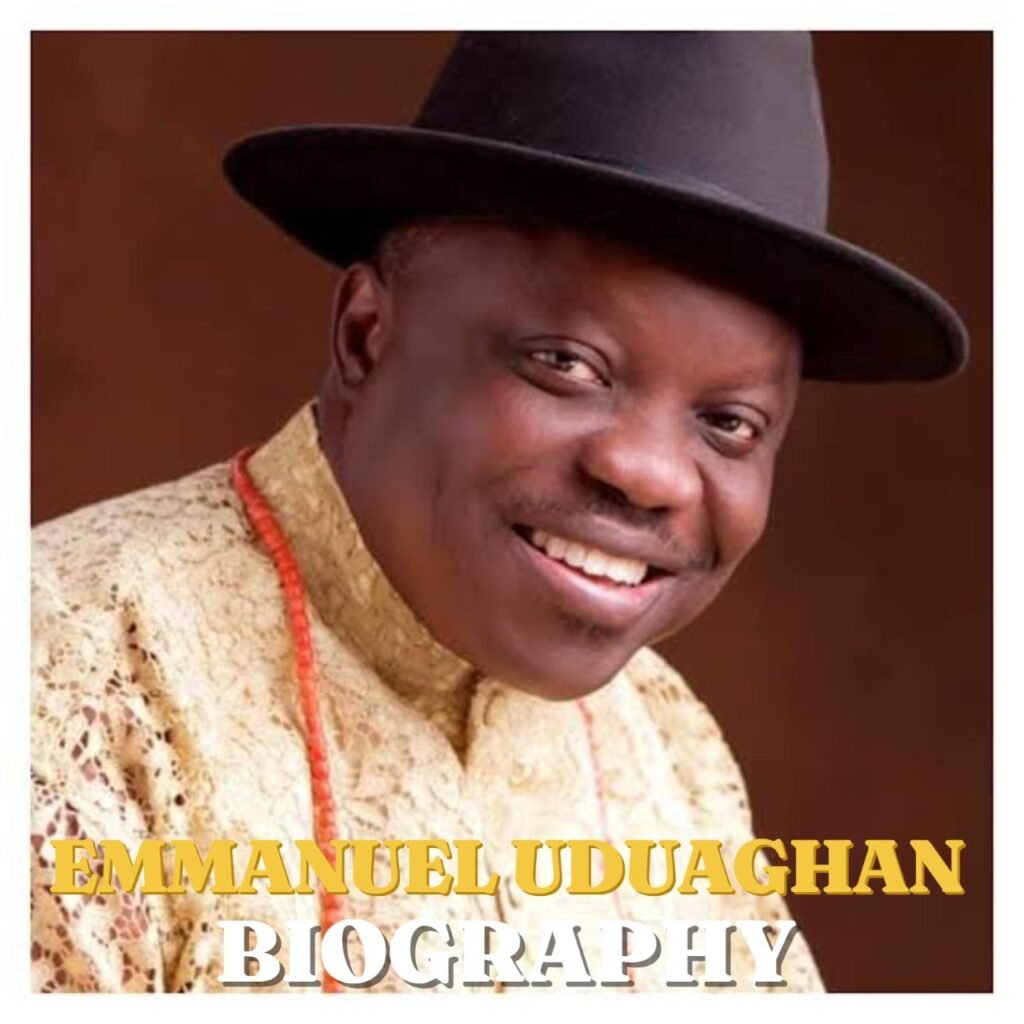
Emmanuel Uduaghan was frequently photographed at official ceremonies, political gatherings and public functions wearing formal business suits or traditional Nigerian attire. In his later years, he appeared as a mature Nigerian man with a professional public image consistent with his background as a medical doctor and former state governor. His photographs document his appearance during his years in public service, although verified information about his exact height, weight and other physical measurements remains limited.
Emmanuel Uduaghan Net Worth
Emmanuel Eweta Uduaghan’s net worth was estimated at approximately $50 million at the time of his death in October 2026, according to online celebrity and biography publications. However, this figure has not been confirmed by audited financial statements or an official declaration of his personal assets, so it should be treated as an estimate rather than an established fact. Uduaghan built a long career as a medical doctor, healthcare administrator and politician, serving as Governor of Delta State from 2007 to 2015. His professional background and years in public service are relevant to understanding his financial profile, although his exact personal wealth remains unknown.
A significant part of Uduaghan’s professional earnings came from his medical career before he entered politics. He worked as a medical officer at Delta Steel Company, served in several hospitals as a medical practitioner and consultant anaesthesiologist, and established a private medical practice in 1994. He subsequently held senior government positions, including Commissioner for Health and Secretary to the Delta State Government, before becoming governor. These roles provided him with professional income and executive experience, but publicly available information does not establish the precise value of his accumulated earnings, investments or property holdings.
Beyond his medical and political career, some online biographical reports attribute Uduaghan’s wealth to private investments and possible business interests, including real estate and other commercial activities. However, detailed financial records confirming the value of these assets are not publicly established. Consequently, the reported $50 million figure should be presented cautiously in any biography, rather than as a verified valuation. His financial legacy is best understood in the context of his decades of professional work and public service, while acknowledging that a reliable, independently verified calculation of his net worth is unavailable.
Emmanuel Uduaghan’s Legacy
Emmanuel Eweta Uduaghan’s legacy is closely connected to his contributions to healthcare, public administration and political leadership in Delta State, Nigeria. Before entering politics, he built a career as a medical doctor and consultant anaesthesiologist, gaining professional experience that later influenced his work in government. His appointment as Commissioner for Health and subsequent service as Secretary to the Delta State Government prepared him for the responsibilities of leading the state. As governor from 2007 to 2015, Uduaghan oversaw initiatives involving healthcare delivery, road construction, education, infrastructure and security. His professional journey from medicine to executive leadership remains an important part of his public record and illustrates his transition from treating patients to managing government institutions and development programmes.
One of the major themes associated with Uduaghan’s administration was the Delta Beyond Oil initiative, which sought to encourage economic diversification and reduce the state’s dependence on petroleum revenue. His government pursued infrastructure projects and programmes intended to improve public services and create opportunities for economic development. Healthcare also remained a significant part of his public-service background, given his experience as a medical practitioner and former Commissioner for Health. However, assessments of his administration also involve examining the implementation and long-term outcomes of its policies, alongside the political and economic challenges facing Delta State during his tenure. His legacy therefore includes both the development initiatives pursued under his leadership and the continuing public discussion of their results.
Beyond his time in office, Uduaghan remained a recognised figure in Delta State politics and maintained connections with political associates and the Itsekiri community. His career included changes in political party affiliation and continued participation in public affairs after leaving the governorship in 2015. Following his death on October 19, 2026, tributes from political leaders, associates and members of his family highlighted his years of service and his place in the state’s political history. His lasting legacy will be considered through his contributions to medicine, government administration and Delta State’s development, as well as the documented achievements and limitations of his time in office. For his family and community, his memory also remains tied to his personal relationships and the role he played in public life over several decades.
Conclusion
Emmanuel Eweta Uduaghan was a Nigerian medical doctor and politician whose journey from healthcare to public administration made him a notable figure in Delta State’s history. Born on October 22, 1954, he served as Commissioner for Health, Secretary to the Delta State Government and Governor of Delta State from 2007 to 2015. His administration pursued initiatives in healthcare, infrastructure, education, security and economic diversification, including the Delta Beyond Oil programme. Beyond politics, he was a husband to Roli Uduaghan and a father whose family remained an important part of his life. Following his death on October 19, 2026, at the age of 71, his professional achievements, political record and contributions to public service remain central to his legacy. His biography provides an account of a career that combined medical practice, government leadership and years of involvement in the political development of Delta State.
Frequently Asked Questions About Emmanuel Uduaghan
1. Who is Emmanuel Uduaghan?
Emmanuel Eweta Uduaghan was a Nigerian medical doctor and politician who served as the Governor of Delta State from May 29, 2007, to May 29, 2015. Before becoming governor, he served as Commissioner for Health and Secretary to the Delta State Government.
2. How old was Emmanuel Uduaghan when he died?
Emmanuel Uduaghan was 71 years old when he died on October 19, 2026. He was born on October 22, 1954, just three days before his 72nd birthday.
3. What was Emmanuel Uduaghan’s cause of death?
As of October 20, 2026, a specific cause of Emmanuel Uduaghan’s death had not been confirmed in the publicly available reports reviewed. His death was announced by his family.
4. Where was Emmanuel Uduaghan born?
Emmanuel Uduaghan was born in Warri North, in present-day Delta State, Nigeria. He maintained strong connections to Delta State throughout his medical and political careers.
5. What tribe was Emmanuel Uduaghan?
Emmanuel Uduaghan belonged to the Itsekiri ethnic group, which has a longstanding cultural and historical presence in the Niger Delta region of southern Nigeria.
6. What was Emmanuel Uduaghan’s religion?
Uduaghan has been described in some biographical accounts as a Christian. However, detailed information about his specific denomination has not been reliably established in widely available sources.
7. Who was Emmanuel Uduaghan’s wife?
Emmanuel Uduaghan was married to Roli Uduaghan. Their marriage was an important part of his personal life during his years as a medical doctor and politician.
8. How many children did Emmanuel Uduaghan have?
Public reports identify his children as including Orode Meyiwa Uduaghan and Toritseju (Toju Anire) Uduaghan.
9. What did Emmanuel Uduaghan study?
Emmanuel Uduaghan studied medicine at the University of Benin from 1975 to 1980, earning a Bachelor of Medicine and Bachelor of Surgery (MBBS) degree. He also received additional professional training in anaesthesia.
10. What was Emmanuel Uduaghan’s profession?
Emmanuel Uduaghan was a medical doctor, consultant anaesthesiologist and politician. Before becoming governor, he worked in medical institutions and held senior administrative positions in the Delta State Government.
11. When was Emmanuel Uduaghan the Governor of Delta State?
Emmanuel Uduaghan served as Governor of Delta State from May 29, 2007, to May 29, 2015. He completed two terms in office after winning re-election in 2011.
12. Which political party did Emmanuel Uduaghan belong to?
Uduaghan was initially associated with the Peoples Democratic Party (PDP), under which he became governor. He later joined the All Progressives Congress (APC), returned to the PDP in 2020 and was reported to have rejoined the APC in 2025.
13. What was Emmanuel Uduaghan’s net worth?
Emmanuel Uduaghan’s exact net worth has not been independently verified. Some online biographies publish estimates, but without reliable financial records, any specific figure should be treated as unconfirmed.
14. What was the Delta Beyond Oil initiative?
Delta Beyond Oil was an economic diversification initiative associated with Uduaghan’s administration. It aimed to encourage economic activities beyond petroleum and reduce Delta State’s dependence on oil revenue.
15. When did Emmanuel Uduaghan die?
Emmanuel Uduaghan died on October 19, 2026, at the age of 71, according to reports published following the announcement by his family.
16. What is Emmanuel Uduaghan remembered for?
Emmanuel Uduaghan is remembered for his medical career, his service as Commissioner for Health and Secretary to the Delta State Government, and his two terms as governor. His legacy includes development initiatives, healthcare-related work and his role in Delta State politics.
17. What was Emmanuel Uduaghan’s height?
Emmanuel Uduaghan’s exact height has not been reliably confirmed in authoritative public records. Figures published on some websites should be treated as estimates unless supported by a credible source.
18. What is Emmanuel Uduaghan’s educational background?
Uduaghan attended Federal Government College, Warri, and studied medicine at the University of Benin. He graduated in 1980 and later obtained additional training in anaesthesia.