
Introduction to Billy Graham’s Biography
Billy Graham was one of the most influential Christian evangelists of the 20th century, widely recognised for his powerful preaching, international evangelistic campaigns and lifelong commitment to spreading the message of Christianity. Born William Franklin Graham Jr. on November 7, 1918, in Charlotte, North Carolina, United States, he rose from humble beginnings to become a globally respected religious leader whose ministry reached millions of people across different countries and cultures. Through his sermons, books, radio broadcasts and television appearances, Graham made Christian teachings accessible to audiences far beyond traditional church settings, earning a reputation as one of the most prominent preachers in modern religious history.
Throughout his career, Billy Graham preached to vast audiences at evangelistic gatherings, advised several United States presidents and established organisations dedicated to Christian outreach and humanitarian support. His ministry included the Billy Graham Evangelistic Association, which he founded in 1950, and the widely recognised evangelistic crusades that brought together people from different backgrounds. Graham also authored numerous books on faith, prayer, salvation and Christian living, helping readers explore spiritual questions and apply biblical principles to their daily lives. His preaching style, which combined straightforward language with an emphasis on personal faith, contributed to his international popularity and lasting influence on evangelical Christianity.
Billy Graham died on February 21, 2018, at the age of 99, at his home in Montreat, North Carolina, leaving behind a significant religious and cultural legacy. Although he is no longer alive, interest in his life, teachings, family and ministry continues through the work of the Billy Graham Evangelistic Association, the Billy Graham Library and the evangelistic activities of his son, Franklin Graham, and grandson, Will Graham. In 2026, his legacy remains relevant through historical commemorations, archived sermons and continuing Christian outreach initiatives associated with his ministry. His biography offers insight into his early life, education, career, personal relationships, achievements and enduring impact on Christianity around the world.
Early Life of Billy Graham
Billy Graham was born William Franklin Graham Jr. on November 7, 1918, in Charlotte, North Carolina, United States, to William Franklin Graham Sr. and Morrow Coffey Graham. He was raised on a dairy farm in a Presbyterian household, where family life, Christian values and hard work played important roles in his upbringing. Graham grew up during a period of considerable social and economic change in America, including the years surrounding the Great Depression. His parents encouraged discipline, responsibility and religious commitment, helping establish the foundation for the beliefs and values that would later shape his life and career. As the eldest of four children, he also experienced the responsibilities of growing up in a busy household where family relationships and shared duties were important.
During his childhood, Graham developed an interest in religion, although his decision to become a committed Christian came later. In 1934, when he was 15 years old, he attended a series of revival meetings led by evangelist Mordecai Ham in Charlotte. During these meetings, Graham made a personal commitment to Christianity, an experience that became a defining moment in his spiritual development. The encounter influenced his understanding of faith and encouraged him to explore the possibility of dedicating his life to Christian ministry. Although he initially had ordinary interests and ambitions like many young people of his generation, his growing religious conviction gradually directed his attention towards preaching, evangelism and the study of the Bible.
As Graham moved into his late teenage years, his interest in Christian ministry became more serious, leading him to pursue theological education and opportunities to preach. He attended Bob Jones College in Cleveland, Tennessee, in 1936 before transferring to the Florida Bible Institute, now known as Trinity College of Florida, where he received further religious training. During his studies, he gained practical experience preaching in churches and developing the communication skills that would later distinguish his public ministry. He subsequently attended Wheaton College in Illinois, graduating in 1943 with a degree in anthropology. These formative experiences strengthened his biblical knowledge, broadened his understanding of people and society, and prepared him for the international evangelistic career that would make him one of the most recognised Christian preachers of the 20th century.
Education of Billy Graham
Billy Graham began his formal higher education in 1936 when he enrolled at Bob Jones College in Cleveland, Tennessee, now known as Bob Jones University in Greenville, South Carolina. His time at the institution introduced him to structured theological study and a more disciplined approach to Christian education. However, Graham found the college’s strict environment difficult to adapt to and eventually decided to continue his studies elsewhere. Although his stay was relatively brief, the experience helped him clarify the kind of religious training he wanted and strengthened his determination to prepare for a future in Christian ministry. His decision to transfer marked an important step in his educational journey, allowing him to seek an environment that better suited his personal development and aspirations.
After leaving Bob Jones College, Graham enrolled at the Florida Bible Institute in Temple Terrace, Florida, an institution now known as Trinity College of Florida. During his time there, he received biblical instruction and developed his preaching abilities through practical ministry opportunities. He regularly practised delivering sermons and gained experience speaking to congregations, which helped him become more confident and effective as a communicator. His education at the institute also deepened his understanding of Scripture and strengthened his commitment to evangelism. It was during this period that Graham became increasingly certain that preaching would be central to his life’s work. His experiences at the Florida Bible Institute provided an essential foundation for the large-scale evangelistic campaigns and international ministry that would later define his career.
Graham subsequently attended Wheaton College in Wheaton, Illinois, where he completed his undergraduate education and graduated in 1943 with a degree in anthropology. His studies exposed him to broader questions about human societies, cultures and behaviour, complementing the biblical training he had received at earlier institutions. At Wheaton, he also met Ruth Bell, a fellow student who would later become his wife and an important partner throughout his life. His time at the college helped him combine religious conviction with a wider understanding of humanity, an approach that proved valuable as he preached to audiences from different cultural and social backgrounds. Although Graham did not follow a conventional academic career, his education at Bob Jones College, the Florida Bible Institute and Wheaton College equipped him with the knowledge, practical experience and communication skills that supported his emergence as one of the world’s best-known Christian evangelists.
Billy Graham’s Career and Achievements
Billy Graham began his professional Christian ministry in the late 1930s and early 1940s, gradually developing into one of the most recognisable evangelists in modern religious history. After receiving theological training at the Florida Bible Institute and graduating from Wheaton College in 1943, he served as a pastor at Western Springs Baptist Church in Illinois. He subsequently became involved with Youth for Christ, a Christian organisation that focused on reaching young people and military personnel through religious meetings and evangelistic activities. As a travelling preacher, Graham spoke to audiences throughout the United States and parts of Europe, gaining valuable experience and building a reputation for his energetic delivery, straightforward sermons and ability to communicate Christian teachings to people from different backgrounds. These early experiences prepared him for the international ministry that would define the remainder of his career.
Billy Graham’s major breakthrough came in 1949, when his evangelistic meetings in Los Angeles attracted considerable public and media attention. Originally scheduled to last three weeks, the meetings continued for more than eight weeks because of strong public interest. Newspaper and magazine coverage helped introduce him to a much wider audience, transforming him into a nationally recognised religious figure. In 1950, he established the Billy Graham Evangelistic Association (BGEA) to coordinate his growing ministry and spread Christian teachings through different forms of communication. That same year, his radio programme, The Hour of Decision, began broadcasting, extending his reach beyond the people who could attend his meetings in person. Graham subsequently conducted major evangelistic campaigns in cities around the world, including a notable 1957 campaign at Madison Square Garden in New York City that continued for 16 weeks.
As his influence expanded, Graham incorporated radio, television, films, books and international broadcasting into his ministry, helping make evangelism accessible to millions of people. He preached in more than 185 countries and territories and, according to his association, addressed nearly 215 million people in live audiences during his career. He also founded Christianity Today magazine in 1956, contributing to discussions about Christian theology, church life and contemporary issues. Graham developed relationships with numerous American presidents and other world leaders, serving as a spiritual adviser to several administrations while maintaining his identity as an evangelist. His ministry also included notable efforts to challenge racial segregation at his meetings; during a 1953 crusade in Chattanooga, Tennessee, he removed barriers separating Black and white attendees. Although he gradually reduced his public activities and held his final major public evangelistic meeting in 2005, his influence continued through the organisation he founded. Billy Graham died on February 21, 2018, aged 99, but his sermons, publications and ministry continue to shape evangelical Christianity through the work of the BGEA and the wider Graham family.
Why Billy Graham’s Legacy Is Trending in 2026
Billy Graham continues to attract public interest in 2026 because of his lasting influence on Christianity, his internationally recognised evangelistic ministry and the continuing activities of the organisations established during his lifetime. Although Graham died on February 21, 2018, his sermons, books and recorded appearances remain important resources for Christians seeking guidance on faith, prayer, salvation and spiritual growth. His life story also continues to interest readers researching influential religious leaders, the history of evangelical Christianity and the relationship between religion and public life.
Another reason for the continued attention is the work of the Billy Graham Evangelistic Association, which carries forward many of the outreach initiatives associated with his ministry. Under the leadership of his son, Franklin Graham, the organisation continues to conduct evangelistic events, distribute Christian resources and provide spiritual support through its various programmes. His grandson, Will Graham, is also involved in evangelistic activities, introducing new audiences to the family’s Christian outreach tradition. These ongoing initiatives keep the Graham name visible in religious news and help preserve the historical significance of Billy Graham’s work for younger generations.
A further source of interest is the Billy Graham Library in Charlotte, North Carolina. In September 2026, the Library announced its autumn programme, including a special exhibition titled Sharing Hope in Crisis: How a Global Ministry Was Born Out of the Tragedy of 9/11, scheduled to run through October 31, 2026. The exhibition uses archival photographs and videos to explore the ministry’s response to the September 11 attacks. These events provide opportunities for visitors to learn about Graham’s legacy and the history of his organisation.
Billy Graham’s Personal Life and Family
Billy Graham’s personal life was closely connected to his Christian faith, marriage and commitment to evangelism. While studying at Wheaton College in Illinois, he met Ruth McCue Bell, later known as Ruth Bell Graham, the daughter of American medical missionaries who had served in China. Their relationship developed during their college years, and they married on August 13, 1943, shortly after graduating. Ruth became his lifelong companion, offering emotional support and advice throughout his demanding ministry. Because Graham frequently travelled internationally to preach, family life sometimes required long periods apart, but Ruth remained an important influence on his personal decisions and professional work. She was also a gifted poet and author who wrote several books and supported aspects of her husband’s ministry behind the scenes. The couple remained married for nearly 64 years, until Ruth died on June 14, 2007, at the age of 87.
Billy and Ruth Graham had five children: Virginia Leftwich “Gigi” Graham, Anne Morrow Graham Lotz, Ruth Bell Graham (known as Bunny), William Franklin Graham III (Franklin), and Nelson Edman Graham (Ned). Each child developed their own interests and family life, although Christian faith remained an important part of their upbringing. Franklin Graham followed his father’s path into evangelism and became president and chief executive officer of the Billy Graham Evangelistic Association. He also leads Samaritan’s Purse, an international Christian relief organisation. Anne Graham Lotz became a Christian author, Bible teacher and speaker, while the other siblings pursued their own personal and professional interests. Graham’s family grew to include 19 grandchildren and numerous great-grandchildren, extending the family’s connection to Christian ministry and community service across generations.
Beyond his immediate family, Billy Graham maintained relationships with fellow Christian leaders, church communities and people he met during his international travels. Despite his global recognition, he generally sought to keep his family’s home life in Montreat, North Carolina, separate from the public demands of his ministry. His marriage to Ruth was particularly significant because she helped manage family responsibilities while he travelled extensively for evangelistic campaigns. Graham also placed considerable importance on prayer, biblical teaching and raising his children within the Christian faith. His son Franklin and grandson Will Graham have continued aspects of the family’s evangelistic tradition, although each has developed a distinct ministry and public identity. Billy Graham died at his home in Montreat on February 21, 2018, at the age of 99, leaving behind his five children, grandchildren and an enduring family legacy associated with Christian preaching, writing and humanitarian service.
Billy Graham’s Age, Religion, Nationality, Health and Physical Appearance
Age: Billy Graham was born on November 7, 1918, in Charlotte, North Carolina, United States. He died on February 21, 2018, at the age of 99 at his home in Montreat, North Carolina. If he were alive today, October 16, 2026, he would be 107 years old and would turn 108 on November 7, 2026. His long life allowed him to witness significant changes in American society, global Christianity and modern communication, all of which influenced the development and reach of his evangelistic ministry.
Religion: Billy Graham was a committed Christian evangelist associated with the Baptist tradition and the Southern Baptist Convention. Raised in a religious household, he made a personal commitment to Jesus Christ in 1934, when he was 15 years old. His faith became the central foundation of his personal life and professional career. Graham’s preaching emphasised salvation through Jesus Christ, repentance, forgiveness and the importance of developing a personal relationship with God. Throughout his ministry, he addressed audiences from diverse cultural backgrounds and encouraged people to explore Christian teachings through evangelistic meetings, books, radio programmes and television broadcasts. His religious beliefs shaped the mission of the Billy Graham Evangelistic Association, which continues to promote Christian evangelism and outreach.
Nationality: Billy Graham was American by nationality. He was born and raised in North Carolina and spent most of his life in the United States, although his ministry took him to countries across Europe, Africa, Asia, Australia and other parts of the world. His international evangelistic campaigns made him a familiar figure among Christian communities worldwide. Graham also became known for his relationships with American presidents and other influential leaders, while using his public platform to discuss faith, morality and spiritual questions. Despite his international reputation, he maintained strong connections to his home state of North Carolina, where he lived during his later years and ultimately died in 2018.
Health: During his later years, Billy Graham experienced several health challenges associated with ageing. He was diagnosed with Parkinson’s disease in 1992 and also experienced other medical problems that gradually limited his public appearances and travel. These challenges contributed to his reduced involvement in large evangelistic campaigns, although he continued to communicate Christian messages through recorded broadcasts and other media. In 2013, shortly before his 95th birthday, he recorded a message for the My Hope with Billy Graham outreach initiative, demonstrating his continued interest in evangelism despite his advancing age. He spent his final years at his home in Montreat, North Carolina, where he died in February 2018.
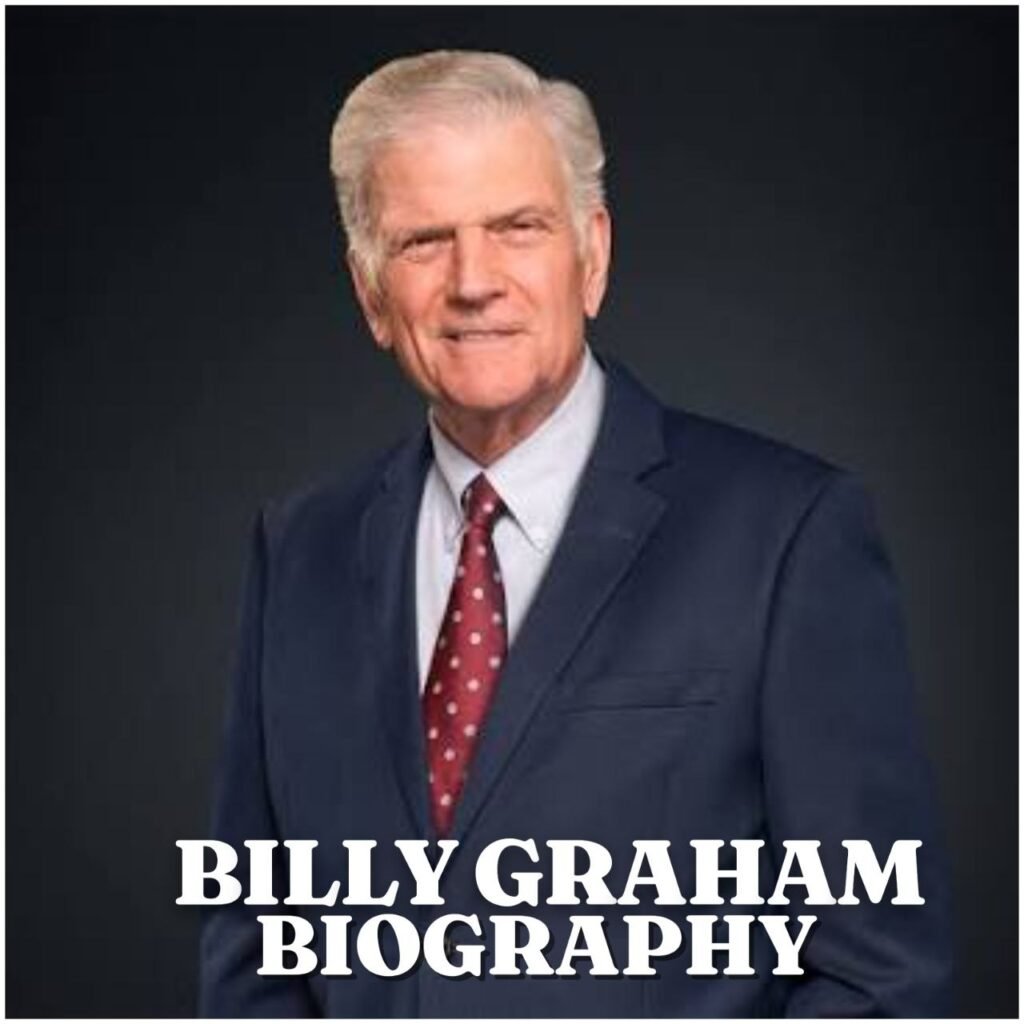
Physical Appearance: Billy Graham was widely recognised for his tall stature, fair complexion, light-coloured eyes and neatly styled hair. During his younger years, he had a lean build and an energetic presence that complemented his confident preaching style. As he grew older, his hair became predominantly white, and his facial features reflected the effects of ageing. He typically appeared in formal suits and ties when preaching at major events, while photographs from his private life sometimes showed him dressed more casually. His upright posture, expressive gestures and clear speaking style contributed to his recognisable public image. Across decades of public appearances, Graham’s physical presence became closely associated with his role as an internationally known Christian evangelist.
Billy Graham’s Age, Religion, Tribe, Height and Physical Appearance
Age: Billy Graham was born on November 7, 1918, in Charlotte, North Carolina, United States. He died on February 21, 2018, at the age of 99 in Montreat, North Carolina. As of October 16, 2026, he would be 107 years old if he were alive, and he would celebrate his 108th birthday on November 7, 2026. His long life spanned nearly a century of religious, cultural and technological change, during which he became one of the most widely recognised Christian evangelists in the world.
Religion: Billy Graham was a Christian evangelist associated with the Baptist tradition and the Southern Baptist Convention. Although he was raised in a churchgoing Presbyterian family, he made a personal commitment to Christianity in 1934, following revival meetings led by evangelist Mordecai Ham in Charlotte. His faith became the foundation of his ministry, and his sermons consistently emphasised salvation through Jesus Christ, repentance, forgiveness and the importance of a personal relationship with God. Through his evangelistic campaigns, books, radio broadcasts and television appearances, Graham shared Christian teachings with audiences around the world.
Tribe and Ethnic Background: Billy Graham was American and of predominantly Scots-Irish ancestry, according to biographical accounts. The term tribe is not generally used to describe his background because he came from a European-American family rather than a community commonly identified by a tribal affiliation. His family roots were connected to the wider Scots-Irish heritage found among many families in the American South. He grew up on a dairy farm near Charlotte, North Carolina, where his parents, William Franklin Graham Sr. and Morrow Coffey Graham, raised him in a Christian household. His upbringing in rural North Carolina influenced his values, work ethic and approach to communicating with ordinary people.
Height and Physical Appearance: Billy Graham was known for his tall stature, fair complexion, light-coloured eyes and neatly styled hair. Biographical and historical photographs show him with a lean build in his younger years, later developing the appearance typical of an older man as he aged. He frequently wore formal suits and ties when preaching at major religious gatherings, giving him a recognisable and professional public image. His expressive gestures, upright posture and confident stage presence complemented his direct and accessible preaching style. Although a consistently verified height measurement is not clearly established in the principal biographical sources cited here, his physical appearance became familiar to millions through photographs, television broadcasts and recordings of his evangelistic campaigns.
Billy Graham’s Social Media Presence
Although Billy Graham died on February 21, 2018, his legacy continues to reach audiences through social media platforms managed by the Billy Graham Evangelistic Association (BGEA), the Christian organisation he founded in 1950. His official Instagram account uses the handle [@billygraham](https://www.instagram.com/billygraham/?utm_source=chatgpt.com), with posts managed by the BGEA to share his recorded sermons, inspirational messages, Bible teachings and historical photographs. His ministry also maintains an official presence on Facebook and YouTube, where followers can access Christian resources, archived messages and updates about ongoing evangelistic activities.
The organisation also uses social media to connect with younger generations and people interested in Christian teachings around the world. Through platforms such as Instagram, Facebook and X, the BGEA shares devotional content, ministry announcements and information about the work of Franklin Graham and Will Graham. These digital channels help preserve Billy Graham’s teachings and make his messages accessible to audiences who may never have attended one of his live evangelistic campaigns. For verified links to the organisation’s official accounts, readers can visit the [Billy Graham Evangelistic Association’s social media page](https://billygraham.org/social-media/?utm_source=chatgpt.com).
Billy Graham’s Net Worth
Billy Graham’s net worth was commonly estimated at approximately $25 million at the time of his death in 2018. However, this figure is an unofficial estimate reported by celebrity-finance publications rather than a verified valuation of his personal estate. Graham was one of the most influential Christian evangelists of the 20th century, and his decades-long career included preaching, writing books, conducting international evangelistic campaigns and appearing on radio and television.
A significant part of Graham’s professional work involved publishing Christian books, delivering sermons and developing media programmes that reached audiences worldwide. His publications, including Angels: God’s Secret Agents, attracted considerable readership, while his radio and television ministry helped expand his influence beyond church congregations. These activities provide context for the reported estimate of his wealth, although the precise amounts he personally earned from book sales, broadcasting and other professional activities are not publicly established. His financial legacy should also be distinguished from the finances of the Billy Graham Evangelistic Association, a separate organisation established to support Christian outreach.
Although Graham’s personal net worth remains uncertain, the organisation he founded continues to manage substantial resources for its religious and charitable work. Its audited financial statements for 2025 reported total assets of approximately $688.6 million and total net assets of approximately $609.6 million. These figures belong to the organisation and its consolidated entities, not to Graham personally or his heirs. Therefore, the most responsible conclusion is that Billy Graham’s wealth at death is often estimated at $25 million, but no publicly verified personal estate valuation cited here confirms that amount.
Billy Graham’s Legacy and Influence on Christianity
Billy Graham’s legacy is deeply rooted in his influence on Christianity and his role in bringing evangelical preaching to international audiences. Over more than six decades, he conducted evangelistic campaigns in numerous countries, reaching millions of people through public gatherings, radio, television and printed publications. His direct preaching style, emphasis on salvation through Jesus Christ and ability to communicate biblical teachings to people from different backgrounds made him one of the most recognisable religious leaders of the 20th century. Graham also helped popularise large-scale evangelistic events and demonstrated how modern media could extend the reach of Christian ministry beyond traditional church settings. His sermons, books and recorded messages continue to be studied and shared by Christians interested in evangelism, biblical teaching and spiritual development.
Another important part of Graham’s legacy is the network of organisations and initiatives he established to support Christian outreach. The Billy Graham Evangelistic Association, founded in 1950, continues to share Christian messages through evangelistic events, digital media and other forms of communication. Graham also founded Christianity Today magazine in 1956, helping create a platform for discussion about Christian theology, church life and contemporary issues. His influence extended into public life through his relationships with numerous United States presidents and international leaders, although his principal public mission remained religious rather than political. Graham’s willingness to address racial segregation at his meetings also became a notable part of his historical record. These activities contributed to his enduring place in discussions about modern evangelical Christianity and the relationship between religion, media and public life.
Billy Graham’s influence has continued through his family, historical archives and institutions dedicated to preserving his work. His son, Franklin Graham, became a prominent evangelist and leader of the Billy Graham Evangelistic Association, while his grandson, Will Graham, has also pursued evangelistic ministry. The Billy Graham Library in Charlotte, North Carolina, preserves photographs, recordings and other historical materials that document Graham’s life and career. Since his death on February 21, 2018, at the age of 99, his sermons and writings have continued to reach audiences through books, online videos and social media. Although assessments of his impact differ among religious communities and scholars, his role in shaping 20th-century evangelicalism is widely recognised. His lasting legacy rests on his extensive preaching ministry, the institutions he helped establish and the continuing interest in his message of Christian faith and hope.
Conclusion: Billy Graham’s Enduring Impact
Billy Graham remains one of the most influential Christian evangelists in modern history, remembered for his powerful preaching, international evangelistic campaigns and lifelong commitment to sharing the message of Jesus Christ. Born on November 7, 1918, in Charlotte, North Carolina, he devoted more than six decades to Christian ministry, reaching millions of people through sermons, books, radio broadcasts and television programmes. His marriage to Ruth Bell Graham, his five children and the continuing ministry of his son, Franklin Graham, and grandson, Will Graham, form important parts of his personal and professional legacy. Although Graham died on February 21, 2018, at the age of 99, his teachings, charitable outreach and the work of the Billy Graham Evangelistic Association continue to influence Christian communities around the world. His life story demonstrates the enduring impact that faith, communication and dedication to a lifelong mission can have on individuals and societies across generations.
Frequently Asked Questions About Billy Graham
1. Who was Billy Graham?
Billy Graham was an American Christian evangelist and religious leader widely recognised for his international preaching campaigns. He dedicated more than six decades to spreading the Christian message through sermons, books, radio, television and public evangelistic gatherings.
2. How old was Billy Graham when he died?
Billy Graham was 99 years old when he died on February 21, 2018. He was born on November 7, 1918, in Charlotte, North Carolina, United States.
3. What was Billy Graham’s net worth?
Billy Graham’s net worth was commonly estimated at approximately $25 million at the time of his death. However, this figure is an unofficial estimate, and a verified valuation of his personal estate is not established by the sources cited in this article.
4. Who was Billy Graham’s wife?
Billy Graham’s wife was Ruth Bell Graham, an American Christian author and poet. They married on August 13, 1943, and remained together until Ruth’s death on June 14, 2007
5. How many children did Billy Graham have?
Billy Graham and his wife, Ruth, had five children: Virginia Graham, Anne Graham Lotz, Ruth Graham, Franklin Graham and Nelson Graham. Their children pursued different careers, with Franklin becoming a prominent evangelist and Christian organisation leader.
6. What religion did Billy Graham practise?
Billy Graham was a Christian evangelist associated with the Baptist tradition and the Southern Baptist Convention. His preaching focused on salvation through Jesus Christ, repentance, forgiveness and personal faith.
7. What was Billy Graham famous for?
Billy Graham was famous for his large-scale evangelistic crusades, straightforward preaching style and international Christian ministry. He also founded the Billy Graham Evangelistic Association in 1950 and Christianity Today magazine in 1956.
8. Where was Billy Graham born?
Billy Graham was born in Charlotte, North Carolina, United States, on November 7, 1918. He grew up on a dairy farm in the surrounding area before pursuing theological education and Christian ministry.
9. Did Billy Graham have any health problems?
Yes. Billy Graham was diagnosed with Parkinson’s disease in 1992 and experienced other health challenges as he grew older. These conditions gradually limited his public appearances and travel during his later years.
10. Is Billy Graham still alive in 2026?
No. Billy Graham died on February 21, 2018, at his home in Montreat, North Carolina, at the age of 99. His ministry and teachings continue through the Billy Graham Evangelistic Association, his archived sermons and the work of his family.
11. What is the Billy Graham Evangelistic Association?
The Billy Graham Evangelistic Association is a Christian organisation founded by Billy Graham in 1950. It continues to share Christian teachings through evangelistic events, digital media, publications and outreach initiatives.
Billy Graham’s legacy includes his international evangelistic ministry, Christian publications, media outreach and influence on modern evangelical Christianity. His sermons and books remain widely available, while the organisations associated with his ministry continue to reach audiences around the world.