
Introduction
King Harald V of Norway was one of Europe’s longest-serving monarchs and a prominent figure in modern Norwegian history. Born on February 21, 1937, at Skaugum in Asker, Norway, he became king on January 17, 1991, following the death of his father, King Olav V. During his more than three decades on the throne, Harald V represented Norway at home and abroad and became widely recognized for his calm, approachable and people-focused style of leadership.
Beyond his constitutional duties, King Harald V was known for his strong commitment to Norwegian society, national unity and inclusion. His reign coincided with major social and political changes in Norway, and he frequently used his public speeches to promote tolerance, equality and respect for people from different backgrounds. His personal interests, particularly sailing, also contributed to his public image, as he represented Norway in the sport at three Olympic Games and remained active in sailing for much of his life.
King Harald V’s personal life was closely connected to the modern history of the Norwegian royal family. He married Sonja Haraldsen in 1968, and she became Queen Sonja of Norway. Together they had two children, Crown Prince Haakon and Princess Märtha Louise. Harald’s long reign, his connection with the Norwegian people, his role during national moments of celebration and tragedy, and his efforts to maintain a modern constitutional monarchy have made him an important figure in Norway’s contemporary history.
Early Life of King Harald V
King Harald V was born on February 21, 1937, at Skaugum in Asker, Norway, to Crown Prince Olav and Crown Princess Märtha. He was the couple’s only son and the grandson of King Haakon VII, making him an important figure in the Norwegian line of succession from birth. Harald was also notable as the first Norwegian-born prince to be born in 567 years, giving his birth particular significance for the Norwegian royal family and the country’s modern monarchy.
His childhood was heavily influenced by World War II and the German invasion of Norway in 1940. When German forces occupied Norway, the Norwegian royal family was forced to leave the country. Harald, his mother and his two sisters eventually traveled to the United States, where they lived for several years during the war, while his father and grandfather continued their resistance and official duties from Britain. The family returned to Norway after the war, and Harald resumed his life in his homeland, growing up with a strong awareness of his future responsibilities as a member of the royal family.
After returning to Norway, Harald continued his education and began preparing for his future role as heir to the throne. He developed a particular passion for sports, especially sailing, which remained an important part of his life. As a young man, he represented Norway in sailing at three Olympic Games and gained experience in public life through royal duties, military training and international travel. These early experiences helped shape the personality and public image of the future King Harald V, who would later become known for his approachable manner and close connection with the Norwegian people.
Education of King Harald V
King Harald V received much of his early education in Norway before the Second World War disrupted his childhood. After the German invasion of Norway in 1940, Harald and his family spent several years abroad, including time in the United States. Following the end of the war, he returned to Norway and continued his schooling. His education was designed not only to provide him with an academic foundation but also to prepare him for the responsibilities expected of a future Norwegian monarch.
After completing his secondary education, Harald continued his studies at Oslo University, where he studied social sciences, history and economics. He also attended Balliol College at the University of Oxford in the United Kingdom, where he further broadened his academic knowledge. His time at Oxford exposed him to British academic and cultural life and gave him valuable international experience that would later prove useful in his diplomatic and representational duties as crown prince and king.
Alongside his formal academic education, Harald received extensive military and royal training as preparation for his future position. He attended the Norwegian Military Academy and served in the Norwegian Armed Forces, gaining experience in leadership, discipline and national service. His education also extended beyond classrooms through extensive travel, official engagements and sporting activities, particularly sailing. These combined experiences helped prepare him for his eventual role as King of Norway, a position he assumed in 1991 following the death of his father, King Olav V.
Career of King Harald V
King Harald V’s career in public service began long before he became king. As the heir to the Norwegian throne, he gradually took on increasing responsibilities within the royal family and represented Norway at official events both at home and abroad. His military education and service in the Norwegian Armed Forces also formed an important part of his early career. In addition, his international experience, including his studies at Oxford, helped prepare him for the diplomatic and constitutional responsibilities he would later assume as monarch.
Harald became Crown Prince of Norway in 1957, following the death of his grandfather, King Haakon VII, and the accession of his father, King Olav V. During his years as crown prince, he undertook numerous official visits, represented Norway internationally and participated in national ceremonies and diplomatic occasions. He also maintained a strong connection with Norwegian sport, particularly sailing, and represented the country at three Olympic Games. His long period as crown prince gave him extensive experience in public service and allowed him to develop a close relationship with the Norwegian people.
On January 17, 1991, Harald succeeded his father and became King Harald V of Norway. His career as monarch primarily involved constitutional, ceremonial and representative responsibilities rather than direct political power. As king, he presided over important state occasions, welcomed foreign leaders, undertook international visits and served as a symbol of national unity. Throughout his reign, Harald became known for his relatively informal and approachable style, while his speeches often emphasized equality, tolerance, inclusion and the importance of bringing Norwegian society together.
Personal Life and Family of King Harald V
King Harald V’s personal life was closely connected to the modern history of the Norwegian royal family. He married Sonja Haraldsen, a commoner from Oslo, on August 29, 1968, after a long relationship that eventually received approval from his father, King Olav V. Sonja became Queen Sonja of Norway, and their marriage was considered significant because she did not come from a royal or aristocratic background. The couple remained married for more than five decades and were frequently seen together during official engagements, state visits and important family occasions.
King Harald V and Queen Sonja had two children, Crown Prince Haakon and Princess Märtha Louise. Crown Prince Haakon, born on July 20, 1973, became heir to the Norwegian throne and later succeeded his father as king. He is married to Crown Princess Mette-Marit, and they have two children, Princess Ingrid Alexandra and Prince Sverre Magnus. Princess Märtha Louise, born on September 22, 1971, has also remained a prominent member of the Norwegian royal family. She has three daughters from her previous marriage to writer Ari Behn and married American spiritual teacher Durek Verrett in 2024.
Family remained an important part of Harald’s public and private life, particularly as the Norwegian monarchy transitioned between generations. He was a grandfather to several grandchildren and maintained a close relationship with Queen Sonja, his children and their families. His family life also attracted considerable public interest because of the different paths taken by members of the younger generation. Despite occasional media controversy surrounding the royal family, Harald and Sonja generally maintained a strong public partnership and continued to represent the Norwegian monarchy together throughout much of his reign.
King Harald V Age, Religion, Tribe, Nationality, Height and Physical Appearance
King Harald V was born on February 21, 1937, in Skaugum, Asker, Norway, and died on August 28, 2026, at the age of 89. He was Norwegian by nationality and belonged to the Norwegian royal family. Because the concept of “tribe” is not normally used to classify people in Norway in the same way it may be used in some African countries, it is more accurate to describe Harald as Norwegian by national and cultural background rather than assign him a tribe.
King Harald V was associated with the Church of Norway, an Evangelical Lutheran church. As Norway’s monarch, he held a constitutional position within a country historically connected to Lutheran Christianity. However, Norway is a modern, religiously diverse society, and Harald was generally known for emphasizing tolerance, inclusion and respect for people with different beliefs and backgrounds.
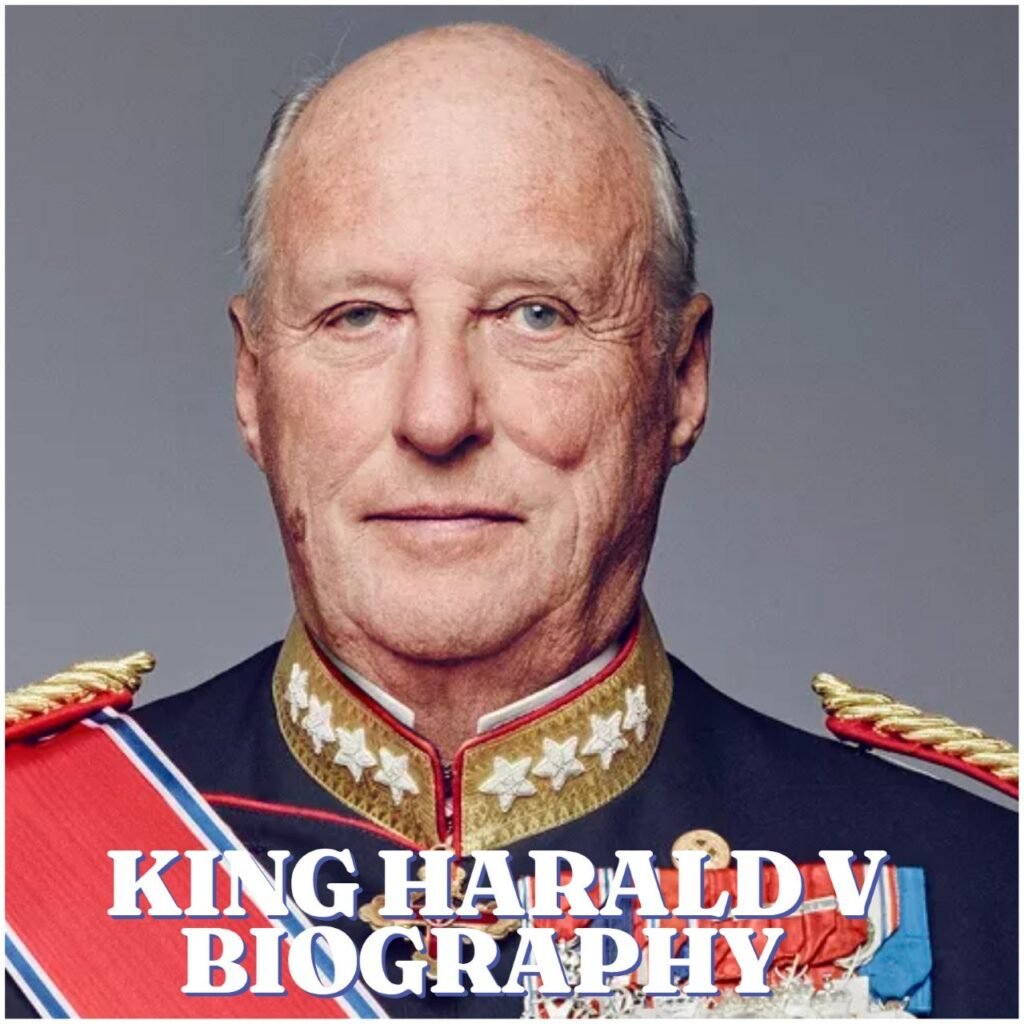
King Harald V was generally described as a tall man with a fair complexion, blue eyes and light-colored hair that became white as he grew older. His height has commonly been reported at approximately 1.83 metres (6 feet), although an official height was not consistently published by the Norwegian Royal Court. In his later years, he experienced various health and mobility difficulties associated with advanced age and was sometimes seen using a walking aid, but he maintained a dignified and recognizable public appearance throughout his reign.
King Harald V Net Worth
King Harald V’s exact personal net worth was not publicly disclosed, so any figure reported online should be treated as an estimate rather than an official amount. Unlike a businessperson or entertainer, Harald’s wealth and finances were closely connected to the Norwegian monarchy, and it is important to distinguish his private assets from property and assets belonging to the Norwegian state or the Crown.
Various unofficial estimates have placed King Harald V’s personal wealth in the tens of millions of U.S. dollars, with some sources suggesting figures around $20 million to $40 million. However, these estimates are difficult to verify and may include assets or royal properties that were not personally owned by Harald. His position as king provided him with an official income and extensive state-supported resources for carrying out constitutional and ceremonial duties, rather than a conventional salary based on commercial employment.
Considering his long career as Crown Prince and King, inherited family assets and personal investments, a cautious estimated personal net worth of around $30 million can be used for biographical purposes. This should not be confused with the value of the Norwegian Crown’s institutional assets, royal residences or state property, which are not simply part of the king’s personal fortune. Therefore, $30 million is best presented as an approximate estimate, not a confirmed figure.
Legacy of King Harald V
King Harald V left a significant mark on modern Norwegian history through his long service to the country and his role as a symbol of national unity. After becoming king in 1991, he guided the Norwegian monarchy through more than three decades of social, cultural and political change. His relatively informal personality and willingness to speak openly about equality, diversity and inclusion helped give the monarchy a modern and approachable image. For many Norwegians, Harald became associated with stability, continuity and a strong sense of national identity.
One of the most memorable aspects of Harald’s legacy was his response to difficult national moments. Following the 2011 terrorist attacks in Norway, his public presence and messages of solidarity contributed to his image as a compassionate national figure. He also used important speeches to emphasize that Norwegian society should have room for people of different backgrounds, beliefs and identities. His approach helped strengthen the perception of the monarchy as an institution that could bring people together rather than simply represent tradition.
Harald’s legacy also continues through the next generation of the Norwegian royal family. His marriage to Queen Sonja, his decades of public service and his preparation of Crown Prince Haakon for the throne formed an important part of the monarchy’s continuity. His passion for sailing and sport also distinguished him from many traditional royal figures and made him particularly relatable to the Norwegian public. After his death in 2026, Harald V was remembered as a long-serving monarch who helped preserve the relevance of Norway’s constitutional monarchy while adapting it to the values and expectations of contemporary Norwegian society.
Conclusion
King Harald V will be remembered as a long-serving Norwegian monarch whose life was shaped by royal duty, national service, family and a strong connection with the Norwegian people. From his childhood during World War II and his years as Crown Prince to his more than three decades as king, he played an important role in modernizing and representing the Norwegian monarchy. His marriage to Queen Sonja, his commitment to public service, his passion for sailing and his emphasis on unity, tolerance and inclusion all contributed to his enduring legacy. Following his death on August 28, 2026, at the age of 89, King Harald V leaves behind a remarkable chapter in Norway’s modern royal history, with his son, King Haakon VIII, carrying the monarchy into a new generation.
Frequently Asked Questions About King Harald V
Who was King Harald V of Norway?
King Harald V was the King of Norway from 1991 until his death on August 28, 2026. He was the son of King Olav V and Crown Princess Märtha and became one of Europe’s longest-serving monarchs.
When was King Harald V born?
King Harald V was born on February 21, 1937, at Skaugum in Asker, Norway.
How old was King Harald V when he died?
King Harald V was 89 years old when he died on August 28, 2026.
Who was King Harald V’s wife?
King Harald V was married to Queen Sonja of Norway. They married on August 29, 1968, after dating for several years.
How many children did King Harald V have?
King Harald V and Queen Sonja had two children: Crown Prince Haakon and Princess Märtha Louise.
Who succeeded King Harald V?
King Harald V was succeeded by his son, Crown Prince Haakon, who became King Haakon VIII of Norway following Harald’s death.
What was King Harald V’s religion?
King Harald V was associated with the Church of Norway, an Evangelical Lutheran church.
What was King Harald V’s nationality?
King Harald V was Norwegian and was born in Norway.
What was King Harald V’s tribe?
The term “tribe” is not normally used for Norwegian people in the way it is used in some African countries. King Harald V was Norwegian by national and cultural background and belonged to the Norwegian royal family.
How tall was King Harald V?
King Harald V’s height is commonly estimated at approximately 1.83 metres (6 feet), although an official height was not consistently published by the Norwegian Royal Court.
What was King Harald V’s estimated net worth?
King Harald V’s exact personal net worth was not publicly disclosed. Unofficial estimates have placed his personal wealth in the tens of millions of U.S. dollars, although these figures should be treated as estimates rather than confirmed financial information.
What was King Harald V famous for?
King Harald V was best known for his 35-year reign as King of Norway, his approachable personality, commitment to national unity and inclusion, passion for sailing, and role in representing Norway at home and internationally.
Did King Harald V compete in the Olympics?
Yes. Before becoming king, Harald was an accomplished sailor and represented Norway in sailing at three Olympic Games.
When did King Harald V become king?
King Harald V became King of Norway on January 17, 1991, following the death of his father, King Olav V.
What is King Harald V’s legacy?
King Harald V’s legacy includes his long service to Norway, his modernization of the monarchy, his emphasis on tolerance and inclusion, and his role as a symbol of stability and national unity during important periods in Norwegian history.