
Introduction
Rabindranath Tagore was one of the most influential literary and cultural figures in South Asian history. Born on May 7, 1861, in Calcutta, British India, he became renowned as a poet, writer, philosopher, composer, educator and artist. His remarkable body of work transformed Bengali literature and music while also earning him international recognition. In 1913, Tagore became the first non-European to receive the Nobel Prize in Literature, largely for his celebrated collection Gitanjali.
Tagore’s influence extended far beyond poetry and literature. He wrote novels, short stories, essays, plays and songs, and his creative works explored themes including human dignity, spirituality, nature, love, freedom and the relationship between individuals and society. He founded Visva-Bharati University at Santiniketan, developing an educational philosophy that encouraged creativity, intellectual freedom and a close relationship with nature. His songs also became deeply connected with the cultural identities of India and Bangladesh, with “Jana Gana Mana” becoming India’s national anthem and “Amar Shonar Bangla” becoming Bangladesh’s national anthem.
More than eight decades after his death on August 7, 1941, Tagore’s legacy continues to attract attention across India, Bangladesh and beyond. His writings remain widely read, his music continues to be performed, and his ideas are regularly revisited through academic discussions, cultural programmes and literary events. In 2026, commemorations surrounding the 165th anniversary of his birth and the 85th anniversary of his death have once again highlighted the enduring relevance of his contribution to literature, education, art, music and humanist thought.
Early Life of Rabindranath Tagore
Rabindranath Tagore was born on May 7, 1861, in the Jorasanko area of Calcutta, then part of British India. He was born into the prominent Tagore family, which was deeply involved in the cultural, intellectual and social life of Bengal. His father, Debendranath Tagore, was a respected philosopher and leader of the Brahmo Samaj, while his mother was Sarada Devi. Rabindranath was the youngest of several children, and growing up in the intellectually active Jorasanko household exposed him from an early age to literature, music, philosophy, theatre and the arts.
Tagore’s childhood education was largely unconventional. Although he attended several schools for short periods, including the Oriental Seminary and St. Xavier’s School in Calcutta, he disliked the rigid structure of conventional classroom education. Much of his learning took place at home under private tutors, where he studied Bengali and English literature, history, science, mathematics, Sanskrit and other subjects. He also received training in music, drawing and physical activities. This unusual educational experience later influenced his ideas about education and contributed to his decision to establish an institution at Santiniketan based on creativity, freedom and learning in close contact with nature.
A major influence on Tagore’s early life was his father, Debendranath, who encouraged his intellectual and spiritual development. In 1873, when Rabindranath was still a young boy, his father took him on a journey through northern India, including the Himalayas. The experience exposed him to natural landscapes and encouraged his interest in spirituality, philosophy and the beauty of nature. Tagore began writing poetry at a young age and published some of his earliest works while still a teenager. These early literary efforts marked the beginning of a remarkable career that would eventually make him one of the most celebrated writers of the modern era.
Education of Rabindranath Tagore
Rabindranath Tagore received much of his early education at home rather than through a conventional school system. His family employed private tutors who introduced him to Bengali and English literature, history, science, mathematics, Sanskrit and other subjects. He briefly attended several schools in Calcutta, including the Oriental Seminary and St. Xavier’s School, but he found the rigid classroom environment unappealing. His education at home was much broader, incorporating literature, music, drawing, physical exercise and philosophical discussions. This freedom encouraged his creativity and helped shape his later ideas about education.
In 1878, at the age of 17, Tagore travelled to England with the intention of studying law. He enrolled at University College London, where he studied for a short period and became familiar with English literature, language and Western intellectual traditions. However, he did not complete a formal university degree or qualify as a lawyer. Instead, his time in Britain gave him valuable exposure to European culture and literature, which later contributed to the international character of his writing. After returning to India, Tagore continued his education independently through extensive reading, writing, travel and intellectual engagement.
Tagore’s unconventional educational journey eventually influenced his own approach to teaching and learning. In 1901, he established an experimental school at Santiniketan, where education was designed to take place in a natural environment rather than within the restrictions of traditional classrooms. The institution later developed into Visva-Bharati University, which Tagore envisioned as a meeting place for Indian and international cultures and ideas. His educational philosophy emphasised creativity, critical thinking, cultural understanding and a close connection with nature, making education an important part of his enduring legacy.
Career of Rabindranath Tagore
Rabindranath Tagore began his literary career at a remarkably young age, writing poetry while still a teenager and publishing some of his early works under the pseudonym Bhanusimha. During the 1880s, he developed his reputation as a Bengali poet, writer and dramatist, producing collections of poetry, plays, essays and short stories. His early literary work demonstrated his distinctive ability to combine Bengali cultural traditions with broader philosophical ideas. Over time, his writing expanded beyond poetry to include novels and short stories that explored human relationships, social customs, family life and the changing society of Bengal.
Tagore’s career took an important turn when he became involved in managing his family’s estates in eastern Bengal, particularly in areas that are now part of Bangladesh. His time there brought him into closer contact with rural communities and exposed him to the everyday experiences of farmers and ordinary people. These experiences influenced some of his most memorable short stories and poems. Works such as The Postmaster, Kabuliwala and The Home and the World reflected his interest in social relationships, identity, tradition and the tensions between individual freedom and society. His literary reputation eventually extended beyond Bengal, especially after the publication of the English version of Gitanjali.
Tagore achieved international fame after Gitanjali: Song Offerings attracted attention in the English-speaking world. In 1913, he was awarded the Nobel Prize in Literature, becoming the first Asian and the first non-European Nobel laureate in literature. He subsequently travelled widely across Europe, North America and Asia, giving lectures and promoting cultural and intellectual exchange. Alongside literature, he composed thousands of songs, created paintings later in life and continued developing his educational vision at Santiniketan. His career therefore extended across literature, music, art, education and philosophy, establishing him as one of the most versatile cultural figures of the modern era.
Personal Life and Family
Rabindranath Tagore was born into the influential Tagore family of Jorasanko, Calcutta, a household that played a major role in the intellectual and cultural life of nineteenth-century Bengal. His father, Debendranath Tagore, was a prominent philosopher, religious reformer and leader of the Brahmo Samaj, while his mother was Sarada Devi. Tagore was one of their many children, and several of his siblings were also accomplished in literature, music, art and social reform. His older brother Dwijendranath Tagore was a poet and philosopher, while Jyotirindranath Tagore was a playwright, composer and artist. His sister Swarnakumari Devi was also a respected novelist and writer.
Tagore married Mrinalini Devi in 1883 when he was 22 years old, and the couple had five children: Madhurilata (Bela), Rathindranath, Renuka, Mira and Samindranath. His family life was marked by both happiness and profound personal losses. Two of his children, Renuka and Samindranath, died while still young, experiences that deeply affected him. Tagore’s relationship with his wife and children formed an important part of his personal world, although his demanding literary career, responsibilities at Santiniketan and frequent travels often kept him occupied. Mrinalini Devi died in 1902, leaving Tagore to face another major personal loss.
Family and personal relationships remained significant throughout Tagore’s life, but he never became engaged or married again after Mrinalini’s death. He maintained close intellectual and artistic connections with members of his extended family and with numerous writers, artists, educators and public figures. His friendships and correspondence with figures such as Mahatma Gandhi, W. B. Yeats and Victoria Ocampo also became notable aspects of his later life. Tagore died on August 7, 1941, at his ancestral home in Jorasanko, Calcutta, at the age of 80. His family, writings and cultural environment collectively played an important role in shaping the ideas and artistic legacy for which he remains remembered.
Rabindranath Tagore’s Age, Religion, Tribe, Nationality, Height and Physical Appearance
Rabindranath Tagore was born on May 7, 1861, and died on August 7, 1941, at the age of 80. He lived through a period of major social, political and cultural changes in India and spent his life contributing to literature, music, education, philosophy and the arts. Because Tagore died in 1941, his present-day age can only be described historically rather than as a living person’s current age.
Tagore was raised in the Brahmo tradition through his family’s association with the Brahmo Samaj. His father, Debendranath Tagore, was one of the movement’s prominent leaders. Tagore’s own philosophy reflected a broad spiritual outlook that emphasised universal humanity, nature, morality and the search for a deeper relationship with the divine rather than strict religious orthodoxy.
Tagore was Bengali by cultural and ethnic background, belonging to the prominent Bengali Tagore family of Jorasanko, Calcutta. The concept of “tribe” does not accurately describe his background in the way it would for many officially recognised tribal communities in India. Therefore, it is more appropriate to identify his heritage as Bengali rather than assign him to a specific tribe. He was Indian by nationality, having been born in Calcutta when India was under British rule.
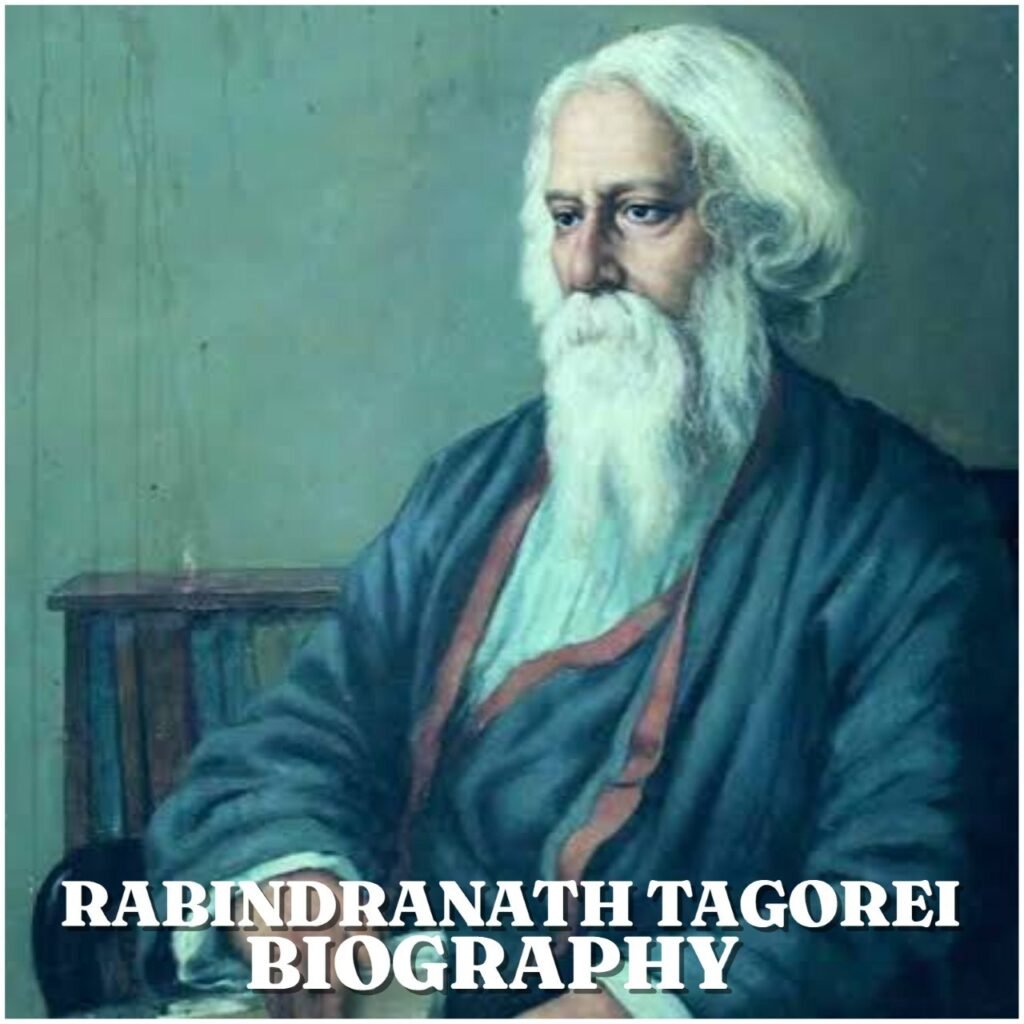
There is no reliably documented official measurement of Tagore’s height in the major biographical records, so specific figures found online should be treated cautiously. Historical photographs and portraits show him as a tall, slender man with a long white beard, flowing hair and a distinctive dignified appearance, particularly during his later years. His traditional robes and serene expression became closely associated with his public image, and his appearance remains one of the most recognisable features of historical photographs of the Nobel Prize-winning poet.
Rabindranath Tagore Social Media Presence
Rabindranath Tagore did not have social media accounts because he died in 1941, decades before platforms such as Facebook, Instagram, X (formerly Twitter) and YouTube existed. Therefore, there is no authentic personal social media handle belonging to Tagore. Modern accounts using his name are generally run by literary organisations, cultural institutions, fan communities or individuals sharing his poems, writings, photographs and quotations.
Today, Tagore’s legacy has a significant presence across social media. On Instagram, for example, posts about his life and works may appear under hashtags such as #RabindranathTagore, #RabindranathTagoreQuotes and #Tagore. Similarly, Facebook, X and YouTube contain numerous pages and channels dedicated to his poetry, songs, books, philosophy and historical legacy. These platforms have helped introduce his work to younger generations and international audiences.
Because there is no verified personal account belonging to Tagore, readers should be cautious about pages claiming to be his official profile. Any social media handle using his name should be understood as a tribute or educational account unless it is clearly operated by a recognised institution. Tagore’s enduring digital presence therefore comes not from his own social-media activity but from the continued sharing and discussion of his literary and cultural contributions online.
Rabindranath Tagore Net Worth
Rabindranath Tagore’s exact net worth cannot be reliably calculated because modern concepts of celebrity net worth did not exist during his lifetime, and there is no authoritative historical record giving a single figure for his total wealth. He came from the affluent Tagore family of Jorasanko, which had substantial property and business interests. Tagore himself also received income from literary work, family estates and other activities, but converting his nineteenth- and early twentieth-century earnings into a modern monetary figure would be highly speculative.
A significant part of Tagore’s financial position was connected to his family’s landed properties and his responsibilities managing estates in eastern Bengal. His literary career also became internationally successful, particularly after he received the Nobel Prize in Literature in 1913. However, Tagore’s income should not be viewed in the same way as that of a modern bestselling author or celebrity because he devoted considerable resources to educational and cultural projects, especially Santiniketan and Visva-Bharati. He also supported artistic, educational and social initiatives during his lifetime.
For that reason, online claims assigning Tagore a precise modern net worth should be treated with caution. A reasonable historical assessment is that he was financially well-established and came from a wealthy family, but there is insufficient evidence to provide a defensible modern dollar or rupee figure. Rather than inventing a number, it is more accurate to describe his wealth as coming from family property, estate management, literary earnings and other intellectual activities, while emphasising that his greatest lasting legacy was his contribution to literature, education, music and culture rather than his personal fortune.
Legacy of Rabindranath Tagore
Rabindranath Tagore’s literary legacy extends far beyond Bengal and India. As a poet, novelist, short-story writer, playwright and essayist, he transformed Bengali literature and helped bring it to international attention. His 1913 Nobel Prize in Literature made him the first non-European Nobel laureate in literature and introduced his work to a much wider global audience. His writings continue to be translated, studied and performed, with themes of humanity, nature, spirituality, love, freedom and social responsibility remaining relevant to readers around the world.
Tagore also left a lasting legacy in music and national culture. He composed thousands of songs, collectively associated with the tradition of Rabindra Sangeet, which remains an important part of Bengali cultural life. His song Jana Gana Mana became the national anthem of India, while Amar Shonar Bangla became the national anthem of Bangladesh. This makes Tagore unique in having written the national anthems of two sovereign countries. His influence can also be seen in painting, theatre, education and the broader cultural identity of Bengal.
Education and humanist philosophy formed another important part of Tagore’s legacy. Through Santiniketan and Visva-Bharati, he promoted an educational approach that encouraged creativity, intellectual freedom, cultural exchange and learning in harmony with nature. His ideas about universal humanity and cooperation across cultures continue to inspire scholars, educators and artists. More than eight decades after his death, Tagore remains a major figure in world literature and one of the most influential cultural personalities produced by the Indian subcontinent.
Conclusion
Rabindranath Tagore remains one of the most influential literary and cultural figures in Indian and global history. From his early life in the intellectually vibrant Tagore family to his achievements as a Nobel Prize-winning poet, writer, composer, artist and educator, he made lasting contributions across several fields. His works continue to inspire readers, musicians, students and thinkers, while institutions such as Santiniketan preserve his educational vision. Although he died in 1941, Tagore’s ideas about humanity, creativity, spirituality, nature and cultural harmony remain relevant, ensuring that his remarkable legacy continues to live on across generations.
Frequently Asked Questions About Rabindranath Tagore
1.Who was Rabindranath Tagore?
Rabindranath Tagore was an Indian Bengali poet, writer, philosopher, composer, artist and educator. He is best known for his poetry, including Gitanjali, and for becoming the first non-European recipient of the Nobel Prize in Literature in 1913.
2.When was Rabindranath Tagore born?
Rabindranath Tagore was born on May 7, 1861, in Jorasanko, Calcutta, British India, an area now part of Kolkata, West Bengal, India.
3.When did Rabindranath Tagore die?
Rabindranath Tagore died on August 7, 1941, at his ancestral home in Jorasanko, Calcutta. He was 80 years old.
What was Rabindranath Tagore famous for?
Tagore was famous for his poetry, novels, short stories, songs, plays, essays, paintings and educational work. He was also the composer of songs that later became the national anthems of India and Bangladesh.
4.Did Rabindranath Tagore win the Nobel Prize?
Yes. Rabindranath Tagore won the Nobel Prize in Literature in 1913 for Gitanjali: Song Offerings. He was the first Asian and first non-European to receive the Nobel Prize in Literature.
5.What is Rabindranath Tagore’s most famous book?
One of Tagore’s best-known works is Gitanjali, a collection of poems that brought him international recognition. Other notable works include The Home and the World, Gora, The Postmaster and Kabuliwala.
6.Who was Rabindranath Tagore’s wife?
Rabindranath Tagore married Mrinalini Devi in 1883. They had five children: Madhurilata, Rathindranath, Renuka, Mira and Samindranath.
7.What religion did Rabindranath Tagore follow?
Tagore was raised in the Brahmo tradition, which was strongly associated with the Brahmo Samaj and his father, Debendranath Tagore. His personal philosophy emphasised spirituality, universal humanity and freedom from religious intolerance.
8.What was Rabindranath Tagore’s tribe?
Tagore is more accurately described as Bengali by cultural and ethnic background rather than being identified with a particular tribal community. He belonged to the prominent Tagore family of Jorasanko, Calcutta.
9.What was Rabindranath Tagore’s nationality?
Rabindranath Tagore was Indian. He was born in Calcutta when India was under British rule and became one of the most internationally recognised figures in Indian literature and culture.
10. Did Rabindranath Tagore write India’s national anthem?
Yes. Tagore wrote Jana Gana Mana, which was later adopted as the national anthem of India.
11. Did Rabindranath Tagore write Bangladesh’s national anthem?
Yes. Tagore wrote Amar Shonar Bangla, which became the national anthem of Bangladesh. He is therefore uniquely associated with the national anthems of both India and Bangladesh.
12.What was Rabindranath Tagore’s height?
There is no reliably documented official measurement of Tagore’s height. Although some websites provide specific figures, they are not consistently supported by authoritative historical sources.
13.Did Rabindranath Tagore have social media accounts?
No. Tagore died in 1941, decades before social media existed. There are modern social media pages and accounts dedicated to his life and work, but he did not have a personal Instagram, Facebook, X or other social media account.
14.What was Rabindranath Tagore’s net worth?
There is no reliable historical figure for Tagore’s modern equivalent net worth. He came from a wealthy and influential family and had income connected to family estates and his literary career, but converting his historical wealth into a precise modern figure would be speculative.
15.What is Rabindranath Tagore’s legacy?
Tagore’s legacy includes his contributions to Bengali and world literature, music, education, art and philosophy. His Nobel Prize, literary works, Rabindra Sangeet, educational vision at Santiniketan and connection to the national anthems of India and Bangladesh have made him one of the most influential cultural figures of South Asia.