
Introduction
Vincent van Gogh was a Dutch painter whose extraordinary artistic vision made him one of the most influential figures in the history of Western art. Born on March 30, 1853, in Zundert, Netherlands, Van Gogh developed a distinctive style characterized by vivid colors, expressive brushwork and emotionally powerful compositions. Although his artistic career lasted only about a decade, he produced more than 2,000 artworks, including approximately 860 oil paintings, many of which have become among the most recognizable works in the world.
Van Gogh’s life was marked by both remarkable creativity and significant personal struggles. Before becoming an artist, he worked in several different professions and initially considered a religious career. He began pursuing art seriously at the age of 27 and spent his remaining years developing a style that increasingly broke away from traditional European painting. Works such as The Potato Eaters, Sunflowers, The Bedroom, Irises and The Starry Night demonstrate the evolution of his artistic language and his fascination with color, nature, people and everyday life.
Despite receiving little commercial recognition during his lifetime, Van Gogh’s reputation grew dramatically after his death in 1890 at the age of 37. His brother Theo and Theo’s wife, Jo van Gogh-Bonger, played an important role in preserving and promoting his paintings and letters, helping establish the legacy that continues today. More than a century later, Van Gogh remains a major subject of exhibitions, museum research, restoration projects and art scholarship, while his paintings continue to attract millions of admirers around the world.
Early Life of Vincent van Gogh
Vincent Willem van Gogh was born on March 30, 1853, in the small village of Zundert in the province of North Brabant, Netherlands. He was the eldest surviving son of Theodorus van Gogh, a Protestant minister, and Anna Carbentus van Gogh. Vincent grew up in a religious and relatively disciplined family alongside his siblings, including Theo van Gogh, who would later become his closest supporter. His childhood in the Dutch countryside exposed him to nature, rural communities and landscapes that would eventually become important themes in his artistic work.
As a young boy, Van Gogh was described as serious, quiet and deeply observant. He attended schools in several locations and showed an early interest in drawing, although art was not initially his main career ambition. At the age of 16, he began working for the art dealership Goupil & Cie in The Hague, where his uncle Vincent was a partner. His employment took him to London and later Paris, giving him valuable exposure to European art and culture. However, he eventually became dissatisfied with the commercial side of the art business and left the profession.
After leaving the art trade, Van Gogh explored several different paths before discovering his lasting vocation as an artist. He worked as a teacher and became deeply interested in religion, eventually spending time studying theology and working as a preacher among poor communities in Belgium. His experiences among working-class families strongly influenced his understanding of hardship and human dignity. By his late twenties, Van Gogh had decided to devote himself seriously to art, beginning a relatively short but extraordinarily productive artistic career that would eventually make him one of the most famous painters in history.
Education of Vincent van Gogh
Vincent van Gogh received his early education in the Netherlands, attending schools in Zundert and later in nearby towns. In 1864, he was sent to a boarding school in Zevenbergen, where he studied subjects including languages, mathematics and drawing. He later attended Willem II College in Tilburg, beginning in 1866. During this period, Van Gogh received drawing instruction from Constant Cornelis Huijsmans, a professional artist and teacher. Although Van Gogh showed an interest in drawing, there was initially no clear indication that he would pursue art as a lifelong profession.
Van Gogh did not follow a conventional university education. After leaving Willem II College in 1868, he entered the art trade and began working for the international art dealership Goupil & Cie in The Hague in 1869. His employment exposed him to paintings by important European artists and allowed him to develop a growing knowledge of art. He later worked for the same company in London and Paris. These experiences effectively became an informal education in art history, painting and the European art market, even though Van Gogh was not formally trained as a professional painter at the time.
After leaving the art trade, Van Gogh explored religious studies and considered becoming a minister. He studied at the University of Amsterdam in preparation for theological training but did not complete the program. He subsequently attended a Protestant missionary school in Brussels and eventually worked as a lay preacher in the Borinage mining region of Belgium. His experiences among poor miners and their families had a profound influence on him. By 1880, at the age of 27, Van Gogh had decided to become an artist, beginning a period of largely self-directed artistic education that included studying drawing, anatomy, perspective and the works of established painters.
Career of Vincent van Gogh
Vincent van Gogh began his professional life outside the world of painting, working as an art dealer for Goupil & Cie in The Hague, London and Paris. He later pursued teaching and religious work, including serving as a lay preacher in the Borinage mining region of Belgium. His experiences among poor working families influenced his artistic interests, particularly his sympathy for laborers and rural communities. In 1880, at the age of 27, Van Gogh decided to dedicate himself to art. He initially focused on drawing and later developed his skills through self-study, artistic practice and guidance from other artists.
During his early artistic years in the Netherlands, Van Gogh concentrated on ordinary people, rural life and working-class communities. He studied drawing and painting in places including Brussels, The Hague and Nuenen. His early works were generally dark and earthy in color, reflecting the influence of Dutch realist traditions. One of his most important early paintings was The Potato Eaters, completed in 1885, which depicted a poor farming family gathered around a table. The work demonstrated his interest in portraying the dignity and hardship of everyday life.
Van Gogh’s career changed significantly after he moved to Paris in 1886, where he encountered Impressionist and Neo-Impressionist artists and began experimenting with brighter colors and more energetic brushwork. In 1888, he moved to Arles in southern France, producing some of his most famous paintings, including Sunflowers, The Yellow House and The Bedroom. His time in Arles was followed by periods of treatment and recovery in Saint-Rémy-de-Provence, where he continued painting works such as The Starry Night. In May 1890, he moved to Auvers-sur-Oise near Paris, where he remained highly productive until his death on July 29, 1890. Although he achieved limited commercial success during his lifetime, his posthumous career became extraordinarily influential, establishing him as one of the most important painters in modern art.
Vincent van Gogh Trending: Renewed Attention Through Major Exhibitions and Restoration Discoveries
Vincent van Gogh is trending in 2026 because museums and art institutions continue to bring renewed attention to his life and work through major exhibitions, restoration projects and new research. One of the notable developments is the “Vincent’s journey to worldwide fame” exhibition at the Van Gogh Museum in Amsterdam, which explores how Vincent’s family, particularly his brother Theo and Theo’s wife Jo van Gogh-Bonger, helped preserve his artworks and letters and build the international reputation he enjoys today.
Another reason Van Gogh has attracted attention is the restoration and research surrounding The Parsonage Garden at Nuenen in Spring, painted in 1884. Restoration work in 2026 revealed that a previous restoration carried out in 1903 had altered parts of the composition, leaving details in the painting for more than a century that Van Gogh himself had not created. The restored work was displayed at the Groninger Museum from March 31 until August 9, 2026, generating renewed interest in the history and preservation of Van Gogh’s paintings.
Van Gogh’s paintings are also receiving international attention through exhibitions and loans. In Philadelphia, two versions of his famous Sunflowers were brought together in the exhibition “Van Gogh’s Sunflowers: A Symphony in Blue and Yellow,” while his Tarascon Stagecoach has been highlighted as part of a major group of works from the Pearlman collection going on tour. These developments demonstrate that more than 130 years after his death, Van Gogh remains a major figure in international art exhibitions, museum research and public interest.
Vincent van Gogh Cause of Death and Death
Vincent van Gogh died on July 29, 1890, in Auvers-sur-Oise, France, at the age of 37. According to the widely accepted historical account, he suffered a gunshot wound on July 27, 1890, while in Auvers. He reportedly returned to the inn where he was staying and died approximately two days later from complications related to the injury. His brother, Theo van Gogh, was with him during his final hours.
The circumstances surrounding Van Gogh’s death have been the subject of considerable historical discussion. For many years, his death was generally described as a suicide, with the traditional account stating that he shot himself in the chest or abdomen with a revolver while out in the countryside. However, some researchers have questioned whether he was actually shot accidentally by another person. Despite these alternative theories, the suicide explanation remains the most commonly accepted account among historians and major Van Gogh institutions.
Van Gogh was buried on July 30, 1890, in Auvers-sur-Oise, and his brother Theo was later buried beside him. His death came only weeks after one of the most productive periods of his artistic career. Although he had achieved little commercial success while alive, his reputation grew enormously after his death. Today, his final years and the circumstances of his death remain an important part of the continuing study of his life, while his paintings have secured his position as one of the most influential artists in modern history.
Vincent van Gogh Personal Life and Family
Vincent van Gogh was born into a close-knit Dutch family led by his father, Theodorus van Gogh, a Protestant minister, and his mother, Anna Carbentus van Gogh. He was the eldest surviving child and had several siblings, including Anna, Elizabeth (Lies), Wilhelmina (Wil), Cor van Gogh, and Theo van Gogh. Among all his family members, Theo became the most important person in Vincent’s life. The two brothers maintained an extensive correspondence, with Theo providing Vincent with financial assistance, encouragement and emotional support throughout much of his artistic career.
Van Gogh never married and did not have any children. His romantic life was often complicated and unsuccessful, and he experienced several difficult relationships. Among the women associated with his life were Eugénie Loyer, whom he became interested in while living in London, Kee Vos-Stricker, his widowed cousin, and Clasina Maria “Sien” Hoornik, a woman he lived with for a period while working in The Hague. His relationship with Sien was particularly significant because she and her children became subjects of some of his drawings. Van Gogh also developed an attachment to Margot Begemann, a woman he met while living in Nuenen, but their relationship did not result in marriage.
Family remained important to Van Gogh even when his personal relationships were difficult. His letters to Theo reveal how strongly he relied on his brother for practical and emotional support, while Theo also played a crucial role in promoting Vincent’s work after his death. Theo died only a few months after Vincent, in January 1891, and was later buried beside his brother in Auvers-sur-Oise. Theo’s wife, Johanna van Gogh-Bonger, subsequently became instrumental in preserving Vincent’s paintings and correspondence and introducing his work to a wider audience. Her efforts helped establish the foundation for Van Gogh’s extraordinary posthumous reputation and the lasting legacy associated with his family.
Vincent van Gogh Age, Religion, Nationality, Height and Physical Appearance
Age: Vincent van Gogh was born on March 30, 1853, in Zundert, Netherlands, and died on July 29, 1890, in Auvers-sur-Oise, France. He was 37 years old at the time of his death. Although his life was relatively short, his artistic career lasted about a decade and produced a remarkable body of work that later made him one of the most celebrated painters in history.
Religion: Van Gogh was raised in a Protestant Christian family, as his father, Theodorus van Gogh, was a Protestant minister. Religion played an important role in his early adulthood, and Van Gogh initially considered becoming a minister himself. He worked as a lay preacher among poor mining communities in Belgium and was deeply influenced by Christian teachings about compassion, poverty and service. Although his relationship with organized religion later became more complicated, religious themes and spiritual ideas remained influential during important stages of his life and artistic development.
Nationality: Van Gogh was Dutch by nationality and was born in the Netherlands. Although he spent significant portions of his life in Belgium and France, particularly during his most productive artistic years, he remained closely connected to his Dutch identity. His early artistic development was strongly influenced by Dutch culture and rural life before his later work in France transformed his style.
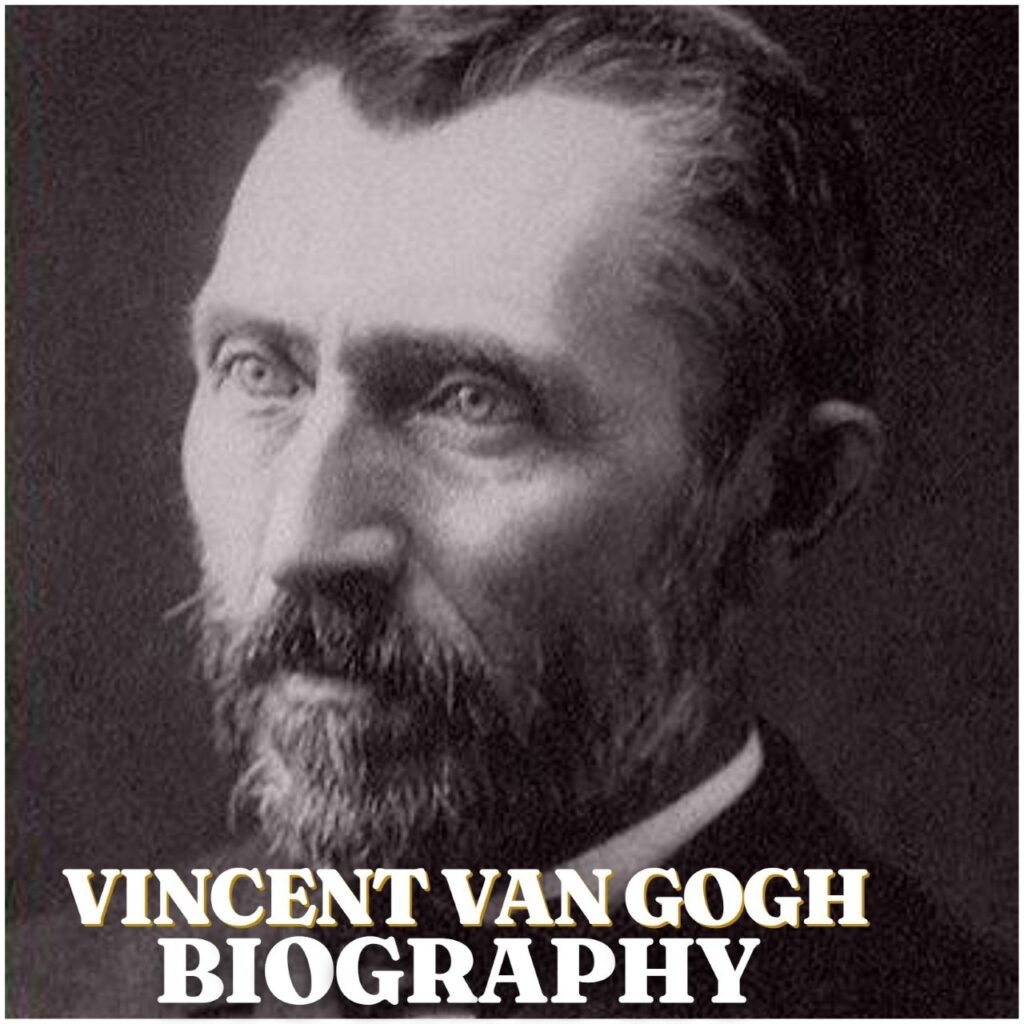
Height and Physical Appearance: Van Gogh’s exact height is not reliably documented in surviving records, so modern claims about his precise height should be treated cautiously. Historical photographs and self-portraits show him as a slim man with reddish-brown hair, a reddish beard, light-colored eyes and a distinctive angular face. His appearance changed somewhat throughout his life, and his numerous self-portraits provide the most familiar visual record of his physical appearance. His red hair and beard became among the features most strongly associated with his recognizable image.
Vincent van Gogh Social Media Presence
Although Vincent van Gogh died in 1890, long before the existence of social media, his life and artwork continue to have a significant digital presence through official museums and institutions dedicated to preserving his legacy. The Van Gogh Museum in Amsterdam regularly shares information about his paintings, letters, exhibitions and research through its official social media accounts, allowing millions of people around the world to engage with his work online. Its Instagram handle is @vangoghmuseum, where the museum posts artworks, exhibition updates and educational content related to Van Gogh and his artistic legacy.
Van Gogh’s paintings also have a strong presence across platforms such as Instagram, Facebook, YouTube and X, where museums, art historians and cultural organizations regularly publish information about his life and work. Because he lived more than a century before social media was created, Van Gogh himself never had a personal social media account or official handle. Accounts using his name today are therefore generally dedicated to sharing his artwork, biography, letters and historical information rather than representing accounts personally operated by the artist.
The continued online interest in Van Gogh demonstrates how his legacy has extended far beyond traditional museums and galleries. His paintings, quotations, letters and personal story are frequently shared by art institutions, educators and enthusiasts, helping introduce new generations to his work. Through platforms such as @vangoghmuseum, audiences can follow exhibitions, discoveries and research connected to Van Gogh while exploring high-quality digital resources about one of the most influential artists in modern art.
Vincent van Gogh Net Worth
Vincent van Gogh’s exact net worth at the time of his death is not known, and modern celebrity-style net-worth figures cannot be reliably applied to him. During his lifetime, Van Gogh was largely unsuccessful commercially and sold very few paintings. His brother, Theo van Gogh, supported him financially for many years, providing money that helped him pay for accommodation, art supplies and everyday expenses. Based on his limited income and dependence on family support, Van Gogh would not have been considered wealthy when he died in 1890.
The enormous financial value associated with Van Gogh today is very different from his financial position during his lifetime. His paintings are now among the most valuable artworks ever sold. For example, Portrait of Dr. Gachet was sold for approximately $82.5 million in 1990, while Laboureur dans un champ was sold for more than $81 million in 2017. Other Van Gogh works have also reached extraordinarily high prices at auction, demonstrating how dramatically the financial value of his art increased after his death.
If a modern estimate is required for biographical purposes, Van Gogh’s historical personal net worth at the time of his death could reasonably be described as modest or very limited rather than millions of dollars. It would be misleading to assign him a precise modern net-worth figure because he died before his paintings acquired their enormous market value. Today, however, the combined cultural and market value of his surviving works is immense, with individual paintings potentially worth tens or hundreds of millions of dollars. His financial legacy therefore represents one of the most remarkable transformations in art history: an artist who struggled financially during his lifetime became one of the world’s most commercially valuable painters after his death.
Legacy of Vincent van Gogh
Vincent van Gogh’s legacy is one of the most extraordinary in the history of modern art. Although he received limited recognition and achieved little commercial success during his lifetime, his expressive use of color, energetic brushwork and emotional approach to painting profoundly influenced the development of modern art. His works, including The Starry Night, Sunflowers, Irises and The Bedroom, are now recognized around the world and continue to attract millions of visitors in museums and exhibitions.
A major part of Van Gogh’s lasting legacy was preserved through the efforts of his family, particularly his brother Theo van Gogh and Theo’s wife, Johanna van Gogh-Bonger. Theo supported Vincent financially and emotionally during his lifetime and carefully preserved many of his paintings and letters. After Vincent and Theo died, Johanna worked tirelessly to promote Vincent’s art, organize exhibitions and maintain his correspondence. Her efforts were crucial in transforming Van Gogh from a largely unknown painter into an internationally celebrated artist.
Today, Van Gogh’s influence extends beyond museums and traditional art history. His distinctive style has inspired generations of painters, filmmakers, writers, designers and popular culture, while his life story continues to attract extensive research and public interest. The Van Gogh Museum in Amsterdam, established around the family’s collection, remains one of the world’s most important centers for studying and displaying his work. More than a century after his death, Van Gogh’s paintings continue to command extraordinary prices, inspire new exhibitions and introduce new generations to his unique vision of art and life.
Conclusion
Vincent van Gogh’s life was a remarkable combination of artistic brilliance, personal struggle and lasting influence. From his early years in the Netherlands and his decision to become an artist at 27 to his productive final years in France, he developed a unique style that transformed the possibilities of modern painting. Although he died at just 37 and received little commercial success during his lifetime, the dedication of his brother Theo and sister-in-law Johanna helped preserve and promote his work. Today, Van Gogh remains one of the world’s most celebrated artists, with his paintings, letters and life story continuing to inspire millions of people and attract worldwide attention.
Frequently Asked Questions About Vincent van Gogh
Who was Vincent van Gogh?
Vincent van Gogh was a Dutch Post-Impressionist painter who became one of the most influential artists in modern art history. He is famous for paintings such as The Starry Night, Sunflowers, The Bedroom, Irises and The Potato Eaters. Although he struggled financially and received limited recognition during his lifetime, his work became internationally celebrated after his death.
When was Vincent van Gogh born?
Vincent van Gogh was born on March 30, 1853, in Zundert, Netherlands. He was born into a Protestant family and was the son of Theodorus van Gogh, a minister, and Anna Carbentus van Gogh.
How old was Vincent van Gogh when he died?
Vincent van Gogh was 37 years old when he died on July 29, 1890, in Auvers-sur-Oise, France. Despite his short life, he produced an extraordinary number of paintings and drawings during approximately a decade of artistic activity.
What was Vincent van Gogh’s nationality?
Vincent van Gogh was Dutch. He was born in the Netherlands and spent the early part of his life there before moving to Belgium and later France, where he produced many of his most famous paintings.
What was Vincent van Gogh’s religion?
Van Gogh was raised as a Protestant Christian. His father was a Protestant minister, and Vincent was deeply interested in religion during his early adulthood. He even worked as a lay preacher among mining communities in Belgium before eventually choosing art as his career.
What was Vincent van Gogh’s most famous painting?
The Starry Night is generally considered Vincent van Gogh’s most famous painting. He created the work in June 1889 while staying at the Saint-Paul-de-Mausole asylum in Saint-Rémy-de-Provence, France. The painting is now part of the collection of the Museum of Modern Art in New York.
How many paintings did Vincent van Gogh make?
Van Gogh produced approximately 860 oil paintings and more than 1,000 drawings and sketches during his artistic career. His output was particularly remarkable because he worked professionally as an artist for only about ten years.
Was Vincent van Gogh married?
No. Vincent van Gogh never married and had no children. He experienced several romantic relationships during his life, including relationships or attachments involving Eugénie Loyer, Kee Vos-Stricker, Sien Hoornik and Margot Begemann.
Who was Vincent van Gogh’s brother?
Van Gogh’s younger brother was Theo van Gogh, an art dealer who became his closest supporter. Theo provided Vincent with financial assistance and encouragement and maintained an extensive correspondence with him. Theo’s support was extremely important to Vincent’s artistic career.
How did Vincent van Gogh die?
Van Gogh died on July 29, 1890, after suffering a gunshot wound two days earlier in Auvers-sur-Oise, France. The traditional historical account considers the wound self-inflicted, although some researchers have proposed alternative explanations. He was 37 years old when he died.
Did Vincent van Gogh sell paintings during his lifetime?
Yes, but he sold very few paintings compared with his enormous posthumous success. His limited commercial success meant that he experienced financial difficulties and relied heavily on support from his brother Theo. His paintings became extremely valuable and internationally sought after only after his death.
What is Vincent van Gogh’s net worth?
There is no reliable modern net-worth figure for Vincent van Gogh. He was not wealthy when he died in 1890, and his paintings had not yet achieved the extraordinary market values they command today. Individual Van Gogh paintings have subsequently sold for tens of millions of dollars, making his artistic estate extremely valuable in modern terms.
Where is Vincent van Gogh buried?
Vincent van Gogh is buried at the Auvers-sur-Oise cemetery in France. His brother Theo van Gogh is buried beside him. Their graves have become an important historical site connected with Van Gogh’s final years.
Why is Vincent van Gogh famous?
Vincent van Gogh is famous for his highly expressive painting style, bold use of color and distinctive brushwork. His personal story, artistic development and paintings such as The Starry Night and Sunflowers have made him one of the most recognizable artists in the world.
Did Vincent van Gogh have social media?
No. Vincent van Gogh died in 1890, more than a century before social media existed, so he never had a personal social media account. However, museums such as the Van Gogh Museum maintain official social media accounts, including Instagram @vangoghmuseum, where his art, exhibitions and historical information are shared with audiences worldwide.