
Franz Schubert Biography and Introduction
Franz Schubert was one of the most remarkable composers in the history of classical music, remembered for the extraordinary beauty, emotional depth and originality of his compositions. Born on January 31, 1797, in Vienna, Austria, Schubert lived for only 31 years, yet he left behind an enormous body of music that continues to influence performers, composers and music lovers around the world. His works helped connect the musical traditions of the Classical period with the emerging Romantic movement of the 19th century.
Schubert is particularly celebrated for transforming the German art song, or Lied, into one of the most expressive forms of musical storytelling. He composed more than 600 songs, many of which were inspired by the poetry of prominent writers such as Johann Wolfgang von Goethe, Friedrich Schiller and Wilhelm Müller. However, his achievements extended far beyond vocal music, encompassing symphonies, chamber music, piano compositions, sacred works and other major pieces that have become permanent parts of the classical repertoire.
Although Schubert experienced financial difficulties and limited public recognition during much of his lifetime, his reputation grew significantly after his death on November 19, 1828. Today, compositions such as Erlkönig, Winterreise, the “Unfinished” Symphony, the “Trout” Quintet and his late piano works are regarded as masterpieces. His brief life and immense creative output have made Franz Schubert a fascinating figure in music history and one of the most enduring composers of the Romantic era.
Franz Schubert Early Life and Childhood
Franz Peter Schubert was born on January 31, 1797, in Vienna, Austria, into a modest but musical family. His father, Franz Theodor Schubert, was a schoolteacher who also played and taught music, while his mother, Elisabeth Vietz, was the daughter of a locksmith. Schubert was one of several children in the family, and his early surroundings provided him with regular exposure to music. His father introduced him to the violin, while his older brother Ignaz helped him develop his skills on the piano.
Schubert’s musical talent became evident at a very young age. He received lessons in singing, violin and piano and quickly progressed beyond what would normally be expected of a child. In 1808, at the age of 11, he successfully auditioned for a place at the Imperial and Royal City College in Vienna, commonly known as the Stadtkonvikt. There, he received a broad education while singing as a choirboy and studying music under Antonio Salieri, the influential composer and teacher. His time at the institution exposed him to the works of major Classical composers, including Wolfgang Amadeus Mozart, Joseph Haydn and Ludwig van Beethoven.
While still a teenager, Schubert began composing with remarkable consistency and ambition. His early works included songs, piano pieces, chamber music, sacred compositions and his first attempts at symphonic writing. His experience at the Stadtkonvikt also introduced him to talented young musicians who became important friends and supporters. By the time he left the institution, Schubert had already demonstrated the extraordinary creative ability that would define his short career, setting the foundation for the remarkable musical legacy he would develop in adulthood.
Franz Schubert Education and Musical Training
Franz Schubert received his earliest musical education within his family home in Vienna. His father, Franz Theodor Schubert, taught him the basics of music and introduced him to the violin, while his older brother Ignaz gave him piano lessons. Schubert also received instruction in singing and quickly demonstrated an exceptional ability to understand music. His natural talent became so apparent that his family sought opportunities for him to receive more advanced formal training.
In 1808, when Schubert was 11 years old, he earned a place at the Stadtkonvikt, an important school in Vienna that provided both general education and extensive musical training. As a student, he sang in the school choir and studied violin, piano, music theory and composition. He also played in the school orchestra, where he gained valuable practical experience performing orchestral music. The institution exposed him to works by major Classical composers, including Joseph Haydn, Wolfgang Amadeus Mozart and Ludwig van Beethoven.
One of the most important figures in Schubert’s formal musical education was Antonio Salieri, the respected Italian composer and teacher who worked in Vienna. Salieri recognized Schubert’s considerable talent and provided him with instruction in composition and musical technique. During his years at the Stadtkonvikt, Schubert began producing an impressive number of compositions, including songs, chamber works, sacred music and early symphonies. Although he did not follow the conventional path of attending a university or conservatory, his combination of family instruction, formal schooling, orchestral experience and private composition study gave him a strong foundation for his later career.
Franz Schubert Career and Musical Achievements
Franz Schubert began his professional life in Vienna as a teacher while continuing to compose with remarkable dedication. After completing his formal schooling, he worked briefly as an assistant teacher at his father’s school, but he found the demands of teaching difficult to reconcile with his growing passion for composition. During these early years, Schubert continued producing songs, piano works, chamber music and orchestral compositions. His talent was increasingly recognized within Vienna’s musical circles, although he struggled to obtain a permanent and financially secure professional position.
Schubert’s career developed largely through the support of friends, musicians and private patrons rather than through a prestigious court appointment. His songs became particularly important to his growing reputation, and performances by the celebrated singer Johann Michael Vogl helped introduce Schubert’s music to a wider audience. His circle of friends also organized gatherings known as Schubertiades, where his songs and instrumental compositions were performed. During the 1820s, he produced some of his most important works, including the song cycle Die schöne Müllerin, the “Unfinished” Symphony, the “Trout” Quintet, Winterreise and numerous piano and chamber compositions.
Despite his extraordinary productivity, Schubert did not achieve the level of public fame or financial success during his lifetime that he would receive after his death. His music was sometimes performed in Vienna, and his compositions gradually attracted greater attention, but he remained dependent on friends and supporters for much of his livelihood. In the final years of his life, however, his artistic achievements reached an extraordinary level. His late symphonies, chamber works, piano sonatas and songs demonstrated a remarkable maturity and emotional depth, establishing the foundation for the international reputation he would gain in the years following his death in 1828.
Why Franz Schubert Is Trending Today
Franz Schubert continues to attract attention because his music remains one of the most influential bodies of work from the transition between the Classical and Romantic eras. His compositions, particularly his more than 600 songs, continue to be performed and recorded by leading classical musicians. Works such as Winterreise, Erlkönig, the “Unfinished” Symphony and the String Quintet in C major remain widely studied and performed, keeping Schubert relevant to modern audiences.
Another reason Schubert continues to trend is the ongoing interest in his short but remarkably productive life. He died in Vienna on November 19, 1828, at just 31 years old, yet he produced an extraordinary number of compositions during those three decades. His relatively late recognition, financial struggles and close relationships with friends and fellow musicians have also made his biography an enduring subject for music historians and classical-music audiences.
Schubert’s continuing presence in modern concerts, recordings, festivals and music education also keeps his name visible in 2026. Musicians regularly revisit his compositions and bring new interpretations to familiar works, while researchers continue examining his manuscripts, creative process and influence on later composers. For these reasons, interest in Franz Schubert is not simply historical; his music continues to have an active place in contemporary classical culture.
Franz Schubert Personal Life and Family
Franz Schubert was born into a large, close-knit family in Vienna. His father, Franz Theodor Schubert, was a schoolteacher and amateur musician who played an important role in his son’s early musical education. His mother, Elisabeth Vietz, also came from a modest background. Schubert had several siblings, including his brothers Ignaz and Ferdinand, with Ferdinand later becoming an important supporter and keeper of his brother’s musical legacy. The family’s musical environment helped encourage Schubert’s extraordinary abilities from childhood.
Schubert never married and there is no reliably documented fiancée or wife in his biography. His personal life was instead strongly connected to a close circle of friends, fellow musicians and artists in Vienna. Among the people associated with him was the singer Johann Michael Vogl, who became an important interpreter of his songs. Schubert’s friendships were particularly significant because they provided him with companionship, encouragement and opportunities to have his compositions performed at private gatherings known as Schubertiades.
Although Schubert’s romantic life remains less clearly documented than his musical career, some historical accounts have proposed possible romantic interests, including Therese Grob, a singer whom he knew during his youth. However, there is no firm evidence that Schubert and Grob became engaged or married. Much of Schubert’s adult life was devoted to composing, socializing with his artistic circle and producing an extraordinary volume of music. His early death at just 31 meant that he never established his own family, but his surviving relatives and close friends played an important role in preserving and promoting his work after his death.
Franz Schubert Age, Religion, Nationality, Height and Physical Appearance
Franz Schubert was born on January 31, 1797, and died on November 19, 1828, making him 31 years old at the time of his death. Despite his short life, he produced an exceptionally large body of music, including more than 600 songs, symphonies, chamber compositions, piano works and sacred music. His age at death is one of the most striking aspects of his biography because he accomplished so much during a relatively brief career.
Schubert was born and raised in a Roman Catholic family in Vienna, which was part of the Austrian Empire. He received a Catholic upbringing and was connected to the Catholic musical tradition through works such as his masses and other sacred compositions. His religious background influenced some aspects of his musical output, although his reputation today rests primarily on his secular songs and instrumental compositions.
Franz Schubert was Austrian, having been born and spent most of his life in Vienna. He lived during the Austrian Empire and became closely associated with Vienna’s musical culture. His career and friendships were largely centered in the city, which was one of Europe’s most important musical centers during the early 19th century.
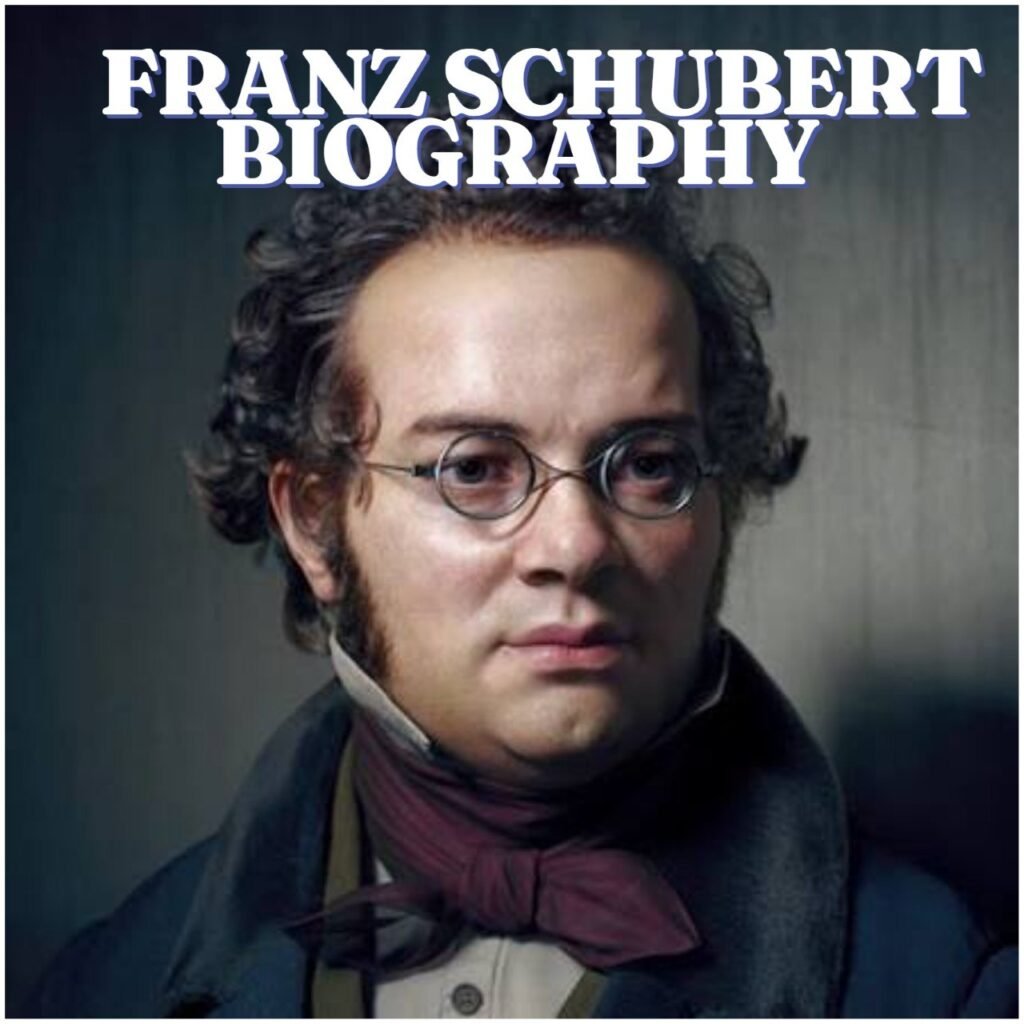
There is no reliably documented exact height for Franz Schubert in the historical records, so claims giving a precise height should be treated cautiously. Contemporary portraits generally depict him as a short, somewhat stocky man with a round face, dark hair and distinctive spectacles. His appearance became especially recognizable through portraits showing his characteristic glasses and slightly tousled hair.
Franz Schubert Cause of Death and Death
Franz Schubert died on November 19, 1828, in Vienna, Austria, at the age of 31. His final illness followed several years of poor health, and he became seriously ill during 1828. Despite his declining condition, Schubert remained creatively active and continued composing some of his most important works during the final months of his life.
The exact medical cause of Schubert’s death has been debated by historians and medical researchers. He was diagnosed at the time with typhoid fever, although some modern interpretations have suggested that complications from other illnesses may have contributed to his death. He had suffered from serious health problems since the early 1820s, and his condition deteriorated significantly toward the end of his life.
Schubert was initially buried at Währing Cemetery in Vienna, near the grave of Ludwig van Beethoven, whom he greatly admired. In 1888, his remains were transferred to Vienna Central Cemetery, where he was placed among other prominent Austrian composers. Although his life ended at only 31, Schubert left behind an enormous musical legacy, and his final years produced some of the works that would later establish him as one of the greatest composers in Western classical music.
Franz Schubert Net Worth
Franz Schubert’s exact net worth is not known, and it would be misleading to give him a modern celebrity-style net worth because he lived in the early 19th century, long before the concept of celebrity wealth and modern music royalties. During his lifetime, Schubert was not financially wealthy. Although he earned money from teaching, performances, publishing and commissions, his income was inconsistent, and much of his music did not generate substantial financial returns while he was alive.
Based on the historical record of his career, Schubert would best be described as having had a modest financial position rather than significant personal wealth. He relied at various times on teaching and financial assistance from friends and supporters, while private performances and publication of his compositions provided additional income. His extraordinary productivity did not translate into great wealth during his lifetime, partly because many of his most important compositions became widely appreciated only after his death.
If a modern-style estimate is required for a biography, it is safer to describe Schubert’s inflation-adjusted lifetime financial position as modest and difficult to quantify, rather than assigning a precise dollar figure. His real legacy is therefore measured not by his personal fortune but by the enormous cultural and artistic value of his music. After his death in 1828, the recognition and commercial importance of his compositions increased substantially, making his musical estate far more significant than the financial circumstances he experienced during his short life.
Franz Schubert Legacy and Influence
Franz Schubert’s legacy is rooted in the extraordinary influence he had on the development of 19th-century classical music. He played a crucial role in the transition from the Classical era to the Romantic period, combining traditional musical structures with greater emotional expression, lyrical melodies and innovative harmonic ideas. His contribution to the German art song was particularly significant, with more than 600 songs demonstrating how music and poetry could be combined to create deeply expressive musical narratives.
Schubert’s instrumental works have also secured his place among the most important composers in Western music. His symphonies, string quartets, piano sonatas and other chamber compositions continued to gain recognition after his death. Works such as the “Unfinished” Symphony, Winterreise, the “Trout” Quintet, Death and the Maiden Quartet and the String Quintet in C major remain central to the classical repertoire and are regularly performed by orchestras, chamber ensembles, singers and pianists around the world.
Perhaps the most remarkable part of Schubert’s legacy is the contrast between his short life and the enormous amount of music he left behind. He died at only 31, without witnessing the full international recognition that his compositions would eventually receive. In the years following his death, musicians, scholars and performers increasingly recognized the originality and emotional depth of his work. Today, Schubert is remembered as one of Austria’s greatest composers and as a foundational figure whose music continues to influence classical performers, composers and audiences worldwide.
Conclusion
Franz Schubert remains one of the most remarkable figures in classical music history, despite living for only 31 years. From his early musical education in Vienna to his extraordinary career as a composer of songs, symphonies, chamber music, piano works and sacred compositions, he demonstrated an exceptional creative ability. Although he experienced financial difficulties and limited recognition during his lifetime, his music gained lasting importance after his death in 1828. Today, Schubert is celebrated for his emotional depth, melodic beauty and major contribution to the development of Romantic music, while masterpieces such as Winterreise, Erlkönig, the “Unfinished” Symphony and the String Quintet in C major continue to preserve his legacy for new generations.
Frequently Asked Questions About Franz Schubert
Who was Franz Schubert?
Franz Schubert was an Austrian composer born on January 31, 1797, in Vienna. He became one of the most important composers of the early Romantic period and was particularly famous for his more than 600 art songs, as well as his symphonies, chamber music, piano works and sacred compositions.
How old was Franz Schubert when he died?
Franz Schubert was 31 years old when he died on November 19, 1828, in Vienna. Despite his short life, he left behind an exceptionally large and influential collection of musical compositions.
What was Franz Schubert famous for?
Franz Schubert was especially famous for developing the German art song, or Lied, into a highly expressive musical form. Some of his best-known works include Erlkönig, Winterreise, the “Unfinished” Symphony, the “Trout” Quintet and the String Quintet in C major.
What was the cause of Franz Schubert’s death?
Schubert died in Vienna on November 19, 1828, following a serious illness. He was diagnosed at the time with typhoid fever, although modern medical historians have debated the precise cause and possible contributing illnesses.
Was Franz Schubert married?
No. Franz Schubert never married and had no known wife or fiancée. Historical accounts mention possible romantic interests, including Therese Grob, but there is no reliable evidence that he became engaged or married.
Did Franz Schubert have children?
No. Schubert did not marry and there are no reliably documented biological children attributed to him.
What nationality was Franz Schubert?
Franz Schubert was Austrian. He was born and spent most of his life in Vienna, which was then part of the Austrian Empire.
What religion was Franz Schubert?
Schubert was raised as a Roman Catholic and came from a Catholic family. His religious background was reflected in some of his sacred compositions, including several masses.
How many songs did Franz Schubert compose?
Franz Schubert composed more than 600 songs, making him one of the most important figures in the development of the German art song tradition. His songs frequently set poems by major German-language poets.
What are Franz Schubert’s most famous compositions?
Some of Schubert’s best-known compositions include Erlkönig, Winterreise, Die schöne Müllerin, the “Unfinished” Symphony, the “Great” C major Symphony, the “Trout” Quintet, the Death and the Maiden Quartet and the String Quintet in C major.
Where did Franz Schubert die?
Franz Schubert died in Vienna, Austria, on November 19, 1828. He was initially buried at Währing Cemetery before his remains were later transferred to Vienna Central Cemetery.
What is Franz Schubert’s legacy?
Franz Schubert’s legacy lies in his extraordinary contribution to both vocal and instrumental music. His songs transformed the German Lied, while his symphonies, chamber works and piano compositions helped shape the Romantic musical tradition. His music continues to be performed, recorded and studied internationally.