
Introduction
Neem Karoli Baba, also widely known as Neeb Karori Baba or Maharaj-ji, was one of the most respected Hindu spiritual figures of the 20th century. Born as Lakshman Narayan Sharma in Uttar Pradesh, India, around the beginning of the 20th century, he became renowned for his deep devotion to Lord Hanuman, his simple way of life, and his emphasis on love, compassion, selfless service, and devotion to God. Although he did not seek fame or present himself as a conventional religious teacher, stories about his spiritual presence, miracles and extraordinary interactions with devotees gradually made him known far beyond India.
Neem Karoli Baba’s spiritual journey eventually became closely associated with Kainchi Dham in Uttarakhand, which developed into one of the most important places connected with his life and teachings. His message centred on serving others, feeding people, remembering God and treating every person with love and compassion. He attracted followers from different backgrounds, including both Indians and Western spiritual seekers. Among the people who became associated with his teachings were Ram Dass, Larry Brilliant and Bhagavan Das, helping introduce his philosophy to a wider international audience.
Even decades after his death in Vrindavan on September 11, 1973, Neem Karoli Baba remains an influential spiritual figure whose teachings continue to inspire devotees around the world. His name is particularly associated with the enduring message of love and service, while Kainchi Dham continues to draw large numbers of visitors seeking spiritual inspiration. His life, family background, spiritual practices, relationship with devotees and continuing influence have made him a subject of enduring interest, and renewed books, documentaries, media reports and biographical projects continue to introduce his story to new generations.
Early Life of Neem Karoli Baba
Neem Karoli Baba was born as Lakshman Narayan Sharma in the early 20th century, with most biographical accounts placing his birth around 1900 in Akbarpur, a village in the Firozabad district of present-day Uttar Pradesh, India. He was born into a Brahmin family and grew up in a traditional Hindu environment where religious values, devotion and spiritual practices were important parts of daily life. Accounts of his childhood and youth describe him as someone who showed an unusual interest in spirituality from an early age, although many details about his early years remain difficult to verify because Neem Karoli Baba himself did not leave behind a conventional autobiography.
As a young man, Lakshman Narayan Sharma married and initially lived a family life rather than immediately becoming a full-time ascetic. He is reported to have had children with his wife, and for a period he lived within the responsibilities and routines of household life. However, his growing spiritual inclination eventually led him away from an ordinary domestic existence and toward a life of wandering, meditation and religious devotion. Stories about this period vary considerably, and some of the accounts surrounding his early spiritual experiences have become part of the oral tradition that developed around him.
Neem Karoli Baba’s reputation as a holy man developed gradually as he travelled through different parts of northern India and spent time with spiritual seekers and ordinary villagers. He became particularly associated with devotion to Lord Hanuman, whom he regarded with profound reverence. Over time, people began approaching him for spiritual guidance, blessings and help, while stories of his unusual abilities and acts of compassion spread among devotees. These early experiences eventually laid the foundation for the larger spiritual movement associated with him, culminating in the establishment of Kainchi Dham and his emergence as the figure affectionately known by devotees as Maharaj-ji.
Education of Neem Karoli Baba
There is very limited reliable information about Neem Karoli Baba’s formal education. Born as Lakshman Narayan Sharma in a traditional Hindu Brahmin family in Uttar Pradesh, he grew up in an environment where religious teachings, customs and spiritual practices were important aspects of life. Unlike many modern biographies of public figures, accounts of Neem Karoli Baba do not provide a documented record of schools, colleges, degrees or academic qualifications. His later reputation was built primarily around his spiritual life rather than formal academic achievement.
Neem Karoli Baba’s intellectual and spiritual development appears to have been shaped largely by traditional Hindu teachings and personal spiritual practice. He became deeply devoted to Lord Hanuman and was associated with the broader bhakti tradition, which emphasizes love, devotion and surrender to God. His understanding of spirituality was expressed through simple teachings and practical acts of service rather than through academic writings or formal theological study. Devotees often remembered him for his ability to communicate profound spiritual ideas in straightforward language.
Because Neem Karoli Baba lived much of his life as a wandering spiritual teacher, his education is best understood in the context of his spiritual journey rather than conventional schooling. His knowledge developed through religious experience, meditation, interaction with devotees and service to others. Although there is no well-documented evidence of a university education or formal professional qualification, his teachings later influenced numerous followers in India and abroad. His emphasis on love, compassion, devotion and selfless service ultimately became a more important part of his public legacy than any formal educational credential.
Career and Spiritual Journey of Neem Karoli Baba
Neem Karoli Baba did not have a conventional career in the modern sense. He became known primarily as a Hindu spiritual teacher, saint and devotee of Lord Hanuman. Born Lakshman Narayan Sharma, he spent different periods of his life travelling, living as a spiritual seeker and interacting with people who came to him for guidance. Rather than building a career around employment or business, he dedicated his life to spiritual practice, devotion, compassion and service. His followers affectionately called him Maharaj-ji, a name that eventually became closely associated with his spiritual identity.
A major part of Neem Karoli Baba’s later life involved guiding devotees and establishing places where people could worship, meditate and participate in acts of service. His connection with Kainchi in Uttarakhand became particularly important, and the Kainchi Dham ashram developed into the most famous centre associated with his name. He encouraged devotees to remember God, help others, feed people and approach spiritual life through love and selfless service. Although he did not produce a conventional body of academic or religious literature, his conversations, sayings and actions were preserved by devotees and later became an important part of his teachings.
Neem Karoli Baba’s spiritual career eventually extended beyond India through his relationships with Western seekers who encountered his teachings and personal example. Among the best-known figures associated with him was American spiritual teacher Ram Dass, whose book Be Here Now helped introduce Neem Karoli Baba’s influence to a much wider international audience. Other followers and associates, including Bhagavan Das and Larry Brilliant, also carried aspects of his teachings into wider spiritual and humanitarian circles. By the end of his life, Neem Karoli Baba had become recognised not because of a formal institution or professional title, but because of the devotion he inspired and his enduring message of love, service and compassion.
Why Neem Karoli Baba Is Trending in 2026
Neem Karoli Baba is trending again because renewed public interest in his life and spiritual legacy has brought his story to the attention of a new generation. In 2026, his name has received additional attention through media coverage and renewed interest in the biographical film Shree Baba Neeb Karori Maharaj, which presents aspects of his spiritual journey and features actor Subodh Bhave in the title role. The renewed focus has encouraged many people to search for information about his early life, teachings, family, Kainchi Dham and influence on followers.
Another reason for the continuing interest is the enduring popularity of Kainchi Dham in Uttarakhand, the spiritual centre most closely associated with Neem Karoli Baba. The ashram has become a major destination for devotees and spiritual seekers from India and abroad, while stories about his teachings and spiritual experiences continue to circulate widely on social media and in news coverage. His association with internationally recognised figures such as Ram Dass and Steve Jobs has also kept his name relevant among people interested in spirituality, meditation and personal transformation.
Neem Karoli Baba is also trending because his simple message of love, service and compassion continues to resonate with modern audiences. The phrase commonly associated with his teachings, “Love All, Serve All, Feed All,” reflects a philosophy that appeals to people looking for spiritual guidance without complicated rituals or elaborate doctrines. Decades after his death in 1973, books, documentaries, online discussions, pilgrimages and new biographical projects continue to revive interest in his life, making Neem Karoli Baba a prominent subject of spiritual and cultural discussion in 2026.
Personal Life and Family of Neem Karoli Baba
Neem Karoli Baba was born as Lakshman Narayan Sharma into a Hindu Brahmin family in Uttar Pradesh, India. Although he later became famous as a spiritual teacher and ascetic, his early life included marriage and family responsibilities. He married Rama Devi at a young age, according to widely circulated biographical accounts, and the couple had three children. His family life is an important part of his story because he did not begin his spiritual journey entirely outside ordinary society; he experienced the responsibilities of marriage and fatherhood before becoming widely recognised as Neem Karoli Baba.
Neem Karoli Baba and Rama Devi are generally reported to have had two sons and one daughter. His sons are commonly identified in biographical sources as Dharm Narayan Sharma and Anegh Narayan Sharma, while his daughter is known as Girija Devi. Details about his wife and children are relatively limited compared with the extensive stories surrounding his spiritual life, partly because Neem Karoli Baba maintained a private personal life and did not build his public identity around his family. His descendants have nevertheless remained connected to his legacy and the wider tradition associated with him.
As his spiritual calling became stronger, Neem Karoli Baba spent long periods travelling and living the life of a wandering saint, although his family remained an important part of his personal history. He eventually became known as Maharaj-ji, attracting devotees who regarded him as a spiritually gifted teacher and devotee of Lord Hanuman. Unlike many public figures, he left relatively little verified personal information behind, so some stories about his family and private life come from devotees and later biographical accounts rather than detailed contemporary records. His family background, marriage and children therefore provide an important human dimension to the life of a man who later became one of India’s best-known modern spiritual figures.
Neem Karoli Baba Age, Religion, Nationality, Height and Physical Appearance
Neem Karoli Baba was born around 1900 and died on September 11, 1973, in Vrindavan, India. Based on the commonly reported birth year, he was approximately 73 years old when he died, although his exact date of birth is not firmly documented. He was an Indian spiritual teacher and Hindu saint whose life was strongly associated with devotion to Lord Hanuman, bhakti spirituality and selfless service. His nationality was Indian, and his spiritual influence eventually extended beyond India through his Western devotees and the international popularity of his teachings.
Neem Karoli Baba followed Hinduism and was particularly known for his intense devotion to Lord Hanuman. His spiritual outlook emphasised love, compassion, remembrance of God and serving other people. He was not known for promoting himself through formal religious institutions or extensive written theological works; instead, his teachings were largely communicated through personal interactions, short sayings and his example of service. His spiritual identity became so closely associated with Hanuman devotion that Kainchi Dham, the ashram connected with him, remains an important pilgrimage destination for his followers.
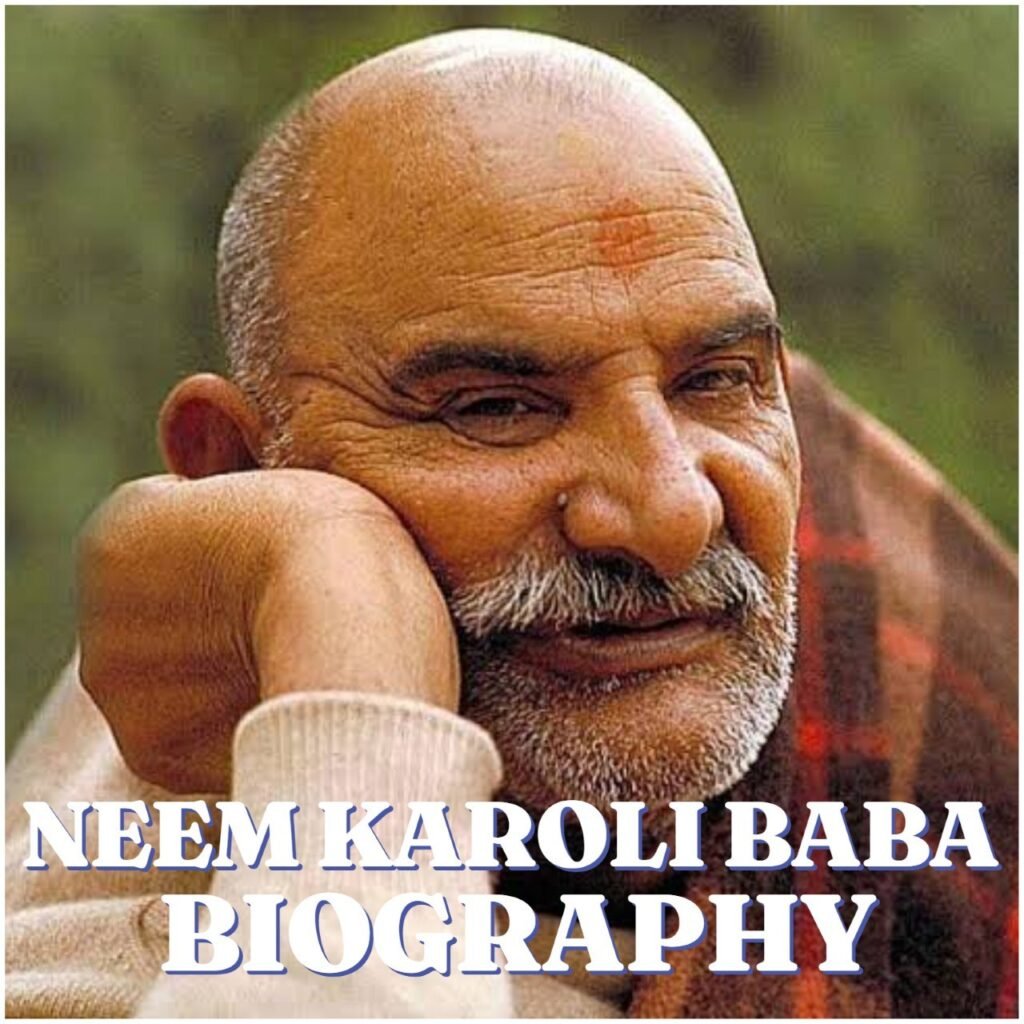
Reliable historical records do not provide an official measurement of Neem Karoli Baba’s height, weight or other precise physical statistics. Some online biographies give estimated figures, but these should not be treated as verified facts. Photographs and descriptions of him generally portray a bearded Indian saint with a fuller build, usually dressed in a simple blanket or shawl, which became one of his most recognisable visual features. His simple appearance reflected the ascetic and devotional lifestyle for which he became known, while his distinctive presence in photographs has helped preserve his image for generations of devotees.
Neem Karoli Baba Net Worth
Neem Karoli Baba’s exact net worth cannot be reliably established, and there is no credible public financial record showing that he accumulated personal wealth. He was a Hindu saint and spiritual teacher rather than a businessman, entertainer or professional whose earnings were publicly documented. His life was centred on spiritual practice, devotion, charity and service, and he was widely associated with a simple lifestyle rather than the pursuit of material possessions.
If an estimate is required based on his type of work and lifestyle, it would be more appropriate to describe his personal net worth as modest or effectively unquantifiable, rather than assigning him a large monetary fortune. Donations and offerings associated with spiritual centres connected to him should not automatically be considered his personal wealth. Kainchi Dham, for example, is a religious institution and pilgrimage centre, and its assets or donations are separate from the personal finances of Neem Karoli Baba.
Therefore, as of 2026, a responsible biography should list Neem Karoli Baba’s personal net worth as unknown/not publicly documented, rather than presenting an unsupported dollar or rupee figure. His lasting influence came from his spiritual teachings and the devotion of his followers, not from financial success. His legacy is generally measured through the continued popularity of Kainchi Dham, the work of organisations and devotees inspired by him, and the international reach of his teachings on love, compassion and selfless service.
Legacy of Neem Karoli Baba
Neem Karoli Baba’s legacy is rooted in his teachings on love, compassion, devotion and selfless service. Although he did not leave behind a large collection of formal theological writings, his words and actions were preserved through the memories of devotees and spiritual seekers who spent time with him. The message most closely associated with his teachings—often expressed as “Love All, Serve All, Feed All”—continues to represent the practical and compassionate approach to spirituality for which he became known. His emphasis on helping others rather than seeking material success remains central to how his followers remember him.
One of the most important physical symbols of Neem Karoli Baba’s legacy is Kainchi Dham in Uttarakhand. The ashram and Hanuman temple associated with him have developed into a major pilgrimage destination, attracting devotees from across India and visitors from other parts of the world. His influence also spread internationally through followers such as Ram Dass, Bhagavan Das and Larry Brilliant, whose experiences with him helped introduce aspects of his teachings to Western audiences. His connection with the spiritual journey of figures such as Steve Jobs has further contributed to his global reputation.
More than five decades after his death in 1973, Neem Karoli Baba remains a significant figure in modern Indian spirituality. His image, teachings and stories continue to circulate through books, documentaries, social media, pilgrimages and biographical projects, allowing younger generations to discover his life. His legacy is therefore not limited to Kainchi Dham or to the people who personally met him; it continues through devotees and charitable activities inspired by his philosophy of serving humanity. For many followers, Neem Karoli Baba’s enduring importance lies in the simplicity of his message: spiritual life should be expressed through love, devotion, kindness and service to others.
Conclusion
Neem Karoli Baba, born Lakshman Narayan Sharma, remains one of the most influential spiritual figures associated with modern Indian Hinduism. From his early family life and years as a wandering saint to the establishment of Kainchi Dham and his growing international influence, his journey was shaped by devotion to Lord Hanuman, compassion and selfless service. Although many details of his private life remain limited or difficult to independently verify, his teachings continue to inspire devotees in India and around the world. More than five decades after his death in 1973, his legacy lives on through Kainchi Dham, his followers, charitable service and the enduring message of love, devotion and service to humanity.
Frequently Asked Questions About Neem Karoli Baba
Who was Neem Karoli Baba?
Neem Karoli Baba, also known as Neeb Karori Baba or Maharaj-ji, was a renowned Indian Hindu saint and spiritual teacher known for his devotion to Lord Hanuman, compassion and teachings on selfless service. He became particularly associated with Kainchi Dham in Uttarakhand and attracted followers from India and abroad.
What was Neem Karoli Baba’s real name?
Neem Karoli Baba’s birth name is generally given as Lakshman Narayan Sharma. He later became widely known as Neem Karoli Baba or Neeb Karori Baba, while many devotees affectionately called him Maharaj-ji.
When was Neem Karoli Baba born?
Neem Karoli Baba is generally believed to have been born around 1900 in Akbarpur, Uttar Pradesh, India. His exact date of birth is not firmly established in reliable historical records.
When did Neem Karoli Baba die?
Neem Karoli Baba died on September 11, 1973, in Vrindavan, India. He was approximately 73 years old if the commonly reported birth year of 1900 is used.
What religion did Neem Karoli Baba follow?
Neem Karoli Baba was a Hindu saint and a devoted follower of Lord Hanuman. His spiritual teachings emphasised devotion, love, compassion, remembrance of God and selfless service.
Was Neem Karoli Baba married?
Yes. Neem Karoli Baba was married to Rama Devi, according to widely circulated biographical accounts. He had a family before becoming widely known as a spiritual teacher and saint.
How many children did Neem Karoli Baba have?
Neem Karoli Baba is generally reported to have had three children: two sons and one daughter. His sons are commonly identified as Dharm Narayan Sharma and Anegh Narayan Sharma, while his daughter is known as Girija Devi.
Where is Neem Karoli Baba’s ashram?
Neem Karoli Baba’s most famous ashram is Kainchi Dham, located in Uttarakhand, India. The site is associated with a Hanuman temple and remains an important pilgrimage destination for his devotees.
Why is Kainchi Dham famous?
Kainchi Dham became famous because of its association with Neem Karoli Baba and his devotion to Lord Hanuman. The spiritual centre continues to attract devotees and visitors who come to pray, seek inspiration and learn about his teachings.
What was Neem Karoli Baba’s main teaching?
Neem Karoli Baba is strongly associated with teachings centred on love, service, compassion and devotion. The phrase “Love All, Serve All, Feed All” is frequently associated with his spiritual legacy and summarises the values for which he is remembered.
Did Steve Jobs meet Neem Karoli Baba?
No. Steve Jobs did not personally meet Neem Karoli Baba. Jobs travelled to India in 1974 in search of spiritual guidance and was interested in visiting the saint’s ashram, but Neem Karoli Baba had died in September 1973, before Jobs arrived in India.
Was Mark Zuckerberg influenced by Neem Karoli Baba?
Mark Zuckerberg has spoken about visiting Kainchi Dham in India during a difficult period for Facebook. The visit was reportedly recommended by Steve Jobs, who had previously encouraged Zuckerberg to visit the temple and seek perspective.
Who was Ram Dass in relation to Neem Karoli Baba?
Ram Dass, formerly Richard Alpert, was one of Neem Karoli Baba’s best-known Western devotees. His experiences with Maharaj-ji became an important part of his spiritual journey and helped introduce Neem Karoli Baba’s teachings to a much wider Western audience.
What was Neem Karoli Baba’s net worth?
Neem Karoli Baba’s personal net worth is not publicly documented. Because he was a spiritual teacher who lived a relatively simple life rather than a businessman or entertainer, there is no reliable financial figure that can be used to establish his personal wealth.
How tall was Neem Karoli Baba?
Neem Karoli Baba’s exact height is not reliably documented. Although some websites provide estimated measurements, there is no sufficiently authoritative historical record confirming his height.
Why is Neem Karoli Baba still famous today?
Neem Karoli Baba remains famous because of his spiritual teachings, devotion to Lord Hanuman, association with Kainchi Dham and the influence he had on followers in India and abroad. His teachings continue to spread through books, pilgrimages, social media, documentaries and stories from devotees.
What is Neem Karoli Baba’s legacy?
Neem Karoli Baba’s legacy is centred on love, devotion, compassion and selfless service. Kainchi Dham remains the most prominent centre associated with his life, while his teachings continue to influence devotees and spiritual seekers around the world.