
Introduction
Mother Teresa, widely known as Saint Teresa of Calcutta, was one of the most influential humanitarian and religious figures of the 20th century. Born Anjezë Gonxhe Bojaxhiu on August 26, 1910, she dedicated her life to serving poor, sick, homeless and dying people. Her remarkable commitment to charity and compassion made her a globally recognised symbol of selfless service. Although she was born in Skopje, in present-day North Macedonia, Mother Teresa spent most of her life working among disadvantaged communities in India.
Mother Teresa became internationally famous through her work with the Missionaries of Charity, the Roman Catholic religious congregation she founded in 1950. Beginning her humanitarian mission in Kolkata, India, she and the members of her organisation provided care and support to people facing poverty, illness and abandonment. Over the years, her charitable work expanded to many countries, and her name became closely associated with compassion, sacrifice and service to humanity.
Decades after her death in 1997, Mother Teresa’s biography continues to attract worldwide interest because of her extraordinary life, religious devotion and lasting humanitarian legacy. She received the Nobel Peace Prize in 1979 and was later canonised by the Catholic Church in 2016 as Saint Teresa of Calcutta. Today, she remains an important historical and spiritual figure whose life story continues to inspire people around the world to show kindness and support those in need.
Mother Teresa Early Life and Childhood
Mother Teresa was born Anjezë Gonxhe Bojaxhiu on August 26, 1910, in Skopje, then part of the Ottoman Empire and now the capital of North Macedonia. She was born into an Albanian family to Nikollë Bojaxhiu and Dranafile Bojaxhiu and was the youngest of three children. Her family was Roman Catholic, and religion played an important role in her childhood. Her mother, Dranafile, was known for encouraging kindness and generosity, values that had a strong influence on the young Anjezë and later shaped the direction of her life.
When Mother Teresa was around eight years old, her father died, leaving her mother to care for the family. Despite the difficulties they faced, her mother continued to teach her children the importance of helping poor and vulnerable people. As a young girl, Anjezë became increasingly interested in the lives of missionaries and their work in other parts of the world. By her teenage years, she had developed a strong desire to dedicate her life to religious service and helping others.
At the age of 18, Anjezë left her home and travelled to Ireland, where she joined the Sisters of Loreto, a Catholic religious congregation. She chose the name Sister Mary Teresa after Saint Thérèse of Lisieux. Soon after, she travelled to India, where she began her journey as a religious sister and eventually became known to the world as Mother Teresa. Her early experiences, family upbringing and strong Catholic faith laid the foundation for the humanitarian work that would later make her one of the most recognised figures in modern history.
Mother Teresa Education and Religious Training
Mother Teresa received her early education in Skopje, where she attended local schools and developed a strong interest in religion, languages and missionary work. Born as Anjezë Gonxhe Bojaxhiu, she grew up in a Catholic household where faith and charitable values played an important role in her upbringing. During her school years, she was an active and dedicated student, and her interest in serving others gradually became stronger as she learned about the work of Catholic missionaries in distant parts of the world.
At the age of 18, Mother Teresa decided to pursue a religious life and left her home for Ireland in 1928. There, she joined the Sisters of Loreto at Loreto Abbey in Rathfarnham, near Dublin. One of the main purposes of her training in Ireland was to learn English, which was important for the work she would later carry out in India. During this period, she received religious instruction and prepared herself for missionary service.
After completing her initial religious training, Mother Teresa travelled to India in 1929, where she continued her education and religious formation. She later took her first vows as a nun and became a teacher at St. Mary’s School in Calcutta. Over the years, her teaching experience and religious training helped prepare her for the humanitarian work that would eventually define her life. Although she did not follow a conventional university education, her years of schooling, teaching and religious training played an important role in shaping her knowledge, discipline and commitment to serving humanity.
Mother Teresa Career and Humanitarian Work
Mother Teresa began her career in religious service after joining the Sisters of Loreto and travelling to India in 1929. She initially worked as a teacher at St. Mary’s School in Calcutta, where she taught geography and other subjects and later became the school’s principal. For nearly two decades, she worked within the education system while living a religious life. Her career took a major turn in 1946, when she said she experienced what she described as a “call within a call,” which convinced her to leave the convent school and dedicate herself more directly to helping people living in extreme poverty.
In 1950, Mother Teresa founded the Missionaries of Charity in Calcutta. The organisation was established to serve people whom she described as the poorest and most vulnerable members of society. Her work included caring for abandoned children, people suffering from serious illnesses, homeless people and those who were dying without family support. One of her best-known projects was the Nirmal Hriday, or Home for the Dying, which opened in Calcutta in 1952. Under her leadership, the Missionaries of Charity expanded beyond India, establishing communities and charitable facilities in different parts of the world.
Mother Teresa’s humanitarian career eventually earned her international recognition and numerous awards. In 1962, she received the Padma Shri from the Indian government, followed by other major honours, including the Nobel Peace Prize in 1979. She used her growing international platform to draw attention to poverty, hunger, homelessness and the needs of vulnerable people. She continued leading the Missionaries of Charity until shortly before her death on September 5, 1997. Her career left behind a global charitable organisation and a lasting reputation as one of the most recognisable humanitarian figures of the 20th century.
Mother Teresa Trending in 2026: Why She Is Receiving Attention
Mother Teresa is currently receiving renewed attention as August 26, 2026, marks the 116th anniversary of her birth. Born Anjezë Gonxhe Bojaxhiu in Skopje on August 26, 1910, she became internationally known for dedicating her life to serving poor, sick and abandoned people. Her birth anniversary continues to generate interest because of her enduring influence as Saint Teresa of Calcutta.
Her legacy is also in the spotlight in 2026 because the Missionaries of Charity continues the work she began in Kolkata in 1950. The congregation reported that its sisters numbered 5,076 across 754 missions in 138 countries in 2025, demonstrating the continuing international reach of her humanitarian mission.
Another recent development concerns the protection of Mother Teresa’s name and legacy. In March 2026, the Missionaries of Charity issued a statement warning against organisations using her name and image for fundraising or promotional purposes without permission. The congregation said it had decided to take legal action against some organisations over the issue.
Her legacy has also received fresh cultural attention in 2026, with an EU-supported heritage route in Kosovo reconnecting visitors with places associated with her early spiritual journey. The route includes Letnica, where Gonxhe Bojaxhiu visited as a teenager before becoming known worldwide as Mother Teresa.
Mother Teresa Cause of Death and Death
Mother Teresa, later known as Saint Teresa of Calcutta, died on September 5, 1997, in Calcutta, India, at the age of 87. The Nobel Prize records her cause of death as heart failure.
Her final years were marked by declining health. She had experienced serious heart problems and other health complications, but continued her religious and charitable responsibilities for as long as she was able. In March 1997, she stepped down as Superior General of the Missionaries of Charity and spent her final months in Calcutta. The Vatican records that she died peacefully on September 5, 1997.
Mother Teresa’s death was followed by a state funeral by the Government of India, reflecting the enormous respect she had earned in the country where she had spent most of her life serving the poor and vulnerable. Her remains were buried at the Mother House of the Missionaries of Charity in Calcutta, which became an important place of remembrance for people around the world.
Mother Teresa Personal Life and Family
Mother Teresa was born Anjezë Gonxhe Bojaxhiu on August 26, 1910, in Skopje, into an Albanian family with a strong Roman Catholic faith. Her parents were Nikollë Bojaxhiu, who was involved in business and community affairs, and Dranafile Bojaxhiu, who played an important role in raising the children and teaching them Christian values. Mother Teresa grew up with her siblings, Lazar and Aga Bojaxhiu, in a close-knit family where prayer, faith and helping people in need were important parts of everyday life.
Mother Teresa never married and did not have a husband, fiancé or biological children. Instead, she chose a life of religious dedication from a young age. At 18, she left her family home and joined the Sisters of Loreto in Ireland before travelling to India, where she spent the majority of her life. Her decision to become a nun meant that her personal life was centred on her religious vocation and humanitarian mission rather than marriage or raising a conventional family.
Her family experienced a major change when her father died while she was still a child. Her mother, Dranafile, subsequently became an especially important influence in her life, encouraging her children to remain faithful and compassionate toward people who were struggling. Mother Teresa later devoted herself to the Missionaries of Charity and regarded the poor and vulnerable people she served as a kind of spiritual family. Although she lived far from her birthplace for most of her adult life, the values she learned from her parents remained central to her identity and humanitarian work.
Mother Teresa Age, Religion, Ethnicity, Height and Physical Appearance
Mother Teresa was born Anjezë Gonxhe Bojaxhiu on August 26, 1910, and died on September 5, 1997, at the age of 87. She was a Roman Catholic throughout her life and became one of the most recognised Catholic religious figures of the 20th century. She devoted her life to religious service and humanitarian work, eventually becoming known as Saint Teresa of Calcutta after her canonisation in 2016.
In terms of ethnic background, Mother Teresa was Albanian. She was born in Skopje, which was part of the Ottoman Empire at the time and is now the capital of North Macedonia. Therefore, describing her as Albanian is more accurate than using the word “tribe,” since Albanian is an ethnic and national identity rather than a tribe. Her family was also Roman Catholic, and her Albanian heritage remained an important part of her background.
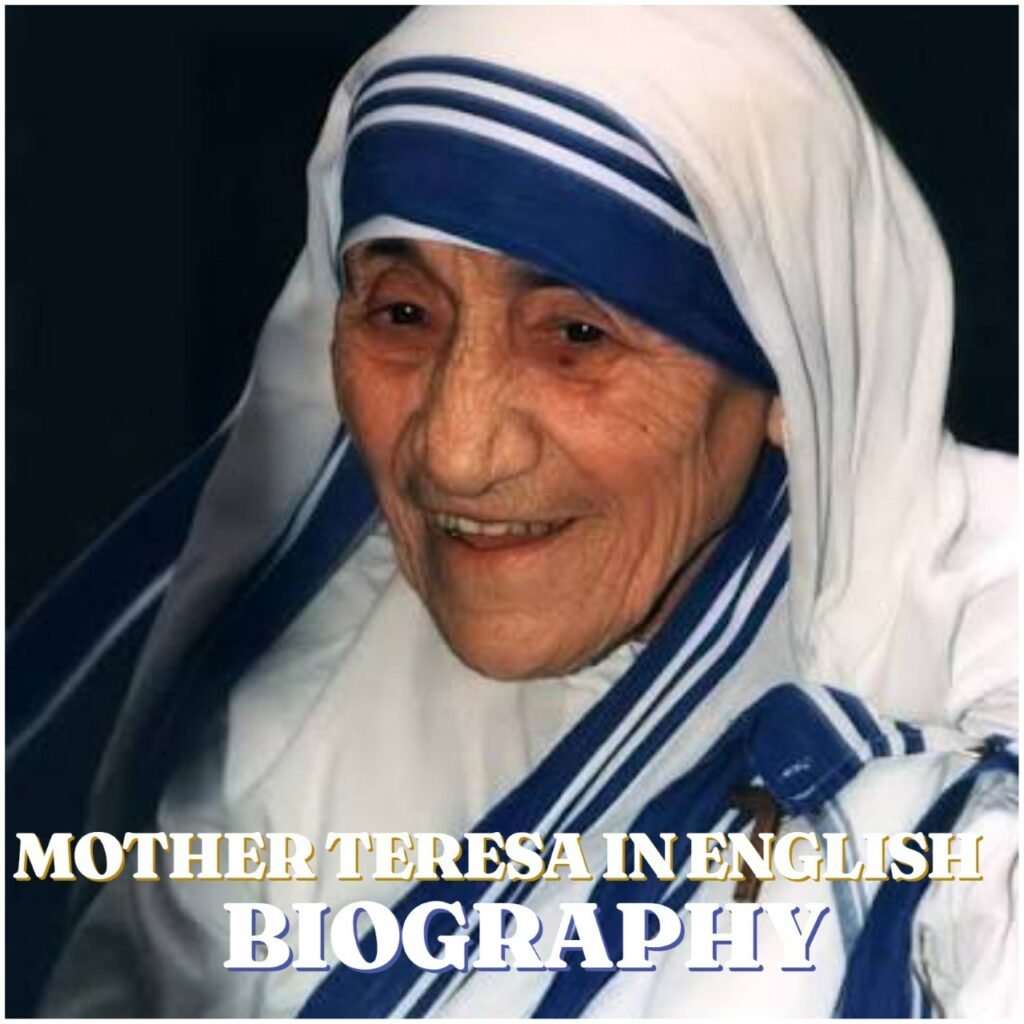
Mother Teresa was a relatively short woman, with commonly reported estimates placing her height at around 5 feet (152 cm), although there is no authoritative official record confirming an exact measurement. She was known for her distinctive appearance, usually wearing the traditional white sari with a blue border associated with the Missionaries of Charity. She had a slender build, dark hair that became grey with age, and a recognisable face marked by a gentle but serious expression. Her simple appearance reflected the modest lifestyle she maintained throughout her religious and humanitarian career.
Mother Teresa Net Worth
Mother Teresa’s personal net worth at the time of her death in 1997 is not reliably documented. Unlike a businessperson or entertainer, she did not build a personal fortune through salaries, investments or commercial ventures. She lived under the religious vows of the Missionaries of Charity, including a commitment to poverty, and dedicated the resources associated with her public work to charitable activities. Therefore, widely circulated figures claiming that Mother Teresa personally possessed more than $100 million should be treated with caution because they often confuse the finances of her charitable organisation with her personal wealth.
Mother Teresa did, however, become associated with substantial charitable donations through the Missionaries of Charity, the organisation she founded in 1950. She received the Nobel Peace Prize in 1979, and the prize carried a financial award; she requested that the money associated with the award be used to help poor people rather than for her personal benefit. This is one reason it would be misleading to calculate her net worth from the donations and charitable funds raised through her humanitarian work.
For a biography, a reasonable conclusion is that Mother Teresa’s personal net worth was effectively modest or unquantifiable rather than a confirmed multimillion-dollar fortune. The financial assets belonging to organisations connected with her work should not be presented as her personal wealth. Publicly available records for some Mother Teresa-related charitable organisations should similarly not be interpreted as evidence of her personal wealth because charitable organisation finances and an individual’s personal assets are separate matters.
Mother Teresa’s Legacy
Mother Teresa left behind a powerful humanitarian legacy centred on serving people living in poverty, illness and abandonment. Through the Missionaries of Charity, which she founded in Kolkata in 1950, she established a worldwide network dedicated to caring for vulnerable people. Her work brought international attention to the needs of people who were often overlooked by society and helped make compassion and service central themes of her public identity.
Her influence was recognised internationally during her lifetime, most notably when she received the Nobel Peace Prize in 1979 for her humanitarian work. She also received numerous other honours, including India’s Bharat Ratna, the country’s highest civilian award, in 1980. Her simple lifestyle, religious devotion and commitment to the poor made her one of the most recognisable Catholic figures of the modern era, while her work also generated debate and criticism over aspects of her approach to poverty, medical care and religious beliefs.
Mother Teresa’s legacy continued after her death on September 5, 1997. She was beatified in 2003 and canonised by Pope Francis on September 4, 2016, becoming Saint Teresa of Calcutta. The Missionaries of Charity continues its charitable activities in countries around the world, while her life remains the subject of books, documentaries, academic discussions and religious reflection. For many people, Mother Teresa continues to represent selflessness, compassion and the belief that helping vulnerable people can make a lasting difference.
Conclusion
Mother Teresa remains one of the most influential humanitarian and religious figures of the 20th century. From her early life as Anjezë Gonxhe Bojaxhiu in Skopje to her decades of service among poor and vulnerable communities in India, her life was defined by faith, compassion and dedication to others. Through the Missionaries of Charity, the Nobel Peace Prize and her eventual canonisation as Saint Teresa of Calcutta, she established a legacy that continues to attract worldwide attention. Although aspects of her work and beliefs remain subjects of debate, her commitment to serving disadvantaged people and her influence on global humanitarianism have ensured that her name remains an important part of modern history.
Frequently Asked Questions About Mother Teresa
Who was Mother Teresa?
Mother Teresa, born Anjezë Gonxhe Bojaxhiu, was an Albanian-Indian Catholic nun and humanitarian who dedicated her life to helping poor, sick, homeless and abandoned people. She founded the Missionaries of Charity in Kolkata in 1950.
When and where was Mother Teresa born?
Mother Teresa was born on August 26, 1910, in Skopje, then part of the Ottoman Empire and now the capital of North Macedonia.
What was Mother Teresa’s real name?
Her birth name was Anjezë Gonxhe Bojaxhiu. After joining the Sisters of Loreto, she adopted the religious name Sister Mary Teresa.
How old was Mother Teresa when she died?
Mother Teresa was 87 years old when she died on September 5, 1997, in Kolkata, India.
What was Mother Teresa’s religion?
Mother Teresa was a Roman Catholic and devoted her entire adult life to religious service and humanitarian work.
What was Mother Teresa’s tribe or ethnicity?
Mother Teresa was Albanian by ethnicity. She was born in Skopje and came from an Albanian Catholic family.
Did Mother Teresa have a husband or fiancé?
No. Mother Teresa never married and did not have a husband or fiancé. She chose a religious life and dedicated herself to serving humanity.
Did Mother Teresa have children?
No, Mother Teresa did not have biological children. She devoted her life to religious service and caring for vulnerable people through the Missionaries of Charity.
What did Mother Teresa do for a living?
Mother Teresa was a Catholic nun, teacher, missionary and humanitarian. She initially worked as a teacher before dedicating herself fully to serving people living in poverty.
When did Mother Teresa found the Missionaries of Charity?
Mother Teresa founded the Missionaries of Charity in 1950 in Kolkata, India. The organisation was established to serve people experiencing extreme poverty and other vulnerable groups.
Why was Mother Teresa famous?
Mother Teresa became famous for her humanitarian work among poor, sick, homeless and abandoned people. Her international recognition increased after she received the Nobel Peace Prize in 1979.
Did Mother Teresa win the Nobel Peace Prize?
Yes. Mother Teresa received the Nobel Peace Prize in 1979 in recognition of her humanitarian work.
What was Mother Teresa’s cause of death?
Mother Teresa died from heart failure on September 5, 1997. She had experienced serious health problems during the later years of her life.
Where is Mother Teresa buried?
Mother Teresa is buried at the Mother House of the Missionaries of Charity in Kolkata, India, which remains an important place of remembrance.
When was Mother Teresa canonised?
Mother Teresa was canonised by Pope Francis on September 4, 2016, officially becoming Saint Teresa of Calcutta.
What was Mother Teresa’s net worth?
There is no reliable official figure for Mother Teresa’s personal net worth. She lived a life of religious poverty, and money associated with the Missionaries of Charity or charitable donations should not be confused with her personal wealth.
What is Mother Teresa’s legacy?
Mother Teresa’s legacy is primarily associated with compassion, religious devotion and humanitarian service. Through the Missionaries of Charity, her work continues to influence charitable activities around the world.
Why is Mother Teresa still remembered today?
Mother Teresa is still remembered because of her lifelong commitment to serving disadvantaged people, her Nobel Peace Prize, the worldwide expansion of the Missionaries of Charity and her canonisation as a Catholic saint in 2016.