
Introduction
A. P. J. Abdul Kalam, whose full name was Avul Pakir Jainulabdeen Abdul Kalam, was one of the most respected scientists, educators and statesmen in modern Indian history. Born on October 15, 1931, in Rameswaram, Tamil Nadu, he rose from a modest family background to become an important figure in India’s space and defence programmes before serving as the country’s 11th President from 2002 to 2007. His remarkable journey from a small coastal town to the highest constitutional office in India made him an enduring symbol of determination, education and national service.
Kalam made major contributions to India’s aerospace and defence development through his work with the Indian Space Research Organisation (ISRO) and the Defence Research and Development Organisation (DRDO). He was closely associated with India’s satellite launch programme and guided-missile development, achievements that earned him the popular title “Missile Man of India.” Beyond science and technology, Kalam became widely admired for his simple lifestyle, humility and strong commitment to young people. His ability to communicate complex ideas in an inspiring way helped make science and education accessible to millions of Indians.
After completing his presidential term, Kalam continued teaching, writing and interacting with students across India. He authored influential books including Wings of Fire, India 2020 and Ignited Minds, using his experiences to encourage young people to dream boldly and contribute to India’s development. He died on July 27, 2015, after collapsing while delivering a lecture at the Indian Institute of Management Shillong. Even years after his death, A. P. J. Abdul Kalam’s scientific achievements, public service, books and message to young people continue to shape his legacy as one of India’s most beloved public figures.
Early Life of A. P. J. Abdul Kalam
Avul Pakir Jainulabdeen Abdul Kalam was born on October 15, 1931, in Rameswaram, a small island town in the Ramanathapuram district of present-day Tamil Nadu, India. He was born into a modest Tamil Muslim family to Jainulabdeen Marakayar, who worked as a boat owner and imam of a local mosque, and Ashiamma, who was a homemaker. Kalam grew up in a simple household alongside his siblings, and his childhood was shaped by strong family values, discipline, faith, compassion and a respect for education. His family’s limited financial circumstances taught him the importance of hard work from an early age.
As a young boy, Kalam developed a strong interest in learning, mathematics and science. He attended Schwartz Higher Secondary School in Ramanathapuram, where his teachers encouraged his curiosity and helped strengthen his interest in science. Because his family was not wealthy, Kalam also took on responsibilities while growing up. One of the well-known accounts of his childhood is that he helped distribute newspapers in Rameswaram to contribute to his family’s income. These early experiences helped develop the determination and work ethic that later became important characteristics of his professional life.
After completing his schooling, Kalam moved to Tiruchirappalli, where he studied physics at Saint Joseph’s College and graduated in 1954. He later developed a stronger interest in aviation and engineering and enrolled at the Madras Institute of Technology to study aeronautical engineering. His education at the institute was an important turning point because it gave him the technical foundation that would eventually lead him into India’s aerospace and defence programmes. Although his early life was marked by financial limitations, Kalam’s dedication to education enabled him to build a career that would ultimately take him from engineering and scientific research to the presidency of India.
Education of A. P. J. Abdul Kalam
A. P. J. Abdul Kalam began his formal education in Rameswaram before attending Schwartz Higher Secondary School in Ramanathapuram. During his school years, he developed a particular interest in mathematics and science, subjects that later influenced his decision to pursue a technical career. His teachers recognized his curiosity and encouraged him to work hard and remain focused on his studies. Although he grew up in a financially modest household, Kalam remained committed to education and understood from an early age that academic knowledge could help him achieve his ambitions.
After completing his schooling, Kalam moved to Tiruchirappalli to attend Saint Joseph’s College, then affiliated with the University of Madras. He studied physics and graduated with a bachelor’s degree in 1954. However, his growing fascination with flight and aircraft made him reconsider his career direction. Rather than continuing solely in physics, he decided to pursue engineering so that he could develop the technical skills needed to work in the emerging aviation and aerospace fields.
Kalam subsequently joined the Madras Institute of Technology (MIT) in Chennai, where he studied aeronautical engineering. His time at MIT was particularly important to his professional development because he received practical exposure to aircraft design and engineering projects. After completing his studies, he began his professional career in India’s defence and aerospace sector, eventually working with organisations such as the Defence Research and Development Organisation (DRDO) and the Indian Space Research Organisation (ISRO). The education and technical training he received at MIT provided the foundation for his later contributions to India’s space and missile programmes.
Career of A. P. J. Abdul Kalam
A. P. J. Abdul Kalam began his professional career in the 1950s after completing his aeronautical engineering studies at the Madras Institute of Technology. He joined the Directorate of Technical Development and Production within India’s Ministry of Defence, where he worked as a scientist and became involved in the country’s early aerospace and defence research. He later joined the Indian Committee for Space Research, which subsequently became part of the Indian Space Research Organisation (ISRO). His work in India’s developing space programme gave him an opportunity to contribute to the country’s efforts to build indigenous launch technology.
One of the most important stages of Kalam’s scientific career came at ISRO, where he served as the project director of the Satellite Launch Vehicle-III (SLV-III) programme. Under his leadership, India successfully launched the Rohini satellite into near-Earth orbit in July 1980, marking an important achievement for the country’s space programme. Kalam later returned to the Defence Research and Development Organisation (DRDO), where he became closely associated with India’s Integrated Guided Missile Development Programme. His involvement in the development of missile systems such as Agni and Prithvi contributed significantly to India’s defence capabilities and earned him the popular title “Missile Man of India.”
Kalam’s career eventually expanded beyond scientific research into national policy and public service. He served as the Scientific Adviser to the Defence Minister and later became the Principal Scientific Adviser to the Government of India, helping shape national policies involving science, technology and strategic development. He was also closely associated with India’s nuclear programme and was involved in the country’s strategic technology efforts during the 1990s. In 2002, his reputation as a scientist and national figure led to his election as the 11th President of India. After completing his presidential term in 2007, Kalam returned to education, teaching and public speaking, visiting universities and institutions across India and continuing to inspire students until his death in 2015.
Cause of Death and Death of A. P. J. Abdul Kalam
A. P. J. Abdul Kalam died on July 27, 2015, at the age of 83 after collapsing while delivering a lecture at the Indian Institute of Management Shillong (IIM Shillong) in Meghalaya, India. He had been speaking to students about creating a better and more developed India when he suddenly became unwell and collapsed on stage. He was immediately taken to Bethany Hospital in Shillong, where doctors attempted to revive him, but he was pronounced dead at 7:45 p.m. The Government of India officially announced his death that same evening.
The cause of Kalam’s death was reported as cardiac arrest. His death was sudden and unexpected, and it occurred while he was doing one of the activities he had become particularly passionate about after leaving the presidency—teaching and interacting with young people. The official records describe his death as sudden and untimely, while the President of India’s records confirm that he lived from October 15, 1931, to July 27, 2015.
Following his death, India declared a seven-day period of state mourning from July 27 to August 2, 2015, as a mark of respect for the former president. Kalam was later given a state funeral with full military honours in Rameswaram, Tamil Nadu, on July 30, 2015. His final resting place became a site visited by admirers, students and members of the public, while tributes from Indian leaders highlighted his contributions as a scientist, teacher, author and former president.
Personal Life and Family of A. P. J. Abdul Kalam
A. P. J. Abdul Kalam was known for living a remarkably simple and private personal life. He never married and had no wife, children or fiancée. Throughout his lifetime, Kalam devoted much of his attention to science, public service, teaching, writing and encouraging young people. He was widely admired for his modest lifestyle, humility and disciplined habits, even after becoming President of India. Despite holding one of the country’s highest offices, he maintained a reputation for being approachable and more interested in education and national development than in personal wealth or luxury.
Kalam was born into a close-knit family in Rameswaram to Jainulabdeen Marakayar, his father, and Ashiamma, his mother. His father was involved in the local community and worked as a boat owner and imam, while his mother was a homemaker who was remembered by Kalam for her kindness and care for the family. Kalam grew up with several siblings, including his brothers Mohammed Muthu Meera Lebbai Maraikayar, Mustafa Kalam, Kasimu Mohammed, and Maraikayar, as well as his sisters Asim Zohra and Najma. His childhood experiences and the values taught by his parents strongly influenced his character and his lifelong emphasis on hard work, compassion and education.
Although Kalam never established a traditional family of his own, he often described his relationship with students as deeply meaningful and considered young people central to his life’s mission. He remained unmarried throughout his life and did not publicly identify a wife or fiancée. His later years were largely dedicated to teaching, writing, lectures and interactions with students across India. Kalam’s decision to devote himself to public service and education became an important part of his identity, and his legacy is often remembered not through a conventional family of his own, but through the millions of students and young people he inspired during and after his presidency.
A. P. J. Abdul Kalam Age, Religion, Tribe, Nationality, Height and Physical Appearance
A. P. J. Abdul Kalam’s Age
A. P. J. Abdul Kalam was born on October 15, 1931, in Rameswaram, Tamil Nadu, India, and died on July 27, 2015, at the age of 83. He remained professionally active well into his later years, continuing to teach, write books and interact with students after completing his five-year term as President of India. He died suddenly while delivering a lecture at the Indian Institute of Management Shillong.
A. P. J. Abdul Kalam’s Religion and Tribe
A. P. J. Abdul Kalam was a Muslim who was born into a Tamil Muslim family in Rameswaram. His father, Jainulabdeen, was an imam and played an important role in his spiritual upbringing. Kalam frequently spoke about religious harmony and recalled how his father maintained friendships with Hindu and Christian religious figures in Rameswaram. Regarding his tribe or ethnic background, Kalam is generally described as Tamil, rather than belonging to a tribal community. His family belonged to the Marakayar Muslim community, a coastal Muslim community historically associated with Tamil Nadu and Sri Lanka. Kalam himself strongly opposed discrimination based on caste, religion, language or community.
A. P. J. Abdul Kalam’s Nationality
Kalam was Indian by nationality and became one of India’s most prominent scientists and public servants. His professional career was closely connected to the development of India’s space and defence capabilities, particularly through his work with ISRO and DRDO. He later served as the 11th President of India from July 25, 2002, to July 25, 2007, becoming widely known as the “People’s President” because of his strong connection with students and ordinary citizens.
A. P. J. Abdul Kalam’s Height and Physical Appearance
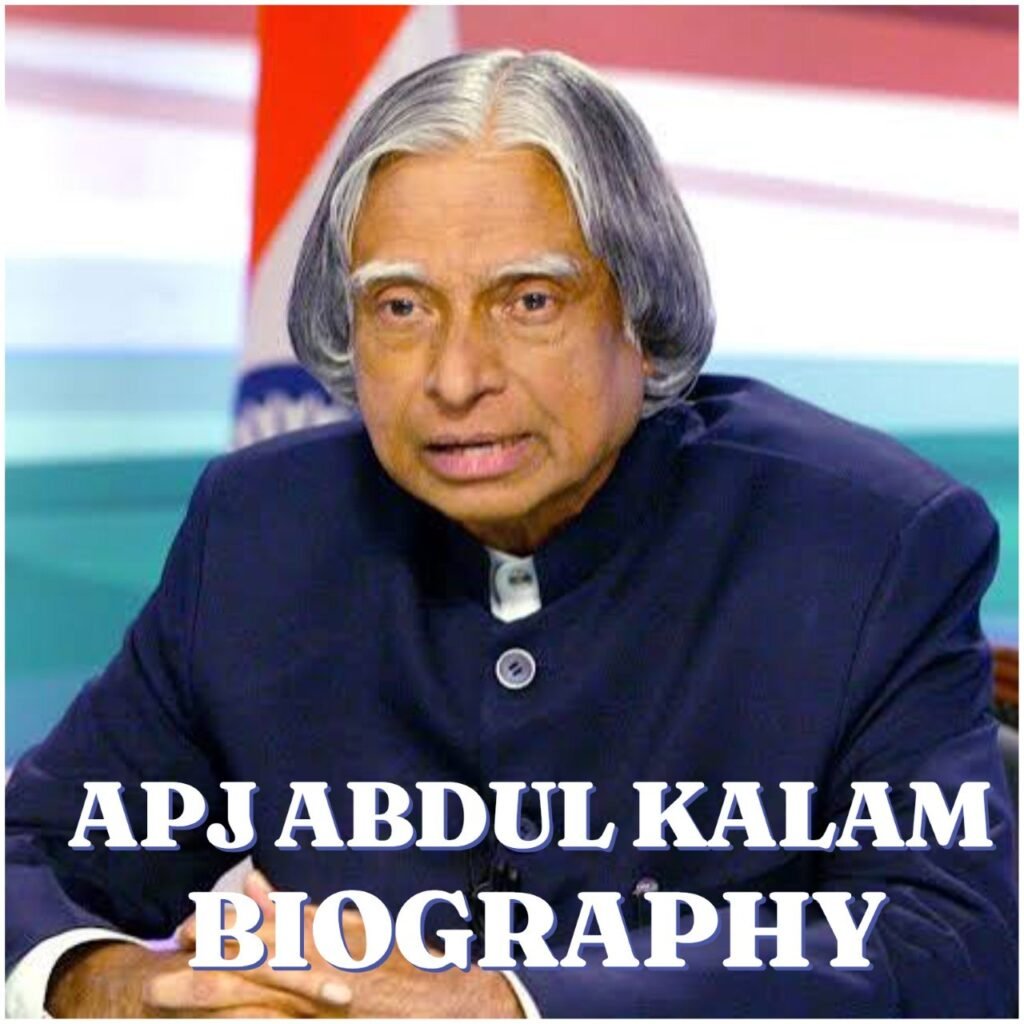
A. P. J. Abdul Kalam’s height is commonly reported by biographical sources as approximately 5 feet 4 inches to 5 feet 5 inches (163–165 cm), although his official presidential biography does not provide an exact height. He had a distinctive appearance, particularly his long, silver-gray hair, dark eyes and warm, recognizable smile. His simple appearance became closely associated with his public image as a scientist, teacher and statesman.
Kalam generally dressed modestly and formally, often appearing in suits during official engagements and in traditional Indian clothing on other occasions. His approachable appearance and gentle expression complemented his reputation for humility and simplicity. Even after becoming President of India, he retained the image of a down-to-earth scientist who preferred interacting directly with students and ordinary citizens rather than emphasizing the prestige of his position. His official materials also repeatedly highlight his humility, simplicity and warmth as defining characteristics of his personality.
A. P. J. Abdul Kalam Net Worth
A. P. J. Abdul Kalam’s exact net worth was never officially disclosed, and there is no reliable government record showing a specific figure for his personal wealth. Unlike many celebrities and business personalities, Kalam spent most of his career as a government scientist, scientific adviser, professor and later President of India. Official records emphasize his scientific achievements, public service and exceptionally simple lifestyle rather than accumulated personal wealth.
Because a verified net-worth figure is unavailable, online estimates should be treated cautiously. Kalam worked for decades in government scientific institutions including ISRO and DRDO, later served as Scientific Adviser to the Defence Minister and Principal Scientific Adviser to the Government of India, and served as President from 2002 to 2007. He also earned income from books, lectures and academic work, but his public profile was notably associated with modest living rather than luxury or major private investments.
Based on the nature of his career and the available information about his lifestyle, a reasonable unofficial estimate would place A. P. J. Abdul Kalam’s personal net worth at around ₹1 crore or less (approximately US$120,000 or less at current exchange rates), although this should not be presented as a confirmed figure. His true wealth may have been different because complete records of his savings, investments, royalties and other personal assets are not publicly available. What is much better documented is that Kalam was known for his simplicity and limited personal possessions, making his intellectual contributions and public service far more significant to his legacy than his financial wealth.
Awards and Achievements of A. P. J. Abdul Kalam
A. P. J. Abdul Kalam received some of India’s highest civilian honours during his lifetime. He was awarded the Padma Bhushan in 1981, the Padma Vibhushan in 1990, and India’s highest civilian award, the Bharat Ratna, in 1997. These honours recognized his contributions to science, engineering, public service and India’s national development.
Kalam’s achievements also included his important role in India’s space and missile programmes. Through his work with ISRO, he contributed to the development of India’s indigenous launch capabilities, while his work with DRDO helped advance the country’s guided-missile programme. He was also associated with India’s strategic technology and national defence efforts, making him an important figure in the country’s scientific history.
Beyond government awards, Kalam received numerous honorary doctorates and international recognition for his contributions to science, education and public service. His achievements were not limited to laboratories and government institutions because he also became a highly influential author and educator. His books and lectures allowed him to reach millions of students and ordinary citizens, further strengthening his reputation as a national role model.
Books Written by A. P. J. Abdul Kalam
A. P. J. Abdul Kalam was a prolific author whose books focused on science, education, leadership, national development and the importance of young people. One of his most famous works is Wings of Fire, his autobiography, which describes his childhood, education, scientific career and journey toward becoming one of India’s most prominent public figures.
Other notable books associated with Kalam include India 2020, Ignited Minds, My Journey and Indomitable Spirit. Through these works, he discussed his vision for India’s development and encouraged young people to use education, scientific knowledge and creativity to improve their communities and country.
His books became particularly influential among students because they combined his personal experiences with practical messages about ambition, discipline and national service. Kalam’s writing helped extend his influence beyond his scientific and political career, ensuring that his ideas could continue reaching readers long after his death.
Legacy of A. P. J. Abdul Kalam
A. P. J. Abdul Kalam’s legacy is deeply connected to India’s scientific and technological development. His work with ISRO and DRDO contributed to important advances in India’s space and missile programmes, particularly the SLV-III launch vehicle and the country’s guided-missile development. His contributions to India’s strategic and defence capabilities earned him the title “Missile Man of India.” Beyond individual projects, Kalam became a symbol of India’s growing ability to develop advanced scientific and technological capabilities independently.
His legacy also extends to his five-year presidency and his close relationship with India’s young population. As the 11th President of India from 2002 to 2007, he became popularly known as the “People’s President” because of his approachable personality and frequent interactions with students. After leaving office, he returned to teaching and continued visiting schools, colleges and universities across the country. Through books such as Wings of Fire, India 2020 and Ignited Minds, Kalam encouraged young people to pursue education, scientific thinking, innovation and ambitious goals for India’s future.
Kalam’s influence continued after his death on July 27, 2015, and he remains one of India’s most admired modern public figures. His birthday, October 15, is commemorated in various educational contexts, including as World Students’ Day by the United Nations-recognized observance associated with his birth anniversary. Numerous educational institutions, awards, scholarships, research initiatives and public projects have been named in his honour. More importantly, his message that young people should dream, learn and contribute to society continues to shape how generations of Indians remember him—not simply as a former president or scientist, but as an educator and national role model.
Conclusion
A. P. J. Abdul Kalam’s life remains an inspiring example of how determination, education, scientific knowledge and humility can transform an individual into a national icon. From his modest childhood in Rameswaram and his career as an aerospace scientist to his contributions to India’s space and missile programmes and his service as the country’s 11th President, Kalam dedicated his life to national development and public service. Even after leaving the presidency, he continued teaching, writing and inspiring young people until his death in 2015. His scientific achievements, simple lifestyle, books and lifelong commitment to education have ensured that his influence continues to reach new generations, making him one of the most respected and beloved figures in modern Indian history.
Frequently Asked Questions About A. P. J. Abdul Kalam
Who was A. P. J. Abdul Kalam?
A. P. J. Abdul Kalam was an Indian aerospace scientist, author, educator and statesman who served as the 11th President of India from 2002 to 2007. He played an important role in India’s space and missile development programmes and became popularly known as the “Missile Man of India.”
When and where was A. P. J. Abdul Kalam born?
A. P. J. Abdul Kalam was born on October 15, 1931, in Rameswaram, Tamil Nadu, India. He grew up in a modest family and developed an early interest in mathematics, science and aviation.
How old was A. P. J. Abdul Kalam when he died?
A. P. J. Abdul Kalam was 83 years old when he died on July 27, 2015. He collapsed while delivering a lecture at the Indian Institute of Management Shillong in Meghalaya.
What was the cause of A. P. J. Abdul Kalam’s death?
A. P. J. Abdul Kalam died after suffering a cardiac arrest while giving a lecture at the Indian Institute of Management Shillong on July 27, 2015. He was taken to Bethany Hospital in Shillong, where doctors attempted to save him.
What religion was A. P. J. Abdul Kalam?
A. P. J. Abdul Kalam was a Muslim. He was born into a Tamil Muslim family in Rameswaram and was raised with Islamic values. He was also widely respected for promoting religious harmony and peaceful coexistence among different communities.
What was A. P. J. Abdul Kalam’s nationality?
A. P. J. Abdul Kalam was Indian. He was born in Rameswaram, Tamil Nadu, and spent his career contributing to India’s scientific, technological and national development.
Was A. P. J. Abdul Kalam married?
No. A. P. J. Abdul Kalam never married and had no wife or children. He devoted much of his life to science, education, public service, writing and mentoring young people.
Did A. P. J. Abdul Kalam have a wife or fiancée?
No reliable biographical record identifies a wife or fiancée of A. P. J. Abdul Kalam. He remained unmarried throughout his life and did not have children.
What was A. P. J. Abdul Kalam’s profession?
A. P. J. Abdul Kalam was an aerospace scientist, engineer, author, professor and statesman. He worked with organisations including ISRO and DRDO before becoming President of India.
Why is A. P. J. Abdul Kalam called the Missile Man of India?
Kalam earned the nickname “Missile Man of India” because of his major involvement in India’s guided-missile development programme. He played an important role in the development and operationalisation of missile systems including Agni and Prithvi.
When did A. P. J. Abdul Kalam become President of India?
A. P. J. Abdul Kalam became the 11th President of India on July 25, 2002. He served one five-year term and left office on July 25, 2007.
Why was A. P. J. Abdul Kalam called the People’s President?
Kalam was popularly called the “People’s President” because of his approachable personality and strong connection with ordinary citizens, particularly students and young people. He frequently interacted with students and encouraged them to pursue education, science and innovation.
What books did A. P. J. Abdul Kalam write?
Some of A. P. J. Abdul Kalam’s best-known books include Wings of Fire, India 2020, Ignited Minds, My Journey, and Indomitable Spirit. His books often focused on education, science, national development and inspiring young people.
What awards did A. P. J. Abdul Kalam receive?
A. P. J. Abdul Kalam received several major honours, including the Padma Bhushan in 1981, Padma Vibhushan in 1990, and India’s highest civilian award, the Bharat Ratna, in 1997.
What was A. P. J. Abdul Kalam’s height?
A. P. J. Abdul Kalam’s height is commonly reported as approximately 5 feet 4 inches to 5 feet 5 inches (163–165 cm). However, his exact height is not prominently documented in official presidential records, so these figures should be treated as estimates.
What was A. P. J. Abdul Kalam’s net worth?
A. P. J. Abdul Kalam’s exact net worth is not publicly verified. He spent most of his career in government scientific and public-service positions and was known for his simple lifestyle. Online estimates vary considerably, so any specific net-worth figure should be regarded as unofficial rather than confirmed.
Where is A. P. J. Abdul Kalam buried?
A. P. J. Abdul Kalam was buried at Pei Karumbu, Rameswaram, Tamil Nadu, following a state funeral with full military honours on July 30, 2015. His memorial has since become an important place for people who wish to honour his life and contributions.
What is A. P. J. Abdul Kalam’s greatest legacy?
A. P. J. Abdul Kalam’s greatest legacy is his contribution to India’s scientific and technological development and his lifelong effort to inspire young people. He remains remembered as a scientist, former president, teacher and author who encouraged generations of students to dream ambitiously, acquire knowledge and contribute to society.