
Introduction
Rabindranath Tagore was one of the greatest writers, poets, philosophers, and cultural figures in Indian history. He was born on May 7, 1861, in Calcutta, India, into a prominent Bengali family. From a young age, Tagore showed a strong interest in literature, music, and the arts. His remarkable talent later made him one of the most respected literary figures in India and around the world.
Tagore wrote poems, short stories, novels, plays, essays, and songs. One of his most famous works is Gitanjali, a collection of poems that brought him international recognition. In 1913, he became the first non-European to receive the Nobel Prize in Literature. His writings often explored themes such as nature, spirituality, humanity, love, freedom, and the relationship between people and society.
Beyond literature, Tagore also made important contributions to education, music, painting, and social thought. He founded an educational institution at Shantiniketan, which later became Visva-Bharati University. His ideas and works continue to influence literature, education, and culture today. Rabindranath Tagore died on August 7, 1941, but his legacy remains important throughout India and the wider world.
Rabindranath Tagore Early Life
Rabindranath Tagore was born on May 7, 1861, in Calcutta, India, which is now known as Kolkata. He was the youngest of the children of Debendranath Tagore and Sarada Devi. His family was wealthy, educated, and deeply involved in Bengali culture, literature, religion, and social reform. Growing up in such an environment exposed Tagore to poetry, music, art, philosophy, and literature from an early age.
Tagore did not enjoy traditional classroom education and was mainly educated at home by private tutors. He studied subjects such as Bengali and English literature, history, science, mathematics, music, and art. He began writing poetry when he was still very young, and his family encouraged his creative interests. As a teenager, he published some of his early writings and gradually developed his own literary style.
In 1878, when he was about seventeen years old, Tagore travelled to England to study law. However, he did not complete his legal studies and returned to India. His time abroad exposed him to Western literature and culture, which influenced his intellectual development. After returning home, he became increasingly involved in writing, managing family affairs, and developing his ideas about literature, society, education, and human life.
Rabindranath Tagore Education
Rabindranath Tagore received most of his early education at home rather than in a traditional school. His father and private tutors introduced him to Bengali and English literature, history, science, mathematics, music, art, and philosophy. From an early age, Tagore showed a strong interest in reading and writing, especially poetry. His home environment also exposed him to different forms of art, culture, and intellectual discussion, which greatly influenced his later work.
In 1878, at the age of seventeen, Tagore travelled to England to continue his education. He initially studied at University College London with the intention of studying law. However, he did not complete his legal studies. During his time in England, he became familiar with Western literature, music, and culture. These experiences broadened his understanding of the world and influenced his development as a writer and thinker.
After returning to India, Tagore continued his education through independent reading, writing, observation, and interaction with scholars and artists rather than following a conventional academic path. His experiences later influenced his ideas about education. He believed that learning should encourage creativity, freedom, nature, and independent thinking. These ideas eventually led him to establish a school at Shantiniketan, which later developed into Visva-Bharati University.
Rabindranath Tagore Career and Achievements
Rabindranath Tagore began his literary career at a very young age. He wrote poems, short stories, essays, novels, plays, and songs, and his works became highly influential in Bengali literature. After returning from England, he became more actively involved in writing and managing his family’s estates. His experiences of rural Bengal influenced many of his short stories and poems, helping him develop a unique style that focused on nature, human emotions, society, and everyday life.
Tagore gained international recognition through his literary works, especially Gitanjali (Song Offerings). In 1913, he was awarded the Nobel Prize in Literature, becoming the first non-European to receive the prize in this category. His success brought Bengali literature to the attention of readers around the world. He also travelled widely and gave lectures, sharing his ideas about literature, education, culture, humanity, and the importance of understanding between different nations.
Apart from writing, Tagore made important contributions to education, music, art, and social thought. He established a school at Shantiniketan, where he promoted an educational system that encouraged creativity, learning in nature, and independent thinking. The school later developed into Visva-Bharati University. Tagore also composed thousands of songs and eventually became a painter. Through his many activities, he became one of the most influential cultural figures of modern India.
Why Was Rabindranath Tagore Famous?
Rabindranath Tagore became a famous and influential figure because of his exceptional talent in literature, music, art, education, and philosophy. His writings expressed deep ideas about nature, love, spirituality, freedom, humanity, and society. Through his poems, stories, novels, plays, and songs, he connected with people from different backgrounds and cultures.
Another important reason for his success was his ability to combine Indian traditions with ideas from other cultures. His work Gitanjali brought him international recognition and earned him the Nobel Prize in Literature in 1913. This achievement made him the first non-European Nobel laureate in Literature and helped introduce Indian and Bengali literature to a wider international audience.
Tagore was also respected because of his contribution to education and society. He founded an educational institution at Shantiniketan, where he encouraged students to learn through creativity, nature, and independent thinking. His ideas, writings, music, and educational work continue to influence people around the world, making him an important figure in Indian and global culture.
Rabindranath Tagore Personal Life and Family
Rabindranath Tagore was born into the famous Tagore family of Calcutta. His father was Debendranath Tagore, a philosopher and leader of the Brahmo Samaj, while his mother was Sarada Devi. Tagore was the youngest of their children. His family was deeply involved in literature, music, art, religion, and social reform, which strongly influenced his interests and development from childhood. His older brother Dwijendranath Tagore was a poet and philosopher, while his brother Jyotirindranath Tagore was a playwright, composer, and artist.
In 1883, Tagore married Mrinalini Devi, who was then known as Bhabatarini Devi. They had five children: Madhurilata (Bela), Rathindranath, Renuka (Rani), Mira, and Samindranath. Tagore was deeply affected by the deaths of his wife and some of his children at relatively young ages. These personal experiences of love, family, loss, and grief influenced some of his later poems, stories, and other writings.
Tagore also had close relationships with many writers, artists, thinkers, and members of his extended family. One important person in his early adult life was Kadambari Devi, the wife of his older brother Jyotirindranath. She was very close to Tagore and encouraged his literary interests. Her death in 1884 deeply affected him. Tagore never became engaged to a known fiancée after his marriage; his documented wife was Mrinalini Devi. His family relationships and personal experiences played an important role in shaping his creative work and worldview.
Rabindranath Tagore Age, Religion, Nationality, Height and Physical Appearance
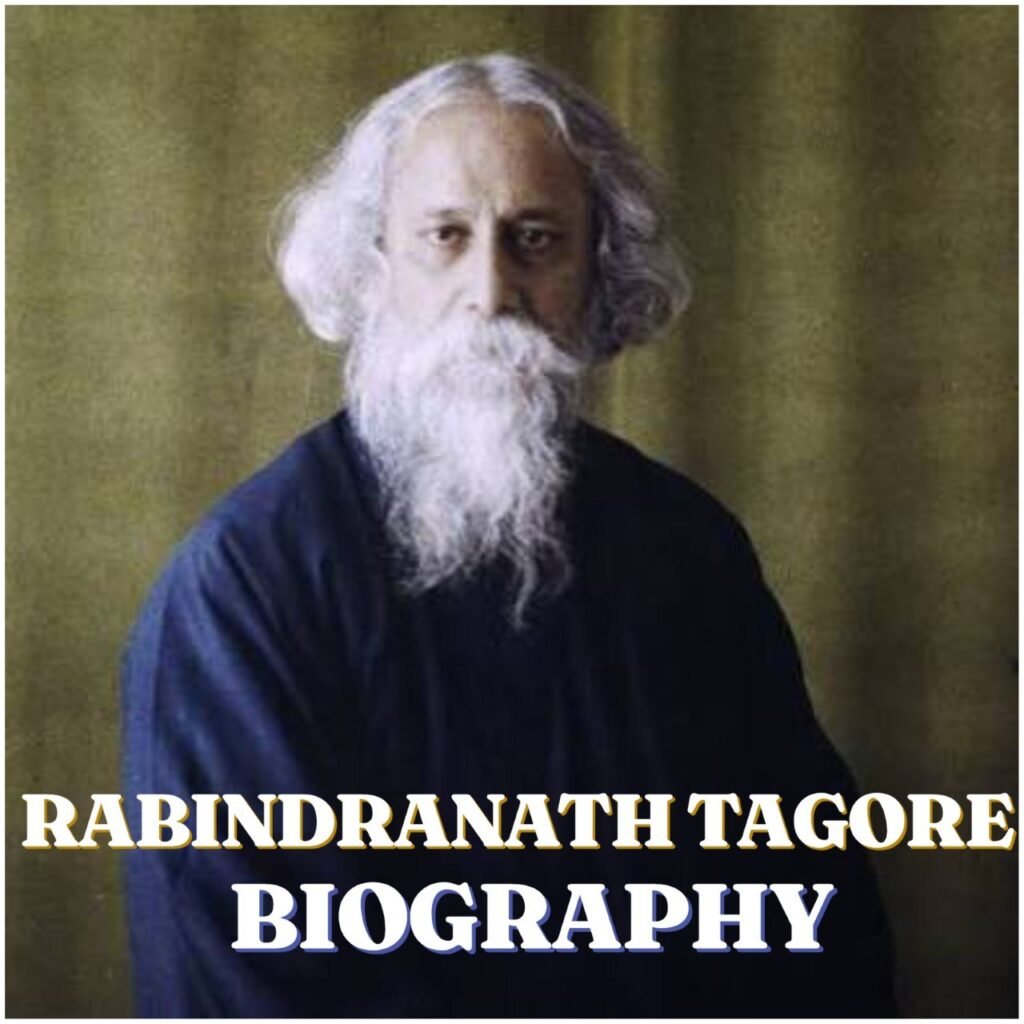
Rabindranath Tagore was born on May 7, 1861, and died on August 7, 1941, at the age of 80. He was Indian by nationality and was born in Calcutta, British India. Tagore was raised in the Brahmo Samaj tradition, a reform movement within Hindu society, although his spiritual and philosophical views were broad and focused strongly on universal humanity. He was known for his distinctive physical appearance, especially his long white beard, long hair, and traditional flowing robes, which became closely associated with his image. His exact height is not reliably documented in authoritative historical sources, so it is better not to give a specific height as fact. In his later years, his white hair and beard gave him a dignified and recognizable appearance that remains familiar in photographs and portraits of him.
Rabindranath Tagore Net Worth
Rabindranath Tagore’s exact net worth is not known. There is no reliable historical record that gives a complete figure for his personal wealth at the time of his death in 1941. Therefore, any specific amount sometimes reported online should be treated as an estimate rather than an established fact.
Tagore’s income came from several sources, including his literary work, publications, royalties, family property, and other activities. He was born into a wealthy and influential family, and he was involved in managing parts of his family’s estates. His financial position was therefore different from that of a writer who depended only on income from books and poetry.
Although a precise net-worth estimate cannot be established, Tagore was financially comfortable for much of his life and had access to significant family resources. His greatest legacy, however, was not his personal wealth but his contributions to literature, music, education, art, and philosophy. His Nobel Prize in Literature in 1913 also brought him international recognition and financial benefit, but the exact value of his total personal wealth remains uncertain.
Rabindranath Tagore Cause of Death and Death
Rabindranath Tagore spent the final years of his life in Calcutta, where his health gradually became weaker. He suffered from various health problems during his later years and underwent medical treatment and surgery. Despite his declining health, he continued to write and remain involved in intellectual and creative activities.
Rabindranath Tagore died on August 7, 1941, at his ancestral home in Jorasanko, Calcutta, at the age of 80. His death followed a prolonged period of illness and declining health. He had undergone an operation related to a urinary condition shortly before his death, but his overall health had already deteriorated significantly.
His death was a major loss to Indian literature and culture. However, his influence did not end with his death. His poems, stories, songs, paintings, educational ideas, and philosophical writings continue to be studied and appreciated around the world. His legacy remains an important part of Indian and Bengali cultural history.
Rabindranath Tagore Legacy
Rabindranath Tagore left a lasting legacy in literature, music, art, education, and philosophy. He wrote thousands of poems, songs, short stories, novels, plays, and essays that continue to be read and studied today. His famous work Gitanjali brought him international recognition and helped introduce Bengali literature to readers around the world. His writings continue to inspire people with their themes of nature, love, spirituality, freedom, and humanity.
Tagore also made a major contribution to education. He founded a school at Shantiniketan based on his belief that education should encourage creativity, freedom, nature, and independent thinking. The institution later became Visva-Bharati University. His educational ideas were different from the traditional system of memorization and emphasized learning through experience, culture, art, and interaction with nature.
His influence can also be seen in music and national culture. Tagore composed many songs, including “Jana Gana Mana,” which became the national anthem of India, and “Amar Sonar Bangla,” which became the national anthem of Bangladesh. Because of his achievements and lasting influence, Tagore is remembered as one of the most important cultural figures in Indian history. His ideas and creative works continue to influence generations long after his death in 1941.
Conclusion
Rabindranath Tagore was a remarkable Indian poet, writer, philosopher, artist, composer, and educator whose life and work had a lasting impact on India and the world. From his early interest in literature to becoming the first non-European Nobel Prize winner in Literature, he demonstrated exceptional creativity and intellectual ability. His contributions to literature, music, education, art, and human thought continue to be remembered and appreciated today. Although he died in 1941, his writings, songs, educational ideas, and philosophy remain influential, making him one of the most celebrated figures in Indian cultural history.
Frequently Asked Questions About Rabindranath Tagore
Who was Rabindranath Tagore?
Rabindranath Tagore was an Indian poet, writer, philosopher, composer, artist, and educator. He is one of the most influential figures in Indian literature and culture.
When and where was Rabindranath Tagore born?
Rabindranath Tagore was born on May 7, 1861, in Calcutta (now Kolkata), India.
When did Rabindranath Tagore die?
Rabindranath Tagore died on August 7, 1941, in Calcutta at the age of 80.
What was Rabindranath Tagore famous for?
Tagore was famous for his poetry, novels, short stories, songs, plays, paintings, and educational ideas. He is also famous for winning the Nobel Prize in Literature in 1913.
Which book made Rabindranath Tagore famous internationally?
His collection of poems Gitanjali (Song Offerings) played a major role in bringing him international recognition and contributed to his winning the Nobel Prize in Literature.
Did Rabindranath Tagore win the Nobel Prize?
Yes. Rabindranath Tagore won the Nobel Prize in Literature in 1913. He was the first non-European Nobel laureate in Literature.
What did Rabindranath Tagore contribute to education?
Tagore founded a school at Shantiniketan, where he promoted creative learning, education in nature, independent thinking, and cultural development. The institution later became Visva-Bharati University.
Who was Rabindranath Tagore’s wife?
Tagore married Mrinalini Devi in 1883. They had five children: Madhurilata, Rathindranath, Renuka, Mira, and Samindranath.
What was Rabindranath Tagore’s religion?
Tagore was raised in the Brahmo Samaj tradition, a reform movement associated with Hindu society. His personal philosophy emphasized spirituality, universal humanity, and harmony between people.
What are Rabindranath Tagore’s most famous songs?
Among his most famous songs are “Jana Gana Mana,” which became India’s national anthem, and “Amar Sonar Bangla,” which became Bangladesh’s national anthem.
What was Rabindranath Tagore’s net worth?
There is no reliable historical record of Tagore’s exact net worth. He came from a wealthy family and had income from his literary work and family properties, but a precise modern net-worth figure cannot be established.
Why is Rabindranath Tagore important today?
Tagore remains important because of his lasting contributions to literature, music, education, art, and philosophy. His works continue to be studied and translated around the world, and his songs remain part of the national identity of India and Bangladesh.