
Introduction
Subhas Chandra Bose, popularly known as Netaji, was one of the most influential and controversial figures in India’s struggle for independence from British rule. Born on January 23, 1897, in Cuttack, Odisha, Bose was known for his intelligence, strong leadership, determination, and uncompromising belief in Indian independence. Unlike leaders who primarily supported constitutional or nonviolent methods, Bose believed that achieving freedom required a more forceful and organised resistance. His dedication to the cause made him one of the most recognised leaders of the Indian independence movement.
Bose began his public and political career after giving up a promising position in the Indian Civil Service, choosing instead to participate in India’s freedom struggle. He became an important leader within the Indian National Congress and eventually served as its president. However, ideological and strategic disagreements with other senior Congress leaders, particularly over the methods and pace of the independence movement, led him to pursue a separate political path. He later established the All India Forward Bloc and continued his efforts to mobilise Indians against British colonial rule.
Subhas Chandra Bose became internationally known during the Second World War after taking leadership of the Indian National Army (INA) and establishing the Provisional Government of Free India, also known as Azad Hind. His powerful speeches, military organisation, and famous appeals for sacrifice inspired many Indians at home and abroad. Although his reported death in a plane crash in 1945 has remained surrounded by controversy and speculation, his influence has continued long after his disappearance. Today, Bose is remembered as a symbol of courage, patriotism, sacrifice, and determination, while his life and political strategies continue to attract historical interest.
Early Life of Subhas Chandra Bose
Subhas Chandra Bose was born on January 23, 1897, in Cuttack, in present-day Odisha, India, which was then part of the Bengal Presidency under British rule. He was the ninth child and sixth son of Janakinath Bose, a respected lawyer and public figure, and Prabhavati Devi, who came from a prominent Bengali family. Bose grew up in a large and well-educated household where discipline, education, and traditional values were strongly emphasised. His family’s social position gave him access to good educational opportunities, while his parents played an important role in developing his serious and disciplined character.
Bose showed considerable academic ability from a young age. He initially attended the Protestant European School in Cuttack, now known as Stewart School, before enrolling at Ravenshaw Collegiate School, one of the leading educational institutions in the region. During his teenage years, he became increasingly interested in philosophy, spirituality, Indian culture, and the question of India’s position under British colonial rule. The writings and teachings of Swami Vivekananda and Ramakrishna Paramahansa had a particularly strong influence on his thinking. These influences helped develop his ideas about self-discipline, service, sacrifice, patriotism, and the responsibility of individuals toward society.
After completing his schooling, Bose moved to Calcutta, where he studied at Presidency College and later Scottish Church College at the University of Calcutta. His university years coincided with growing nationalist activity across India, and his interest in the independence movement became increasingly strong. In 1919, he travelled to England to prepare for the Indian Civil Service (ICS) examination, one of the most prestigious career paths available under British rule. Bose passed the examination in 1920 and ranked fourth among the successful candidates. However, he eventually concluded that working for the British administration was incompatible with his commitment to Indian independence. He resigned from the civil service in 1921, returned to India, and began dedicating himself fully to the struggle for freedom, marking the beginning of his transformation into one of India’s most prominent nationalist leaders.
Education of Subhas Chandra Bose
Subhas Chandra Bose received his early education in Cuttack, where he attended the Protestant European School, now known as Stewart School. He later enrolled at Ravenshaw Collegiate School, one of the most respected educational institutions in Odisha. Bose was an outstanding student and developed a strong interest in philosophy, history, literature, and Indian culture. His education during these formative years helped develop the intellectual discipline and independent thinking that later became important characteristics of his political career. He was also deeply influenced by the writings and teachings of Swami Vivekananda, whose ideas about character, discipline, service, and national regeneration had a lasting impact on him.
After completing his schooling, Bose moved to Calcutta to pursue higher education. He initially enrolled at Presidency College, where he studied under the University of Calcutta. His time at the college coincided with increasing nationalist sentiment among Indian students. Bose became increasingly conscious of British colonial rule and developed strong nationalist views. Following a controversial incident involving a British professor, he was expelled from Presidency College in 1916. He subsequently continued his education at Scottish Church College, where he completed his bachelor’s degree in philosophy in 1919. His study of philosophy further strengthened his interest in ethics, spirituality, society, and the principles that would later shape his political outlook.
In 1919, Bose travelled to England to prepare for the Indian Civil Service (ICS) examination, following his family’s wishes that he pursue a prestigious administrative career. He enrolled at Fitzwilliam Hall, Cambridge, and studied for the competitive examination. Despite having relatively little time to prepare, Bose performed exceptionally well and passed the ICS examination in 1920, ranking fourth among the successful candidates. His achievement demonstrated his considerable academic ability and opened the door to a secure career within the British administration. However, Bose increasingly felt that serving the colonial government was incompatible with his commitment to India’s independence. He therefore resigned from the ICS in 1921, returned to India, and chose the uncertain path of nationalist politics instead of a prestigious government career.
Career of Subhas Chandra Bose
Subhas Chandra Bose began his political career in the early 1920s after returning to India and resigning from the Indian Civil Service. He joined the Indian National Congress and came under the influence of Chittaranjan Das, an important nationalist leader from Bengal. Bose worked closely with Das and became involved in political organisation, journalism, and the nationalist movement. He served as the chief executive officer of the Calcutta Corporation when Das was mayor and quickly gained a reputation as an energetic young leader. His political activities brought him into conflict with the British authorities, and he was imprisoned several times for his involvement in the independence movement.
During the 1930s, Bose emerged as one of the more radical and influential figures within the Congress. He supported complete independence from British rule and favoured stronger political mobilisation and industrial development. In 1938, he was elected president of the Indian National Congress at the Haripura session, where he presented an ambitious vision for India’s economic and political future. He was re-elected Congress president in 1939, but his increasingly significant differences with Mahatma Gandhi and other senior Congress leaders over strategy and leadership eventually led to his resignation. After leaving the Congress presidency, Bose founded the All India Forward Bloc in 1939 with the aim of bringing together more radical nationalist forces and intensifying the campaign for Indian independence.
During the Second World War, Bose took his struggle onto the international stage. He escaped British surveillance in India in 1941 and travelled through several countries in search of foreign support for India’s independence. He eventually reached Southeast Asia, where he took leadership of the Indian National Army (INA), also known as the Azad Hind Fauj. Under his leadership, the INA sought to fight British forces with support from Japan. In 1943, Bose proclaimed the Provisional Government of Free India (Azad Hind) and became its head. He encouraged Indians to make sacrifices for independence and used powerful slogans such as “Give me blood, and I will give you freedom.” Although the INA’s military campaign ultimately failed as Japan and its allies were defeated in the war, Bose’s leadership made him a lasting symbol of militant resistance to British colonial rule.
Bose’s career ended under circumstances that remain historically debated. He was reportedly involved in a plane crash in Taiwan on August 18, 1945, while attempting to travel toward Japanese-held territory. Reports stated that he died from injuries sustained in the crash, but questions surrounding his disappearance generated decades of speculation and investigations. Despite the unresolved aspects of his final journey, his political career left a significant mark on India’s independence movement. His leadership of the INA, his opposition to British colonial rule, and his determination to secure independence through international alliances continue to make Subhas Chandra Bose an important and widely studied figure in modern Indian history.
Why Subhas Chandra Bose Is Trending in 2026
Subhas Chandra Bose has remained in the news in 2026 because renewed attention has focused on his reported death, his remains, and the preservation of objects associated with his life. In March 2026, the Supreme Court of India considered a petition seeking the return to India of mortal remains believed to be Bose’s and preserved at Renkoji Temple in Tokyo, Japan. Bose’s only daughter, Anita Bose Pfaff, appeared online and supported the petition. The court, however, was not inclined to entertain the plea and indicated that if the direct heir wanted the issue pursued legally, she should come forward herself. The petition was subsequently withdrawn with liberty to return with a fresh petition.
Bose’s historical belongings also generated attention in March 2026 after a controversy surrounding a cap associated with him at the Netaji Museum in Delhi’s Red Fort. An empty display case initially prompted concerns that the cap had gone missing. The Archaeological Survey of India later clarified that the item was in safe custody after having been taken for an exhibition in Port Blair. However, Bose’s grandnephew Chandra Kumar Bose subsequently questioned whether the cap that returned to the display was actually the original item. The dispute renewed public discussion about the preservation and authenticity of historical objects connected to Netaji.
The continuing interest in Bose during 2026 also reflects the unresolved public debate over his death and the location or authenticity of his remains. His daughter Anita Bose Pfaff has repeatedly expressed support for bringing the ashes believed to be her father’s back to India, while questions about the circumstances of his death have continued to attract historians, researchers, family members, and the public. These developments have ensured that, more than eight decades after his disappearance, Subhas Chandra Bose remains a prominent figure in India’s historical and public conversations.
Subhas Chandra Bose Cause of Death and Death
Subhas Chandra Bose was officially reported to have died on August 18, 1945, following a plane crash in Taihoku, now Taipei, Taiwan, which was then under Japanese control. According to accounts and investigations, Bose was travelling aboard a Japanese military aircraft when the plane crashed shortly after takeoff. He reportedly suffered severe burns and other injuries and was taken to a nearby military hospital, where he died later that day. He was reportedly 48 years old.
The circumstances surrounding Bose’s death have remained controversial for decades. Although several investigations concluded that he died from injuries sustained in the 1945 plane crash, some supporters and researchers have questioned whether he actually died in the accident. The uncertainty was partly fuelled by the absence of a universally accepted physical remains and conflicting accounts surrounding his final journey. Various theories claimed that Bose survived the crash and lived secretly under another identity, but none has been conclusively established.
The Government of India has historically recognised the plane-crash account, while investigations conducted after independence examined the available evidence. The Shah Nawaz Committee, the Khosla Commission, and later the Mukherjee Commission reached different conclusions about aspects of the case. The Mukherjee Commission did not accept that Bose died in the plane crash, but the Government of India rejected that conclusion. As a result, Bose’s reported death continues to attract historical debate, even though the officially accepted account remains that Subhas Chandra Bose died from injuries sustained in the plane crash in Taiwan on August 18, 1945.
Personal Life and Family of Subhas Chandra Bose
Subhas Chandra Bose was born into a large and respected Bengali family in Cuttack, Odisha. His father, Janakinath Bose, was a successful lawyer and a prominent figure in the local community, while his mother, Prabhavati Devi, was known for her strong religious and traditional values. Bose was one of several children in the family and grew up alongside his brothers and sisters. Among his siblings, Sarat Chandra Bose became particularly important in his life and was himself a prominent lawyer, politician, and nationalist leader. The two brothers shared a close relationship and remained connected through their political activities and commitment to India’s independence movement.
Although Bose devoted most of his adult life to politics and the struggle against British rule, he also had a private personal life that was largely kept away from the public. During his years in Europe, he developed a close relationship with Emilie Schenkl, an Austrian woman who worked with him as a secretary and assistant. The two are widely reported to have married privately in 1937, although details about their relationship remained largely undisclosed during Bose’s lifetime. Because Bose was deeply involved in India’s independence movement and spent long periods travelling or living under difficult circumstances, he had limited opportunity to maintain a conventional family life with Emilie.
Bose and Emilie Schenkl had one daughter, Anita Bose Pfaff, who was born in 1942 in Vienna. Anita later became a respected economist and academic in Germany and has spoken publicly about her father and his political legacy. Because Bose left Europe during the Second World War and later disappeared in 1945, Anita had very limited direct contact with him. Emilie and Anita subsequently lived in Austria and maintained their connection to Bose’s memory and legacy. Anita Bose Pfaff has remained one of the most prominent surviving members of Bose’s immediate family and has occasionally participated in discussions concerning his life, death, political ideas, and historical legacy.
Age, Religion, Nationality, Height and Physical Appearance of Subhas Chandra Bose
Subhas Chandra Bose was born on January 23, 1897, in Cuttack, Odisha, India. He was therefore 48 years old at the time of his reported death on August 18, 1945. Bose was Indian by nationality and belonged to a Bengali family. He was born into a Hindu family and was influenced by Indian spiritual and philosophical traditions, particularly the teachings associated with Swami Vivekananda and Ramakrishna Paramahansa. His religious outlook was closely connected with ideas of spirituality, discipline, patriotism, sacrifice, and service to the nation, although his political vision emphasised unity among Indians of different religious backgrounds.
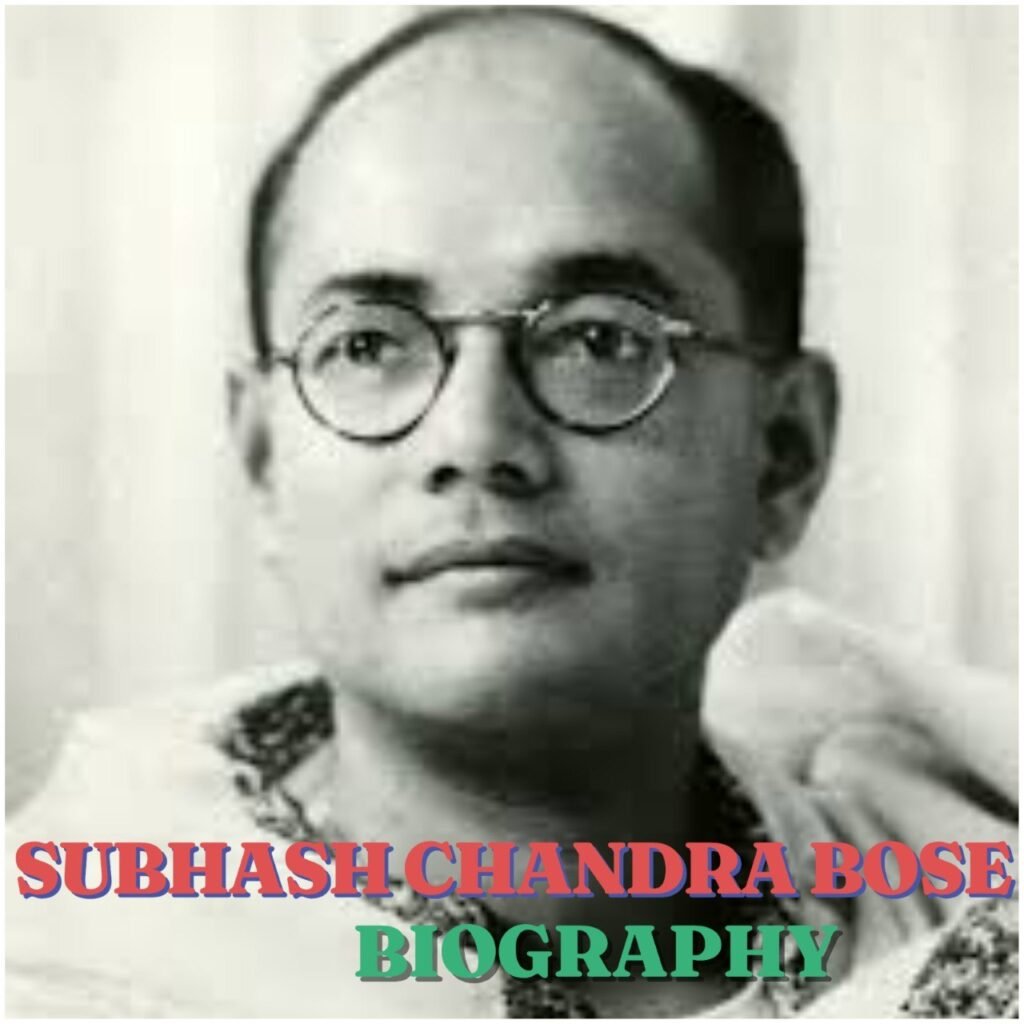
Bose was known for his distinctive appearance and commanding presence. Historical descriptions and photographs show him as a medium-to-tall, slim-built man with a serious expression, dark hair, and a characteristic moustache. He was frequently seen wearing round spectacles, traditional Indian clothing, or military-style uniforms during his leadership of the Indian National Army. His physical appearance became closely associated with his public image, particularly the military cap and uniform he wore while addressing INA soldiers and supporters. Reliable historical records do not establish a universally confirmed height for Bose, so specific height figures found on some websites should be treated cautiously rather than presented as fact.
Subhas Chandra Bose Net Worth
There is no reliable historical record of Subhas Chandra Bose’s personal net worth, and it would be misleading to give a precise modern figure. Bose was not a businessman or a professional whose wealth was accumulated through commercial activities. He came from a relatively prosperous family: his father, Janakinath Bose, was a successful lawyer and government pleader, and historical sources describe the family as wealthy enough to provide a good education for their fourteen children.
Before entering politics, Bose passed the highly competitive Indian Civil Service (ICS) examination in 1920, ranking fourth among successful candidates. Had he remained in the British administration, he could have earned a respectable and secure government salary. However, he resigned from the service in 1921 because he believed working for the colonial government conflicted with his commitment to India’s independence. Consequently, his later life was primarily devoted to political activism, imprisonment, organising the independence movement, and leading the Indian National Army rather than personal wealth creation.
For a modern biography, therefore, the most accurate estimate is that Subhas Chandra Bose’s personal net worth cannot be reliably calculated. Any websites claiming a specific figure in millions or crores should be treated as speculation unless they provide historical financial records to support the number. His family’s comfortable financial background should also not be confused with Bose’s personal net worth. His significance was not based on personal wealth but on his political leadership, sacrifice, and role in India’s independence struggle.
Legacy of Subhas Chandra Bose
Subhas Chandra Bose left behind one of the most enduring legacies of India’s independence movement. His determination to achieve complete independence from British rule, combined with his willingness to take unconventional political and military approaches, made him one of the most distinctive leaders of the period. His leadership of the Indian National Army (INA) and the establishment of the Provisional Government of Free India (Azad Hind) transformed him into a powerful symbol of resistance. His famous call, “Give me blood, and I will give you freedom,” continues to be associated with his emphasis on courage, sacrifice, and national commitment.
Bose’s legacy also extends beyond his military activities. He promoted the idea of a united India in which people from different religious and social backgrounds would work together for national independence. The INA brought together Indians from different communities and regions, while women also played important roles in the organisation, most notably through the Rani of Jhansi Regiment led by Captain Lakshmi Sahgal. Although the INA was ultimately defeated militarily during the Second World War, the trials of INA officers after the war generated considerable public sympathy in India and contributed to renewed nationalist sentiment against British rule.
Today, Subhas Chandra Bose remains a major historical figure whose life continues to be commemorated throughout India. His birthday, January 23, is officially observed as Parakram Diwas, or Day of Valour, in recognition of his courage and contribution to the freedom struggle. Museums, memorials, books, films, educational programmes, and public institutions continue to preserve his memory. At the same time, debates surrounding his political methods, relationship with other nationalist leaders, and reported death continue to attract historians and the public. More than eight decades after his disappearance, Bose’s name remains closely associated with patriotism, sacrifice, leadership, and the pursuit of Indian independence.
Conclusion
Subhas Chandra Bose remains one of the most remarkable and influential figures in the history of India’s independence movement. From his early academic achievements and decision to resign from the Indian Civil Service to his leadership of the Indian National Army and the Provisional Government of Free India, his life was defined by a strong commitment to ending British colonial rule. Although his reported death in 1945 continues to generate historical debate, his contribution to India’s freedom struggle remains an important part of the country’s history. His courage, determination, leadership, and willingness to sacrifice personal ambitions for his vision of an independent India have ensured that Netaji Subhas Chandra Bose continues to be remembered and respected by generations.
Frequently Asked Questions About Subhas Chandra Bose
Who was Subhas Chandra Bose?
Subhas Chandra Bose, popularly known as Netaji, was a prominent Indian nationalist leader and one of the major figures in India’s struggle for independence from British rule. He led the Indian National Army (INA) and established the Provisional Government of Free India, seeking to achieve India’s independence through armed resistance and international support.
When was Subhas Chandra Bose born?
Subhas Chandra Bose was born on January 23, 1897, in Cuttack, Odisha, India, which was then part of the Bengal Presidency under British rule.
When did Subhas Chandra Bose die?
Subhas Chandra Bose was officially reported to have died on August 18, 1945, following a plane crash in Taihoku, present-day Taipei, Taiwan. However, questions surrounding his disappearance and death have remained subjects of historical debate.
What was the cause of Subhas Chandra Bose’s death?
According to the officially accepted account, Bose suffered severe burns and other injuries in a Japanese military aircraft crash on August 18, 1945. He reportedly died later that day in a hospital in Taihoku.
How old was Subhas Chandra Bose when he died?
Subhas Chandra Bose was 48 years old when he was officially reported to have died in 1945.
Who was Subhas Chandra Bose’s wife?
Subhas Chandra Bose was widely reported to have married Emilie Schenkl, an Austrian woman who worked as his secretary and assistant in Europe. Their relationship was kept largely private, and historical accounts generally place their marriage in 1937.
Did Subhas Chandra Bose have children?
Yes. Subhas Chandra Bose and Emilie Schenkl had one daughter, Anita Bose Pfaff, who was born in Vienna in 1942. She later became an economist and academic in Germany.
What was Subhas Chandra Bose’s religion?
Subhas Chandra Bose was born into a Hindu family and was influenced by Indian spiritual and philosophical traditions. His political vision, however, emphasised unity among Indians regardless of religion or community.
What was Subhas Chandra Bose’s nationality?
Subhas Chandra Bose was Indian. He was born in Cuttack, in present-day Odisha, and dedicated his political career to India’s independence from British colonial rule.
What was Subhas Chandra Bose’s height?
There is no consistently verified historical record of Subhas Chandra Bose’s exact height. Some modern websites publish specific measurements, but these figures are not sufficiently supported by reliable historical documentation.
What was Subhas Chandra Bose’s net worth?
There is no reliable historical record establishing Subhas Chandra Bose’s personal net worth. He came from a financially comfortable family and briefly qualified for the Indian Civil Service, but he resigned from the service and devoted his life to India’s independence movement rather than building personal wealth.
Why is Subhas Chandra Bose famous?
Subhas Chandra Bose is famous for his leadership of the Indian National Army, his establishment of the Provisional Government of Free India, and his determined opposition to British colonial rule. His military and political activities made him one of the most recognisable leaders of India’s independence struggle.
What was Subhas Chandra Bose’s famous slogan?
One of Bose’s most famous slogans was “Give me blood, and I will give you freedom.” He also popularised “Jai Hind,” which became an enduring patriotic expression in India.
Why is Subhas Chandra Bose called Netaji?
Subhas Chandra Bose became widely known as “Netaji,” meaning “Respected Leader” or “Leader,” because of the admiration and loyalty he commanded among his supporters, particularly those associated with the Indian National Army.
Why is Subhas Chandra Bose trending in 2026?
Subhas Chandra Bose continues to attract attention in 2026 because of renewed public and historical discussions about his reported death, the remains believed to be preserved at Renkoji Temple in Japan, and the preservation and authenticity of historical objects associated with him. In March 2026, his daughter Anita Bose Pfaff supported a legal effort concerning the return of his remains to India, while a separate controversy involving a cap associated with Bose at the Red Fort Museum also generated public attention. These developments have kept Bose’s life, death and legacy prominent in contemporary discussions.