
Introduction
Indira Gandhi was one of the most powerful women in modern history. As India’s first female prime minister, she led the country through war, political unrest, economic changes and major national challenges. Her leadership made her a global figure, but her decisions also sparked debates that continue to this day.
Born into India’s famous Nehru family, Indira grew up surrounded by politics and the struggle for independence. Her father, Jawaharlal Nehru, became India’s first prime minister in 1947. However, Indira did not remain in his shadow. She built her own political career and became one of the most influential leaders in the country.
She served as prime minister from 1966 to 1977 and returned to office in 1980. During her time in power, India supported the creation of Bangladesh, expanded food production and carried out its first nuclear test. Yet her rule also included the controversial Emergency, which placed serious restrictions on democratic freedoms.
Her life ended on October 31, 1984, when two of her bodyguards assassinated her. More than four decades later, her story remains important. It reveals the achievements, challenges and dangers that can come with great political power.
Who Was Indira Gandhi?
Indira Gandhi was an Indian politician and stateswoman. She became the first woman to serve as India’s prime minister and remains the country’s only female holder of the office to date.
She was born Indira Priyadarshini Nehru on November 19, 1917, in Allahabad, now known as Prayagraj, Uttar Pradesh, India. Her parents were Jawaharlal Nehru and Kamala Nehru, both of whom played important roles in India’s independence movement.
Indira became known for her strong personality, political confidence and firm leadership. She was admired by supporters for her courage and influence. However, critics questioned her approach to democracy, especially during the Emergency.
Her surname sometimes causes confusion. Although she shared the Gandhi name, she was not related to Mahatma Gandhi. She adopted the surname through her marriage to Feroze Gandhi.
Early Life and Family Background
Indira was born into one of India’s most prominent political families. Her grandfather, Motilal Nehru, was a respected lawyer and political leader. Her father, Jawaharlal Nehru, became a central figure in the independence movement and later led the country as prime minister.
Her mother, Kamala Nehru, also supported India’s freedom struggle. She took part in political activities despite facing health problems. Because both parents were deeply involved in public life, Indira spent much of her childhood around political discussions and national events.
However, her childhood was not always easy. British authorities frequently imprisoned her father, while her mother’s poor health meant that the family often faced difficult periods. These experiences exposed Indira to the personal sacrifices made by those fighting for India’s freedom.
Even as a child, she wanted to contribute to the independence movement. She helped organise groups of young volunteers, including the Vanar Sena, which supported Congress activities. During the Quit India Movement in 1942, she was arrested and spent several months in prison.
These early experiences helped shape her interest in politics and prepared her for a life in public service.
Education and Academic Journey
Indira received her education in several schools and institutions in India and abroad. Her studies were often interrupted by family circumstances, her mother’s illness and her father’s political activities.
She attended schools in India, Switzerland and England. She also studied at Visva-Bharati University in Santiniketan, founded by the famous poet and philosopher Rabindranath Tagore.
In 1937, she entered Somerville College at the University of Oxford, where she studied modern history. However, health problems interrupted her education, and she left without completing a degree.
Although she did not graduate from Oxford, her education extended beyond the classroom. Her travels, reading and exposure to international politics helped develop her understanding of government and world affairs.
Marriage, Husband and Children
Indira married Feroze Gandhi on March 26, 1942. He was a journalist and politician who later became a member of India’s Parliament. Despite sharing the Gandhi surname, Feroze was not related to Mahatma Gandhi.
Their marriage took place during India’s struggle for independence. Both were involved in political activities, and Indira was arrested later that year during the Quit India Movement.
The couple had two sons, Rajiv Gandhi and Sanjay Gandhi. Their marriage later faced difficulties, and they spent much of their later lives apart. Feroze died in 1960.
Both sons eventually became involved in Indian politics. Sanjay became an influential figure during his mother’s government, especially during the Emergency. Rajiv initially worked as a commercial pilot but entered politics after Sanjay died in 1980. He later became prime minister following his mother’s assassination.
Political Career: How Indira Gandhi Became Prime Minister
Indira’s political journey began long before she became prime minister. Her family introduced her to the Indian National Congress and the independence movement, but she gradually developed her own role within the party.
After India gained independence in 1947, she helped manage her father’s official residence and accompanied him on several visits. These experiences brought her into contact with political leaders, diplomats and international visitors.
In 1955, she joined the Congress Working Committee, one of the party’s important decision-making bodies. In 1959, she became president of the Indian National Congress.
After her father died in May 1964, Indira entered the Rajya Sabha, India’s upper house of Parliament. She later joined Prime Minister Lal Bahadur Shastri’s government as Minister of Information and Broadcasting.
When Shastri died suddenly in January 1966, the Congress Party needed a new leader. Indira contested the party’s leadership election against Morarji Desai and won.
On January 24, 1966, she became India’s first female prime minister. Her appointment was historic, but the country was facing serious problems. Food shortages, drought, economic pressure and political disagreements made her early years in office difficult.
Major Achievements and Policies of Indira Gandhi
Indira Gandhi’s leadership brought major changes to India’s economy, agriculture, science and international relations. Some of her decisions also created lasting political debates.
1. The Green Revolution
When Indira became prime minister, India struggled to produce enough food for its growing population. Drought, low agricultural output and dependence on food imports made the situation worse.
Her government supported the Green Revolution, which introduced improved farming methods and high-yielding crop varieties. Farmers gained access to better seeds, irrigation, fertilisers and modern equipment.
These changes increased wheat and rice production, especially in Punjab and Haryana. India gradually became more self-reliant in food production.
However, the benefits were not equal across the country. Farmers with access to irrigation, credit and modern equipment gained more than those in poorer agricultural regions. Despite these challenges, the Green Revolution became a major turning point in India’s agricultural history.
2. Nationalisation of Banks
In July 1969, Indira’s government nationalised 14 major commercial banks. This meant that the government took control of these banks.
The aim was to make banking services more accessible and direct more loans towards agriculture, small businesses and development projects.
Supporters believed the policy would help ordinary citizens and reduce the concentration of financial power. Critics questioned whether government control would make banks less efficient.
Even today, bank nationalisation remains one of the most important economic decisions of Indira’s first term.
3. The 1971 War and the Creation of Bangladesh
The 1971 conflict between India and Pakistan became one of the defining events of Indira’s leadership.
At the time, Pakistan had two regions: West Pakistan and East Pakistan. Political discrimination and military repression in East Pakistan led to widespread violence. Millions of people fled across the border into India, creating a major humanitarian crisis.
Indira’s government supported the independence movement in East Pakistan and sought international support. In December 1971, war broke out between India and Pakistan.
India’s military victory helped end Pakistani rule in the eastern region. On December 16, 1971, Pakistani forces surrendered in Dhaka, paving the way for the creation of Bangladesh.
The outcome strengthened India’s position in South Asia and became one of the most celebrated achievements of Indira’s leadership.
4. India’s First Nuclear Test
On May 18, 1974, India conducted its first nuclear test at Pokhran in Rajasthan. The test was named Smiling Buddha.
The Indian government described it as a peaceful nuclear explosion. However, the test attracted international attention and raised concerns about nuclear weapons and global security.
It demonstrated India’s growing scientific and technological abilities. It also changed how other countries viewed India’s position in nuclear affairs.
5. Stronger International Relations
Indira worked to strengthen India’s position in world affairs. Her government maintained the country’s commitment to the Non-Aligned Movement, which aimed to avoid dependence on the major Cold War power blocs.
India also developed closer ties with the Soviet Union. In August 1971, both countries signed the Treaty of Peace, Friendship and Cooperation.
The agreement strengthened their relationship during a period of growing tension in South Asia. It also reflected Indira’s determination to protect India’s national interests.
The Emergency: The Darkest Period of Her Leadership
Despite her achievements, Indira Gandhi’s rule included one of the most controversial periods in India’s democratic history.
On June 12, 1975, the Allahabad High Court ruled against her in an election case involving allegations of electoral malpractice. The judgment created a political crisis, and opposition groups demanded her resignation.
On June 25, 1975, her government declared a national Emergency. It lasted until March 1977.
During this period, the government restricted civil liberties, censored newspapers and arrested many opposition leaders. Elections were postponed, and the government exercised extraordinary powers.
The Emergency also saw controversial population-control campaigns. Indira’s son, Sanjay Gandhi, became closely associated with aggressive sterilisation drives. Reports of forced procedures and other abuses created widespread anger.
Supporters argued that the Emergency brought order and allowed the government to carry out development programmes. Critics saw it as an attack on democracy and individual freedom.
In January 1977, Indira announced a general election. Her party lost heavily, and the Janata Party formed a new government under Morarji Desai.
The defeat showed that Indian voters could remove even a powerful prime minister through elections. The Emergency remains one of the most debated periods in the country’s history.
Return to Power in 1980
After losing the 1977 election, Indira faced political pressure and investigations. However, the Janata Party government struggled with internal disagreements and instability.
Indira used this opportunity to rebuild her political support. She formed a new Congress faction, known as Congress (I), and worked towards a return to power.
In the January 1980 general election, her party won a decisive victory. She returned as prime minister on January 14, 1980.
Her second term focused on restoring political stability and addressing economic challenges. However, rising tensions in Punjab soon became one of the biggest problems facing her government.
Her family also suffered a major tragedy during this period. On June 23, 1980, her younger son, Sanjay Gandhi, died in an aircraft crash in New Delhi. His death deeply affected her and changed the political situation around her. Her elder son, Rajiv, later became more involved in politics.
Operation Blue Star and the Punjab Crisis
During the early 1980s, Punjab faced growing political and religious tensions. Some Sikh groups demanded greater autonomy, while others supported the creation of an independent state known as Khalistan.
Jarnail Singh Bhindranwale became a prominent and controversial figure during the unrest. Armed militants later took positions inside the Golden Temple complex in Amritsar, the holiest site in Sikhism.
In June 1984, Indira’s government ordered the Indian Army to carry out Operation Blue Star. The aim was to remove the armed militants from the temple complex.
The operation took place from June 1 to June 8, 1984. It caused heavy casualties and damaged parts of the sacred complex. Many Sikhs in India and abroad were deeply angered by the military action.
The government defended the operation as necessary to stop armed militancy. However, critics argued that using military force at such an important religious site caused lasting harm.
The operation also increased hostility towards Indira Gandhi and became the immediate background to her assassination later that year.
Assassination and Death
On October 31, 1984, Indira Gandhi was assassinated at her official residence in New Delhi. Two of her Sikh bodyguards, Beant Singh and Satwant Singh, carried out the attack.
Her assassination shocked India and the international community. She had led the country for nearly 16 years in total and remained one of its most influential political figures.
Her elder son, Rajiv Gandhi, was sworn in as prime minister later that day. However, her death was followed by widespread anti-Sikh violence, especially in Delhi. Thousands of Sikhs were killed, while many others lost their homes and businesses.
The violence remains one of the darkest events in modern Indian history. It also raised serious questions about political accountability and the protection of minority communities.
Awards, Honours and Recognition
Indira Gandhi received several honours during her political career. In 1971, she received the Bharat Ratna, India’s highest civilian award.
Her role in the 1971 war and the creation of Bangladesh also brought international attention. Supporters praised her ability to strengthen India’s position in South Asia and guide the country through difficult times.
However, her achievements must be considered alongside the controversies of her rule. The Emergency and Operation Blue Star remain important parts of any balanced account of her legacy.
Books and Published Works
Indira Gandhi’s speeches and writings offer insight into her political beliefs and her understanding of India’s role in the world.
Her published works include The Years of Challenge, 1966–1969 and The Years of Endeavour, 1969–1972. These collections cover important periods of her leadership and document some of the challenges she faced as prime minister.
Her letters, speeches and other writings have also been published in collections that help readers understand her views on politics, development and international relations.
Age, Nationality, Religion and Physical Appearance
Indira Gandhi was born on November 19, 1917, and died on October 31, 1984. She was 66 years old when she died.
She was Indian by nationality and came from a Kashmiri Pandit family, a Hindu community with historical roots in Kashmir.
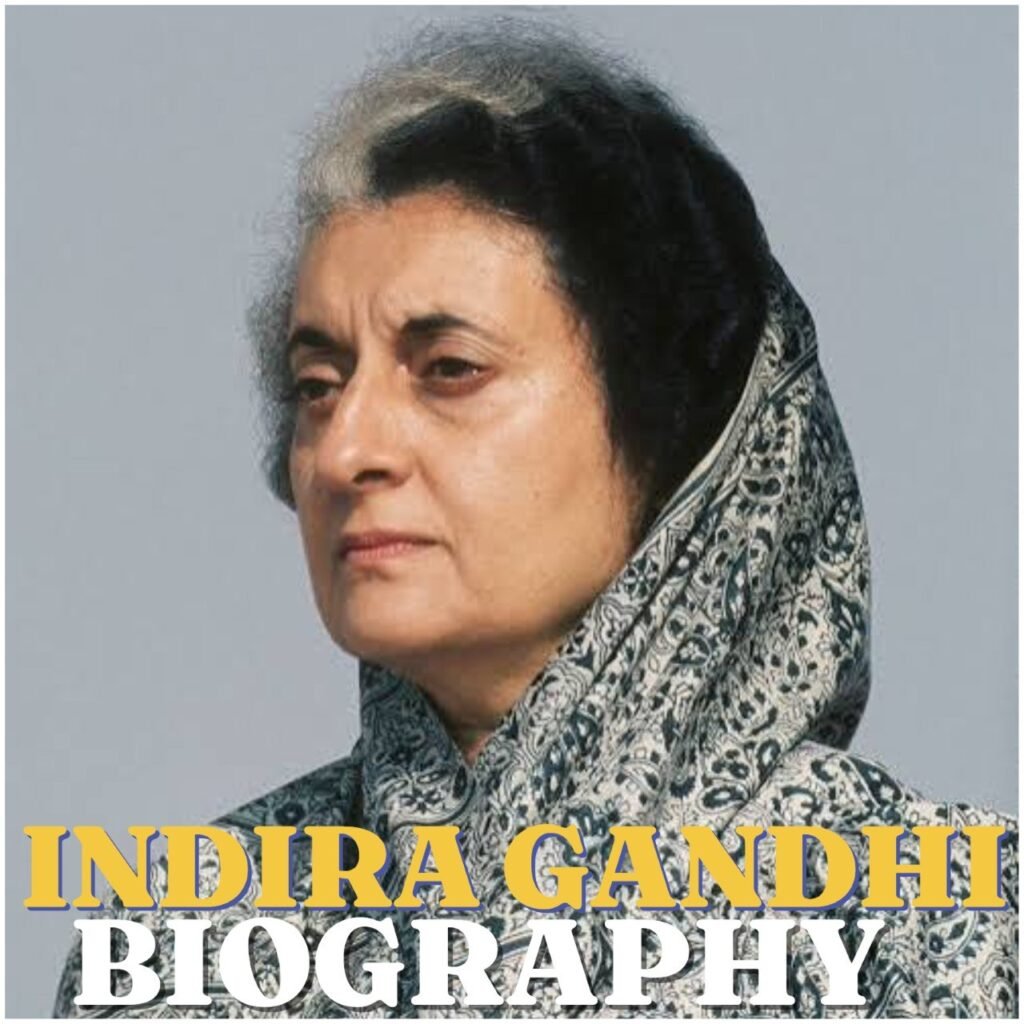
She was easily recognised by her short hairstyle, which featured a distinctive white streak. She often wore traditional Indian saris during public appearances, creating a look that became closely linked to her public image.
Her exact height is not consistently confirmed by reliable official records.
Indira Gandhi’s Net Worth
Indira Gandhi’s personal net worth at the time of her death has not been reliably established. There is no confirmed figure that can accurately describe her personal wealth.
Her position as prime minister involved managing public resources and national affairs. These responsibilities should not be confused with personal assets.
Rather than relying on unsupported financial estimates, her influence is best understood through her political decisions, achievements and impact on India.
Legacy: Why Indira Gandhi Still Matters
Indira Gandhi’s legacy remains a subject of strong debate. Her supporters remember her as a determined leader who strengthened India’s international position, increased food production and played a major role in the creation of Bangladesh.
Her critics focus on the Emergency, when civil liberties were restricted and political opponents were arrested. Operation Blue Star and the violence that followed her assassination also remain painful parts of India’s history.
Her influence went beyond the policies she introduced. As the first woman to lead India, she became an important figure in discussions about women and political leadership around the world.
Her life also offers a lesson about power. Strong leadership can help a country face difficult challenges, but it must be balanced with respect for democratic rights and human dignity.
That is why Indira Gandhi remains one of the most studied and debated leaders of the twentieth century. Her achievements were significant, but so were the consequences of her most controversial decisions.
Conclusion
Indira Gandhi’s life was marked by ambition, political success, personal loss and controversy. From growing up in a family committed to India’s independence to becoming the country’s first female prime minister, she played a major role in shaping modern India.
Her government supported agricultural development, nationalised major banks, helped bring about Bangladesh’s independence and conducted India’s first nuclear test. Yet the Emergency and Operation Blue Star remain reminders of the dangers of political power without sufficient checks.
Her assassination in 1984 ended her life but did not erase her influence. Today, she remains a major figure in Indian history and a powerful example of the opportunities and challenges women can face in leadership.
Frequently Asked Questions About Indira Gandhi
Who was Indira Gandhi?
Indira Gandhi was India’s first female prime minister. She served from 1966 to 1977 and again from 1980 until her assassination in 1984.
When and where was Indira Gandhi born?
She was born on November 19, 1917, in Allahabad, now called Prayagraj, Uttar Pradesh, India.
Who were Indira Gandhi’s parents?
Her parents were Jawaharlal Nehru, India’s first prime minister, and Kamala Nehru, an independence activist.
Was Indira Gandhi related to Mahatma Gandhi?
No. She was not related to Mahatma Gandhi. She adopted the Gandhi surname after marrying Feroze Gandhi.
Who was Indira Gandhi’s husband?
Her husband was Feroze Gandhi, a journalist and politician. They married in 1942.
How many children did Indira Gandhi have?
She had two sons, Rajiv Gandhi and Sanjay Gandhi.
What were Indira Gandhi’s major achievements?
Her major achievements included supporting the Green Revolution, nationalising 14 major banks, leading India during the 1971 war and overseeing the country’s first nuclear test.
What was the Emergency declared by Indira Gandhi?
The Emergency lasted from June 1975 to March 1977. During this period, the government restricted civil liberties, censored the press and arrested many political opponents.
What was Operation Blue Star?
Operation Blue Star was a military operation ordered by Indira Gandhi’s government in June 1984 to remove armed militants from the Golden Temple complex in Amritsar, Punjab.
When was Indira Gandhi assassinated?
She was assassinated on October 31, 1984, at her official residence in New Delhi.
How old was Indira Gandhi when she died?
She was 66 years old when she was assassinated.
What award did Indira Gandhi receive in 1971?
She received the Bharat Ratna, India’s highest civilian award, in 1971.
What was Indira Gandhi’s religion?
She was born into a Kashmiri Pandit Hindu family.
What was Indira Gandhi’s net worth?
Her personal net worth has not been reliably established in public records. Therefore, no confirmed figure is available.