
Introduction
Bola Ahmed Tinubu is one of the most powerful and talked-about politicians in Nigeria. From his early days in Lagos to his rise to the presidency, his journey has been filled with ambition, challenges, political battles and major achievements.
Popularly known as Asiwaju, Tinubu spent years building his name in Nigerian politics. He served as governor of Lagos State for eight years and played a major role in forming the All Progressives Congress (APC). In 2023, his long political journey reached a new height when he became Nigeria’s president.
Today, Tinubu’s leadership affects millions of Nigerians. His decisions on petrol subsidies, taxes and foreign exchange have sparked heated debates across the country. While some people support his reforms, others worry about the rising cost of living and their impact on ordinary families.
But there is more to Tinubu than politics. He studied in the United States, worked as an accountant, built a career in business and raised a family with strong public connections. His story is one of the most interesting in modern Nigerian politics. Here is a closer look at his early life, education, career, wife, children, wealth and presidency.
Early Life and Family Background
Bola Ahmed Tinubu was born on March 29, 1952, in Lagos, Nigeria. He belongs to the Yoruba ethnic group of southwestern Nigeria. His mother, Abibatu Mogaji, was a respected businesswoman and a major figure in Lagos.
Abibatu Mogaji later became the Iyaloja-General of Nigeria. This traditional title gave her an important role in the country’s market-trading community. Growing up around her business activities exposed Tinubu to trade, leadership and public relationships from an early age.
Tinubu spent his early years in Lagos and Ibadan. He received his basic education in both cities before travelling to the United States for further studies. That move opened a new chapter in his life and prepared him for a career in accounting and business.
Education and Academic Qualifications
Tinubu began his education at St. John’s Primary School in Aroloya, Lagos. He later attended Children’s Home School in Ibadan, Oyo State. These schools provided the foundation for his academic journey.
He eventually moved to the United States to continue his education. He attended Richard J. Daley College in Chicago before proceeding to Chicago State University in Illinois.
In 1979, Tinubu graduated from Chicago State University with a Bachelor of Science degree in Business Administration, majoring in Accounting. His education gave him useful knowledge of finance, business and management. These skills later played a role in his professional and political career.
Professional Career Before Politics
Before entering politics, Tinubu built a career in the corporate world. After graduating, he worked with several American companies, including Arthur Andersen, Deloitte Haskins & Sells and GTE Services Corporation.
These jobs helped him gain experience in accounting, financial management and business operations. He also learned how large companies managed their money and daily activities.
In 1983, Tinubu returned to Nigeria and joined Mobil Oil Nigeria. He later became the company’s treasurer, a senior position that involved financial management.
His time in the corporate sector gave him valuable business experience. Although politics eventually became his main career, his background in accounting remained an important part of his public profile.
Political Career: How Tinubu Rose to Power
His Entry Into Nigerian Politics
Tinubu entered national politics during Nigeria’s Third Republic. He joined the Social Democratic Party (SDP) and contested for a seat in the Nigerian Senate.
In 1992, he won the election to represent Lagos West Senatorial District. This victory marked the beginning of his journey as an elected political leader.
However, his time in the Senate was cut short by the political crisis that followed the annulment of the June 12, 1993, presidential election. The military government later dissolved the National Assembly and ended the Third Republic.
Tinubu did not abandon politics. He became involved in the National Democratic Coalition (NADECO), a group that campaigned for democracy and recognition of the June 12 election. His involvement brought him closer to other prominent pro-democracy activists.
Exile and Return to Nigeria
During the military rule of General Sani Abacha, Tinubu spent part of his time outside Nigeria. He remained connected to the struggle for democratic government.
Following Abacha’s death in 1998, Nigeria began preparing for a return to civilian rule. Tinubu returned home and joined the political activities leading to the 1999 general election.
His return marked the beginning of a fresh political chapter. This time, he was ready to contest for one of the most important positions in Lagos State.
Governor of Lagos State (1999–2007)
Tinubu contested the Lagos State governorship election in 1999 under the Alliance for Democracy (AD). He won and became governor on May 29 of that year.
His administration focused on improving roads, transportation, public finance and government institutions. One of its biggest priorities was increasing the state’s internally generated revenue.
His government introduced measures to improve tax collection and reduce Lagos State’s dependence on federal allocations. These efforts helped the state raise more money to fund public projects.
Tinubu won re-election in 2003 and completed his second term in 2007. His eight years as governor made him one of the most influential politicians in southwestern Nigeria.
However, his administration also faced criticism. Disagreements over local government administration, public spending and relations with the federal government attracted public attention.
How He Helped Build the APC
Leaving office in 2007 did not end Tinubu’s political journey. He remained active and continued to influence major political decisions.
He became a leading figure in the Action Congress and later the Action Congress of Nigeria (ACN). In 2013, the ACN joined other opposition parties to form the All Progressives Congress (APC).
The new party brought together influential politicians, including Muhammadu Buhari. Their alliance created a stronger opposition capable of challenging the ruling People’s Democratic Party (PDP).
In 2015, the APC defeated the PDP in the presidential election. Buhari became president, ending the PDP’s 16-year hold on power.
Tinubu’s role in building the party strengthened his reputation as a skilled political organiser. It also increased his influence in national politics.
His Journey to the Presidency
After years of political involvement, Tinubu decided to pursue Nigeria’s highest political office. In January 2022, he announced his intention to contest for president.
He won the APC presidential primary in June 2022, defeating several other aspirants. This made him the party’s candidate for the 2023 election.
The presidential election took place on February 25, 2023. Tinubu faced strong opponents, including Atiku Abubakar of the PDP and Peter Obi of the Labour Party.
INEC declared him the winner with 8,794,726 votes. Opposition candidates challenged the result in court, but the Presidential Election Petition Court dismissed the petitions. The Supreme Court later upheld his election in October 2023.
On May 29, 2023, Tinubu was sworn in as Nigeria’s 16th president. After decades in politics, he had finally reached the highest office in the country.
Bola Ahmed Tinubu’s Presidency and Major Policies
Since becoming president, Tinubu has introduced several policies aimed at changing Nigeria’s economy. Some have received support, while others have faced strong criticism.
One of his biggest decisions came during his inauguration in May 2023. He announced that the petrol subsidy was no longer sustainable. This marked the beginning of a major change in Nigeria’s fuel pricing system.
The government said the decision would reduce public spending and free up money for development. However, petrol prices and transportation costs increased, placing more pressure on Nigerian households.
Tinubu’s administration also changed the country’s foreign-exchange system. The goal was to improve transparency, reduce market distortions and attract foreign investors. However, the naira’s depreciation and rising prices have remained major concerns.
Tax reform is another major part of his economic agenda. His government has supported changes designed to simplify tax collection, improve public revenue and create a better business environment.
Other priorities include roads, agriculture, education, healthcare and national security. Tinubu has also set an ambitious goal of growing Nigeria’s economy to a $1 trillion gross domestic product by 2030.
The real test of these policies will be their results. Nigerians want to see better jobs, lower living costs, improved security and stronger public services.
Why Is Bola Ahmed Tinubu Trending?
Tinubu remains in the news because of his position as president and the decisions made by his government.
His economic reforms are among the biggest reasons for public discussion. The removal of petrol subsidies, changes to foreign exchange and tax reforms have affected businesses and households across Nigeria.
The rising cost of living has also placed his government under pressure. Many Nigerians want better wages, affordable transportation, stable electricity and improved security.
Supporters believe the reforms are necessary to fix long-standing economic problems. Critics, however, argue that the government must do more to reduce hardship and protect vulnerable citizens.
Tinubu also attracted attention in late October and early November 2026 following his visit to Saudi Arabia to perform Umrah, the lesser Islamic pilgrimage. During the trip, he was granted access to pray inside the Holy Kaaba. He also offered prayers for Nigeria’s peace, unity and prosperity.
As the next general election cycle approaches, discussions about his performance and political future are likely to remain important topics in Nigerian politics.
Personal Life: Who Is Bola Ahmed Tinubu’s Wife?
Tinubu is married to Oluremi Tinubu, the First Lady of Nigeria. She is also a politician with a career of her own.
Oluremi represented Lagos Central Senatorial District in the Nigerian Senate from 2011 to 2023. Before that, she served as the First Lady of Lagos State while her husband was governor.
As First Lady, she has taken part in programmes that focus on women, children, families and social welfare. Her public activities have made her an important figure in Nigeria’s political and social life.
Tinubu’s family includes his publicly known children: Seyi Tinubu, Habibat Tinubu, Folashade Tinubu-Ojo and the late Jide Tinubu.
Seyi Tinubu is known for his business activities and public profile. Folashade Tinubu-Ojo holds the traditional title of Iyaloja-General of Nigeria, following a family connection to the market leadership role once held by her grandmother, Abibatu Mogaji.
Bola Ahmed Tinubu’s Age, Religion, Tribe and Nationality
Tinubu was born on March 29, 1952. As of November 2026, he is 74 years old.
He is Nigerian and belongs to the Yoruba ethnic group. He practises Islam and has spoken about his faith during several public engagements.
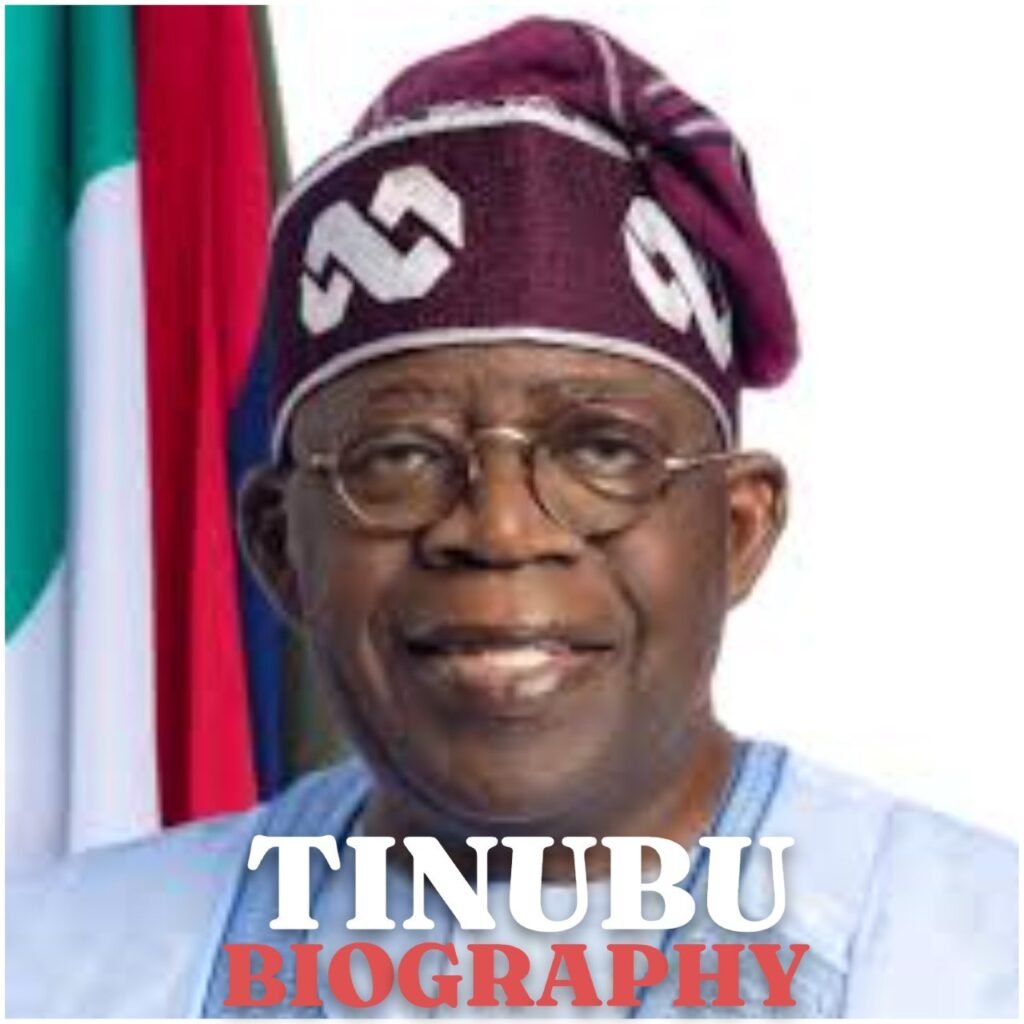
He is also known for his traditional style of dressing. His public appearances often feature agbada, traditional caps and glasses, making his appearance easy to recognise.
His exact height has not been confirmed by reliable public records.
Quick Facts About Bola Ahmed Tinubu
- Full name: Bola Ahmed Tinubu
- Date of birth: March 29, 1952
- Age: 74 years old
- Birthplace: Lagos, Nigeria
- Nationality: Nigerian
- Ethnicity: Yoruba
- Religion: Islam
- Profession: Politician and former accountant
- Political party: All Progressives Congress (APC)
- Wife: Oluremi Tinubu
- Mother: Abibatu Mogaji
- Education: Chicago State University
- Former position: Governor of Lagos State
- Years as governor: 1999–2007
- Presidential inauguration: May 29, 2023
Bola Ahmed Tinubu’s Net Worth: How Rich Is Nigeria’s President?
Bola Ahmed Tinubu is widely regarded as a wealthy Nigerian politician. His business background, investments and long career in public life have attracted attention.
Before entering full-time politics, he worked in the corporate sector and held a senior financial position at Mobil Oil Nigeria. His experience gave him a strong background in accounting and business management.
Over the years, several websites have published estimates of his wealth. However, these figures vary widely, and there is no independently verified amount that confirms his current net worth.
For that reason, it is better not to attach a definite figure to his wealth. What is clear is that his financial background remains a major subject of public interest.
Social Media Presence
As president, Tinubu maintains a public presence through official government communication channels and social media.
His administration uses these platforms to share presidential speeches, policy announcements, official visits and government updates. Nigerians can also follow the activities of the Presidency through its official website and verified social media accounts.
Controversies and Public Criticism
Tinubu’s long political career has not been without controversy. His business interests, academic records and government decisions have attracted public debate.
One major issue involved questions about his academic qualifications during the 2023 presidential election. His educational records became part of the legal challenges against his candidacy. Chicago State University confirmed that he attended the institution and graduated in 1979.
His presidency has also faced criticism over economic policies. The removal of petrol subsidies and changes to foreign-exchange management have contributed to financial pressure on many Nigerians.
Security is another major concern. Many citizens want stronger action against terrorism, kidnapping, banditry and other crimes.
While his supporters argue that he inherited serious economic and security problems, critics believe his administration must deliver faster results.
These debates show the high expectations Nigerians have for their president.
Legacy: What Will Bola Ahmed Tinubu Be Remembered For?
Tinubu’s influence on Nigerian politics goes far beyond his years as governor and president. He is known for building political alliances, developing strong networks and helping shape the country’s opposition politics.
His eight years as Lagos State governor remain an important part of his record. His administration focused on revenue generation and government reforms, helping to strengthen the state’s financial position.
He also played a major role in forming the APC. The party’s victory in 2015 changed Nigeria’s political landscape and showed how opposition parties could unite to challenge an established government.
However, his greatest legacy will depend on his performance as president. Better security, more jobs, improved infrastructure and a stronger economy will shape how Nigerians remember his leadership.
His story is still being written. The decisions he makes today will influence how future generations judge his place in Nigerian history.
Conclusion
Bola Ahmed Tinubu’s journey to the Nigerian presidency is a story of ambition, political strategy and years of public service. From his early career in accounting to his time as Lagos governor, he built a reputation as one of the country’s most influential political figures.
His role in forming the APC and his eventual victory in the 2023 presidential election marked major moments in his career.
However, becoming president has brought challenges on a much larger scale. Nigerians expect his government to tackle insecurity, create jobs, improve public services and make life more affordable.
Whether history remembers him as a successful reformer or a controversial leader will depend on the results of his policies. For ordinary Nigerians, the most important question is simple: will his leadership make the country better?
Frequently Asked Questions About Bola Ahmed Tinubu
1. Who is Bola Ahmed Tinubu?
Bola Ahmed Tinubu is the president of Nigeria and a leading member of the All Progressives Congress (APC). He previously served as governor of Lagos State from 1999 to 2007.
2. How old is Bola Ahmed Tinubu?
He is 74 years old as of November 2026. He was born on March 29, 1952.
3. Where was Bola Ahmed Tinubu born?
He was born in Lagos, Nigeria.
4. Who is Bola Ahmed Tinubu’s wife?
His wife is Oluremi Tinubu, the First Lady of Nigeria and a former senator.
5. How many children does Bola Ahmed Tinubu have?
His publicly known children include Seyi Tinubu, Habibat Tinubu, Folashade Tinubu-Ojo and the late Jide Tinubu.
6. What did Bola Ahmed Tinubu study?
He studied Business Administration, with a major in Accounting, at Chicago State University in the United States.
7. Which political party does Bola Ahmed Tinubu belong to?
He belongs to the All Progressives Congress (APC).
8. When did Bola Ahmed Tinubu become president?
He became president on May 29, 2023.
9. What religion does Bola Ahmed Tinubu practise?
He practises Islam.
10. What is Bola Ahmed Tinubu’s tribe?
He belongs to the Yoruba ethnic group of southwestern Nigeria.
11. What was Tinubu’s position before becoming president?
He served as governor of Lagos State from 1999 to 2007. He later became a leading figure in the APC.
12. What is Bola Ahmed Tinubu’s net worth?
His exact net worth has not been independently verified. Online estimates vary and should be treated with caution.
13. What is Bola Ahmed Tinubu famous for?
He is famous for his political influence, his time as Lagos governor, his role in forming the APC and his election as Nigeria’s president.
14. Who is Bola Ahmed Tinubu’s mother?
His mother was Abibatu Mogaji, a respected businesswoman and former Iyaloja-General of Nigeria.
15. What are Bola Ahmed Tinubu’s popular titles?
He is popularly known as Asiwaju and Jagaban, titles associated with his political influence and traditional honours.