
Introduction
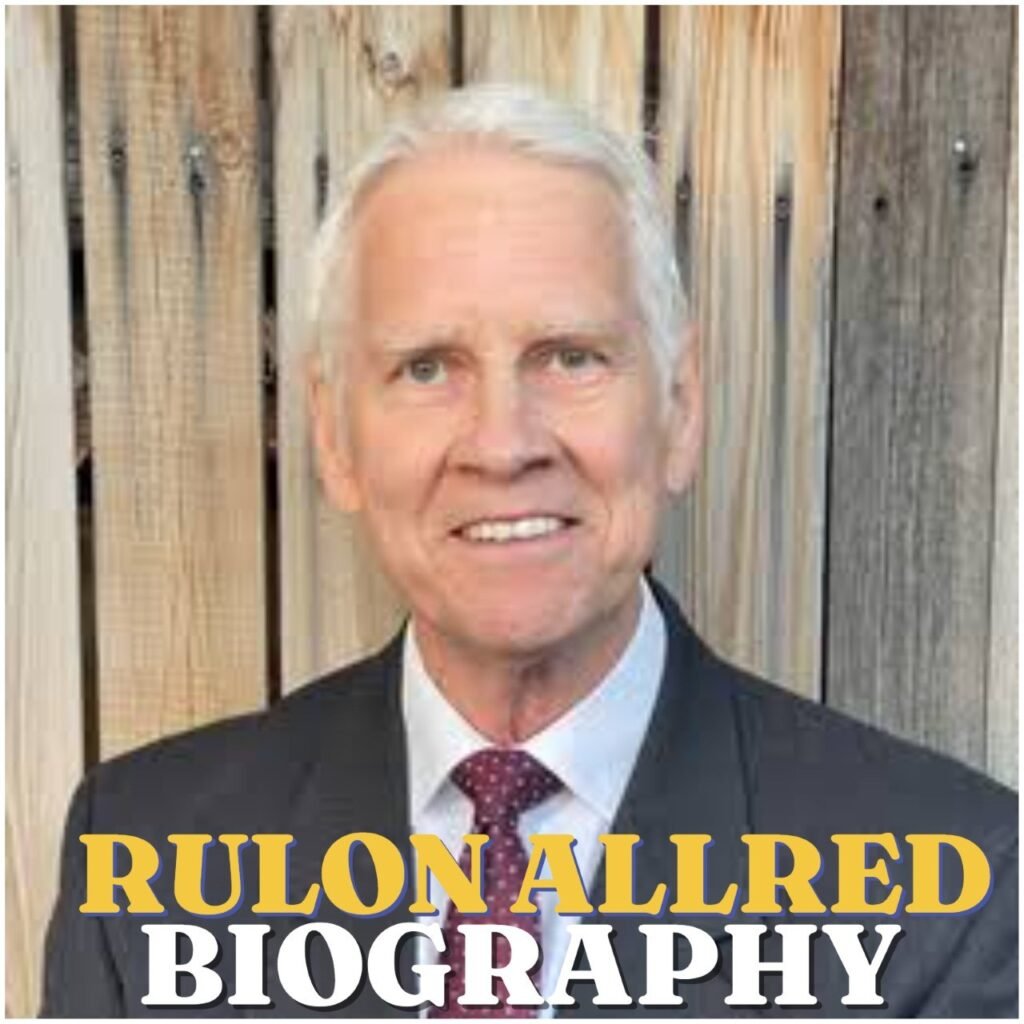
Rulon Allred was a religious leader whose life ended in one of the most shocking murder cases in the history of American Mormon fundamentalism. He led the Apostolic United Brethren (AUB), a religious group that continued to practise plural marriage after the mainstream Mormon Church had abandoned it. He was also a chiropractor and naturopathic physician who ran a medical clinic in Utah.
Allred spent much of his life defending his religious beliefs. He built a large following, helped establish religious communities and became an influential figure among Mormon fundamentalists. However, his leadership also brought him into conflict with rival religious groups.
That conflict turned deadly on May 10, 1977. Two women entered his clinic in Murray, Utah, and shot him. The murder was later linked to Ervil LeBaron, a rival religious leader who was convicted in connection with the killing.
But who was Rulon Allred, and how did he become involved in such a violent religious feud? His story begins with his childhood in a polygamous family and a change in faith that shaped the rest of his life.
Who Was Rulon Allred?
Rulon Clark Allred was an American religious leader, chiropractor and naturopathic physician. He was born on March 29, 1906, in Chihuahua, Mexico. He became widely known as the leader of the Apostolic United Brethren, a Mormon fundamentalist group.
Allred took charge of the movement in 1954, following the death of Joseph W. Musser. Under his leadership, the group expanded its communities and strengthened its organization. Its members continued to follow religious teachings that included plural marriage.
His religious beliefs made him a controversial figure. They also brought him into conflict with the mainstream Church of Jesus Christ of Latter-day Saints and other fundamentalist leaders.
Allred remained the head of the Apostolic United Brethren until his assassination in 1977. He was 71 years old.
Early Life and Family Background
Rulon Allred was born to Byron Harvey Allred Jr. and Mary Evelyn Clark. His family had strong ties to early Mormon traditions, including plural marriage.
Growing up in a polygamous household gave Allred an early understanding of the beliefs that would later shape his religious life. However, he did not immediately follow his father’s position.
As a teenager, Allred joined the mainstream Church of Jesus Christ of Latter-day Saints. This decision created a difference between his beliefs and those of his father, who continued to support plural marriage.
The disagreement became an important part of his personal history. Although Allred initially rejected his father’s views, he later reconsidered them. That change would influence his marriage, religious membership and future leadership.
Education and Medical Career
Allred trained in naturopathic medicine and later worked as a chiropractor. He built a medical career that allowed him to treat patients while maintaining his religious activities.
He eventually opened a clinic in Murray, Utah. Patients visited him for treatment, and the clinic became an important part of his professional life.
His medical work gave him an identity outside the religious movement. However, his position as a fundamentalist leader eventually brought him greater public attention.
Although detailed records of his full educational history are limited, historical accounts confirm his training in naturopathic medicine. He continued his medical practice until his death.
Rulon Allred’s Religious Journey
Allred’s religious journey was far from straightforward. Although he grew up in a polygamous family, he joined the mainstream Mormon Church as a teenager.
On June 9, 1926, he married Katherine Lucy Handy in the Salt Lake City Temple. The couple later lived in California, where Allred became involved in church activities. He served in local positions connected with genealogy and church leadership.
His beliefs began to change in the early 1930s. In 1933, his father published a book titled A Leaf in Review, which defended plural marriage. Allred initially disagreed with the book and challenged his father’s views.
However, their discussions caused him to reconsider his position. Over time, he began to accept the arguments in favour of plural marriage and eventually became a supporter of the practice.
This change placed serious pressure on his marriage. Allred tried to persuade his wife and other church members to accept his new beliefs, but the disagreement continued. He and Katherine divorced in October 1935.
His growing commitment to plural marriage also put him at odds with the mainstream Mormon Church. On May 8, 1940, the church excommunicated him.
Rather than abandon his beliefs, Allred became more involved in the Mormon fundamentalist movement. He joined the United Order Effort, a group that sought to preserve religious teachings and practices associated with early Mormonism.
This decision marked the beginning of his rise as a fundamentalist leader.
Arrest and Commitment to Plural Marriage
Allred’s religious beliefs eventually brought him into conflict with the law. In May 1945, authorities in Utah convicted him for practising plural marriage and sentenced him to prison.
He was released on parole in December 1945. After his release, he moved to Mexico and lived at a ranch associated with the LeBaron fundamentalist community.
His arrest did not change his religious position. He continued to support plural marriage and remained active in the fundamentalist movement.
His time in these communities also exposed him to disagreements among different religious leaders. These tensions would later become a major part of his story.
Leadership of the Apostolic United Brethren
In 1954, Allred became the leader of the Apostolic United Brethren after the death of Joseph W. Musser. The group had developed from an existing Mormon fundamentalist movement, but Allred played a major role in shaping its identity and direction.
The Apostolic United Brethren maintained beliefs that differed from those of the mainstream Mormon Church. Its members regarded plural marriage as an important religious principle and believed they were preserving teachings associated with early Mormon leaders.
As leader, Allred worked to organize the group and strengthen its communities. He helped establish congregations in Utah, Arizona and Montana. The movement also maintained connections with members in Mexico.
One important community developed in Pinesdale, Montana. Members built homes and facilities for worship and community activities. These settlements helped the group develop a stronger sense of identity.
Allred’s leadership attracted followers, but it also brought public attention. His support for plural marriage drew criticism and led to further legal difficulties.
By the time of his death, the Apostolic United Brethren had become an established group within the wider Mormon fundamentalist movement.
Rulon Allred’s Wives and Children
Plural marriage played a central role in Allred’s religious beliefs and family life. He believed the practice remained a valid religious principle and built a large household around that conviction.
Historical accounts do not always agree on the number of women connected to his marriages and religious sealings. Some accounts give a lower figure, while others report that he had been sealed to at least 16 women by the time of his death. These differences may reflect how individual sources count marriages and sealings.
Allred was reported to have 48 children. His large family reflected the religious practices he promoted within his community.
His first wife was Katherine Lucy Handy. They married in 1926, but their relationship ended in divorce in 1935 after disagreements over his changing religious beliefs.
Some of his children later helped preserve family records and information about his life. Their contributions have given researchers a closer look at his family relationships and religious activities.
The Bitter Feud With Ervil LeBaron
One of the darkest chapters in Allred’s life was his conflict with Ervil LeBaron, a rival Mormon fundamentalist leader.
LeBaron led a separate religious group known as the Church of the Lamb of God. Tensions between the two men grew over religious authority, leadership and disagreements within the fundamentalist movement.
The rivalry became increasingly dangerous. Allred reportedly received threats, and relations between the rival groups continued to deteriorate.
LeBaron later became linked to a series of murders involving people connected to competing fundamentalist communities. His actions drew the attention of law enforcement and exposed the violent nature of the conflict.
The feud eventually reached Allred himself. On May 10, 1977, two women entered his medical clinic and shot him. The attack ended his life and became one of the most notorious events in the history of Mormon fundamentalism.
How Was Rulon Allred Murdered?
Rulon Allred was murdered on May 10, 1977, at his clinic in Murray, Utah. He was 71 years old.
Two women, Rena Chynoweth and Ramona Marston, entered the clinic disguised as visitors. They shot Allred several times before leaving the scene. He later died from his injuries.
Investigators linked the attack to Ervil LeBaron, who had a bitter rivalry with Allred. The investigation established that LeBaron had ordered the killing.
The case attracted national attention because it involved a religious feud, a planned assassination and a wider pattern of violence between rival fundamentalist groups.
In 1980, LeBaron was convicted of criminal homicide in connection with Allred’s murder. He received a life sentence.
The killing became a defining moment in the history of the Apostolic United Brethren. It also exposed the deadly consequences of the conflict between rival religious leaders.
Rulon Allred’s Funeral
Allred’s death caused deep grief among members of the Apostolic United Brethren. His funeral took place at Bingham High School in South Jordan, Utah.
More than 2,600 people reportedly attended the service. The large turnout showed how much influence he had gained within the movement.
For his followers, the funeral was a time to mourn a leader who had guided their community for more than two decades. It was also a moment of uncertainty, as the group had to find someone to take his place.
Although Allred’s leadership ended with his death, the religious organization he had helped build continued.
Who Succeeded Rulon Allred?
After the assassination, Allred’s brother, Owen A. Allred, became the leader of the Apostolic United Brethren.
Owen inherited an established religious community with congregations, settlements and a clear organizational structure. He worked to maintain the group and guide its members through the difficult period following Rulon’s death.
His leadership helped the movement continue beyond the man who had become its most recognized figure.
Owen remained an important leader for many years. He died in February 2005, marking another major moment in the history of the Apostolic United Brethren.
Was Rulon Allred the Founder of the Apostolic United Brethren?
Rulon Allred is often described as the founder of the Apostolic United Brethren because of his major role in shaping the group. However, the movement developed from an earlier Mormon fundamentalist organization.
He became its leader in 1954 and helped build its identity, organize its members and strengthen its communities. His influence was so significant that outsiders sometimes referred to the group as the “Allred Group.”
His leadership helped turn an existing religious movement into an organized community that continued after his death.
Rulon Allred’s Net Worth
There is no verified public estimate of Rulon Allred’s net worth. Although he worked as a medical practitioner and led a religious organization, available historical records do not establish the total value of his personal assets.
His professional work and religious position may have provided him with income, but there is not enough reliable information to calculate his wealth.
For this reason, any specific net-worth figure would be speculation. His importance in history is better understood through his medical career, religious leadership and influence on the Apostolic United Brethren.
Rulon Allred’s Legacy
Rulon Allred remains an important figure in the history of Mormon fundamentalism. His leadership helped the Apostolic United Brethren grow into an organized religious community with followers in several parts of the United States.
His life also reflects the divisions that developed within the wider Mormon tradition after the mainstream church discontinued plural marriage. Different fundamentalist groups continued to defend older teachings, but they often disagreed over leadership and religious authority.
His assassination brought wider attention to the violence that could grow from these disputes. The murder also became part of the criminal history of Ervil LeBaron and his followers.
Today, Allred’s life can be studied through historical archives, family records, letters and accounts of the Apostolic United Brethren. These materials help explain his beliefs, family life, medical career and influence.
His story remains significant because it connects religion, family traditions, leadership struggles and the consequences of violence.
Conclusion
Rulon Allred’s life took him from a polygamous family in Mexico to the leadership of one of America’s best-known Mormon fundamentalist groups. His changing religious beliefs affected his first marriage, led to his excommunication and eventually shaped his work within the Apostolic United Brethren.
He built a strong following and helped establish communities across several states. However, his leadership also brought him into conflict with rival religious groups.
That conflict ended in tragedy when he was assassinated at his medical clinic in 1977. His brother later took over the movement, which continued after his death.
Today, Allred remains a notable figure in the history of Mormon fundamentalism. His life is remembered for his religious leadership, his large family and the violent feud that brought his story to an end.
Frequently Asked Questions About Rulon Allred
1. Who was Rulon Allred?
Rulon C. Allred was an American chiropractor, naturopathic physician and Mormon fundamentalist leader. He led the Apostolic United Brethren from 1954 until his assassination in 1977.
2. When was Rulon Allred born?
He was born on March 29, 1906, in Chihuahua, Mexico.
3. How old was Rulon Allred when he died?
He was 71 years old when he was murdered on May 10, 1977.
4. What was Rulon Allred famous for?
He was best known for leading the Apostolic United Brethren, a Mormon fundamentalist group that continued to practise plural marriage.
5. Was Rulon Allred a doctor?
Yes. He trained in naturopathic medicine and worked as a chiropractor and medical practitioner. He operated a clinic in Murray, Utah.
6. What religion did Rulon Allred follow?
He was associated with the Mormon religious tradition. He first joined the mainstream Church of Jesus Christ of Latter-day Saints but later became a leader in the Mormon fundamentalist movement.
7. What was the Apostolic United Brethren?
The Apostolic United Brethren is a Mormon fundamentalist group that maintains certain teachings associated with early Mormonism, including plural marriage. Allred became its leader in 1954.
8. How many wives did Rulon Allred have?
Historical accounts give different figures. Some report a lower number of wives, while others state that he had been sealed to at least 16 women.
9. How many children did Rulon Allred have?
He was reported to have 48 children.
10. Who was Rulon Allred’s first wife?
His first wife was Katherine Lucy Handy. They married on June 9, 1926, and divorced in October 1935.
11. Why was Rulon Allred excommunicated?
The mainstream Mormon Church excommunicated him on May 8, 1940, after he embraced plural marriage, a practice the church had officially discontinued.
12. Who killed Rulon Allred?
Two women, Rena Chynoweth and Ramona Marston, shot him at his clinic on May 10, 1977. The murder was linked to rival religious leader Ervil LeBaron, who was later convicted in connection with the killing.
13. Why was Rulon Allred murdered?
His murder was connected to a bitter rivalry between his religious group and the group led by Ervil LeBaron. The conflict involved disagreements over religious authority and leadership.
14. Where was Rulon Allred killed?
He was murdered at his medical clinic in Murray, Utah, in the United States.
15. Who succeeded Rulon Allred?
His brother, Owen A. Allred, succeeded him as the leader of the Apostolic United Brethren.
16. What was Rulon Allred’s net worth?
His net worth was never reliably established in public records. Any specific figure would be speculative.
17. Where is Rulon Allred buried?
His funeral was held at Bingham High School in South Jordan, Utah. Reliable public information about his exact burial location is limited.